Key Highlights
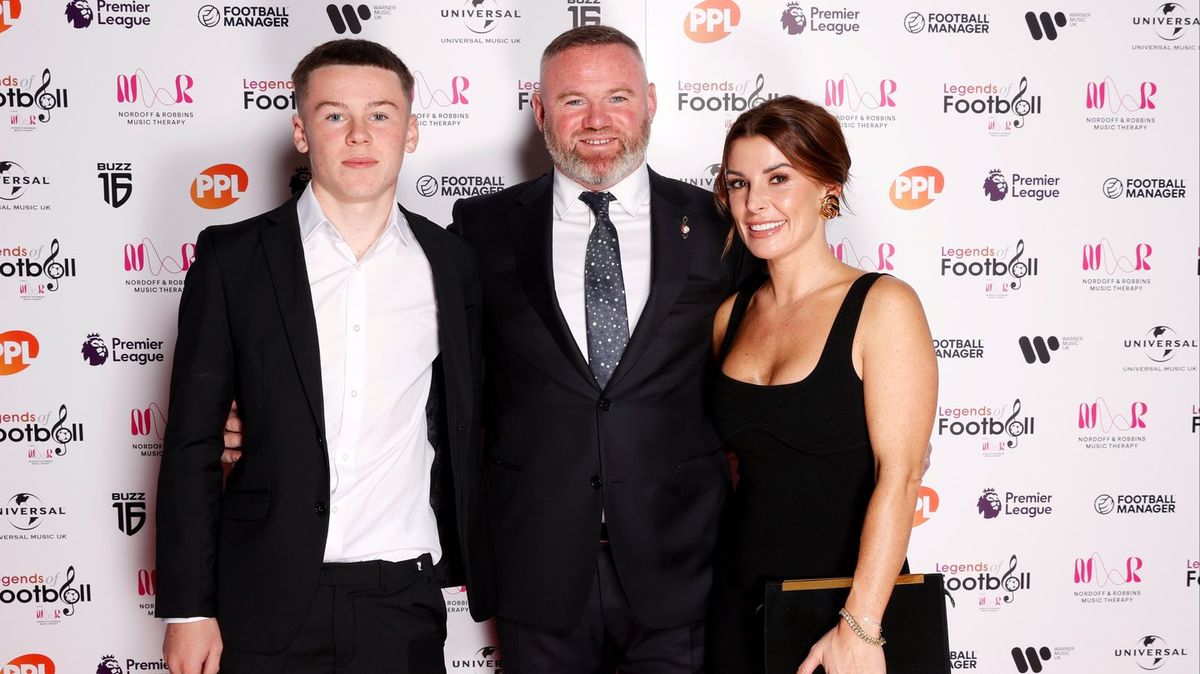
- Wayne and Coleen Rooney’s new Disney+ documentary series “The Real Rooneys” offers unprecedented access to their Cheshire family life with four sons Kai, 16, Klay, 13, Kit, 10, and Cass, 8.
- The couple discuss how their children have developed accents distinct from their parents’ strong Scouse roots, with eldest son Kai’s speech pattern drawing particular attention online.
- Episodes 1-8 are currently streaming on Disney+, with the final two episodes dropping on 1 October, showcasing both parents’ current ventures and the challenges of raising children in the public eye.
The Rooneys Open Their Cheshire Home for Unfiltered Family Portrait
After decades in the unforgiving glare of the British tabloid spotlight, Wayne and Coleen Rooney have taken the deliberate step of inviting cameras into their private world. The new Disney+ docuseries The Real Rooneys pulls back the curtain on life inside their Cheshire mansion, capturing the daily rhythm of a household anchored by four boys—Kai, 16, Klay, 13, Kit, 10, and Cass, 8—who have known no existence outside the public eye. The series arrives as both parents navigate new professional chapters: Wayne transitioning into television work while Coleen pursues brand partnerships with Primark and Applied Nutrition, all while managing the school run and the intensifying demands of their eldest son’s burgeoning football career.
Accent Evolution: When Scouse Roots Meet Cheshire Upbringing
One of the most striking revelations in the early episodes centers on language rather than football. Despite both parents having grown up in Croxteth, Liverpool, with unmistakable Scouse accents, their children speak with a markedly different cadence—a product of their Cheshire schooling and environment. The phenomenon has not gone unnoticed by viewers; clips of Kai speaking frequently circulate on social media, prompting Wayne to acknowledge the external fascination. “Kai’s at that age now where, 16-year-olds… it’s a big influence from the music and … I’ve been told it’s bit of a weird accent actually,” Wayne admits to LADbible. Coleen concurs, noting the discrepancy isn’t featured in the show itself but is a frequent topic of family discussion.
The couple describes a linguistic double-bind the children have navigated since childhood. “It’s funny because when they were growing up- all our family, when we were in Liverpool or they were around us, they’d say ‘oh the kids speak so posh,’” Wayne recalls. “But when they went to school they were common, so I think they had that like crossover because we and our family are really Scouse.” Coleen adds further texture: “They had that ‘oh they speak so lovely’ but then in school – obviously the Cheshire lot, they have that little, you know, posh accent – to them they had that little twang where they wasn’t that posh.” The result is a hybrid accent that belongs fully to neither world—a subtle marker of the unique social position the Rooney children occupy.
Kai Rooney: Football Prodigy Forging His Own Path
At sixteen, Kai Rooney stands at the threshold his father crossed over two decades ago when he debuted for Everton as a teenager. Yet the context could hardly be more different. Where Wayne exploded onto the scene from relative anonymity, Kai has lived under scrutiny since birth. “You know, when we look back now we see our boys – like Kai’s 16. nearly 17 – we were young and I don’t think you realise that until years later,” Coleen reflects. “But I think we handled it as well as we could and with the kids, obviously we’re in the spotlight so they’ve been brought into it. They handle it well because it’s something they’ve grown up with.”
The series captures Wayne watching Kai train in their back garden, noting the uncanny physical and technical resemblance—down to the consistent finishing—with one critical divergence. “It’s just like watching myself but ‘left-footed,’” Wayne observes. Yet he is careful to emphasize Kai’s autonomy. “Especially Kai who’s at that age now where he’s obviously gone full-time into football as well. He’s got his own mind, he’s his own person, he knows what he wants and then we’re obviously there when he needs us to help and guide him.” The father-son dynamic on display suggests a deliberate parenting philosophy: proximity without pressure, guidance without projection.
Why This Matters: Celebrity, Authenticity, and the New Family Documentary
The Real Rooneys arrives at a pivotal moment for celebrity-driven documentary programming. Audiences have grown increasingly skeptical of heavily stage-managed “access” documentaries that function as extended press releases. The Rooneys’ decision to include unvarnished moments—“There was days when the cameras were there, Wayne didn’t want to get out of bed – it’s just life and I think that’s what people want to see because they can relate to that,” Coleen explains—signals an awareness of this shift. By admitting to marital friction, parental exhaustion, and the mundane realities of adolescence, the series attempts to bridge the gap between the family’s rarefied status and the universal experiences of its viewers. For Disney+, the series represents a significant investment in British unscripted content, testing whether a legacy tabloid fixture can translate into streaming-era authenticity. The staggered release—eight episodes available now, two more on 1 October—also reflects a strategic pivot toward weekly event viewing in an on-demand landscape.
Frequently Asked Questions
When can I watch all episodes of The Real Rooneys?
Episodes 1 through 8 are currently streaming on Disney+. The final two episodes (9 and 10) will be released on 1 October.
How old are the Rooney children featured in the series?
The couple’s four sons are Kai (16), Klay (13), Kit (10), and Cass (8). Kai has recently signed a professional contract with Manchester United’s youth system.
Do the Rooney children have Scouse accents like their parents?
No. Despite both Wayne and Coleen having strong Liverpool accents from their Croxteth upbringing, all four boys speak with accents shaped by their Cheshire schooling and environment—a “crossover” the parents describe as sounding “posh” to Liverpool relatives but “common” to their Cheshire peers.