Tag: Robinhood

  • Robinhood Engineers Charged After Allegedly Trading Crypto on Secret Listing Information

    Robinhood Engineers Charged After Allegedly Trading Crypto on Secret Listing Information

    Key Highlights

    • Two Robinhood engineers, Hefu Chai and Huaisong Xiang, have been charged by the U.S. Department of Justice with commodities fraud and wire fraud for allegedly using confidential listing information to trade crypto perpetual futures on Hyperliquid.
    • Prosecutors allege the defendants generated over $50,000 each by repeatedly trading tokens ahead of public Robinhood Crypto listing announcements between 2025 and 2026.
    • The case draws parallels to the Jane Street Group controversy, where the trading firm allegedly exited $192 million in TerraUSD (UST) prior to its May 2022 collapse using alleged insider access.

    Robinhood Engineers Charged in Alleged Insider Trading Scheme

    The U.S. Department of Justice has unsealed criminal complaints against two Robinhood Markets engineers, accusing them of orchestrating a systematic scheme to exploit confidential corporate data for personal profit in the cryptocurrency derivatives market. Hefu Chai, 36, of Menlo Park, California, and Huaisong Xiang, 30, of Jersey City, New Jersey, face charges of commodities fraud and wire fraud stemming from their alleged misuse of non-public information regarding upcoming token listings on the Robinhood Crypto platform.

    Trading on Confidential Listing Data

    According to complaints filed in the Southern District of New York, Chai and Xiang leveraged their positions as engineers to access advance knowledge of which cryptocurrencies Robinhood planned to list for trading. Prosecutors contend that the defendants used this privileged information to purchase perpetual futures contracts tied to those specific tokens on Hyperliquid, a decentralized perpetual futures exchange, before the listings were announced to the general public. The DOJ alleges this pattern of trading was repeated multiple times over a period spanning 2025 and 2026, with each defendant allegedly realizing profits exceeding $50,000.

    Severe Penalties and Upcoming Court Appearances

    The charges carry significant potential prison time. The commodities fraud count carries a maximum sentence of 10 years, while the wire fraud charge carries a maximum of 20 years. Chai is scheduled to make his initial appearance in federal court in the Northern District of California, while Xiang is set to appear before a federal magistrate judge in New York. The geographic split reflects the defendants’ respective residences and the national scope of the alleged electronic communications used to execute the trades.

    DOJ Signals Crackdown on Derivatives-Based Insider Trading

    U.S. Attorney Jamie McDonald emphasized the broader legal implications of the case in a formal statement:

    “Misappropriating confidential information to trade in the derivatives markets for personal benefit is illegal. That is exactly what we allege Hefu Chai and Huaisong Xiang have done. Today’s charges make clear that corporate insiders cannot evade the securities and commodities laws by trading based on misappropriated information in derivatives like perpetual futures, tokenized securities, or other similar financial instruments.”

    The statement underscores the Justice Department’s intent to apply traditional insider trading statutes to novel crypto-native instruments, specifically perpetual futures, signaling that the regulatory perimeter extends beyond spot markets into decentralized derivatives venues.

    Why This Matters: Regulatory Scrutiny Extends to Crypto Derivatives

    This prosecution arrives amid heightened regulatory focus on market integrity within the digital asset ecosystem. The allegations against Chai and Xiang represent a notable expansion of enforcement theory: applying misappropriation theory to perpetual futures traded on decentralized platforms like Hyperliquid, rather than traditional securities or spot crypto assets. It establishes a precedent that confidential corporate information—such as exchange listing schedules—is protected property regardless of the financial instrument used to monetize it.

    The case also resurfaces scrutiny on institutional players. The Jane Street Group controversy, referenced in the DOJ’s background context, involved allegations that the quantitative trading firm utilized a private Telegram channel with Terraform Labs insiders to sell approximately $192 million in TerraUSD (UST) ahead of the algorithmic stablecoin’s catastrophic de-pegging in May 2022. While distinct in mechanism—one involving exchange listing data, the other protocol-level stability intelligence—both cases illustrate a regulatory environment where information asymmetry, whether at a broker-dealer or a protocol issuer, is increasingly actionable.

    For Robinhood, the charges pose reputational risk as the firm continues its push to deepen its crypto product suite. For the broader industry, the message is clear: the Commodity Futures Trading Commission (CFTC) and DOJ view perpetual futures and similar derivatives as fully within their jurisdictional reach for fraud and manipulation enforcement.

    Frequently Asked Questions

    What specific charges do Hefu Chai and Huaisong Xiang face?

    Both defendants are charged with one count of commodities fraud, carrying a maximum 10-year sentence, and one count of wire fraud, carrying a maximum 20-year sentence, in the Southern District of New York.

    How did the alleged scheme work according to prosecutors?

    Prosecutors allege Chai and Xiang used their engineering roles at Robinhood to access non-public information about upcoming cryptocurrency listings on Robinhood Crypto. They then allegedly purchased perpetual futures contracts for those tokens on Hyperliquid before the listings were publicly announced, profiting from the price movements that typically follow a major exchange listing.

    What is the significance of the Jane Street comparison mentioned in the report?

    The Jane Street case, involving a $192 million exit from TerraUSD prior to its 2022 collapse, is cited as a parallel high-profile instance where sophisticated market participants allegedly used non-public information—via a private channel with Terraform Labs—to trade advantageously. Both cases highlight expanding enforcement against information asymmetry in crypto markets, whether on centralized platforms or decentralized protocols.

  • Coinbase, Robinhood, Circle Positioned as Early Winners in SEC Tokenized Stock Push, Analysts Say

    Coinbase, Robinhood, Circle Positioned as Early Winners in SEC Tokenized Stock Push, Analysts Say

    Key Highlights

    • The SEC’s five-year innovation exemption establishes a regulatory pathway for tokenized U.S. stocks to trade via automated market makers on public blockchains, requiring preservation of shareholder rights including dividends and voting.
    • Goldman Sachs and Citizens analysts identify Coinbase as a primary beneficiary due to its existing tokenized-equity offering, institutional custody business, Coinbase Tokenize infrastructure, and Base blockchain ecosystem.
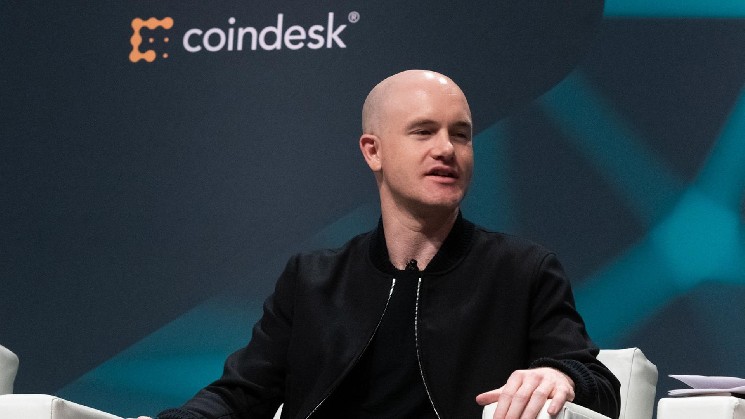
    • Coinbase CEO Brian Armstrong confirmed voting rights for token holders are “coming soon,” addressing a key requirement for parity with traditional shareholders.

    SEC Innovation Exemption Creates Onchain Pathway for U.S. Equities

    The U.S. Securities and Exchange Commission has unveiled a five-year innovation exemption that carves out a regulated framework for tokenized U.S. stocks to trade through automated market makers on public blockchains. The exemption mandates that tokens preserve core shareholder rights—specifically dividends and voting—while imposing constraints on trading venues, including limits on trading volume and the number of stocks they may offer. This targeted experiment signals a cautious but concrete step toward integrating traditional securities with decentralized market infrastructure.

    Goldman Sachs and Citizens Pinpoint Coinbase as Multi-Vector Beneficiary

    Analysts at Goldman Sachs project that Coinbase stands to benefit across multiple business lines as the tokenized-equity landscape matures. The firm’s existing tokenized-equity offering already aligns with many SEC requirements, featuring shareholder rights and dividends comparable to the underlying shares. Complementing this, Coinbase operates an institutional custody business and Coinbase Tokenize, a dedicated infrastructure service that enables other firms to bring assets onchain. Citizens analysts echoed this view, emphasizing Coinbase’s sprawling reach across custody, tokenized assets, stablecoins, and its Ethereum Layer 2 network, Base.

    Armstrong Confirms Voting Rights Rollout Imminent

    A critical piece of the compliance puzzle fell into place this week when Coinbase CEO Brian Armstrong stated that voting rights for token holders are “coming soon.” This development would bring tokenized-equity holders to functional parity with investors in the underlying shares, satisfying a core condition of the SEC’s exemption. The announcement underscores Coinbase’s proactive approach to meeting regulatory expectations ahead of broader market adoption.

    Robinhood and Circle Also Positioned for Upside

    While Coinbase commands the most detailed analyst coverage, the exemption’s ripple effects extend to other major players. Robinhood and Circle are cited as potential beneficiaries should the scope of tokenized U.S. securities expand beyond the current narrow pilot. Both firms possess the retail distribution, brokerage infrastructure, and stablecoin capabilities—particularly Circle’s USDC—that could prove pivotal in a scaled onchain equities market.

    Why This Matters

    The SEC’s innovation exemption represents the first formal U.S. regulatory acknowledgment that public blockchains can serve as legitimate venues for securities trading, albeit within strict guardrails. By requiring automated market makers to uphold dividend and voting rights, the regulator is attempting to bridge the investor-protection gap that has historically stalled tokenization efforts. For market participants, the five-year window offers a defined period to build compliant infrastructure, demonstrate demand, and lobby for permanent rulemaking. The involvement of custodians like Coinbase and stablecoin issuers like Circle suggests the emerging stack—custody, settlement, tokenization, and liquidity—is coalescing around a handful of regulated entities. Analysts will be watching trading-volume caps and stock-count limits closely; if these constraints bind quickly, pressure for legislative or rule-based expansion will intensify.

    Frequently Asked Questions

    What specific shareholder rights must tokenized stocks preserve under the SEC exemption?

    The exemption requires that tokenized stocks maintain dividends and voting rights equivalent to those of the underlying traditional shares.

    Which Coinbase business lines do analysts highlight as relevant to the tokenized-equity opportunity?

    Goldman Sachs and Citizens point to Coinbase’s existing tokenized-equity offering, institutional custody business, Coinbase Tokenize infrastructure platform, stablecoin operations, and the Base Layer 2 blockchain as key growth vectors.

    Are Robinhood and Circle expected to benefit immediately from the exemption?

    Analysts describe the current experiment as narrow, but note that Robinhood and Circle are well-positioned to benefit if the program expands to include more U.S. securities onchain.

  • Binance’s bStocks Adds 181K Asset Holders, Leading Adoption

    Binance’s bStocks Adds 181K Asset Holders, Leading Adoption

    Key Highlights

    • Binance’s bStocks added 181,000 new asset holders in seven days, outpacing Robinhood’s 148,700 additions.
    • The BNB Chain now commands a significant share of the tokenized stock market, signaling a shift in trader preferences.
    • Surge in tokenized stock adoption highlights growing demand for fractional ownership and digital asset alternatives.

    Binance bStocks Leads Tokenized Stock Surge with Record Holder Growth

    Binance’s tokenized stock product, bStocks, has established a commanding lead in the rapidly evolving digital asset sector, onboarding 181,000 new asset holders over the past week. According to data highlighted by Token Terminal, this growth trajectory significantly outpaces traditional fintech competitor Robinhood, which added 148,700 new holders during the same seven-day window. The milestone underscores a definitive migration of retail and institutional interest toward blockchain-based equity exposure, positioning the BNB Chain as a central infrastructure layer for tokenized traditional finance assets.

    Market Dynamics Shift as Tokenized Equities Gain Mainstream Traction

    The acceleration in bStocks adoption reflects a broader structural shift in how market participants access equity markets. Tokenized stocks offer distinct advantages over conventional share ownership, most notably fractional ownership capabilities that lower entry barriers for global investors. Binance has leveraged its regulatory positioning and the BNB Chain’s throughput capacity to capture this demand, effectively turning the chain into a primary settlement layer for tokenized equities. The platform’s ability to innovate within existing financial frameworks has allowed it to iterate faster than many Western-regulated counterparts, consolidating market share while competitors assess compliance roadmaps.

    Competitive Pressure Mounts on Traditional and Crypto-Native Platforms

    Robinhood’s substantial but secondary growth figures indicate that established fintech platforms are not ceding ground entirely, yet the velocity gap suggests a potential inflection point. As Binance deepens its bStocks catalog and liquidity pools, the competitive pressure on both traditional brokerages and other crypto exchanges to launch or expand tokenized equity offerings will intensify. Market observers note that the mixed signals in the broader cryptocurrency market—characterized by volatile token prices and shifting regulatory sentiment—create a complex backdrop where tokenized stocks emerge as a stable, yield-bearing use case for blockchain infrastructure.

    Why This Matters

    The rapid expansion of Binance bStocks signals that tokenized traditional assets are moving from experimental niche to scalable product-market fit. For the BNB Chain, capturing a dominant share of tokenized stock settlement validates its thesis as a high-performance financial infrastructure. For global regulators, the volume of non-U.S. retail participation via tokenized equities raises questions about investor protection, cross-border securities distribution, and the applicability of existing frameworks like MiCA or Reg S. For traders, the liquidity depth forming around these products may soon enable 24/7 equity exposure without reliance on legacy market hours or centralized clearinghouses. The next phase will likely involve expansion into tokenized ETFs, fixed income, and corporate actions processing on-chain.

    Frequently Asked Questions

    What are tokenized stocks and how do they differ from traditional shares?

    Tokenized stocks are blockchain-based digital representations of traditional equity shares. They enable fractional ownership, allowing investors to purchase portions of high-priced stocks, and typically trade on a 24/7 basis via crypto exchanges like Binance. Unlike traditional shares held in centralized brokerage accounts, tokenized stocks settle on-chain—on networks such as BNB Chain—providing transparent, near-instant finality.

    Why is Binance outperforming Robinhood in new tokenized stock holders?

    Binance’s bStocks benefits from the exchange’s global user base, the BNB Chain’s low transaction costs and high throughput, and a regulatory approach that has permitted faster product iteration in tokenized equities. Robinhood, while adding significant holders, operates under stricter U.S. securities regulations that limit the scope and speed of tokenized asset deployment.

    What role does the BNB Chain play in the tokenized stock ecosystem?

    The BNB Chain serves as the primary settlement and infrastructure layer for Binance’s bStocks products. Its significant market share in tokenized stock trading volume reflects the chain’s capacity to handle high-frequency, low-cost transactions required for equity token liquidity. This positions BNB Chain as critical financial infrastructure bridging traditional capital markets and decentralized technology.

  • Solana Tokenized Stock TVL Surges to $87.4M Amid DeFi Boom

    Solana Tokenized Stock TVL Surges to $87.4M Amid DeFi Boom

    Solana DeFi Growth Accelerates as Tokenized Stock TVL Hits $87.4 Million

    Solana is making significant strides in the decentralized finance sector, with its total value locked (TVL) in tokenized stocks reaching $87.4 million, according to data highlighted by CryptoTwitter commentator @tokenterminal. This marks a substantial increase from previous levels and signals burgeoning interest in tokenized assets within Solana’s ecosystem.

    Solana Captures 35.2% of Tokenized Stock Market

    The surge reflects a broader DeFi trend where innovative financial products are attracting fresh capital. As of the latest data, Solana accounts for approximately 35.2% of the total TVL in tokenized stocks, underscoring its critical role in this segment.

    This growth is particularly noteworthy because the total value locked across all tokenized stocks in DeFi has skyrocketed by over 1,960% in the past year, reaching $247.8 million. The dominance of chains like Solana, Robinhood, and BNB Chain—which collectively hold 89.5% of this market—highlights the increasingly competitive landscape in decentralized finance.

    Why Solana’s Infrastructure Matters for Tokenized Assets

    Solana is a blockchain platform designed for decentralized applications, facilitating fast and low-cost transactions. Its architecture within the DeFi ecosystem is significant, as its infrastructure supports a variety of tokenized assets, positioning it as a key player in the evolving financial landscape. The ongoing growth in Solana’s stablecoin supply further cements its position as a critical player in emerging markets.

    Key Levels for Traders to Monitor

    Market participants should keep a close eye on Solana’s developments in the DeFi space, especially as it continues to attract significant capital into tokenized stocks. With TVL rising, analysts may look for potential resistance levels around $90 million as a significant benchmark.

    The growing interest in Solana’s ecosystem may also lead to increased volatility, making it essential for traders to monitor not only price movements but also broader market sentiment.

    Data referenced in this article is based on current market trends and on-chain metrics.

  • Robinhood CEO says issuers should not have veto over tokenized stocks

    Robinhood CEO says issuers should not have veto over tokenized stocks

    Robinhood CEO Vlad Tenev argued Friday that companies should not hold veto authority over tokenized stock products that leave shareholder rights, issuer obligations, and official stock ledgers unchanged.

    In a post on X, Tenev framed the issue of issuer consent around whether a tokenized product alters the rights attached to underlying shares or creates new obligations for the company or its transfer agent. If it does, he stated the issuer should be involved. However, Tenev contended that if the product creates a separate financial instrument holding or referencing freely transferable shares without changing the issuer’s rights, obligations, or shareholder record, consent should not be required.

    Response to AMC Entertainment Criticism

    The comments followed criticism from AMC Entertainment CEO Adam Aron on Sept. 4. Aron said AMC had no affiliation with Robinhood’s tokenized stock offerings and would ask securities counsel to review them.

    Tenev explained that Robinhood Stock Tokens use a third-party structure with separately issued instruments backed 1:1 by underlying shares. The products provide economic exposure to stocks and exchange-traded funds without altering an issuer’s cap table or the rights attached to its shares.

    “Going onchain shouldn’t give the issuer a veto it never had offchain,” Tenev said.

  • AMC CEO Challenges Robinhood’s 1:1 Token Backing Claim

    AMC CEO Challenges Robinhood’s 1:1 Token Backing Claim

    AMC CEO Adam Aron Challenges Robinhood’s 1:1 Stock Token Backing Claims

    AMC Entertainment CEO Adam Aron has publicly questioned whether Robinhood’s stock tokens maintain true one-for-one backing if the underlying shares are lent to short sellers. In a series of posts on X dated Sept. 12–13, Aron directed pointed questions to Robinhood CEO Vlad Tenev and Chief Legal Officer Dan Gallagher, following their recent public defense of the company’s tokenized stock products.

    Aron Calls Stock Token Model “Abhorrent”

    In his latest post, Aron called the stock token model “abhorrent” and argued that it conflicts with the purpose of public share ownership. He questioned whether customers could misunderstand the rights attached to the products when Robinhood promotes them using the names and prices of listed companies.

    “If those tokens are theoretically backed 1:1 by real shares, but hypothetically some of those underlying real shares are in turn lent out to short sellers, are the tokens really backed 1:1 in fact?”

    Aron wrote. The question concerns the assets Robinhood holds against its token liabilities. Robinhood’s stock token documentation says Robinhood Assets Jersey Limited issues tokenized debt securities that provide economic exposure to an underlying security.

    How Robinhood’s Stock Tokens Work

    Robinhood says each public-company stock token is backed by a corresponding share. Its documents do not say that the token itself represents legal ownership of the underlying equity. A token holder instead holds a claim against the Jersey issuer. Aron did not cite Robinhood records, custody statements, or onchain evidence showing that the corresponding shares had been lent. His post asked Robinhood to disclose how the backing operates if securities lending occurs.

    Token Holders Lack Shareholder Rights

    Under Robinhood’s structure, the investor receives exposure to movements in the referenced stock’s price. The product can account for distributions such as dividends, but the holder does not appear on the public company’s shareholder register. Token owners lack voting rights attached to the referenced shares. Robinhood’s Key Information Document characterizes the product as a derivative and identifies Robinhood Assets Jersey Limited as its manufacturer.

    The document warns that investors depend on the issuer’s ability to meet its obligations. Ownership of a token therefore differs from direct ownership of AMC common stock, even when the token’s value tracks an AMC share.

    European Rollout and U.S. Regulatory Questions

    Robinhood introduced stock tokens for European customers as part of an international expansion announced in 2025. The company later connected the product line with Robinhood Chain, its blockchain network for tokenized assets. The products are not offered to U.S. persons. Robinhood’s expansion announcement says the stock tokens are issued through Robinhood Assets Jersey Limited and provide exposure to U.S.-listed securities.

    Aron questioned why Robinhood’s U.S. website promotes the concept when domestic customers cannot purchase the products. He described the Jersey structure as an offshore operation designed to function outside U.S. securities laws. Robinhood has not accepted that description.

    Tenev: Companies Cannot Veto Referenced Tokens

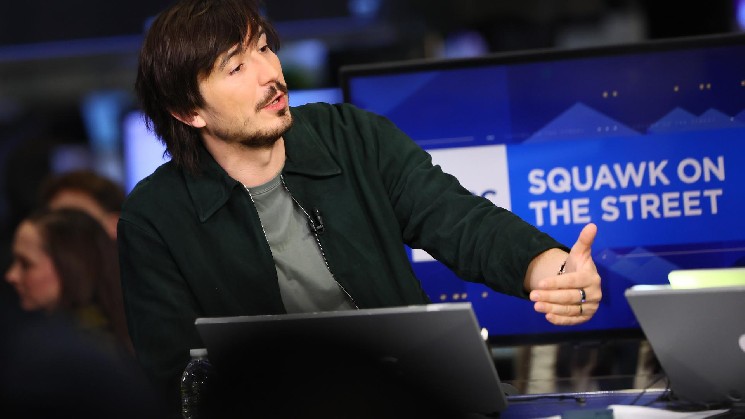
    Tenev defended the stock token model during a Sept. 9 CNBC “Squawk Box” interview. He argued that issuers control the rights and duties attached to shares they issue but do not control every separate financial product referencing their stock.

    “Issuers should have control and do have control over the rights and obligations of the stock that they issue, but that doesn’t mean they control everything about it,”

    Tenev said. Tenev stated that issuer consent “depends on what exactly you’re doing.” He maintained that Robinhood’s products “should not automatically require issuer consent,” although no cited court or U.S. regulatory decision has settled that position for Robinhood’s structure. Aron previously said AMC did not authorize, endorse, or participate in the creation of its referenced token. In a prior statement, he called on Robinhood to stop offering the product and said AMC would consult securities lawyers about possible legal and regulatory action.

    Gallagher Rejects AMC Demand

    Gallagher rejected the demand publicly.

    “We know a little something about the U.S. securities laws and will not ‘DECIST,’”

    he wrote on X, reproducing a misspelling in Aron’s earlier post. Gallagher invited AMC to send its lawyers. No public lawsuit filed by AMC over Robinhood’s stock tokens had been identified by Sept. 13. The U.S. Securities and Exchange Commission had not announced an enforcement action involving the AMC-linked product.

    Share Lending and Voting Remain Open Questions

    Robinhood’s public material explains how token prices follow referenced securities, but its available summaries provide limited detail about the custody and possible lending of each backing share. Aron’s latest post asks the company to state whether reserve shares are kept unencumbered or can enter securities-lending transactions.

    A securities loan transfers shares temporarily to a borrower under a separate agreement. Aron’s hypothetical question does not establish that Robinhood uses this arrangement for stock token collateral. A direct answer would require information from Robinhood or its custodian concerning the treatment of reserve shares.

    The company has not published a token-by-token reserve register showing where each corresponding share is held. Its stock token documentation identifies the issuer and product mechanics but does not give token holders direct voting control over the referenced equity. Robinhood therefore controls, directly or through its custody structure, any voting power connected to the underlying shares. Tenev has not announced how votes attached to stock token collateral are exercised.

    Regulatory Warnings and Comparable Cases

    European regulators have raised separate concerns about products that track shares without transferring legal ownership. The European Securities and Markets Authority has warned that tokenized instruments may create investor confusion when buyers do not receive the governance rights attached to conventional shares, Reuters reported.

    OpenAI raised a comparable ownership distinction in 2025 after Robinhood promoted a token tied to the private company. OpenAI said the instrument was not its equity and had not received the company’s endorsement, according to Reuters.

    Robinhood Maintains 1:1 Backing Description

    Robinhood maintains that its tokens can give eligible international customers economic exposure to U.S. securities. The company is developing Robinhood Chain to support tokenized assets, while crypto.news reported that its architecture creates a revenue stream for Arbitrum through chain-related fees.

    As of Sept. 13, Robinhood continued to describe its public-company tokens as one-for-one backed. Neither Tenev nor Gallagher had publicly answered Aron’s specific question about whether shares assigned to that backing may be lent to short sellers.

  • Robinhood CEO: Companies Should Not Hold Veto Power Over Stock Tokens Amid AMC Feud

    Robinhood CEO: Companies Should Not Hold Veto Power Over Stock Tokens Amid AMC Feud

    Robinhood’s Tenev and AMC’s Aron Clash Over Synthetic Equity Products

    A public disagreement between Robinhood Markets CEO Vlad Tenev and AMC Entertainment CEO Adam Aron highlights a growing tension in financial markets over how traditional stocks are represented on blockchain networks. The dispute centers on whether companies should control financial products that reference their shares without altering the underlying securities.

    The Core Disagreement

    Tenev argues that issuer consent should not be required for products that merely reference existing shares. In a written statement, he drew a clear line between synthetic instruments and products that modify the shares themselves:

    “If it creates a separate financial instrument that holds or references freely transferable shares without changing the issuer’s rights, obligations, or authoritative shareholder record, issuer consent should not be required,” Tenev wrote.

    Aron takes a sharply different view. He has characterized Robinhood’s offering as a “fictitious synthetic equity market” and warned that such products could undermine AMC’s ability to raise capital, confuse investors about their rights, and create a market using the AMC name without corporate consent.

    Existing Market Precedents

    Tenev countered that current markets already permit similar structures. He pointed to options contracts, unsponsored American depositary receipts (ADRs), and structured products as examples of instruments that reference public shares without granting the underlying company control over the derivative product.

    However, Tenev acknowledged a boundary where issuer involvement becomes necessary. He specified that products altering shareholder rights, replacing the official stock ledger, or creating new obligations for the issuer or its transfer agent should require company approval:

    “If a product purports to change the rights attached to the underlying shares, replaces the company’s official stock ledger, or imposes new obligations on the company or its transfer agent, the issuer should be involved,” he wrote.

    Broader Implications for Tokenized Assets

    The debate extends beyond the two companies. Financial firms are actively exploring multiple approaches to bringing stock exposure onto blockchains. These range from synthetic derivatives and custodial arrangements holding conventional shares to issuer-backed securities recorded directly on distributed ledgers. The outcome of disputes like this one could shape regulatory frameworks and market standards for tokenized assets going forward.

  • Robinhood Crypto Trading Volume Jumps 61% in August

    Robinhood Crypto Trading Volume Jumps 61% in August

    Robinhood Crypto Volume Surges 61% in August, but Prediction Markets Steal the Show

    Robinhood Markets reported a sharp rebound in cryptocurrency trading activity during August, though the standout growth story remains its rapidly expanding prediction market business.

    Crypto Trading Rebounds From July Lows

    Notional crypto trading volume—the total dollar value of assets bought and sold on the platform—jumped 61% month over month to $17.5 billion in August, according to operating data released Thursday. The increase follows a sluggish July, when volume sat at $10.9 billion.

    Despite the monthly gain, August volume remained 38% below the $28.1 billion recorded in the same month last year, highlighting the persistent year-over-year decline in retail crypto engagement.

    Platform Breakdown: App vs. Bitstamp

    • Robinhood App: $7.4 billion in volume, up 72% from July but down 46% year over year.
    • Bitstamp: $10.1 billion in volume, up 53% month over month. Robinhood acquired the exchange in 2025.

    Combined, the two platforms averaged $565 million per day in crypto trading volume during the month.

    Broader Platform Metrics Show Strength

    Crypto represents a small slice of Robinhood’s overall balance sheet. Key platform-wide figures for August include:

    • Total platform assets: $384 billion, up 26% year over year.
    • Funded customers: 28.6 million (users with at least one transaction in the trailing 45 days).
    • Margin loans: $21.5 billion, up 72% from a year ago.

    Event Contracts Emerge as Breakout Business

    The most striking growth metric isn’t crypto at all. Event contracts—Robinhood’s prediction market bets on outcomes like Federal Reserve rate decisions or sports results—traded 4.7 billion times in August.

    While that represents a 23% decline from July, it marks a roughly 15-fold increase from the 300 million contracts traded in August 2025. Each contract functions as a binary wager: buy a “yes” for a few cents, and it pays $1 if correct, zero if wrong.

    That explosive growth has turned prediction markets into Robinhood’s fastest-growing revenue line. In the company’s record quarter reported in July, event contract revenue surged more than tenfold year over year to $156 million, overtaking crypto as a source of transaction income.

    Infrastructure and Partnerships

    Robinhood operates these products through partner exchanges Kalshi and ForecastEx, as well as its own joint venture Rothera. As of the July earnings report, Rothera had processed more than 3.5 billion contracts since its June launch.

    Regulatory Scrutiny Intensifies on Capitol Hill

    The rapid rise of prediction markets has drawn legislative attention. Since January, lawmakers have introduced more than 10 bills targeting the sector, including the PREDICT Act, which would prohibit members of Congress, the president, and other senior officials from trading contracts tied to political events.

    Critics argue that placing sports and political wagers alongside retirement accounts blurs the line between investing and gambling—a tension regulators are still working to resolve.

    Robinhood Chain Gains Traction on Ethereum Layer 2

    The company’s blockchain bet is also accelerating. Robinhood Chain, an Ethereum Layer 2 network designed to process transactions faster and cheaper before settling to the mainnet, logged $1.6 billion in daily trading volume on decentralized exchanges as of September 1—a 61% increase in just four days.

    Market Reaction and Upcoming Catalysts

    Despite the strong operating data, Robinhood shares (HOOD) slipped 0.83% on Thursday. Analysts at Mizuho and StoneX raised their price targets this week, citing the company’s broader growth trajectory.

    Robinhood’s next quarterly earnings report is expected November 4.

  • Breaking: Official Statement on Altcoin Triggers Volatility Spike

    Breaking: Official Statement on Altcoin Triggers Volatility Spike

    Pump.fun, the Solana-based platform known for streamlined token creation and memecoin trading, appears to be broadening its scope. On-chain data reveals the emergence of new trading pairs linked to traditional equities, signaling a potential pivot toward tokenized stock exposure.

    Stock-Linked Pairs Surface on Pump.fun

    Blockchain analytics indicate that currency pairs referencing stock prices have begun appearing on the Pump.fun interface. The platform has not yet issued a comprehensive official statement clarifying the nature of these assets. It remains uncertain whether the listings represent directly tokenized shares or synthetic derivatives that track equity price movements on-chain.

    Sector Momentum Builds Around Tokenized Equities

    The development coincides with accelerating interest in tokenized share products across the digital asset industry. Robinhood has rolled out tokenized stock offerings for European users, while xStocks, a venture linked to Kraken, is expanding in the same vertical. Additionally, the London Stock Exchange Group (LSEG) recently announced plans to develop blockchain-based representations of UK shares in partnership with Payward, the parent company of Kraken.

    PUMP Token Reacts with Heightened Volatility

    Following the appearance of the equity-linked pairs and the broader wave of tokenized stock announcements, the native PUMP token experienced a notable increase in trading volatility. Market participants are closely monitoring whether the integration represents a permanent product expansion or a limited test deployment.