Tag: Restaurant industry

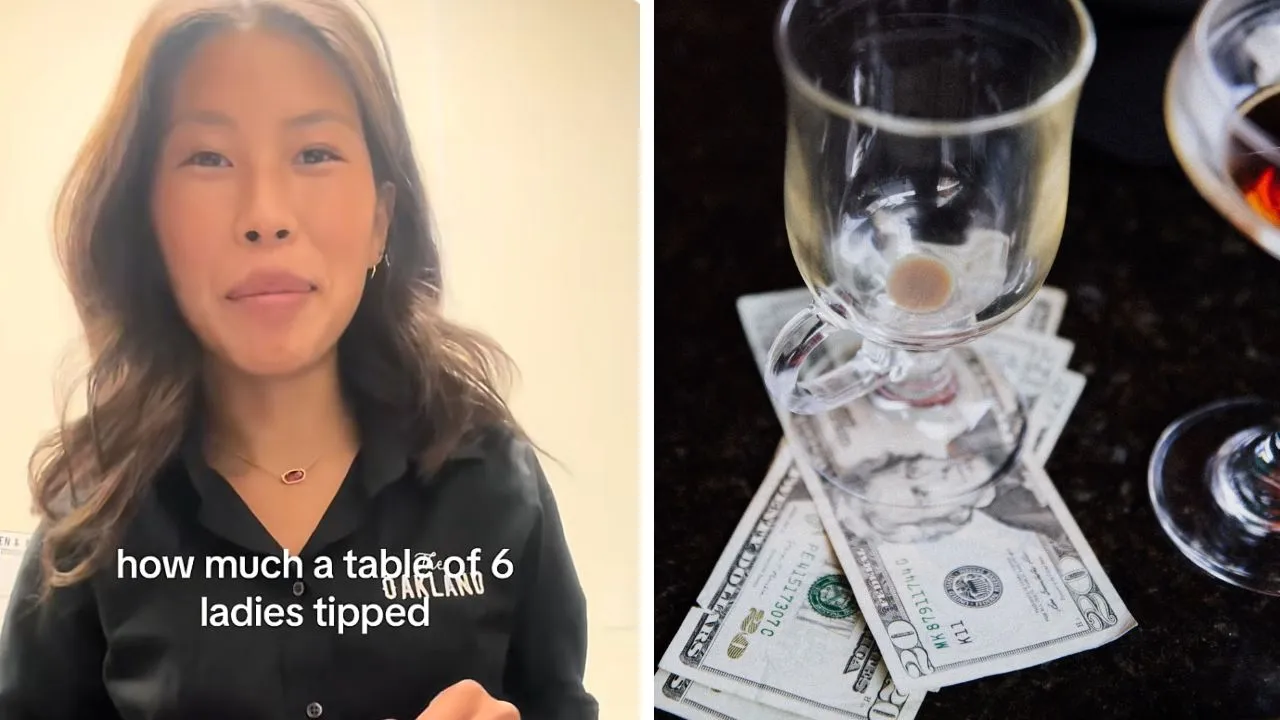
  • ‘Doctors Don’t Get a Tip, Why You Want Tips?’: Server Says She’d Prefer 20% Tip After Table of 6 Women Leaves Little

    ‘Doctors Don’t Get a Tip, Why You Want Tips?’: Server Says She’d Prefer 20% Tip After Table of 6 Women Leaves Little

    Key Highlights

    • TikTok creator @Andjjj.7 posted a video on May 8, 2025, showing itemized tips from a table of six women, revealing multiple $0 tips on bills ranging from $32 to $60.
    • The video amassed 12.7 million views, 802,500 likes, and 21,700 comments, igniting a polarized debate over tipping expectations versus earned gratuity.
    • A separate viral clip from creator @lovee.leahh_ captured a retail customer refusing a tip prompt with “Hell no!” — further fueling the national conversation on tip fatigue.

    Server’s Itemized Receipt Breakdown Sparks Massive Tipping Debate

    TikTok user @Andjjj.7 — identified in the video as a server in restaurant uniform — uploaded a clip on May 8, 2025, that has since garnered 12.7 million views, 802,500 likes, and 21,700 comments. In the video, she flips through six separate checks from a single table of six women, narrating the tip amount left on each. The first bill, $51, carried a $9 tip. The second, $32, received $0. The third, $55, also received $0. The fourth, $60, left a $6 tip. A $21 bill yielded a $7 tip, and a final $23 bill left $4. Summarizing the experience, she stated directly to the camera:

    “I am grateful for any tip but will prefer 20 percent.”

    The on-screen caption accompanying the post read:

    @andjjj.7 their bill was $250. tipping culture may have gotten out of hand but I didn’t know we’re normalizing no tips. ♬ original sound – Andj

    Comment Section Erupts With Divergent Views on Gratuity Norms

    The comment section quickly became a battleground for opposing philosophies on tipping culture. One user challenged the expectation of tips altogether, writing:

    “doctors dont get a tip; why u want tips? Bruh.”

    Another commenter echoed the sentiment that gratuity should reflect service quality, not obligation:

    “You earn tips not expect them.”

    A third contributor offered a detailed personal anecdote illustrating a performance-based approach:

    “There’s only been one time I haven’t tipped a server and it was because he never refilled my drink. there was no one else in the restaurant to serve I gave him the change he brought me back which was like 9cents. I’ll give a $20 tip on a $50 total just because the server was amazing. you leave me to eat without a drink to wash it down your getting Pennies.”

    Yet another voice acknowledged systemic issues while defending the practice of tipping service workers:

    “I get that the tipping culture is getting out of hand but not tipping servers is crazyyyyyy.”

    Parallel Viral Moment: Retail Tip Prompt Rejection Goes Viral

    The discourse gained additional momentum from a separate TikTok posted by creator @lovee.leahh_ (Leah Danzy), which documented a confrontation at a mall retail counter. In the clip, a female customer completes a purchase when the shop employee asks twice, “Do you want to tip?” The customer responds emphatically:

    “Hell no!”

    She continues, “No tip.” After the shopkeeper replies, “Ok! I just asked,” the customer counters, “I know, and I just told you,” and begins walking away. She adds, “Thank you! Have a good day,” then turns toward the camera and appears to address the person filming:

    ‘They are talking about f—- tip,’

    before the video ends. Danzy captioned the post: “I still can’t get over this? Ariel was so embarrassed #fypシ゚viral #fyp #grandmagonewild ♬ original sound – Leah Danzy.”

    Why This Matters

    The dual viral moments underscore a growing cultural flashpoint in the United States: the expansion of tip prompts beyond traditional full-service dining into counter service, retail, and self-checkout environments. While the federal tipped minimum wage remains $2.13 per hour in many states — making tips essential income for servers — consumers increasingly report “tip fatigue” amid inflation and ubiquitous digital prompts. The @Andjjj.7 video highlights the tension between servers who depend on 20% gratuity as a professional standard and diners who view tipping as discretionary or excessive. Meanwhile, the @lovee.leahh_ clip illustrates how tip requests in non-service contexts can provoke hostility. Neither TikTok experience has been independently verified by The Daily Dot, but together they reflect a nationwide debate over who should be tipped, how much, and whether the burden of fair wages should fall on customers or employers.

    Frequently Asked Questions

    What were the exact tip amounts left by the table of six women in the @Andjjj.7 video?

    The server showed six checks: $51 bill with $9 tip; $32 bill with $0 tip; $55 bill with $0 tip; $60 bill with $6 tip; $21 bill with $7 tip; $23 bill with $4 tip. The total bill was approximately $250.

    How did the retail customer in the @lovee.leahh_ video respond when asked to tip?

    The customer said “Hell no!” and “No tip.” After the employee said “Ok! I just asked,” she replied “I know, and I just told you,” wished them a good day, and told the camera, “They are talking about f—- tip.”

    Has The Daily Dot verified the events shown in these TikTok videos?

    No. The Daily Dot explicitly stated it was “unable to independently verify the experiences described by commenters on this video” and noted the details reflect the creators’ stated views and commenters’ individual accounts as shared on TikTok.
  • Woman Defends Tipping Culture Despite Making Just $5 an Hour: ‘The Money Can Be Really Good’

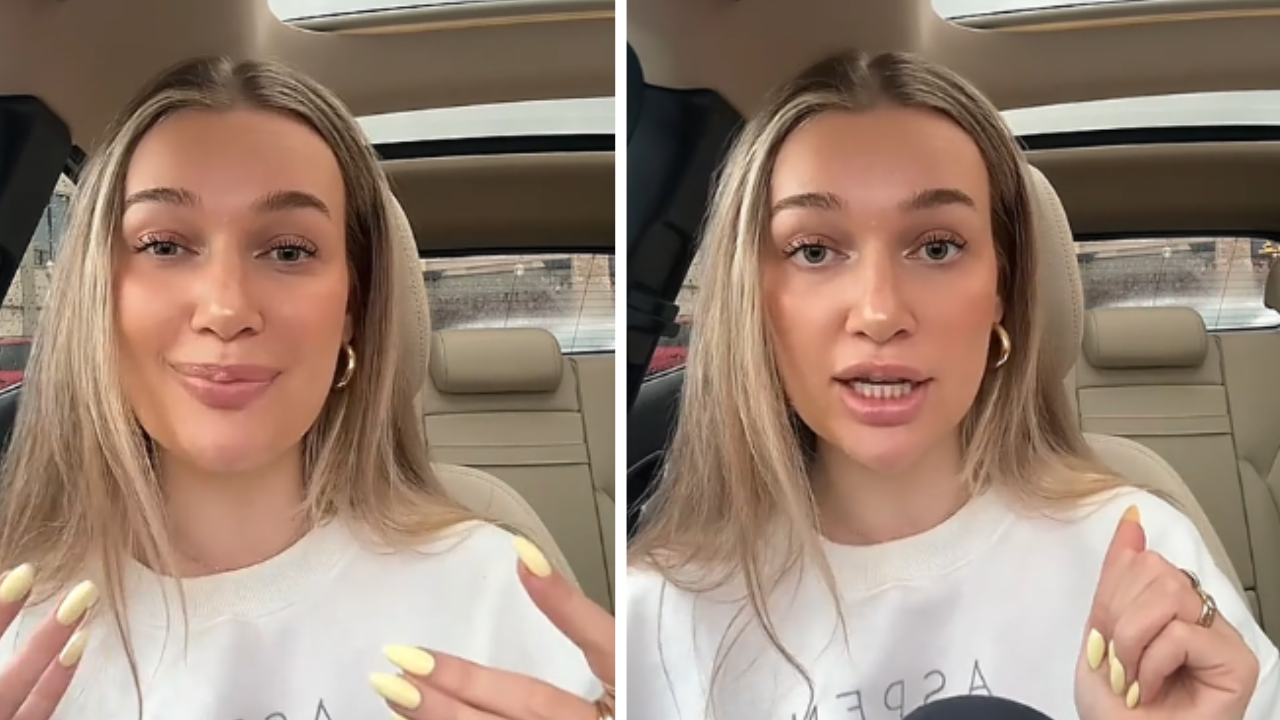
    Woman Defends Tipping Culture Despite Making Just $5 an Hour: ‘The Money Can Be Really Good’

    A TikTok video from bartender Dana May, known as @ayedanamay, has reignited the debate over tipping culture in the United States. The clip, which had garnered 24,900 likes and 1,125 comments at the time of reporting, captures May explaining why she believes tipping remains essential — both for service workers and for consumers’ wallets.

    The Economics Behind a $5 Hourly Wage

    May earns a base pay of just $5 per hour at her bartending job. Like many tipped employees, she relies on customer gratuities to make a living wage. She argues that without tips, restaurants would be forced to raise menu prices significantly to cover higher labor costs, ultimately passing the expense to diners anyway.

    “In a perfect world, the restaurant would pay her a living wage,” the video narrative explains, “she believes that isn’t realistic.” May contends that eliminating tipping would not lower costs for customers; instead, it would shift the burden directly onto the bill.

    Anticipating Backlash

    May acknowledged she expected criticism for her stance. She emphasized that her low base wage is not her fault and that tips allow her to support herself. She also noted that bartending can be financially rewarding when tipping culture functions as intended. However, she warned that a widespread rejection of tipping could fundamentally alter the restaurant industry’s economy, affecting both workers and patrons.

    TikTok Commenters Split on Tipping Obligations

    The comments section reflected deep division. Some users outright rejected the expectation to tip.

    “I never tip, it’s not required,”

    one commenter wrote. Another challenged:

    “Show me that tipping is mandatory.”

    May replied directly, calling the opinion “brave” to share publicly.

    Others pointed out that food prices are rising regardless of tipping practices, suggesting higher bills are inevitable. Fellow service workers weighed in with support for May’s perspective.

    “As a bartender, if we were paid a “livable wage” and tipping wasn’t a thing anymore, I would not be in the industry anymore. You think I’m getting paid ~$15/hr to be HARASSED by MEN??,”

    one commenter stated, highlighting the non-monetary challenges of the job that tips help offset.

    Broader Implications for the Service Industry

    The discourse underscores a national tension: how much responsibility should fall on customers to compensate service staff? While May and other industry workers view tips as a critical component of their income — and a mechanism that keeps base menu prices lower — a growing segment of diners questions the fairness of a system that shifts wage obligations onto patrons.

    The Daily Dot was unable to independently verify the details described in the TikTok video. The information above is based solely on Dana May’s account of her experience and views on tipping culture.

  • Man Mocks Unrealistic Expectations at Minimum Wage Jobs: ‘We’re Going to Skip Your Break’

    Man Mocks Unrealistic Expectations at Minimum Wage Jobs: ‘We’re Going to Skip Your Break’

    TikTok Creator Mocks Unrealistic Minimum-Wage Job Expectations in Viral Video

    TikTok user @tyronereid shared a satirical video highlighting the unreasonable demands some employers place on minimum-wage workers. The clip has garnered 37,500 views and 70 comments, with many viewers stating the exaggerated scenarios hit uncomfortably close to home.

    Video Depicts Exaggerated—Yet Familiar—Workplace Scenarios

    The video features Tyrone portraying a boss or supervisor at a minimum-wage job delivering increasingly absurd directives. He says things like:

    “It’s actually kind of busy, so I think we’re going to skip your break for today. Yeah, sixteen hours straight of work,”

    “You finish at two in the morning, do you? Okay, we’re going to need you back for a four a.m. start tomorrow,”

    “I know you have college next week, but I decided to put you on for eighty hours. I hope that’s alright.”

    He continues to joke about the way some employers treat stressed workers—piling on more hours and assigning the most complicated customers. Restaurant-specific scenarios include a table of 42 people walking in and another table ordering 28 coffees, each with different syrups. While hyperbolic, the sketches reflect situations workers say they genuinely encounter.

    Commenters Share Relatable Workplace Experiences

    The comment section quickly filled with viewers sharing their own stories. One person challenged the premise:

    “Now do an exaggerated one,”

    Another commenter framed minimum-wage work as a lesson in self-advocacy:

    “These jobs are amazing for learning to say no, and standing up for yourself in the workplace,”

    Several users described experiences mirroring Tyrone’s sketches. One wrote:

    “I work at a PIZZA PLACE. I am an 18 year old shift lead and I was told that my availability was an inconvenience because I have school TWO… ONE TWO days a week and can’t come in until NOON on those days. We open at 9. Like…”

    Another added:

    “I used to work 35 hours a week and then all of a sudden worked 20. No notice whatsoever.”

    Multiple commenters said Tyrone’s exaggerated scenarios reflected real conditions they had faced on the job.

    The Daily Dot was unable to independently verify the workplace experiences described by commenters. The details of the video above are based on Tyrone’s account shared on TikTok under the username @tyronereid.