Tag: Relationships

  • TikTok Woman Explains ‘Grass Is Greener’ Effect in Relationships: ‘I Want What She Has’

    TikTok Woman Explains ‘Grass Is Greener’ Effect in Relationships: ‘I Want What She Has’

    Key Highlights

    • TikTok creator Lyss (@lyssokada) viral video with over 605,500 views argues women often desire a friend’s partner only after seeing the relationship publicly displayed as happy and fulfilling.
    • She describes a “grass is greener” effect where perceived desirability shifts once a man is shown “buying flowers,” “going on vacations,” and making his partner happy on social media.
    • Commenters validated the theory, citing psychological projection, lifestyle envy, and competitive dynamics—with some admitting they keep relationships private to avoid this dynamic.

    TikTok Creator Lyss Breaks Down the ‘Grass Is Greener’ Relationship Dynamic

    TikTok user @lyssokada, known as Lyss, has ignited a widespread conversation about relationship visibility and female competitiveness with a video amassing over 605,500 views and nearly 1,000 comments. In the clip, she articulates a theory she believes is under-discussed: that some women become interested in a friend’s partner specifically because that partner is already in a happy, visible relationship with the friend.

    The Core Argument: Visibility Creates Desirability

    Lyss contends that a man’s perceived attractiveness can fundamentally shift once another woman witnesses him actively investing in a relationship. She argues the interest isn’t necessarily rooted in the man’s inherent qualities, but in the validated lifestyle he represents.

    “I think one of the craziest things in the world, and we don’t talk about it enough, is how women will only want your man because he’s your man.”

    She clarifies that these men may not have been overlooked previously, but their market value appears to inflate once they are “claimed” and demonstrated as a devoted partner.

    “Before they knew that, like, you were with him and you were happy and he was doing everything for you and everything was great. Nobody was really checking for him.”

    According to Lyss, the catalyst is the public performance of relationship success—flowers, vacations, date nights, and social media posts depicting happiness.

    “Now that they know that you are with him, now that you’re posted up happy with him, now that he’s buying you flowers and he’s making you happy and you’re going on vacations and going on date nights, all of a sudden he looks so attractive to other women. Like they see another pretty girl that’s happy and smiling and they’re like, ‘I want what she has.’”

    Social Media as an Accelerant for Comparison

    Lyss suggests platforms like TikTok and Instagram amplify this phenomenon by curating a highlight reel of romantic partnership. The constant visibility of “happy couples” creates a benchmark that triggers competitive desire rather than genuine connection. She frames it as a subset of broader female competitiveness, where the goal becomes replicating the friend’s perceived happiness by acquiring the same partner.

    Community Response: Validation, Psychology, and Privacy Strategies

    The comment section evolved into a forum for shared experiences and psychological analysis. Many users agreed the desire often targets the lifestyle and emotional fulfillment on display, not the individual man.

    “Some women don’t really want your man, they just wanna BE YOU & have your life. Thats why I never make my love life public.”

    Another commenter framed it through a psychological lens, describing a projection mechanism where observers insert themselves into the observed dynamic.

    “It’s a psychological thing. People see you with that person and picture themselves with your life. Therefore they go for what you have. This is why you keep things private.”

    A third perspective highlighted the relational insult embedded in the behavior: the implication that the pursuer believes she could “win” the partner if she chose to, implicitly devaluing the friend.

    “It’s kind of insulting tbh cause they’re basically saying in their mind ‘I could have him too if I wanted him,’ basically insinuating that they’re better than their ‘friend’ or the girl.”

    Discussion also touched on the fragility of friendships when comparisons are fueled by curated online personas, where only the positive aspects of a relationship are visible.

    Why This Matters

    The viral discourse around @lyssokada’s theory reflects a growing cultural awareness of how social media distorts relational dynamics. As platforms incentivize the public performance of intimacy—through “soft launches,” couple aesthetics, and milestone documentation—the boundary between sharing joy and inviting comparison erodes. This phenomenon intersects with established psychological concepts like mate-choice copying and social proof, where observed desirability increases perceived value. For users, the takeaway is practical: curating relationship visibility may be a necessary boundary-setting tool. For researchers and cultural observers, it signals a shift in how digital natives navigate trust, envy, and friendship in an algorithmically amplified social landscape. The Daily Dot notes it could not independently verify the experiences shared, which remain Lyss’s personal perspective—underscoring that viral discourse often elevates anecdote to cultural touchstone.

    Frequently Asked Questions

    Who is Lyss and what platform is she on?

    Lyss (@lyssokada) is a TikTok content creator whose video explaining the “grass is greener” effect in relationships garnered over 605,500 views and 946 comments. The video was reported on by The Daily Dot.

    What is the ‘grass is greener’ effect she describes?

    Lyss argues that some women only become interested in a friend’s partner after seeing the relationship publicly displayed as happy and fulfilling—complete with gestures like flowers, vacations, and date nights. She believes the visibility of the partner’s devotion and the friend’s happiness triggers a desire to possess that same validated lifestyle, summarized by the phrase: “I want what she has.”

    Why do commenters suggest keeping relationships private?

    Many TikTok users in the comments agreed with Lyss and shared that they intentionally avoid posting their partners or relationship milestones to prevent attracting unwanted attention, envy, or pursuit from friends or acquaintances who may view the relationship as a template to replicate rather than a bond to respect.

  • Commenters Name Hobbies Most Likely to End a Relationship, From Content Creation to World of Warcraft

    Commenters Name Hobbies Most Likely to End a Relationship, From Content Creation to World of Warcraft

    Key Highlights

    • A viral Reddit thread on r/AskReddit with over 7,100 upvotes identifies golf, gaming, fitness regimens, and social media content creation as hobbies most frequently cited for ending relationships.
    • Commenters consistently emphasize that the core issue is not the hobby itself, but the obsessive devotion of time, attention, and financial resources that displaces partner and family priorities.
    • The Daily Dot was unable to independently verify the personal anecdotes shared in the thread, which represent the opinions of individual Reddit users.

    Viral Reddit Thread Sparks Relationship Debate

    A September 24 post on r/AskReddit posed a straightforward question: “Which hobby has ended more relationships than people realize?” The thread rapidly gained traction, amassing 7,100 upvotes and nearly 5,000 comments by publication time. Redditors responded with a wide spectrum of answers ranging from golf and gaming to marathon training, social media, and even K-pop fandom, creating a crowdsourced catalogue of domestic friction points.

    Golf Emerges as Top Relationship Strain

    Golf dominated the discussion as one of the most common answers. Multiple Redditors described partners who spent entire days on the course, regularly leaving spouses or children for hours at a time. One commenter illustrated the dynamic by sharing that their friend’s husband spent so much time golfing that she felt as if she were a “side piece” in their marriage. Another recounted a particularly stark example: a woman whose husband chose to attend a golf tournament instead of her father’s funeral. A commenter summarized the broader pattern by writing, “Sports to a fanatical degree,” describing an ex who had missed family milestones due to his obsession.

    Gaming and Financial Secrecy Drive Breakups

    Online gaming, particularly World of Warcraft, generated thousands of upvotes. Stories included a marriage that ended after the husband spent most of his honeymoon playing the MMORPG. Financial secrecy emerged as a compounding factor: one user explained she discovered her husband had spent approximately $15,000 in three months on microtransactions for a mobile game. She noted the financial secrecy was more damaging to the relationship than the spending itself.

    Fitness Obsession and Competitive Training Create Distance

    Fitness regimens appeared repeatedly, with specific references to CrossFit, Brazilian jiu-jitsu, and endurance racing. One person described a friend who escalated marathon running after having children. Another detailed their partner’s progression from a half-Ironman to more demanding races, which required significantly increased training hours that encroached on family time.

    Social Media Content Creation Invades Quality Time

    Content creation for social media platforms surfaced as a frequent source of tension. One commenter explained how every dinner or walk could transform into an hour-long photo shoot because their partner was obsessed with going viral. In another case, a relationship deteriorated during holidays and vacations, as the partner prioritized content creation over shared experiences.

    The Underlying Pattern: Obsession Over Balance

    Beyond specific activities, commenters identified hobbies that seem harmless but become disruptive when they consume disproportionate attention. Examples included K-pop fandom, car enthusiasm, fishing, and even volunteer firefighting. The consensus crystallized around a central theme. One commenter highlighted the main issue by saying, “obsession with anything, really.” Another articulated the critical distinction: “it’s important that one knows, especially while in a relationship, that the real problem is not being able to strike a balance between a hobby and a relationship.”

    Why This Matters

    The thread reflects a growing cultural conversation about attention economics and relationship sustainability in the digital age. As hobbies increasingly intersect with monetization (streaming, content creation, microtransactions) and identity formation (fitness communities, fandoms), the boundary between leisure and lifestyle blurs. Relationship therapists often cite “emotional abandonment” via excessive hobby engagement as a presenting issue, particularly when combined with financial opacity. The viral nature of this Reddit discussion suggests widespread relatability, indicating that many couples navigate these tensions without clear frameworks for negotiation. Future discourse will likely focus on establishing healthy boundaries around time allocation, financial transparency, and shared versus individual pursuits in long-term partnerships.

    Frequently Asked Questions

    What was the most commonly cited relationship-ending hobby in the Reddit thread?
    Golf emerged as the most frequently mentioned hobby, with numerous commenters describing partners who spent entire days on the course, sometimes prioritizing it over major family events.
    Is the hobby itself the problem, according to the Reddit discussion?
    No. The consensus across thousands of comments is that the core issue is obsessive devotion—excessive time, attention, and financial resources directed toward the hobby at the expense of the relationship and family responsibilities.
    Were the stories in the Reddit thread verified?
    The Daily Dot explicitly stated it was unable to independently verify the personal experiences described by commenters. The details reflect responses shared on r/AskReddit and represent the opinions of individual Reddit users.
  • Tyler Perry Discusses ‘Why Did I Get Married Again’ Third Film

    Tyler Perry Discusses ‘Why Did I Get Married Again’ Third Film

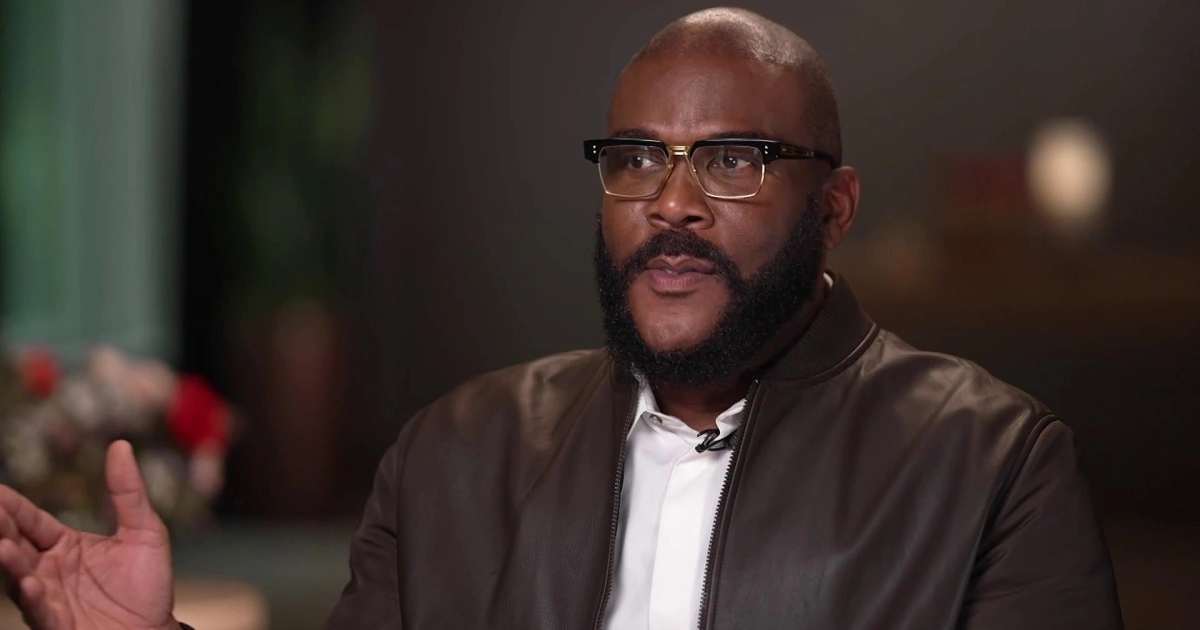
    Iconic filmmaker and actor Tyler Perry sat down with Justin Sylvester for TODAY With Jenna & Sheinelle on September 14, 2026, offering a candid look at his creative evolution, personal growth, and a major lifestyle shift. The wide-ranging conversation touched on his upcoming film, a milestone therapy journey, and a planned move away from the Hollywood spotlight.

    Revisiting Complicated Love in Why Did I Get Married Again

    Perry discussed the third installment of his Why Did I Get Married franchise, Why Did I Get Married Again, which revisits the complicated couples from the original films. He noted that the project forced him to confront reflections of his own life, joking that watching his own movie “scared myself out of getting married.” The film serves as a vessel for his updated perspective on relationships, forged through recent personal work.

    First Therapy Session at 54

    A pivotal moment in the interview came when Perry revealed he attended therapy for the first time at age 54. He described the experience as transformative, directly influencing his writing and his philosophy on partnership. Articulating his current outlook, Perry stated: “I think there is only one kind of love, and that’s real. If it’s real, it’s enough.”

    Scaling Back and Moving to Puerto Rico

    Beyond creative projects, Perry confirmed he is actively planning to scale back his immersion in Hollywood life. He announced his intention to relocate to Puerto Rico, signaling a deliberate shift toward a quieter chapter focused on family and personal well-being. The move underscores a broader theme of the interview: prioritizing authenticity over industry expectations.

    Additional TODAY Highlights

    The September 14 broadcast featured a diverse lineup of entertainment and culture segments alongside Perry’s interview. Other notable moments included:

    • Linda Perry performing “What Lies With You” live in studio.
    • Meghan Markle sharing a first look at life in the U.K. and a glimpse of Princess Lilibet.
    • Ella Beatty discussing her role as Lizzie Borden in Monster Season 4.
    • An NBC News interview with AI actor Tilly Norwood.
    • Duran Duran receiving a collectible stamp set.
    • Salma Hayek Pinault on Without Blood and a milestone birthday.
    • Nashville International Airport set to be renamed after Dolly Parton.
    • Jeff Goldblum hosting the U.K. version of Saturday Night Live.
    • Lady Gaga and fiancé Michael Polansky welcoming their first baby.
    • Mariska Hargitay on hosting the 2026 Emmys.
    • Céline Dion’s emotional return to the stage following illness.
    • Benny Blanco on his “fever dream” career, new book, and Selena Gomez.