Tag: relationship boundaries

  • Woman Says Best Friend Became Obsessed With Her Boyfriend: ‘He Was All We Would Talk About’

    Woman Says Best Friend Became Obsessed With Her Boyfriend: ‘He Was All We Would Talk About’

    Key Highlights

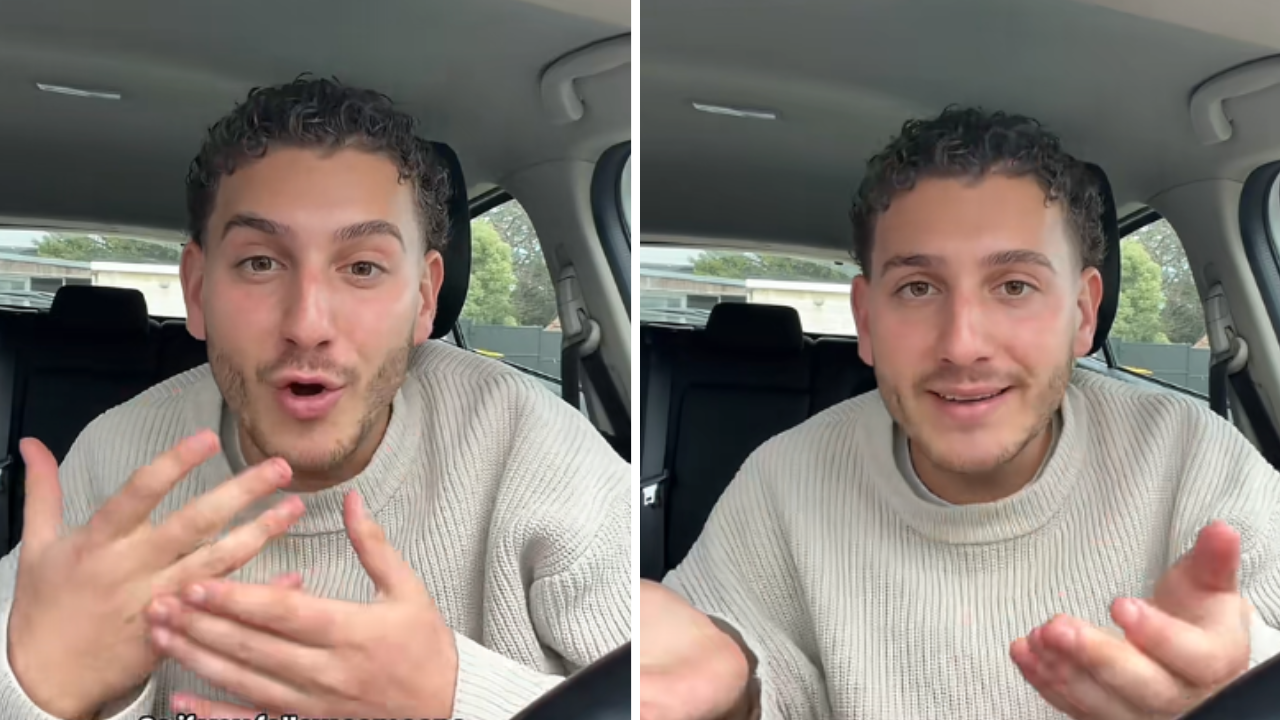
    • TikTok creator Mya (@themyab) alleged her best friend messaged her boyfriend privately on Snapchat asking to get ice cream together, sparking a viral debate about friendship boundaries.
    • Mya said the friend had increasingly talked about and commented on her boyfriend’s social media posts, behavior a third party flagged during a group hangout before the boyfriend showed Mya the screenshot.
    • The video prompted thousands of comments sharing similar experiences, with many users praising the boyfriend’s transparency and loyalty for immediately showing Mya the message.

    TikTok Creator Alleges Best Friend Crossed Boundary by Messaging Her Boyfriend

    TikTok user Mya, who posts under the handle @themyab, shared a storytime video detailing how her best friend’s behavior toward her boyfriend escalated from social media interactions to a private Snapchat invitation. According to Mya, she initially welcomed the connection between the two people closest to her, thinking it was healthy for them to get along. She did not think much of her friend following her boyfriend on TikTok or having his Snapchat information at first.

    Friend’s Interest Escalates From Comments to Private Message

    Over time, Mya said she noticed her friend frequently talked about her boyfriend and consistently engaged with his social media posts. The dynamic shifted noticeably during a group hangout that included Mya, her boyfriend, and another person. That third party reportedly pointed out that Mya’s best friend appeared particularly interested in her boyfriend. While Mya had started noticing the behavior herself, she said her boyfriend initially dismissed her concerns, suggesting she might be overthinking the situation.

    His perspective changed, Mya recounted, after he received a direct Snapchat message from her best friend asking whether he wanted to get ice cream with her. The boyfriend immediately sent Mya a screenshot of the message, which she said left her surprised by her friend’s actions. The Daily Dot was unable to independently verify the details of Mya’s story, which are based solely on her account shared on TikTok. Mya did not identify her friend or provide independent documentation of the interactions described.

    Viral Video Ignites Debate on Friend-Partner Boundaries

    The video triggered a widespread discussion in the comments section about appropriate boundaries between friends and their friends’ partners. Numerous women shared parallel experiences, validating Mya’s discomfort. One commenter wrote, “Maam. I didn’t even follow my bestie’s man back on TikTok when he followed me. Bc NO THATS MY GIRL & that’s HER mans.” She added that she had never followed any of her friends’ boyfriends unless they were already friends independently, and would not have interacted with their posts in the same manner.

    Another user shared, “One of my friends is this way with my husband, and my mom keeps telling me to keep an eye on her.” A third commenter described a nearly identical situation: “Wait, this same exact thing happened to me. He told me right away when it was obvious and showed me her text. He called her out and we both blocked her. I didn’t even waste a word on her.” A fourth woman recounted an even more extreme breach: “Oh girl, I had a girl do the same thing, but she KISSED him because she wanted to ‘understand’ our relationship better.”

    Commenters Praise Boyfriend’s Transparency and Loyalty

    Amid the stories of betrayal, many commenters highlighted the boyfriend’s response as a positive example of relationship security. “That’s such a good bf,” one user shared, while another added, “We love a loyal bf.” The consensus among responders was that the boyfriend’s immediate decision to show Mya the screenshot—rather than hiding it—demonstrated respect for the relationship and helped prevent the situation from escalating further.

    Why This Matters

    The viral spread of Mya’s video underscores how social media platforms like TikTok have become primary venues for negotiating modern relationship norms. The sheer volume of similar anecdotes in the comments suggests that boundary violations between close friends and romantic partners are a common, yet often unspoken, source of relational stress. The discourse highlights two competing values: the expectation that a partner’s inner circle should be welcoming, and the need for clear limits to protect the intimacy of the romantic bond. For content creators, the incident also illustrates how personal storytelling can catalyze collective sense-making around shared social dilemmas.

    Frequently Asked Questions

    Who is Mya and where did she share this story?
    Mya is a TikTok creator who posts under the handle @themyab. She shared the story in a video posted to her TikTok account.
    What specific action by the best friend prompted the boyfriend to show Mya the message?
    The best friend sent the boyfriend a private Snapchat message asking if he wanted to get ice cream with her. The boyfriend screenshot the message and sent it to Mya immediately.
    Has the story been independently verified?
    No. The Daily Dot reported that it was unable to independently verify the details of Mya’s account. The story is based solely on her TikTok video; she did not name the friend or provide screenshots or other documentation to the outlet.

  • ‘I Will Kill You’: Woman’s ‘Worse Than Cheating’ Dealbreakers Include Giving Someone a Ride Home

    ‘I Will Kill You’: Woman’s ‘Worse Than Cheating’ Dealbreakers Include Giving Someone a Ride Home

    Key Highlights

    • TikToker Laila Hakim (@ulovelailahakim) viral video outlines four relationship behaviors she considers “worse than cheating,” including sending money to other women and giving female friends rides home.
    • The video amassed over 237,400 likes and 1,274 comments, sparking heated debate in the comments section about trust, boundaries, and gender dynamics in relationships.
    • Hakim explicitly stated none of the four scenarios constitute actual infidelity, but rather represent boundaries that would upset her more than cheating itself.

    TikTok Creator Laila Hakim Sparks Viral Debate With “Worse Than Cheating” Relationship Boundaries

    Content creator Laila Hakim, known on TikTok as @ulovelailahakim, ignited a firestorm of discussion after posting a video enumerating four specific behaviors she considers dealbreakers “worse than cheating.” The video, which had garnered 237,400 likes and 1,274 comments as of publication, features Hakim delivering her list with a mix of hyperbolic humor and firm conviction, preemptively acknowledging the backlash she expected to receive.

    Financial Boundaries and Transportation Rules Top the List

    Hakim opened her list with a hard line on finances: a man sending money to another woman who is not a family member. “I will f—— literally kill you,” she said, “in a clearly exaggerated, joking tone. ‘I’ll have to. I’ll have to.’” She immediately followed with a prohibition on giving other women rides home, dismissing the concept entirely. “I don’t give a f-ck. I don’t give a f—, ‘She can Uber home. She can Uber. She can f—— Uber.’”

    Anticipating pushback, Hakim addressed the audience directly mid-video. “I can’t believe you guys are gonna fight me on this sh-t, too,” Hakim said, adding that she trusted her boyfriend “with my whole heart and soul” even while laying down the rule.

    Dancing and Disclosure Round Out the Four Dealbreakers

    The third item drew on Hakim’s personal background. Identifying herself as a dancer, she issued an ultimatum regarding her partner dancing with anyone else. “If you want to dance with anyone, you can dance with me.” She characterized any violation as relationship-ending. “That would disturb me to another level. I would have to break up with you,” she said.

    The final scenario involved a woman expressing interest in her boyfriend who remains unaware of his relationship status. Hakim drew the line not at reciprocation, but at omission. “Especially if you don’t tell her you have a girlfriend,” she said. “Oh, f-ck that, f-ck that, f-ck that.”

    Throughout the video, Hakim emphasized repeatedly that none of the four scenarios actually constitute cheating. Rather, she framed them as behaviors that would upset her more than infidelity itself — a distinction that became a focal point of the ensuing comment section debate.

    Comment Section Splits on Trust, Context, and Gender Dynamics

    The response in the comments revealed a sharply divided audience. One commenter defended the logic behind the ride-sharing rule, writing: “She trusts her bf she doesnt trust the girls around him espesically in his car [sic].”

    Another pushed back forcefully on the same point: “To everyone who is confused, giving someone in need a ride home is not cheating and you all need to grow up fr.”

    A third commenter challenged the financial boundary by introducing a hypothetical scenario involving menstrual products, then establishing their own separate red line: “Now I’d kill him for paying for someone’s Uber.”

    Why This Matters

    The viral spread of Hakim’s video illustrates how relationship boundary discourse has become a dominant genre of social media content, particularly on TikTok where algorithmic amplification turns personal preference lists into referendum-style debates. The video’s engagement metrics — nearly a quarter-million likes and over a thousand comments — demonstrate the high emotional resonance of trust, fidelity, and gendered expectations in modern dating culture.

    The divided reaction also highlights a broader cultural tension: whether relationship boundaries should be understood as expressions of individual security needs or as controlling behaviors that isolate partners from platonic social networks. Hakim’s explicit framing — that these are “worse than cheating” yet “not cheating” — encapsulates the ambiguity that fuels such debates. The Daily Dot was unable to independently verify whether the scenarios described reflect real events in Hakim’s relationship, underscoring the performative nature of much creator-led relationship content.

    Frequently Asked Questions

    Who is Laila Hakim and what is her TikTok handle?
    Laila Hakim is a TikTok content creator who posts under the handle @ulovelailahakim. She identifies herself as a dancer in the video.
    What are the four dealbreakers she listed?
    The four behaviors Hakim considers “worse than cheating” are: (1) a man sending money to a woman who isn’t a family member, (2) giving other women rides home, (3) dancing with someone other than her, and (4) not telling an interested woman that he has a girlfriend.
    Does Hakim consider these behaviors to be cheating?
    No. Hakim explicitly stated repeatedly throughout the video that none of the four scenarios count as cheating. She framed them as boundaries that would upset her more than infidelity itself.
  • Man Says Following Strangers on Instagram or TikTok Is Cheating: ‘What Are You Following Someone for if You Don’t Know Them?’

    Man Says Following Strangers on Instagram or TikTok Is Cheating: ‘What Are You Following Someone for if You Don’t Know Them?’

    Key Highlights

    • TikTok creator Anthony (@undiagnosedanthony) argues that following, liking, or commenting on attractive strangers’ social media profiles constitutes cheating, sparking viral debate.
    • Commenters are sharply divided, with some praising his strict boundaries while others label the views as insecurity and an erosion of the term “cheating.”
    • The discourse highlights shifting relationship norms around digital privacy, phone access, and social media boundaries in modern partnerships.

    TikTok Creator Redefines Infidelity in Viral Video

    A TikTok video posted by Anthony, known on the platform as @undiagnosedanthony, has ignited a fierce debate over the definition of cheating in the digital age. The video, which has garnered thousands of likes and 874 comments, outlines a strict framework for fidelity that classifies common social media behaviors—such as following attractive strangers, engaging with their content, and guarding one’s phone—as acts of unfaithfulness. Originally reported by The Daily Dot, the clip has become a flashpoint for conflicting philosophies on trust, privacy, and relationship boundaries.

    Anthony’s Argument: Digital Engagement as Betrayal

    In the video, Anthony establishes a baseline that following someone a person could be attracted to, despite having no personal connection, qualifies as cheating. He challenges the viewer’s intent, questioning what interest could exist beyond physical appearance. This logic extends to liking and commenting on that person’s posts, which he frames as active indicators of attraction rather than passive scrolling.

    Perhaps the most contentious point involves device privacy. Anthony posits that refusing to let a partner look through one’s phone is a potential sign of infidelity rather than a legitimate assertion of personal privacy. By equating opacity with guilt, the argument removes the nuance of individual autonomy, suggesting that transparency is the sole metric of loyalty.

    Comment Section Splits on ‘Insecurity’ vs. ‘Standards’

    The response in the comments section reveals a polarized audience. Supporters validated Anthony’s rigidity. One user wrote, “You’re strict, I like it,” while another agreed regarding visual boundaries, stating, “Lingering eyes drive me insane.” A third commenter offered a behavioral litmus test: “If you’re doing something that you wouldn’t do right in front of your partner, that’s considered cheating imo.” Another praised the approach as therapeutic, commenting, “You could be a couples therapist.”

    Personal anecdotes reinforced this view. One user shared a painful history, writing, “My ex husband’s insta feed was nothing but women. But his excuse was always ‘I went to school with them’ or ‘I was in AIT with them,’” illustrating how the behaviors Anthony describes can manifest in real-world betrayal.

    Critics Argue Definition Waters Down Cheating

    However, a significant portion of the commentary pushed back hard, characterizing the rules as controlling and rooted in insecurity. A lengthy, highly engaged rebuttal read: “This doesn’t scream, cheating, this screams insecurity to me. I would never tell someone who they could, and could not follow. Just like I would never allow someone to tell me who I could, and could not follow. My husband has access to my phone, but he has no reason to ever go in it. If he doesn’t trust me to have social media or a phone, we shouldn’t be together at all.”

    Others dismissed the premise entirely. “None of these are cheating …” one commenter asserted. The semantic dilution of the term “cheating” was a recurring theme. One user asked, “So people can’t just think someone else is good looking anymore? So many healthy couples will point out good-looking men and women because some people are just naturally very beautiful,” while another questioned the utility of the label: “I mean each relationship will have its own unique boundaries, but do some of the things you are listing not water down what ‘cheating’ is? Like, you are going to label your partner a cheater if they follow someone on TikTok?”

    Why This Matters: Digital Boundaries in Modern Relationships

    The viral nature of this debate underscores a fundamental tension in contemporary romance: the lack of universal norms for digital conduct. Unlike physical infidelity, which has relatively clear boundaries, “micro-cheating” behaviors—following, liking, direct messaging—exist in a gray zone defined entirely by individual couple agreements. The discourse exposes a generational and philosophical divide between relational security models (where transparency and restriction prove commitment) and autonomy models (where trust is demonstrated precisely by granting freedom). As social media becomes the primary arena for social validation and connection, these conflicts are likely to remain central to relationship counseling and cultural conversation.

    Frequently Asked Questions

    Who is Anthony (@undiagnosedanthony)?
    Anthony is a TikTok content creator who posted a viral video outlining his strict definitions of cheating, focusing on social media behaviors like following attractive strangers and phone privacy.
    What specific behaviors does he classify as cheating?
    He identifies three main categories: following someone you don’t know but are attracted to; liking or commenting on that person’s posts; and hiding your phone or refusing to let a partner look through it.
    Is there a consensus on whether these behaviors count as cheating?
    No. The comments on the video and subsequent coverage reveal a deep split. Some viewers agree these are boundary violations, while a large contingent argues they reflect insecurity and incorrectly expand the definition of infidelity.
  • Woman Says Boyfriend’s Female Best Friend Crossed Boundaries After He Lied About Seeing Her: ‘So Crazy Seeing You Two Here’

    Woman Says Boyfriend’s Female Best Friend Crossed Boundaries After He Lied About Seeing Her: ‘So Crazy Seeing You Two Here’

    A TikTok creator known as @kelsgordon has gone viral after sharing a detailed story about her boyfriend’s female best friend and a series of incidents she describes as boundary-crossing behavior. The video has amassed 1.5 million likes and over 11,000 comments, igniting a widespread conversation about relationship dynamics when one partner maintains a close friendship with someone of the opposite sex.

    Birthday Plans Disrupted by Friend’s ‘Car Trouble’

    Kels opened her story by explaining she had long felt uneasy about the friendship. She said the woman would insist on sitting next to her boyfriend in group settings, fueling suspicions of romantic feelings. Despite repeated reassurances from her boyfriend that the friend was “like a sister” to him, the situation escalated around Kels’ birthday.

    According to Kels, the couple had dinner reservations when the friend called claiming her car had broken down 45 minutes away. They cancelled their plans to rescue her, only to find the vehicle running in a parking lot. Her boyfriend then invited the friend to join their birthday dinner instead.

    Boyfriend Caught Lying About Evening Plans

    A second incident occurred when the boyfriend said he was spending time with coworkers. Kels said a friend later called to report seeing him at a bar alone with the female friend. She confronted them at the venue, leading to a heated exchange. Kels stated her boyfriend became upset with her, did not apologize, and called her “crazy.”

    The following day, Kels said her boyfriend admitted he had chosen to spend time with his friend and lied because it was “easier… than tell her the truth.”

    Commenters React: ‘Why Are You Still Calling Him Your Boyfriend?’

    The comment section exploded with reactions questioning Kels’ composure and the relationship’s viability.

    “I fear you’re underreacting, girl. You’re too calm about this,” one commenter wrote.

    “Why are you still calling him ‘your boyfriend’?” another asked.

    Others offered blunt advice:

    “Get a male best friend, reverse psychology,” one user suggested.

    “I’m halfway through the video and I’m starting to feel like you should be calling him your ex.”

    Viewers Share Contrasting Boundary Experiences

    Several commenters shared personal experiences to highlight what they view as healthy boundaries in opposite-sex friendships.

    “I have a guy best friend we have been close since childhood. I have a key to his house, spares to his cars, he calls if he needs help and I call him if I need help. But the minute he has a girlfriend I myself put my own boundaries up out of respect for the girlfriend. I don’t just walk in uninvited, I send invites to things to her not him, if I need help I’ll call her or someone else,” one commenter wrote.

    Unverified Account Sparks Relationship Debate

    The Daily Dot was unable to independently verify the events described in @kelsgordon’s TikTok video. The details in this article are based on Kels’ account of her relationship and interactions with her boyfriend’s friend, as well as the reactions shared by viewers in the comments.

  • Woman Gives Chronically Late Friend Fake Arrival Time; Friend Arrives Hour Late, Friendship on Brink

    Woman Gives Chronically Late Friend Fake Arrival Time; Friend Arrives Hour Late, Friendship on Brink

    Reddit User Sparks Debate After Giving Chronically Late Friend Wrong Arrival Time

    A Reddit user has ignited a widespread discussion about boundaries and chronic lateness after deliberately giving a friend the wrong meeting time. The 20-year-old woman, posting under the username u/SmoothSpell7918 on the r/AmItheAsshole subreddit, detailed years of frustration with a friend who consistently arrives 45 minutes to an hour late for every engagement.

    Pattern of Chronic Lateness Disrupts Important Events

    According to the original post, the friend’s habitual tardiness has had concrete consequences. The group lost a birthday dinner reservation when the friend arrived approximately an hour late. At another friend’s going-away party, she missed a significant portion of the event. Perhaps most critically, when the friend was supposed to provide transportation to a medical appointment, she arrived 50 minutes late, forcing the poster to take an Uber and ultimately miss the appointment entirely.

    Previous Accommodation Strategies Failed

    The friend group had previously attempted to manage the situation by giving the chronically late friend earlier arrival times. However, this strategy backfired when the friend eventually realized the tactic and began treating those adjusted times as the actual meeting times, perpetuating the cycle of lateness.

    Breaking Point: The 6:30 PM Dinner Reservation

    The situation reached a climax when the group arranged a dinner with a 6:30 PM reservation and requested everyone arrive by 6:15 PM. The friend stated she would leave her house at 6:00 PM. At 6:20 PM, she texted the group saying she was leaving now. By this point, the poster’s frustration had peaked.

    Instead of the actual 6:15 PM arrival time, the poster told the friend the reservation had been pushed back to 7:00 PM. The rest of the group, aware of the real plan, arrived at 6:15 PM as originally scheduled.

    Friend Arrives Over an Hour Past False Time

    The friend did not arrive until 7:35 PM — over an hour past the fabricated 7:00 PM time and a full 80 minutes after the actual requested arrival time. By then, the group had already finished their meal. The friend confronted the poster, accusing her of deliberately making her late and violating trust by providing the wrong time.

    The poster acknowledged the deception, admitting that lying was not exactly mature, but insisted she wanted her friend to experience what it feels like when others’ time is repeatedly disregarded.

    Reddit Community Largely Supports Poster

    The Reddit community overwhelmingly sided with the poster, ruling her Not the A-hole. Many commenters argued the group should simply proceed with plans without the friend rather than continuously adjusting schedules to accommodate chronic lateness. Others contended that a friend who is regularly late should face the natural consequences of missing events.

    Neurodivergence Perspective Offered in Discussion

    One Reddit user provided a different perspective, sharing their personal experience with time estimation difficulties prior to an ADHD diagnosis. They explained they had implemented strategies like repeated alarms and thorough planning to ensure punctuality despite these challenges.

    This anecdotal insight aligns with scientific research. A 2016 study published in Research in Developmental Disabilities examined timing abilities and executive functions, finding relationships between time estimation capacity, executive control, and the ability to organize activities around time. The research also linked time perception to executive processes including working memory and cognitive control.

    Friendship May Not Survive the Incident

    Following the confrontation, the friend stated she no longer wants to make plans with the poster. The poster expressed minimal concern, noting that after months of mounting frustration, she felt the friendship had reached its natural conclusion.

  • Man Steps Back From Gym Crush After Discovering Age Gap: ‘Probably the Right Call’

    Man Steps Back From Gym Crush After Discovering Age Gap: ‘Probably the Right Call’

    A Reddit user’s decision to end a budding romantic connection after discovering a 10-year age gap with his gym crush has sparked discussion about maturity, timing, and modern dating dynamics. The story, shared to r/BoyDinnerDiaries, details how a weeks-long flirtation at the gym came to a respectful but definitive close once both parties realized the difference in their life stages.

    From Gym Glances to Parking Lot Revelation

    The original poster, a 29-year-old man, described noticing a woman during workouts over several weeks. The dynamic shifted when she passed him a note with her phone number, later admitting she had felt nervous exercising near him. The two quickly built a rapport through frequent texting and joint evening workouts, finding shared interests and comfortable chemistry.

    The turning point arrived during a conversation in the gym parking lot. When ages were disclosed, both were startled: she was 19, he was 29. She had assumed he was no older than 23. The pair stood in brief silence before he stated he did not believe they should pursue a romantic relationship.

    A Mature, Mutually Respectful Parting

    According to the post, the conversation that followed was constructive. “She agreed, we had a productive conversation about it and made jokes about where were you during this year,” he wrote. She also joked about future unspoken tension and warned him not to be put off if she seemed to be “fawning” over him — a remark he noted did not feel entirely like a joke.

    They agreed to remain friendly at the gym, dubbing themselves “gym bro/sis.” She told him the timing was simply wrong and that she held no hard feelings. She also said she did not personally view the age gap as a problem, adding the experience was new for her as well. He clarified his discomfort stemmed from how the situation felt to him, not from any judgment of her.

    Reddit Reacts: Praise for Honesty and Boundaries

    Commenters largely applauded the poster’s handling of the situation. One wrote:

    “Probably the right call, 19 is very young for someone nearing 30. Sucks seeing that you all had so much in common and she was really into you. Very mature response and good honest communication, bravo sir.”

    Another offered historical perspective on age gaps in dating:

    “It’s a story as old as time. When I was in HS in the 80s, 16yos were chasing guys well into their 20s. It’s nothing new, and if anything it’s less acceptable now than it was then.”

    A third commenter suggested the gap might matter less with time:

    “Doing the right thing. If you’re meant to be together, you’ll still be meant to be together in a few years when it’s much less weird. A decade isn’t egregious once everyone is a full fledged adult.”

    Unverified Account, Real Conversation

    The Daily Dot was unable to independently verify the details of the Reddit post or the identities of those involved. The account reflects the narrative shared to r/BoyDinnerDiaries.