Key Highlights
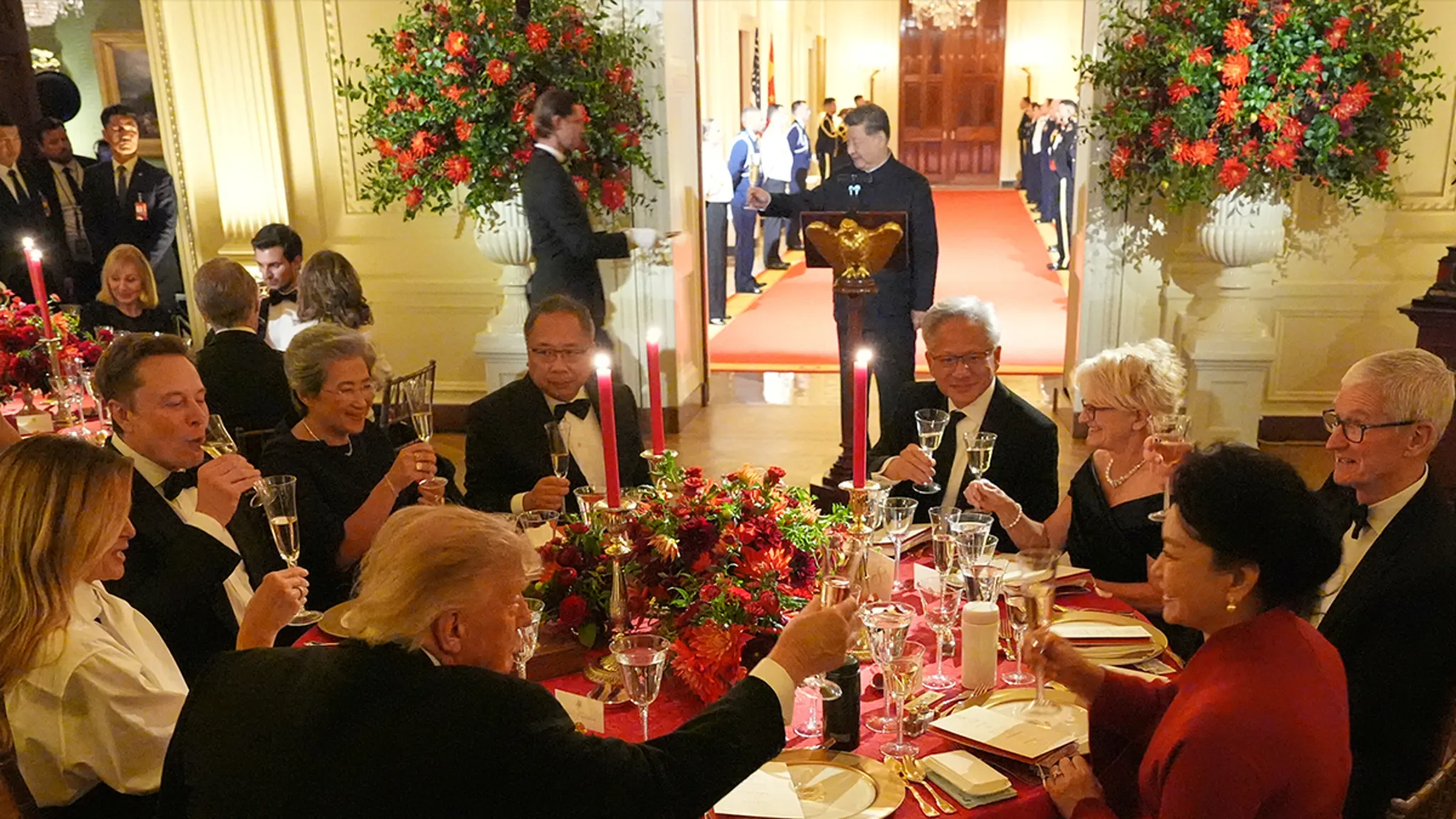
- Billionaires with a combined net worth of nearly $1.13 trillion were seated at President Donald Trump’s table during a state dinner for Chinese President Xi Jinping.
- The collective wealth of the guests at the table was reported to be roughly equivalent to the entire Gross Domestic Product (GDP) of Poland.
- The seating arrangement placed ultra-high-net-worth individuals in direct proximity to the leaders of the world’s two largest economies.
Trump State Dinner Seating Draws Attention to Concentration of Wealth
The guest list for President Donald Trump’s table at the state dinner hosted for Chinese President Xi Jinping has highlighted the extraordinary concentration of wealth among the President’s inner circle. According to reports, the billionaires seated at the presidential table possessed a combined net worth approaching $1.13 trillion. This staggering figure places the collective financial power of those immediate guests on par with the total economic output of a major European nation, specifically matching the Gross Domestic Product of Poland.
Historic Context of the US-China State Dinner
The state dinner itself represented a high-stakes diplomatic engagement between the United States and China, the world’s two largest economies. Such events are traditionally used to solidify bilateral relations, negotiate trade frameworks, and project soft power. The decision to seat a cohort of billionaires—rather than solely cabinet secretaries, lawmakers, or traditional diplomats—at the President’s immediate table signaled a distinct approach to governance and diplomacy, prioritizing private sector leadership and personal financial success within the framework of official statecraft.
Economic Scale of the Guest List
The comparison of the attendees’ combined net worth to Poland’s GDP serves as a stark illustration of global wealth disparity. Poland, a significant European economy with a population of nearly 38 million, generates approximately $1.13 trillion in annual economic activity. The fact that a single dinner table could command an equivalent amount of static capital underscores the outsized influence wielded by a minuscule number of individuals in the modern global economy. This concentration of capital at the highest levels of political interaction raises questions regarding policy access, regulatory capture, and the intersection of private wealth with public diplomacy.
Why This Matters
The seating arrangement at the Trump-Xi state dinner offers a tangible data point in the ongoing debate regarding the role of oligarchic wealth in democratic governance. When the combined assets of a President’s dinner companions rival the GDP of a sovereign nation, it reframes the conversation around campaign finance, lobbying influence, and the composition of advisory circles. For international observers, particularly in Beijing, the presence of such immense private capital at the presidential table may have signaled a blurring of lines between state policy and corporate interest, potentially influencing perceptions of US negotiating positions on trade, technology transfer, and market access. This moment remains a reference point for analyses of plutocratic trends in 21st-century American politics.
Frequently Asked Questions
Who were the billionaires seated at President Trump’s table?
The provided source text identifies the guests only as “billionaires whose combined net worth is nearly $1.13 trillion” and does not list their specific names.
How does the combined net worth compare to Poland’s GDP?
The source explicitly states the combined net worth of the guests—nearly $1.13 trillion—is “roughly the same amount as Poland’s entire GDP.”
Was this a standard diplomatic seating arrangement?
Standard state dinner protocol typically seats the visiting head of state next to the host head of state, with cabinet members, congressional leadership, and diplomats filling the immediate tables. Seating a group of private billionaires at the President’s personal table represents a significant departure from that tradition.