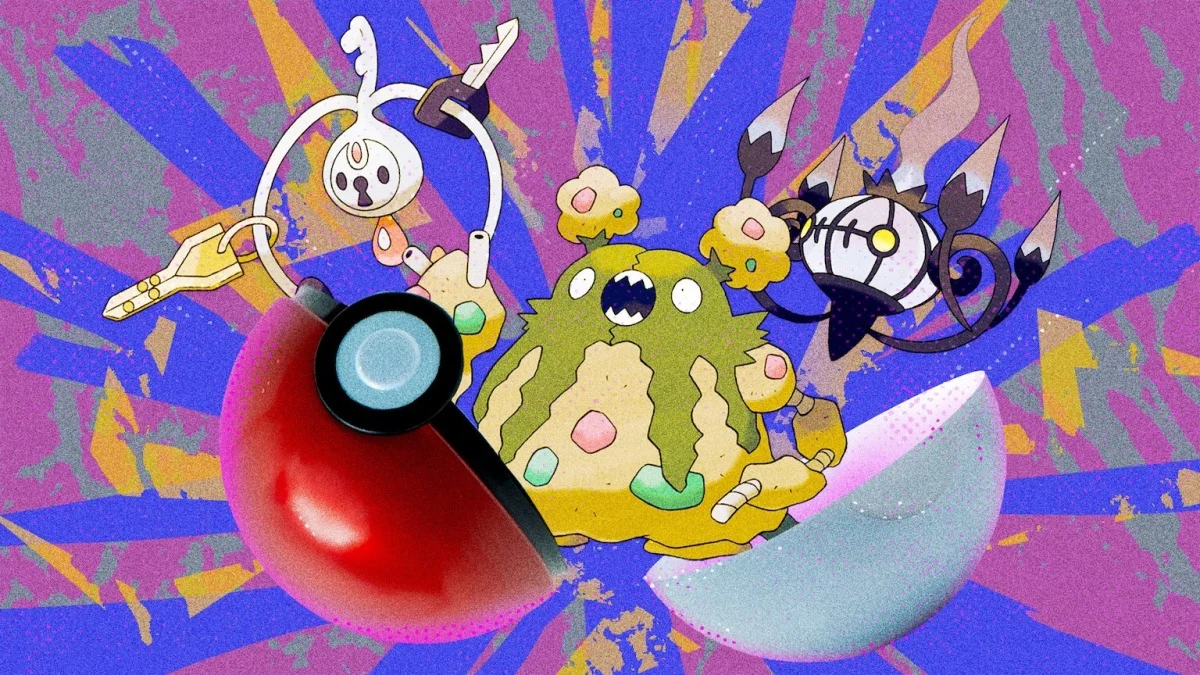
Key Highlights
- Pokémon’s 30th anniversary spotlight shines on 11 delightfully bizarre creatures spanning all nine generations, from living keyrings to sentient ice cream cones.
- Inanimate object designs dominate the list, including Klefki (keys), Chandelure (chandelier), Garbodor (trash), and Vanilluxe (ice cream), showcasing the franchise’s whimsical creativity.
- Deep-lore favorites like Mimikyu, Unown, and Gimmighoul join original generation icons Lickitung, Mr. Mime, Rotom, and Gengar for their strange mechanics and unforgettable personalities.
Three Decades of Delightful Oddities
As Pokémon celebrates its 30th anniversary across trading cards, video games, and pop culture, the milestone invites reflection on what makes the franchise enduringly magnetic. The answer, arguably, lies in its willingness to embrace the profoundly strange. “The entire appeal of Pokémon, to me, is that every few years you get a couple hundred strange new creatures to look at and, eventually, learn to love,” the author notes, adding that “basically every single one of them is a weird little freak,” a term used with “nothing but admiration and love.” From the cutthroat world of card collecting to the virtual realms of Pokémon Pokopia, the celebrations honor three decades of greatness defined by abundant little weirdos.
Inanimate Objects Come to Life
Later generations introduced a design philosophy that feels like a designer glancing around the room for inspiration. Klefki, debuting in Generation VI (2013), is “literally a living ring of keys.” Series lore explains it rattles keys defensively yet cherishes favorites for long periods. Chandelure, a Generation V (2010) ghost-type, evolves from a candle to a lamp into an ornate chandelier, gaining a Mega Evolution in Pokémon Legends: Z-A that makes it “even more ornate.” Garbodor, also Generation V (2010), is unapologetically “a living, breathing pile of trash,” presumably inspired by garbage outside the Pokémon office. Vanilluxe, the third stage of a Generation V line, is “literally just an ice cream cone with a face. Well, two faces, technically,” resembling two cones smashed together—a design the author admits loving mostly because “I really like ice cream.”
Mystery, Lore, and High-Maintenance Evolution
Some weirdness runs deeper than appearance. Mimikyu, introduced in Generation VII (2016), “made waves online when it was first introduced 10 years ago because, frankly, it has one of the saddest backstories of any Pokémon.” A tiny ghost hidden under a “shoddy, low-effort Pikachu costume,” it mimics the mascot “to make friends, of course, given Pikachu’s massive popularity and the presumed ugliness of Mimikyu’s true self.” Unown, from Generation II (1999), exists in dozens of hieroglyph-like forms inhabiting ruins and a private dimension, contributing “a real sense of mystery” as “the only Pokémon that you can use to form sentences.” Gimmighoul, a Generation IX (2022) arrival, lives in treasure chests and demands exactly 999 gold coins to evolve into a golden humanoid—a “specific, deeply involved evolution process” the author applauds for being “as high-maintenance about evolution as it is.”
The Original Weirdos That Started It All
The first 151 Pokémon supplied foundational freaks. Lickitung (Generation I, 1996) embodies simple weirdness: “Give a little guy a big tongue and make that his defining feature, and you’ve got yourself a 30-year-strong weird little guy.” Mr. Mime (Generation I, 1996) “likes doing parlor tricks and will slap the hell out of anyone who isn’t impressed by them,” earning respect for having “a day job.” Rotom (Generation IV, 2006) is “a living spark of electricity” inhabiting appliances—microwave, washing machine, lawn mower, even smartphones—proving “Rotom benefits society.” Finally, Gengar (Generation I, 1996) remains “the best of the best,” a perennial favorite because “no fictional character has ever been more down to party than Gengar. But, like, in a kind of insidious way. You never know how things are going to go with Gengar is around, but they’re always going to be interesting.”
Why This Matters
Pokémon’s 30th anniversary underscores a design ethos that balances marketable cuteness with deliberate, memorable oddity. The franchise’s longevity stems partly from its refusal to sanitize creativity; a living keyring, a trash heap, and a ghost in a Pikachu suit coexist with dragons and legends. This menagerie fuels collector culture, competitive play, and generational nostalgia simultaneously. As official events like Target’s 30th Anniversary promotion distribute promo cards and fans revisit regions from Kanto to Paldea, the celebration reinforces that Pokémon’s weirdest entries are often its most beloved—proof that in a world of hundreds of monsters, the “little freaks” are the heart of the phenomenon.
Frequently Asked Questions
Which Pokémon generations are represented in this 30th anniversary weirdos list?
The selection spans all nine generations: Generation I (Lickitung, Mr. Mime, Gengar), Generation II (Unown), Generation IV (Rotom), Generation V (Chandelure, Garbodor, Vanilluxe), Generation VI (Klefki), Generation VII (Mimikyu), and Generation IX (Gimmighoul).
What criteria defined these Pokémon as the “weirdest” for the anniversary?
The author prioritizes conceptual strangeness—inanimate objects with faces (keys, chandelier, trash, ice cream), tragic or mysterious lore (Mimikyu’s disguise, Unown’s alphabet forms, Gimmighoul’s 999-coin evolution), and uniquely aggressive or helpful personalities (Mr. Mime’s parlor tricks, Rotom’s appliance possession, Gengar’s insidious party vibe).
How can fans participate in the official 30th anniversary celebrations?
Major retail events include Target’s Pokémon 30th Anniversary promotion offering free promo cards. Fans are also engaging through trading card collecting, video game events like Pokémon Pokopia, and community retrospectives across the franchise’s nine generations of games.