Tag: Paris 2024 Olympics

  • Women’s Sports Slam Sydney Sweeney: “It is disrespectful to sexualize bodies for an advertisement”

    Women’s Sports Slam Sydney Sweeney: “It is disrespectful to sexualize bodies for an advertisement”

    Sydney Sweeney, the actress who rose to fame through HBO’s Euphoria and recently starred in the film adaptation of the bestseller The Housemaid, is facing intense criticism from elite female athletes over her latest advertising campaign for a sports betting company. The ads feature Sweeney wearing minimal clothing while mimicking various athletic activities, sparking accusations that the campaign sexualizes women’s sport for the male gaze.

    Olympians and Champions Condemn “Slap in the Face” Marketing

    The backlash began when Australian Olympic swimmer Ariarne Titmus posted a blunt assessment on social media. She stated:

    “I can’t describe the anger I feel seeing this. It is not only a slap in the face to all the women who have dedicated their lives to perfecting their craft, but to all the women who enjoy sport for what it really is: teamwork, friendship, dedication, excellence… I thought this kind of “absurd” marketing was a thing of the past”.

    American gymnast Gracie Kramer amplified the message by posting a training video with the caption: “This is what a woman in sports looks like.” The video triggered a wave of similar posts from athletes across multiple disciplines.

    Wave of Athlete-Led Response Videos

    Australian triathlete Jenna Gwinn shared her own training footage alongside a pointed critique:

    “A woman’s place in the sports industry is as an athlete, reporter, coach…. Not sexualizing bodies for a sports betting ad aimed at men. Women belong in the sports industry without being sexualized”.

    Lani Pallister, Olympic gold medalist in the 4x200m freestyle relay at Paris 2024, posted a compilation of her training, races, and medals with the message:

    “I don’t know what Sydney thinks about sport, but this is what sport looks like.”

    Australian water polo player Tilly Kearns, a silver medalist at the Paris Games, added her voice over match footage:

    “I absolutely hate the new Sydney Sweeney sports ad”

    “Using Sex to Sell Sport” — World Champion Weighs In

    World boxing champion Skye Nicolson articulated a distinction many athletes have emphasized:

    “There is a big difference between looking ‘sexy’ because you play sports and using sex to sell ‘sport’. […] It is disrespectful to female athletes who dedicate their lives to sport and to the women who have broken barriers for generations, only to then mock it by using a sex symbol with suggestive language and imagery in an ad about sport”.

    Nicolson also noted the paradox of engagement: “giving the advertising campaign exactly what they wanted, but honestly these companies need to do better. Stop sexualizing women in sport”.

    Mexican gymnast Natalia Escalera framed the issue in structural terms:

    “This ad is honestly infuriating. Seeing women’s sports once again being commercialized through the male gaze feels like a huge step backward. We shouldn’t have to take our clothes off to convince men that women belong in sports or that we’re only worth watching if we show enough skin”.

    Sweeney Responds with Historical Athlete Covers

    Sweeney addressed the criticism via her Instagram stories, sharing a series of magazine covers featuring renowned athletes who have posed nude for editorial features. The images included Serena Williams, Ronda Rousey, Megan Rapinoe, and Myles Garrett, among others.

    The actress has not issued a formal statement beyond the visual response. The betting company behind the campaign has not publicly commented on the athlete-led backlash as of publication.
  • United States: A Threatened Giant

    United States: A Threatened Giant

    The United States women’s basketball team has long defined dominance in international sport. Eight consecutive Olympic gold medals, four straight FIBA World Cup titles, and a 73‑0 record spanning nearly 20 years paint a statistical portrait of supremacy unmatched in any team sport, men’s or women’s. The program has functioned as a perpetual Dream Team, each iteration seemingly more precise than the last — relentless transition offense, overwhelming physicality, and a depth of talent that crushed opponents by an average of 40 points per game at the last World Cup.

    First Cracks in the Armor at Paris 2024

    That aura of invincibility wobbled in the Paris 2024 Olympic final. France, playing on home soil, dragged the Americans into a grind-it-out contest and nearly ended the 18‑year unbeaten streak. A 67‑66 escape — decided by a controversial late call — served as the first serious warning that the gap between the U.S. and the rest of the world had narrowed.

    Second Warning: Italy Pushes USA to the Brink at 2026 World Cup

    The second alarm rang louder in Berlin. Italy, not considered a medal favorite entering the tournament, replicated France’s blueprint: slow the pace, extend possessions, and force the U.S. into half‑court sets where its tactical discipline — often a relative weakness — is tested. The Italians led 51‑50 with three minutes remaining before the Americans survived 55‑52, aided by a missed buzzer‑beating three from Cecilia Zandalasini and a pair of debated officiating decisions. Another low‑scoring affair, another near‑disaster.

    Roster Absences Loom Large

    When the World Cup roster was announced, analysts fixated on who was missing: Sabrina Ionescu, Kelsey Plum, and, most critically, A’ja Wilson — widely regarded as the best player on the planet and the ultimate safety valve when games turn ugly. Her absence removes the singular figure who “takes out the trash” in crisis moments.

    When the team that would play in the World Cup was made public, experts focused more on the absences: Sabrina Ionescu, Kelsey Plum and, above all, A”ja Wilson. They are tremendous absences, especially Wilson’s, the best player on the planet today, the player who, in case of trouble, is always there to take out the trash. That indispensable figure is not on this “Dream Team”.

    Production Questions Surround Current Rotation

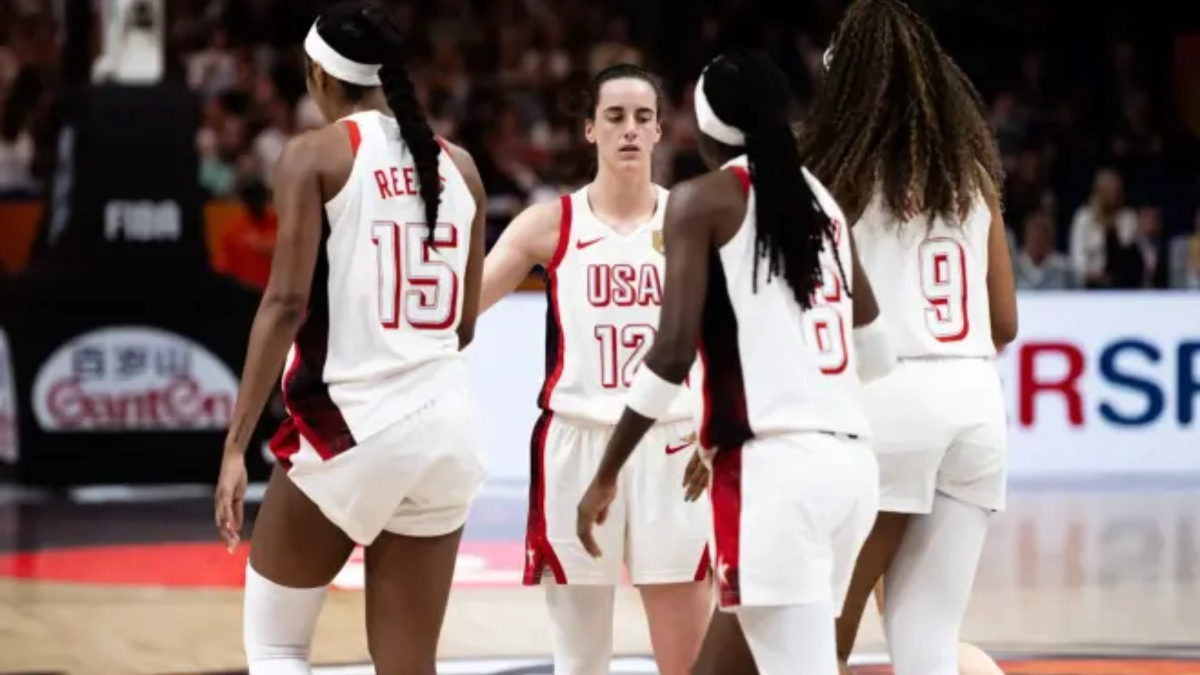
    In Berlin, the offense has lacked a clear go‑to scorer. Jackie Young leads the team at just 11 points per game, followed by Napheesa Collier (9.8) and Breanna Stewart (9.5). While the talent of Caitlin Clark and Paige Bueckers is undeniable, questions persist about the supporting cast — particularly Angel Reese, whom many believe would not have made the squad had the full player pool been available, and veteran Chelsea Gray, who appears past her prime.

    On the contrary, on the team that is in Berlin many questions have arisen about the performance of some players, especially in close games. Jackie Young is their top scorer, averaging 11, with Napheesa Collier, 9.8, and Breanna Stewart behind her on 9.5. The quality of Caitlin Clark is unquestionable, as is that of Paige Bueckers, but there are many doubts about other players such as Angel Reese, who for many would not have a place if everyone had come, or Chelsea Gray, one of the veterans, but far from her prime.

    Chemistry and Culture Concerns

    Perhaps the most troubling development isn’t tactical — it’s cultural. The squad does not appear cohesive. Body language on the bench suggests friction rather than unity, and the environment lacks the resilience to weather adversity. Observers note a parallel to the internal tensions currently roiling the WNBA: when problems arise, this group seems to amplify them rather than resolve them. That disorder manifests on the court in disjointed stretches and lapses in communication.

    FIBA Adaptation Issues Persist

    Operational missteps have compounded the on‑court struggles. While every other federation adhered to assigned training schedules and venues, the U.S. staff twice rejected allocated practice slots — including the day before the semifinals — opting instead for alternative courts. The decision to skip a session at Uber Arena ahead of a pivotal knockout game reads as arrogance, or at minimum a failure to respect the tournament’s logistical framework.

    Spain Awaits in Semifinals; Global Gap Continues to Shrink

    Make no mistake: the United States remains the tournament favorite. A semifinal clash with Spain looms, and should they advance, they will enter the final as the presumed winner. Yet the margins that once measured in blowouts now measure in single digits. Just as the men’s game has seen global parity erode American hegemony, the women’s landscape is shifting. France, Spain, and others are no longer merely participants — they are legitimate threats.

    Whether the dynasty falls in Berlin or endures another cycle, one truth is immutable: the chasm has closed. The giant still stands, but the climbers are reaching its shoulders.

  • Breaker Raygun Reflects on What Happened at the Paris 2024 Olympics

    Breaker Raygun Reflects on What Happened at the Paris 2024 Olympics

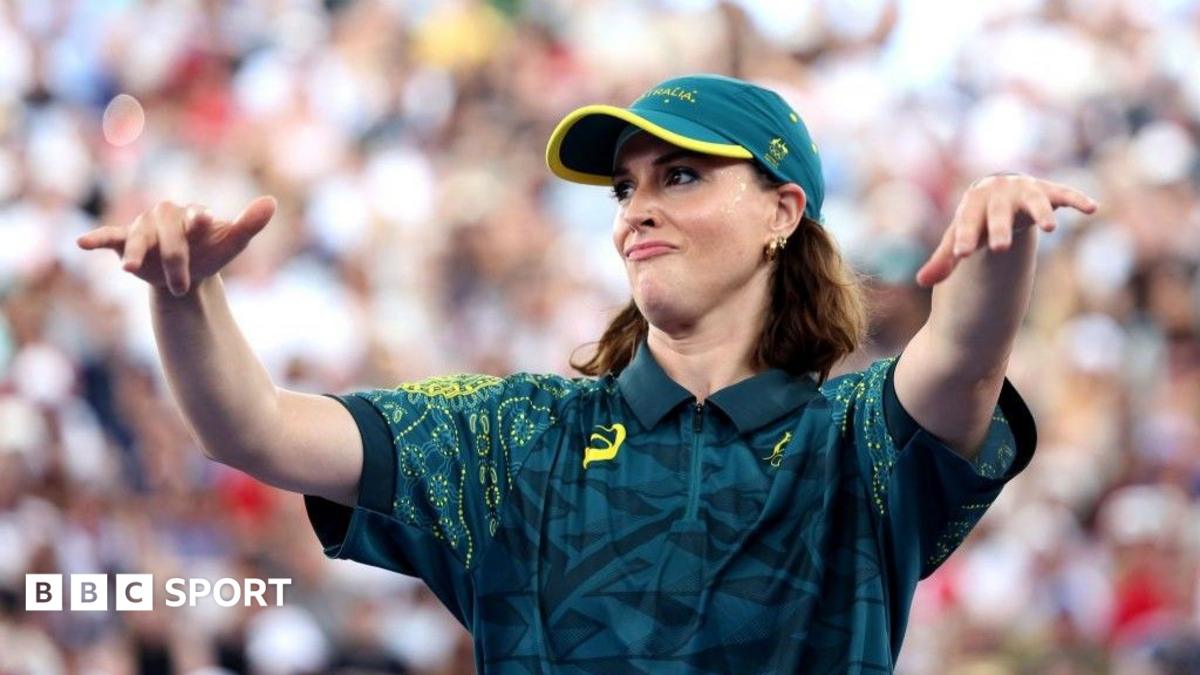
    Rachael Gunn suffered a panic attack in the Olympic village just hours before representing Australia at the Paris 2024 opening ceremony.

    Surrounded by experienced athletes, Gunn began to understand the scale of the challenge ahead. Her professional background was as a university lecturer, but she was about to compete in breaking, the breakdancing event making its Olympic debut.

    Known as Raygun when competing, the 38-year-old described her anxiety in a new Netflix documentary about her experience at the Games.

    “I felt like an imposter,” said the 38-year-old breaker.

    She also explained how she reacted after seeing someone she recognised from the Olympic team.

    “I just could not stop crying… I had a panic attack. ‘What am I doing? What have I done? Should I be doing this?’” she said.

    Just a few hours later, Gunn was sailing down the River Seine alongside the rest of the Australian delegation, waving to onlookers.

    Raygun’s Olympic breaking performance goes viral

    Less than a fortnight later, her Olympic journey was over. Gunn lost all three of her round-robin battles at the Games, but said she was pleased with how she had performed.

    “Finishing my last round, the world champion Nicka [Dominika Banevic] gave me props for my moves, the MC celebrated my stuff and the vibe was just generally good,” Gunn told BBC Sport.

    What she had not expected was the global reaction to one of her routines, in which she introduced unconventional moves including a sprinkler and a kangaroo hop.

    The performance quickly became a viral sensation. It inspired memes and a sketch on The Tonight Show Starring Jimmy Fallon. Adele referenced it during one of her concerts, while Chris Hemsworth defended Gunn in an interview with Jimmy Kimmel. In August 2024, Australian Prime Minister Anthony Albanese also spoke out, praising Gunn for having “a crack”.

    “It was pretty wild the way I became a topic of conversation in spaces I never thought I would be,” said Gunn.

    Conspiracy theories affected Rachael Gunn’s mental health

    Alongside the teasing, Gunn faced more serious online attacks, including conspiracy theories alleging nepotism. One claim suggested that her husband and trainer, Samuel Free, had been on the selection committee when she qualified to represent Australia at the Games. He had not been.

    “It was really tough when mine and Sammy’s credibility, ethics and motivations were being called into question,” Gunn said.

    “You could just spend 30 seconds researching and find plenty of sources to debunk these conspiracies, but that’s not how people use the internet anymore.”

    The intense scrutiny took a toll on Gunn’s mental health.

    “I felt like my whole life was just kind of crumbling before me.. .and I was just trying to get through the day,” she says in the documentary.

    While making a film about that period, Gunn said she had begun to regain a sense of control over her story.

    “It’s taken a long time for me to process what happened,” Gunn told BBC Sport.

    “It’s really exciting for me to finally have a voice again.”

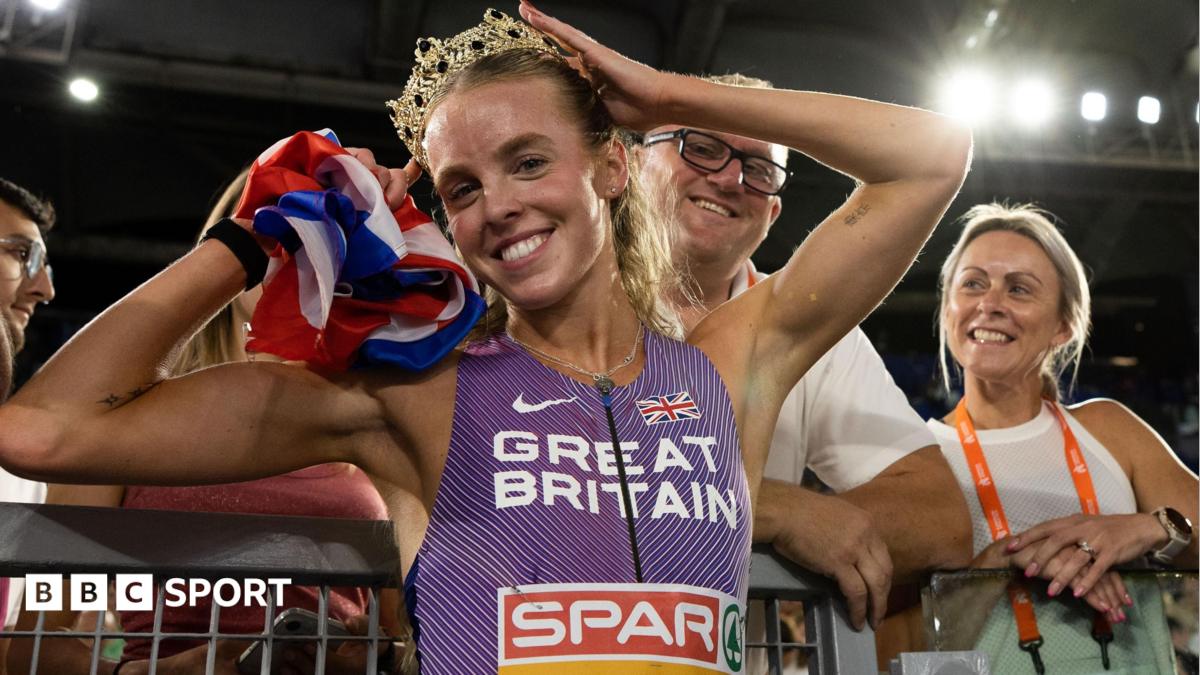
  • Team Behind Keely Hodgkinson’s Golden Rise Drives 800m World Record Pursuit

    Team Behind Keely Hodgkinson’s Golden Rise Drives 800m World Record Pursuit

    The M11 Track Club’s foundations were established long before Keely Hodgkinson’s father proposed the now globally recognized name. Trevor Painter, who brings a background in rugby league and an impressive 47-second 400-meter personal best, has guided Hodgkinson’s development since she was 17. Prior to that, he coached Jenny Meadows to international success.

    From Vision to Global Recognition in Two Years

    It has taken just two years for Meadows’ vision of an official Manchester-based training group to become reality and earn a worldwide reputation.

    “I think everyone thought I was quite deluded. I had a vision of this happening, but I didn’t quite know how we were going to achieve it,” says Meadows.

    “At first, when we would hear people from other nations talk about M11, I was almost like, ‘oh my gosh, they’ve said M11’. It’s almost like a project that I brought home from school, and people are talking about it.”

    “Now people know instantly: that’s Jenny and Trevor, that’s some of the best athletes in the world. You don’t have to explain what M11 is. It’s pretty incredible.”

    Olympic Success Accelerates Growth

    Reaching that stage was never a given. The process was undoubtedly accelerated by Hodgkinson’s rise to Olympic gold, and further medals at Paris 2024 for teammates Hunter Bell and Lewis Davey.

    The sustained success on the track has allowed Painter and Meadows to expand the scale of their operation, with backing from big-name sponsors helping to add an assistant coach, track-side physiotherapist, and dedicated physiologist.

    “Back in the day, it was difficult because you’re working on a shoestring budget, trying to make things happen,” says Painter.

    “But, as Keely comes along and does well, you get a little bit of help from here and there.”

    “Then, as more people come and we have more success, we can go back to the sponsors and they give us a little more. It pays for strength and conditioning support, nutrition support, trackside physiotherapy – all which keep the athletes healthy.”

    “If they’re healthy, they can do their job of running as fast as they can.”