Tag: Oliver Bearman

  • Kimi Antonelli Leads Red-Flagged F1 Spanish GP FP3 After Hamilton, Bearman Crashes

    Kimi Antonelli Leads Red-Flagged F1 Spanish GP FP3 After Hamilton, Bearman Crashes

    Antonelli Tops Disrupted Spanish GP Practice as Hamilton and Bearman Crash

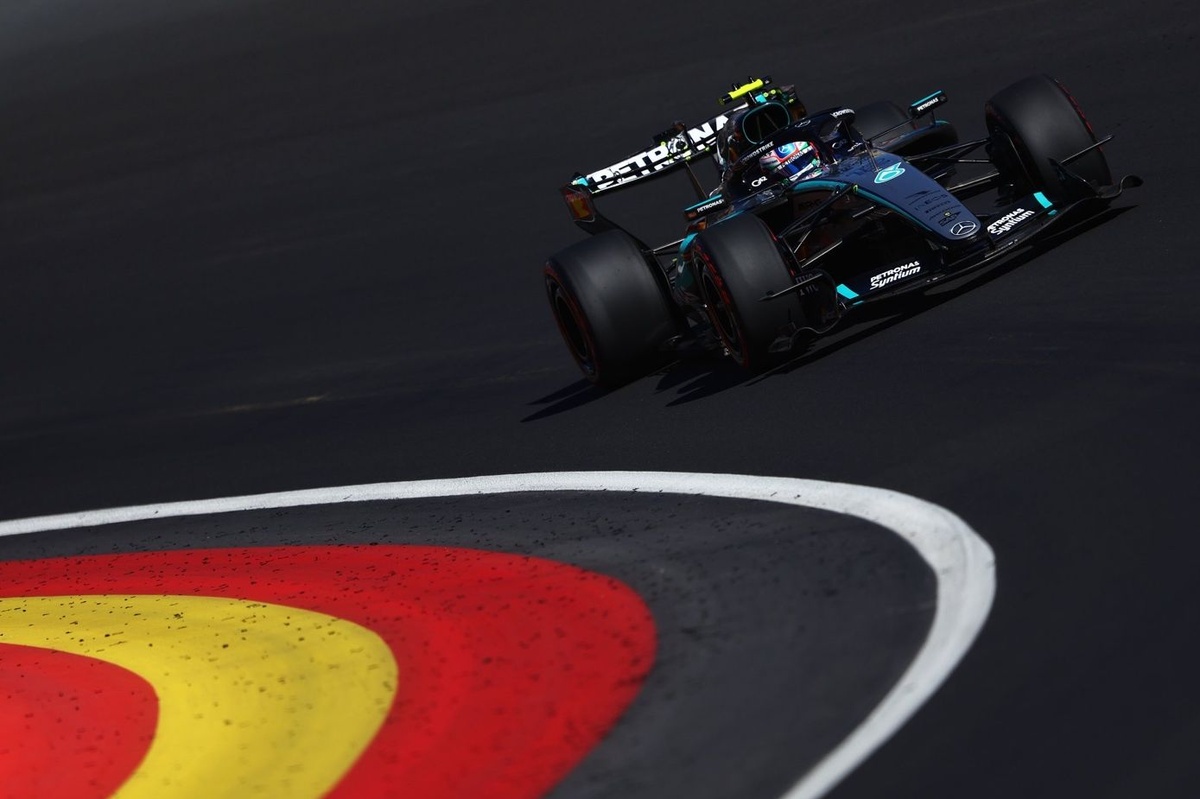
    Mercedes rookie Kimi Antonelli set the pace in a chaotic final practice session for the Formula 1 Spanish Grand Prix, leading a tightly packed field at the challenging Madring circuit in Madrid. The session was defined by two lengthy red-flag stoppages triggered by heavy impacts for Lewis Hamilton and Oliver Bearman.

    Hamilton’s Costly Error Triggers First Stoppage

    The first major interruption arrived 23 minutes into the hour-long session. Ferrari’s Lewis Hamilton locked up his front tyres entering Turn 22, the circuit’s final corner, and slid straight into the TecPro barriers. While the initial contact appeared minor, the damage dislocated his front wing.

    Crucially, Hamilton had just passed the pit entry, forcing him to attempt a full lap back to the pits on three wheels. As the damaged wing dragged across the tarmac, it began piercing the front-right tyre. Ignoring team instructions to stop immediately, the seven-time world champion continued until he was forced to abandon the car at the exit of Turn 14.

    The extensive barrier repairs required a near 40-minute delay. Race control responded by stopping the session clock at 15 minutes and 38 seconds, preserving track time for the remaining running.

    Leclerc Leads Early, But Antonelli Strikes Late

    At the moment of the first red flag, Charles Leclerc topped the timesheets for Ferrari with a 1m33.332s, edging out Antonelli’s earlier 1m33.664s. Lando Norris sat third for McLaren, with Hamilton fourth.

    When the session resumed for a frantic final shootout, Leclerc immediately lowered the benchmark to a 1m32.963s. Mercedes initially struggled to match that pace, with Antonelli trailing by three tenths. However, on his second flying lap of the restarted session, the Italian rookie found significant time, posting a 1m32.797s to reclaim top spot.

    Bearman Crash Ends Session Early

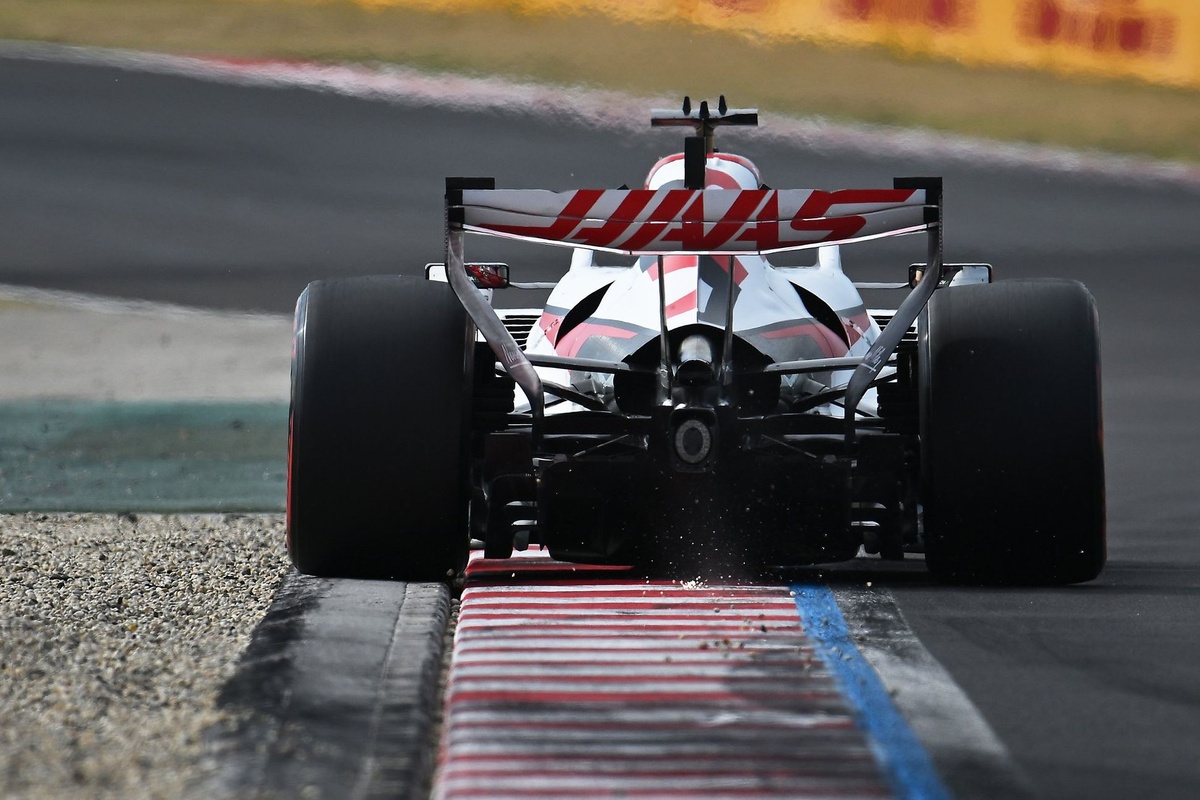
    Any hope of a late challenge for the lead evaporated in the final minute. Haas driver Oliver Bearman lost the rear of his VF-25 entering the high-speed Turn 10 right-hander, smashing into the concrete wall. The heavy impact caused significant damage to the left-hand side of the car and brought out the second red flag, effectively ending the session and cementing Antonelli’s position at the top of the order.

    McLaren Gains Ground; Red Bull Struggles Continue

    McLaren showed encouraging signs after a difficult Friday. Oscar Piastri and Norris secured third and fourth respectively, just two tenths adrift of Antonelli’s benchmark.

    Max Verstappen had a disrupted session, only joining the action moments before Hamilton’s crash. The world champion finished fifth, 0.375s off the pace, as Red Bull continued to grapple with the Madring circuit’s aggressive kerbs and a general lack of competitiveness relative to the front-runners.

    FP3 Classification Highlights

    • 1st: Kimi Antonelli (Mercedes) – 1m32.797s
    • 2nd: Charles Leclerc (Ferrari) – +0.166s
    • 3rd: Oscar Piastri (McLaren) – +0.201s
    • 4th: Lando Norris (McLaren) – +0.215s
    • 5th: Max Verstappen (Red Bull) – +0.375s
    • 6th: George Russell (Mercedes)
    • 7th: Liam Lawson (Red Bull)
    • 8th: Nico Hulkenberg (Audi)
    • 9th: Lewis Hamilton (Ferrari)
    • 10th: Gabriel Bortoleto (Audi)

    George Russell managed only sixth after aborting a strong lap before the first red flag and failing to piece together a representative run afterwards. Liam Lawson took seventh for the second Red Bull after a mistake on his final attempt. Nico Hulkenberg impressed with the fastest first sector in the Audi but was baulked by traffic later in the lap, settling for eighth. Hamilton dropped to ninth by the chequered flag, with teammate Gabriel Bortoleto rounding out the top ten.

    Alex Albon’s session ended prematurely for Williams after he tapped the wall early on, requiring suspension repairs that sidelined him for the remainder of the hour.

    Attention now turns to qualifying, where the tight margins displayed in FP3 suggest a fierce battle for pole position on the streets of Madrid.
  • Ferrari’s ADUO 2 Upgrade Is No “Game Changer” for Haas Either

    Ferrari’s ADUO 2 Upgrade Is No “Game Changer” for Haas Either

    Bearman: Ferrari Engine Upgrade a “Much Smaller Step” Than Haas Aero Package

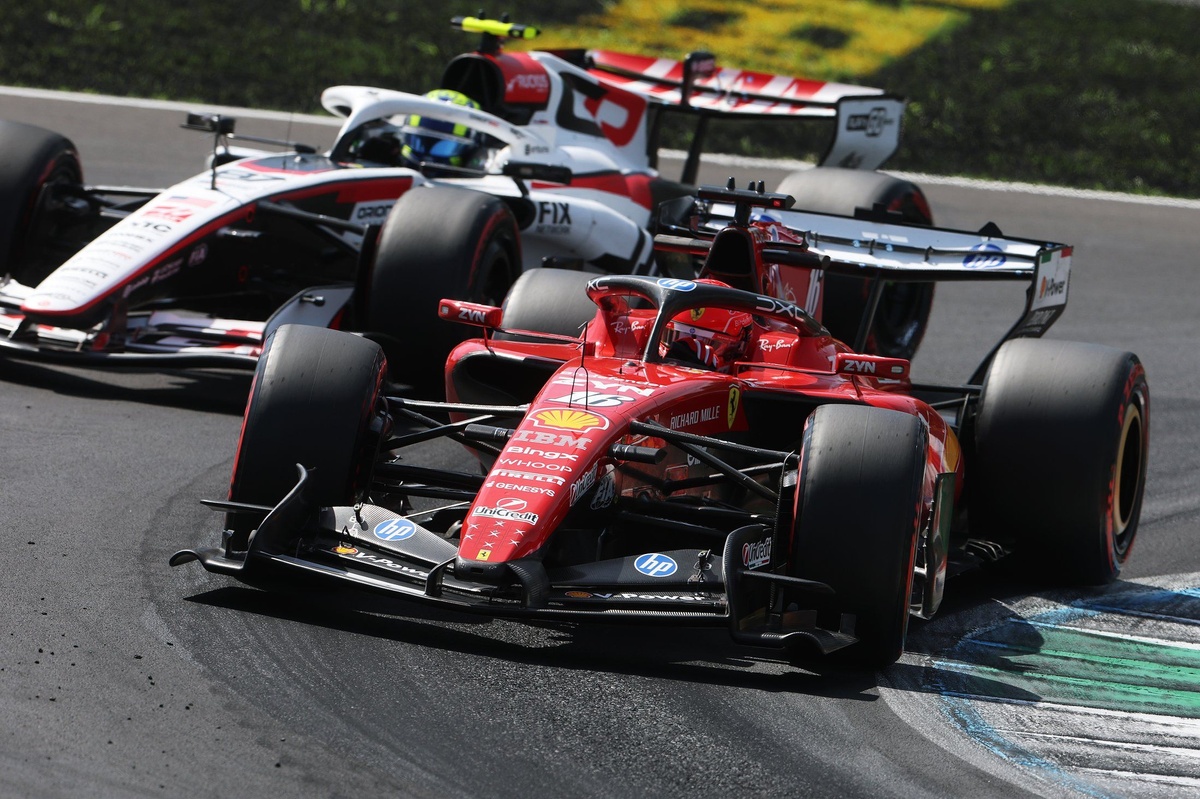
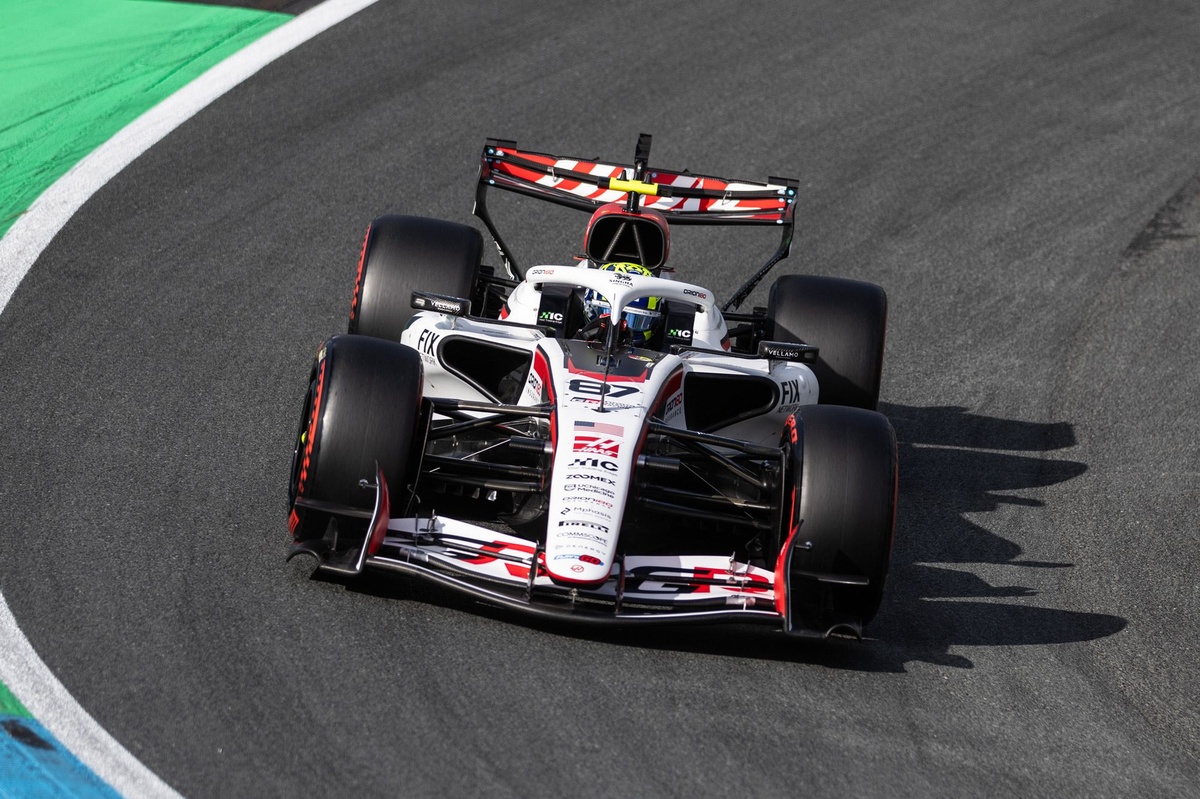
    Oliver Bearman has downplayed the impact of Ferrari’s ADUO 2 power unit upgrade, describing it as “a much smaller step” compared to the revised chassis Haas brought to the Italian Grand Prix. The Prancing Horse introduced its second and final power unit upgrade of the 2026 season under the Additional Development and Upgrade Opportunities (ADUO) system, supplying one such powertrain to Haas for the Monza round. The engine was fitted to Bearman’s VF-26.

    Oliver Bearman, Haas F1 Team. Photo by: Sam Bagnall / Sutton Images via Getty Images

    Qualifying Progress Offset by Race-Day Struggles

    The American squad showed slight progress in qualifying, with the British rookie securing 12th place—his best grid slot since the Chinese Grand Prix in March. However, Haas endured a seventh consecutive point-less round at Monza, equalling its worst streak since the 2021 season. Bearman briefly held eighth in the opening laps but slipped back as he could not match the pace of the Alpines and Racing Bulls. Having stayed out under the virtual safety car, he finished 15th.

    Ferrari team principal Fred Vasseur had already tempered expectations, stating the ADUO 2 powertrain would not be a game changer. Bearman echoed that sentiment after qualifying.

    “It’s a much smaller step than what the [aero] upgrade was, let’s say,” the 21-year-old commented. “Of course, there’s a bit more in this track, but in terms of a season average, it wouldn’t have been enough to get us out of the fight for Q1, to be honest, if you put that engine on us in Zandvoort. I don’t think it was a game changer.

    “Of course, more power is always nice, but you’ve read the news about how much it is. It’s definitely beneficial, but the biggest step was the [aero] upgrade, which was more than twice or three times the amount of power we got from the engine – which is testament to the team’s hard work, and I’m really, really proud of them for that.”

    Haas Aero Upgrade Details

    The Haas upgrade for Monza featured a revamped floor and revised bodywork on the sidepods and engine cover. While Esteban Ocon did not receive the new power unit, he benefited from the aerodynamic parts. Nevertheless, the Frenchman ended up seven tenths slower than his teammate in Q2.

    That gap does not equate to the engine deficit alone. Ocon has struggled with the VF-26’s aerodynamic inconsistency—an issue he believes has affected him at 10 of the 13 grands prix so far this year.

    Esteban Ocon, Haas F1 Team. Photo by: Sam Bagnall / Sutton Images via Getty Images

    Ocon: “We Didn’t Get to the Bottom of the Issue”

    Asked after qualifying if the car’s inconsistency had improved compared to practice, Ocon replied:

    “No, it wasn’t, unfortunately. We tried everything we could, taking all the bits in the garage to put it on the car. We did everything that we could, but we didn’t get to the bottom of the issue.

    “Unfortunately, we’re still losing a lot of load compared to Ollie, especially on the rear of the car. It’s not ideal, clearly, but the guys did a mega job by trying that.

    “And I was happy with my lap, you know. At the end of the day, I feel like I did a strong lap, I was happy with it. But the deficit of downforce plus the engine losses, it’s quite a lot around here. So that’s the max that we could have done.”

    The veteran driver did find a silver lining in the performance of the sister car: “They worked on Ollie’s side, yes, they did.”

    Constructors’ Battle Tightens

    Despite the aerodynamic step forward on Bearman’s car, both Haas entries finished behind the Audis. The German manufacturer now trails Haas by just five points in the constructors’ championship, setting up a close fight for the remainder of the season.

    Nico Hulkenberg, Audi F1 Team, Oliver Bearman, Haas F1 Team. Photo by: Andy Hone / LAT Images via Getty Images
  • Haas Updates Car for Monza as Oliver Bearman Remains “sceptical” About VF-26 Performance

    Haas Updates Car for Monza as Oliver Bearman Remains “sceptical” About VF-26 Performance

    Haas has admitted that its rivals have overtaken and out-developed the team during the 2026 Formula 1 season, despite a strong start. Team principal Ayao Komatsu and driver Oliver Bearman remain confident that Haas can close the gap “soon”.

    Haas traditionally begins each season strongly, and it maintained that trend in 2026 by scoring points in the opening three races. That run included a fifth-place finish for Bearman at the Chinese Grand Prix.

    However, the team has since been caught by its rivals as it struggles with an inconsistent car and a slower development rate than midfield competitors Alpine and Racing Bulls.

    “2025 was really the first year for us, or one of very few years, where we seemed to have good pace throughout the year,” Bearman explained ahead of the Dutch Grand Prix. “We actually improved our relative performance as the year went on.

    “Now, 2026 is more of what we’ve seen from Haas in the past, of starting incredibly strong with a really quick car as a base, but not being able to improve like the others have.

    “Quite frankly, we’ve been overtaken right now. We are the 10th-best team. It really hurts, myself and all the others. We were working really hard to make that not be the case, but that’s the reality of where we are right now.”

    Haas has not scored points since the Monaco Grand Prix in June, when Esteban Ocon finished ninth. Since then, inconsistency has limited the team’s ability to extract the maximum performance from its 2026 car.

    Haas will not abandon its 2026 Formula 1 car

    Komatsu remains hopeful that Haas can find solutions to the problems affecting its car. The team principal said the organisation has demonstrated over the past two seasons that it has the technical capability to develop its machinery.

    “So, the last two years, I think we proved to ourselves and the outside world that we can develop the car. We’ve got the people, the technical department is functioning,” Komatsu said ahead of the Zandvoort race.

    “For us to have any remote chance of keeping up with the others, because of the size of our team, everything has to be perfect. But that’s just not realistic in anyone’s life. And the Montreal upgrade wasn’t perfect. Some bits worked, some bits made the car faster, but some bits wasn’t perfect. Actually, [it] made the drivability more difficult as well.

    “So, we’re learning from those lessons. And what’s the objective for the rest of the season? For me, it’s the same as the last two years. We’ve got to prove to ourselves that we can identify the key issues, we can solve the issues and then put it on the car to move forward.”

    Haas’s struggles have prompted questions about when the team will stop developing its 2026 challenger and switch its resources to next year’s car. Komatsu said that is not an option, insisting that Haas must unlock the performance of the VF-26. He believes that process will also benefit the team over the longer term.

    “If you say, OK, fine, ‘26, we started well, but tail off, it’s the first year of regulation. Fine, let’s move on, start ’27. We haven’t solved the fundamental issue. If we do that, it doesn’t give confidence to people,” the Japanese engineer explained.

    “They’ve got to believe in themselves. One of the main driving factors in the way they’re tackling now, together as a team, is the confidence and togetherness they’ve gained from the last two years. That’s why we are developing out of it.”

    Haas confirms Monza upgrades for the Italian Grand Prix

    Haas will bring new parts for the VF-26 to Monza this weekend for the Italian Grand Prix as it attempts to develop its way out of its current performance problems.

    “This weekend, we’re bringing another upgrade package to the car,” Komatsu explained in a statement shared by the team. “So again, it’s critical we maximise our practice time, evaluate our data comprehensively, and strive to keep pushing in the midfield.”

    Bearman cautioned, however, that new parts do not always result in an immediate improvement on track. He said Haas has seen significant differences in downforce from one race to another, meaning that improving the car’s consistency could be as valuable as introducing an upgrade.

    “We have new parts coming,” the Briton said. “But we’re very sceptical in some ways. We have discrepancies in a race like Budapest. We have discrepancies of downforce equivalent to the size of an upgrade. If I have the car that I had in Spa, here [in Zandvoort], it’s like putting an upgrade on the car.

    “An upgrade, I don’t know how much it costs, but many millions. If we can figure out how to get our car to work, it’s for free. If we get the upgrade but it doesn’t perform, then it’s like not getting it. There’s many factors at play, it’s a big challenge.”

    Looking ahead to the Italian Grand Prix, Bearman believes Haas can move up to ninth in the Formula 1 constructors’ order. Aston Martin has recently introduced a major overhaul of its AMR26 and moved away from the back of the field, but Bearman expects Haas to hold an advantage at Monza because of the circuit’s power-sensitive layout.

    “We expect to beat [Aston Martin] in Monza, where it’s a power track,” Bearman said. “But in Hungary, they were faster than us, or at least more consistent. Those are the facts in terms of that. That’s where we are.

    “It really hurts to be sitting here saying that, but that’s the case.”

  • Haas Completes Latest TPC Test as Focus Grows on 2027 F1 Driver Lineup Decision

    Haas Completes Latest TPC Test as Focus Grows on 2027 F1 Driver Lineup Decision

    Haas has completed its latest Testing of Previous Cars (TPC) programme, with Ryo Hirakawa, Leonardo Fornaroli and Rafael Camara driving the team’s 2025 Formula 1 car as scrutiny of its 2027 driver line-up intensifies.

    As the 2027 F1 driver market gathers pace following the summer break, Haas remains one of the few teams yet to formally settle its line-up for next season. Oliver Bearman appears likely to retain his seat, while Esteban Ocon’s future remains under review as Haas evaluates its available options.

    Haas assesses 2027 driver options at Portimao

    The American team conducted a three-day TPC test at Portimao from 26-28 August. Reserve driver Hirakawa shared driving duties with 2025 Formula 2 champion and McLaren development driver Fornaroli, as well as current F2 title contender and Ferrari junior Camara.

    All three drivers completed laps in the VF-25, Haas’ 2025 F1 car, at the Portuguese circuit. The test followed a similar TPC programme at Fuji last month, where Toyota-backed drivers Sho Tsuboi and Nirei Fukuzumi were given running time.

    Haas has not released further details about the Portimao test, but the programme forms part of its broader evaluation of interested drivers before the team makes a final decision on its 2027 line-up.

    Ayao Komatsu, Haas F1 Team

    Photo by: Simon Galloway / LAT Images via Getty Images

    “I think it’s really good that other people are actually interested in us,” Haas team principal Ayao Komatsu said ahead of the Dutch GP last weekend.

    “At the moment, we’re not performing so well. We cannot challenge for points, but I think it’s nice that other people can see the potential in us. Within the constraint how we’re fighting and we’re trying to improve the team. We just take it as a compliment that other drivers are interested.”

    Komatsu has emphasised that his immediate priority is maximising the performance of Haas’ car and drivers in 2026, suggesting the team will not rush its decision on the future pairing.

    Haas has frequently been among the last teams to confirm its driver line-up for the following season during its relatively short F1 history. With other teams expected to maintain stable driver line-ups for 2027, a similar timeline remains possible.

    “We’re not in any rush,” Komatsu said at Zandvoort. “We’re focused on our two drivers, Ollie and Esteban, trying to get the best out of them. They’ve got the tough challenge, right? You know what they are capable of.

    “Ollie has showed it repeatedly, Esteban, when he is happy with the car, you know what he can do. So we need to really just focus on providing them with the best possible car, best set-up adaptation, and get the best out of them. And then both of our drivers are fully focused. So at the moment, we’re focused on that.”