Tag: Nvidia

  • Donald Trump’s Single Word Sparks 300% Altcoin Surge

    Donald Trump’s Single Word Sparks 300% Altcoin Surge

    Key Highlights

    • Solana-based memecoin Super Inu surged over 300% following President Donald Trump’s United Nations General Assembly remarks endorsing “super intelligence” for artificial intelligence.
    • The token’s market capitalization reached approximately $7.23 million post-surge, with reports indicating it is paired with tokenized NVIDIA shares via the Stonk platform.
    • No official connection exists between Super Inu and the U.S. government, Donald Trump, or the Trump family, underscoring the speculative volatility of low-cap memecoins.

    Trump’s UN Address Sparks Memecoin Frenzy

    During his address to the United Nations General Assembly, President Donald Trump declared that his administration would not restrict artificial intelligence but instead encourage “super intelligence”. The President further announced that the term “Super Intelligence” would be officially adopted for artificial intelligence in U.S. government documents. While the remarks centered on national technology policy, cryptocurrency markets reacted almost immediately, demonstrating the outsized influence political rhetoric can exert on speculative digital assets.

    Super Inu Token Surges 300% on Solana

    Within a short window following the President’s speech, Super Inu, a memecoin built on the Solana blockchain, experienced a price surge exceeding 300%. Market data indicates the token’s total market capitalization climbed to roughly $7.23 million at the peak of the rally. According to on-chain analysis and platform disclosures, Super Inu is allegedly paired with tokenized NVIDIA shares and was issued through the Stonk platform, a detail that adds a layer of synthetic asset exposure to the token’s structure.

    No Official Ties to Government or Trump Entity

    Despite the dramatic price action, the President’s UN address made no mention of the Super Inu token, cryptocurrency, or blockchain technology. There is no confirmed official link between the asset and the United States government, Donald Trump, or any member of the Trump family. The rally appears driven entirely by speculative narrative trading, where traders associate keywords from high-profile political speeches with similarly named tokens, regardless of fundamental connections.

    Low-Cap Memecoin Mechanics Amplify Risk

    The Super Inu episode illustrates the inherent mechanics of low-market-capitalization memecoins. Because liquidity pools are shallow, even relatively small buy orders can trigger exponential price increases. Conversely, the same structural fragility means that selling pressure can precipitate equally rapid and severe price collapses, often wiping out late-entry retail investors. Market observers caution that such assets function more as sentiment-driven lottery tickets than as investments tied to underlying utility or adoption.

    Why This Matters

    The Super Inu rally highlights a recurring pattern in cryptocurrency markets where political figures’ public statements—particularly those involving technology buzzwords—act as catalysts for ephemeral speculative bubbles. As the 2024 U.S. election cycle intensifies and AI policy remains a dominant theme, traders and automated bots increasingly scan speeches for trigger terms. This dynamic raises concerns about market manipulation, investor protection, and the broader reputation of the digital asset sector. Regulators and exchange operators may face renewed pressure to monitor or restrict tokens that appear to exploit political branding without authorization.

    Frequently Asked Questions

    Did Donald Trump endorse the Super Inu token?
    No. President Trump’s UN General Assembly speech referenced “super intelligence” as a government policy term for artificial intelligence and did not mention Super Inu, cryptocurrency, or any digital asset.
    What is the Stonk platform’s role in Super Inu?
    According to the source data, Super Inu was issued via the Stonk platform and is allegedly paired with tokenized NVIDIA shares, suggesting a synthetic asset structure rather than a standard memecoin launch.
    Is Super Inu a safe investment?
    The source explicitly states this is not investment advice and warns that low-market-cap memecoins can rise and fall extremely quickly due to thin liquidity, making them highly speculative and risky.
  • Nvidia Invests $3 Billion in SB Energy Ahead of $50 Billion IPO

    Nvidia Invests $3 Billion in SB Energy Ahead of $50 Billion IPO

    Key Highlights

    • Nvidia is investing an additional $1.5 billion in SB Energy through Class N non-voting shares, raising its total equity commitment to $3 billion ahead of the company’s planned Nasdaq IPO.
    • SB Energy’s PORTS-Pike Technology Campus in Ohio, leased long-term to OpenAI with an exclusive Nvidia chip mandate, is designed for 4.25 gigawatts of AI computing capacity, expandable to 8 gigawatts.
    • Nvidia has disclosed up to $108.5 billion in maximum gross exposure tied to AI infrastructure guarantees, including a $105 billion residual value guarantee linked to the Ohio project that phases in as data centers enter service.

    Nvidia Deepens Financial Ties to AI Infrastructure Ahead of SB Energy IPO

    Nvidia is significantly expanding its stake in the physical infrastructure underpinning the artificial intelligence boom, committing an additional $1.5 billion to SB Energy, the SoftBank-backed energy and data center subsidiary preparing for a U.S. initial public offering. The transaction, executed through a private placement and a prepaid forward contract for newly issued Class N non-voting shares priced at the IPO offering price, doubles Nvidia’s total equity commitment in SB Energy to $3 billion. The move gives the chipmaker substantial financial exposure to one of the largest dedicated AI computing campuses under development in the United States without granting voting control over SB Energy’s governance.

    SB Energy Targets $50 Billion Valuation in Nasdaq Listing

    SB Energy filed its IPO registration in late August 2026 and intends to list on the Nasdaq under the ticker SBE, seeking a valuation of roughly $50 billion. The company aims to raise between $5 billion and $7 billion through the public offering, positioning it as one of the larger listings directly tied to the AI infrastructure buildout cycle. Separately, SB Energy is reportedly pursuing an additional $500 million from Japanese investors earmarked specifically for data center and power infrastructure development, according to Bloomberg. As the energy and data center arm of SoftBank Group, SB Energy sits at the intersection of surging AI compute demand and the massive power requirements needed to support it.

    Ohio Campus Anchors Nvidia’s Strategic Bet

    The rationale for Nvidia’s deepening commitment centers on SB Energy’s flagship project: the PORTS-Pike Technology Campus in Ohio. The facility is engineered to deliver an initial 4.25 gigawatts of AI computing load, with expansion potential to 8 gigawatts, placing it among the largest dedicated AI sites in the country. Crucially, the campus is leased long-term to OpenAI under terms that mandate the exclusive use of Nvidia chips. This arrangement creates a direct commercial feedback loop: every watt of computing capacity deployed at PORTS-Pike translates into demand for Nvidia’s graphics processing units, effectively securing a built-in revenue stream tied to the infrastructure Nvidia is helping finance.

    Billion-Dollar Guarantees Extend Beyond Equity

    Nvidia’s involvement extends well beyond equity ownership. In connection with the Ohio project, the company has pledged residual value guarantees reaching as high as $105 billion. According to Invezz, this guarantee sits within a broader $108.5 billion maximum gross exposure Nvidia disclosed in its latest filing, covering AI infrastructure commitments that also include $3.5 billion tied to certain AI-cloud partners. The OpenAI-linked guarantee does not take full effect immediately; obligations are expected to increase as nine data centers enter service, beginning around fiscal 2029, before declining as OpenAI makes lease payments. The guarantee is also conditional, triggered only under specified circumstances such as tenant default or insolvency, which limits its near-term balance-sheet impact while maintaining substantial long-term exposure.

    Why This Matters

    Nvidia’s expanding role illustrates a structural shift in how the AI economy is being financed. Rather than merely selling chips into demand generated by others, Nvidia is increasingly acting as a capital provider and risk partner for the gigawatt-scale infrastructure required to run advanced AI workloads. By embedding chip-exclusivity clauses into long-term leases and backing projects with residual value guarantees, Nvidia secures demand visibility for its product roadmap while assuming financial risks traditionally borne by real estate and infrastructure investors. For the broader market, the SB Energy IPO will serve as a key barometer of public investor appetite for pure-play AI infrastructure assets, and the company’s financial performance—revenue grew 66.4% year-over-year in the first half of 2026 even as net losses widened—highlights the capital-intensive, front-loaded cost profile of building at this scale.

    Frequently Asked Questions

    How much has Nvidia committed to SB Energy in total, and what structure does the latest investment use?
    Nvidia’s total equity commitment to SB Energy now stands at $3 billion following the latest $1.5 billion tranche. The new shares are Class N non-voting shares acquired via a private placement paired with a prepaid forward contract, both priced at the IPO offering price.
    What is the significance of the PORTS-Pike Technology Campus lease to OpenAI?
    The Ohio campus is leased long-term to OpenAI with a contractual requirement for exclusive use of Nvidia chips. This means the facility’s entire 4.25 GW (expandable to 8 GW) computing capacity is tied directly to Nvidia’s GPU business, creating a guaranteed demand channel for its hardware.
    What are the terms and scale of Nvidia’s residual value guarantee for the Ohio project?
    Nvidia has pledged up to $105 billion in residual value guarantees linked to the PORTS-Pike campus, part of a disclosed $108.5 billion maximum gross exposure across AI infrastructure commitments. The guarantee phases in as nine data centers enter service starting around fiscal 2029 and is triggered only under specified conditions such as tenant default or insolvency.
  • Nvidia CEO Claims ‘0% Chance’ World Will End From AI by 2030

    Nvidia CEO Claims ‘0% Chance’ World Will End From AI by 2030

    Key Highlights

    • Nvidia CEO Jensen Huang states there is “absolutely no chance” AI will cause a technology-induced apocalypse within the next four years.
    • Huang made the remarks during an interview with CBS Sunday Morning, pushing back against speculative existential risk narratives.
    • The executive characterized warnings about AI-driven doomsday scenarios as “scaring people” about unproven dangers.

    Huang Dismisses Near-Term AI Apocalypse Scenarios

    Nvidia co-founder and chief executive officer Jensen Huang has issued a definitive rebuttal to narratives forecasting an imminent artificial intelligence catastrophe, declaring there is “absolutely no chance” that AI will trigger a technology-induced apocalypse within the next four years. The comments, delivered during a televised interview with CBS Sunday Morning, represent one of the most direct and time-bound dismissals of existential AI risk to date from a leading figure in the semiconductor and accelerated computing industry.

    Executive Critiques ‘Scaring People’ Over Speculative Dangers

    During the broadcast, Huang addressed the discourse surrounding artificial general intelligence and potential loss of human control. He told the program that “scaring people” about the speculative dangers of… remains a counterproductive framing that distracts from the tangible, near-term benefits and governance challenges of the technology. The chief executive’s choice of language underscores a broader strategy by Nvidia leadership to position AI development as an engineering and safety discipline rather than an uncontrollable existential threat.

    Contextualizing the Four-Year Horizon

    The specific four-year timeframe offered by Huang is notable for its precision. While many AI safety researchers and ethicists debate risks on decadal or indefinite horizons, Huang’s constraint aligns with product roadmap visibility typical in the semiconductor sector. Nvidia’s current architecture cycles, including the Blackwell and Rubin platforms, extend roughly through this period, suggesting the assessment may be grounded in the company’s concrete view of hardware capabilities and deployment trajectories rather than abstract philosophy.

    Why This Matters

    Jensen Huang’s intervention carries significant weight because Nvidia hardware underpins the vast majority of large-scale AI training and inference worldwide. As the primary architect of the computational infrastructure driving the current generative AI wave, his public risk assessment influences investor sentiment, regulatory postures, and enterprise adoption strategies. By explicitly rejecting the “apocalypse” framing in the near term, Huang attempts to steer the policy conversation toward practical safety standards, transparency, and workforce adaptation—areas where industry and government can collaborate—rather than speculative moratoriums or licensing regimes that could consolidate market power. The remarks also signal confidence that current alignment techniques and human-in-the-loop architectures are sufficient to manage model behavior through the next generation of accelerators.

    Frequently Asked Questions

    What exactly did Jensen Huang say about AI ending the world?

    Huang stated there is “absolutely no chance” AI will cause a technology-induced apocalypse in the next four years, and he criticized narratives that focus on “scaring people” about speculative dangers.

    Where did Jensen Huang make these comments?

    The remarks were made during an interview with CBS Sunday Morning.

    Why is Huang’s four-year timeframe significant?

    The four-year horizon aligns with Nvidia’s visible product roadmap (Blackwell, Rubin architectures), suggesting the assessment is based on concrete engineering visibility rather than abstract speculation.

  • Jim Cramer Predicts NVIDIA (NASDAQ:NVDA) Share Price Movement After Anthropic CEO Remarks

    Jim Cramer Predicts NVIDIA (NASDAQ:NVDA) Share Price Movement After Anthropic CEO Remarks

    NVIDIA Corporation (NASDAQ: NVDA) returned to the spotlight this week after prominent AI leaders called for a slowdown in development, sparking fresh debate over the chipmaker’s near-term trajectory. The company’s graphics processing units (GPUs) remain the backbone of AI data-center infrastructure, and the latest commentary from CNBC host Jim Cramer underscored the tension between short-term sentiment and long-term demand.

    Cramer on Amodei’s Remarks and NVIDIA’s Stock Reaction

    Reacting to Anthropic CEO Dario Amodei’s appeal for a development pause, Cramer took to social media to frame the market’s response:

    “Oh, and yes, Dario’s comments send Nvidia’s stock down four and then it works its way lower and then stabilizes. Yes, it’s a buy. But let it come down. The buyback’s not big enough. This stuff now happens in what seems like slow motion for me…”

    The remarks align with Cramer’s broader stance over recent months, during which he has repeatedly expressed frustration with NVIDIA’s share-price weakness while maintaining a bullish long-term outlook. He characterized any pullback triggered by Amodei’s comments as temporary.

    Blackwell Demand and a $2 Trillion Order Backlog

    Underpinning that optimism is unprecedented demand for NVIDIA’s next-generation Blackwell GPUs. In March, CEO Jensen Huang revealed that the company’s initial estimate of 3.6 million units significantly understated actual requirements. The scale of interest was further quantified in the second-quarter earnings release, which disclosed an order backlog exceeding $2 trillion.

    Explosive Revenue Growth Driven by Data-Center Sales

    The AI boom continues to fuel exceptional financial performance. Second-quarter revenue surged 106% year-over-year to $96.22 billion, with the data-center segment contributing $83.7 billion of that total. This concentration highlights NVIDIA’s dominant position in the accelerated-computing market.

    Margin Pressure from a Historic Memory Shortage

    Growth, however, is colliding with a severe global memory shortage. While Q2 gross margins held at 75%, the company guided for a sequential decline to 74% in Q3 and projected a further slide to between 71% and 72% in Q4. The tightening supply of high-bandwidth memory (HBM) is a primary driver of the compression.

    Capacity Constraints May Limit Upside Surprises

    Analysts at Seaport Global have cautioned that NVIDIA’s sold-out production capacity could restrict its ability to deliver positive revenue surprises in coming quarters. With the revenue base resetting at higher levels, the incremental upside from additional supply becomes increasingly difficult to achieve.

  • China’s Modded RTX 5090 GPU Reaches 96GB VRAM at $3,888 Price

    China’s Modded RTX 5090 GPU Reaches 96GB VRAM at $3,888 Price

    Shenzhen Manufacturer Lists Modded RTX 5090 With 96GB VRAM on Alibaba for $3,888

    A Shenzhen manufacturer has done something Nvidia never authorized: it tore apart a GeForce RTX 5090, tripled its memory, and put the result up for sale on Alibaba for less than the price of a decent laptop. On September 11, 2026, Tom’s Hardware reported that Shenzhen Suqiao Intelligent Technology is selling a modified RTX 5090 carrying 96GB of VRAM, up from the card’s stock 32GB, for $3,888. Other Alibaba sellers are listing similar rebuilds closer to $5,900. Neither price is official Nvidia pricing, and neither card is an Nvidia product anymore in any sense the company would recognize.

    What Actually Showed Up on Alibaba This Week

    The listing itself is straightforward: a GeForce RTX 5090, Nvidia’s current flagship gaming GPU built on the Blackwell architecture, with its factory 32GB of GDDR7 memory replaced by 96GB. Tom’s Hardware framed the math directly in its headline, describing the card as offering “3x more VRAM at 65% the cost of the original” relative to comparable market pricing for high-memory alternatives. Whatever the exact baseline for that percentage, the headline figures are simple enough: 96GB of VRAM for $3,888 versus Nvidia’s official $1,999 Founders Edition MSRP for the unmodified 32GB card, or the $2,500 to $5,000 range the RTX 5090 actually trades at on the open retail market in 2026.

    Suqiao is not a hobbyist operation. Reporting describes it as an OEM/ODM manufacturer, meaning it already runs board-level production and assembly work for other brands and is applying that same capability to memory rebuilds. Tom’s Hardware also flagged something worth dwelling on: rumors of leaked Nvidia firmware had reportedly circulated for months before these 96GB cards appeared, suggesting the software side of the mod, getting the GPU to correctly address and report the expanded memory pool, relied on a firmware mechanism that was never meant to leave Nvidia’s internal toolchain.

    This isn’t even the most extreme example on the market. A separate Tom’s Hardware report covers an even rarer modded RTX 5090 carrying 128GB of VRAM, priced at roughly $13,000 and described explicitly as a limited-run prototype rather than a production item. That card sits well outside normal consumer or even prosumer budgets, but it confirms the ceiling modders are chasing: as close to datacenter memory capacity as a gaming die can be pushed.

    Stock RTX 5090 vs. the Modded Alibaba Cards

    Laid side by side, the spec gap explains why buyers are willing to accept a rebuilt card with no factory backing. The table below compares Nvidia’s official RTX 5090, the mainstream 96GB Alibaba mod, the rarer 128GB prototype, and Nvidia’s own China-compliant variant, the RTX 5090D V2, which is a separate and fully legal product built to satisfy export-control performance ceilings rather than a mod.

    Card VRAM Price Status Architecture
    RTX 5090 (Founders Edition) 32GB GDDR7 $1,999 MSRP (Jan. 30, 2025 launch) Official Nvidia product Blackwell
    RTX 5090 96GB (Suqiao mod) 96GB $3,888 on Alibaba Unofficial third-party rebuild Blackwell (modified board)
    RTX 5090 96GB (other Alibaba sellers) 96GB ~$5,900 Unofficial third-party rebuild Blackwell (modified board)
    RTX 5090 128GB (prototype) 128GB ~$13,000 Unofficial, limited-run prototype Blackwell (modified board)
    RTX 5090D V2 (China) ~25% less VRAM/bandwidth than global RTX 5090 $2,299 MSRP in China Official Nvidia China SKU Blackwell (export-compliant)

    That last row matters for context. Nvidia already sells a China-specific, deliberately downgraded RTX 5090 variant, the RTX 5090D V2, which trims roughly a quarter of the VRAM and memory bandwidth off the global card to stay under export-control performance thresholds, while keeping the same $2,299 MSRP in China according to Tom’s Hardware’s coverage. In other words, Nvidia’s own compliant answer to Chinese demand for the RTX 5090 is a card with less memory. The Alibaba mod scene is doing the opposite: taking the globally sold, uncapped RTX 5090 and pushing memory well past what Nvidia offers in any version, official or restricted.

    This Isn’t New: The RTX 4090 48GB Mod Economy Since 2023

    The RTX 5090 story is a sequel. Chinese workshops have been rebuilding RTX 4090 cards since 2023, doubling their stock 24GB of GDDR6X to 48GB and marketing the results under names like “RTX 4090D 48G” (a companion mod bumps the RTX 4080 from 16GB to 32GB). These conversions were never supported by Nvidia and were documented independently by outlets including Tom’s Hardware, TweakTown, ExtremeTech, and HotHardware, along with a steady stream of Reddit and Taobao listings tracked by the r/LocalLLaMA community.

    The technique is closer to factory rework than garage tinkering. Technicians desolder the original Ada Lovelace GPU die and memory chips from a donor RTX 4090, then transplant them onto a custom “clamshell” PCB that carries memory packages on both sides of the board instead of one. Twelve additional Micron GDDR6X modules go on alongside the original twelve, doubling the total to 24 chips, and a custom BIOS is flashed to make the card correctly enumerate 48GB instead of 24GB. Tom’s Hardware traced the software trick back to a leaked Nvidia BIOS mechanism for partial memory-controller changes, the same category of leak now suspected in the RTX 5090’s 96GB conversion.

    Pricing has followed a consistent pattern across three years and two GPU generations, summarized below using figures reported by Tom’s Hardware, TweakTown, BigGo News, and UK/EU repair shops that now offer the same service as a standing catalog item rather than a one-off mod.

    Source / Market Mod Reported Price Notes
    Chinese retail (TweakTown, BigGo News) RTX 4090 24GB → 48GB ~$3,400 (with AIO cooler) Sold openly in China, early 2025
    Taobao listings (Reddit-tracked) RTX 4090 24GB → 48GB / “4090D” variant ~$3,300 / ~$2,900 Multiple active sellers as of 2025-2026
    Component cost breakdown (Tom’s Hardware) Upgrade kit only ~$430–$1,800+ (excludes donor card) 12 extra GDDR6X modules ~$288 total, plus custom PCB/cooler
    UK repair shop (Blackstone Repair) RTX 4090 24GB → 48GB From £1,000 Customer sends in own card
    EU repair shop RTX 4090 24GB → 48GB €1,600 (own card) / €3,900 (card included) 3-month shop warranty
    Alibaba (Shenzhen Suqiao) RTX 5090 32GB → 96GB $3,888 September 11, 2026 listing

    The RTX 4090 mod economy has had three years to mature into something resembling an actual supply chain, with component sourcing, standardized kits, and international repair shops now offering the same service outside China. The RTX 5090 conversion is following the identical playbook on a newer, more expensive donor card.

    Why VRAM, Specifically, Is the Thing Worth Rebuilding a GPU For

    Gamers rarely need more than 16GB to 24GB of VRAM even at 4K with ray tracing enabled. AI inference and fine-tuning workloads are a different story: model size, context length, and batch size all scale directly with available memory, and running out of VRAM doesn’t degrade a large language model’s performance gracefully, it simply stops the job from running at all. That’s the specific pain point these mods target. Chinese buyers documented on Reddit have used 48GB RTX 4090 mods to run Llama 3.1 70B locally and to train video generation models at 720p resolution with a batch size of four, workloads that would otherwise require a genuine datacenter card or a cloud GPU rental.

    That’s the economic logic driving both the RTX 4090 and RTX 5090 mod markets: a rebuilt gaming card that costs $3,000 to $4,000 delivers memory capacity that would otherwise require equipment priced in the tens of thousands of dollars, with none of the export paperwork.

    The Export Control Backdrop Making These Mods Worth the Risk

    None of this happens in a vacuum. U.S. export policy on Nvidia’s AI-class chips to China shifted twice in 2026, and both shifts help explain why a modded gaming card looks attractive to Chinese AI teams. In a January 2026 final rule, the Bureau of Industry and Security moved Nvidia’s H200 and AMD’s MI325X from a “presumption of denial” posture to “case-by-case licensing” for exports to China and Macau, according to BIS’s own press release. The change applies only to chips under a specific performance ceiling (total processing performance below 21,000 and DRAM bandwidth below 6,500 GB/s), and approval still requires third-party U.S. testing, customer-screening commitments, and a hard cap limiting China to no more than 50% of the volume sold to American customers.

    Nvidia’s Blackwell-generation datacenter chips, the B100, B200, and GB200, remain flatly excluded from that opening. They sit under presumption-of-denial status for China in 2026, a restriction reinforced on May 31, 2026, when BIS issued weekend guidance clarifying that license requirements apply to any company whose ultimate parent is headquartered in China, even if the purchasing entity sits in a subsidiary outside the country, according to reporting from Al Jazeera. That guidance closed a subsidiary workaround that some Chinese-linked firms had reportedly used to acquire Blackwell hardware indirectly. Blackwell chips also depend on TSMC’s 4NP process node, which is separately barred from China-bound production runs under U.S. national-security rules, adding a manufacturing-level barrier on top of the licensing one.

    Put plainly: the newest, most capable Nvidia AI silicon is essentially unreachable for Chinese buyers in 2026, and even the mid-tier H200 requires clearing a licensing gauntlet most smaller labs and startups can’t navigate. A rebuilt gaming GPU, bought retail and modified domestically, sidesteps every part of that process. It’s not a datacenter-class part, but for teams doing inference or fine-tuning at a moderate scale, 96GB of memory for under $4,000 is a workable substitute that requires no license, no compliance review, and no wait.

    What the Warranty Fine Print Actually Says

    Buyers of these cards are trading Nvidia’s backing for the mod shop’s own guarantee, and that trade is total. Nvidia’s official GeForce Graphics Cards Warranty covers manufacturing defects and hardware component failures for three years from the date of purchase, but explicitly excludes damage tied to abuse, misuse, negligence, or misapplication of service by a non-authorized party. Nvidia’s broader service terms for its DGX line go further, stating coverage applies only to unmodified products used exactly as documented, and that opening a case for self-service, let alone desoldering the GPU die, voids support entirely.

    Once a card like the RTX 5090 or RTX 4090 has its memory chips physically replaced and its BIOS re-flashed, it is no longer, in Nvidia’s terms, an unmodified product. The three-year factory warranty is gone the moment the rework begins. That’s precisely why the mod shops profiled by Tom’s Hardware, Blackstone Repair, and various EU services offer their own short-term coverage, typically just three months, reflecting the real failure risk baked into a hand-reworked, non-standard board.

    Modded Gaming Cards vs. Real Datacenter Silicon

    Even at 96GB or 128GB, a modified RTX 5090 is not a substitute for genuine enterprise AI hardware, it’s a budget alternative for teams priced out of the real thing. The gap in both capacity and cost is stark.

    GPU Memory Hardware List Price Cloud Rental (per GPU/hr)
    RTX 5090 96GB (modded) 96GB GDDR7 $3,888 Not applicable (retail card)
    Nvidia H100 80GB HBM ~$31,000; 8-GPU HGX system $250,000–$320,000 $0.57–$14.90 (avg. ~$3.99–$4.09 on major platforms)
    Nvidia H200 141GB HBM3e ~$39,999 (retailer list) $0.93–$13.78 (~$3.22 typical)
    Nvidia B200 192GB HBM3e ~$50,000–$70,000 (rumored) $3.35–$16.11 (~$5.25 typical)

    The comparison explains the appeal without overselling it. A single H100 card lists around $31,000, and an eight-GPU HGX H100 system runs $250,000 to $320,000, according to pricing data compiled by GetDeploying and Morphllm. A modded RTX 5090 costs roughly an eighth of a single H100’s list price for a bit more raw memory (96GB versus 80GB), but none of the HBM bandwidth, error correction, NVLink interconnect, or driver-level enterprise support that make H100, H200, and B200 the actual workhorses of large-scale AI training. For a closer look at how the stock RTX 5090 stacks up against its predecessor on pure gaming performance, see our RTX 5090 vs RTX 4090 comparison. What the modded card buys is memory capacity for inference and mid-scale fine-tuning, not a datacenter replacement.

    A Bigger Pattern: 2026’s Year of Export-Control Workarounds

    The Alibaba GPU mod is one data point in a much larger story that’s played out across 2026: Chinese entities finding creative, sometimes legally contested paths around U.S. chip restrictions. Reporting this year uncovered Megaspeed’s Malaysian subsidiary, Speedmatrix, purchasing an estimated $2 billion in Nvidia chips, and Chinese server maker Inspur routing roughly $5.6 billion in Nvidia hardware purchases through Aivres, an offshore-registered entity. Samsung and SK Hynix have also been drawn into the picture, testing China-made chipmaking tools after four of their fabs lost Verified End User status earlier in 2026, forcing a review of which equipment those fabs can keep using. Meanwhile, Beijing has publicly rejected U.S. claims that Chinese AI labs distilled American models to shortcut their own development, naming six firms in its rebuttal.

    None of those stories involve physically modifying consumer GPUs, but they share the same underlying dynamic: export restrictions create a price and access gap, and someone, whether a shell subsidiary, a chip-tool importer, or a Shenzhen OEM with a soldering iron, moves to close it. The RTX 5090 mod is simply the version of that story that plays out on a retail marketplace instead of in a corporate structuring memo.

    Market Impact: What This Means for Nvidia’s Product Strategy

    For Nvidia, a thriving gray-market mod economy is an awkward signal wrapped around otherwise good news. The fact that Chinese buyers are willing to pay a premium to rebuild an already-expensive consumer card into something resembling a workstation GPU confirms just how much unmet demand exists for mid-tier AI compute inside China, demand Nvidia’s own compliant product, the RTX 5090D V2, was specifically designed not to fully satisfy by trimming its VRAM and bandwidth below the global card. Every modded RTX 5090 sold outside Nvidia’s channel is also a card Nvidia didn’t get standard margin on twice: once at original retail, and again on whatever premium the reseller charges after the rebuild, since the donor card itself still had to be purchased at market price before the mod shop touched it.

    There’s also a support-cost angle. Even though Nvidia’s warranty explicitly excludes modified hardware, a card as visibly non-standard as a clamshell-rebuilt RTX 5090 with double-sided memory chips is unlikely to pass unnoticed if it ever reaches an authorized service center, but the sheer volume of RTX 4090 mods documented since 2023 suggests enforcement at the point of sale, rather than after the fact, has not meaningfully slowed the practice.

    Competitive Landscape: How This Compares Across the GPU Industry

    Nvidia isn’t the only company whose chips are caught in this dynamic, but it is by far the largest target because of its dominant position in AI compute. AMD’s MI325X falls under the same case-by-case H200-tier licensing framework the January 2026 BIS rule established, meaning it faces an identical, if smaller-scale, version of the same access gap. There’s no public reporting of a comparable gray-market VRAM-mod economy built around AMD’s Radeon gaming cards, which likely reflects Nvidia’s overwhelming share of both the gaming GPU market and the AI software ecosystem, since CUDA compatibility matters enormously for anyone trying to repurpose a gaming card for machine learning work, and that ecosystem lock-in points buyers toward GeForce cards specifically.

    On the memory side, Micron and Samsung GDDR6X and GDDR7 chips are the components actually being harvested and re-soldered in these mods, meaning the memory makers are, indirectly, supplying both Nvidia’s official product line and the parallel gray-market rebuild industry at the same time, through entirely separate distribution channels.

    The Cost-Per-Gigabyte Math Buyers Are Actually Running

    Strip away the marketing angle and the decision comes down to simple arithmetic that Chinese AI buyers are clearly already running for themselves.

    • Stock RTX 5090: $1,999 / 32GB = $62.47 per GB
    • Modded RTX 5090 96GB: $3,888 / 96GB = $40.50 per GB
    • Nvidia H100: ~$31,000 / 80GB = $387.50 per GB
    • Nvidia H200: ~$39,999 / 141GB = $283.68 per GB
    • Nvidia B200: ~$60,000 / 192GB = $312.50 per GB (midpoint of rumored range)

    By raw cost-per-gigabyte, the modded card is cheaper than every legitimate option on the list, including the stock RTX 5090 itself. That math ignores bandwidth, reliability, support, and the fact that GDDR7 is not HBM3e, but for a buyer whose bottleneck is simply fitting a large model into memory at all, it’s an easy number to be persuaded by.

    Historical Context: Gray Markets Have Always Chased Export Bans

    The pattern isn’t unique to GPUs. Whenever a government restricts a technology’s flow to a specific market, that market historically self-organizes to route around the restriction, from Cold War-era electronics smuggling to more recent cases of restricted networking and semiconductor equipment reaching sanctioned buyers through third countries. What’s notable about the RTX 4090 and RTX 5090 mod economy is how visible it is. These aren’t hidden transactions, they’re listed openly on Alibaba, discussed openly on Reddit and Bilibili, and covered openly by mainstream tech press. The openness itself is a signal that mod shops and their customers view the practice as occupying a gray zone rather than a clearly illegal one, since VRAM modification of a legally purchased consumer product sits in a different legal category than smuggling a restricted datacenter chip across a border.

    Predictions: Where This Goes From Here

    Based on the trajectory from the RTX 4090 mod cycle to the RTX 5090 cycle now underway, a few outcomes look likely over the next 12 to 18 months.

    • Mod pricing will compress. The RTX 4090’s 48GB conversion dropped from an early premium toward roughly $2,900 to $3,400 within about two years of appearing; expect the RTX 5090’s 96GB mod to follow a similar downward curve as more Shenzhen shops enter the market and component sourcing scales.
    • Nvidia will keep segmenting China-specific SKUs rather than chasing individual mod shops. The RTX 5090D V2’s reduced-spec, same-price approach suggests Nvidia’s strategy is to control what it can, official channel products, rather than police what it can’t, aftermarket rebuilds of cards already sold.
    • U.S. export policy will likely see further incremental adjustment rather than a single dramatic reversal, continuing the back-and-forth seen in the January 2026 H200 easing followed by the May 2026 subsidiary-loophole crackdown.
    • Expect a 128GB or higher modded tier to become more commercially available, following the same escalation path that took the RTX 4090 mod scene from 48GB toward the rarer 96GB variant over roughly two years.
    • Scrutiny of secondhand and gray-market GPU resale will increase globally as regulators in the U.S. and EU pay closer attention to where high-VRAM consumer cards ultimately end up, given their dual-use potential for AI workloads.

    What Buyers Outside China Should Take Away From This

    For readers outside China who might be tempted by a heavily discounted, high-VRAM RTX 5090 or RTX 4090 showing up on a resale platform or an overseas Alibaba storefront, the practical risk calculus hasn’t changed from what has applied to modded 4090s since 2023: no Nvidia warranty, no guarantee the BIOS mod remains stable under sustained load, and no recourse beyond whatever short-term guarantee the individual mod shop offers. For workloads that genuinely need the memory and can tolerate that risk, particularly hobbyists and small labs running local large language models who would otherwise be priced out of any high-VRAM option entirely, the economics are real. For anyone running production workloads, the gap between a $3,888 gray-market card and a supported, warrantied piece of hardware is the entire point of paying more in the first place. For more on how AI chip pricing and availability are reshaping the broader hardware market, see our ongoing AI chips coverage.

    Frequently Asked Questions

    What is the China-modified RTX 5090 with 96GB of VRAM?

    It’s a standard Nvidia GeForce RTX 5090 that has had its factory 32GB of GDDR7 memory removed and replaced with 96GB through a board-level rework. Shenzhen Suqiao Intelligent Technology began selling the modified cards on Alibaba around September 11, 2026, for $3,888, with other sellers listing similar cards closer to $5,900.

    How does the price compare to the official RTX 5090?

    Nvidia’s official RTX 5090 launched on January 30, 2025, at a $1,999 Founders Edition MSRP with 32GB of VRAM. The modded 96GB version costs roughly $3,888 to $5,900 depending on the seller, roughly double to triple the original MSRP for three times the memory.

    Does modifying an RTX 5090 or RTX 4090 void the Nvidia warranty?

    Yes. Nvidia’s official GeForce Graphics Cards Warranty excludes damage or issues caused by abuse, misuse, or servicing by a non-authorized party, and the company’s broader service terms state that support only applies to unmodified products. A card with its GPU die and memory desoldered and replaced is no longer considered unmodified.

    Why do buyers want more VRAM than Nvidia officially provides?

    AI inference and fine-tuning workloads scale directly with available memory. Larger VRAM pools let a single GPU load bigger language models, longer context windows, or larger training batch sizes. Buyers of 48GB RTX 4090 mods have reported running Llama 3.1 70B locally and training video generation models, workloads that would otherwise require far more expensive datacenter hardware.

    What’s the difference between this mod and Nvidia’s own RTX 5090D V2?

    The RTX 5090D V2 is an official, Nvidia-sanctioned China-market SKU that reduces VRAM and memory bandwidth by roughly 25% compared to the global RTX 5090, in order to comply with U.S. export-control performance thresholds, while keeping a $2,299 MSRP. The Alibaba mod is the opposite: an unofficial, unsanctioned rebuild of the full global RTX 5090 that increases memory well beyond any version Nvidia sells.

    Are these modded GPUs legal to buy and own?

    Buying and owning a modified consumer GPU is not the same legal question as exporting a restricted datacenter AI chip. The RTX 5090 and RTX 4090 are retail gaming products with no export restriction on the base card; the mods are aftermarket hardware modifications, which typically fall into a legal gray area around warranty and consumer protection rather than export control law. Buyers should not assume any manufacturer support or recourse.

    What is the current status of U.S. export controls on Nvidia AI chips to China in 2026?

    As of 2026, Nvidia’s H200 and AMD’s MI325X are eligible for case-by-case export licensing to China and Macau under a January 2026 BIS rule, subject to performance ceilings, third-party testing, and volume caps. Nvidia’s Blackwell-generation datacenter chips (B100, B200, GB200) remain under a presumption of denial and are effectively banned for China, a position reinforced by May 2026 guidance closing a subsidiary-based workaround.

    Can these modded cards still be used for gaming?

    In principle yes, since the GPU die itself is unchanged, but the added memory provides no gaming benefit since no current game uses anywhere near 32GB of VRAM, let alone 96GB. The mods are built and marketed specifically for AI workloads, not gaming performance.

  • Kalshi Seeks 24/7 Tesla and Nvidia Perpetual Futures as Wall Street Battles Over Regulation

    Kalshi Seeks 24/7 Tesla and Nvidia Perpetual Futures as Wall Street Battles Over Regulation

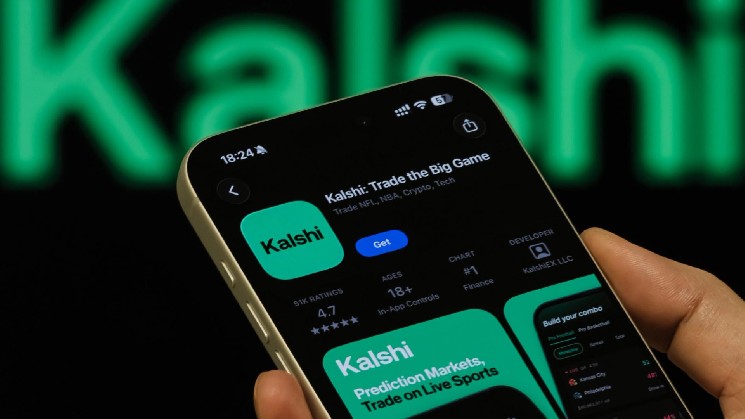
    Prediction marketplace Kalshi is preparing to introduce one of cryptocurrency’s most widely traded instruments to the U.S. equities market, with perpetual futures contracts tied to major companies including Tesla, Apple, and Nvidia that would operate around the clock.

    Regulatory Filing Planned for Dozens of Contracts

    The operator intends to seek regulatory approval for approximately 60 perpetual futures linked to individual stocks and exchange-traded funds, the Wall Street Journal reported late Thursday. If cleared, these would become the first regulated single-stock perpetual futures offered in the United States.

    How Perpetual Futures Work

    Perpetual futures, commonly known as perps, allow traders to speculate on whether an asset will rise or fall, frequently using leverage, without the contract ever reaching an expiration date. Instead of settling at maturity, traders exchange regular funding payments that keep the contract price anchored to the underlying asset’s spot price.

    From Crypto Innovation to Mainstream Markets

    Since the soon-to-be-defunct exchange BitMEX launched these products in 2016, perpetual futures have grown into one of the cryptocurrency sector’s largest business lines. Newer platforms such as Hyperliquid now enable traders to take leveraged positions on bitcoin and hundreds of tokens at any hour.

    Around-the-Clock Price Discovery

    A Tesla perpetual future could continue trading through nights and weekends while Tesla shares on the Nasdaq remain closed, providing a live view of what traders believe the company is worth hours—or even days—before the stock market itself reopens.

  • Zacks Investment Ideas Highlights Dell, Nvidia, Hewlett Packard, Super Micro Computer and Lenovo

    Zacks Investment Ideas Highlights Dell, Nvidia, Hewlett Packard, Super Micro Computer and Lenovo

    Dell Technologies (NYSE: DELL) is scheduled to report its fiscal second-quarter results after the market closes on Tuesday, September 1. Expectations are elevated as demand for artificial intelligence infrastructure continues to drive rapid growth in the company’s server business.

    Dell posted a record first quarter, and another strong performance from its AI-optimized servers could strengthen the bullish outlook for DELL stock. Shares have gained more than 260% year to date but remain about 10% below their 52-week and all-time high of $514.

    Dell’s Fiscal Q2 Earnings Expectations

    The Zacks Consensus Estimate projects fiscal second-quarter earnings of $4.95 per share, more than double the $2.32 reported in the year-ago quarter. Revenue is expected to reach $45.34 billion, up 52% from $29.78 billion a year earlier.

    Wall Street’s current expectations are slightly above Dell’s previous guidance. Management forecast quarterly revenue of $44 billion to $45 billion and adjusted earnings of $4.80 per share, plus or minus $0.10. Dell also projected approximately $15.5 billion in AI server revenue and about 75% growth in Infrastructure Solutions Group revenue.

    The outlook follows a strong first quarter in which Dell generated $16.1 billion in AI-optimized server revenue, a 757% year-over-year increase, while recording $24.4 billion in AI orders. Dell later raised its fiscal 2027 AI server revenue outlook to approximately $60 billion.

    Analyst Estimates Continue to Rise

    Rising earnings estimates are another positive signal ahead of Dell’s quarterly report. Analyst EPS revisions for the second quarter, third quarter, fiscal 2027 and fiscal 2028 have continued to move higher over the past week.

    Over the last 90 days, fiscal 2027 EPS estimates have climbed nearly 11%, from $17.40 to $19.29. Fiscal 2028 EPS estimates have risen almost 10%, from $21.42 to $23.51.

    After reporting adjusted earnings of $10.30 per share last year, Dell is expected to deliver 87% EPS growth in fiscal 2027, followed by projected growth of 22% in fiscal 2028.

    Zacks ESP Signals Potential Earnings Upside

    The Zacks ESP (Expected Surprise Prediction) also points to a potentially strong quarterly performance. The Most Accurate Estimate among Wall Street analysts places Dell’s fiscal second-quarter EPS at $5.26, more than 6% above the Zacks Consensus Estimate of $4.95.

    Dell exceeded first-quarter EPS expectations by nearly 60% and has delivered an average earnings surprise of 18.66% over its last four quarterly reports.

    Dell Expands Its AI Infrastructure Ecosystem

    Dell is one of the most direct hardware beneficiaries of rising AI infrastructure investment through its server business, primarily sold under the PowerEdge (PE) brand. These systems provide the computing hardware used by businesses and data centers for applications, databases, cloud workloads and AI workloads.

    Dell’s partnership with Nvidia continues to expand through the Dell AI Factory, including new PE systems designed around Nvidia’s next-generation Vera Rubin architecture.

    The company is also deepening its relationship with Advanced Micro Devices by offering AI platforms powered by AMD Instinct accelerators.

    Competition remains intense, however. Hewlett Packard Enterprise, Super Micro Computer and Lenovo Group are competing aggressively for AI server and enterprise infrastructure spending. Dell’s ability to preserve strong margins while rapidly increasing AI server shipments will therefore be an important metric to watch.

    Outlook for DELL Stock

    Dell enters its fiscal second-quarter report with substantial momentum, supported by strong AI server demand and steadily rising earnings estimates.

    The trend could leave additional upside for Dell stock, which trades at approximately 24 times forward earnings despite its significant year-to-date rally.

    The primary risk is that expectations have become exceptionally high, with the current consensus already above the upper end of Dell’s initial fiscal second-quarter revenue guidance. Even so, robust AI demand, sharply higher earnings projections and an expanding infrastructure portfolio powered by Nvidia and AMD create a compelling setup ahead of the results.

    Dell currently carries a Zacks Rank #1 (Strong Buy), making DELL one of the more attractive AI infrastructure stocks to consider ahead of Tuesday’s report.

    Zacks Stock Research

    Since 2000, Zacks’ top stock-picking strategies have exceeded the S&P’s average annual gain of 7.7%. The strategies generated average annual gains of 48.4%, 50.2% and 56.7%.

    Investors can access the live picks without cost or obligation through Zacks Investment Research.

    See Stocks Free >>

    Media Contact
    Zacks Investment Research
    800-767-3771 ext. 9339
    support@zacks.com
    https://www.zacks.com

    Past performance is no guarantee of future results. Inherent in any investment is the potential for loss. This material is being provided for informational purposes only and nothing herein constitutes investment, legal, accounting or tax advice, or a recommendation to buy, sell or hold a security. No recommendation or advice is being given as to whether any investment is suitable for a particular investor. It should not be assumed that any investments in securities, companies, sectors or markets identified and described were or will be profitable. All information is current as of the date of herein and is subject to change without notice. Any views or opinions expressed may not reflect those of the firm as a whole. Zacks Investment Research does not engage in investment banking, market making or asset management activities of any securities.

    These returns are from hypothetical portfolios consisting of stocks with Zacks Rank = 1 that were rebalanced monthly with zero transaction costs. These are not the returns of actual portfolios of stocks. The S&P 500 is an unmanaged index. Visit https://www.zacks.com/performance for information about the performance numbers displayed in this press release.

    Readers can also download 7 Best Stocks for the Next 30 Days from Zacks Investment Research.

    This article originally published on Zacks Investment Research (zacks.com).

    Source: finance.yahoo.com

  • Hut 8’s Texas Power Site Included in Anthropic’s $35 Billion AI Deal

    Hut 8’s Texas Power Site Included in Anthropic’s $35 Billion AI Deal

    Bitcoin miner Hut 8 is gaining attention after its Beacon Point data center campus in Texas was linked to Anthropic’s latest artificial intelligence computing contract.

    Anthropic has agreed to spend $35 billion purchasing computing capacity from Lambda, an AI cloud company backed by Nvidia, the Wall Street Journal reported late Monday.

    Some of that capacity will operate through Hut 8’s Beacon Point campus in Nueces County, Texas. Nvidia holds the lease on the facility, Lambda will deploy Nvidia chips there, and Anthropic will purchase the resulting computing power.

    Hut 8 shares initially jumped after the news emerged Monday night, but the stock was only marginally higher in premarket trading.

    Hut 8 had previously disclosed two 15-year leases at Beacon Point covering 704 megawatts of IT capacity without identifying the tenant. The leases represent $19.6 billion in contracted value over their initial terms.

    The 525-acre site has access to up to 1 gigawatt of power and an existing connection to the electricity grid. CoinDesk has asked Hut 8 to confirm how much of Beacon Point’s 704 megawatts of leased capacity is associated with Lambda and Anthropic, and whether Nvidia is the previously undisclosed tenant behind both leases.

    Why Bitcoin Miners Are Appearing in AI Infrastructure Deals

    AI companies require enormous amounts of electricity, while connecting hundreds of megawatts to the grid from a new site can take years. Bitcoin miners already operate large facilities designed around low-cost power and existing grid connections, making their infrastructure attractive to AI developers racing to expand computing capacity.

    Source: cryptonews.net

  • S&P 500 Beats Inflation Again as 30% Earnings Growth Drives Real Returns

    S&P 500 Beats Inflation Again as 30% Earnings Growth Drives Real Returns

    The S&P 500 is on track to deliver another positive inflation-adjusted return in 2026, but the market’s gains are increasingly reliant on corporate profits holding up in a more challenging interest-rate environment.

    The benchmark index has climbed approximately 12%–13% year to date through late August, comfortably outpacing recent U.S. inflation readings. The Consumer Price Index rose about 3.4% over the 12 months through July, while the Federal Reserve’s preferred personal consumption expenditures measure increased 3.7%. As a result, stock investors have achieved a substantial positive real return after accounting for higher consumer prices.

    Corporate Earnings Are Driving More of the S&P 500 Rally

    The key question for the 2026 stock-market rally is what is supporting it.

    S&P 500 companies delivered exceptionally strong second-quarter results. FactSet reported that earnings growth reached its highest level since the second quarter of 2021, while Reuters estimated year-over-year second-quarter growth at approximately 33.5%.

    FactSet also found that 86% of companies reporting through Aug. 7 exceeded earnings-per-share estimates. That compares with five-year and 10-year averages of 78% and 76%, respectively.

    Analysts currently expect third-quarter earnings to grow by roughly 27%–28% year over year, with full-year profit growth projected at approximately 30%.

    Those results give the equity rally a stronger fundamental foundation than a market advance driven solely by expanding valuation multiples.

    Artificial intelligence remains a central part of the market’s growth story. Technology and communication-services companies have generated some of the strongest profit gains, while continued investment in AI infrastructure is supporting earnings expectations.

    AI-related stocks have repeatedly helped lift the latest rally. Nvidia and other semiconductor companies helped push the S&P 500 toward record territory in August.

    Inflation Still Matters as Stocks Rise

    A positive nominal stock-market return does not necessarily translate into the same increase in purchasing power.

    If the S&P 500 gains 13% while inflation reaches 3.5%, the simplified real return is approximately:

    13% − 3.5% = 9.5%.

    The precise inflation-adjusted calculation is slightly different because returns compound, but the subtraction offers a useful approximation.

    Comparing stock-market performance with inflation also helps place record index levels in context. Investors care not only whether the S&P 500 rises, but whether those gains increase purchasing power faster than consumer prices.

    Coinpaper’s guide to real yields explains the same concept from the bond-market perspective: inflation determines how much of a nominal investment return remains in real terms.

    Higher Treasury Yields Pose a Growing Risk

    The main challenge is that persistent inflation is keeping borrowing costs elevated.

    The 30-year Treasury yield recently traded above 5.2%, near its highest level since 2007, while the 10-year yield has remained around 4.7%. Higher Treasury yields increase the returns investors can earn from relatively low-risk government debt and raise the discount rate applied to future corporate profits.

    That pressure has already affected equities. The S&P 500 reached a record 7,798.99 on Aug. 13 before a bond selloff pushed stocks lower. The reversal was especially painful for highly valued technology and semiconductor shares.

    Federal Reserve policy represents another risk. Markets sharply increased expectations for a September rate hike after Chair Kevin Warsh reiterated that inflation remained too high. Renewed pressure on oil prices has added another potential catalyst for inflation.

    For investors, the outlook is more nuanced than the headline “stocks beat inflation.”

    The S&P 500 is still generating a strong real return in 2026, and exceptional earnings growth is providing significant support. However, sustaining that advantage will increasingly depend on corporate profits growing quickly enough to offset persistent inflation, higher bond yields and tighter financial conditions.

    Source: cryptonews.net