
Tag: Multi-chain theft

  • Duelbits Crypto Hack Drains $7M as Casino Goes Offline

    Duelbits Crypto Hack Drains $7M as Casino Goes Offline

    Key Highlights

    • Crypto casino Duelbits suffered a ~$7 million exploit across four blockchain networks, with hot wallets on BNB Chain, Ethereum, Tron, and Bitcoin drained by attackers.
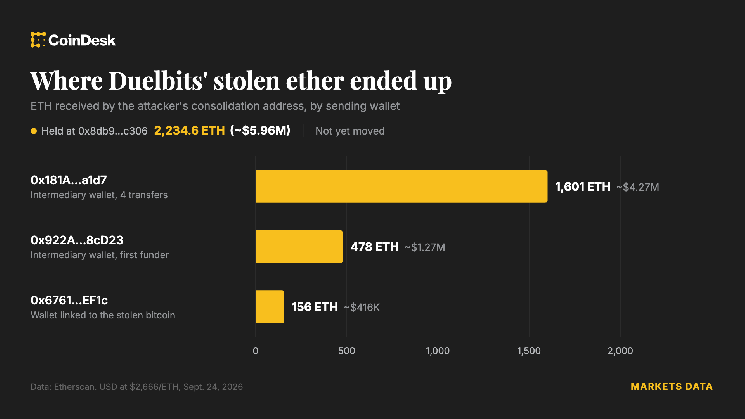
    • Stolen assets—including 836 ETH, 593,000 USDT, 97,000 USDC, 31,500 DAI, 12.4 billion SHIB, and 8.1 BTC—were rapidly swapped into Ether and consolidated into a single address holding roughly 2,234 ETH (~$6 million).
    • Co-founder Joe confirmed the breach and stated the platform will remain offline until the investigation concludes and hot wallets are replenished; users are warned against phishing links circulating during the outage.

    Multi-Chain Hot Wallet Compromise Drains Millions

    Blockchain security firm Scam Sniffer—described in the source as “a company that specializes in blockchain security research”—first flagged a string of unusual transfers from Duelbits wallets on BNB Chain, Ethereum, and Tron. A subsequent detection revealed a loss of 8.1 BTC from the platform’s Bitcoin wallet. The affected wallets were identified as hot wallets: online accounts where a platform holds sufficient cryptocurrency to process client deposits and withdrawals quickly. While convenient for transaction speed, hot wallets carry elevated risk if credentials are compromised.

    Co-Founder Confirms Breach, Investigation Underway

    Duelbits co-founder Joe publicly acknowledged the incident, writing:

    Confirming a ~$7M hack. Still investigating exactly what happened and how.

    Joe added that the casino would remain offline until the investigation is complete and the company has replenished its hot wallets. As of publication, there has been no independent verification of the safety of user funds, and Duelbits has not disclosed how the attackers gained system access or provided a timeline for reopening withdrawals.

    Stolen Funds Converted to Ether, Complicating Recovery

    The attacker’s haul included 836 ETH, approximately 593,000 USDT, 97,000 USDC, 31,500 DAI, and 12.4 billion SHIB. Due to the speed and scale of the withdrawals, Scam Sniffer suspects a private key compromise—meaning the master credentials controlling the wallets were obtained, allowing transfers without exploiting the underlying blockchains. Duelbits has not confirmed this theory.

    Most of the stolen tokens were swiftly exchanged for Ether and consolidated into a single address holding about 2,234 ETH, valued at roughly $6 million at the time of tracing. The funds had not moved onward. This conversion to Ether significantly complicates potential recovery: the issuers of USDT and USDC can freeze those assets, but Ether has no central issuer capable of freezing or reversing transactions.

    Why This Matters

    The Duelbits hack underscores the persistent vulnerability of centralized hot-wallet infrastructure in the crypto-gambling sector. When platforms concentrate liquidity in online wallets for operational speed, a single private-key breach can expose millions across multiple chains simultaneously. The rapid conversion of stablecoins and altcoins into Ether—an asset without a freeze mechanism—demonstrates how attackers structure exits to evade recovery efforts. For users, the incident highlights the importance of verifying platform solvency claims independently and remaining vigilant against phishing campaigns that surge during service outages.

    Frequently Asked Questions

    Which blockchains and assets were affected in the Duelbits hack?

    The exploit hit hot wallets on BNB Chain, Ethereum, Tron, and Bitcoin. Stolen assets included 836 ETH, ~593,000 USDT, 97,000 USDC, 31,500 DAI, 12.4 billion SHIB, and 8.1 BTC.

    Can the stolen funds be frozen or recovered?

    The attacker converted most tokens into Ether and consolidated them in one address. While USDT and USDC issuers can freeze those specific tokens, Ether cannot be frozen because it has no central issuer. Recovery prospects therefore depend on law-enforcement action or the attacker’s future mistakes.

    Is Duelbits currently operational, and what should users do?

    Duelbits has taken its site offline and has not announced a reopening date. Co-founder Joe stated the platform will stay down until the investigation finishes and hot wallets are replenished. Users should avoid any “refund” or “recovery” links circulating during the outage, as these are likely phishing attempts designed to steal wallet credentials.
  • Crypto Casino Duelbits Goes Offline After $7 Million Hot Wallet Hack

    Crypto Casino Duelbits Goes Offline After $7 Million Hot Wallet Hack

    Key Highlights

    • Crypto gambling platform Duelbits suffered a $7 million hot wallet exploit on Thursday, prompting the site to go offline while co-founder Joe confirmed “user funds are safe.”
    • Blockchain security firm Scam Sniffer identified a suspected private key compromise affecting wallets on Ethereum, BNB Chain, Tron, and Bitcoin, with 8.1 BTC also stolen.
    • The attack mirrors the 2023 Stake.com breach, where hackers stole $40 million using the same private key compromise method.

    Duelbits Takes Platform Offline After $7 Million Hot Wallet Drain

    Crypto gambling platform Duelbits went offline on Thursday after attackers drained approximately $7 million from its hot wallets across multiple blockchains. The incident was first flagged by blockchain security firm Scam Sniffer, which reported that Duelbits hot wallets on Ethereum, BNB Chain, and Tron had sent funds to newly created addresses in what appeared to be a private key compromise. The firm later confirmed the company’s Bitcoin hot wallet also lost 8.1 BTC in the attack.

    Co-Founder Confirms Breach, Assures User Funds Secure

    Duelbits co-founder Joe addressed the incident on X, stating: “Confirming a ~$7M hack. Still investigating exactly what happened and how,” adding that “user funds are safe.” He indicated the platform would remain offline until the investigation concludes and its hot wallets are refilled. The direct acknowledgment from leadership came as on-chain data continued to reveal the full scope of the asset movements.

    On-Chain Analysis Reveals Multi-Chain Asset Losses

    Etherscan data shows the Ethereum wallet labeled as a Duelbits hot wallet transferred 836 ETH, approximately 593,000 USDT, 97,000 USDC, 31,500 DAI, and 12.4 billion SHIB to the attacker within minutes. The compromised Ethereum wallet now holds less than $25 in ether. Scam Sniffer’s analysis indicates the simultaneous compromise across Ethereum, BNB Chain, Tron, and Bitcoin networks strongly points to a private key breach rather than a smart contract vulnerability.

    Attack Method Mirrors 2023 Stake.com Breach

    The suspected private key compromise mirrors the methodology used in the 2023 attack on Stake.com, the largest crypto casino by volume, where hackers made off with $40 million. That incident, also attributed to a private key compromise, raised significant concerns about key management practices across the crypto gambling sector. The recurrence of this attack vector suggests persistent operational security challenges for platforms managing large hot wallet balances.

    Why This Matters

    The Duelbits hack underscores the ongoing vulnerability of centralized hot wallet infrastructure in the crypto gambling industry. Despite high-profile incidents like the Stake.com breach, platforms continue to maintain substantial assets in internet-connected wallets secured by single points of failure. The multi-chain nature of this exploit—hitting Ethereum, BNB Chain, Tron, and Bitcoin simultaneously—demonstrates how a single private key compromise can cascade across an operator’s entire treasury. For users, the incident reinforces the importance of platform solvency transparency and the risks inherent in custodial gambling platforms. Regulators and industry watchdogs will likely scrutinize whether Duelbits’ claim that “user funds are safe” holds up during the investigation and whether the platform maintains sufficient cold storage reserves to cover the hot wallet losses without impacting customer balances.

    Frequently Asked Questions

    How much was stolen in the Duelbits hack?

    Approximately $7 million was drained from Duelbits hot wallets across Ethereum, BNB Chain, and Tron, plus an additional 8.1 BTC from the platform’s Bitcoin hot wallet.

    What caused the Duelbits security breach?

    Blockchain security firm Scam Sniffer identified a suspected private key compromise as the attack vector, noting that wallets across multiple chains sent funds to newly created addresses simultaneously.

    Is Duelbits currently operational?

    No, Duelbits has taken its platform offline. Co-founder Joe stated the site will remain offline until the investigation is finished and hot wallets are refilled.