Tag: Monster: The Lizzie Borden Story

  • Charlie Hunnam Reveals How They Filmed ‘craziest puking sequence ever put on screen’ in New Monster Series

    Charlie Hunnam Reveals How They Filmed ‘craziest puking sequence ever put on screen’ in New Monster Series

    Key Highlights

    • Charlie Hunnam and Rebecca Hall filmed an extended, practical-effects vomiting and diarrhea scene for Netflix’s Monster: The Lizzie Borden Story, with Hunnam describing the experience as deeply unpleasant due to his germaphobia.
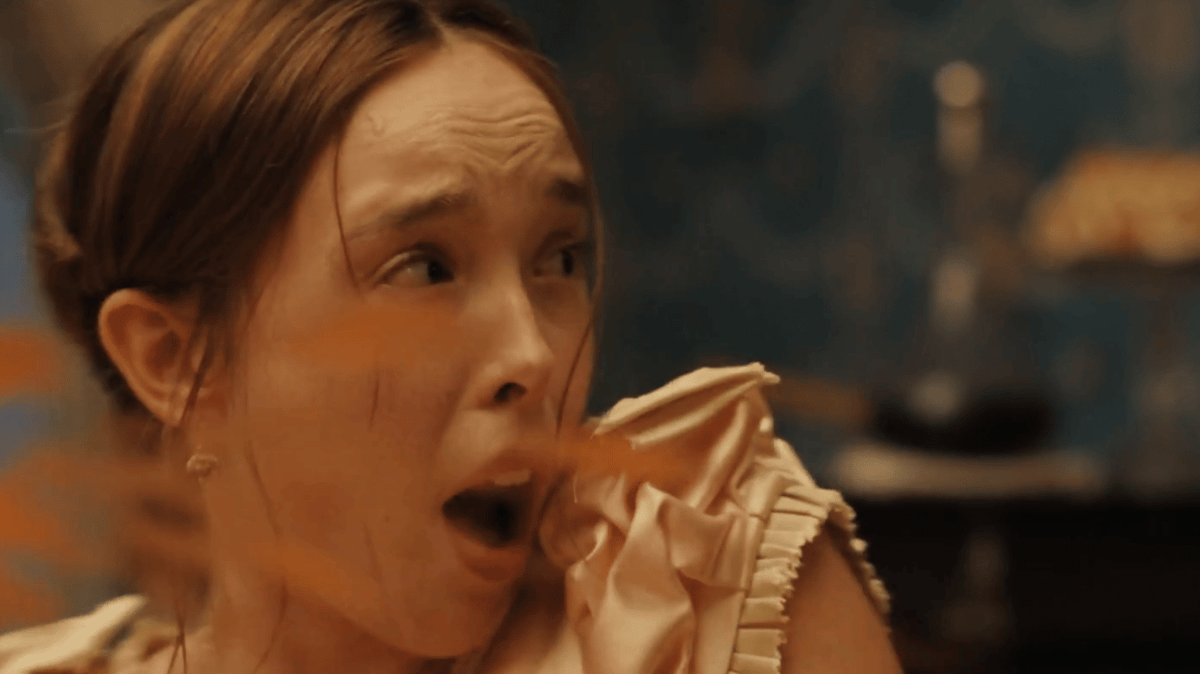
    • Director Carl Franklin Winkler revealed the sequence used strategically placed tubes and multiple test runs—no CGI—to calibrate the angle and velocity of the projectile effects, which used tomato soup as the primary substitute.
    • The scene, in which Lizzie Borden (Ella Beatty) and maid Bridget (Vicky Krieps) serve tainted oysters to murder their father and stepmother, has drawn viral social media reactions for its visceral intensity compared to the series’ axe-murder sequences.

    Hunnam and Hall Detail the Ordeal of Filming Netflix’s Most Grotesque Dinner Scene

    Charlie Hunnam has pulled back the curtain on one of the most physically demanding days of his career, revealing that filming the explosive food-poisoning sequence in Monster: The Lizzie Borden Story lived up to every dread he anticipated. In the limited series, Hunnam portrays Andrew Borden, the wealthy father of the infamous accused axe murderer Lizzie Borden, while Rebecca Hall plays his wife, Abby. The pivotal scene depicts the couple consuming oysters deliberately spoiled by their daughter Lizzie (Ella Beatty) and the household maid Bridget (Vicky Krieps) in a bid to induce fatal food poisoning. What follows is a prolonged, graphic sequence of simultaneous projectile vomiting and implied incontinence at the dinner table.

    A Germaphobe’s Nightmare: Hunnam’s “Unenjoyable” Day on Set

    Speaking to Entertainment Weekly, Hunnam admitted the prospect filled him with dread long before cameras rolled. “It seemed like it was gonna require being very, very uncomfortable and, you know, I’m kind of a germaphobe,” he said. “So even if it’s fake vomit, being covered head to toe in vomit and diarrhea for the day did not seem like a particularly enjoyable experience. And indeed it wasn’t.” The actor’s reluctance underscores the physical commitment required for a sequence that, while fictional in its narrative purpose, demanded very real endurance from its leads.

    Hall Finds Comedy in the Chaos, But Loses a Childhood Comfort Food

    Rebecca Hall approached the day with trepidation, fearing she might genuinely become ill. “It was so funny and preposterous, and nothing was remotely like real vomiting, actually,” she recalled. “It turned out that my biggest challenge was maintaining a straight face when the camera was on me, because I don’t think I’ve ever laughed more.” Yet the experience exacted a surprising toll: the fake vomit was primarily tomato soup. “I never wanna, as long as I live, see a bowl of tomato soup ever, ever, ever again,” Hall declared. “I really liked grilled cheese and tomato soup, but it is over for me now forever.”

    Practical Effects Mastery: Winkler Breaks Down the “Tube” Engineering

    Series director Carl Franklin Winkler emphasized that the sequence relied entirely on practical effects, rejecting digital enhancement in favor of analog engineering. “We do everything once as a dry run without the vomit. So everybody’s faking it,” Winkler explained. “Then we do tubes, which we have to do many tests and figure out what’s the distance, what’s too crazy, what’s just crazy enough, what’s too small. Then we start with them putting stuff in their mouth and just doing that version of it.” The iterative process—calibrating pressure, volume, and trajectory—highlights the technical precision required to sell a scene that balances horror with the dark absurdity Hall described.

    Why This Matters: Practical Effects, Viral Moments, and the “Monster” Anthology Strategy

    The dinner-table sequence has emerged as a breakout moment for Monster: The Lizzie Borden Story, the latest installment in Ryan Murphy and Ian Brennan’s true-crime anthology franchise. While the series dramatizes the 1892 Fall River murders—where Lizzie Borden was acquitted of killing her father and stepmother with an axe—social media discourse has fixated on the vomiting scene over the titular violence. Reactions such as “This puking scene in monster is actually insane omfg” and “Mind u bodies were getting chopped up every episode but THIS was the moment” illustrate a recurring phenomenon in streaming-era horror: visceral, body-horror set pieces often generate more immediate cultural conversation than narrative climaxes. For Netflix, the scene serves as a potent marketing asset, driving curiosity-driven viewership while showcasing the production’s commitment to practical craftsmanship in an era dominated by CGI.

    Frequently Asked Questions

    Who plays Lizzie Borden in the Netflix series?

    Ella Beatty portrays Lizzie Borden in Monster: The Lizzie Borden Story.

    What was the fake vomit made of?

    According to Rebecca Hall, the primary substance used for the projectile vomiting effects was tomato soup.

    Is the vomiting scene computer-generated?

    No. Director Carl Franklin Winkler confirmed the sequence used practical effects—specifically tubes rigged to the actors—with multiple test runs to perfect the angle and velocity. No CGI was involved.
  • Monsters Star Ella Beatty Shares Advice from Famous Hollywood Parents

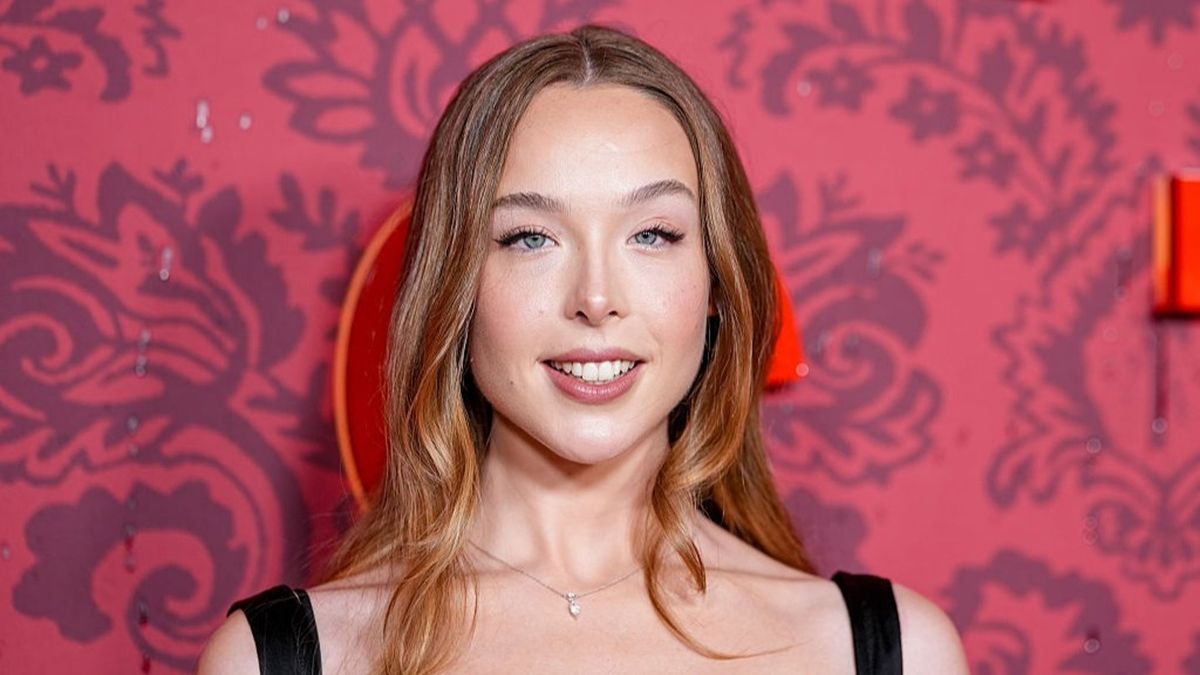
    Monsters Star Ella Beatty Shares Advice from Famous Hollywood Parents

    Key Highlights

    • Ella Beatty, 26, leads the cast of Netflix’s Monster: The Lizzie Borden Story, the fourth season of the anthology series, which premiered September 17.
    • Co-star Sarah Paulson revealed she assessed Beatty entirely on merit, unaware initially that her parents are Warren Beatty and Annette Bening.
    • Beatty credits her parents’ core acting advice — “get interested rather than be interesting” and prioritize listening — as foundational to her craft.

    Ella Beatty Steps Into the Spotlight With Monster: The Lizzie Borden Story

    Netflix debuted the eight-episode fourth installment of its Monster anthology, Monster: The Lizzie Borden Story, on Thursday, September 17, placing 26-year-old Ella Beatty at the center of the macabre historical drama. The Los Angeles-born actress portrays Lizzie Borden, the figure at the heart of the infamous 1892 axe murders, marking her most prominent leading role to date. Beatty arrives at this breakthrough moment with a pedigree that reads like a Hollywood hall of fame: her father is Warren Beatty, 89, the Oscar-winning writer, director, and star of classics including Bonnie and Clyde, Reds, and Dick Tracy; her mother is Annette Bening, 68, a four-time Oscar nominee celebrated for American Beauty, Being Julia, and the recent Nyad; and her aunt is Shirley MacLaine, an Academy Award winner for Terms of Endearment. Yet Beatty’s resume already stands on its own, featuring a turn in Ryan Murphy’s Hulu series Feud: Capote vs. The Swans and a role in the A24 film If I Had Legs I’d Kick You.

    Co-Star Sarah Paulson: ‘I Was Assessing You Entirely on Your Own Merit’

    During a joint interview with Interview Magazine last year, American Horror Story veteran Sarah Paulson — who appears alongside Beatty in the new season — disclosed she had “no idea” of Beatty’s lineage while they worked together. Paulson’s candid assessment underscores the younger actress’s ability to hold the screen independent of her surname. “My interest in you, my estimation of you as a performer, had nothing to do with that,” Paulson told Beatty. “Your father was a great movie star, but in terms of the current knowledge that some young people have today, your name might not be synonymous immediately with one of the most important actors and directors to ever walk the planet… I didn’t know you came from these formidable performers and I was assessing you entirely on your own merit.”

    Juilliard Training and a Lifetime of ‘Playing Pretend’

    Beatty traces her acting impulse to childhood, describing how she “contextualised the world” around her by “playing pretend.” She delayed professional work until after graduating from Juilliard, the prestigious performing arts conservatory. “I didn’t work professionally at all until I graduated from acting school, but I knew that that was who I was before I knew it was going to be my profession,” the former Juilliard student said. That disciplined foundation, combined with an upbringing steeped in cinematic craft, has shaped an approach she characterizes as curious and observant rather than self-centered.

    Parental Wisdom: ‘Get Interested Rather Than Be Interesting’

    Warren Beatty and Annette Bening, who met on the set of the 1991 crime drama Bugsy and share four children, offered their youngest daughter concise, practical guidance as she launched her career. Speaking to E! News, Beatty revealed the core lesson: “As an actor in a scene — always being more curious about what the other person is doing. Get interested rather than be interesting, but also to listen and observe and watch more generally. You never want to be the smartest person in the room. Just really listening is what I learned most from them.” She describes both parents as “incredible artists” and calls her mother her “favourite actress in the world, hero and best friend.”

    Why This Matters: Legacy, Merit, and the ‘Nepo Baby’ Conversation

    Beatty’s emergence coincides with an industry-wide scrutiny of nepotism, a dialogue she addressed directly in a 2024 Vogue interview. “I totally acknowledge that there is an inherent privilege and exposure that comes from having well-known actors as parents,” she said. “And I really hope that I can offer something meaningful.” Her casting as the first female lead in the Monster franchise — which previously centered on male figures such as Jeffrey Dahmer and the Menendez brothers — adds a fresh dimension to the anthology’s exploration of notoriety. “Even by nature of her being the first female monster, I felt the difference there,” Beatty noted. “I was so excited by that opportunity to interrogate that theme.” For Netflix, the series represents a continued bet on high-profile true-crime storytelling; for Beatty, it is a test of whether early critical goodwill translates into lasting leading-lady status.

    Frequently Asked Questions

    When did Monster: The Lizzie Borden Story premiere on Netflix?

    The eight-episode season premiered on Thursday, September 17.

    What previous projects has Ella Beatty appeared in?

    She starred in the Hulu series Feud: Capote vs. The Swans and the A24 film If I Had Legs I’d Kick You before landing the lead in Monster: The Lizzie Borden Story.

    What acting advice did Warren Beatty and Annette Bening give their daughter?

    They emphasized listening and observation on set: “Get interested rather than be interesting… You never want to be the smartest person in the room. Just really listening is what I learned most from them.”

  • Vicky Krieps Plays Dual Roles in ‘Monsters: The Lizzie Borden Story’ as Characters Share Scenes

    Vicky Krieps Plays Dual Roles in ‘Monsters: The Lizzie Borden Story’ as Characters Share Scenes

    Key Highlights

    • Vicky Krieps portrays dual roles in Monster: The Lizzie Borden Story — primary character Bridget ‘Maggie’ Sullivan and historical figure Countess Elizabeth Báthory in fantasy flashback sequences.
    • The fourth instalment of Ryan Murphy’s Netflix anthology premiered on 19 September 2024, dramatizing the unsolved 1892 axe murders of Andrew and Abby Borden in Fall River, Massachusetts.
    • Historical consultant Dr. Annouchka Bayley challenges the ‘Blood Countess’ legend, suggesting Báthory may have been the victim of a politically motivated witch hunt rather than a serial killer.

    Vicky Krieps Anchors Dual Roles in Latest Monster Anthology

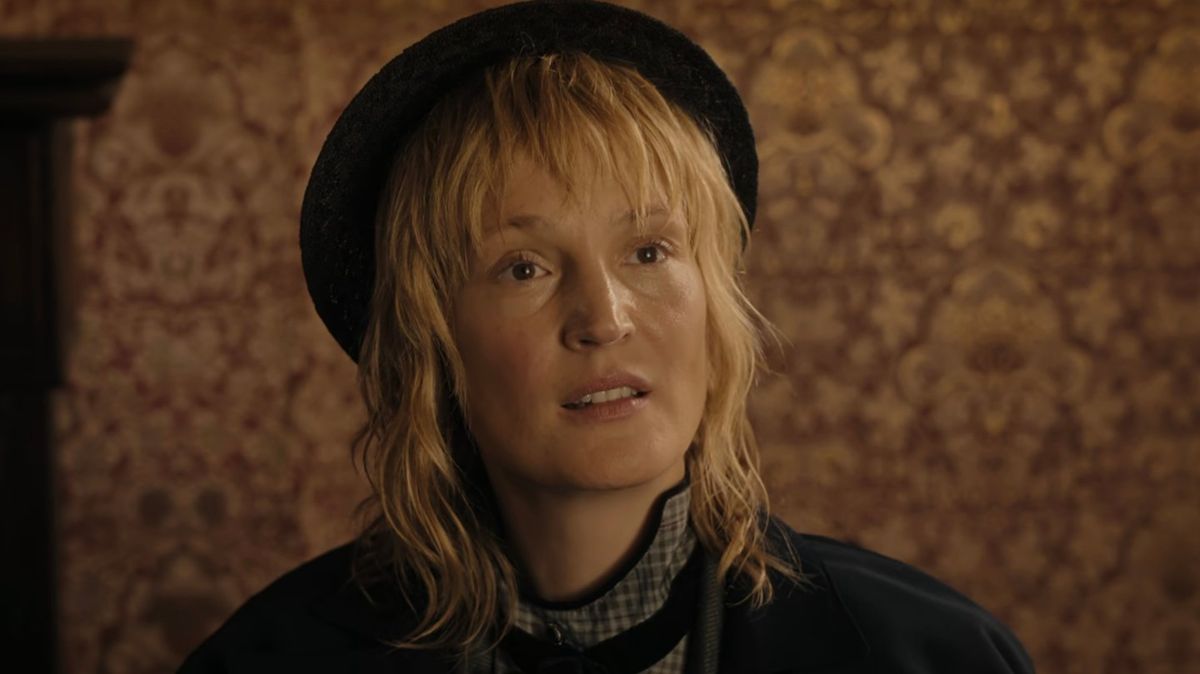
    Luxembourg-born actress Vicky Krieps commands significant screen time in the fourth season of Netflix’s Monster anthology, Monster: The Lizzie Borden Story, which debuted on 19 September 2024. The 42-year-old performer takes on a demanding dual assignment: her primary role as Bridget ‘Maggie’ Sullivan, the Bordens’ housekeeper, and a secondary portrayal of Countess Elizabeth Báthory — the infamous “Blood Countess” — in stylized fantasy flashback sequences filmed in Italy. The casting decision for Báthory came late in production, with co-creator Ian Brennan revealing to Tudum that the role remained unfilled until Ryan Murphy proposed Krieps. “That was all shot in Italy, so we knew that that would be at the end of the schedule anyway, and we just couldn’t think of who would do it or who seemed right,” Brennan explained. “It was Ryan’s idea. He pitched it to her and she loved it. Now it seems like such an obvious choice, but it actually came very late in the process.”

    A Catalyst for Chaos in the Borden Household

    As Bridget Sullivan, Krieps embodies what Brennan describes as a disruptive force within the repressed Borden family dynamic. “She’s like a foreign object that gets introduced to this ecosystem, and completely turns it on its head,” he told TV Insider. The character introduces Lizzie Borden (played by Ella Beatty) to literature, hair dye, sex toys, and the concept of revenge — elements that destabilize the rigid household headed by Andrew Borden (Charlie Hunnam) and his wife Abby (Rebecca Hall). “I think Lizzie’s just completely perplexed [by Bridget] at first. She becomes, very quickly, an object of deep fascination and then desire,” Brennan added. Beatty characterized her collaboration with Krieps as the “most incredible partner in crime,” a description that resonates given the series’ murder-centric narrative.

    Ryan Murphy’s Vision: A Feminist, Unapologetic Reimagining

    Krieps offered insight into Murphy’s creative direction for Bridget during an interview with Vanity Fair. “The way Ryan thought of it, she’s almost like a Mary Poppins that comes out of nowhere, who can be anyone from any time. Ryan said, ‘It’s women-driven, feminist, lesbian, dirty, unapologetic’.” This framing positions the series as a deliberate subversion of traditional true-crime storytelling, centering female agency and desire within a historical case that has long been sensationalized through a patriarchal lens. The Borden murders — Andrew and Abby Borden were hacked to death with an axe in August 1892 — resulted in Lizzie’s acquittal, though she lived under suspicion until her death in 1927 at age 66.

    The Blood Countess: Historical Horror as Narrative Mirror

    The Báthory flashbacks serve as a thematic counterpoint to Lizzie’s story. In the series, Maggie recounts the legend of the Hungarian noblewoman who allegedly bathed in the blood of virgins to preserve her youth. “She was completely restored,” Maggie tells Lizzie. “Because…blood is life.” Historical records accuse Elizabeth Báthory of torturing and killing hundreds of young women between 1590 and 1610 alongside four servants; she was imprisoned in Csejte Castle until her death in 1614, while her alleged accomplices were executed. The show depicts her bathing first in milk, then escalating to blood to achieve “pure white skin like a child.” Folklore links Báthory to the evil queen in Snow White, and the series draws explicit parallels: both women were accused of heinous crimes, neither was convicted, and both became cultural bogeymen.

    Why This Matters: Revisiting History Through a Revisionist Lens

    Monster: The Lizzie Borden Story continues Ryan Murphy’s anthology strategy of re-examining notorious criminal cases through contemporary social frameworks. By casting Krieps in dual roles — one grounded in historical documentation (Sullivan was a real witness at Lizzie’s trial), the other in mythologized history (Báthory) — the series interrogates how female violence is narrated, remembered, and often distorted. The inclusion of Dr. Annouchka Bayley’s scholarly challenge to the Báthory legend underscores a broader editorial intent: to question whether history’s most “monstrous” women were perpetrators or convenient targets for patriarchal suppression. Bayley, a Cambridge associate professor, told the BBC in 2024 after years of research: “I mean, who has the time in one lifetime to, one by one, kill 650 young women? I mean she would have been a busy girl.” She further argued that Báthory — “the first female self-publisher that we have on record” — was likely silenced because her literacy and independence threatened power structures: “And that’s arguably why she needed not only to be shut up, but erased from the history books and, where not erased, turned into a bogeyman. Lock up your daughters — because Báthory is going to come and drain them of their blood to keep her looking young.” This revisionist perspective aligns with the series’ feminist framing and invites viewers to apply similar skepticism to the Lizzie Borden narrative.

    Frequently Asked Questions

    What two characters does Vicky Krieps play in Monster: The Lizzie Borden Story?

    Krieps portrays Bridget ‘Maggie’ Sullivan, the Bordens’ housekeeper and a central figure in the main narrative, and Countess Elizabeth Báthory, the Hungarian “Blood Countess,” who appears in fantasy flashback sequences filmed in Italy.

    When did Monster: The Lizzie Borden Story premiere on Netflix?

    The fourth season of the Monster anthology premiered on Thursday, 19 September 2024.

    Is the Countess Elizabeth Báthory storyline historically accurate?

    The series dramatizes the legendary account of Báthory bathing in blood to preserve her youth. However, historian Dr. Annouchka Bayley has argued that Báthory may have been the victim of a politically motivated witch hunt, noting her status as an early female publisher and suggesting the 650-victim claim is logistically implausible. The show presents the legend as a story within the story, told by Maggie to Lizzie, rather than as established fact.