Tag: Midterm elections

  • Democrats ‘chose visceral hatred for’ Donald Trump Over crypto Clarity Act, Lummis Says

    Democrats ‘chose visceral hatred for’ Donald Trump Over crypto Clarity Act, Lummis Says

    Key Highlights

    • Senator Cynthia Lummis blamed Senate Democrats for blocking a procedural vote on bipartisan crypto market structure legislation last week, calling the outcome “dismayed, dumbfounded and saddened.”
    • Speaking at CoinDesk’s Policy & Regulation event, Lummis alleged Democrats prioritized opposition to President Donald Trump over passing the bill, which had grown from 300 to over 600 pages after Democratic requests for provisions such as bankruptcy protections.
    • The legislation was the product of cross-party negotiations, but failed to advance before the midterm election cycle, leaving digital asset regulatory clarity in limbo.

    Lummis Points Finger at Democratic Opposition to Trump

    Senator Cynthia Lummis (R-Wyo.) delivered a sharp rebuke of her Democratic colleagues on Tuesday, arguing that partisan animosity toward President Donald Trump derailed a carefully negotiated crypto market structure bill that had achieved rare bipartisan consensus. Addressing attendees at CoinDesk’s Policy & Regulation event in Washington, D.C., Lummis said she was “dismayed, dumbfounded and saddened” that the Senate could not advance a key procedural vote on the measure last week.

    The Wyoming Republican framed the failure as a deliberate choice by Democrats to deny the incoming administration a legislative win ahead of the midterm elections. The problem was, as I see it, Democrats hate President [Donald] Trump more than they like good policy, and the way I see it is they chose their visceral hatred for President Trump and denied the opportunity to pass important policy legislation before a midterm, Lummis said. They chose that … pin it on the Democrats.

    Bill Expanded Significantly After Democratic Input

    Lummis emphasized that the legislation was not a partisan product but the result of extensive negotiations between members of both parties. She noted the bill had ballooned from roughly 300 pages to more than 600 after Democrats requested additional provisions addressing issues such as bankruptcy protections, among other items. Those concessions, she argued, demonstrated Republican willingness to accommodate Democratic priorities, only for the bill to stall at the procedural stage.

    The stalled measure represents the most comprehensive attempt to date to establish a clear regulatory framework for digital asset markets in the United States. Its failure to advance leaves critical questions unresolved regarding the classification of tokens, the roles of the SEC and CFTC, consumer protections, and the treatment of digital assets in bankruptcy proceedings — issues the expanded text had sought to address.

    Why This Matters

    The collapse of the bipartisan crypto market structure bill underscores how broader political dynamics — particularly the polarized response to President Trump — can override substantive policy agreement on emerging technologies. With the legislation now stalled, regulatory uncertainty continues to hamper the digital asset industry, driving activity offshore and complicating compliance for U.S.-based firms. The next opportunity for comprehensive crypto legislation will likely depend on the composition of the next Congress and whether either party chooses to revive the negotiated text or pursue a new approach. For now, the SEC and CFTC will continue to rely on existing enforcement authorities, and market participants will operate without the statutory clarity the bill was designed to provide.

    Frequently Asked Questions

    What specific provisions did Democrats request that expanded the bill?

    According to Senator Lummis, Democrats asked for provisions addressing bankruptcy protections, among other items, which caused the bill to grow from roughly 300 pages to over 600 pages.

    Was the crypto market structure bill a partisan or bipartisan effort?

    Lummis described the bill as a bipartisan product resulting from negotiations between members of both parties, though it ultimately failed to advance due to what she characterized as Democratic opposition to President Trump.

    What happens next for crypto regulation in the Senate?

    With the procedural vote blocked before the midterm elections, the legislation is effectively stalled. Future progress will depend on the next Congress’s composition and priorities, and whether lawmakers choose to revive this negotiated text or start anew.

  • Jimmy Kimmel Gleefully Roasts Empty Seats at Trump’s Midterm Convention

    Jimmy Kimmel Gleefully Roasts Empty Seats at Trump’s Midterm Convention

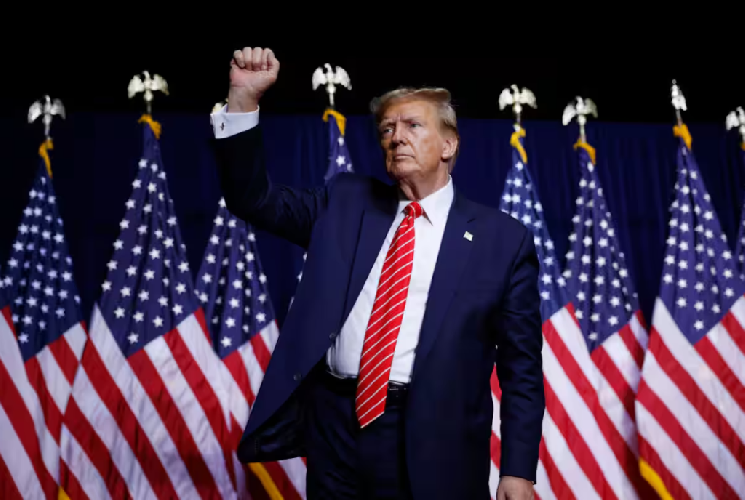
    Former President Donald Trump held a midterm campaign convention in Texas on Wednesday, but attendance appeared lower than expected as several Republicans cited scheduling conflicts for their absence.

    Jimmy Kimmel Highlights Empty Seats at Trump Rally

    Late-night host Jimmy Kimmel devoted a segment to the event, contrasting video footage of vacant seats with Trump’s claim that the venue was packed.

    “Could there be a better metaphor for this presidency than him bragging about the size of his crowd to a bunch of empty seats? I don’t think so. When does the kid come out and inform the emperor that he has no clothes? That arena was as empty as a Waymo,” Kimmel says.

    Kimmel further compared the scene to state-controlled media environments.

    “This is what happens in North Korea. It is really terrifying that this is the news that some people are getting exclusively.”

    The convention was intended to energize Republican voters ahead of the midterm elections, but the visible turnout raised questions about current enthusiasm levels within the party base.

  • Donald Trump’s $5,000 Promise: Potential Impact on Bitcoin and Altcoins

    Donald Trump’s $5,000 Promise: Potential Impact on Bitcoin and Altcoins

    Trump Launches Midterm Campaign With $5,000 Payment Promise to Adult Citizens

    Former President Donald Trump officially kicked off his campaign for the November congressional elections with a rally in Dallas, Texas, where he announced a sweeping financial proposal: a $5,000 payment to every adult U.S. citizen if Republicans secure control of both the Senate and the House of Representatives.

    Details of the Proposed Payment Program

    Speaking at the Republican midterm election rally, Trump outlined the direct payment plan but attached a strict domestic spending requirement. “I don’t want you spending this money in Canada, China, or Germany. The only condition is that the money is spent in the United States.”

    The former president did not specify how the program would be funded during his remarks. According to calculations by Reuters, based on a U.S. adult population of approximately 270 million, the total cost could reach roughly $1.35 trillion. Legal experts cited by Reuters noted that a presidential decree alone would be insufficient to authorize such expenditures; congressional legislation would be required.

    Cryptocurrency Analysts Predict Potential Altcoin Season

    Trump’s proposal has immediately drawn attention from digital asset markets. Cryptocurrency analyst Mark Chadwick suggested the plan could act as a massive liquidity catalyst for the crypto sector, potentially triggering a large-scale altcoin season.

    In a post on his X account, Chadwick compared the proposed payments to the COVID-19 stimulus checks distributed in 2021, which coincided with a significant rally in risk assets. He argued that the infusion of new capital could provide additional momentum to a bull market he believes is already in its early stages. Chadwick had previously noted in his analyses that the long-term downtrend in the altcoin market appeared to have broken, with current technical patterns resembling those seen ahead of previous major altcoin rallies.

    This article does not constitute investment advice.

  • Democrats Eye New Tool to Hold Trump Accountable if They Win House

    Democrats Eye New Tool to Hold Trump Accountable if They Win House

    Democrats Prepare Sweeping Investigations and Legal Battles Ahead of Midterms

    With two months until the midterm elections, Democrats are laying the groundwork to launch far-reaching investigations into the Trump administration and preparing for high-stakes court battles if they win control of the House of Representatives in November.

    Top Investigative Targets: Iran, Ballroom, Business Dealings, Epstein Files

    President Donald Trump’s war with Iran, his White House ballroom project, his family’s business dealings, and the administration’s handling of the Jeffrey Epstein files will be among the top targets of investigations if Democrats take back the House, according to conversations with over a dozen Democratic lawmakers and aides.

    Democrats don’t want to squander the opportunity to act as a check on Trump if they reclaim the majority and say they have learned a lot since the last time the party controlled the House while Trump was in office. Few say they are interested in launching an impeachment process on day one, and many instead are eyeing a new tool that would be at their disposal to try to quickly compel the testimony and documents they seek: lawsuits.

    Legal Standing and the Power to Sue

    In the majority, Democrats would have the ability to sue the Trump administration in a more effective way since they have not had standing to do so in the minority. Whether it is compelling testimony from a top administration official, escalating a fight over obtaining documents, or trying to halt the construction of Trump’s White House ballroom, Democrats plan to be strategic and aggressive about taking their fight to court.

    “We’re going to use every tool in the toolbox and we will have certainly a lot more authority to get ourselves into court in the majority than we did when we were in the minority,”

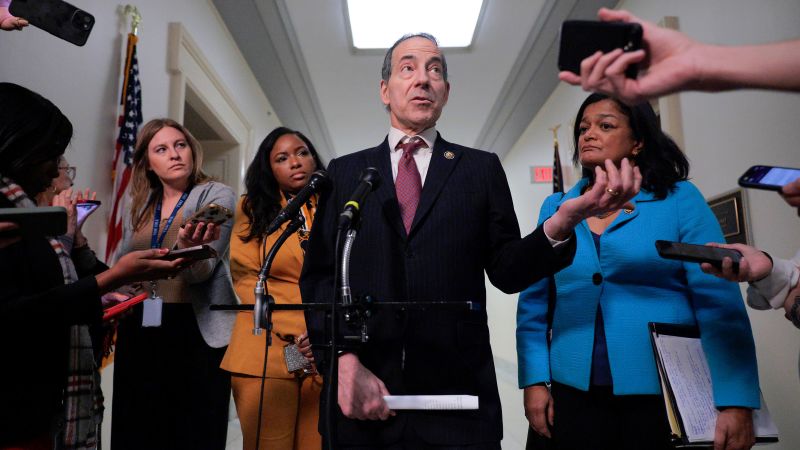
    Democratic Rep. Jamie Raskin, who is in line to lead the powerful House Judiciary Committee, told CNN.

    “We are not taking no for an answer in terms of getting the evidence we need,”

    Raskin said.

    Committee Leaders Outline Specific Probes

    Raskin has already launched investigations into allegations of corrupt government contract deals at Donald Trump Jr.’s venture capital firm and on the Trump administration’s pardon policy. Rep. Robert Garcia, the top Democrat on the House Oversight Committee, wants to interview the president and first lady as well as top officials like Vice President JD Vance and White House Chief of Staff Susie Wiles about how the administration has handled the Epstein matter. Garcia also wants to interview Kushner and Trump family members about their business dealings.

    Democratic Rep. Adam Smith plans to probe the Trump administration’s decision to go to war with Iran and US strikes on alleged drug boats atop the House Armed Services Committee. Democratic Rep. Jared Huffman is laying the groundwork to investigate Trump’s ballroom and other construction projects on the House Natural Resources panel.

    Even in the minority on the House Homeland Security Committee, Democratic Rep. Bennie Thompson has tried to get answers on the administration’s deportation efforts and the practices of Immigration and Customs Enforcement. And that’s without committee gavels, subpoena power, and the standing to sue in court — all of which House Democrats will gain if they win the majority.

    Aggressive Planning and Staffing for Oversight

    For now, lawmakers in line to run committees are working aggressively to outline their top investigative priorities, jockeying for who will investigate what and trying to coordinate an overarching plan on ambitious investigative targets.

    Democratic leadership and committee teams are preparing to launch an aggressive hiring push if they win in November to be ready for the onslaught of investigations they have planned. One of the most important roles will be who Democrats select to be their in-house general counsel, who will help Democrats navigate lawsuits and the courts.

    “If you’re a highly qualified, experienced lawyer or senior staffer out there that wants to be part of this historic moment of accountability think about coming back to the Capitol and being part of this team because we will be staffing up,”

    Huffman told CNN.

    Democrats have laid the groundwork through the creation of a legal task force, which has already racked up wins even with the party in the minority, including successfully stopping the Trump administration from blocking lawmakers from making announced oversight visits to federal immigration detention facilities.

    “Should Democrats get the gavel in either chamber, we expect sustained oversight across a sweeping range of issues and entities. Companies and institutions should use the time they have now to prepare for that scrutiny,”

    said Emily Loeb, a partner at the law firm Jenner & Block, whose team has already been contacted by companies preparing for congressional investigations.

    Court Challenges and Alternative Strategies

    Of course, there’s no guarantee of success in the courts. But Democrats say they are not deterred by that, including a recent decision by the Supreme Court that cleared the way for Trump to continue construction of his massive new ballroom project at the White House, concluding that a preservation group lacked the legal right — known as standing — to challenge the project.

    “Donald Trump will not be able to run out the clock on these illegal construction projects because his buddies on the Supreme Court bounced a case for lack of standing,”

    Huffman said.

    But bringing an issue to court would just be one option at the party’s disposal.

    Anticipating roadblocks from the Trump administration, Democrats also plan to rely heavily on requests for information from the private sector, which they say would not be beholden to the same executive privilege restrictions Trump may invoke on government officials asked to comply with congressional requests or subpoenas.

    And Democrats say they have already developed relationships with multiple whistleblowers both inside and outside the government who they would also rely on in the majority if they can’t get the answers they seek directly from Trump administration officials.

    Introducing legislation would also be a component of the investigative agenda, including trying to give Congress a role in the enactment of the 25th Amendment, imposing stricter requirements barring a president from profiting from a foreign government, and permanently eliminating the “anti-weaponization” fund.

    Impeachment Debate: Strategic Caution vs. Pressure from Rank-and-File

    Raskin was the lead manager for Trump’s second impeachment trial in February 2021, and does not think impeaching Trump should even be in the initial conversation if Democrats reclaim the majority in November, given the chances of conviction in the Senate are so slim.

    “I’ve not heard a single person say to me that they think our top priority should be impeachment of Donald Trump,”

    Raskin told CNN.

    “He hasn’t been convicted, and the chances of conviction on even his most gross and undeniable offenses against the Constitution are slim because he exercises even more authoritarian control over the Republican Congress than he did in the last impeachment.”

    Garcia, meanwhile, said his focus is on finding evidence of what he says is Trump’s corruption.

    “Trump commits an impeachable offense every week. But our job is to stop Trump, to stop his agenda. That’s job number one. So, for us, our job is to (do) investigations and building a case as to why this is the most corrupt person ever to serve,”

    he told CNN.

    But even if impeachment turns out to not be most effective strategy as conviction remains unlikely in the Senate, Smith argued that Democrats should not shy away from making the case for why Trump should be impeached:

    “I’m going to be all in favor of pushing that argument.”

    And while Democratic leaders have not endorsed impeachment, there is still pressure to pursue it within the rank-and-file.

    Dozens of Democrats supported the launch of a formal impeachment debate back in June 2025.

    One of those Democrats to vote back in June, Democratic Rep. Yassamin Ansari, told CNN she supports impeaching Trump but is more focused on showing accountability.

    “I do hear a lot from my constituents about how we need to really prosecute if there are crimes that have been committed and people want to see people in power go to jail if they’ve committed crimes. It’s really that simple,”

    she told CNN.

    “We think now that there could never be another Donald Trump. There could easily be another Donald Trump. There could be a worse version of Donald Trump. And if we don’t show that there are consequences, then people also just won’t trust government.”

    In her view, the mistake Democrats made after the past impeachments, which occurred before she assumed office, was trying to go back to normal afterward.

    “I think in many ways that allowed Trump 2.0 to be so much worse because they thought they could get away with the worst possible things and nothing happened and in fact, he ultimately was re-elected again,”

    Ansari said.

    Another one of those Democrats to vote back in June of last year, Rep. Mark Pocan, who is in line to chair the subcommittee that oversees the White House budget and the now defunct Department of Government Efficiency, now says Democrats need to not get ahead of themselves.

    “I think we’ve got to do our investigation work first and that’s oversight work”

    Pocan said.

    It’s a delicate balance that Democrats are trying to strike as members actively discuss how to deliver accountability without rushing into anything.

    “Everyone’s got an axe to grind with this administration,”

    Democratic Rep. Suhas Subramanyam, who serves on the Oversight Committee, told CNN.

    “I think there are definitely people who, the first thing they want to do is start impeaching Trump. We’ve already had that happen this Congress. I just want to make sure if we do impeachment, that’s it’s going to be an ironclad case.”

    Wanting to be strategic about how to investigate Trump, some Democrats say that momentum for impeaching Trump cabinet officials, particularly Defense Secretary Pete Hegseth, could take off first.

    “Impeaching this president has caused his supporters to dig in even harder. And his party members to dig in and defend him even harder,”

    Democratic Rep. Mary Gay Scanlon, who serves on the House Judiciary Committee told CNN.

    “I suspect that some of those peripheral impeachment efforts might move sooner.”

    Balancing Oversight with Affordability Message and Governing Responsibilities

    Many Democrats, though, argue the entire conversation about a potential future investigative agenda is premature and the focus now is on winning back the House with a sizable majority and keeping up hope that the Senate could also be in play.

    Democrats say they will also be proactive in trying to tie any oversight work to their efforts to address the affordability concerns that many people face, in an effort to combat criticism that their investigations would be squarely about going after Trump.

    “I don’t think they’re incompatible. You cannot address the cost of living without the impact of corruption on the American public. So, I think they’re hand in hand,”

    Democratic Rep. Joe Morelle, who is leading the task force to create the anti-corruption agenda for Democrats if they win the majority, told CNN.

    In the aggressive pursuit of oversight, some Democrats are wary of the caucus losing sight of its affordability message. Making that connection between Democrats’ affordability and anti-corruption agenda is a critical goal for the party this fall in the final sprint ahead of the midterms.

    “If we are entrusted with the majority, we have to meet the moment to turn the ship around,”

    Democratic Rep. Chris Deluzio told CNN.

    “We have to take the economic fight front and center and we cannot only be doing oversight.”

    If they win the majority, House Democrats will also have to balance their efforts to investigate the Trump administration with the reality that Democratic leadership will still have to work with the White House on various issues to ensure basic functions of the government, like keeping the government funded, can continue.

    Democrats were split after House Democratic Leader Hakeem Jeffries recently took a private meeting with Kushner. But many said later they felt reassured after hearing the explanation from the Democratic leader, who said Kushner asked for the meeting and he took it “to discuss the affordability crisis,” and said even if Jeffries were to continue taking meetings with administration officials it would have no bearing on Democrats’ plans for aggressive oversight, even of Kushner.

    Coordinated, Multi-Committee Approach to Maximize Visibility

    Instead of narrowing their list of investigations, the party is warming to the idea of conducting multiple, even overlapping, investigations at once.

    In 2019, Democrats coalesced around an investigation that culminated in the first impeachment of Trump over allegations that the president pressured Ukraine to investigate his political rivals while withholding US security assistance and a White House meeting.

    But in the current environment, Democrats want to be more dynamic and are prepared to have multiple hearings on different issues a day.

    “We’ve got to move fast and that means it can’t all live in two committees,”

    a Democratic aide told CNN.

    “In order to make people feel like real accountability is happening, you need to have a volume and that amount of content needs to be tuned to different audiences so that people actually see it or they won’t believe we are doing anything.”

    Still, other Democrats are looking to leadership for coordination as many committees have overlapping investigative targets, with Smith telling CNN,

    “it’s going to have to be a coordinated effort, not something that each committee is going to be flying off on their own.”


  • Trump’s $5,000 Midterm Dividend Checks: What You Need to Know

    President Donald Trump is reviving direct-payment promises ahead of the November midterm elections, pledging a $5,000 “Trump dividend” to every American adult if Republicans retain control of Congress and announcing $500 refunds for certain Affordable Care Act enrollees. The proposals, unveiled during the GOP’s midterm convention in Dallas, have drawn sharp criticism from Democrats, some Republicans, and policy experts who question their legality, funding, and economic impact.

    Trump’s $5,000 ‘Trump Dividend’ Pledge

    Speaking at the rally on Sept. 9, Trump tied the payment directly to electoral outcomes:

    “If the Republicans win, you win with us, and you get $5,000. It will be called the ‘Trump dividend.’”

    The president said the dividend would be funded by the “tremendous strength and success” of the American economy and must be spent within the United States. He did not specify a funding mechanism or total cost during the speech.

    A White House press release the following day attributed the potential payout to “unleashed trillions in new private investment” and reductions in government waste. However, independent estimates place the price tag at roughly $1.2 trillion, requiring congressional approval.

    Legislative Prospects and Political Reaction

    Sen. Bernie Moreno, R-Ohio, posted on X that he would prepare legislation for the dividend. Senate Majority Leader John Thune, R-S.D., told Fox News on Thursday that whether enough votes exist for passage is a “good question,” adding, “We will cross that bridge when we come to it.”

    Democrats denounced the proposal as election interference. Rep. Jamie Raskin, D-Md., the top Democrat on the Judiciary Committee, called it a “political bribe,” while Rep. Dan Goldman, D-N.Y., labeled the pledge “corrupt and blatantly illegal.”

    Republican criticism also emerged. Florida Gov. Ron DeSantis warned the plan could “lead to more debt and inflation.” Former Rep. Bob Good, R-Va., described the checks as a “socialist vote-buying scheme,” according to The Hill.

    Sen. Susan Collins, R-Maine, told CentralMaine.com: “From the few details we have, it seems that the proposed $5,000 dividend would not have an income cap and would be extraordinarily costly. Tax and spending decisions should be made based on the needs of the American people and the state of the economy; they should not appear to be tied to election results.”

    $500 Obamacare Refund Checks Detailed

    A day after the Dallas rally, the White House released a video and fact sheet outlining $500 payments to roughly 1 million people in 30 states who purchased coverage through Healthcare.gov without receiving premium assistance under the Affordable Care Act. The administration says the refunds stem from excess user fees collected from insurers that were passed on to consumers through higher premiums.

    Trump stated the excessive fees total $500 million: “Our Administration is doing the right thing and giving the money back to the people who were wrongly ripped off.” Checks are expected to be distributed in October.

    Critics Call Refunds ‘Disingenuous’

    Advocates note that Senate Republicans in December 2025 rejected a plan to extend COVID-era Obamacare subsidies that lowered costs for 22 million Americans. Brad Woodhouse, president of the left-leaning advocacy group Protect Our Care, said in a statement: “What an absolute joke. Five hundred dollars is a drop in the bucket compared to what Americans are paying because Trump and Republicans gutted health care to bankroll massive tax breaks for billionaires and big corporations.”

    Previous Trump Payment Initiatives: Mixed Results

    Americans have reason for skepticism based on past promises. In December 2025, all military personnel received a $1,776 “Warrior Dividend” bonus. Although Trump said the funds would come from tariff revenue, the money was ultimately sourced from military housing appropriations in the “One Big Beautiful Bill” law.

    More recently, “Trump Accounts” launched with $1,000 deposits for children born between 2025 and 2028. As of July 6, Trump said 6 million children had accounts, designed as investment starters similar to IRAs for minors.

    However, two other proposed dividends — one from Department of Government Efficiency (DOGE) proceeds and another from tariff revenues — never materialized.

    Economists Warn of Inflation and Feasibility Risks

    Regarding the latest $5,000 proposal, economists caution about macroeconomic side effects. Garrett Watson, vice president of federal tax policy at the nonpartisan Tax Foundation, told USA TODAY: “Given such side effects, the $5,000 dividend checks don’t make sense. The president is promising something that almost certainly can’t be done, from a policy and political perspective.”

    Watson and other analysts warn that injecting $1.2 trillion into the economy without offsetting revenue could exacerbate inflation and push interest rates higher.

    Contributing: Ken Alltucker, Zac Anderson, Aysha Bagchi, Christopher Cann, Daniel de Visé, Joey Garrison, Julia Gomez, Bart Jansen, Melina Khan and Jeanine Santucci

    Mike Snider is a national trending news reporter for USA TODAY. You can follow him on Threads, Bluesky, X and email him at mikegsnider @mikegsnider.bsky.social @mikesnider msnider@usatoday.com.