McLaren Faces Crucial Monza Test After Consecutive F1 Victories
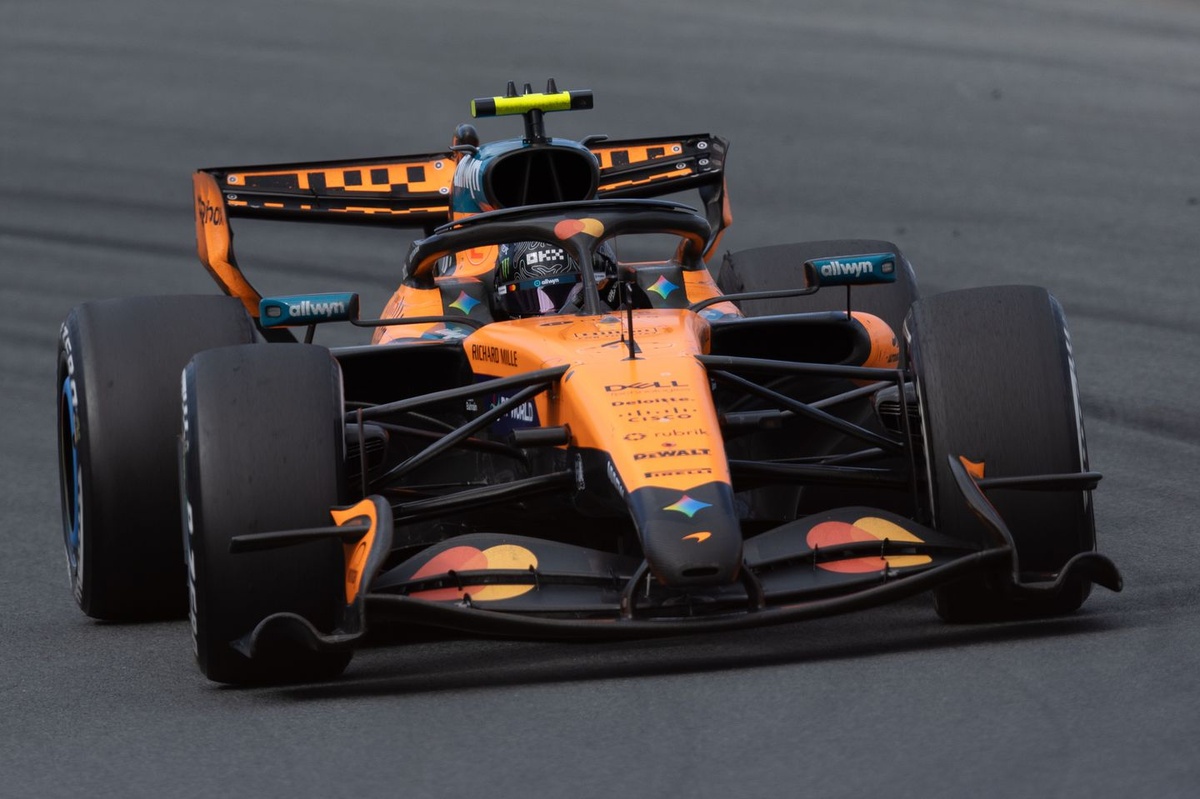
After a difficult start to the 2026 Formula 1 season, McLaren appears to have returned to the front of the grid. The Woking-based team struggled with its understanding of the Mercedes power unit in Australia and suffered a double DNS in China, but consecutive victories in Budapest and Zandvoort have changed the outlook.
Lando Norris has cut his deficit to championship leader Kimi Antonelli to 83 points, reigniting McLaren’s hopes of defending his drivers’ title. However, team principal Andrea Stella is refusing to draw premature conclusions about a potential championship fight.
Monza will test McLaren’s recent progress
Stella wants McLaren to focus on one race at a time rather than look too far ahead.
“Beyond any way of saying, the real approach we have is just one race at a time. There’s not much more you can influence than just maximising what’s next available,” Stella said when asked by Motorsport.com how much confidence this gives McLaren for the second half of the season.
“The next race will be in Monza, and if we think about the demands of Zandvoort and Hungary, and then think about the demands of Monza, we are in a completely different regime.”
That difference makes the Italian Grand Prix an important internal benchmark for McLaren. The Hungaroring and Zandvoort are both high-downforce circuits, while Monza is a high-speed track dominated by long straights and chicanes.
McLaren was able to exploit the strengths of the MCL40 in Hungary and the Netherlands, particularly through medium-speed corners. However, Norris described the car’s slow-speed performance on Saturday as “nowhere near good enough”.
Monza will therefore demand a different set of qualities from the McLaren. Stella considers the circuit one of the team’s most important tests yet because it will reveal whether its recent gains can translate to a low-downforce layout.
Energy management remains a key concern
Unlike Zandvoort and Budapest, Monza is an “energy-starved” circuit, placing greater emphasis on energy management and the team’s understanding of the Mercedes power unit.
McLaren was significantly behind the Mercedes works team in that area at the start of the season. The team has made substantial progress since then, including through the long-awaited simulation tools it received for Spa. Monza will provide a clearer indication of how valuable those improvements are at a circuit where power-unit understanding is especially important.
Stella wants those questions answered before McLaren begins discussing a title challenge.
“So I think if we can confirm our improvements in Monza, then I would say that the answer to your question is yes, then we can look with some optimism at the remainder of the season.
“But first of all, we need to go to Monza and see that our car can express a good performance in the long straights.”
Monza will also test McLaren’s low-downforce configuration, which has not been one of the MCL40’s strongest areas. Stella stressed that the challenge is not limited to understanding the Mercedes power unit.
“We know that drag is not necessarily a point of strength of our car,” he said. “And, for instance, there’s a lot of braking as well, which is not necessarily a point of strength of our car either.”
Stella remains cautious on Norris’ title hopes
For now, Stella is limiting his conclusions to specific circuit characteristics rather than discussing a title defence with Norris. McLaren must first prove that its recent form is not restricted to high-downforce tracks.
“There’s a lot of things that we need to confirm as we head on to the next race”, Stella insisted. “But so far, I think we can confirm is that when we are at high-downforce circuits, with this sort of layout, then we can fight for victories.”
The FIA’s ADUO announcement—covering the Additional Development and Upgrade Opportunities for Formula 1 power units—had been a long time coming. After the results of the first assessment period were shared with teams and manufacturers at the Monaco Grand Prix, the press release was ready in almost exactly its final form. Only the section covering the second period was missing.
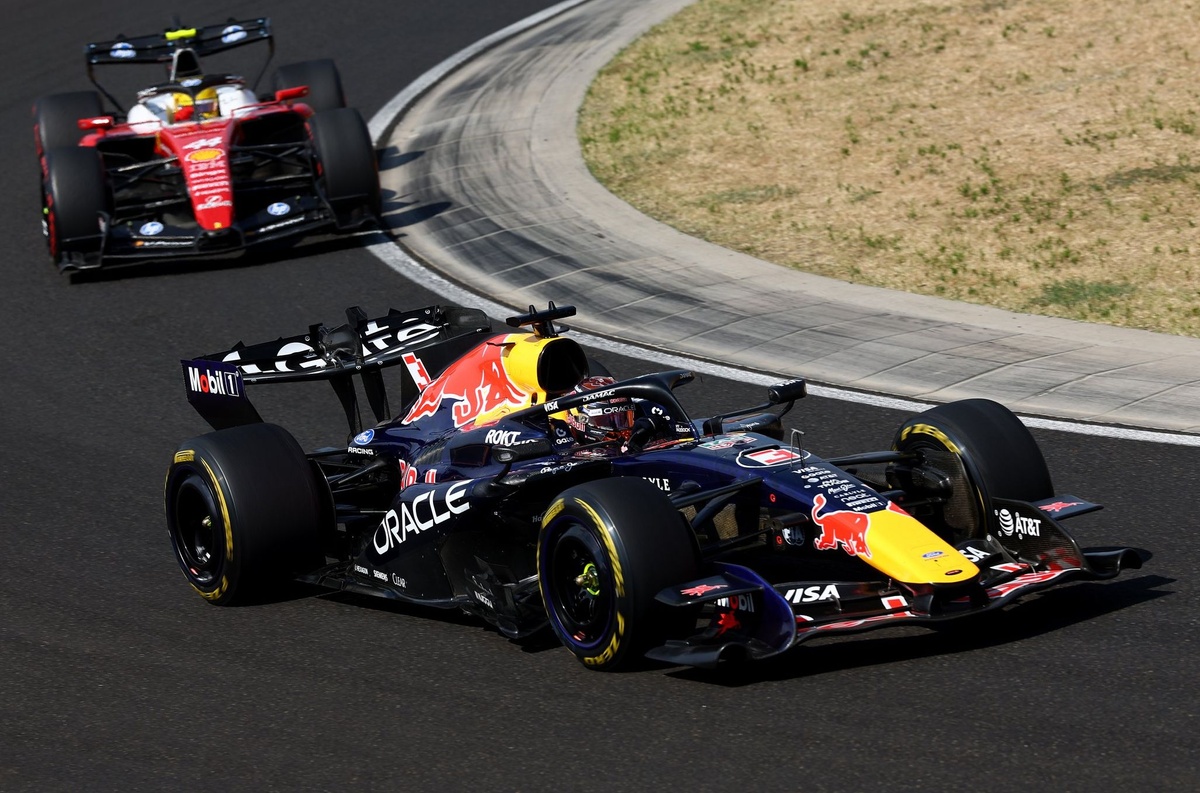
The delay was caused by Red Bull’s significant dissatisfaction with the first-period result, which was reportedly raised behind the scenes with the involvement of Oliver Mintzlaff.
Red Bull had limited options to challenge the outcome. Although the ADUO system has clear weaknesses, the teams and manufacturers agreed to its framework last year. Red Bull Ford Powertrains could request only a factual review, and that did not alter the result. FIA single-seater director Nikolas Tombazis said the governing body’s measurements were accurate, despite Red Bull team principal Laurent Mekies arguing that there was not a single data point showing Red Bull had the best engine.
Red Bull highlighted its deficit at power-sensitive circuits. According to Mekies, that shortfall was greater than at tracks such as Monaco and the Hungaroring, where power units have less influence. However, the performance picture at energy-starved circuits is also affected by energy management and how effectively each power unit handles that challenge.
Those factors are not included in the FIA’s ADUO calculations, which measure only the power output of the internal combustion engine (ICE). The FIA cannot disclose the precise measurement methods and data publicly because they involve intellectual property and confidential information.
“Due to the confidential nature of this information, no further details on power unit performance index measurements will be communicated,” the FIA statement reads.
As a result, the FIA announcement states only that Mercedes falls into the 2%-4% deficit category. That gives the manufacturer one upgrade opportunity in 2026 and another in 2027. Ferrari, Audi and Honda are all classified in the plus-4% deficit category, granting each two new homologations—and therefore two update opportunities—in the current season, followed by two more next year.
The ADUO system was designed to help manufacturers such as Honda that were significantly behind, but it has become a political battleground in Formula 1.
These manufacturers also receive additional financial headroom under the power unit manufacturers’ cost cap. Mercedes High Performance Powertrains can receive an allowance of up to $3 million, while Ferrari can receive up to $4.65 million.
The FIA has also introduced an additional safety net for manufacturers in serious difficulty, such as Honda. A manufacturer more than 10% behind the best ICE would be eligible for a cost-cap allowance of up to $11 million per ADUO period, plus an additional $8 million for 2026 as a whole. However, Honda was understood not to have fully met those criteria after the first assessment period.
The Japanese manufacturer can nevertheless accept the FIA’s analysis.
“I think the number we received from the FIA looks reasonable. I would say that number is fair. And also, thanks to ADUO, we are now working hard to develop our engine,” chief engineer Shintaro Orihara told Motorsport.com.
Red Bull’s opposition to championship standings may have backfired
The second assessment period produced no additional upgrade opportunities, indicating that the performance picture had not changed significantly.
For Red Bull, that could theoretically mean one of two things: either the newcomer remains at the top of the ICE ranking, or its deficit is below 2%. The latter would also produce no upgrade opportunity.
However, Motorsport.com understands that the ranking and the gaps between manufacturers remain broadly unchanged. Red Bull Ford Powertrains is therefore rated by the FIA as having the best internal combustion engine in Formula 1.
Mercedes team principal Toto Wolff has acknowledged that Mercedes has the best overall power unit. However, ADUO assesses only the ICE, exposing one of the system’s central weaknesses: the measurement applies to just one part of the power unit, while the resulting upgrade opportunities extend further and cover electrical components as well.
Mercedes has the best power unit in F1, as Toto Wolff also acknowledged, but it has nevertheless received an upgrade opportunity.
Red Bull remains behind on the electrical side, but its strong ICE ranking prevents it from addressing that weakness under the current rules. The newcomer is therefore effectively checkmated.
That is a weakness in the system, although the FIA cannot be entirely blamed. Tombazis has told the media that he was open to including more parameters, but the teams and manufacturers pushed to keep the process as simple as possible.
One example is turbocharger size, which Tombazis wanted to include in the assessment. That did not happen, allowing Ferrari to benefit from a deliberate design choice. The Italian manufacturer enjoyed an advantage off the line at the start of the season because of its smaller turbo, but sacrificed some power as a result. ADUO now allows Ferrari to address that trade-off, particularly after it received two upgrade opportunities.
That raises questions about whether it is fair to reward or penalize deliberate design decisions, but it is how the current system operates.
The FIA also intended to factor championship standings into the ADUO calculations. The system was not designed to give the dominant manufacturer even more opportunities to develop, but insiders say Red Bull was among those that opposed including the championship position.
That stance was understandable based on the circumstances at the time, but it has proved counterproductive for Red Bull. When the discussions took place last year, the team could reasonably have thought: As a newcomer, we are probably going to be more than 2% behind, but if the chassis is good, we could still be relatively high up in the championship standings. In that case, it would logically be advantageous if the FIA did not take that aspect into account.
The reality has been the opposite. Red Bull’s ICE is highly competitive, but its chassis was below par at the beginning of the season. As a result, the championship standings are unfavorable from Red Bull’s perspective, and including them in the ADUO system could have provided the team with a lifeline.
Red Bull’s chassis has been below par, meaning that, with hindsight, the team would have benefited if championship standings had been included.
FIA acknowledges ADUO weaknesses as Red Bull faces final opportunity
The ADUO results explain why Red Bull is the only manufacturer prohibited from developing its power unit during the season. There is still one opportunity to change that: the third assessment period, which concludes after the Mexico City Grand Prix.
Red Bull does not control its own fate, however. Its position depends on its rivals. If they do not use their upgrade opportunities on the ICE—Mercedes in particular—and do not suddenly extract more performance from it than they have so far, Red Bull will remain unable to develop its power unit.
The ADUO results have therefore revealed more than Red Bull’s position in the rankings. They have also exposed weaknesses in the system, something the FIA readily acknowledges. Motorsport.com asked Tombazis in Hungary whether ADUO was currently working as intended.
“I think our measurement, in my opinion, has proven to be very accurate,” he replied. “With that said, has everything worked fine? No, because obviously people are not happy and so on. Do we need to think about improvements in the future? Yes, I would say so.”
When announcing the results, Tombazis again indicated that the system could be revised in the coming years:
“This is the first year of ADUO so naturally there are areas which we may evolve over time, in discussion with all the PU manufacturers.”
Behind the scenes, that process remains at an early stage and will need to produce more concrete proposals in the coming months.
The current outcome is perhaps the clearest illustration of ADUO’s weaknesses. The manufacturer with the best overall power unit receives development opportunities based on its ICE deficit, while a manufacturer that is weaker on the electrical side cannot address that problem because of its ADUO classification.
That issue will require consideration over the longer term. For now, however, the teams and manufacturers—including Red Bull—must also accept responsibility, having agreed to the system last year.
The FIA has published the latest Additional Upgrades and Opportunities (ADUO) evaluation for Formula 1 power units, with the Red Bull-Ford internal combustion engine still ranked as the benchmark.
The analysis covers every race from the season-opening Australian Grand Prix through the Hungarian Grand Prix. According to the FIA’s findings, Red Bull-Ford currently has the most powerful internal combustion engine in F1.
Mercedes is estimated to be between 2% and 4% behind Red Bull-Ford on power. Audi, Ferrari and Honda are more than 4% adrift. Honda’s updated power unit, introduced at the Dutch Grand Prix, was not included in the latest assessment.
No additional power unit homologations awarded
Following the first quarter of the season, Mercedes was granted one additional homologation for each of 2026 and 2027. Audi, Ferrari and Honda were each awarded two additional homologations for both years. The allowances include extra cost-cap capacity and additional dyno testing, although no official announcement had been made at the time.
While the FIA confirmed the latest ADUO ranking, it did not award any further homologations in this evaluation period.
Mercedes expected to lead F1 power unit rankings
Mercedes had widely been considered to have the strongest power unit in Formula 1, rather than Red Bull-Ford. The ADUO system has faced criticism because it evaluates only the internal combustion engine, which is not the sole performance differentiator in F1’s current hybrid power units.
Mercedes team principal Toto Wolff has also acknowledged the strength of the team’s power unit, although his comments were not made specifically in reference to the ADUO system.
“The FIA has undertaken thorough and exhaustive analysis as part of our ADUO review process,” said Nikolas Tombazis, FIA director of single-seater. “With the release of the findings of period two, we are confident that, based on the quality of the data, its analysis is incredibly robust, giving us a high level of confidence in our findings. We also have to respect the confidentiality and intellectual property of the teams and their power unit manufacturers in disseminating any details from the findings.
“This is the first year of ADUO so naturally there are areas which we may evolve over time, in discussion with all the PU manufacturers.”
Red Bull questions ADUO opportunities
Red Bull has been particularly frustrated by the limited opportunities provided by the current ranking system. The team requested a review of the results issued after the Canadian Grand Prix, but that appeal was unsuccessful.
Speaking after the Belgian Grand Prix, Red Bull team principal Laurent Mekies said:
“Toto is right. I also think that they have the most powerful power unit,” team principal Laurent Mekies said following the Belgian GP. “And certainly they had a sizeable advantage on the straight this weekend again.
“But it’s not the first weekend. They have an advantage on the straight most weekends. And this weekend a bit more with the track sensitivity.
“As you said, the second period closing in Budapest in a week’s time. We’ll see what’s happening.”
With Red Bull-Ford still at the top of the ADUO rankings, the system is expected to become a major topic of debate during the Italian Grand Prix weekend.