Tag: McLaren MCL40

  • McLaren to Run Rotating F1 Rear Wing in Italy, Calls It an H-Wing

    McLaren to Run Rotating F1 Rear Wing in Italy, Calls It an H-Wing

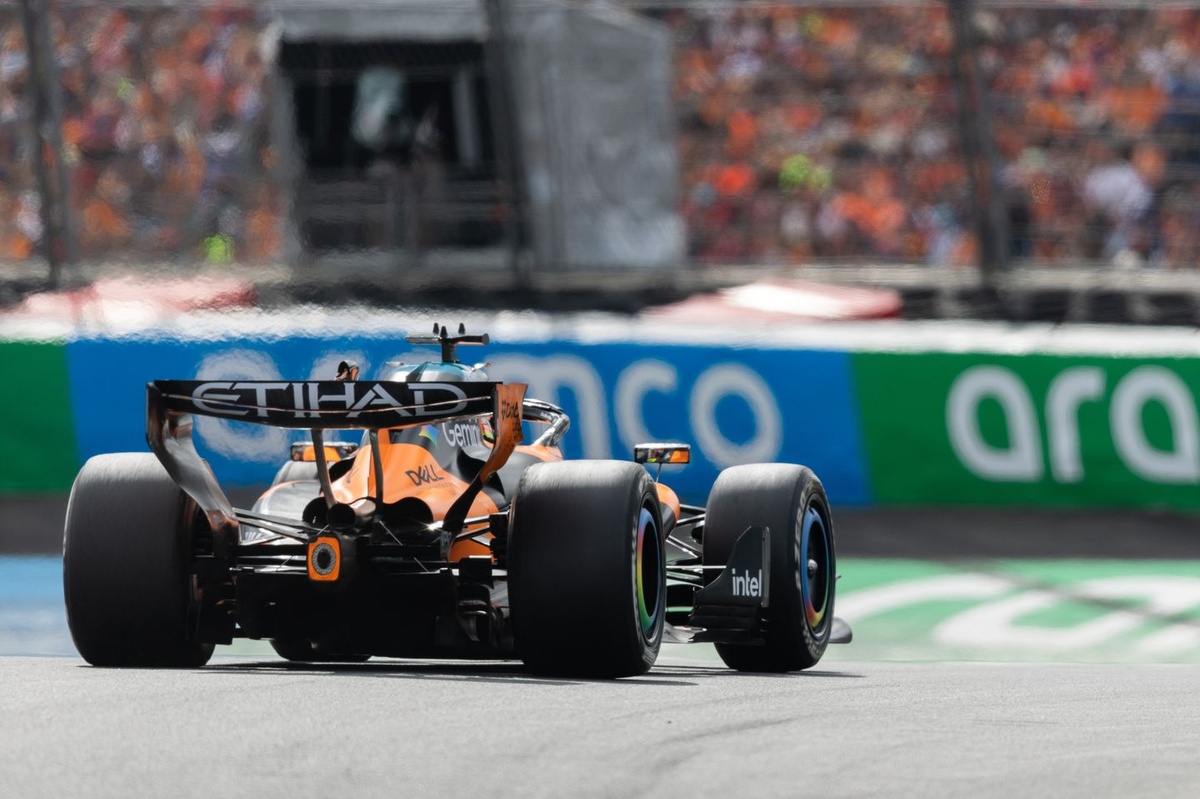
    McLaren will debut its H-Wing, the team’s version of a rotating rear wing, at this weekend’s Italian Grand Prix at Monza.

    The Formula 1 team has been developing its own interpretation of the upside-down rear wing after Ferrari introduced the concept during winter testing. The device rotates 180 degrees between cornering mode and straight-line mode, helping reduce drag on high-speed sections.

    McLaren commits H-Wing to both cars at Monza

    McLaren first brought a prototype to the Austrian Grand Prix but decided not to test it in free practice after an issue arose in the garage. The Woking-based team later ran a revised version during FP1 at the Hungarian Grand Prix, with the intention of introducing it at a low-drag, high-speed circuit.

    Monza provides the first such opportunity, and McLaren has committed to running the H-Wing on both cars.

    The name is not a reference to Star Wars. Instead, it comes from the letter H in the Etihad logo displayed on the rear wing of the MCL40. The H runs along the centreline, where the H-Wing’s straight-mode actuator is positioned.

    The naming convention follows the tradition of McLaren’s famed F-duct from 2010, which took its name from the F in Vodafone’s logo near the nose of the car, where the duct was installed.

    McLaren introduces new low-drag rear wing

    “This weekend, we have brought what we believe is needed to be competitive, including a new low-drag rear wing specification, including the first use of our H-Wing, alongside some small aerodynamic and low-drag options that we will evaluate before deciding the final specification for qualifying,” said McLaren’s technical director Neil Houldey.

    “Overall, we know there is still more performance to unlock from the MCL40, both through maximising the package we already have and through further upgrades planned for the races ahead.”

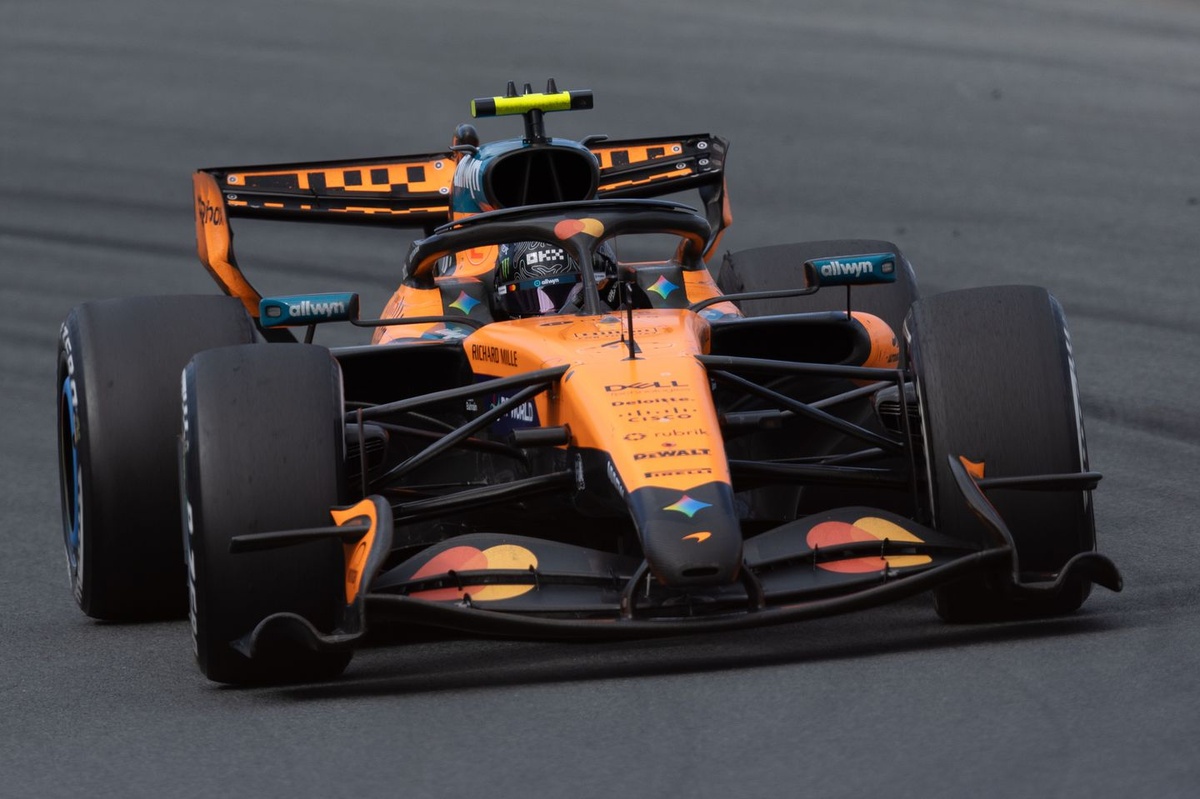
    McLaren will also run a tweaked livery at Monza and next week’s Spanish Grand Prix to promote its partnership with cryptocurrency company OKX.
  • Oscar Piastri’s 2026 F1 Season: The Ugly Statistics Behind a Winless Year

    Oscar Piastri’s 2026 F1 Season: The Ugly Statistics Behind a Winless Year

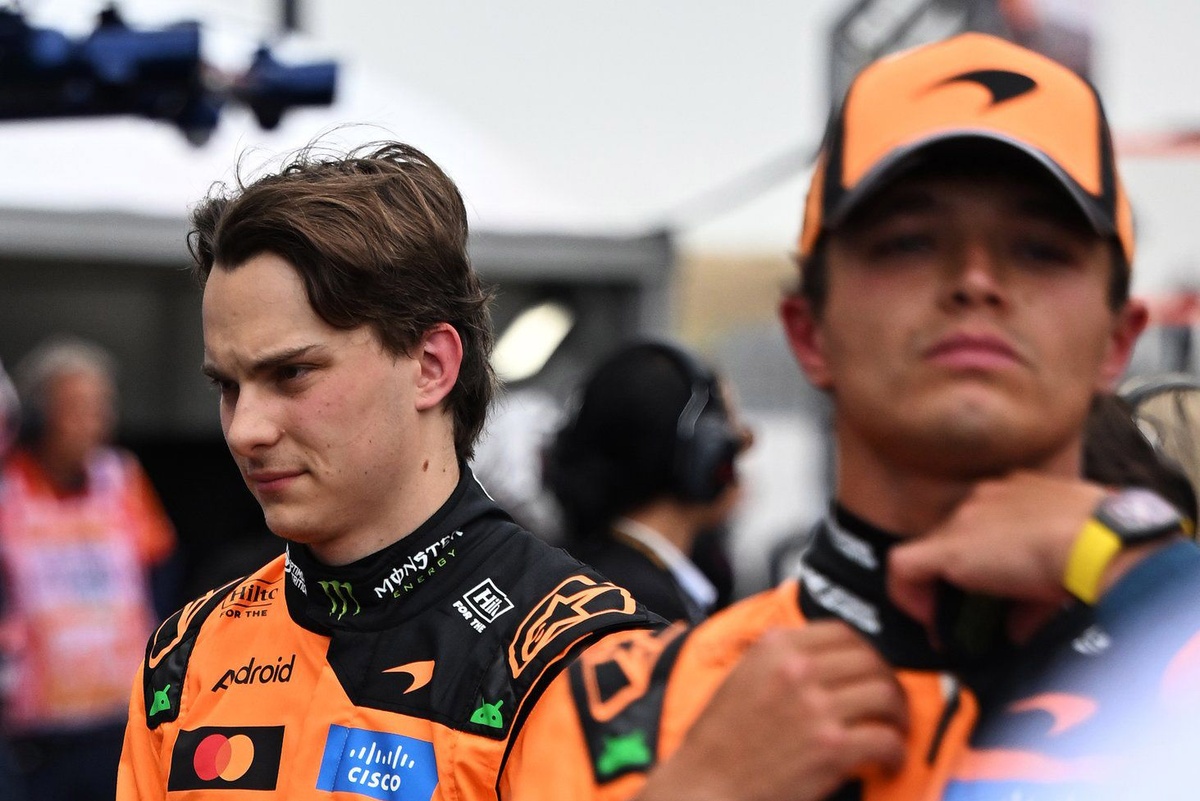
    Oscar Piastri’s struggles at McLaren have continued into the 2026 Formula 1 season, with qualifying pace, rear-tyre management and the MCL40’s aerodynamic characteristics limiting his challenge for race wins.

    Piastri won the 2025 Dutch Grand Prix at Zandvoort, extending his lead over McLaren teammate Lando Norris to 34 points. Red Bull’s Max Verstappen was 104 points adrift and appeared to be out of contention.

    However, Piastri did not win another grand prix during the remainder of the season and eventually dropped to third in the championship. His decline prompted unfounded speculation that McLaren was sabotaging his title bid.

    Piastri trails Norris in 2026

    Beyond podium finishes at Suzuka and Miami in the spring, Piastri has not seriously challenged for victory during a difficult 2026 campaign. More concerning for the Australian is that Norris has outperformed him, winning at the Hungaroring and Zandvoort, as well as the Miami sprint.

    Piastri’s problems have been most apparent in qualifying and have carried into the races. Norris has beaten him 22-7 in qualifying since last season’s Dutch Grand Prix. Piastri has six pole positions, nine fastest laps and nine grand prix victories, but he has not looked likely to add to that total so far this year.

    Why the McLaren MCL40 is challenging for Piastri

    Part of the problem is linked to the McLaren MCL40’s design concept. Piastri has traditionally struggled on low-grip circuits, where his relatively conventional driving style can create spikes in rear-tyre surface temperatures as the tyres slide.

    Norris has shown greater adaptability between the two drivers. By overlapping the brake and throttle while approaching corners on a shallower trajectory, he encourages the front tyres to help rotate the rear of the car as they reach peak lateral grip. That approach requires a strong feel for front-end grip and confidence that the rear axle will respond as expected.

    Piastri’s more linear brake and throttle inputs tend to produce greater rear-end movement when grip levels are low. That weakness has been amplified by this year’s cars, which generate less overall downforce.

    McLaren has also struggled to produce efficient rear downforce because it chose the shortest wheelbase permitted under the regulations. The decision delivered straightforward weight savings but left the team with less floor area for adding strakes and slots to manage airflow.

    Piastri laboured to sixth in Zandvoort as his teammate won.

    Photo by: Simon Galloway / LAT Images via Getty Images

    Small losses caused by rear-end slides can accumulate throughout a lap, depending on the circuit layout. Piastri then needs to use more electrical energy than Norris to regain speed, which can leave him with a lower state of charge and cost him top speed on the straights.

    Rear-tyre degradation remains a concern

    Recent upgrades have returned McLaren to race-winning contention after an underwhelming start to the season. Piastri failed even to make the grid in Australia and China because of power-unit problems, but the rear axle’s behaviour remains a concern, particularly during races, when he generally experiences more tyre degradation than Norris.

    The issue was visible at the most recent Dutch Grand Prix. Norris defeated championship leader Kimi Antonelli’s Mercedes in a straight fight, while Piastri was held back by a slow pit stop and rear-tyre problems. He finished sixth, 32 seconds behind his teammate.

    “In general I’ve been much happier with the car this weekend, which has been good,” Piastri said in Zandvoort.

    “I feel like it’s been back into the normal kind of rhythm of having strengths in some corners, weaknesses in others, rather than just trying to find time everywhere, which has been nice.

    “We still probably lack a little bit of downforce compared to some of the others, or at least some balance characteristics. I think we rely a lot on the grip from the new tyres to help our balance.

    “Maybe we pay the price a bit more when the tyres get worse, but that’s just a guess.”

  • Why McLaren Must Pass Its Monza Test Before Pursuing an F1 Title Challenge

    Why McLaren Must Pass Its Monza Test Before Pursuing an F1 Title Challenge

    McLaren Faces Crucial Monza Test After Consecutive F1 Victories

    After a difficult start to the 2026 Formula 1 season, McLaren appears to have returned to the front of the grid. The Woking-based team struggled with its understanding of the Mercedes power unit in Australia and suffered a double DNS in China, but consecutive victories in Budapest and Zandvoort have changed the outlook.

    Lando Norris has cut his deficit to championship leader Kimi Antonelli to 83 points, reigniting McLaren’s hopes of defending his drivers’ title. However, team principal Andrea Stella is refusing to draw premature conclusions about a potential championship fight.

    Monza will test McLaren’s recent progress

    Stella wants McLaren to focus on one race at a time rather than look too far ahead.

    “Beyond any way of saying, the real approach we have is just one race at a time. There’s not much more you can influence than just maximising what’s next available,” Stella said when asked by Motorsport.com how much confidence this gives McLaren for the second half of the season.

    “The next race will be in Monza, and if we think about the demands of Zandvoort and Hungary, and then think about the demands of Monza, we are in a completely different regime.”

    That difference makes the Italian Grand Prix an important internal benchmark for McLaren. The Hungaroring and Zandvoort are both high-downforce circuits, while Monza is a high-speed track dominated by long straights and chicanes.

    McLaren was able to exploit the strengths of the MCL40 in Hungary and the Netherlands, particularly through medium-speed corners. However, Norris described the car’s slow-speed performance on Saturday as “nowhere near good enough”.

    Monza will therefore demand a different set of qualities from the McLaren. Stella considers the circuit one of the team’s most important tests yet because it will reveal whether its recent gains can translate to a low-downforce layout.

    Energy management remains a key concern

    Unlike Zandvoort and Budapest, Monza is an “energy-starved” circuit, placing greater emphasis on energy management and the team’s understanding of the Mercedes power unit.

    McLaren was significantly behind the Mercedes works team in that area at the start of the season. The team has made substantial progress since then, including through the long-awaited simulation tools it received for Spa. Monza will provide a clearer indication of how valuable those improvements are at a circuit where power-unit understanding is especially important.

    Stella wants those questions answered before McLaren begins discussing a title challenge.

    “So I think if we can confirm our improvements in Monza, then I would say that the answer to your question is yes, then we can look with some optimism at the remainder of the season.

    “But first of all, we need to go to Monza and see that our car can express a good performance in the long straights.”

    Monza will also test McLaren’s low-downforce configuration, which has not been one of the MCL40’s strongest areas. Stella stressed that the challenge is not limited to understanding the Mercedes power unit.

    “We know that drag is not necessarily a point of strength of our car,” he said. “And, for instance, there’s a lot of braking as well, which is not necessarily a point of strength of our car either.”

    Stella remains cautious on Norris’ title hopes

    For now, Stella is limiting his conclusions to specific circuit characteristics rather than discussing a title defence with Norris. McLaren must first prove that its recent form is not restricted to high-downforce tracks.

    “There’s a lot of things that we need to confirm as we head on to the next race”, Stella insisted. “But so far, I think we can confirm is that when we are at high-downforce circuits, with this sort of layout, then we can fight for victories.”