Tag: Market manipulation

  • U.S. Regulator Warns of Cheating Risks in ‘Mention Markets’ on Prediction Platforms

    U.S. Regulator Warns of Cheating Risks in ‘Mention Markets’ on Prediction Platforms

    Key Highlights

    • The CFTC issued a staff advisory warning that “mention markets” — betting on what a specific individual might say or do — are “presumptively readily susceptible to manipulation.”
    • The regulator distinguishes these markets from standard event contracts because outcomes depend on “the discrete conduct of a named person” rather than independently generated, externally verifiable events.
    • Prediction platform operators including Kalshi and Polymarket are reminded they may only list derivative contracts that are not readily susceptible to manipulation.

    CFTC Targets ‘Mention Markets’ in New Supervisory Advisory

    The Commodity Futures Trading Commission has drawn a sharp regulatory line around a growing category of prediction-market contracts, issuing a staff advisory on Tuesday that labels wagers on an individual’s future statements or actions as “presumptively readily susceptible to manipulation.” The guidance, released by the agency’s Division of Market Oversight, signals a potential narrowing of the event-contract universe that can clear the CFTC’s supervisory hurdles, directly affecting operators such as Kalshi and Polymarket.

    How ‘Mention Markets’ Differ From Standard Event Contracts

    Unlike traditional event contracts that settle on “independently generated, externally verifiable outcomes that are outside the control of any single person,” the CFTC staff advisory explains that mention markets pivot on “the discrete conduct of a named person, and that conduct may be neither independently generated nor externally verifiable.” Because the outcome hinges on one person’s behavior — or the actions of those in their orbit — the agency warns that the individual or people around them could shift the result based on their own knowledge of the betting activity.

    Regulatory Reminder: Only Non-Manipulable Contracts Permitted

    The advisory serves as a formal reminder to prediction-platform operators that they are “only allowed to trade derivative contracts that are not readily susceptible to manipulation.” By classifying mention markets as presumptively problematic, the CFTC is effectively placing the burden on exchanges to demonstrate why any contract tied to a specific person’s conduct should be permitted, or to delist such markets altogether. The move underscores the agency’s focus on market integrity as prediction platforms expand their offerings beyond traditional economic and political indicators.

    Why This Matters

    The CFTC’s advisory arrives as prediction markets gain mainstream traction and attract significant volume during major news cycles. By targeting contracts tied to individual conduct, the regulator is addressing a structural vulnerability: markets where a single actor — or their associates — can influence the outcome create clear incentives for insider trading and market manipulation. For platforms like Kalshi and Polymarket, the guidance implies a compliance review of existing “mention market” listings and stricter vetting for future contracts. The decision also sets a precedent for how U.S. regulators may treat novel event-contract categories as the sector evolves, balancing innovation with the statutory mandate to prevent manipulation and protect market participants.

    Frequently Asked Questions

    What are “mention markets” according to the CFTC?
    Mention markets are wagers on what a specific, named individual might say or do — for example, whether a public figure will utter a certain phrase or take a particular action. The CFTC considers these distinct from standard event contracts because the outcome depends on the discrete conduct of one person.
    Why does the CFTC consider mention markets prone to manipulation?
    The advisory states that because the outcome pivots on “the discrete conduct of a named person,” that person or people around them could influence the result based on their own knowledge of the betting, making the market “presumptively readily susceptible to manipulation.”
    What must prediction platforms like Kalshi and Polymarket do in response?
    Operators are reminded they may only list derivative contracts that are not readily susceptible to manipulation. They will likely need to review existing mention-market contracts for compliance and apply stricter criteria before launching similar markets in the future.
  • Kalshi Issues First Lifetime Ban to Former Congressman George Santos

    Kalshi Issues First Lifetime Ban to Former Congressman George Santos

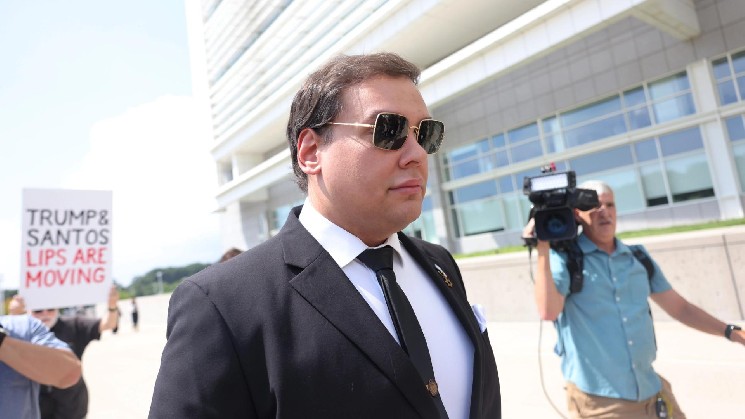
    George Santos did not attend the event, ultimately betting money on that outcome. In addition to banning him, Kalshi fined Santos more than $70,000 in an enforcement action late last week. Federal authorities have reportedly also been investigating the matter. Santos did not immediately respond to CoinDesk’s request for comment.

    Santos was expelled from Congress in 2023 as criminal investigations pursued the disgraced former lawmaker. He was serving a prison sentence for fraud when President Donald Trump commuted it last year.

    Kalshi said the Santos case was one of five new enforcement actions at the company. Under its regulatory obligations, the prediction-market platform is responsible for serving as a first line of defense against market manipulation. The other individuals received temporary trading bans after cooperating with Kalshi’s investigations.

    “Mr. Santos faces additional financial penalties and will be banned permanently from trading on Kalshi given his lack of cooperation,” a spokesperson said in a statement.

    The U.S. Commodity Futures Trading Commission, which regulates the industry, also fined a former White House aide for illicit trading late Friday. Gabriel Perez was ordered to pay more than $170,000 and received a three-year trading ban. The penalties were reduced after what regulators described as his “exemplary cooperation.”

  • Kalshi Imposes First Lifetime Ban on George Santos for Market Manipulation

    Kalshi Imposes First Lifetime Ban on George Santos for Market Manipulation

    Kalshi, the regulated U.S. prediction-market exchange, has issued its first permanent trading ban, barring former Representative George Santos and fining him more than $70,000 for allegedly manipulating a contract linked to his own attendance at a public event, according to CoinDesk.

    The penalty, detailed in a disciplinary record published on Kalshi’s website and confirmed by a company spokesperson, is the most severe sanction the exchange has imposed. It comes as prediction markets face growing scrutiny over whether they can prevent trading based on public figures’ actions and non-public information.

    What Kalshi Says George Santos Did

    Kalshi’s disciplinary record says Santos made a series of large trades in a market whose contracts depended on whether he attended an appearance by President Donald Trump earlier this year. The record says Santos then made public statements about his attendance in an effort to influence the market’s outcome.

    Santos ultimately bet that he would not attend the event, and he did not appear. Kalshi imposed the fine in the final days of August, in addition to banning him from the platform for life.

    Santos did not respond to CoinDesk’s request for comment. He was expelled from Congress in 2023 amid criminal fraud investigations and was serving a prison sentence when Trump commuted his sentence last year.

    Kalshi Announces Broader Enforcement Action

    Kalshi said the Santos case was one of five new enforcement matters. The other four traders received temporary bans after cooperating with investigators.

    The exchange described the cases as part of its responsibility under its regulations to serve as a first line of defense against market manipulation. A spokesperson said Santos “faces additional financial penalties and will be banned permanently from trading on Kalshi given his lack of cooperation.”

    The action followed a separate Commodity Futures Trading Commission order issued Friday, August 28. Under that order, former White House aide Gabriel Perez was directed to pay more than $170,000 and was barred from trading for three years over bets on “mention” contracts involving Trump.

    The CFTC said Perez’s penalties were reduced because of what it described as exemplary cooperation. Perez had worked as a teleprompter operator. “Mention” contracts pay out when prominent figures speak specific words during public addresses.

    Why Prediction-Market Enforcement Matters

    Prediction markets have spent the past year seeking to reassure regulators and institutional partners that their platforms can resist manipulation. That effort has gained importance as companies such as Cantor Fitzgerald open Kalshi markets to institutional clients and trading volumes increase.

    Self-enforcement is a key part of that argument. Platforms that investigate suspicious activity and impose penalties can cite those actions as evidence that their compliance systems are working.

    Rival platform Polymarket has said it uses machine learning, blockchain analytics, trade surveillance and open-source research to identify unusual activity. The company says it has referred more than 100 cases to authorities, including bets linked to a U.S. soldier accused of using classified information to wager on the capture of Venezuela’s Nicolás Maduro and possible insider trading before U.S. military action in Iran.

    Polymarket has also said its systems block the vast majority of U.S. users from accessing its international platform, as required under a 2022 settlement with the CFTC.

    Kalshi’s disciplinary record illustrates how a lightly monitored market tied to one person’s behavior can become vulnerable to manipulation. BlockchainReporter has examined a similar dynamic in coverage of sophisticated traders’ structural advantage on Kalshi.

    Key unanswered questions include how far federal scrutiny will extend and whether other prediction-market platforms will impose permanent bans of their own. Kalshi has said federal authorities have reportedly examined the Santos trades, while the wider regulatory environment—including state efforts to prohibit prediction markets—suggests that the industry’s enforcement practices will remain under close scrutiny through the U.S. midterm elections.