Tag: Madring

  • Lewis Hamilton: I Don’t Want Preferential Treatment from Ferrari

    Lewis Hamilton: I Don’t Want Preferential Treatment from Ferrari

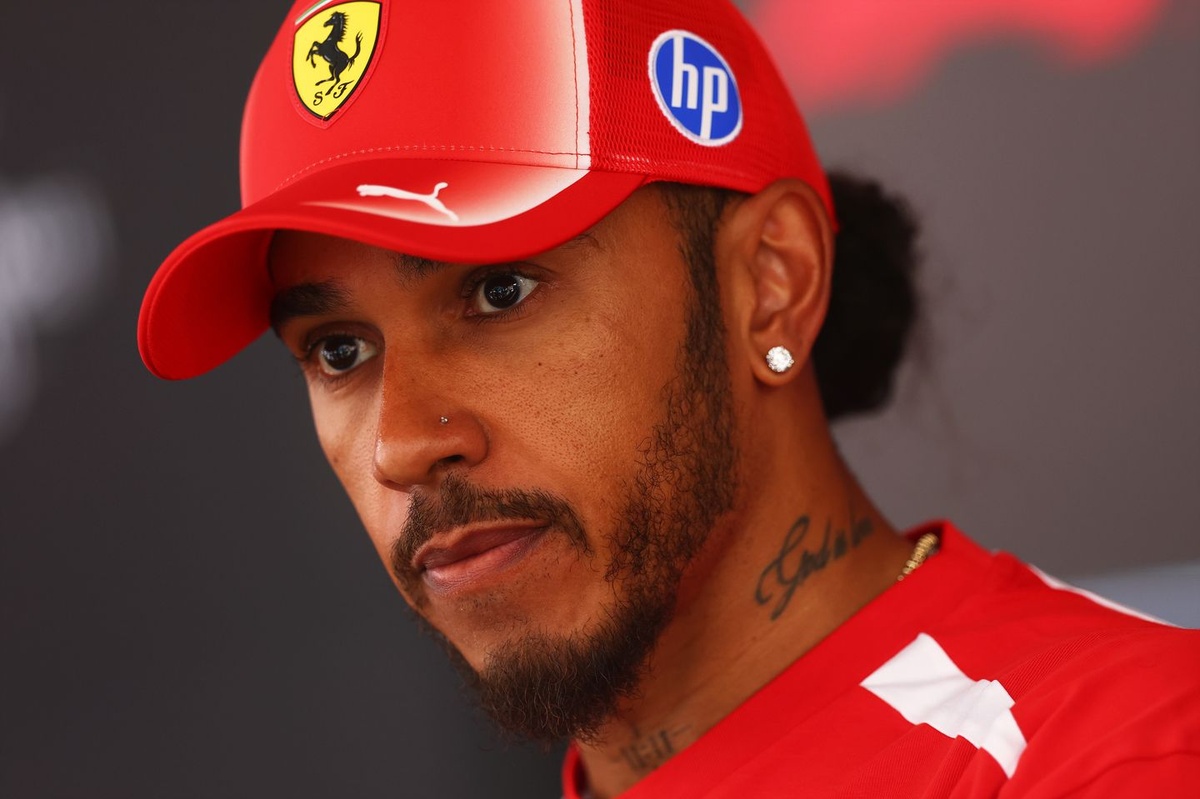
    Lewis Hamilton has dismissed suggestions that Ferrari should prioritize his championship bid over team-mate Charles Leclerc, insisting his focus remains on collective execution rather than preferential treatment. The seven-time world champion finds himself 76 points behind championship leader Andrea Kimi Antonelli with 10 rounds remaining, while Leclerc’s retirement at the Italian Grand Prix leaves him 112 points adrift—assuming the final races proceed unaffected by the Iran conflict.

    Hamilton Rejects Number One Driver Status

    Despite holding a mathematically viable path to the title, Hamilton pushed back against the narrative that Ferrari should funnel resources toward his campaign. When asked if the Scuderia should put all efforts behind him and have Leclerc play a supporting role, Hamilton responded directly:

    “That’s not actually really what I’ve been asking for.

    “It’s really just making sure we’re executing to make sure we get the best result for the team. Instead of us working against each other and finishing fourth and fifth, maybe we can work together and get a podium, pull off more points.”

    Consistency Keeps Hamilton in Contention

    Hamilton’s championship relevance stems largely from remarkable consistency: he is the only driver to finish every grand prix inside the top ten this season, with his lowest result being sixth. Yet he remains acutely aware of Ferrari’s fundamental deficit relative to Mercedes, particularly in power unit performance. Ferrari has yet to secure a single pole position in 2026.

    Quantifying the Straight-Line Deficit

    Hamilton provided specific data on the performance gap, highlighting the straight-line disadvantage that has defined Ferrari’s season:

    “Mercedes, if you look at the last race, they were six tenths a lap quicker on the straights,” Hamilton pointed out. “Pretty much most of the other tracks, it was three or four tenths. We were losing just on the straights.

    “I think we’ve done a really great job, given that we’ve had that deficit, and we continue to make improvements to the car. We’ve made improvements to the engine. We knew that the last [engine] upgrade wasn’t going to be a silver bullet and close that gap completely. But for me, it’s really positive to see us continuously stepping forward. They are just very, very quick, and it’s not easy.”

    Focus on Internal Execution Over External Rivals

    Rather than fixating on Mercedes’ advantage, Hamilton emphasized a strategy centered on operational excellence and capitalizing on opponent errors:

    “As I said, rather than focus on them – they’re not a focus for me at the moment – I think our focus should just be, how we can do the best and execute the best on our weekends, because there’ll be weekends where they’re exceptional, and there’ll be weekends where they maybe drop the ball.

    “As long as we just focus on our consistency and trying to optimise our weekends, maybe there’s going to be a moment where we are able to capitalise on, perhaps, their shortcomings.”

    That approach already yielded a signature victory earlier this season, when Hamilton beat Antonelli and George Russell to win the Barcelona Grand Prix—proof that maximizing Ferrari’s package can overcome the straight-line deficit on the right weekend.

  • Formula 1’s Spanish Football Connections: From Real Madrid to World Champions

    Formula 1’s Spanish Football Connections: From Real Madrid to World Champions

    Formula 1 Returns to Madrid: Madring Debut Unites Motorsport and Spanish Football Royalty

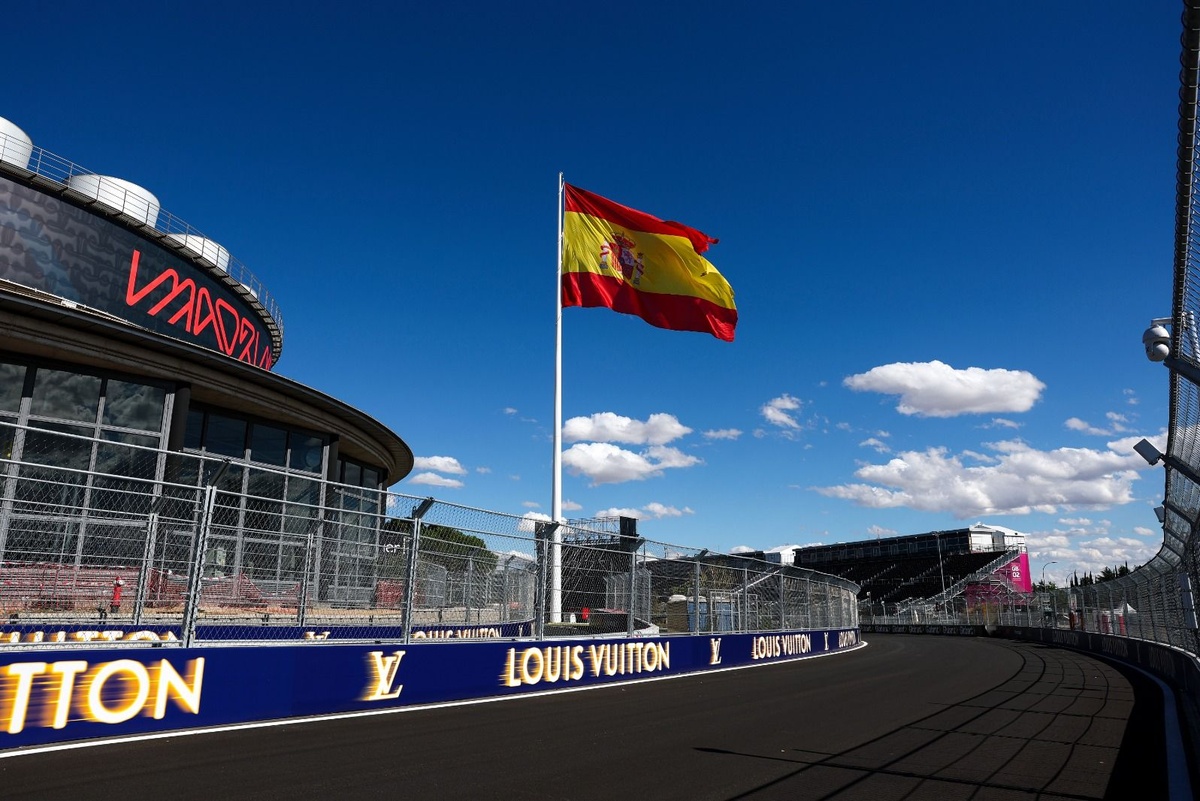
    Formula 1 lands in Madrid this weekend for the inaugural Spanish Grand Prix at the all-new Madring circuit, marking the sport’s return to the capital after a 45-year absence since the last race at Jarama. The 5.4km, 22-corner layout arrives at a historic moment for Spanish sport: both the men’s and women’s national football teams hold World Cup titles, while the city’s two football giants—Real Madrid and Atletico Madrid—are deeply embedded in the Grand Prix’s fabric.

    Real Madrid Roots Run Deep in the F1 Paddock

    Carlos Sainz and Fernando Alonso, Spain’s two Formula 1 stars, are lifelong Real Madrid supporters, a passion inherited from their fathers. Carlos Sainz Sr., a two-time World Rally Champion and four-time Dakar Rally winner, even had trials with Los Blancos as a teenager before switching to motorsport.

    Both drivers regularly wear Real Madrid shirts in the paddock. Alonso’s bond with the club was formalized in 2017 when he became an official honorary member—the club’s highest distinction. Sainz Sr. received the same honour in 2021.

    For Sainz Jr., the homecoming is personal. Born and raised in Madrid, the Williams driver serves as a Madring ambassador and became the first driver to complete a lap of the finished circuit earlier this year.

    Real Madrid City: Neighbours to the Madring

    Ahead of the inaugural race, Real Madrid signed on as an official Local Event Supporter. The partnership is geographically poetic: Real Madrid City, the club’s state-of-the-art training complex in Valdebebas, sits just 200 metres from the Madring’s northern entrance. Selected club facilities will be integrated into Grand Prix operations, and Real Madrid will maintain a hospitality presence throughout the weekend.

    That proximity puts F1 cars racing metres from the training ground of World Cup winners. Marc Cucurella, who joined Real Madrid this summer after playing every minute of Spain’s 2026 World Cup triumph, is among the stars preparing just down the road.

    Atletico Madrid Joins the Grid with Five-Year Partnership

    The capital’s other heavyweight, Atletico Madrid, has also agreed a five-year deal as a Local Event Supporter. Their involvement extends beyond the circuit: the Riyadh Air Metropolitano stadium will serve as a major fan hub, hosting experiences, hospitality, and the Grand Prix’s main concert, with shuttle services connecting the venue to Madring.

    Atletico will also have a dedicated presence at the circuit itself. The club arrives buoyed by its contribution to Spain’s World Cup-winning squad—supplying the largest number of players from a single team to a World Cup final since 1934, according to the club.

    World Cup Winners Bridge the Two Sports

    The crossover is already active. Ferran Torres, part of Spain’s 2026 World Cup-winning side, was a guest of Audi at Monza last weekend, inspecting the Audi R26 alongside driver Gabriel Bortoleto and race engineer Jose Manuel Lopez. He was joined by a roster of football talent including Sandro Tonali, Curtis Jones, Serge Gnabry, and Cesc Fabregas.

    With Spain still celebrating global football dominance, the convergence of the nation’s two sporting passions is set to intensify as Formula 1 takes centre stage in Madrid.

    When El Clasico Went Virtual

    Real Madrid and Barcelona’s rivalry once played out on a Formula 1 grid. During the Covid-19 pandemic, F1’s Virtual Grand Prix series featured a Virtual Spanish Grand Prix where Real Madrid goalkeeper Thibaut Courtois raced for Alfa Romeo and Barcelona midfielder Arthur Melo drove for Haas. They were joined by Sergio Aguero at Red Bull alongside Alex Albon, while F1 regulars Charles Leclerc, Lando Norris, and George Russell also competed on a digital Circuit de Barcelona-Catalunya.

    Football Stars Are No Strangers to the Spanish GP

    Previous Spanish Grands Prix have drawn heavy football attendance. The 2025 race in Barcelona saw the England men’s national team visit the paddock, with Jude Bellingham and Bukayo Saka spotted alongside former Real Madrid and Brazil defender Roberto Carlos. Robert Lewandowski performed the ceremonial duty of waving the chequered flag.

    A year later, the 2026 Barcelona-Catalunya Grand Prix coincided with the World Cup’s opening weekend. Drivers tested their shooting skills in the paddock, Pierre Gasly and Isack Hadjar played a kickabout on a local pitch, and Racing Bulls rebranded as ‘VCARB FC’ with a football-inspired crest and special livery. Sergio Busquets, a 2010 World Cup winner, has been a frequent visitor to Spanish Grands Prix, including the Barcelona-Catalunya race earlier this season.

    Madrid Braces for a Festival of Speed and Football

    As the Madring prepares for its baptism of fire, the ingredients are unique: a brand-new street circuit, one of the world’s biggest football clubs training metres away, another converting its stadium into a Grand Prix village, and a nation still riding the high of World Cup glory. When the lights go out this weekend, Formula 1’s newest chapter in Spain will be written to the rhythm of football fever.

  • F1 Drivers React to “Crazy” Madrid Circuit

    F1 Drivers React to “Crazy” Madrid Circuit

    Formula 1 drivers are bracing for a chaotic debut at the new Madring street circuit in Madrid, with widespread predictions of frequent red flags and a punishing test of precision. The consensus from the paddock is that the 5.47-kilometer layout, characterized by blind entries, aggressive kerbs, and a unique banked corner, offers virtually no margin for error.

    Red Flags Expected as Drivers Brace for ‘Very Busy’ Weekend

    The only real-world running prior to the Spanish Grand Prix weekend came during a Formula 3 test late last month, which served as a stark warning. The session produced 19 red flags and three heavily damaged cars, with incidents scattered across the lap—particularly in the technical second sector featuring chicanes, blind corners, and the banked La Monumental turn.

    “I’ll put my money on a red flag, that’s for sure,” said Pierre Gasly when asked what he thought of Formula 1’s new Madring street circuit.

    Lance Stroll offered a similarly blunt assessment: “I think we’re going to be busy, very busy.”

    Drivers Relish the Challenge Despite Danger

    Despite the obvious risks, the prevailing mood is anticipation rather than apprehension. Drivers appear eager to test themselves against a layout that Franco Colapinto describes as a composite of the entire calendar.

    “I think this track is going to be extremely difficult for the drivers,” said Franco Colapinto. “In the simulator, putting together one complete lap could take me hours. So imagine what it is going to be like here when you only have two or three laps to do it. Finding that perfect lap is going to be very difficult. It has a bit of everything. If you took everything you find across the 24 races on the calendar and mixed it together, you would probably get something like this. So I’m happy and looking forward to trying it.”

    Sergio Perez echoed the sentiment, drawing a parallel to Jeddah’s original high-speed layout. “It’s a bit scary. It reminds me a bit of Jeddah. Good, proper track, [I’m] really happy to be here, and I think the atmosphere here is going to be one of the best.”

    Asked how punishing the track could be in response to driver error, Perez was unequivocal. “I think very. It all depends what sort of grip level we get, but I think there is no room for error. It’s very rare, depending on which corner you do a mistake, you might get away with it – but in most places, there is no margin for it.”

    Simulator Preparation Meets Real-World Uncertainty

    While drivers have logged extensive simulator miles, the transition to the physical circuit introduces variables that virtual tools cannot perfectly replicate. Gasly noted the enjoyment of the simulated challenge but highlighted the unknowns of track evolution.

    “Driving-wise, I must say in the sim it was very enjoyable and very exciting,” said Gasly. “I got a good read and feel of pretty much every single wall at every single corner, so actually I know what to do and what not to do. But I think it’s going to be very challenging, especially in terms of evolution, probably a lot of track evolution, kind of slightly off-road braking zones, which are not fully straight, kind of like snaky, very twisty type of corners, many corners, a lot of blinds, banking, up and down, undulation all the way.”

    Aggressive Kerbs a Major Unknown

    A critical concern is the size and profile of the kerbs, which simulations may not render with total accuracy. The second chicane, feeding onto an uphill gradient with a wall at the exit, demands a committed approach over “proper kerbs” that can launch a car into the barriers if misjudged. The scenario draws comparisons to the Norisring, though the Madrid entry kerbs add an extra layer of complexity.

    “They’re not small kerbs, they’re proper kerbs, so we’ll need to attack them.” Arvid Lindblad

    Lindblad, who tested in F3, emphasized the difficulty of simulating kerb interaction precisely. “I think Monaco is more unforgiving. But yeah, it’s not a very forgiving track. I think all street circuits now, there’s not much margin. This one definitely does not have much scope for error. That’s probably the thing that’s the hardest to simulate. From offline simulations, but also just from the sims that we drive, they get, I think, a measurement from the FIA with a photo saying, ‘it looks like this, and this is this many centimetres’, you know, width and length, whatever. But yeah, that’s the hardest part to simulate. So I think that I would already say just from a driving point of view will be a challenge because they’re not small kerbs, they’re proper kerbs, so we’ll need to attack them.”

    Grip Levels and Track Evolution Add Variables

    Following the F3 test, the circuit was jet-washed to remove the greasy bitumen layer common on fresh asphalt. However, grip levels remain uncertain and will evolve significantly throughout the weekend. This evolution, combined with rubber marbles accumulating off the racing line, could create a “park the bus” dynamic where defending drivers hold the advantage on the only viable line.

    “The tyres are going to be absolutely screaming.”Alex Albon

    Blind Corners Demand Muscle Memory Over Vision

    The majority of corners are late-apex and blind, forcing drivers to commit before seeing the clipping point. This requires intense repetition to build the muscle memory and internal timing necessary to hit invisible apexes consistently.

    “You’re kind of swinging in from a blind spot and you’ve got to try and pick an imaginary spot that’s a few hundred meters in front of you,” explained Alex Albon. “That’s really challenging to do. It’s a lot of repetition and muscle memory just to get that timing right. Because you basically can’t see an apex. So now you’re just using your internal body clock and almost imaginary, you’re trying to focus on a reference point or something to know what’s your apex point of that corner.”

    As in Jeddah, these blind sections are likely to create qualifying flashpoints when cars on flying laps catch slower traffic unexpectedly.

    Technical Setup Compromise: Kerb Riding vs. High-Speed Stability

    The circuit layout forces a difficult chassis compromise. The first sector demands a compliant suspension to attack kerbs, while the high-speed second and third sectors reward stiffness for aerodynamic load. This disparity will widen the performance gap between teams with efficient downforce and those without, particularly regarding energy deployment from the power unit.

    “Technically speaking, there’s a lot of corners on this track that will be between 90% and 100% throttle,” explained Albon. “I think for the top teams, it will be flat out. For the midfield teams and the backfield teams, a bigger lift, which has a big effect in deployment. If you can do a corner flat or not, it massively changes the way the deployment works. And you don’t want to go in qualifying, suddenly all these corners start to become flat and your deployment starts to move around a lot. That’s what we’ve found so far.

    “The technical part will be, can you make a car that is good over the kerbs from Turn 1 to Turn 5? But you want the stiffness in the car for Sector 2 and Sector 3, because actually, the stiffer car gives you more load. But then you’re going to sacrifice your Turn 1, Turn 2 kerb riding. And then the final thing is, is it one of those weekends where Q3, Run 2 for those guys – Q1, Run 3 for us – do you end up just sending it across the kerbs? I mean, that Turn 5, 6 feels a little bit like, I hope there’s a rhythm to it and it’s actually not that bad. But I think there’s an angle there that you’re going to just send it. If you get through the other side, you’re going to be two or three tenths quicker. And if you don’t want to take that risk, you lose out on those few tenths. The other thing we’ve seen in the simulator already is the tyres are going to be absolutely screaming.”

    Unique Banked ‘La Monumental’ Corner Presents New Test

    Unlike the banked final corner at Zandvoort—which is effectively a straight limited by engine power—La Monumental is grip-limited. Drivers will carry full throttle for over four seconds through a corner that flows onto a section with a change of camber, inviting experimentation with racing lines and raising the spectre of multi-car incidents as limits are explored.

    With bridges, tunnels, undulations, and a relentless sequence of technical corners, the Madring promises to be one of the most demanding street circuits Formula 1 has visited in years. The drivers are ready; the track, however, may have the final say.
  • “I went too far”: Charles Leclerc accepts blame for Monza second-corner clash with Lewis Hamilton

    “I went too far”: Charles Leclerc accepts blame for Monza second-corner clash with Lewis Hamilton

    Leclerc Admits He Went “Too Far” in Monza Battle with Hamilton, Says Pair Have Cleared the Air

    Charles Leclerc has acknowledged he overstepped the mark during his opening-lap clash with Lewis Hamilton at the Formula 1 Italian Grand Prix, confirming the Ferrari team-mates have since discussed the incident and moved on.

    Opening-Chicane Contact Sends Hamilton onto Gravel

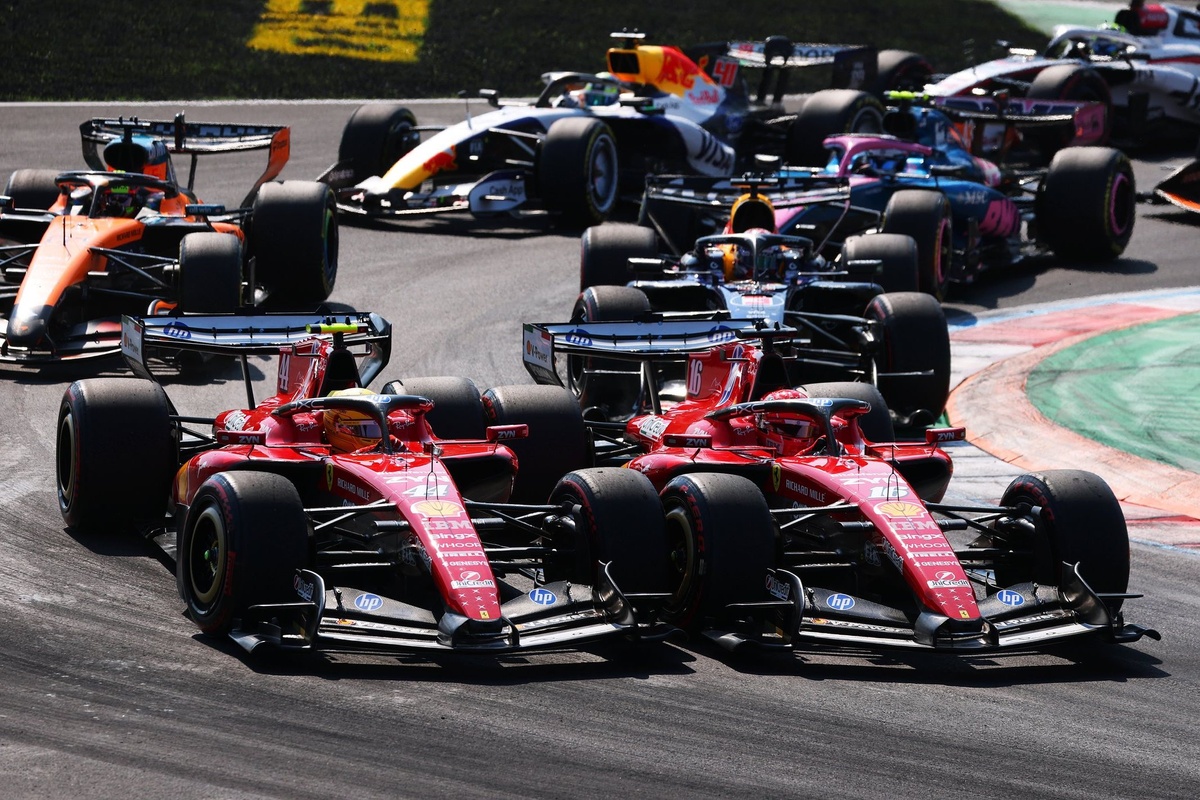
    The pair ran side-by-side through the first chicane at Monza, but Leclerc attempted to hold the standard racing line exiting Turn 2. The move forced Hamilton onto the gravel on the outside of the corner, ending the Briton’s race prematurely.

    In the immediate aftermath—following his own second-lap crash at Parabolica—Leclerc stated that “we went too far” in their battle at the opening corner. Hamilton firmly disagreed, countering that “there was no ‘we’ in it” and criticising Ferrari’s race communication and execution.

    Leclerc Accepts Responsibility After Review

    After reviewing footage with team principal Fred Vasseur and Hamilton himself, Leclerc accepted blame and sought to protect the intra-team relationship.

    “I mean the rules of engagement, I think it’s kind of clear that we never want to see a car of the same team in the grass.

    After reviewing, we spoke with Lewis, I obviously know I went too far in Turn 2 and I said it to Lewis and I think it’s very clear what we should do or should avoid going forward.

    But I won’t go into much more details of what we said. The only thing I can say is that it definitely did not affect the good relationship that we have and it will not affect anything going forward. And that is the most important for me really.

    Then of course, I mean I know we are driving for Ferrari and if there’s one race where you don’t want that to happen is in Monza and when these things happen at our home race, then it does a huge mess outside.

    However, looking at the race from outside, there’s been also some friction between other team-mates and the only thing we end up speaking of is Lewis and I, which I don’t think is quite right.

    “Not Acceptable” but Proportions Magnified at Ferrari

    Leclerc was keen not to minimise the error while contextualising the media scrutiny.

    “But that doesn’t mean we did everything perfect. I didn’t in Turn 2 and for that I’ve been straight away very clear with Lewis after reviewing the images.

    I think the most important is that we clarified the situation, we talked, I told Lewis how I felt, Lewis told me what he felt and I think we fully agree with both of our views in hindsight when we speak without the emotions of the race.

    It happens. It’s not the last time that will happen I’m sure, because it’s the kind of things that happens in racing – particularly when we are starting so close to each other so often. But it’s not a situation that we want to find ourselves in again so and that is very clear for Lewis and for myself.”

    Asked by Motorsport.com whether the incident had been overblown—especially given his observation of “friction between other team-mates” (referencing Mercedes’ split pit strategies and on-track battle)—Leclerc agreed the “proportions” were larger for Ferrari.

    “Again I need to be careful with that because surely it’s not to minimise the way that this unfolded. And as I said, it’s not acceptable to see Lewis going in the gravel.

    But for sure the proportions as a matter of fact are much bigger on our side compared to the two other teams that have had some…I mean, I didn’t follow the whole race but the two other teams I saw that were fighting at the top, there wasn’t as much noise around it.

    So surely, the proportions that it takes when when you are driving for Ferrari is much bigger and particularly if we’re in Monza. But that’s not to minimise what happens and yeah it’s not something that should happen again.”

    Photo by: Andy Hone / LAT Images via Getty Images

  • “It’s always the same” – Carlos Sainz weighs in on Charles Leclerc and Lewis Hamilton’s Monza clash

    “It’s always the same” – Carlos Sainz weighs in on Charles Leclerc and Lewis Hamilton’s Monza clash

    Carlos Sainz has drawn on his four years as Charles Leclerc’s teammate at Ferrari to downplay any lingering tension between Leclerc and Lewis Hamilton following their collision at the Formula 1 Italian Grand Prix.

    Sainz and Leclerc were evenly matched during their stint together at the Scuderia from 2021 to 2024, with Sainz accumulating 900.5 points to Leclerc’s 1,029. That parity occasionally sparked on-track friction, such as at the 2024 Spanish Grand Prix where Sainz accused the Monegasque of complaining too much after contact while overtaking in Barcelona. However, the pair always resolved disagreements internally, a dynamic Sainz believes Leclerc and Hamilton must now replicate.

    Charles Leclerc, Ferrari, Lewis Hamilton, Ferrari Photo by: Andy Hone/ LAT Images via Getty Images

    Sainz: Conflict Is Normal Between Competitive Teammates

    Speaking in Madrid on Thursday, Sainz emphasized that clashes are inevitable when two top drivers share a garage.

    It’s none of my business, but I can tell you that when you have two competitive team-mates, these kind of situations are always going to happen.

    Me with Charles, always twice, two or three times a year, we always had a bit of a discussion or an argument, but after the race or the morning after we would call each other and sort it out.

    So yeah, I think it’s normal when you’re fighting for podiums or wins in a competitive team and there’s situations into turn one or situations fighting the race or with strategy, you always end up one day being not happy with the way it’s been handled and the next day maybe you’ve been favoured.

    It’s always the same case and I don’t know the way it’s being handled right now, but when I was there in Ferrari with Charles, we would always sort it out among each other and we would get on with it and yeah, we had a good time.

    Monza Collision: Diverging Accounts

    At Monza, Leclerc forced Hamilton into the gravel at the start, allowing Leclerc to retain third while Hamilton dropped to tenth after crashing at Parabolica on lap two. Post-race, Leclerc accepted shared blame, claiming we went too far, but Hamilton firmly rejected that narrative.

    I was ahead in Turn 2, by the apex I was ahead, there was no ‘we’ in it.

    Lewis Hamilton, Ferrari Photo by: Eric Le Galliot

    Hamilton expanded on his perspective, defending his racing ethics and pointing to team leadership.

    Look, I don’t race dirty, he added at Monza. I’ve always raced clean and fairly and always left space.

    I’ve come into the team and tried to be respectful of space and definitely not put the team in jeopardy. I stand by that and all I can talk about is on my side. You have to speak to Fred [Vasseur, team principal] about the other side and decisions that are taken there.

    Ultimately it comes from the top. It trickles down, decisions. It starts with Fred. There’s only so much you can say, so much you can push and shout from the mountain top.

    Yesterday, I said we’ve got to look at how we communicate. If we continue to travel the same path, we get the same result. We keep getting the same result.

    Hamilton Questions Ferrari’s Rules of Engagement

    The Monza incident is the latest flashpoint in a season where Hamilton has repeatedly criticized Ferrari’s operational execution. At Zandvoort, he was frustrated by a lack of team orders while running behind Leclerc, a scenario he felt cost him a podium finish. Ferrari now trails Mercedes by 122 points in the Constructors’ Championship.

    Hamilton contrasted the current environment with his Mercedes tenure, where clear protocols governed teammate battles.

    I think it comes down to rules of engagement, said Hamilton in Italy. When I was at Mercedes, we had a written rule of engagement.

    We never really had it too bad. Maybe moments with me and Nico [Rosberg] a couple of times. But more often than not it was good. Here, there are no rules.

  • Yuki Tsunoda Responds to Max Verstappen’s F1 2026 Claim

    Yuki Tsunoda Responds to Max Verstappen’s F1 2026 Claim

    Yuki Tsunoda has dismissed Max Verstappen’s suggestion that recent driver performances prove the 2026 Formula 1 regulations diminish the importance of driver skill. The Japanese driver, currently standing in for the injured Isack Hadjar at Racing Bulls, delivered strong results in his two race starts at Zandvoort and Monza.

    Tsunoda Unfazed by Verstappen’s Critique of 2026 Rules

    Tsunoda and Verstappen were teammates at Red Bull Racing during the 2025 season. While Verstappen secured second place in the drivers’ championship, Tsunoda finished 17th and was replaced by Isack Hadjar for 2026. After moving into a reserve role, Tsunoda returned to race action for sister team Racing Bulls following a wrist injury sustained by Hadjar over the summer break. Liam Lawson, who also struggled alongside Verstappen in 2025, temporarily filled Hadjar’s Red Bull seat.

    Both replacement drivers impressed. Lawson finished seventh at Zandvoort, while Tsunoda scored a championship point at Monza after narrowly missing out in the Netherlands. Speaking in Madrid ahead of this weekend’s race, Tsunoda expressed satisfaction with his performance and indifference to Verstappen’s theory.

    “It’s his comments, so… I don’t know. I really just read it, to be honest. That’s it.

    “It’s a different car, for sure. Obviously, energy deployments and stuff is different. It’s obviously part of things that you can’t really push flat out in some corners. Something I experienced in Monza.

    “But, yeah, that’s it. I’m not really taking anything from his comments and compare to my results, what I showed in two races, it’s a very individual thing, I think. So, I think I’ve done a good job and that’s it.”

    Verstappen Argues New Regulations Create “Choke Hold” on Drivers

    Verstappen has been a consistent critic of the 2026 technical regulations, famously describing them in pre-season testing as “Formula E on steroids” due to the heavy reliance on energy management. His concerns appear validated by several races this season where electrical deployment strategies overshadowed pure driving talent.

    Notable examples include Lando Norris being ‘forced’ into overtaking Lewis Hamilton at Suzuka due to energy deployment modes, and McLaren highlighting the “self-learning elements” of the power unit impacting racing at Spa-Francorchamps. These incidents prompted Verstappen to cite Lawson and Tsunoda’s immediate competitiveness as further evidence of a fundamental shift in the sport.

    “In the history of the sport, normally the driver that is the most committed, the latest on the brakes, earlier on throttle, committing in the high-speed [corners], they get rewarded, because you just gain that time in the corner.

    “But now you’re constantly thinking about, ‘In this corner I might have to hold in a bit. Go later on throttle. Or brake earlier. Or lift off. And then I have more top speed.’ Stuff like that. It’s so unnatural. It’s so not how it should be.

    “No disrespect, and I hope no one picks up on this, but look at Yuki. He jumps in the car. Never driven the car before. Immediately competitive. Liam jumps from the Racing Bulls to the Red Bull – immediately competitive. It’s because these cars are numb to your driver inputs.

    “Of course, yes, you still have to do a good lap and you still have to commit, the fastest drivers will always come out on top, but it’s really, really limited, like a choke hold or something. You’re held back.”

    Tsunoda will continue in the Racing Bulls seat for the Madrid Grand Prix as Hadjar recovers, offering another opportunity to test his form against Verstappen’s hypothesis.

  • Why Ferrari won’t have to worry about another manhole cover incident at the Madring

    Why Ferrari won’t have to worry about another manhole cover incident at the Madring

    Formula 1 Madrid Debut: Madring Circuit Eliminates Manhole Cover Risk That Plagued Las Vegas

    Formula 1 is preparing to race on a brand-new circuit for the first time since 2023. The Madring, located in Madrid, will host the 2026 Spanish Grand Prix this weekend, marking a significant expansion of the championship’s European calendar.

    A Modern Semi-Urban Circuit Design

    In line with many new venues introduced over the last 15 years, the Madring is classified as a street circuit, though it follows a specific hybrid model. While it incorporates sections of public road, portions have been purpose-built to host Formula 1 machinery. This approach places it alongside contemporary semi-urban venues such as Sochi, Jeddah, and Miami, blending city atmosphere with dedicated racing infrastructure.

    Anticipation is building among teams and fans, though some observers approach the debut with a degree of apprehension. Early simulations and track data suggest the Madring may present a particularly difficult challenge to master, combining high-speed sections with technical street-circuit characteristics.

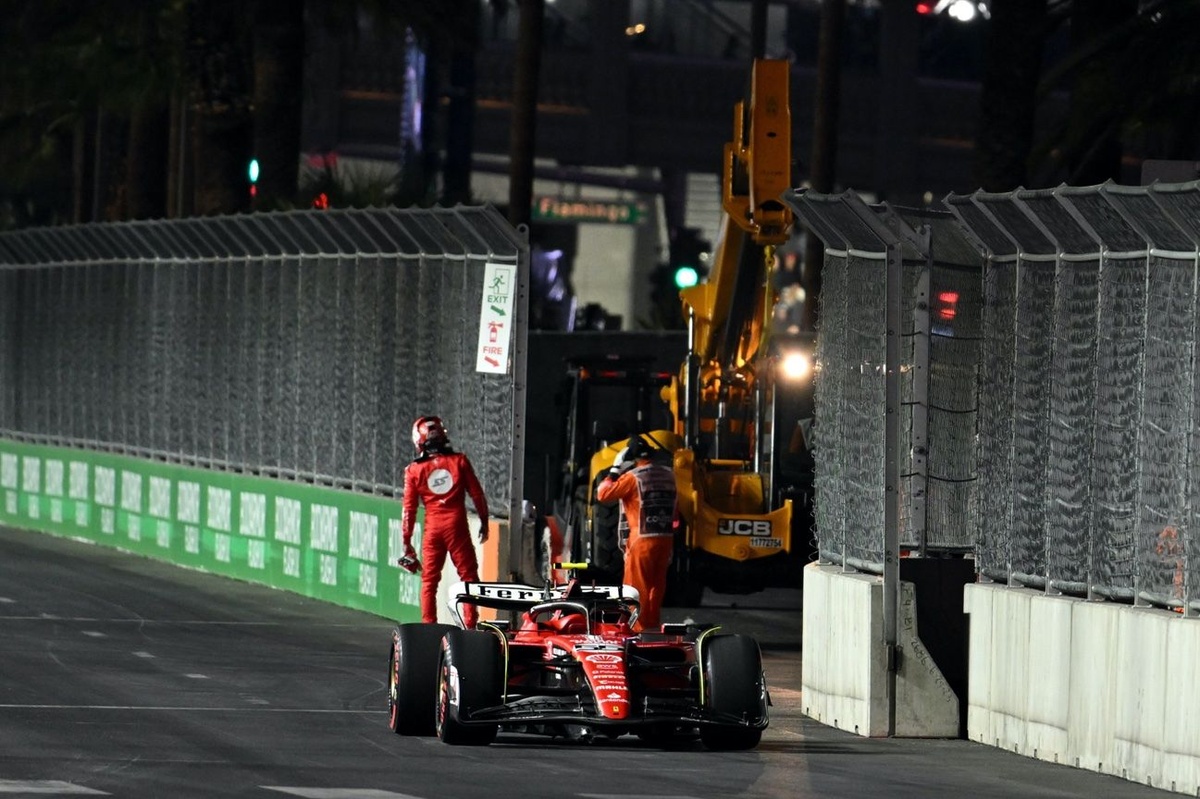
    Carlos Sainz was taken out in FP1 by a manhole cover that broke free. Photo by: Erik Junius

    Learning from the Las Vegas 2023 Incident

    New circuit debuts often serve to iron out operational kinks, but the Madring organizers have proactively addressed a specific issue that disrupted the Las Vegas Grand Prix debut in 2023. During the first practice session (FP1) on the Las Vegas Strip Circuit, Carlos Sainz’s Ferrari struck a manhole cover that came loose due to a fault in the concrete securing it.

    While Sainz escaped injury, the incident caused significant damage to his car. The repercussions were severe for Ferrari, resulting in both a sporting penalty—a grid drop for the Spaniard—and substantial financial cost. The session was cancelled after just 10 minutes, and the second practice session was postponed until 2:30 am local time, running in front of empty grandstands after spectators were evacuated.

    Madring circuit design showing no manhole covers on track surface
    No manhole covers, no problem, right? Photo by: Simon Galloway / LAT Images via Getty Images

    Zero Manhole Covers: A Design Mandate

    The Las Vegas experience proved seminal for the Spanish Grand Prix organizers. Ferrari, which has a vested interest in preventing a recurrence, has revealed that the Madring’s very design accounted for the persistent manhole cover hazard on street circuits.

    The solution was straightforward but radical: the 5.416 km track layout features zero manhole covers on the racing surface. Ferrari confirmed this specification in its official race presentation, stating:

    “Zero. The number of manhole covers on the track. To avoid the problems seen at other street circuits, the design specified there would be none in the track surface.”

    This proactive engineering decision offers a sigh of relief for Ferrari and for Sainz, who serves as an ambassador for the Madrid circuit. By eliminating the infrastructure hazard at the design stage, the Madring aims to ensure that the focus remains on racing performance rather than avoidable mechanical failures.

  • Five Things to Watch at the F1 Spanish Grand Prix

    Five Things to Watch at the F1 Spanish Grand Prix

    Formula 1 Debuts at Madrid’s Madring Circuit for 2026 Spanish Grand Prix

    Formula 1 arrives at a new venue this weekend as the Madring circuit hosts the 2026 Spanish Grand Prix on the outskirts of Madrid. The event replaces Barcelona, which held the Spanish GP earlier in June under a revised calendar slot won by Lewis Hamilton. This marks the first time Madrid has featured on the F1 calendar since the Jarama circuit hosted a round in 1981.

    Logistical Teething Problems Expected at New Venue

    New circuits often face operational growing pains. The inaugural Miami Grand Prix struggled with catering logistics, while established venues like Monza and Abu Dhabi still contend with access bottlenecks. Early reports from the Madring suggest similar challenges: media personnel, including Pedro de la Rosa and Kimi Antonelli, were seen navigating confusion between the media centre and paddock. With this round forming the second leg of a double-header, teams face compressed setup schedules amid the disarray.

    Track surface condition adds another variable. Fresh asphalt can behave unpredictably, though organizers have pressure-washed the circuit to remove oily residues. Recent theft of wiring for signage systems compounds the uncertainty.

    Kimi Antonelli Extends Championship Lead After Monza Dominance

    Andrea Kimi Antonelli strengthened his title grip with victory at the Italian Grand Prix, expanding his advantage to 66 points over team-mate George Russell with ten rounds remaining. Russell conceded the championship is effectively decided:

    “Yeah, Kimi’s definitely in control of it and he’s deserving to be in control of it,” he said. “I’m not even thinking about a fight or a comeback or anything. I’m just focused on taking it race by race and trying to maximise every single weekend. “He’s performing incredibly well. It’s going to be exceptionally challenging to overcome that gap, so I’m just sort of accepting that is what it is. I’m just going to enjoy it from here on in and try and win as many races as possible.”

    Antonelli’s Monza win came from 19th on the grid, underscoring his pace advantage. Russell, who opened the season with victory in Melbourne, has seen his challenge undone by misfortune and the rookie’s consistency. Madrid represents another step toward Antonelli’s maiden title.

    Yuki Tsunoda’s Extended Racing Bulls Stint Continues

    Initially expected as a one-off replacement at Zandvoort, Yuki Tsunoda will make his third consecutive start for Racing Bulls in Madrid. The opportunity arises from Isack Hadjar‘s ongoing recovery from a wrist injury sustained during the August break. Hadjar has now missed Zandvoort, Monza, and the upcoming Spanish GP.

    The situation benefits both Racing Bulls drivers. Liam Lawson, subbing at Red Bull, has impressed with consistent points finishes. Tsunoda, without a confirmed 2026 seat and linked to an IndyCar move, uses these outings to rebuild reputation after a difficult 2025 Red Bull tenure. He scored points at Monza and could challenge for another top-ten result given Racing Bulls’ midfield form.

    Red Flag Risk Looms Over Madring Debut

    An F3 test at the Madring last month produced 19 red flags, including several heavy impacts. The circuit’s hybrid layout—blending public roads with high-speed bespoke sections and limited run-off—raises concerns for F1’s first competitive running.

    Focus centers on Turn 12 (La Monumental), a steeply banked corner with varying radii and elevation changes. The sequences preceding and following it feature unforgiving exit walls that encroach onto the racing line. Carlos Sainz, serving as event ambassador, warned of the challenge:

    “I think definitely with the way they’ve put the barriers and the design of the track, it’s going to be one of the biggest challenges in Formula 1 recently,” said Carlos Sainz. “The track reminds me a lot of Jeddah, reminds me a lot of Baku, even reminds me a bit of Macau in some ways. So having that in an F1 car with 1,000 horsepower is going to be quite an interesting challenge.”

    Sainz referenced the F3 test incidents and anticipates a chaotic qualifying session:

    “I’ve been looking at the track and hearing of what happened in the F3 test,” he added. “I think we are all expecting safety cars and red flags and yellow flags in qualifying and things like this. “It’s been a tendency of Formula 1 to go to these kinds of tracks like Jeddah and Baku recently, that are closer to the city, Miami, but they have more walls and we haven’t had any issues with it.”

    Ferrari Internal Tensions Under Scrutiny After Monza Clash

    Ferrari arrives under scrutiny following the Lewis Hamilton–Charles Leclerc collision at Monza’s opening chicane. Hamilton attempted an inside pass at Turn 1; Leclerc held the line into Turn 2, forcing Hamilton into the gravel and dropping him down the order. Hamilton criticized the team’s lack of clear engagement rules, referencing his Mercedes tenure:

    “there are no rules” at Maranello.

    Ferrari conducted a filming day at the Madring in July, potentially offering a data advantage. However, resolving the driver dynamic remains the immediate priority as the team navigates an unpredictable weekend.