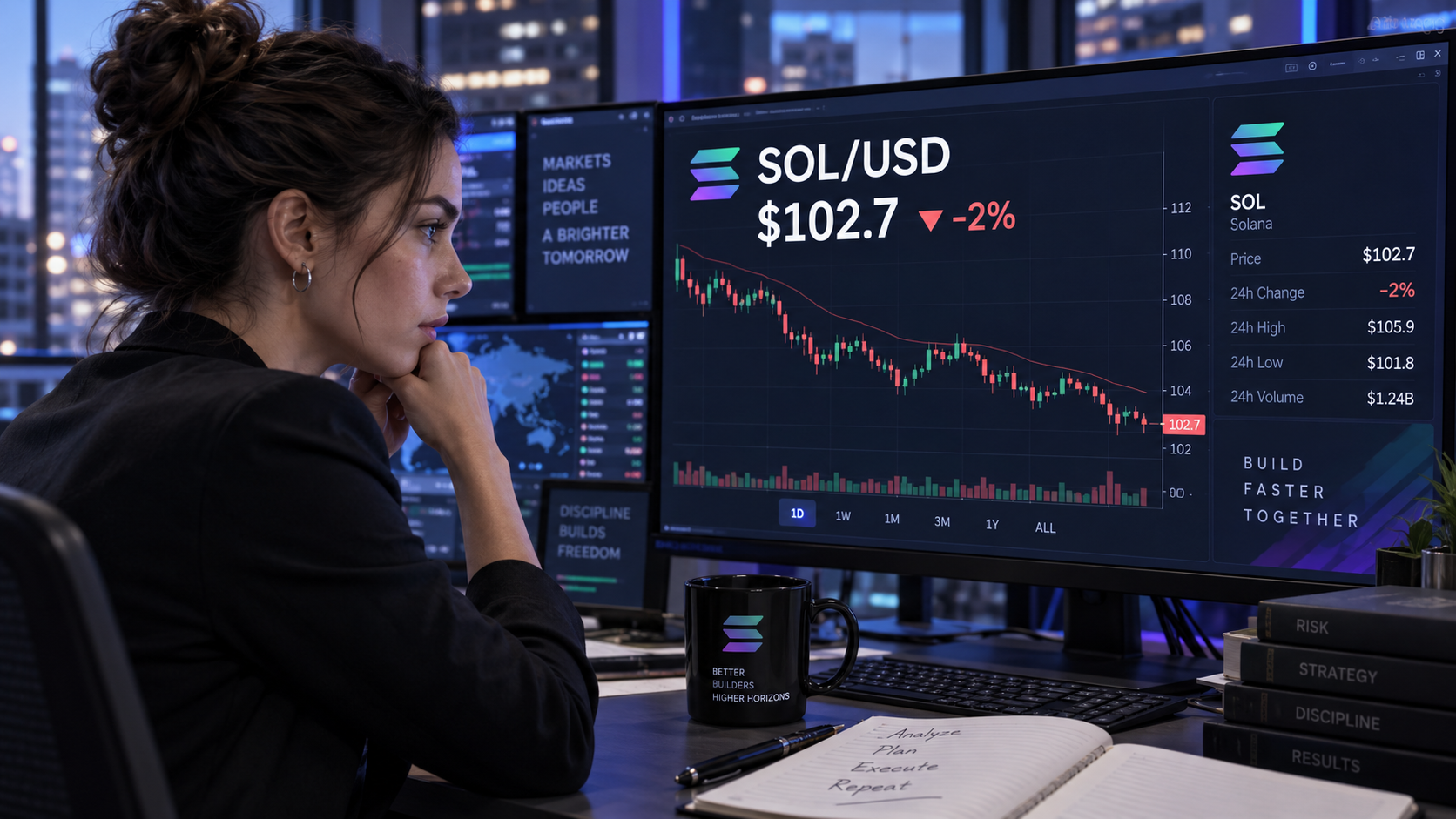
Solana (SOL) slipped 2% on Tuesday, trading near $102, yet a cluster of large derivatives traders is positioning for a continuation of the asset’s recent recovery. Five whale addresses on Hyperliquid collectively opened $9.11 million in SOL long positions between September 7 and September 8, according to CoinGlass data.
Whale Long Positions Signal Confidence Ahead of Network Upgrade
The concentrated bullish exposure suggests these traders expect Solana to extend the rebound that began on August 17. Their combined $9.11 million commitment reflects confidence that the upcoming network improvement could spark renewed buying demand. Long positions profit when the underlying asset rises, though they carry liquidation risk if SOL resumes its decline. While the activity of a few large traders does not guarantee a rally, sizable whale moves often influence sentiment, especially ahead of a major protocol change.
Solana’s September 9 Upgrade Expands Transaction Capacity
The scheduled upgrade will raise the maximum transaction size from 1,232 bytes to 4,096 bytes. This increase allows developers to pack more instructions into a single operation, bundling processes that previously required multiple separate transactions. By more than tripling the size limit, Solana aims to support more complex applications and reduce the need to split related instructions across several transactions.
Additional context on the upgrade can be found in this post by Scott Melker.
Broader Derivatives Metrics Remain Bearish
Despite the whale long positions, Solana’s wider futures market continues to show caution. SOL’s funding rate sits at a positive 0.0025%, meaning long holders are paying shorts to maintain their trades — a sign of stronger demand for bullish positions. However, the long-to-short ratio stands at 0.94, indicating short accounts outnumber long accounts. This reading reinforces the view that the five Hyperliquid whales are taking a contrarian stance against prevailing futures sentiment.
Demand for SOL derivatives has also weakened. Trading volume fell 10% to $6.58 billion, while open interest declined 1.21% to $6.47 billion. Lower volume signals reduced trading activity, and declining open interest shows leveraged positions are being closed. Together, these metrics suggest futures traders are reducing exposure as SOL approaches its upgrade.
Institutional Demand Paints a More Constructive Picture
On the institutional side, Solana exchange-traded funds have recorded inflows for ten consecutive weeks. This streak indicates that demand through regulated investment products remains resilient despite weaker futures activity. The result is a divided market outlook: whale positioning and ETF inflows favor an eventual recovery, while negative funding, falling open interest, and a sub‑one long‑to‑short ratio point to short‑term caution. SOL’s reaction to the September 9 upgrade could determine which side gains control.
Technical Analysis: Symmetrical Triangle Points to $124 Resistance or $84 Support
On the four‑hour chart, SOL is trading within a symmetrical triangle — a pattern that reflects tightening price action and can break out in either direction. The formation’s projected height is approximately 16%. A decisive break below the lower trendline could send SOL down a similar percentage toward $84. Before that target comes into view, sellers would need to push price below the psychological support at $100.
Conversely, a clear move above the triangle resistance at $107 could trigger a 16% rally toward $124. Momentum currently leans toward sellers: the Relative Strength Index sits at 44, below the neutral 50 level, and its lower lows indicate growing selling pressure. Solana’s immediate outlook therefore hinges on the triangle’s boundaries. Holding $100 and breaking above $107 would strengthen the whale‑backed bullish scenario, while losing triangle support could expose SOL to a decline toward $84.