Tag: legal battle

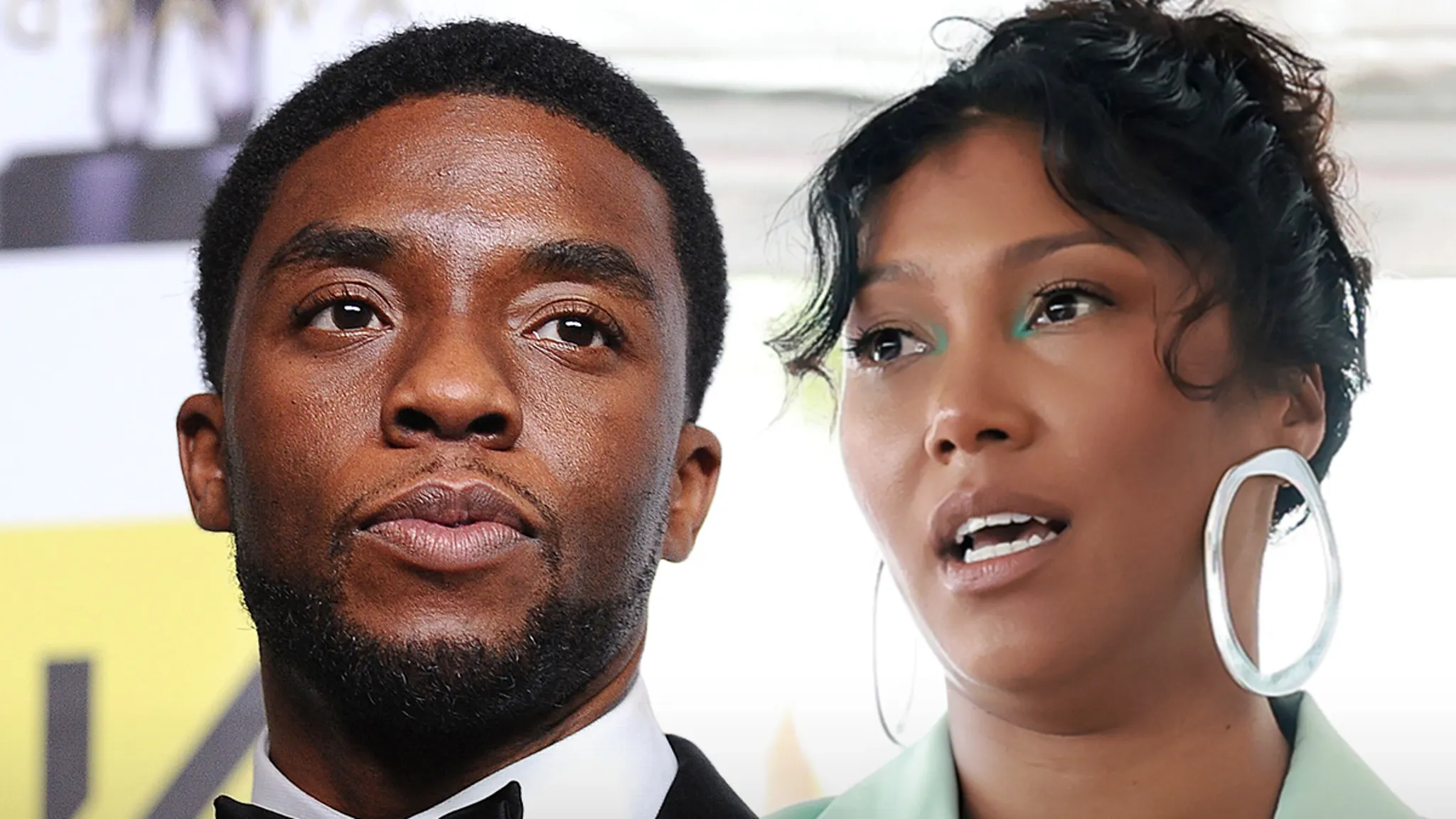
  • Chadwick Boseman’s Family Feuds With Widow Over Documentary She’s Producing

    Chadwick Boseman’s Family Feuds With Widow Over Documentary She’s Producing

    Key Highlights

    • Taylor Simone Ledward Boseman alleges that Chadwick Boseman’s family is creating obstacles for a documentary honoring the late actor’s life.
    • Court documents obtained by TMZ detail the widow’s claims regarding interference with the documentary project.
    • The legal filings represent a new chapter in the administration of the “Black Panther” star’s estate following his 2020 passing.

    Widow Alleges Family Interference with Documentary Plans

    Taylor Simone Ledward Boseman, the widow of acclaimed actor Chadwick Boseman, has filed court documents claiming that the late star’s family is actively impeding her efforts to produce a documentary celebrating his life and legacy. According to legal paperwork obtained by TMZ, Simone asserts that she has encountered significant resistance from Boseman’s relatives as she attempts to move forward with the project intended to honor the “Black Panther” icon.

    Court Filings Detail Obstruction Claims

    The court documents, which have been reviewed by the entertainment news outlet, outline Simone’s position that family members are making the documentary process unnecessarily difficult. While the specific nature of the alleged obstruction is detailed in the filings, the core contention centers on the widow’s desire to steward a tribute to her late husband against what she characterizes as familial opposition. Chadwick Boseman died in August 2020 at the age of 43 after a private four-year battle with colon cancer, leaving behind a profound cinematic legacy and an estate that has been the subject of ongoing legal proceedings.

    Estate Administration and Creative Control

    This latest development highlights the complexities that can arise in managing the posthumous legacy of a high-profile artist. As the administrator of Boseman’s estate, Simone Ledward Boseman holds legal authority over certain decisions regarding his name, likeness, and intellectual property. However, the involvement of immediate family members often introduces competing interests regarding how a public figure’s life story is told and who controls the narrative. The documentary project sits at the intersection of estate administration, family dynamics, and the public’s enduring interest in the actor’s groundbreaking career.

    Why This Matters

    The dispute underscores the broader challenges faced by estates of cultural icons when balancing commercial opportunities, artistic integrity, and family wishes. Chadwick Boseman’s impact on film—particularly through his portrayal of T’Challa in the Marvel Cinematic Universe and his powerful performances in “42,” “Get on Up,” and “Ma Rainey’s Black Bottom”—cemented his status as a generational talent. Documentaries about such figures carry significant cultural weight and commercial value, making control over them a focal point for stakeholders. The outcome of this situation may set precedents for how similar disputes are navigated in the entertainment industry, particularly when a surviving spouse and blood relatives diverge on legacy management.

    Frequently Asked Questions

    Who is Taylor Simone Ledward Boseman?
    She is the widow of Chadwick Boseman and serves as the administrator of his estate. The couple married in 2019, shortly before his death in August 2020.
    What is the documentary about?
    The documentary is intended to celebrate the life and legacy of Chadwick Boseman, the award-winning actor known for roles including Jackie Robinson, James Brown, Thurgood Marshall, and T’Challa/Black Panther.
    Why is the family reportedly opposing the documentary?
    According to court documents obtained by TMZ, Simone Ledward Boseman claims family members are making the documentary process difficult, though the specific reasons for their opposition are detailed in the legal filings rather than publicly disclosed in full.
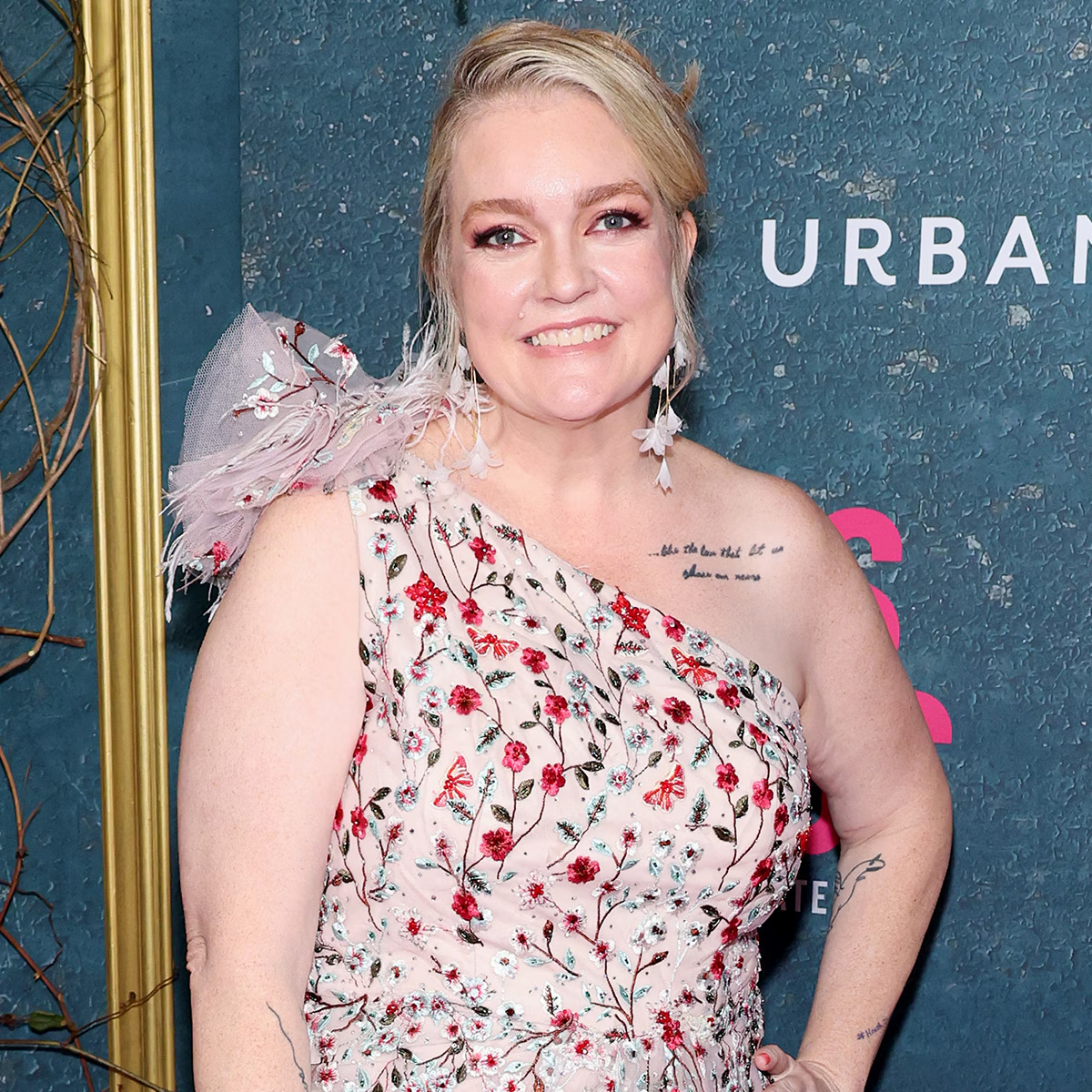
  • Colleen Hoover Reveals Where She Stands on It Ends with Us Sequel

    Colleen Hoover Reveals Where She Stands on It Ends with Us Sequel

    Key Highlights

    • Colleen Hoover signals continued engagement with her most controversial screen adaptation despite ongoing turmoil.
    • Blake Lively and Justin Baldoni remain locked in an extensive legal dispute nearly two years after the conflict surfaced.
    • The author’s stance suggests the adaptation’s legacy remains unresolved amid the high-profile costar litigation.

    Hoover Refuses to Close Chapter on Divisive Adaptation

    Best-selling author Colleen Hoover has made clear she is not ready to move past the screen adaptation that has become her most polarizing project to date. The declaration comes as the production at the center of the storm—headlined by costars Blake Lively and Justin Baldoni—continues to reverberate through an extensive legal battle that has now stretched across nearly two years. Hoover’s public positioning underscores how deeply the controversy has entangled the creative legacy of the work, keeping the author publicly tethered to a project defined as much by off-screen litigation as by its source material.

    Costar Conflict Enters Third Year

    The legal entanglement between Lively and Baldoni has evolved into a protracted dispute that shows no immediate signs of resolution. What began as reported friction on set has escalated into a formal, extensive legal battle that has dominated entertainment headlines and diverted attention from the adaptation itself. With nearly two years elapsed since the conflict became public, the litigation has become a fixture of the project’s narrative, overshadowing its release and reception. Both principals remain actively involved in the proceedings, ensuring the adaptation remains inextricably linked to their personal and professional rupture.

    Why This Matters

    The ongoing standoff illustrates the growing vulnerability of literary adaptations to talent-driven crises that outlive production cycles. For Hoover, whose brand is built on intense reader loyalty, the inability to “turn the page” reflects a broader industry reality: authors increasingly find their work’s public identity shaped by contractual disputes and personality clashes they cannot control. The Lively-Baldoni litigation also signals a shift in how on-set disputes are adjudicated—moving from private settlements to public, protracted legal warfare that can freeze a franchise’s momentum indefinitely. As the case grinds forward, the adaptation’s commercial and critical fate remains hostage to a legal timeline that operates on a radically different schedule than the entertainment news cycle.

    Frequently Asked Questions

    What is the “most divisive adaptation” referenced in the report?
    The source identifies it as Colleen Hoover’s most polarizing screen adaptation but does not name the specific title.
    How long has the legal battle between Blake Lively and Justin Baldoni lasted?
    Nearly two years, according to the source.
    Has Colleen Hoover commented on the legal battle directly?
    The source states Hoover “doesn’t want to turn the page” on the adaptation, implying continued engagement, but does not quote her addressing the litigation itself.
  • Dolly Parton’s Manager Files Restraining Order Against Late Singer’s Nephew

    Dolly Parton’s Manager Files Restraining Order Against Late Singer’s Nephew

    Key Highlights

    • Dolly Parton’s longtime manager has filed a lawsuit seeking a temporary restraining order against Bryan Seaver, identified as the nephew of a late singer connected to Parton’s family.
    • Court documents obtained by TMZ reveal escalating legal action in what is being described as a family dispute involving the country music icon.
    • The restraining order request signals a significant intensification of the conflict, moving the matter from private disagreement into the court system.

    Legal Action Escalates in Parton Family Dispute

    A simmering family conflict involving country music legend Dolly Parton has taken a decisive legal turn, with her longtime manager initiating formal court proceedings. According to court documents obtained by TMZ, the manager has filed a lawsuit that specifically seeks a temporary restraining order against Bryan Seaver. Seaver is identified in the filing as the nephew of a late singer associated with Parton’s family circle, though the precise familial relationship to Parton herself was not detailed in the initial reporting.

    Court Documents Detail Restraining Order Request

    The legal filing marks a significant escalation in what TMZ characterizes as an increasingly ugly family war. By pursuing a temporary restraining order, the manager is asking a judge to impose immediate legal restrictions on Seaver’s actions or proximity, a remedy typically reserved for situations involving alleged harassment, threats, or risk of irreparable harm. The involvement of Parton’s longtime representative—as opposed to the artist filing personally—adds a notable dimension to the dispute, suggesting the conflict may intersect with professional business interests or estate matters.

    TMZ Uncovers Legal Filings

    The entertainment news outlet TMZ reports it has reviewed the court documents directly, providing the first public confirmation of the lawsuit’s existence and its specific demands. The outlet’s reporting indicates the documents were filed recently, though an exact filing date was not specified in the initial coverage. As the case progresses, further details regarding the specific allegations against Seaver and the legal basis for the restraining order are expected to become part of the public record, unless the court orders them sealed.

    Why This Matters

    This development pulls back the curtain on a private family matter involving one of America’s most beloved entertainers. Dolly Parton has cultivated a public persona defined by warmth, humor, and close family ties, making any public legal battle involving her inner circle newsworthy by contrast. The use of a temporary restraining order—a powerful legal tool—suggests the allegations are serious and immediate. For the entertainment industry, the case highlights how family dynamics, business management, and legacy planning can collide, even for icons with decades of professional success. Observers will be watching whether Parton herself addresses the litigation publicly or if the matter proceeds quietly through the courts.

    Frequently Asked Questions

    Who filed the lawsuit and against whom?
    Dolly Parton’s longtime manager filed the lawsuit seeking a temporary restraining order against Bryan Seaver, described as the nephew of a late singer connected to Parton’s family.
    What is a temporary restraining order?
    A temporary restraining order (TRO) is a court order that prohibits a person from taking certain actions or contacting specific individuals for a limited period, typically until a full hearing can be held. It is granted when a judge finds immediate and irreparable harm could occur without intervention.
    Has Dolly Parton commented on the lawsuit?
    Based on the current reporting from TMZ, there is no public statement from Dolly Parton herself regarding the legal action. The information comes solely from court documents obtained by the outlet.
  • Jack Avery Opposes Ex Gabbie Gonzalez’s Latest Bid to See Daughter

    Jack Avery Opposes Ex Gabbie Gonzalez’s Latest Bid to See Daughter

    Key Highlights

    • Jack Avery is contesting his ex-partner Gabbie Gonzalez’s recent effort to reestablish contact with their daughter.
    • A criminal protective order currently prevents Gonzalez from having any contact with the child.
    • Avery’s legal response cites court documents as the basis for maintaining the no-contact restriction.

    Avery Counters Gonzalez’s Bid to Reconnect With Daughter

    Singer Jack Avery, known as a member of the pop group Why Don’t We, is formally opposing his former partner Gabbie Gonzalez’s latest legal maneuver to resume contact with their daughter. According to court filings reviewed in the case, Gonzalez has moved to challenge the existing restrictions, prompting Avery’s legal team to submit a response reinforcing the validity of the current protective measures. The dispute centers on a criminal protective order that explicitly bars Gonzalez from any interaction with the minor child, a restriction Avery argues remains necessary and legally sound.

    Criminal Protective Order Cited as Central Barrier

    The core of Avery’s position rests on the existence of a criminal protective order, a court-issued mandate that carries significant legal weight and is distinct from standard family law restraining orders. Such orders typically arise from criminal proceedings and impose strict no-contact provisions to safeguard alleged victims. Avery’s filing asserts there is “a good reason” this order remains in effect, signaling that the underlying circumstances warrant continued enforcement. The documentation indicates that the order was not entered lightly and reflects judicial findings that contact would pose a risk.

    Court Documents Underpin Legal Arguments

    Both parties are relying heavily on the official court record to advance their respective positions. Avery’s response references specific court documents obtained during the proceedings, using them to demonstrate the procedural history and judicial rationale behind the protective order. These records serve as the factual foundation for arguing that the order should not be modified or lifted. The legal back-and-forth suggests a contested history, with Gonzalez seeking to alter the status quo while Avery maintains the original judicial determination remains appropriate.

    Why This Matters

    This case highlights the intersection of family law and criminal protective orders in high-profile custody disputes. Criminal protective orders differ fundamentally from civil restraining orders because they stem from criminal charges or convictions, giving them enhanced enforceability and making modifications more difficult. For public figures like Avery, such proceedings attract media scrutiny while the underlying priority remains child safety. The outcome may set a precedent for how courts balance parental rights against protective mandates when one parent faces criminal-level restrictions. Legal observers note these cases often involve sealed records to protect the minor, limiting public access to full details.

    Frequently Asked Questions

    What is a criminal protective order and how does it differ from a restraining order?

    A criminal protective order is issued by a criminal court judge, typically in connection with domestic violence or child endangerment charges. Unlike civil restraining orders sought in family court, criminal protective orders are initiated by prosecutors, carry criminal penalties for violation, and are generally harder to modify or dismiss because they reflect a judicial finding of risk based on criminal proceedings.

    Can Gabbie Gonzalez legally challenge the protective order?

    Yes, the protected party or the restrained party can petition the court to modify or terminate a criminal protective order. However, the burden is high; the moving party must demonstrate a material change in circumstances and convince the judge that lifting the order would not endanger the protected individual—in this case, the minor child.

    Has Jack Avery made any public statements beyond the court filings?

    Based on the available court documents and legal filings, Avery’s position has been communicated through formal legal channels. No additional public statements or interviews have been referenced in the current record.