Tag: Las Vegas Grand Prix

  • Why the 2026 F1 Azerbaijan Grand Prix Is Scheduled for a Saturday

    Why the 2026 F1 Azerbaijan Grand Prix Is Scheduled for a Saturday

    The 2026 Formula 1 season enters its final stretch with 14 of the scheduled 23 rounds complete following last weekend’s Spanish Grand Prix. Kimi Antonelli claimed victory in Madrid on Sunday, closing out the European leg of the calendar before the series heads to Azerbaijan and a run of Asian and American flyaway races.

    Why the 2026 Azerbaijan Grand Prix moves to Saturday

    The 2026 Azerbaijan Grand Prix will run on Saturday, 26 September — one week later than its 2025 slot — despite an original Sunday, 27 September date on the provisional calendar. A schedule revision announced in June 2025 shifted the event forward following a request from the Azerbaijan promoter and relevant government stakeholders, according to an official Formula 1 statement at the time.

    The change accommodates Azerbaijan Remembrance Day, observed annually on 27 September. The national day of mourning honours military personnel and civilians who died during the Second Nagorno-Karabakh War, known domestically as The Patriotic War. The conflict erupted on 27 September 2020 in the disputed Nagorno-Karabakh region and lasted 44 days, ending in an Azerbaijani victory and triggering anti-government protests in Armenia. Official figures cite 2,783 Azerbaijani soldiers killed.

    With Remembrance Day falling on Sunday, 27 September 2026, the entire Grand Prix weekend moves forward by 24 hours:

    • Media day: Wednesday
    • Free Practice 1 & 2: Thursday
    • Free Practice 3 & Qualifying: Friday
    • Grand Prix (51 laps): Saturday

    How common are Saturday Formula 1 races?

    While Sunday has long been the standard race day, Formula 1 has contested grands prix on every day of the week. The very first World Championship race — the 1950 British Grand Prix at Silverstone — took place on a Saturday, and the British round remained a Saturday fixture until 1975.

    The Indianapolis 500, which counted toward the F1 championship from 1950 to 1960, traditionally ran on 30 May (moving to Monday when 30 May fell on a Sunday). After 1985, however, Saturday races vanished from the calendar until Las Vegas returned in 2023. Since its revival, the Las Vegas Grand Prix has been held on Saturday each year.

    More recently, the 2024 Bahrain and Saudi Arabian Grands Prix also ran on Saturdays to avoid a clash with the start of Ramadan.

    George Russell, Mercedes
    Photo by: Sam Bagnall / Sutton Images via Getty Images
  • Why Ferrari won’t have to worry about another manhole cover incident at the Madring

    Why Ferrari won’t have to worry about another manhole cover incident at the Madring

    Formula 1 Madrid Debut: Madring Circuit Eliminates Manhole Cover Risk That Plagued Las Vegas

    Formula 1 is preparing to race on a brand-new circuit for the first time since 2023. The Madring, located in Madrid, will host the 2026 Spanish Grand Prix this weekend, marking a significant expansion of the championship’s European calendar.

    A Modern Semi-Urban Circuit Design

    In line with many new venues introduced over the last 15 years, the Madring is classified as a street circuit, though it follows a specific hybrid model. While it incorporates sections of public road, portions have been purpose-built to host Formula 1 machinery. This approach places it alongside contemporary semi-urban venues such as Sochi, Jeddah, and Miami, blending city atmosphere with dedicated racing infrastructure.

    Anticipation is building among teams and fans, though some observers approach the debut with a degree of apprehension. Early simulations and track data suggest the Madring may present a particularly difficult challenge to master, combining high-speed sections with technical street-circuit characteristics.

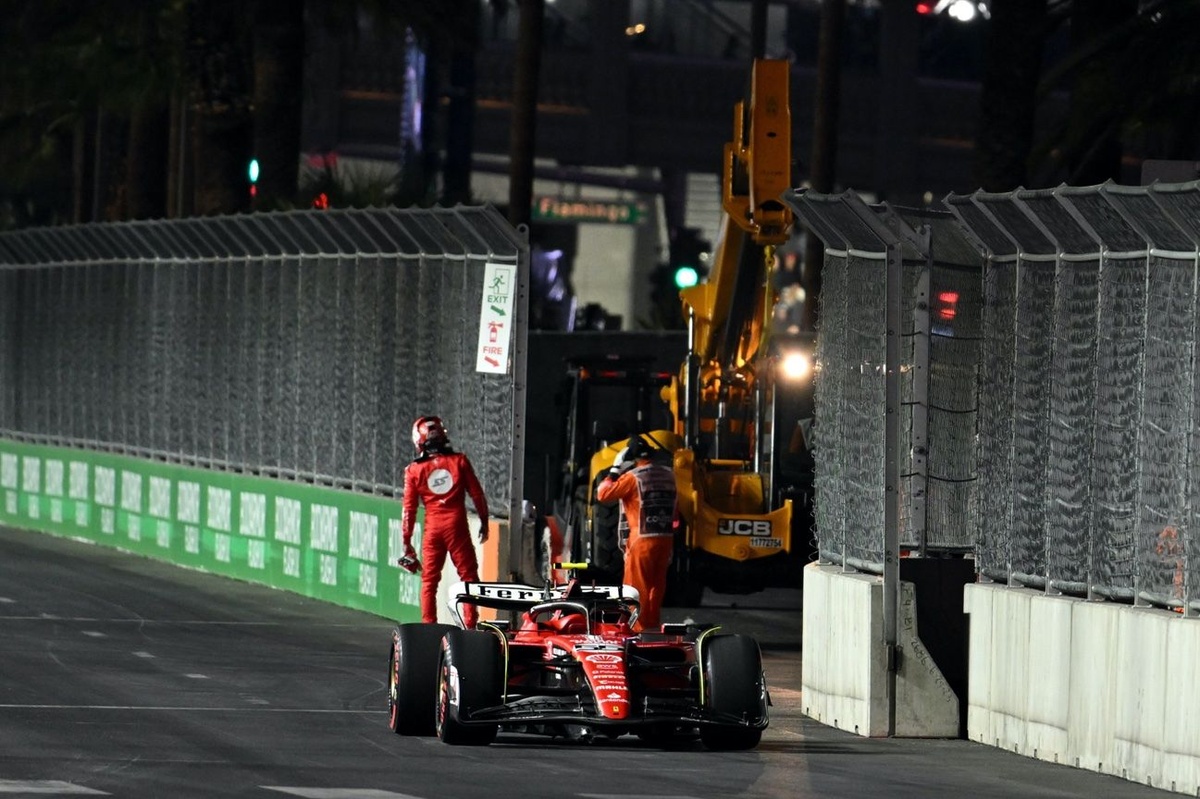
    Carlos Sainz was taken out in FP1 by a manhole cover that broke free. Photo by: Erik Junius

    Learning from the Las Vegas 2023 Incident

    New circuit debuts often serve to iron out operational kinks, but the Madring organizers have proactively addressed a specific issue that disrupted the Las Vegas Grand Prix debut in 2023. During the first practice session (FP1) on the Las Vegas Strip Circuit, Carlos Sainz’s Ferrari struck a manhole cover that came loose due to a fault in the concrete securing it.

    While Sainz escaped injury, the incident caused significant damage to his car. The repercussions were severe for Ferrari, resulting in both a sporting penalty—a grid drop for the Spaniard—and substantial financial cost. The session was cancelled after just 10 minutes, and the second practice session was postponed until 2:30 am local time, running in front of empty grandstands after spectators were evacuated.

    Madring circuit design showing no manhole covers on track surface
    No manhole covers, no problem, right? Photo by: Simon Galloway / LAT Images via Getty Images

    Zero Manhole Covers: A Design Mandate

    The Las Vegas experience proved seminal for the Spanish Grand Prix organizers. Ferrari, which has a vested interest in preventing a recurrence, has revealed that the Madring’s very design accounted for the persistent manhole cover hazard on street circuits.

    The solution was straightforward but radical: the 5.416 km track layout features zero manhole covers on the racing surface. Ferrari confirmed this specification in its official race presentation, stating:

    “Zero. The number of manhole covers on the track. To avoid the problems seen at other street circuits, the design specified there would be none in the track surface.”

    This proactive engineering decision offers a sigh of relief for Ferrari and for Sainz, who serves as an ambassador for the Madrid circuit. By eliminating the infrastructure hazard at the design stage, the Madring aims to ensure that the focus remains on racing performance rather than avoidable mechanical failures.