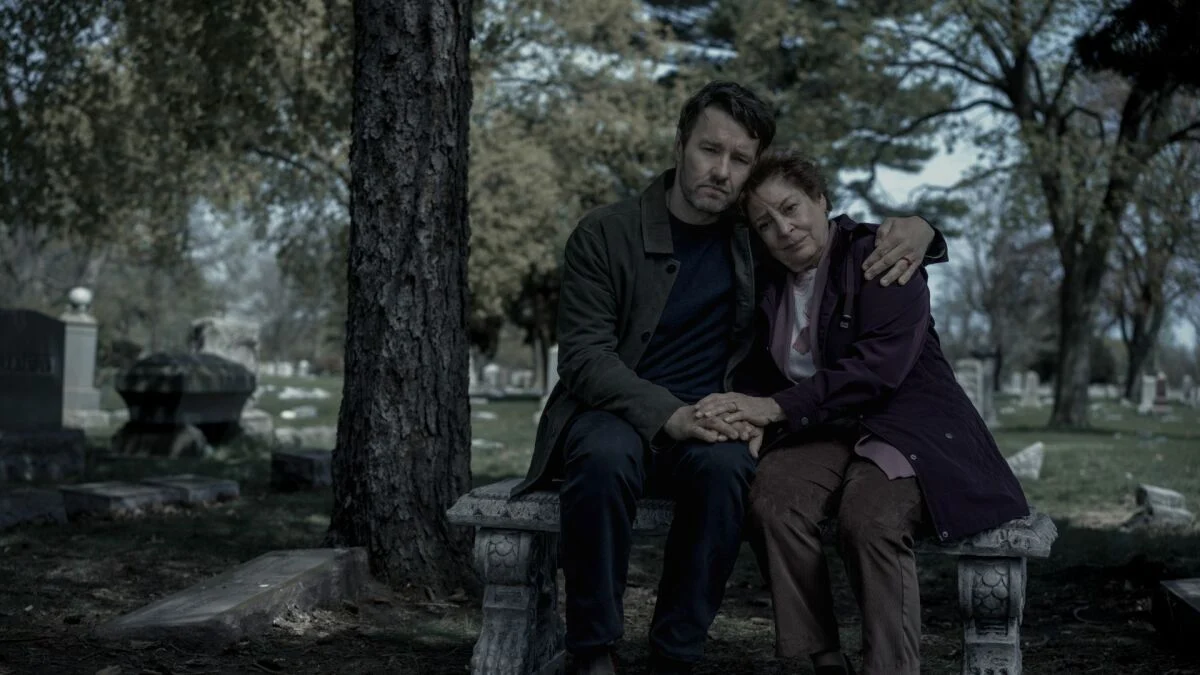
Tag: Joel Edgerton

  • Dark Matter Season 2 Episode 5 Review: The Best Kind of Filler Episode

    Dark Matter Season 2 Episode 5 Review: The Best Kind of Filler Episode

    Key Highlights

    • Standalone storytelling: Season 2, Episode 5 “Love and Be Loved” functions as a self-contained narrative focusing on one of the displaced Jason variants from the Season 1 finale.
    • Grief and renewal: The episode charts a variant Jason’s journey from suicidal despair to finding new purpose, love, and closure in a world where his mother survived but his childhood self did not.
    • Symbolic resolution: The final scene—Jason removing the hair tie from his wedding ring finger—visually confirms he has released his attachment to a life he cannot reclaim and embraced a future with Maria.

    A Standalone Chapter in the Multiverse

    Dark Matter Season 2, Episode 5, “Love and Be Loved,” continues the prestige television tradition of standalone episodes that enrich a series without requiring exhaustive prior knowledge. Following the Season 1 revelation that Jason Dessen’s (Joel Edgerton) world-hopping spawned hundreds of displaced variants—all converging on the box to say goodbye—this installment isolates a single “other” Jason. Written with the emotional precision of a short film, the episode explores what happens when one variant exhausts his last multiverse capsule seeking not his original family, but a second chance at peace.

    Building a Life From Loss

    The narrative drops viewers into a reality where this Jason’s mother is alive, yet the version of himself native to that world died as a child. He moves in with his mother, takes up chairmaking, reads voraciously, and assists two other lost Jasons who stumble into the same timeline. The rhythm is deliberately quiet, emphasizing recovery through routine. A relationship blossoms with Maria (Angela Sarafyan), a bookstore owner, grounding the speculative premise in tangible intimacy. When his mother eventually passes, Jason chooses to stay with Maria rather than pursue the version of Daniela (Jennifer Connelly) he encounters during a supply run—a Daniela who offers only gentle advice on flowers, not a portal back to his past.

    The Notebook That Bridges Two Lives

    The emotional fulcrum arrives when Maria discovers a notebook packed in a moving box. Its final page bears the raw confession that defines the variant experience:

    “I have lost everything,” the last page reads. “The love of my life. My son. My home. Please just let me find a world where I can love and be loved.”

    This plea, written before his final jump, reframes the entire episode as an answered prayer. The show resists melodrama; instead, it lets the quiet domesticity that follows—shared meals, a shared home—stand as the fulfillment of that request.

    A Gesture That Says Everything

    The closing image lingers on Jason’s hand as he unwinds the hair tie he has worn around his wedding ring finger since Season 1. Established originally as a tactile reminder of his marriage to Daniela, the band’s removal signals a profound internal shift. Seeing another Daniela does not destabilize him; it provides closure. He is no longer the man waiting to return home—he is a man who has built a new one. The episode argues that healing is possible even for those seemingly condemned to infinite displacement, offering a hopeful counterpoint to the Season 1 finale’s ocean of grief.

    Why This Matters

    Dark Matter uses its multiverse conceit not merely for plot mechanics but as a metaphor for grief’s fracturing effect on identity. By dedicating a full episode to a variant’s interior life, the series expands its moral universe: every “other” Jason is a protagonist in his own tragedy, not an obstacle for the “prime” Jason. This narrative choice deepens the show’s central question—what makes a life worth living when the original is gone?—and positions the Apple TV+ adaptation as a rare sci-fi drama prioritizing emotional architecture over puzzle-box complexity. With new episodes releasing weekly on Fridays, the season continues to test whether its high-concept premise can sustain this level of character-driven intimacy.

    Frequently Asked Questions

    Does “Love and Be Loved” require watching previous episodes to understand?
    No. The episode is structured as a standalone story. While it references the Season 1 finale’s revelation about multiple Jasons, it provides sufficient context for new viewers to follow the variant Jason’s arc without prior knowledge.
    Who plays Maria, and what is her significance to the variant Jason?
    Maria is portrayed by Angela Sarafyan. She becomes the variant Jason’s romantic partner and represents the new life he chooses after accepting he cannot return to his original family.
    What does Jason removing the hair tie from his ring finger symbolize?
    The hair tie was introduced in Season 1 as a physical reminder of his marriage to Daniela. Removing it in the Season 2, Episode 5 finale signifies he has made peace with the loss of that life and is fully present in his new relationship with Maria.
  • Dark Matter Season 2 Episode 4: Why Daniela Leaves

    Dark Matter Season 2 Episode 4: Why Daniela Leaves

    Key Highlights

    • Daniela Dessen (Jennifer Connelly) leaves the family home in Episode 4 after confessing severe psychological distress stemming from multiverse travel and trauma.
    • Her departure follows hallucinations, paranoia, and the unresolved trauma of killing an alternate version of her husband Jason (Joel Edgerton) in the season premiere.
    • The series deepens its exploration of the mental health consequences of reality-hopping, positioning Daniela’s exit as a necessary step toward healing rather than a permanent separation.

    The Breaking Point in a Fractured Reality

    Apple TV+’s Dark Matter Season 2 has steadily shifted from high-concept sci-fi thriller into an intimate psychological family drama, and Episode 4 brings that transformation into sharp focus. After the emotional milestone of sending their son Charlie (Oakes Fegley) off to college in a technologically stunted version of Chicago, Jason (Joel Edgerton) and Daniela find themselves alone in an apartment that has suddenly become too quiet. The silence does not bring peace; it creates the space for Daniela to articulate the crisis that has been building since the season began.

    Daniela’s Confession and the Weight of Trauma

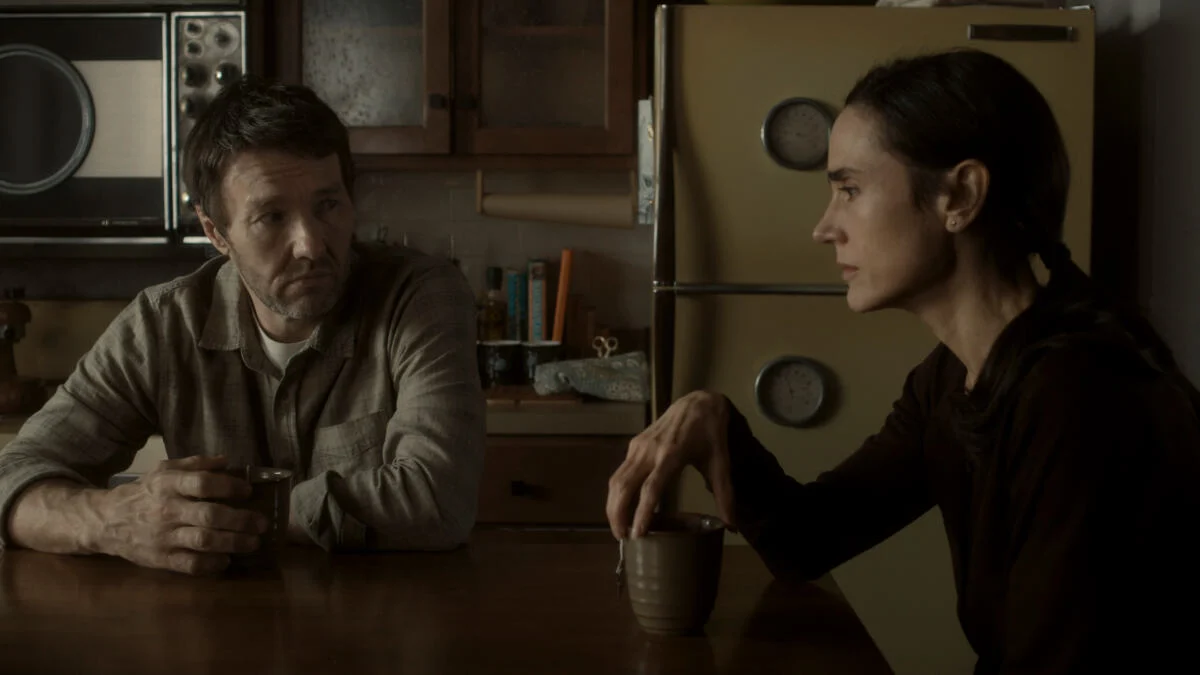
    The episode’s pivotal scene unfolds as the couple drinks tea, a domestic ritual that feels increasingly fragile. Daniela breaks the silence with a diagnosis of their new reality that is as clinical as it is heartbreaking. “We’re not the people we used to be,” she says. “I guess it was crazy to think that we could be. I think you feel it too. It’s… something’s wrong with me.” When Jason presses for details, she describes a haunting sense of surveillance and dislocation. “It’s like I’m being followed,” she says. “And I keep thinking I see these versions of you. But… it’s something else. I’m scared of things that I see in you. But I don’t know what to do with what I’ve done.” Faced with Jason’s offer to help, she delivers her final verdict: “I think I need to go away,” she finishes. The episode closes on her departure, destination unknown, though she reassures Jason that they will always be each other’s person.

    The Accumulated Cost of Multiverse Travel

    Daniela’s unraveling is not an isolated incident within the show’s logic; it is the most acute manifestation of a pattern established across two seasons. Amanda (Alice Braga), a psychiatrist by trade, has already disclosed to Ryan (Jimmi Simpson) that she suffers from a form of PTSD resulting from her reality-hopping journey with Jason in Season 1. Her professional background lends clinical weight to the diagnosis: the Box extracts a steep psychological toll. Daniela’s ledger of trauma is arguably heavier. Beyond the disorientation of traversing alternate timelines, she was forced in the Season 2 premiere to shoot and kill an alternate version of Jason who had tracked the family to their refuge. The victim was not a stranger but a man who “essentially is your husband,” creating a psychic wound that no conventional therapy can easily address. Living daily with the prime Jason—the living double of the man she killed—acts as a relentless trigger for paranoia and grief.

    Why This Matters

    Dark Matter distinguishes itself from standard multiverse fare by treating dimensional travel not as a plot device but as a source of profound existential injury. By centering Daniela’s mental health crisis, the series raises the stakes from “can they get home?” to “can they survive the journey?” Her decision to leave reframes the narrative for the remaining episodes: it splits the core trio, isolates Jason as a single parent navigating an unfamiliar world, and opens the door for a parallel storyline focused on recovery. For viewers, it signals that the show’s final act will be as much about psychological reconstruction as scientific resolution, reinforcing the series’ growing reputation for grounding speculative concepts in human consequence.

    Frequently Asked Questions

    Does Daniela leave Jason permanently?
    Almost certainly not. Her parting words—reaffirming they will always be each other’s person—strongly imply a temporary separation for healing rather than a divorce or permanent exit from the series.
    What caused Daniela’s hallucinations and paranoia?
    The show attributes her condition to the cumulative trauma of multiverse travel—specifically the PTSD identified in Amanda’s case—compounded by the unique horror of killing an alternate version of her husband in Episode 1 and living daily with his counterpart.
    When do new episodes of Dark Matter Season 2 release?
    New episodes stream every Friday on Apple TV+.