Tag: Iran sanctions

  • US Justice Department Takes Action: “Binance’s Iran Transactions Under Investigation!”

    US Justice Department Takes Action: “Binance’s Iran Transactions Under Investigation!”

    Key Highlights

    • U.S. federal prosecutors in Manhattan and the DOJ Criminal Division are investigating whether Binance violated sanctions regulations by processing transactions linked to sanctioned Iranian entities.
    • The probe follows a DOJ lawsuit last week seeking to seize approximately $61 million in cryptocurrency allegedly laundered through Binance from black-market Iranian oil sales.
    • Binance maintains a “zero-tolerance policy against sanctions violations” and says it fully cooperates with law enforcement, following a $4.3 billion settlement with U.S. authorities in November 2023.

    U.S. Authorities Expand Scrutiny of Binance Sanctions Compliance

    Federal prosecutors in New York and Washington are intensifying their examination of Binance, the world’s largest cryptocurrency exchange, over potential violations of U.S. sanctions regulations related to Iran. According to a Bloomberg report, the U.S. Attorney’s Office for the Southern District of New York and the Department of Justice’s Criminal Division are investigating whether Binance failed to block transactions that should have been prohibited under existing sanctions frameworks.

    The investigation centers on whether the exchange’s compliance teams were negligent or “knowingly allowed” transactions by sanctioned shell companies to proceed on its platform. While the specific transactions under scrutiny have not been publicly disclosed, the probe unfolds against the backdrop of a civil forfeiture lawsuit filed last week by the DOJ. That action seeks to seize approximately $61 million worth of cryptocurrency allegedly connected to the Iranian government and the Islamic Revolutionary Guard Corps (IRGC), with prosecutors alleging the funds were derived from the black-market sale of sanctioned Iranian oil and laundered through accounts on Binance.

    Binance Reiterates Compliance Commitment Amid Ongoing Investigations

    In response to the reported investigation, Binance issued a statement emphasizing its adherence to regulatory standards. The company declared it has a “zero-tolerance policy against sanctions violations and fully cooperates with law enforcement.” The exchange further stated it “is committed to identifying and removing actors who violate sanctions from its platform.”

    It remains unclear whether the current investigation will result in formal charges or a trial. Bloomberg noted that the information regarding the probe could not be independently verified and that the U.S. Department of Justice declined to comment on the matter.

    Context: A Pattern of Regulatory Action Against the Exchange

    The latest scrutiny adds to a significant history of regulatory challenges for Binance in the United States. In November 2023, the company pleaded guilty to violating multiple federal regulations, including U.S. banking and sanctions laws. As part of a comprehensive settlement with the Department of Justice, the Treasury Department’s Financial Crimes Enforcement Network (FinCEN), and the Commodity Futures Trading Commission (CFTC), Binance agreed to pay approximately $4.3 billion in fines and penalties. The agreement also required the appointment of an independent compliance monitor to oversee the exchange’s anti-money laundering and sanctions compliance programs for a period of three to five years.

    Why This Matters

    The ongoing investigation signals that U.S. authorities are actively testing the effectiveness of the compliance reforms implemented by Binance following its historic 2023 settlement. For the cryptocurrency industry, the case serves as a critical benchmark for how major exchanges are expected to police sanctions evasion, particularly concerning state-sponsored actors like the IRGC. The outcome could influence the stringency of Know Your Customer (KYC) and transaction monitoring standards across the digital asset sector globally. Furthermore, the seizure lawsuit highlights the increasing use of blockchain analytics by law enforcement to trace and interdict illicit financial flows tied to sanctioned oil revenue.

    Frequently Asked Questions

    What specific allegations are U.S. prosecutors investigating regarding Binance and Iran?

    Prosecutors are investigating whether Binance violated U.S. sanctions regulations by failing to block transactions linked to sanctioned Iranian entities, specifically examining if compliance teams were negligent or “knowingly allowed” transactions by sanctioned shell companies on the platform.

    How does this investigation relate to the DOJ’s recent $61 million seizure lawsuit?

    The investigation and the civil forfeiture lawsuit are related developments. The lawsuit, filed last week, alleges that proceeds from the black-market sale of sanctioned Iranian oil were laundered through Binance accounts, seeking to seize approximately $61 million in cryptocurrency linked to the Iranian government and the IRGC.

    What was the outcome of Binance’s previous settlement with U.S. authorities in 2023?

    In November 2023, Binance pleaded guilty to violating federal banking and sanctions laws and agreed to pay approximately $4.3 billion in fines and penalties to resolve investigations by the DOJ, FinCEN, and the CFTC. The settlement also mandated the appointment of an independent compliance monitor for three to five years.
  • Binance faces U.S. probe over Iran sanctions

    Binance faces U.S. probe over Iran sanctions

    Key Highlights

    • U.S. federal prosecutors in Manhattan are investigating whether Binance knowingly allowed trading that violated Iran sanctions, nearly three years after the exchange’s $4.3 billion settlement with the Justice Department.
    • A separate civil forfeiture complaint filed September 14 seeks approximately $61 million in USDT held in 10 cryptocurrency addresses, alleging the funds represent proceeds from Iranian crude oil sales intended to finance the Islamic Revolutionary Guard Corps.
    • Binance maintains it offboarded the implicated firms Hexa Whale and Blessed Trust in 2025 and 2026 respectively, and says its internal review found approximately $126.1 million eventually reached Iran-linked wallets after multiple blockchain hops.

    Manhattan Prosecutors Open New Iran Sanctions Inquiry Into Binance

    U.S. federal prosecutors have launched a fresh investigation into whether Binance, the world’s largest cryptocurrency exchange, knowingly permitted trading activity that violated U.S. sanctions on Iran. According to a September 22 Bloomberg report, the Manhattan U.S. Attorney’s Office is leading the inquiry with participation from the Justice Department’s Criminal Division in Washington. The investigation focuses on Binance’s compliance controls and whether the exchange was aware of the specific transactions under review. Reuters noted it had not independently verified Bloomberg’s account.

    Binance responded to the reporting by reiterating its compliance posture. The exchange said, “We fully cooperate with law enforcement, and we remain committed to rooting out and shutting down bad actors.” The Justice Department declined to comment to Reuters, while the Manhattan U.S. Attorney’s Office was not immediately available for comment outside normal business hours.

    Civil Forfeiture Complaint Details $61 Million in Alleged Iranian Oil Proceeds

    Running parallel to the reported criminal inquiry, a verified civil forfeiture complaint filed September 14 in the Southern District of New York provides public documentation of Iran-linked funds moving through Binance accounts. The case, United States v. All USD Tether Held in the Following Cryptocurrency Addresses, No. 1:26-cv-08010, seeks all USDT held in 10 cryptocurrency addresses operating on the TRON network, valued at approximately $61 million.

    Prosecutors allege the targeted cryptocurrency represents proceeds from black-market Iranian crude oil and petroleum sales intended to finance Iranian government and military bodies, including the Islamic Revolutionary Guard Corps (IRGC). The complaint identifies two Chinese companies, Blessed Trust and Hexa Whale, as having used Binance trading accounts while handling proceeds connected with Iranian oil sales. According to the filing, a network of cryptocurrency actors laundered more than $1.5 billion in illicit oil proceeds, while Blessed Trust and Hexa Whale used the U.S. financial system to send or receive tens of millions of dollars.

    The forfeiture complaint does not accuse Binance itself of wrongdoing in that proceeding. The Justice Department states that a civil forfeiture complaint contains allegations that remain unproven until a court enters judgment for the government. Court records indicate Tether would burn the tokens covered by a seizure warrant and issue replacement tokens of equal value for transfer into U.S. government custody.

    Binance Details Offboarding Timeline for Implicated Firms

    Binance has provided its own timeline regarding the two firms named in the forfeiture complaint. In a March 6 response to a Senate inquiry, the exchange said law enforcement contacted it in April 2025 about transactions between Binance wallets and outside addresses with possible terrorism-financing connections. The company said it supplied know-your-customer and transaction records connected with Hexa Whale in June 2025 and continued reviewing the account afterward.

    Binance said it removed Hexa Whale from Binance.com on August 13, 2025. A separate set of law-enforcement requests concerning transactions involving other outside wallets arrived during summer 2025, according to the exchange. Investigators then performed a source-of-funds review and offboarded Blessed Trust in January 2026.

    The exchange maintains that, to its knowledge, no Binance account transacted directly with an Iran-based entity. In another March statement, Binance said its investigation found approximately $126.1 million eventually reached wallets linked to Iran after multiple blockchain hops, with as much as $24.1 million reaching IRGC-related wallets. The figures are Binance’s account of its internal review and have not been presented by the company as findings of a court.

    Congressional Scrutiny Preceded Current Investigation

    Scrutiny of Binance’s Iran-related controls surfaced months before the Bloomberg report. In March, Senators Elizabeth Warren, Chris Van Hollen, and Ruben Gallego planned congressional oversight of a reported Justice Department investigation involving Iran-linked transactions. At the time, the inquiry was described as examining whether networks connected to Iran used Binance to evade U.S. sanctions.

    Binance disputed claims made in several February reports. In its March congressional response, the company described parts of the reporting as “demonstrably false, unsupported by credible evidence, and defamatory in several material respects.” Binance said its know-your-customer rules prohibit users residing or located in Iran from accessing Binance.com.

    The exchange also defended its compliance staffing and monitoring data. Binance says more than 1,500 people work in compliance-related functions, representing roughly 25% of its global workforce. It reported processing more than 71,000 law-enforcement requests during 2025 and claimed exposure to four major Iranian crypto exchanges fell 97.3%, from $4.19 million to $110,000 over two years. Binance said claims that it fired compliance employees for escalating concerns were false, acknowledging that one employee was dismissed after an internal investigation over what the company described as an unauthorized disclosure of user information, while other compliance workers left voluntarily.

    Investigation Follows Landmark 2023 Criminal Settlement

    The current scrutiny follows Binance’s November 2023 criminal resolution with U.S. authorities. The exchange pleaded guilty to offenses involving the Bank Secrecy Act, operating an unregistered money-transmitting business, and violating the International Emergency Economic Powers Act. Binance agreed to a total criminal financial penalty of $4.316 billion.

    In that case, the Justice Department said Binance knowingly failed to install controls that would stop U.S. customers from trading with users in sanctioned jurisdictions. Federal prosecutors said Binance caused more than $898 million in trades between U.S. users and users ordinarily resident in Iran from January 2018 through May 2022.

    The settlement required Binance to retain an independent compliance monitor for three years and improve its anti-money-laundering and sanctions systems. Separate coordinated resolutions involved FinCEN, the Treasury Department’s Office of Foreign Assets Control, and the Commodity Futures Trading Commission. Treasury-related oversight gave authorities access to Binance books, records, and systems under separate monitoring obligations, while Iran-linked transaction reports prompted renewed questions about compliance.

    Why This Matters

    The reported investigation represents a critical test of whether Binance’s post-settlement compliance reforms are functioning as required under its 2023 plea agreement. The exchange’s admission to processing nearly $898 million in Iran-linked trades between 2018 and 2022 established a pattern of sanctions violations that resulted in one of the largest corporate penalties in U.S. history. The new Manhattan inquiry, combined with the civil forfeiture action targeting $61 million in alleged Iranian oil proceeds, suggests prosecutors are examining whether the exchange’s enhanced controls — including the independent monitor and expanded compliance staff — are effectively preventing sanctioned entities from accessing the platform. For the broader cryptocurrency industry, the case underscores the persistent challenge of enforcing sanctions compliance on decentralized networks where transactions can be obscured through multiple blockchain hops and intermediary wallets.

    Frequently Asked Questions

    What specific sanctions is Binance accused of violating?

    The investigation centers on U.S. sanctions on Iran, specifically whether Binance knowingly allowed trading that should have been stopped under the International Emergency Economic Powers Act and related sanctions programs administered by the Treasury Department’s Office of Foreign Assets Control (OFAC).

    Does the civil forfeiture complaint charge Binance with a crime?

    No. The September 14 forfeiture complaint targets the cryptocurrency held in 10 specific wallet addresses, not Binance itself. The Justice Department states the allegations in the complaint remain unproven until a court enters judgment for the government.

    What was the outcome of Binance’s 2023 settlement with U.S. authorities?

    Binance pleaded guilty to Bank Secrecy Act violations, operating an unregistered money-transmitting business, and violating the International Emergency Economic Powers Act. The exchange agreed to a $4.316 billion criminal penalty, retention of an independent compliance monitor for three years, and enhancements to its anti-money-laundering and sanctions compliance systems.

  • US Unveils ‘Operation Economic Outcast’ Against Iran: Toughest Sanctions Yet or Warning Shot?

    US Unveils ‘Operation Economic Outcast’ Against Iran: Toughest Sanctions Yet or Warning Shot?

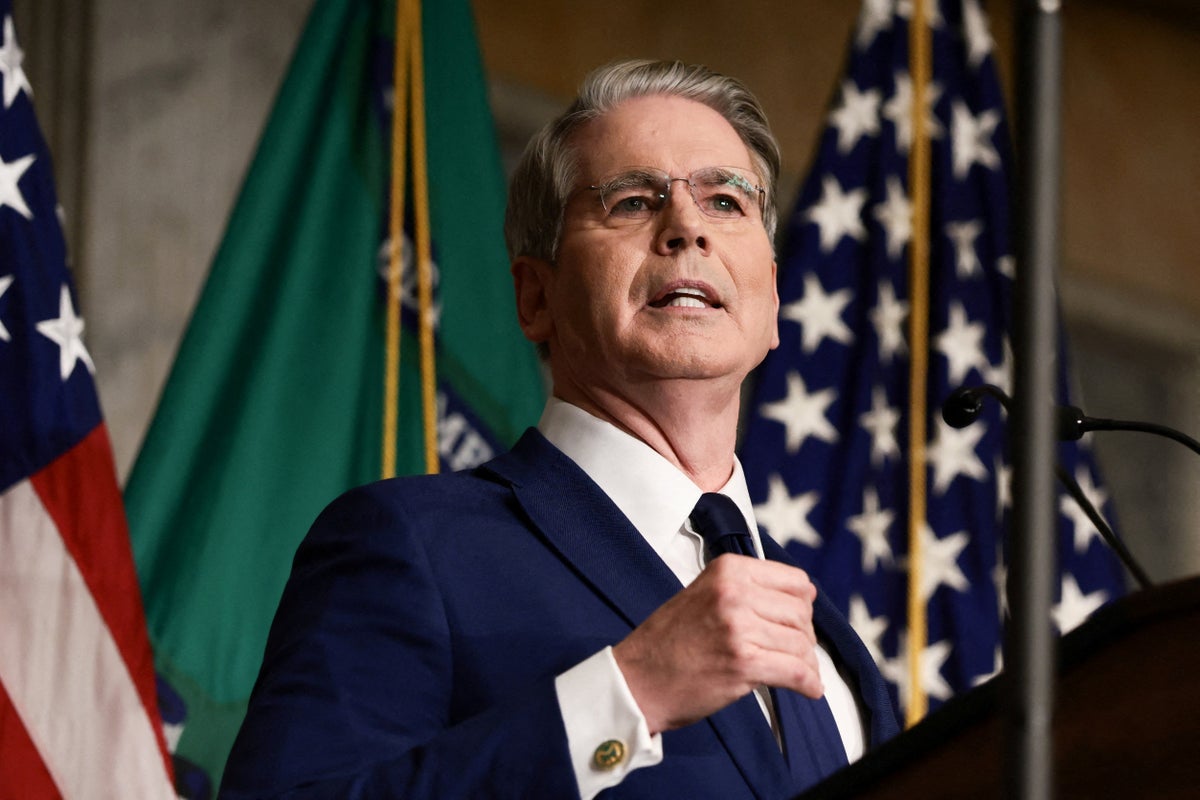
    The United States Treasury Department announced a fresh wave of punitive measures against Iran on Monday, branding the effort "Operation Economic Outcast." Treasury Secretary Scott Bessent declared that nearly 60 Iran-linked entities, individuals, and vessels would be sanctioned, framing the move as "economic asphyxiation" for the Tehran regime. In a pointed warning, Bessent stated that any economic engagement with Iran — including by China, the country's largest trade partner — would expose participants to "the full reach of American power."

    Iran's finance minister, Ali Madanizadeh, responded that Tehran is fully prepared to retaliate, while Beijing cautioned that the escalation would only "intensify" tensions and vowed to safeguard its interests. However, analysts have noted a gap between the rhetoric of an "economic D-Day" and the actual measures unveiled. The most severe potential steps, such as directly sanctioning major Chinese financial institutions, were not included, leading experts to characterize the announcement as a warning shot rather than a knockout blow.

    The new designations sit atop a sanctions architecture that has been building since 1979. The 2015 Joint Comprehensive Plan of Action (JCPOA) offered sanctions relief in exchange for nuclear constraints, but President Trump withdrew from the deal in 2018 and reimposed a "maximum pressure" campaign targeting oil exports, banking, and the financial system. The Biden administration largely maintained those restrictions. In response, Iran has developed extensive workarounds: a "shadow fleet" of tankers moving oil illicitly, domestic production of military hardware like Shahed drones, and deepened economic ties with Russia and China.

    A critical element of the latest package is the threat of secondary sanctions — penalties on third-country actors that continue doing business with Iran. Bessent did not name specific nations, saying only that President Trump was personally calling leaders to demand an immediate halt to trade with Tehran. "It's as much a warning as it is a sanctions announcement," observed Dr. Neil Quilliam, a geopolitics and energy policy specialist. This ambiguity leaves room for diplomatic maneuvering but also creates uncertainty for global markets, particularly oil, which has historically reacted to shifts in Iran sanction enforcement.

    The episode echoes the 2018–2020 period when similar "maximum pressure" threats triggered temporary oil price spikes, yet Iran adapted through illicit networks and alternative partnerships. Whether the current operation represents a genuine escalation or a calibrated pressure tactic will depend on whether the administration follows through on secondary sanctions against major economies like China — a move that would carry significant global economic repercussions.