Tag: Interest rate hike

  • Experienced CEO’s Bold Claim: “The Fed’s Interest Rate Hike Will Benefit Bitcoin”

    Experienced CEO’s Bold Claim: “The Fed’s Interest Rate Hike Will Benefit Bitcoin”

    Key Highlights

    • CrossBorder Capital CEO Michael Howell argues a potential Fed rate hike could be stimulative for Bitcoin, not contractionary, due to increased government interest payments flowing to the private sector.
    • Howell emphasizes global liquidity and balance sheet capacity—not policy rates—as the true driver of asset prices, noting 80% of capital market transactions now fund debt refinancing rather than new investment.
    • The analyst predicts a 25 basis point hike could strengthen long-term bonds, lower yields, and reduce volatility, with Bitcoin and gold positioned to benefit from ongoing “monetary inflation” driven by short-term Treasury issuance.

    Why Higher Rates May Not Hurt Bitcoin This Time

    Conventional wisdom holds that Federal Reserve interest rate hikes are unequivocally negative for risk assets like Bitcoin. Michael Howell, CEO of CrossBorder Capital and a widely followed analyst of global liquidity dynamics, challenges that assumption. In a detailed analysis, Howell argues that the modern financial architecture has shifted so fundamentally that a rate increase could actually inject cash into the private sector, creating a tailwind for cryptocurrencies and precious metals rather than a headwind.

    The Liquidity Framework Supplanting Rate Policy

    Howell’s thesis rests on a structural transformation in global capital markets. He calculates that approximately 80 percent of primary market transactions now serve to refinance existing debt rather than fund new productive investment. In this environment, the critical variable for financial stability is not the level of the policy rate but the availability of balance sheet capacity and liquidity that allows institutions to continue rolling over obligations. “If you raise interest rates in the U.S., you’re essentially giving more cash to the private sector. This isn’t a contraction, it’s a stimulus,” Howell stated, describing a mechanical fiscal transfer where higher coupon payments on expanding public debt flow directly to bondholders.

    This dynamic, he argues, means the U.S. government’s status as a massive net debtor has inverted the traditional transmission mechanism. When the Fed raises rates, the Treasury pays more interest, which functions as a fiscal injection. Howell contends a 25 basis point increase at the next meeting could align with short-term market expectations, strengthen long-duration bonds, push yields lower, and dampen volatility across fixed income markets—outcomes that would ease financial conditions rather than tighten them.

    Monetary Inflation and the Short-Term Debt Pivot

    Central to Howell’s outlook is the Treasury’s increasing reliance on short-term bills to finance the deficit. This shift expands commercial bank balance sheets and broad money supply, a process he describes as “monetary inflation.” In this regime, assets with fixed or limited supply—gold, silver, Bitcoin, and Ethereum—tend to outperform. Historical precedent from the 2008 global financial crisis and the COVID-19 period supports the pattern: when debt rollover stress forces central banks to expand liquidity, these assets record sharp price appreciation.

    Howell emphasizes that the United States’ elevated public debt trajectory compels policymakers to maintain ample liquidity and favor short-term borrowing. Consequently, he expects liquidity conditions to remain supportive even if the Fed moves rates higher. The recent rally in both Bitcoin and gold, he suggests, may reflect markets beginning to price this new paradigm where the policy rate is a secondary concern to the pace of balance sheet expansion.

    Why This Matters

    The analysis reframes the macroeconomic playbook for digital asset investors. For over a decade, the “Fed put” narrative has conditioned markets to expect easier policy as the primary catalyst for crypto rallies. Howell’s work suggests the catalyst may instead be fiscal-driven liquidity growth that persists regardless of the federal funds rate. If correct, the correlation between Bitcoin and global liquidity metrics—rather than interest rate expectations—becomes the superior signaling tool. This also implies that traditional recession indicators tied to yield curve inversion may misfire in a system where the curve is managed through bill issuance and central bank backstops. Investors and analysts should monitor Treasury refunding announcements, repo market functioning, and broad money aggregates with at least the same rigor applied to FOMC dot plots.

    Frequently Asked Questions

    Does Michael Howell believe the Fed will raise rates at its next meeting?
    The source does not state Howell’s prediction on whether the Fed will hike. He analyzes the potential consequences if a 25 basis point increase occurs, arguing it could be bullish for liquidity-sensitive assets.
    What specific assets does Howell identify as beneficiaries of monetary inflation?
    Howell explicitly names Bitcoin, Ethereum, gold, and silver as assets highly sensitive to global liquidity expansion and likely to benefit from the current fiscal and monetary structure.
    How does the 80% debt refinancing figure change the impact of rate hikes?
    When most capital market activity services existing debt, the system’s stability depends on rollover capacity and liquidity, not borrowing costs. Higher rates then transfer income to bondholders (stimulus) rather than choking off new investment (contraction).
  • Bitcoin Rallies After BOJ’s 1.25% Rate Hike, but Real Yen-Carry Test Looms Next Week

    Bitcoin Rallies After BOJ’s 1.25% Rate Hike, but Real Yen-Carry Test Looms Next Week

    Key Highlights

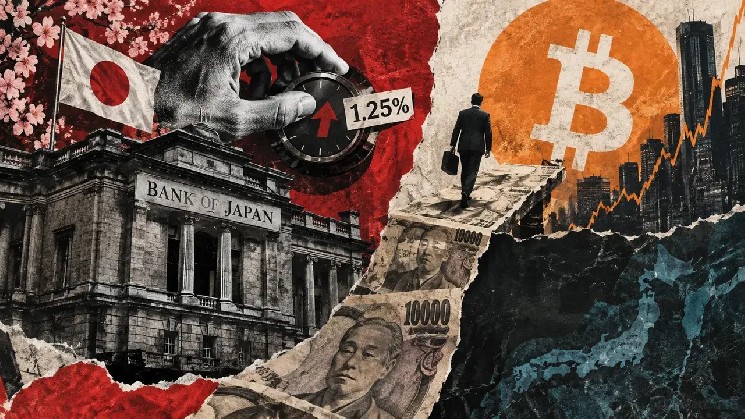
    • The Bank of Japan raised its policy rate by 25 basis points to approximately 1.25% on September 18, with the new target taking effect September 24.
    • Bitcoin traded orderly following the announcement, rising from $76,961 to over $81,000 intraday, while the yen weakened 1.2% against the dollar—contrary to a classic carry-unwind pattern.
    • The BOJ signaled financial conditions will remain accommodative and tied further hikes to economic and inflation outlook rather than a fixed timetable, leaving longer-term risk open.

    BOJ Delivers Rate Hike as Markets Monitor Yen-Carry Dynamics

    The Bank of Japan voted 7-2 on September 18 to lift its target for the uncollateralized overnight call rate from about 1% to about 1.25%, marking a continuation of its gradual normalization cycle. The new target and related facility rates take effect September 24, meaning the policy path shifted before the official operating rates changed. This separation allows market positions to adjust ahead of implementation, and the BOJ’s next policy signal may prove as consequential as the September 24 effective date because the central bank explicitly tied further increases to its economic and inflation outlook rather than a predetermined schedule.

    Bitcoin Reaction Remains Orderly Amid Yen Weakness

    At the BOJ’s 02:54 UTC release time, Coinbase one-minute data recorded Bitcoin’s closing price at $76,961. By 03:30 UTC, the one-minute close stood at $77,383, with the cryptocurrency continuing to climb throughout the session to an intraday high of $81,000. The currency move simultaneously ran counter to the simplest carry-unwind pattern. Reuters reported that during BOJ Governor Kazuo Ueda’s press conference, the dollar climbed to a two-week high of 157.84 yen, leaving the Japanese currency 1.2% weaker on the day. A visible synchronized unwind would more typically pair rapid yen appreciation with falling risk assets.

    Yen Funding One Channel Among Several for Crypto

    The available evidence leaves the amount of Bitcoin exposure financed in yen unquantified. Coinbase Institutional’s review of the 2024 carry episode identified several simultaneous catalysts, including weak U.S. economic data and pressure on technology stocks. Yen funding represents one transmission channel among several that can shape crypto market moves. The initial reaction points to limited immediate unwind pressure in observed markets, though longer-term risk remains open as the new rate takes effect and the BOJ considers its next steps.

    Why This Matters

    The BOJ’s decision arrives at a critical juncture for global liquidity and risk-asset positioning. Yen-funded carry trades have historically amplified volatility across asset classes when Japanese rates rise or the yen appreciates sharply. The central bank’s explicit conditioning of future hikes on realized economic and inflation outcomes—rather than a mechanical calendar—introduces a layer of policy uncertainty that markets must price incrementally. For cryptocurrency markets, the orderly Bitcoin response suggests current positioning is less vulnerable to an immediate, disorderly unwind than some analysts feared. However, the diagnostic warning signs remain clear: sharp yen appreciation concurrent with declining crypto and equity prices, or a fresh BOJ signal indicating tighter policy sooner than consensus expects, could rapidly alter the risk calculus. The September 24 implementation date serves as the next tangible milestone, but the evolving outlook guidance from Governor Ueda and the BOJ board will likely drive the narrative in the weeks ahead.

    Frequently Asked Questions

    Did the BOJ rate hike trigger a Bitcoin sell-off?

    No. Bitcoin rose from $76,961 at the time of the announcement to an intraday high of $81,000, indicating an orderly market response rather than a forced unwind of yen-funded positions.

    Why did the yen weaken instead of strengthen after the rate increase?

    The dollar climbed to a two-week high of 157.84 yen during Governor Ueda’s press conference, leaving the yen 1.2% weaker on the day. This suggests markets interpreted the BOJ’s forward guidance as sufficiently dovish—emphasizing accommodative conditions and data-dependent future hikes—to offset the immediate rate increase.

    What are the key signals to watch for potential carry-unwind risk ahead?

    Analysts highlight two primary warning signs: a sharp appreciation of the yen accompanied by simultaneous declines in crypto and equity markets, or a new BOJ communication indicating that policy tightening will resume sooner than markets currently anticipate.

  • Bitcoin Bounces as Markets Brace for the Fed’s Next Move

    Bitcoin Bounces as Markets Brace for the Fed’s Next Move

    Key Highlights

    • The Federal Reserve raised its benchmark interest rate by 25 basis points to 3.75%–4% on a unanimous 12–0 vote, marking the first hike since July 2023.
    • Bitcoin held near $76,300, largely unmoved by the decision, while the broader crypto market capitalization stabilized around $2.63 trillion.
    • Zcash (ZEC) surged up to 23% to a multi-year high near $1,425 after Paradigm co-founder Matt Huang disclosed his firm’s stake, calling it “a private complement to Bitcoin.”

    Fed Delivers Expected Hike; Crypto Markets Absorb Move With Composure

    Bitcoin traded sideways near $76,300 on Thursday, showing remarkable resilience a day after the Federal Reserve executed its first interest rate increase since July 2023. The Federal Open Market Committee lifted the federal funds rate by 25 basis points to a target range of 3.75% to 4%, a decision backed by all 12 voting members. Heading into the announcement, CME’s FedWatch tool indicated traders had priced in a 93% probability of the move, which helped mute immediate volatility across digital asset markets.

    While traditional markets reacted more sharply—the Dow Jones Industrial Average fell roughly 1.2% and the S&P 500 declined 0.4% to 0.5% on Wednesday—cryptocurrency prices steadied by Thursday morning. The 10-year Treasury yield, which had breached 5% earlier in the week for the first time since 2007, retreated slightly, and equity futures turned positive. Oil prices also pulled back from highs above $100 a barrel driven by the Israel–Iran conflict. These developments eased the dual headwind of a stronger dollar and higher risk-free yields that typically pressure non-yielding assets like Bitcoin and gold.

    Zcash Breaks Out on Paradigm Endorsement and Privacy Narrative

    While major tokens traded in tight ranges, Zcash (ZEC) erupted as much as 23% to trade near $1,425, hitting a multi-year high. The catalyst came after Paradigm co-founder Matt Huang disclosed on X that his venture firm holds a position in ZEC and has invested in the Zcash Open Development Lab. Huang called Zcash “a private complement to Bitcoin” and argued its inflation-funded developer fund deserves continued backing as AI-driven cyber threats and quantum computing advance.

    The rally extends a powerful run for the privacy-focused cryptocurrency. ZEC has gained approximately 160% over the past month, vastly outperforming Bitcoin’s 18.2% climb in the same period, and is up nearly 3,000% over the trailing 365 days. In May, Multicoin Capital’s Tushar Jain revealed a position built since February, describing the token as “the cleanest way” to express a privacy thesis rooted in wealth-seizure fears. Those disclosures have helped make Zcash the standout performer among the top 10 cryptocurrencies by market capitalization this week.

    Broader Market Context: Liquidations, Legislative Setback, and Sentiment Shift

    Elsewhere in the top 50, gains were more modest. BNB traded near $724 (up 2%), Solana held just above $100 for a 3.3% increase, and XRP lagged at $1.29—up 2% on the day but still down more than 6% for the week. XRP’s weekly decline followed the failure of the crypto Clarity Act to secure a Senate cloture vote days earlier. The legislation would have legalized most crypto activity in the United States and provided more meaningful regulatory clarity for altcoins such as Solana and XRP than for Bitcoin, which is widely recognized to occupy a distinct regulatory category.

    Leveraged positions felt the pressure as prices ground higher into the rate decision. Roughly $373 million in crypto liquidations hit the market over 24 hours, with short positions accounting for the larger share. Sentiment indicators reflect the cooling enthusiasm: the Crypto Fear and Greed Index read 50, exactly in “neutral” territory, a significant drop from the “extreme greed” readings recorded just three weeks ago.

    Why This Matters

    The Fed’s latest hike signals that the central bank remains vigilant on inflation despite growing risks to economic growth. The median “dot plot” projection places the federal funds rate at 4.1% by the end of 2026, leaving room for one more quarter-point move this cycle. The next FOMC meeting is scheduled for October 27–28, and markets will closely parse incoming labor and inflation data for clues on whether that final hike materializes.

    For crypto, the relatively muted reaction suggests the rate path was well-telegraphed and that the market is increasingly focused on idiosyncratic catalysts—such as the privacy narrative driving Zcash—rather than macro surprises. The failure of the Clarity Act underscores that regulatory uncertainty remains a persistent overhang for altcoins, even as Bitcoin continues to decouple from traditional risk assets in the eyes of some investors. With the Fear and Greed Index resetting to neutral, the stage is set for the next directional move to be driven by either a macro shock or a breakthrough in protocol-level adoption.

    Frequently Asked Questions

    How did Bitcoin react to the Fed’s rate hike?

    Bitcoin briefly touched $76,499 after the announcement before settling near $76,300, roughly flat on the day. The muted response reflects the fact that traders had priced in a 93% probability of the 25-basis-point increase, per CME’s FedWatch tool.

    Why did Zcash (ZEC) surge while other cryptocurrencies were flat?

    Zcash jumped as much as 23% after Paradigm co-founder Matt Huang disclosed his firm’s stake and investment in the Zcash Open Development Lab. Huang called ZEC “a private complement to Bitcoin”, and the token has benefited from a growing privacy narrative amid concerns over AI-driven cyber threats and quantum computing.

    What is the Fed’s projected rate path and next meeting date?

    The Fed’s median projection sees the federal funds rate at 4.1% by the end of 2026, implying one more potential quarter-point hike. The next FOMC meeting is scheduled for October 27–28.

  • U.S. Diesel Prices Hit Record High as Bitcoin and Gold Struggle

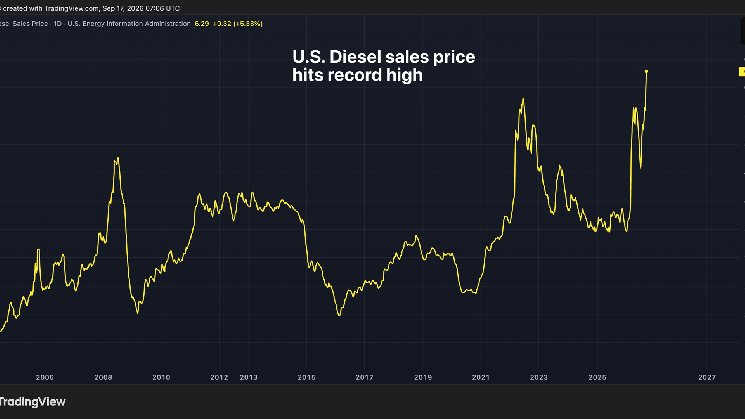
    U.S. Diesel Prices Hit Record High as Bitcoin and Gold Struggle

    Diesel prices are surging globally, driven primarily by escalating geopolitical tensions in the Middle East. The ongoing conflict involving the U.S., Israel, and Iran has disrupted crude oil flows and injected significant risk premiums into refined product markets. Compounding the supply-side pressure, tight refinery capacity and robust demand from both freight and industrial sectors have amplified the price move, transforming a regional supply shock into a worldwide spike at the pump.

    Federal Reserve Policy Under Scrutiny Amid Supply-Driven Inflation

    The Federal Reserve’s decision on Wednesday to raise its benchmark borrowing cost by 25 basis points to the 3.75%–4% range has drawn criticism from market observers. Critics argue the hike demonstrates a policy bias toward using interest rate increases to combat inflation rooted in oil-supply shocks—a strategy some view as a fundamental mistake. Higher borrowing costs historically act as a headwind for non-yielding assets, and the current environment is no exception.

    Record Diesel Prices Create Headwinds for Gold, Bitcoin, and Tech Stocks

    Record-high diesel prices are pressuring traditional safe-haven assets and growth equities alike. Both gold and bitcoin are widely viewed as stores of value and hedges against sovereign risk. However, historical precedent shows that rising interest rates weigh heavily on cryptocurrency valuations, a dynamic clearly illustrated during the Fed’s aggressive tightening cycle in 2022. Technology stocks, sensitive to discount rates and economic growth forecasts, face similar downward pressure.

    Global Central Banks Extend Tightening Cycle

    The shift toward restrictive monetary policy is not isolated to the United States. The European Central Bank has recently implemented its own rate increase, and the Bank of Japan (BOJ) is widely expected to follow suit with a hike on Friday. Major Wall Street institutions, including Goldman Sachs and Morgan Stanley, anticipate the Fed will deliver an additional 25 basis point increase at its October meeting, signaling that the global tightening cycle remains firmly in place.

  • Bitcoin Absorbs Fed Rate Hike as Officials Anticipate Further Tightening

    Bitcoin Absorbs Fed Rate Hike as Officials Anticipate Further Tightening

    Bitcoin maintained its position near pre-announcement levels around $76,000 on Wednesday, showing minimal immediate reaction to the U.S. Federal Reserve’s decision to raise its benchmark interest rate for the first time since 2023.

    Fed Raises Rates by 25 Basis Points

    The Federal Open Market Committee voted unanimously to increase rates by 25 basis points, setting a new target range of 3.75% to 4%. This move, typically associated with pressure on stocks and risk assets, came as the central bank continues to address persistently high inflation.

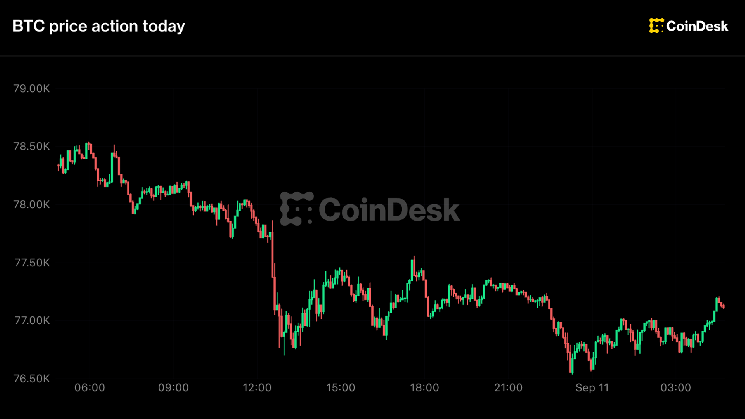
    At the time of writing, Bitcoin was trading at $76,663, representing a 1.35% gain over the previous 24 hours.

    Market Reaction Largely Anticipated

    Cooper Duschang, research analyst at Talos, noted in comments shared with Cointelegraph:

    “The initial reaction suggests the Fed’s decision was largely anticipated by crypto markets. Bitcoin has remained relatively resilient, holding broadly around pre-announcement levels even as equities moved lower.”

    Equities Decline While Bitcoin Holds

    U.S. stocks slipped on Wednesday following the rate decision. Crypto analysts caution that Bitcoin’s current resilience could face fresh tests if the Fed implements additional rate hikes before year-end.

    During the FOMC press conference, Fed Chair Kevin Warsh stated that inflation remains too high while the U.S. economy shows signs of strengthening. Updated economic projections indicate a majority of officials anticipate at least one more rate increase before the end of the year.

    16 out of 18 FOMC participants expected another rate increase this year. Source: US Federal Reserve

    Andrew Melville, head of research at Block Scholes, characterized a potential additional increase as a “more hawkish surprise than today’s 25bp hike.”

    Derivatives and Spot Markets Show Divergence

    While Bitcoin’s spot price remained stable, Duschang highlighted significant activity beneath the surface:

    “Perpetual futures have shifted towards net selling, led by approximately $82 million in Bitcoin and $68 million in Ether over the past hour. In contrast, Bitcoin recorded around $15.5 million of net spot buying, suggesting spot demand is absorbing some of the selling pressure coming through derivatives.”

    Duschang also pointed to notable exchange flows, with approximately 2,170 Bitcoin moving onto exchanges following the rate announcement, followed by a withdrawal of 1,260 Bitcoin.

    “Rather than a uniform risk-off response, investors appear to be actively repositioning as they digest the Fed’s message. The key question now is whether Bitcoin’s resilience and spot demand hold as attention shifts from today’s widely anticipated hike to the prospect of further tightening.”

    Analysts Warn of Repricing Risk

    Martin Lee, market insights lead at DWF Labs, warned that the Fed’s renewed “hawkish stance” of “higher for longer” rates would lead to risk-on assets “repricing this new reality.”

    Related: Bitcoin awaits Fed rate decision below $76K as analysis discounts ‘dovish surprise’ odds

    Magazine: HYPE price could suffer as Binance takes its revenue: Alice Liu

  • Goldman Pivots, Now Forecasts Fed Rate Hike in October

    Goldman Pivots, Now Forecasts Fed Rate Hike in October

    Goldman Sachs Revises Fed Rate Forecast, Now Expects October Hike

    Goldman Sachs has executed a significant reversal in its Federal Reserve policy outlook, now projecting that the central bank will raise its benchmark interest rate once more in October. This new forecast marks a 180-degree pivot from the firm’s previous expectation of a September hike followed by an extended pause.

    Fed Signals Further Tightening After September Increase

    The shift follows the Federal Reserve’s Wednesday decision to lift rates by 25 basis points, bringing the target federal funds rate to a range of 3.75%–4.00%. Perhaps more critically, the central bank’s updated Summary of Economic Projections revealed that a strong majority of policymakers anticipate at least one additional rate increase before the end of the year.

    Warsh Strikes Hawkish Tone at Press Conference

    At the post-meeting press conference, Fed Chair Kevin Warsh adopted a notably hawkish stance. He stated that inflation remains “too high” and characterized the latest hike as having merely removed a “dose of accommodation”. The implication is clear: the current policy stance is still not restrictive enough, and further rate hikes remain in the pipeline.

    Markets Price In Elevated Probability of October Move

    Financial markets have quickly adjusted to the revised guidance. As of this writing, traders are pricing in just over a 50% probability of another 25 basis point hike at the Fed’s October meeting, according to data from the CME Group’s FedWatch tool.

    Bitcoin Holds Steady Amid Macro Uncertainty

    Despite the shifting rate outlook, Bitcoin has shown resilience, continuing to trade near the $76,260 level. The cryptocurrency is up a marginal 0.5% over the past 24 hours, suggesting digital asset markets are currently digesting the hawkish pivot without significant volatility.

  • FOMC Meeting Today: Fed Expected to Hike Rates 25 Bps – Will Bitcoin Drop Again?

    FOMC Meeting Today: Fed Expected to Hike Rates 25 Bps – Will Bitcoin Drop Again?

    Fed Expected to Raise Rates by 25 Basis Points

    Crypto markets are already under pressure ahead of today’s Federal Open Market Committee (FOMC) meeting, with Bitcoin trading below $75,000. The Fed is widely expected to raise rates by 25 basis points, a move that is largely priced in. Traders are now focused on Chair Kevin Warsh’s comments for clues on future rate hikes and whether another wave of selling could hit Bitcoin.

    The FOMC will announce its decision at 2:00 PM EDT, followed by Fed Chair Kevin Warsh’s press conference at 2:30 PM EDT. Markets are pricing in a 92.5% chance of a 25-basis-point hike, which would move the federal funds rate from 3.50%–3.75% to 3.75%–4.00%. This would be the Fed’s first rate hike in three years.

    🚨 REMINDER: 🇺🇸 FED INTEREST RATE DECISION TODAY AT 2:00 PM ET!
    Current: 3.50% – 3.75%
    Forecast: 3.75% – 4.00%
    HIKE → MARKETS DROP HARD
    HOLD → MARKETS RALLY
    CUT → MARKETS RALLY HARD
    PRESS CONFERENCE AT 2:30 PM ET!
    pic.twitter.com/Du0sWRoIBp
    — Crypto Rover (@cryptorover) September 16, 2026

    However, traders are already looking beyond today’s decision. They are watching Warsh’s comments for signals about future rate hikes. The markets have shifted from expecting two hikes to pricing in at least three by June 2027. Former Fed Vice Chair Richard Clarida warned that another hike could follow.

    “If we get a hike next week, certainly we’ll get additional ones. This is certainly not one and done.”

    CLARITY Act Failure Adds More Pressure

    The Fed’s decision comes as the crypto market deals with another setback. On September 15, the CLARITY Act failed to advance in the Senate, weakening a major regulatory catalyst for the market. Even after a last-minute substitute text included 126 bipartisan changes, lawmakers could not overcome major political and ideological differences. Prediction markets now put the bill’s 2026 passage odds at around 12%.

    Following the setback, the total crypto market fell more than 3%, while Bitcoin dropped below $75,000. The decline also triggered around $770 million in liquidations, adding more selling pressure from leveraged long positions.

    Bitcoin Could Face More Selling If Warsh Sounds Hawkish

    The biggest risk for crypto may not be the 25-basis-point increase itself, because traders have already priced it in. Instead, Bitcoin could face more selling if Warsh signals that more hikes are coming or the Fed’s updated projections point to tighter policy for longer. Such a signal could strengthen the dollar, lift bond yields, and push investors away from riskier assets. Bitcoin has already fallen below $76,000, now trading around $75,860.

  • Bitcoin Coinbase Premium Falls to One-Month Low: Key Drivers Behind the Drop

    Bitcoin Coinbase Premium Falls to One-Month Low: Key Drivers Behind the Drop

    Bitcoin Coinbase Premium Slumps to Four-Week Low as U.S. Demand Weakens

    Bitcoin’s Coinbase premium has dropped to its lowest level in four weeks, signaling fading U.S. buying pressure as traders digest a legislative setback for the crypto industry and brace for tighter monetary policy.

    Coinbase Premium Turns Negative

    The premium measures the price gap between Bitcoin’s dollar value on Coinbase and its USDT-denominated price on Binance. CryptoQuant’s Coinbase Premium Index tracks this spread as a percentage of price. Tuesday’s reading of approximately -0.07% translates to roughly $50 on a $75,900 Bitcoin — a narrow margin that nonetheless points to relatively weak demand on the U.S. exchange.

    The discount deepened from roughly -0.02% a day earlier after the Clarity Act failed to advance on Tuesday. The move marks a sharp reversal from late August and early September, when the premium flipped positive for the first time in months as Bitcoin rallied toward $80,000. Since then, Bitcoin has retreated to around $75,000.

    Legislative Setback Weighs on Sentiment

    The failure of the Clarity Act — a bill aimed at establishing clearer regulatory frameworks for digital assets — has removed a potential catalyst for institutional inflows. Market participants had viewed legislative progress as a key driver for sustained U.S. exchange premiums, which typically reflect stronger domestic appetite.

    Fed Policy Decision Looms

    Monetary policy presents an additional headwind. The Federal Reserve announces its rate decision later Wednesday, with markets widely pricing in a 25-basis-point increase that would lift the federal funds target range to 3.75%–4%. Higher rates tend to dampen risk appetite across speculative assets, including cryptocurrencies.

    Traders will closely monitor the accompanying policy statement and press conference for signals on the pace of future hikes, which could further influence Bitcoin’s near-term trajectory and exchange-specific pricing dynamics.

  • Bitcoin, ETH, XRP Rally Threatened as September 16 Fed Rate Hike Odds Surge to 86%

    Bitcoin, ETH, XRP Rally Threatened as September 16 Fed Rate Hike Odds Surge to 86%

    Bitcoin, Ethereum, and XRP are bracing for a fresh macroeconomic headwind as market-implied odds of a Federal Reserve rate hike at the September 16 Federal Open Market Committee (FOMC) meeting have climbed sharply.

    Bitcoin Faces Key Test Ahead of September FOMC Decision

    According to the CME FedWatch Tool, the probability of a 25-basis-point increase has surged in recent sessions, reflecting sticky inflation data and resilient labor-market readings that have pushed traders to reprice the terminal-rate outlook. The shift puts risk assets—including the largest cryptocurrencies by market capitalization—on alert for heightened volatility in the days leading up to the policy announcement.

    Rate-Hike Expectations Reaccelerate

    Fed futures now show a materially higher chance of a hike compared with a week ago, when the consensus leaned strongly toward a pause. The repricing follows a run of economic releases—including consumer-price-index and producer-price-index reports—that came in above forecast, reviving concerns that the central bank’s disinflation progress has stalled.

    Crypto Market Implications

    Bitcoin, often viewed as a liquidity-sensitive asset, has historically sold off when rate-hike expectations rise, as higher discount rates pressure valuations across the risk spectrum. Ethereum and XRP tend to exhibit even higher beta to macro shifts, amplifying downside moves during hawkish repricing episodes. Traders are monitoring key technical levels on BTC/USD, ETH/USD, and XRP/USD pairs for signs of trend exhaustion or breakout confirmation once the FOMC statement and accompanying Summary of Economic Projections are released.

    What to Watch on September 16

    • Policy rate decision: Whether the Fed raises the federal funds target range by 25 basis points or holds steady.
    • Dot-plot projections: Updated median forecasts for the policy path through 2024 and beyond.
    • Chair Powell’s press conference: Tone on inflation persistence, labor-market tightness, and the reaction function for future meetings.

    Market participants will parse every word for clues on whether the hiking cycle has truly ended or if one more increase remains on the table before a prolonged pause. The outcome will likely set the near-term trajectory for digital-asset prices as well as traditional risk markets.

  • Bitcoin Below $77,000, Zcash Leads Losses as Traders Bet on Fed Rate Hike

    Bitcoin Below $77,000, Zcash Leads Losses as Traders Bet on Fed Rate Hike

    Bitcoin hovered near a critical technical threshold Thursday as risk assets sold off broadly on surging oil prices, rising Treasury yields, and mounting expectations for another Federal Reserve interest-rate hike.

    Key Support Level in Focus

    Bitget analyst Lewis Huang marked the line before the print, saying “$76,270 is an important technical support level.” Bitcoin is now less than $800 above it.

    Energy Shock Ripples Through Markets

    Brent crude ripped above $107 a barrel, up more than 6%, with West Texas Intermediate near $102. The energy shock feeds directly into the inflation data the Fed is watching. The 10-year Treasury yield pushed toward 5% and the two-year above 4.5%.

    Gold slipped toward $4,330, the dollar index firmed near 99, and the S&P 500 closed lower at about 7,594, a fourth straight decline. Asian equity futures followed, with Japan down nearly 2%, Korea more than 3% and Hong Kong close to 1%.

    Higher Real Yields Pressure Crypto

    Higher real yields drain crypto through two channels at once. They make government debt competitive with an asset that pays nothing, and they raise the cost of carrying leverage.

    U.S. spot bitcoin ETFs are already showing it, with $120 million of outflows on Wednesday, more than double Tuesday’s, while ether, $XRP and solana funds all took in money the same day.

    CPI Data and Fed Expectations

    August CPI lands at 8:30 a.m. ET, with headline inflation expected at 3.4% year over year and core at 2.4%. Interest rate futures put the odds of a hike at the Sept. 15-16 meeting near 70%, up from roughly a coin flip two weeks ago.