Tag: Institutional investors

  • Bitwise: 15 Institutions Signal More Crypto Buyers May Be Coming

    Bitwise: 15 Institutions Signal More Crypto Buyers May Be Coming

    Key Highlights

    • Major institutions held crypto allocations through a roughly 50% market decline between October 2025 and April 2026, with none of the 15 interviewed by Bitwise reducing exposure and several increasing positions.
    • Bitcoin serves as the universal first, largest, and longest-held crypto asset for every institutional holder surveyed, with allocations typically ranging from 1% to 2% of investable assets.
    • Bitwise projects a majority of institutional investors will hold crypto within five years, supported by separate data showing 60% of wealth managers plan allocations within a year and 75% of institutions intend to increase exposure in 2026.

    Institutions Weather Market Decline Without Selling

    Some of the world’s largest institutional investors maintained their cryptocurrency allocations through a severe market downturn, according to Bitwise Asset Management’s institutional crypto adoption report published September 23. The firm interviewed 15 institutions between late March and April 2026, covering a period when crypto markets declined approximately 50% from October 2025 through April 2026. Not a single interviewee reduced its allocation during that window, and several added to their positions.

    The resilience reflects a longer-term investment thesis. As one investment consultant described the perspective to Bitwise: “If the thesis is right, given the S-curve of adoption, selling now would be selling too early.” None of the institutions cited price depreciation as a reason they would sell. The group also included potential buyers: several participants without existing allocations were in advanced due diligence, while multiple sovereign wealth funds were actively examining sizable positions. One sovereign investor noted that building the necessary legal and regulatory infrastructure for an allocation could take more than a year, suggesting decisions may not appear in public holdings data immediately.

    Bitcoin Dominates Institutional Crypto Portfolios

    Among Bitwise’s interviewees, crypto allocations ranged from 0.5% to 13% of investable assets, with most clustering between 1% and 2%. Family offices reported the largest positions and could often act with approval from a single principal. Sovereign wealth funds tended to hold smaller allocations while navigating more layers of review. Bitwise found that allocation size tracked almost inversely with the number of people required to approve the investment.

    Every institution that owned cryptocurrency held bitcoin, universally as its first, largest, and longest-held crypto position. Some also held ether or solana in smaller amounts, attaching conditions to those positions such as whether growing network usage would produce value for their tokens. Public disclosures corroborate substantial existing positions: two Abu Dhabi investment vehicles held nearly $764 million in BlackRock bitcoin ETF shares at the end of June without reducing their combined net share count during the second quarter. Those holdings are separate from the anonymous institutions in Bitwise’s study.

    ETFs Become Primary Access Vehicle

    Access has become significantly easier for institutional allocators. Almost every institution Bitwise interviewed either used spot cryptocurrency exchange-traded funds or planned to use them, citing lower costs and simpler administration. A spot bitcoin ETF provides price exposure through brokerage-held shares while the fund handles custody of the underlying bitcoin. Bitwise also found that some institutions use vehicles outside Form 13F disclosure, making public filings an incomplete measure of total institutional ownership.

    Sovereign Wealth Funds and Family Offices Lead Adoption

    The interviews reveal distinct adoption patterns across institution types. Family offices, with streamlined decision-making, have moved fastest into larger positions. Sovereign wealth funds, while showing strong interest, face longer implementation timelines due to regulatory and governance requirements. This dynamic creates a staggered adoption curve where early movers establish positions while a larger wave of capital works through due diligence and approval processes.

    Growing Pipeline of New Institutional Capital

    Bitwise expects adoption to build as investors complete due diligence and more institutions disclose positions. The asset manager argues each credible public allocation lowers the reputational cost of investing for the next institution. Bitwise forecasts that a majority of institutional investors will hold crypto within five years—a projection, not a measured outcome from the 15 interviews.

    Separate data reinforces the trajectory. A Coinbase and EY-Parthenon survey of 351 institutional investors conducted in January 2026 found nearly three-quarters planned to increase crypto allocations in 2026. Nearly half also reported greater attention to risk management, liquidity, and position sizing amid volatility. In a separate poll of wealth managers discussed by Bitwise Head of Research Ryan Rasmussen on September 8, 60% of respondents planned a crypto allocation within a year, while 67% had none at the time.

    Why This Matters

    The Bitwise report signals a maturation of institutional crypto adoption from speculative positioning to strategic portfolio construction. The fact that no interviewed institution sold during a 50% drawdown—and several bought—suggests bitcoin is increasingly viewed as a long-term store of value akin to gold, which institutions often pair it with. The widespread embrace of spot ETFs as the preferred access vehicle removes custody and operational barriers that previously deterred traditional allocators. Meanwhile, the pipeline of sovereign wealth funds and wealth managers working through due diligence represents a potentially massive wave of future capital. Regulatory progress and peer adoption effects—where each public allocation reduces career risk for the next decision-maker—create a self-reinforcing adoption dynamic that could accelerate over the next several years.

    Frequently Asked Questions

    What percentage of their portfolios are institutions allocating to crypto?

    Among the 15 institutions Bitwise interviewed, crypto allocations ranged from 0.5% to 13% of investable assets, with most falling between 1% and 2%. Family offices tended to hold larger positions than sovereign wealth funds.

    Which cryptocurrencies do institutions hold?

    Every institutional holder in the Bitwise study owned bitcoin as their first, largest, and longest-held position. Some also held smaller allocations to ether or solana, typically with conditions tied to network adoption and token value accrual.

    How are institutions accessing crypto exposure?

    Almost every institution interviewed by Bitwise either used or planned to use spot cryptocurrency exchange-traded funds, citing lower costs and simpler administration. Some also use investment vehicles that fall outside Form 13F disclosure requirements, meaning public filings understate total institutional ownership.

  • Bitcoin Bear Markets Growing Milder, Signaling Potential Bull Market Ahead

    Bitcoin Bear Markets Growing Milder, Signaling Potential Bull Market Ahead

    Key Highlights

    • Bitcoin ETFs have shifted ownership toward financial advisers and professional investors who typically allocate around 2% of portfolios to the asset, compared to 20–30% or more for crypto-native retail investors.
    • Institutional rebalancing behavior—buying after declines and selling after surges to maintain target weights—is expected to soften sell-offs but also cap the magnitude of rallies.
    • Risk Dimensions CIO Mark Connors predicts smaller drawdowns than the 70–80% crashes of prior cycles, but warns that reduced volatility comes with moderated returns and “smaller blow-off tops.”

    ETFs Reshape Bitcoin Ownership From Retail to Professional Hands

    Before the launch of spot bitcoin exchange-traded funds, ownership of the largest cryptocurrency was concentrated among retail investors, crypto-native funds, and traders making tactical bets. According to Rasmussen, the introduction of ETFs provided financial advisers and other professional investors with a familiar, regulated vehicle to add bitcoin to traditional portfolios. This structural shift has fundamentally altered the composition of the investor base, bringing in participants who approach the asset through the lens of portfolio construction rather than speculative conviction.

    Allocation Discipline Creates Divergent Risk Profiles

    The difference in allocation size creates starkly different risk experiences. Rasmussen noted that a professional investor might allocate roughly 2% of a portfolio to bitcoin, whereas crypto-focused retail investors often commit 20%, 30%, or more of their capital to the asset. Consequently, a 50% price decline impacts these groups in vastly different ways. “If it goes down 50%, my portfolio is only down 1%,” Rasmussen said in an interview, describing how an investor with a 2% allocation might view the decline. For a retail holder with a 30% allocation, the same drop would erase 15% of total portfolio value.

    Rebalancing Mechanics May Dampen Volatility Cycles

    Beyond allocation size, the discipline of periodic rebalancing introduces a mechanical counter-cyclical force. An adviser targeting a 2% bitcoin weight may buy after a steep decline to restore the target allocation, providing a floor of demand during sell-offs. Conversely, if bitcoin surges and grows to 5% of the portfolio, that same investor may sell a portion at the next rebalancing date, creating natural supply at higher prices. This dynamic could soften the depth of corrections while simultaneously limiting the explosive upside that characterized earlier market cycles.

    Institutionalization Brings Trade-Offs: Smaller Drawdowns, Moderated Returns

    Mark Connors, chief investment officer at Risk Dimensions, expects growing institutional participation to contribute to smaller drawdowns than the 70–80% declines observed in previous bitcoin cycles. However, he cautioned that investors should not expect to get something for nothing. Connors said bitcoin’s volatility has fallen over time, but its returns have moderated as well. More institutional investors could mean “smaller blow-off tops due to rebalancing,” he said, highlighting the trade-off between reduced downside risk and capped upside potential as the asset matures within traditional financial infrastructure.

    Why This Matters

    The transition from a retail-dominated market to one with significant professional participation marks a structural maturation for bitcoin as an asset class. The introduction of spot ETFs in the United States has accelerated this shift by lowering operational and custody barriers for registered investment advisors, family offices, and institutional allocators. As these investors apply modern portfolio theory—fixed allocations, systematic rebalancing, and risk-budgeting frameworks—the statistical properties of bitcoin’s price action are likely to evolve. Historically, bitcoin’s boom-bust cycles were amplified by homogeneous, high-conviction holders prone to panic selling and euphoric buying. A more diverse holder base with differentiated time horizons and mandate constraints could produce a return profile that resembles other alternative assets: lower volatility, reduced tail risk, but also diminished alpha relative to the asset’s early years. For allocators, this raises strategic questions about bitcoin’s role in a portfolio—whether it remains a high-beta growth sleeve or transitions toward a diversifier with equity-like risk and modestly enhanced returns.

    Frequently Asked Questions

    How does a typical professional investor’s bitcoin allocation differ from a retail crypto investor’s?

    Professional investors such as financial advisers typically allocate around 2% of a portfolio to bitcoin, while crypto-focused retail investors often hold 20%, 30%, or more of their total capital in the asset.

    What effect does portfolio rebalancing have on bitcoin’s price cycles?

    Systematic rebalancing creates counter-cyclical flows: advisers buy bitcoin after price declines to restore target weights, supporting prices during corrections, and sell after sharp rallies to trim overweight positions, capping upside momentum.

    Will institutional adoption eliminate bitcoin’s volatility entirely?

    No. Mark Connors of Risk Dimensions notes that while institutional participation may reduce the severity of drawdowns compared to historical 70–80% crashes, volatility will persist and returns are likely to moderate, resulting in “smaller blow-off tops due to rebalancing.”

  • CryptoQuant CEO Ki Young Ju Predicts Bitcoin Could Surge 3-5x This Cycle

    CryptoQuant CEO Ki Young Ju Predicts Bitcoin Could Surge 3-5x This Cycle

    Key Highlights

    • CryptoQuant CEO Ki Young Ju forecasts Bitcoin appreciation of 3–5x in the current bull cycle, significantly below the 10x+ gains seen in prior cycles.
    • Growing institutional participation and market maturation are reducing both upside volatility and downside crash risk, potentially making future bear markets milder.
    • Ki argues this structural shift positions Bitcoin as a long-term capital preservation asset rather than a short-term speculative vehicle, with transformative implications for the global financial system if adoption as a functional currency accelerates.

    CryptoQuant CEO Projects Tempered Bitcoin Returns Amid Market Maturation

    CryptoQuant founder and chief executive Ki Young Ju has revised expectations for Bitcoin’s current bull cycle, suggesting the asset may climb only three to five times its present value rather than repeating the tenfold or greater surges characteristic of earlier market phases. In a post published on X, Ki attributed the moderated outlook to the cryptocurrency’s expanding market capitalization and the rising dominance of institutional investors, factors he says are fundamentally altering Bitcoin’s volatility profile.

    Institutional Growth Dampens Speculative Extremes

    Ki explained that during Bitcoin’s earlier stages, a comparatively small market cap and heavy reliance on retail participants left prices acutely sensitive to short-term speculative flows. That structure, he noted, routinely produced parabolic rallies followed by drawdowns as deep as 80 percent. As institutional capital assumes a larger share of ownership, the analyst argues, the market’s depth increases, compressing volatility in both directions and lowering the probability of both explosive melt-ups and catastrophic crashes.

    Shift Toward Long-Term Store of Value

    The CryptoQuant chief framed this evolution as a positive development for the asset class, contending that reduced cyclicality makes Bitcoin better suited for long-term capital allocation rather than short-term trading. He further speculated that should Bitcoin eventually achieve sufficient stability and gain widespread adoption as a functional medium of exchange, the resulting transformation of the global financial architecture could extend well beyond anything currently anticipated by market observers.

    Why This Matters

    Ki Young Ju’s assessment reflects a growing consensus among on-chain analysts that Bitcoin’s risk-return profile is normalizing as the asset graduates from a niche speculative instrument to an institutional-grade treasury reserve. The increasing presence of spot Bitcoin ETFs, corporate treasuries, and sovereign wealth fund allocations deepens liquidity and lengthens holder time horizons, structurally suppressing the boom-bust cycles that defined the 2013, 2017, and 2021 peaks. For investors, this implies a recalibration of expectations: lower maximum upside per cycle in exchange for shallower drawdowns and a higher probability of multi-year compounding. At a macro level, a Bitcoin that behaves more like a low-volatility monetary asset than a high-beta tech stock could accelerate its integration into global payment rails, central bank reserves, and cross-border settlement layers—a transition that would indeed reshape financial infrastructure in ways current models struggle to capture.

    Frequently Asked Questions

    What specific price multiple does Ki Young Ju expect for Bitcoin in this bull cycle?

    Ki Young Ju projects a 3–5x appreciation from current levels, contrasting with the 10x+ multiples observed in previous bull markets.

    Why does Ki believe future bear markets will be less severe?

    He cites the growing share of institutional investors and a larger market capitalization, which together deepen liquidity and reduce the influence of short-term speculative capital that historically amplified both rallies and crashes.

    Does Ki Young Ju’s analysis constitute investment advice?

    No. The original post explicitly includes a disclaimer stating “This is not investment advice.”

  • Mark Yusko Predicts Bitcoin Will Reach $250,000

    Mark Yusko Predicts Bitcoin Will Reach $250,000

    Key Highlights

    • Morgan Creek Capital Management CEO Mark Yusko signals Bitcoin has transitioned from a “distribution” phase to an “accumulation” phase, citing higher lows, higher highs, and a break above key moving averages.
    • Yusko’s valuation model pegs Bitcoin’s current fair value at approximately $105,000 based on Metcalfe’s Law and network valuation models, suggesting the asset remains undervalued at recent $85,000-$86,000 levels.
    • Global M2 money supply expansion, reduced leverage in crypto markets, and a shift toward institutional ownership are cited as structural tailwinds for a sustainable, albeit slower, long-term uptrend targeting $250,000.

    Yusko Identifies Structural Shift in Bitcoin Market Dynamics

    Mark Yusko, chief executive officer of Morgan Creek Capital Management, has outlined a bullish thesis for Bitcoin arguing that the cryptocurrency’s market structure is undergoing a fundamental shift back in favor of a sustained uptrend. In a recent interview, the veteran investor detailed a significant change in market character compared to just months prior, when he advised caution. Yusko now contends that Bitcoin has moved decisively from a “distribution” phase into an “accumulation” phase, a transition he believes marks the early stages of a new bull run with a long-term price target of $250,000.

    Technical Confirmation and Valuation Metrics Support Thesis

    The Morgan Creek CEO’s analysis rests on a confluence of technical and on-chain metrics. Yusko highlights that Bitcoin price action has begun printing higher lows and higher highs, a classic Dow Theory signal of an emerging uptrend. Critically, the asset has reclaimed both the 200-day moving average and the 50-week moving average, levels widely watched by institutional trend-followers. Bitcoin’s recent surge above $86,000, reaching its highest level since January, has been bolstered by sustained inflows into spot Bitcoin exchange-traded funds and renewed institutional purchasing.

    Despite the recovery from a local low near $58,000 to the current $85,000-$86,000 range, Yusko maintains that Bitcoin trades below its intrinsic “fair value.” Applying Metcalfe’s Law alongside Timothy Peterson’s network valuation model, Yusko calculates a fair value of approximately $105,000. In a separate recent statement, he characterized trading below this level as a compelling accumulation opportunity for long-term allocators.

    Macro Liquidity and Evolving Market Structure Favor Sustainability

    Beyond technicals, Yusko anchors his outlook in the macroeconomic backdrop. He points to a renewed expansion in global M2 money supply, noting that while the Federal Reserve maintains a restrictive posture, aggressive monetary expansion in major economies—particularly China—is driving global liquidity higher. This environment, he argues, historically favors scarce assets.

    Equally important is the changing composition of market participants. Yusko contrasts the current cycle with previous bull runs dominated by speculative retail leverage of 20x to 100x, which precipitated violent liquidation cascades. He observes that the growing dominance of spot ETFs, family offices, and high-net-worth long-term holders has structurally reduced systemic leverage. The sharp correction from a 2025 peak near $125,000-$126,000, in his view, effectively flushed excessive leveraged positions, leaving a healthier base.

    “The Rise in Bitcoin Won’t Come Suddenly”

    Yusko explicitly tempers expectations for explosive, vertical price action. “The Rise in Bitcoin Won’t Come Suddenly” he stated, emphasizing that Bitcoin’s maturation into a major asset class makes the tenfold rallies of prior cycles increasingly improbable. Instead, he envisions a protracted but more durable advance, potentially driving total market capitalization into the tens of trillions of dollars over the long term. This slower grind higher, he argues, is the trade-off for greater institutional participation and reduced volatility.

    Debt Monetization Narrative and Broader Digital Asset Exposure

    The thesis extends beyond Bitcoin-specific factors to a structural critique of the global financial system. Yusko argues that unsustainable sovereign debt loads will ultimately compel governments to devalue fiat currencies, positioning fixed-supply assets like gold and Bitcoin as primary stores of value. While his conviction is strongest on Bitcoin, Yusko also identifies significant roles for smart-contract platforms including Ethereum, Solana, and Avalanche in the evolving digital economy, highlighting tokenization of real-world assets, on-chain securities trading, and decentralized finance as key growth vectors.

    Why This Matters

    Yusko’s analysis reflects a growing consensus among institutional managers that Bitcoin’s market microstructure has fundamentally matured. The approval and success of spot Bitcoin ETFs in the United States have introduced a persistent, price-insensitive buyer base—registered investment advisors, pension funds, and endowments—that did not exist in prior cycles. This structural shift reduces the likelihood of the 80% drawdowns characteristic of Bitcoin’s early history, but also dampens the velocity of upside moves. For allocators, the implication is clear: Bitcoin is transitioning from a speculative vehicle to a strategic portfolio asset, demanding longer time horizons and conviction in the monetary debasement narrative. The $105,000 fair value estimate provides a tangible benchmark for dollar-cost averaging strategies, while the $250,000 long-term target underscores the asymmetric upside still perceived by early institutional adopters.

    Frequently Asked Questions

    What specific technical signals does Mark Yusko cite as confirmation of a new Bitcoin bull market?
    Yusko points to the formation of higher lows and higher highs, a decisive break above both the 200-day moving average and the 50-week moving average, and a second bottom formation with higher volume as primary technical confirmation of a trend change.
    How does Yusko arrive at a $105,000 fair value estimate for Bitcoin?
    The valuation derives from applying Metcalfe’s Law—which values a network proportionally to the square of its users—combined with Timothy Peterson’s network valuation model, which correlates Bitcoin’s price with its address activity and hash rate.
    Why does Yusko expect slower price appreciation in this cycle compared to previous ones?
    He attributes the slower grind to Bitcoin’s larger market capitalization and the dominant presence of institutional investors, ETFs, and family offices who employ little to no leverage and have longer investment horizons, reducing both volatility and the velocity of parabolic rallies.
  • Bitcoin Rally Driven by ‘Serious Institutional Money,’ Devere Says

    Bitcoin Rally Driven by ‘Serious Institutional Money,’ Devere Says

    Key Highlights

    • Devere Group CEO Nigel Green argues Bitcoin’s recovery is gaining durability from sustained institutional inflows into regulated U.S. spot ETFs, marking a shift from leveraged speculation to “patient capital.”
    • Despite a net inflow of approximately $6.1 million across five trading days through Sept. 18, the trend remains fragile after $746.3 million in withdrawals on Sept. 15–16 nearly offset recent gains.
    • The Federal Reserve’s Sept. 16 rate hike to 3.75%–4% raises the opportunity cost of holding non-yielding Bitcoin, while the CLARITY Act’s legislative stall delays regulatory clarity that Green says could unlock pension and wealth-manager allocations.

    Institutional Flows Signal Market Shift, Says Devere Group CEO

    Bitcoin’s recent price recovery is underpinned by a structural shift in market participation, according to Devere Group Chief Executive Officer Nigel Green. In comments issued Sept. 21, Green asserted that consistent purchasing through regulated investment products indicates buyers have regained control of the market. He characterized the current momentum as fundamentally different from previous rallies driven by leveraged speculation.

    “The market’s momentum has flipped, and this time there’s serious institutional money behind it,” Green said, adding:

    “Billions are flowing into regulated bitcoin products week after week. It’s patient capital that plans to stay, a very different animal from the leveraged speculation that fuelled past rallies.”

    ETF Data Shows Mixed Recovery After Volatile Week

    Flow data for U.S. spot bitcoin exchange-traded funds (ETFs) supports Green’s observation of renewed demand, though the net picture remains modest. Farside Investors’ rounded daily figures show the funds attracted $433 million in net inflows on Sept. 18, following $159.5 million the previous session and $159.9 million on Sept. 14. However, those purchases only narrowly offset withdrawals of $746.3 million recorded on Sept. 15 and 16, leaving approximately $6.1 million in net inflows across the five trading days.

    The recovery began Thursday, Sept. 18, when bitcoin ETFs returned to positive flows after two consecutive sessions of withdrawals. BlackRock’s IBIT led the rebound, while ether and XRP funds continued losing money. The divergence suggests renewed demand for bitcoin products has not yet translated into consistent buying across the broader crypto ETF market.

    Monetary Policy Creates Countervailing Pressure

    Green’s supply-side argument—that Bitcoin’s fixed cap of 21 million coins offers a hedge against currency debasement—runs against a tightening monetary backdrop. The Federal Reserve raised its benchmark target range to 3.75%–4% on Sept. 16, a unanimous quarter-point increase accompanied by language describing inflation as elevated. Higher interest rates increase returns on interest-bearing assets, raising the opportunity cost of holding Bitcoin, which pays no yield.

    A separate assessment from Grayscale characterized the latest increase as a limited adjustment within the current Fed cycle. The asset manager distinguished one or two potential increases in 2026 from the prolonged tightening cycle that began in 2022. That interpretation aligns with Green’s view that demand can remain resilient despite higher rates, though both assessments represent forward-looking market outlooks rather than established facts.

    Regulatory Uncertainty Tempers Optimism

    Green identified clearer U.S. crypto rules as a conditional catalyst that could encourage pension funds and wealth managers to increase exposure. His forecast depends on large allocators becoming more comfortable with the regulatory framework governing digital assets, which would extend demand beyond current ETF buyers into a wider pool of portfolio allocations.

    The legislative backdrop, however, delivered a setback on Sept. 15 when senators failed to advance the CLARITY Act toward floor debate. The procedural vote required 60 votes to move forward; its failure left the proposed market-structure framework unresolved. Green nevertheless expects a larger potential pool of buyers if regulation becomes clearer, while acknowledging that volatility and pullbacks will continue.

    “Once big allocators see rules they can work with, the next wave of demand could dwarf this one,”

    he described, elaborating:

    “The crypto winter looks to be ending. Every dip that gets bought strengthens the case that the floor has moved higher.”

    “Bitcoin is a permanent fixture in the global portfolio conversation, and the bulls know it,”

    the executive concluded.

    Why This Matters

    The interplay between institutional adoption, monetary policy, and regulatory progress defines Bitcoin’s current inflection point. Sustained ETF inflows—particularly from vehicles like BlackRock’s IBIT—signal growing acceptance among traditional financial intermediaries, yet the net flow figures remain marginal after sharp reversals. The Federal Reserve’s higher-for-longer rate posture introduces a persistent headwind for non-yielding assets, while the CLARITY Act’s stall underscores that U.S. regulatory certainty remains a work in progress. Market participants should monitor whether the “patient capital” Green describes withstands the dual test of rate sensitivity and legislative gridlock, or whether the recent rebound proves another bear-market rally.

    Frequently Asked Questions

    What were the net flows into U.S. spot Bitcoin ETFs for the week ending Sept. 18?

    According to Farside Investors data cited in the report, U.S. spot Bitcoin ETFs saw approximately $6.1 million in net inflows across the five trading days through Sept. 18. This followed $433 million in inflows on Sept. 18, $159.5 million on Sept. 17, and $159.9 million on Sept. 14, which were largely offset by $746.3 million in withdrawals on Sept. 15–16.

    How does the Federal Reserve’s September rate hike affect Bitcoin’s appeal?

    The Fed raised its benchmark rate to 3.75%–4% on Sept. 16, increasing the opportunity cost of holding Bitcoin because the cryptocurrency does not generate interest income. Higher yields on bonds and cash equivalents make non-yielding assets comparatively less attractive, though some analysts, including Grayscale, view the hike as a limited adjustment rather than a return to aggressive tightening.

    What is the CLARITY Act and why does its failure matter for Bitcoin?

    The CLARITY Act is a proposed U.S. market-structure framework for digital assets. Its failure to advance past a procedural vote on Sept. 15—falling short of the 60 votes needed—leaves regulatory rules unresolved. Devere Group CEO Nigel Green argues that clearer rules would unlock allocations from pension funds and wealth managers, potentially driving a larger wave of institutional demand than current ETF flows.

  • XRP ETFs Face Setback, But Institutional Investors Hold Tokens

    XRP ETFs Face Setback, But Institutional Investors Hold Tokens

    Key Highlights

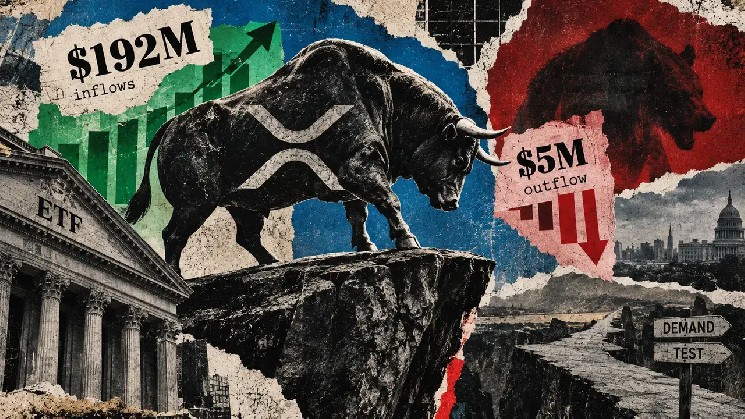
    • US spot XRP exchange-traded products recorded a $5.15 million outflow on September 17, breaking a month-long streak of inflows totaling $192 million.
    • The single-day reversal marks the first significant test of whether sustained investor demand for XRP-linked investment vehicles is beginning to cool.
    • Despite the interruption, cumulative flow data indicates the broader monthly trend remains strongly positive for XRP ETPs.

    XRP ETP Flow Reversal Snaps Month of Steady Inflows

    US spot XRP exchange-traded products (ETPs) experienced a notable shift in momentum on September 17, registering approximately $5.15 million in net outflows. This single-day withdrawal halted a consistent accumulation phase that had seen the category attract roughly $192 million in net new capital over the preceding month. The reversal represents the first material stress test of the bullish flow dynamics that have characterized XRP investment products since their broader market acceptance.

    Market Context: Testing the Durability of XRP Demand

    The outflow event arrives after a period of robust institutional and retail appetite for regulated XRP exposure. For weeks, the asset class benefited from favorable regulatory tailwinds and growing recognition of XRP’s utility in cross-border payments, driving near-uninterrupted capital inflows. The September 17 figure, while modest relative to the month’s total intake, is analytically significant because it provides the first clean data point to assess whether the buying pressure has reached a near-term saturation point or if the underlying demand curve remains intact.

    Broader Flow Pattern Remains Constructive

    Analysts observing the fund flow data emphasize that a single session of redemptions does not invalidate the prevailing trend. The $192 million monthly inflow figure dwarfs the recent outflow, suggesting the product category is still in a net accumulation phase. Market participants will closely monitor subsequent trading sessions to determine if September 17 was an isolated profit-taking event or the leading edge of a sentiment shift. The resilience of the broader monthly pattern offers a statistical buffer against over-interpreting one day’s activity.

    Why This Matters

    Flow data for spot crypto ETPs serves as a primary proxy for institutional and sophisticated retail sentiment. For XRP specifically, sustained inflows have validated the market structure built around the asset following years of regulatory uncertainty. A confirmed trend reversal could signal reduced appetite for crypto-linked traditional finance products broadly, while a quick resumption of inflows would reinforce the narrative that XRP has graduated to a core portfolio holding for digital asset allocators. The next week of flow reports will be critical for calibrating expectations for Q4 product launches and asset under management (AUM) growth trajectories.

    Frequently Asked Questions

    How significant is a $5.15 million outflow relative to the monthly total?
    The outflow represents approximately 2.7% of the $192 million in net inflows recorded during the month. While technically a reversal, the magnitude is small enough to be consistent with routine portfolio rebalancing or short-term profit taking rather than a structural shift in demand.
    What does “clean test” mean in the context of ETP flows?
    A “clean test” refers to the first unambiguous counter-trend move after an extended period of one-directional flows. It allows analysts to observe investor behavior—specifically whether new buyers step in to absorb the selling—without the noise of overlapping mixed signals.
    Could this outflow impact the approval or launch of new XRP investment products?
    Regulators and issuers typically evaluate multi-week and multi-month flow trends rather than single-day prints. Unless the outflows accelerate into a sustained trend, this data point alone is unlikely to influence product pipeline decisions.
  • Binance Points to On-Chain IPOs as Future of Capital Markets

    Binance Points to On-Chain IPOs as Future of Capital Markets

    Binance Highlights Shift Toward On-Chain IPOs as Capital Markets Evolve

    Binance has sparked industry discussion by addressing the potential transition of initial public offerings (IPOs) to on-chain models, a move that could fundamentally reshape how capital markets operate. The conversation, highlighted in a recent Binance tweet, signals a broader trend toward blockchain adoption in traditional finance and carries significant implications for traders and investors.

    Traditional Market Structures Face Disruption

    The current cryptocurrency landscape reflects mixed sentiment alongside growing interest in innovative financial structures. Binance’s focus on on-chain IPOs underscores a shift where traditional market hours and constraints are becoming less relevant. This evolution not only highlights the changing nature of capital markets but also positions Binance as a key driver of this transformation. Such developments could attract increased institutional interest, emphasizing the need for market participants to stay informed on emerging trends.

    Key Implications of On-Chain IPO Models

    • Binance is leading discussions on transitioning from traditional IPOs to on-chain models
    • The shift signals a potential transformation in capital market structure
    • On-chain IPOs could deliver increased efficiency and transparency
    • Traders should assess how these developments may influence market dynamics
    • Growing institutional interest could accelerate the transition

    Market Context and Institutional Impact

    Against a backdrop of mixed market signals, Binance’s insights into on-chain IPOs could prove pivotal. This development points to a potential loosening of traditional market constraints, enabling more fluid capital movements. As Binance continues to innovate, its influence on market structure will be significant, presenting traders with both new opportunities and challenges. The conversation around on-chain IPOs reflects the increasing integration of blockchain technology into traditional financial practices, potentially reshaping how companies access capital and how investors participate in market opportunities.

    Regulatory Outlook and Trader Guidance

    Market participants are advised to monitor how the shift to on-chain IPOs develops and what regulatory responses may emerge. The potential for increased institutional participation could lead to volatility as new structures are adopted. Tracking Binance’s position and subsequent innovations will be essential for understanding future market trends. As with all market data, information is subject to change and should be interpreted with caution.

  • Clarity Act Fails to Pass, Sparking Investor Concern

    Clarity Act Fails to Pass, Sparking Investor Concern

    Crypto Derivatives Face Uncertainty After Clarity Act Failure

    The collapse of the Clarity Act has triggered significant concern across the cryptocurrency derivatives market, with sophisticated investors warning that regulatory ambiguity may drive institutional capital away from speculative trading products.

    Market Reaction: Volumes Vanish Amid Regulatory Void

    Trading activity has ground to a near halt. According to market data cited by crypto commentator Pentosh1, derivatives volumes dropped to $0 in the last 24 hours, signaling a abrupt withdrawal of liquidity as participants digest the legislative setback. The absence of trading reflects a cautious stance from both retail and institutional actors reassessing exposure in the absence of clear regulatory guardrails.

    Institutional Hesitation Grows

    The Clarity Act was designed to establish a coherent regulatory framework for digital assets, aiming to encourage deeper institutional engagement. Its failure removes a anticipated pathway for compliance, leaving fund managers, market makers, and custodians without the legal certainty required to scale derivatives operations.

    Pentosh1 notes that sophisticated investors are worried that institutions may refrain from engaging with speculative derivatives, a dynamic that could amplify price swings as hedging and market-making capacity contracts.

    Sentiment Turns Fragile

    Social media chatter has shifted toward anxiety-driven memes and speculation, underscoring a broader loss of confidence. Traders are questioning the viability of leveraged positions and structured products in an environment where regulatory risk is now the dominant variable.

    What Comes Next

    Market participants are now monitoring:

    • Regulatory signals from the SEC, CFTC, and congressional leadership
    • Derivatives exchange responses — including potential product delistings or margin hikes
    • Institutional custody and prime brokerage announcements

    Analysts warn that prolonged uncertainty could trigger liquidation cascades if leveraged positions are unwound en masse. The coming weeks will determine whether the market stabilizes around alternative compliance models or enters a deeper retrenchment.

    Bottom Line

    The Clarity Act’s failure has injected a new layer of systemic risk into crypto derivatives. Without legislative clarity, institutional participation — critical for depth, stability, and innovation — remains on hold. Traders should prepare for elevated volatility and fragmented liquidity until a new regulatory signal emerges.

  • Bitwise Investment Director Attributes Bitcoin Rally to Strong Demand Despite Strategy Sale

    Bitwise Investment Director Attributes Bitcoin Rally to Strong Demand Despite Strategy Sale

    Bitwise Investment Director Matt Hougan has weighed in on Strategy’s recent Bitcoin sale, noting that the transaction reflects routine capital management rather than financial distress. Despite the company selling over $200 million worth of BTC, the cryptocurrency’s price continued to climb — a signal Hougan says points to robust buying demand across the market.

    Sale Driven by Capital Management, Not Funding Pressure

    According to Hougan, Strategy’s decision to offload a portion of its Bitcoin holdings was executed to meet dividend payment obligations and manage cash reserves. The move should be viewed as part of a broader capital management strategy, not an indication that the firm is facing liquidity issues or forced to reduce its position under duress.

    As one of the largest institutional holders of Bitcoin on its balance sheet, Strategy’s trading activity is closely monitored by market participants for potential price impact. However, Hougan emphasized that the market absorbed the sale without disruption, suggesting sufficient buyer appetite to offset large-scale selling.

    Institutional Investors Poised to Become Primary Market Drivers

    Looking ahead, Hougan expects Strategy’s influence on Bitcoin’s price to gradually diminish. He argues that as institutional investors gain greater market share, they will increasingly serve as the primary marginal buyers of BTC. This structural shift is being accelerated by the growth of spot Bitcoin exchange-traded funds (ETFs), asset managers, and other institutional investment vehicles.

    The diversification of capital flows into Bitcoin through these channels could expand the investor base and deepen market liquidity. Hougan’s analysis implies that Bitcoin demand is becoming more resilient and less dependent on the actions of any single corporate entity.

    Market Absorption Signals Strengthening Independent Demand

    The fact that Bitcoin’s price rose despite a significant sale by a major holder underscores a key development: the market now has enough buying power to absorb large sell orders without meaningful downside pressure. This dynamic supports the view that Bitcoin’s demand fundamentals are strengthening independently of individual corporate transactions.

    This is not investment advice.

  • Bitwise Acquires $107 Million in Solana Over 20 Days

    Bitwise Acquires $107 Million in Solana Over 20 Days

    Bitwise Accumulates $107.4 Million in SOL as Solana ETF Inflows Persist

    Leading asset management firm Bitwise has significantly increased its Solana position, acquiring $107.4 million worth of SOL tokens despite sluggish momentum in the broader Solana ETF market. The substantial purchase, identified through on-chain analytics platform Arkham Intelligence, coincides with a month of consistent capital inflows into the firm’s Solana investment product.

    Institutional Investors Leverage Price Weakness

    Amid ongoing volatility across the cryptocurrency market, institutional investors appear to be treating the recent decline in Solana’s price as a strategic entry point. The data reveals that Bitwise executed the large-scale accumulation after its Solana ETF recorded steady, modest inflows across 20 consecutive trading sessions. During this period, only two sessions registered outflows, indicating sustained positive demand for the fund on the vast majority of trading days.

    Holdings Approach $1 Billion Milestone

    This latest acquisition has propelled Bitwise’s total Solana holdings toward a historic threshold. As of Thursday, September 10, the firm holds over 9,030,000 SOL. Based on a current market price of approximately $101 per token, the portfolio is valued at roughly $918 million. At the current accumulation rate, Bitwise is on track to surpass $1 billion in Solana assets under management in the near term, underscoring growing institutional conviction in the Solana ecosystem.