Key Highlights
- Danny Boyle’s latest film Ink dramatizes the 1969 partnership between Rupert Murdoch and editor Larry Lamb that turned the struggling The Sun into a dominant, sensationalist British tabloid.
- Boyle confirmed at the Telluride and Toronto film festivals that generative AI was used for roughly 30 seconds of the 116-minute runtime, specifically to animate a historical photograph and depict mice in a newsroom.
- The film’s climax links the tabloid’s “give the people what they want” philosophy to Silicon Valley’s “Move Fast and Break Things” motto, but critics argue Boyle’s own use of AI undercuts this thematic critique.
Boyle Returns to Biopic Territory With Ink
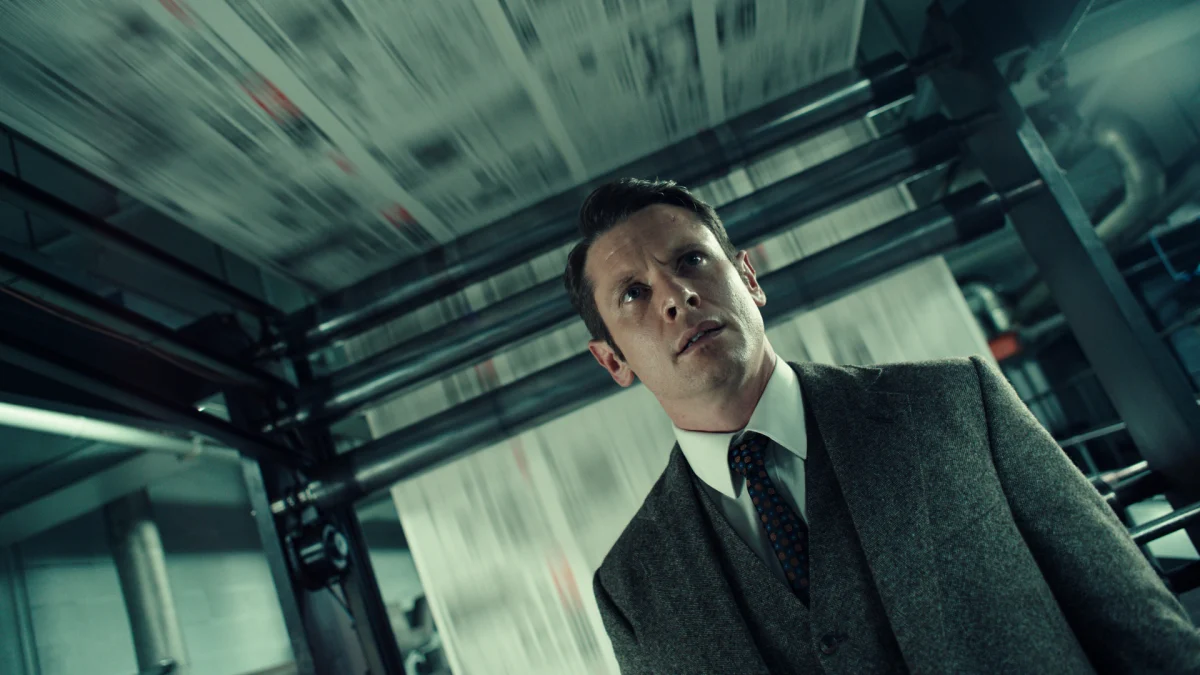
Since his 1996 breakthrough with Trainspotting, English filmmaker Danny Boyle has oscillated between genre-defining horror (28 Days Later), Oscar-winning drama (Slumdog Millionaire), and high-stakes biopics (127 Hours, Steve Jobs). His newest feature, Ink, marks a return to the biographical form, chronicling how Australian media magnate Rupert Murdoch and Yorkshire-born editor Larry Lamb transformed a failing UK newspaper into the powerful—and arguably dangerous—tabloid The Sun. Boasting a cast led by Jack O’Connell as Lamb, Guy Pearce as Murdoch, and Claire Foy as the provocative reporter Jules, the film arrived at the Venice International Film Festival with early Oscar buzz. That momentum stalled, however, when Boyle inadvertently derailed awards-season discourse by revealing he had employed generative AI for “about 30 seconds” of the finished film.
A Heist-Movie Structure for a Newspaper Launch
Screenwriter James Graham frames the newspaper launch as a caper reminiscent of Ocean’s Eleven. Set in 1969 London, the film introduces Lamb and Murdoch as boxers circling in a dark, wood-paneled restaurant—the oldest in London, Lamb notes. A swift Boyle-esque cut to a black-and-white photograph of men posing outside that same restaurant decades earlier underscores the establishment’s stodgy irrelevance, making it the perfect covert meeting place. Murdoch tasks Lamb with building a rival to the wildly popular Daily Mirror, and a punk-rock-scored montage follows Lamb recruiting reporters from a porn theater, a morgue, and a hotel bed. O’Connell delivers a chaotic, devilish charisma that captures Lamb’s willingness to exploit sex, violence, and fear for circulation. When Murdoch objects, Lamb insists he is merely giving the public the ugly truth they crave.
The AI Controversy: “About 30 Seconds” That Distract
The AI disclosure emerged during the festival circuit. At the Telluride Film Festival, Boyle stated the mice scurrying through The Sun‘s newsroom in the first act were AI-generated. He also admitted, “We animate[d] a couple of old photographs.” At a post-premiere Q&A at the Toronto International Film Festival (TIFF), he elaborated: “We try to be very responsible and make sure no actors were out of work because of it, so we would always employ actors if we were going to use a bit of it. There was about 30 seconds of it.”
One of those seconds animates the opening photograph: the static line of suited gentlemen suddenly dances and celebrates during a montage of the paper’s rising success. The effect is immediately jarring. The generative AI artifacts are visible, clashing with Boyle’s otherwise frenetic but tactile visual style. The callback to the first scene is already clear without the animation; the sequence feels like a hat on a hat. Worse, it undermines the film’s own argument about the perils of abandoning standards for engagement.
Final Montage Links Tabloid Past to Tech Present
In its closing moments, Ink flashes images of Mark Zuckerberg, Elizabeth Holmes, and Elon Musk alongside graphics reading: “Move Fast and Break Things.” The notorious Silicon Valley motto, coined by Zuckerberg, is presented as the spiritual heir to Lamb and Murdoch’s playbook. The film argues that popularity does not equate to quality or societal good—a parable about blind ambition and the temptation to exploit primal desires for profit. Yet the critique falters when the filmmaker himself succumbs to the temptation of a controversial, unproven technology for mere flourishes. As the review notes, “How can that critique land when Boyle himself is falling to the temptation of generative AI? Spoilers: It won’t.”
Ink will play in select theaters on December 7 before streaming on Netflix December 11.
Why This Matters
The controversy surrounding Ink highlights a growing fault line in the film industry: the ethical and artistic integration of generative AI. While Boyle frames his use as responsible—limited in duration and not displacing actors—the visible artifacts in a high-profile prestige drama amplify concerns that AI tools are being adopted for convenience rather than necessity. For a film explicitly critiquing the “move fast and break things” mentality, the decision to use unpolished AI animation for a non-essential shot appears hypocritical to many critics and industry observers. This incident may influence awards voters and shape emerging guild policies on AI disclosure and usage, setting a precedent for how “responsible” AI adoption is defined in Hollywood craft categories.
Frequently Asked Questions
What is Ink about?
Ink dramatizes the 1969 acquisition of the failing British newspaper The Sun by Rupert Murdoch and the appointment of editor Larry Lamb. It depicts their transformation of the paper into a sensationalist tabloid that prioritized sex, scandal, and sport, drawing a direct line to modern tech disruption.
How much generative AI was used in the film?
Director Danny Boyle confirmed at the Telluride and Toronto film festivals that generative AI was used for approximately 30 seconds of the 116-minute runtime. This includes animating a historical photograph in a montage sequence and generating mice in the newsroom scenes.
When and where can I watch Ink?
Ink is scheduled for a limited theatrical release on December 7, followed by a global streaming debut on Netflix on December 11.