Tag: Hyperliquid

  • Bitcoin Trades Now Face Liquidation Risk After a Stock Crash

    Bitcoin Trades Now Face Liquidation Risk After a Stock Crash

    RWA Perpetual Futures Volume Surges to $799.5 Billion

    Monthly volume on real-world-asset (RWA) perpetual futures climbed from $85 billion in January to a record $799.5 billion in August, with equities representing 62.3% of that total across both decentralized and centralized venues, according to CoinMarketCap data.

    Unified Portfolio Margin Reshapes DeFi Trading

    Trading venues are shifting away from single-asset margin models toward unified portfolio accounts. In this structure, a trader’s entire holdings collateralize every position simultaneously, moving well beyond the traditional single stablecoin deposit.

    DeFi trading originally required depositing USDC as margin for crypto perpetuals. Hyperliquid’s portfolio margin now allows spot balances and perpetual positions to offset each other directly, with assets like HYPE and BTC eligible as non-stablecoin collateral. Backpack expanded this pool on September 3 by adding equity holdings, enabling shares in SPCX to support perpetual trades, dollar borrowing, and spot-margin positions within one unified account. Synthetix built a dedicated liquidity vault this year to handle ETH-denominated collateral, market-making, and liquidations in concert.

    Katana CEO Matthew Fisher said that unified margin adds leverage to the system. He argued that it also lets sophisticated trading firms net risk across an entire book, turning the same tool into something that can support genuine hedging alongside larger directional bets.

    Collateral Risk: A Second Liquidation Trigger

    A stablecoin-margined Bitcoin long carries only BTC’s price as the risk variable. Fisher’s point is that collateral built from anything else introduces a second, independent trigger.

    If Bitcoin falls, the position loses money as expected. If the collateral backing that position falls instead, the margin ratio deteriorates on its own, even with Bitcoin unchanged. Fisher described a trader who can end up liquidated while the underlying derivative is still profitable, purely because the asset propping it up has dropped far enough.

    Fisher frames adding yield-bearing collateral as reconciling two separate clocks. Yield accrues on a smooth, near-continuous schedule, while the asset’s price still moves tick by tick, and the margin engine has to stay accurate about both at the moment a liquidation might trigger.

    Liquidation Challenges: Pricing vs. Selling

    Every crypto venue can already tell a trader what their tokenized gold, staked ETH, or equity position is worth at any given moment, but Fisher noted that knowing the price solves only half the problem.

    He said:

    “The challenge is basically liquidating the new collateral safely.”

    Even an asset as liquid as Bitcoin or gold needs a route into a stable settlement asset that works quickly and without meaningful slippage once a forced sale begins. That distinction between knowing what something is worth and being able to sell enough of it fast enough is where Hyperliquid’s design becomes evident. Its documentation routes portfolio-margin liquidations through a dedicated backstop liquidator, a different track from the ordinary market process used for perpetuals.

    Seized collateral converts through a time-weighted average price with a 10-minute half-life, because spot order books have less consistent liquidity than perpetual markets. Synthetix built its liquidity vault around the identical problem, assigning it the combined role of market maker, liquidator, and collateral converter for every non-stablecoin asset it accepts.

    Real-World Test: SK Hynix Incident Exposes Weakness

    Galaxy’s research on an August incident described a Seoul pre-market print for SK Hynix that came in 29.96% below the prior close and fed directly into a tokenized perpetual contract margined in USDC on Hyperliquid. That triggered roughly $60 million of leveraged long liquidations across nearly a thousand accounts. Galaxy concludes that correct price discovery is not the same as sound liquidation design.

    Fisher expects DeFi to eventually rediscover the same collateral hierarchy traditional finance built over decades: cash first, then government debt, high-quality credit, other debt, equities, and only then more volatile or illiquid assets. Wrapping something in an ERC-20 standard makes it transferable, though it says nothing about how that asset behaves under real selling stress. What determines an asset’s place on that ladder remains the same two things traditional finance has always weighed: volatility and how easily it can be sold once a sale becomes mandatory.

    TradFi’s Collateral Hierarchy vs. DeFi Innovation

    Fisher’s read on the competitive landscape runs counter to the usual crypto assumption that DeFi always innovates first and traditional finance follows years later. Banks and prime brokers have accepted securities, gold, and money-market fund shares as collateral for decades, complete with established haircut methodologies and stress-testing frameworks. Tokenization functions as an infrastructure upgrade to a practice institutions already run, well short of a new discipline they need to learn from scratch.

    Recent moves support that reading. Nasdaq has agreed to invest $100 million in Kraken parent Payward to help build infrastructure for tokenized assets trading outside conventional market hours, and US market plumbing is separately extending toward round-the-clock clearing and settlement.

    The Collateral Arms Race: Bull and Bear Cases

    The bull case sees RWA perpetual volume continuing to grow, tokenized Treasuries and equities building genuinely deep order books, and backstop liquidation vaults proving they can convert seized collateral profitably through real stress events. Under that path, decentralized exchanges come to resemble on-chain prime brokers, offering spot holdings, perpetuals, lending, and collateral management inside one account. Bitcoin benefits directly, since traders can hold it spot while shorting perpetuals or borrowing against it without ever selling.

    The bear case envisions a crowded trade that reverses sharply with collateral assets gapping down together. Spot order books prove unable to absorb seized positions anywhere near their oracle-marked value, echoing what happened during the SK Hynix incident at far larger scale.

    That risk sits more concentrated than headline volume implies. DEX share of RWA perpetual trading fell from roughly 45% in December to just 13% by August. Hyperliquid’s HIP-3 markets carry most of the remaining DeFi share, with a single deployer behind nearly all of that volume. In that scenario, venues cut loan-to-value ratios, shrink collateral caps, and retreat toward stablecoin-first margin. Bitcoin ends up absorbing much of the shock anyway, since forced liquidations in less liquid collateral often settle through crypto’s deepest, most liquid derivatives market, regardless of where the stress began.

    The harder question for DeFi now is whether it can sell a tokenized asset fast enough, at scale, the one moment it has to.


  • Solana Tests $100 Support as Whale Traders Bet on Price Rebound

    Solana Tests $100 Support as Whale Traders Bet on Price Rebound

    Solana (SOL) slipped 2% on Tuesday, trading near $102, yet a cluster of large derivatives traders is positioning for a continuation of the asset’s recent recovery. Five whale addresses on Hyperliquid collectively opened $9.11 million in SOL long positions between September 7 and September 8, according to CoinGlass data.

    Whale Long Positions Signal Confidence Ahead of Network Upgrade

    The concentrated bullish exposure suggests these traders expect Solana to extend the rebound that began on August 17. Their combined $9.11 million commitment reflects confidence that the upcoming network improvement could spark renewed buying demand. Long positions profit when the underlying asset rises, though they carry liquidation risk if SOL resumes its decline. While the activity of a few large traders does not guarantee a rally, sizable whale moves often influence sentiment, especially ahead of a major protocol change.

    Solana’s September 9 Upgrade Expands Transaction Capacity

    The scheduled upgrade will raise the maximum transaction size from 1,232 bytes to 4,096 bytes. This increase allows developers to pack more instructions into a single operation, bundling processes that previously required multiple separate transactions. By more than tripling the size limit, Solana aims to support more complex applications and reduce the need to split related instructions across several transactions.

    Additional context on the upgrade can be found in this post by Scott Melker.

    Broader Derivatives Metrics Remain Bearish

    Despite the whale long positions, Solana’s wider futures market continues to show caution. SOL’s funding rate sits at a positive 0.0025%, meaning long holders are paying shorts to maintain their trades — a sign of stronger demand for bullish positions. However, the long-to-short ratio stands at 0.94, indicating short accounts outnumber long accounts. This reading reinforces the view that the five Hyperliquid whales are taking a contrarian stance against prevailing futures sentiment.

    Demand for SOL derivatives has also weakened. Trading volume fell 10% to $6.58 billion, while open interest declined 1.21% to $6.47 billion. Lower volume signals reduced trading activity, and declining open interest shows leveraged positions are being closed. Together, these metrics suggest futures traders are reducing exposure as SOL approaches its upgrade.

    Institutional Demand Paints a More Constructive Picture

    On the institutional side, Solana exchange-traded funds have recorded inflows for ten consecutive weeks. This streak indicates that demand through regulated investment products remains resilient despite weaker futures activity. The result is a divided market outlook: whale positioning and ETF inflows favor an eventual recovery, while negative funding, falling open interest, and a sub‑one long‑to‑short ratio point to short‑term caution. SOL’s reaction to the September 9 upgrade could determine which side gains control.

    Technical Analysis: Symmetrical Triangle Points to $124 Resistance or $84 Support

    On the four‑hour chart, SOL is trading within a symmetrical triangle — a pattern that reflects tightening price action and can break out in either direction. The formation’s projected height is approximately 16%. A decisive break below the lower trendline could send SOL down a similar percentage toward $84. Before that target comes into view, sellers would need to push price below the psychological support at $100.

    Conversely, a clear move above the triangle resistance at $107 could trigger a 16% rally toward $124. Momentum currently leans toward sellers: the Relative Strength Index sits at 44, below the neutral 50 level, and its lower lows indicate growing selling pressure. Solana’s immediate outlook therefore hinges on the triangle’s boundaries. Holding $100 and breaking above $107 would strengthen the whale‑backed bullish scenario, while losing triangle support could expose SOL to a decline toward $84.

  • North Korean Hackers Move Tens of Millions on Hyperliquid as Trump Pushes to Bring Crypto Platform Onshore

    North Korean Hackers Move Tens of Millions on Hyperliquid as Trump Pushes to Bring Crypto Platform Onshore

    Kraken said compliance is central to its operations and that it uses blockchain analytics partnerships to monitor onchain activity and block assets linked to sanctioned wallets before they reach the exchange. A representative for Kraken told CoinDesk that “compliance is foundational to how we operate. Kraken maintains a best-in-class compliance program, including partnerships with leading blockchain analytics providers that continuously monitor onchain activity. These controls are designed to identify and block any assets associated with sanctioned wallets before they enter our platform.”

    LBank said it has consistently relied on industry-standard compliance tools for ongoing monitoring. However, the exchange acknowledged that the crypto industry is “inherently cross-platform, cross-chain, and cross-jurisdictional.”

    “As a result,” the spokesperson added, “relevant risks are often not generated by, or capable of being independently identified and addressed by, any single platform, but instead represent an ongoing challenge faced by the industry as a whole.”

    KuCoin said it could not verify or comment on the sanctioned-wallet activity without reviewing the underlying data. CoinDesk declined to provide that data before publication.

    “We would also note that public onchain data reflects the movement of assets but does not necessarily provide a complete picture of compliance actions taken by a centralized platform after assets reach the platform. Measures such as account restrictions, regulatory reporting, or other risk-control actions may occur at the account or platform level and may not be visible from public blockchain data alone,” the representative said, adding that the exchange “maintains sanctions compliance policies and procedures designed to meet applicable legal and regulatory requirements.”

    Lazarus Group’s Hyperliquid activity

    The Lazarus Group’s use of Hyperliquid could expose the platform to scrutiny from authorities if it violates U.S. sanctions laws. The activity comes as the Trump administration considers how Hyperliquid could be integrated into the regulated U.S. financial system.

  • Lazarus Moves $30 Million Through Hyperliquid as U.S. Talks Advance

    Lazarus Moves $30 Million Through Hyperliquid as U.S. Talks Advance

    Wallets linked to North Korea’s Lazarus Group have sold more than $30 million worth of Bitcoin through Hyperliquid over the past three weeks, converting the proceeds into Ethereum and Solana before transferring the assets to centralized exchanges, according to Arkham blockchain data.

    Lazarus-linked wallets move Bitcoin into ETH and SOL

    Arkham said wallets associated with the North Korean state-sponsored Lazarus Group sold more than $30 million in Bitcoin on Hyperliquid during the three-week period. The wallets then used the proceeds to buy Ethereum and Solana, sending the assets to exchanges including Kraken, LBank and KuCoin.

    Crypto investigator ZachXBT first identified the addresses in 2024. Arkham later labeled them as connected to Lazarus.

    Public blockchain records show transfers between addresses but do not identify the individuals or entities controlling receiving exchange accounts. CoinDesk reported that it could not determine who held the accounts or whether the exchanges knew about the reported source of the funds.

    Kraken said compliance is central to its operations and that it continuously monitors blockchain activity with support from analytics providers. The exchange said its controls are designed to identify and block assets connected to sanctioned wallets before they reach the platform.

    LBank said it uses industry-standard compliance tools for continuous monitoring. The exchange described illicit transfers across platforms, blockchains and jurisdictions as an industry-wide problem that no single company can independently detect or resolve.

    KuCoin said it could not confirm the reported activity without reviewing the underlying wallet data. It also cautioned that public blockchain records do not reveal every action taken after assets arrive at a centralized platform, including account restrictions, regulatory reports and other risk controls.

    Hyperliquid transfers raise U.S. sanctions concerns

    The reported transfers have a direct U.S. regulatory dimension because the Treasury Department has sanctioned Lazarus Group and identified it as a cyber organization controlled by the North Korean government.

    U.S. authorities have linked Lazarus to several digital-asset thefts, including the $625 million Ronin Network attack in 2022. As previously reported by crypto.news, former Defense Secretary Mark Esper recently cited North Korean hacking groups while arguing that regulated domestic crypto markets could give U.S. law enforcement better access to customer and transaction records.

    Using a decentralized trading venue can complicate enforcement because Hyperliquid allows users to connect a wallet and trade without opening a traditional brokerage account. Its public blockchain still records transactions, enabling firms such as Arkham to trace transfers between labeled addresses.

    However, the presence of assets linked to a sanctioned actor on a decentralized platform does not establish that Hyperliquid assisted the activity or knew who controlled the wallets. CoinDesk’s report also did not establish that Kraken, LBank or KuCoin credited the transferred assets to unrestricted customer accounts.

    Any U.S. plan to offer Hyperliquid-linked products domestically would need to address sanctions screening, customer identification and account-level controls. Wallet checks can identify previously labeled addresses, but funds may pass through multiple assets or wallets before reaching another venue.

    A recent Hyperliquid testnet deployment illustrated how a permissioned version of its infrastructure could operate. In August, a deployer using Kraken’s name whitelisted 10 wallets and tested controls for canceling orders, reducing positions and moving collateral.

    Neither Kraken nor Hyperliquid had confirmed ownership of the deployment when the report appeared. Because Hyperliquid’s testnet allows outside deployments, the use of the Kraken name alone did not prove that the exchange created or operated it.

    Payward explores regulated Hyperliquid access for U.S. traders

    Bloomberg reported that Kraken parent company Payward is in advanced discussions with Hyperliquid Labs about offering selected perpetual contracts to American traders through Bitnomial, its CFTC-regulated derivatives business.

    People familiar with the talks told Bloomberg that Payward had presented the Commodity Futures Trading Commission with an outline of the proposed structure. Any agreement would still require regulatory approval, while the financial terms remain unknown. Payward and Hyperliquid Labs declined to comment to Bloomberg.

    President Donald Trump brought the potential U.S. expansion into public view during an Aug. 19 White House event. Referring to CFTC Chair Michael Selig, Trump said he understood that the regulator was working to bring Hyperliquid into the United States in a “fully compliant and legal fashion.”

    A Payward arrangement would give eligible U.S. customers access through a registered operator rather than Hyperliquid’s permissionless interface. Commodity derivatives offered to American retail traders generally must use CFTC-regulated entities, and wallet screening alone does not replace exchange, clearing and brokerage requirements.

    Payward already has the regulatory infrastructure required to operate in the U.S. derivatives market. The company completed its Bitnomial purchase in May after agreeing to pay as much as $550 million in cash and stock.

    The acquisition gave Payward control of a designated contract market, a derivatives clearing organization and a futures commission merchant. Together, the three registrations cover trading, clearing and brokerage services under CFTC oversight.

    Kraken launched regulated perpetuals for eligible U.S. customers in June. The service allows supported users to trade spot, margin, traditional futures and perpetual futures through Kraken Pro while using Bitnomial’s regulated structure.

    Hyperliquid remains a leading decentralized perpetuals platform

    Hyperliquid operates its main exchange through HyperCore, an on-chain trading system that handles order matching, margin calculations and liquidations. Users trade from connected crypto wallets, while the platform’s primary permissionless interface does not require a conventional brokerage account.

    Perpetual futures differ from dated futures because they have no fixed expiry. Funding payments between long and short traders help keep contract prices close to the value of their underlying assets, allowing positions to remain open as long as traders meet margin requirements.

    DefiLlama data showed that Hyperliquid had processed approximately $5.19 trillion in cumulative perpetual trading volume at the time of writing. Its perpetual markets recorded about $60.44 billion in seven-day volume and $204.95 billion during the previous 30 days.

    Open interest stood at roughly $13.3 billion, representing the notional value of outstanding perpetual positions. DefiLlama also recorded more than $32.6 billion in cumulative liquidations on the platform, including approximately $2.25 billion during the preceding 30 days.

    Beyond markets operated by the core protocol, Hyperliquid Improvement Proposal 3 allows outside developers to launch independent perpetual exchanges using HyperCore. Deployers select their contracts, collateral, leverage limits, funding settings and price sources after staking 500,000 HYPE.

    Validators can slash the stake if a deployer manipulates an oracle or violates market rules. HIP-3 operators receive half of the trading fees generated by their markets, while newer permission tools tested on the network could allow individual deployers to restrict access to approved wallets.

  • Hyperliquid and Kraken Parent Explore Regulated U.S. Futures Launch

    Hyperliquid and Kraken Parent Explore Regulated U.S. Futures Launch

    Hyperliquid Labs and Payward, the parent company of Kraken, are in advanced discussions to offer selected Hyperliquid-linked perpetual futures to U.S. traders through Bitnomial, a derivatives exchange regulated by the Commodity Futures Trading Commission (CFTC).

    Hyperliquid may reach U.S. traders through Bitnomial

    Bloomberg reported on Aug. 31 that Hyperliquid Labs and Payward are considering a structure that would list selected crypto perpetual futures on Bitnomial, the U.S. derivatives exchange owned by Kraken’s parent company.

    Under the proposed arrangement, eligible U.S. customers would trade the contracts through Bitnomial instead of connecting directly to Hyperliquid’s decentralized platform. The companies have not disclosed which assets would be included, how many contracts could be listed, or whether $HYPE would be among the underlying tokens.

    According to Bloomberg, Payward has already presented the Commodity Futures Trading Commission with an outline of the arrangement. Regulatory clearance is still required, and the companies have not announced a launch date or commercial terms.

    Bitnomial would provide the U.S. trading venue, customer access, and compliance infrastructure. Hyperliquid technology would support the assets or markets linked to the selected products, separating the regulated contracts from the permissionless platform used by the protocol’s existing customers.

    U.S. users remain unable to access Hyperliquid directly. An August filing cited in earlier coverage of the protocol said the platform continued to restrict U.S. users. It also said Hyperliquid Strategies was not aware at the time of any pending CFTC approval process for the network.

    The discussions do not represent approval for Hyperliquid itself to operate as a U.S. exchange. Instead, Bloomberg’s reported structure would place any American trading activity within Bitnomial’s regulated system and limit access to contracts selected for that venue.

    Payward controls a complete U.S. derivatives platform

    Payward completed its acquisition of Chicago-based Bitnomial on May 1. The transaction had initially been valued at up to $550 million in cash and stock, although the final price was not disclosed.

    The acquisition gave Payward control of a designated contract market, a derivatives clearing organization, and a futures commission merchant. Together, the three CFTC-regulated entities allow Bitnomial to provide exchange trading, clearing, and brokerage services within one corporate group.

    As crypto.news previously reported, Bitnomial spent more than a decade securing the licenses required to operate that structure. Payward said when the acquisition was announced that Bitnomial would retain its regulatory framework and continue serving third-party clients after joining the company.

    The infrastructure has already supported Kraken’s U.S. expansion. In June, Kraken introduced perpetual futures for eligible American clients through Bitnomial, placing the contracts alongside spot, margin, and traditional futures products on Kraken Pro.

    Kraken said customers could use a single collateral pool across perpetual futures and other derivatives positions. John Palmer, Kraken’s global head of derivatives, said the arrangement reduced the need for traders to split capital and positions across separate platforms.

    Perpetual futures differ from dated futures because they have no fixed expiration date. Recurring funding payments between long and short traders help keep the contract price close to the value of its reference asset.

    The format is common on offshore exchanges and decentralized platforms, but federal derivatives rules have historically limited U.S. access. Bitnomial’s involvement could give American traders access through a supervised exchange without opening Hyperliquid’s full range of onchain markets to U.S. customers.

    CFTC review will shape the final structure

    The CFTC would be the primary federal regulator for the proposed crypto derivatives because Bitnomial operates under the Commodity Exchange Act. Depending on the final structure and the assets referenced, regulators would need to determine how the contracts should be classified and whether the listing process satisfies applicable exchange requirements.

    Groups linked to Hyperliquid are already engaging U.S. regulators on related issues. In an Aug. 24 comment letter, the Hyperliquid Policy Center asked the Securities and Exchange Commission and the CFTC to recognize qualifying cash-settled equity perpetuals as security futures.

    The group argued that regulators should first examine how a derivative is structured and traded before using its underlying asset to divide oversight. Under its proposal, futures-like perpetual contracts tied to individual stocks would fall under the security futures framework jointly administered by the SEC and CFTC.

    According to the policy center, HIP-3 markets using Hyperliquid infrastructure processed more than $480 billion in cumulative notional volume during their first 10 months. The markets use central limit order books and continuous margin, while funding payments help align perpetual contract prices with their reference assets.

    The proposed Payward arrangement concerns selected crypto contracts, not unrestricted access to HIP-3 or the broader Hyperliquid platform. Bloomberg did not report that the SEC is involved in the discussions, and neither Payward nor Hyperliquid has published a list of the proposed contracts.

    U.S. regulators would also expect the regulated venue and its intermediaries to apply customer identification, anti-money laundering, and sanctions controls. Those requirements differ from the permissionless access model used by decentralized trading protocols.

    $HYPE extends its August rally

    $HYPE traded at about $84.50 when checked, up roughly 3% over 24 hours after recovering from an earlier decline. The token had gained more than 60% since the start of August, although available reports did not establish that expectations of U.S. access were responsible for the entire monthly advance.

    Hyperliquid processes more than $4 billion in daily trading volume, according to figures cited in the original report. Any Bitnomial offering would cover only a selected portion of Hyperliquid-linked markets. The companies have not disclosed whether revenue from the U.S. contracts would flow to the protocol or affect $HYPE’s existing token-buyback system.

  • What Would It Take to Bring Hyperliquid to the US? Former SEC Counsel Explains

    What Would It Take to Bring Hyperliquid to the US? Former SEC Counsel Explains

    Hyperliquid could face a 10-to-12-month regulatory process to enter the U.S. market, even if federal agencies move quickly, according to former U.S. Securities and Exchange Commission senior counsel Ashley Ebersole. The estimate follows President Donald Trump’s statement that regulators were working on a compliant route for the perpetual futures platform.

    Ebersole, co-founder and chief legal officer at tx, told crypto.news that the main challenge is not simply obtaining approval for Hyperliquid to operate in the United States. Regulators would first need to determine how offshore-style crypto perpetual futures fit within existing securities and derivatives laws.

    Trump highlighted the issue on Aug. 19 during a White House meeting with crypto and financial industry executives. He said Commodity Futures Trading Commission Chair Michael Selig was working to bring Hyperliquid into the United States in a “fully compliant and legal fashion.” Contemporary reports did not identify an approval, regulatory structure, or timetable for the proposed move.

    The comments came as the administration urged Congress to advance the Digital Asset Market Clarity Act. As previously reported by crypto.news, Trump used the same Aug. 19 meeting to call on lawmakers to pass the legislation, which would establish clearer boundaries between SEC and CFTC oversight of digital assets.

    Hyperliquid would need more than CFTC approval

    U.S. law does not currently provide a straightforward route for offering crypto perpetual futures to American retail customers in the same form commonly available on offshore platforms, Ebersole said.

    The CFTC would probably have primary jurisdiction over perpetual contracts tied to commodities, including crypto assets that are not securities. Contracts based on securities, however, could fall under the SEC’s authority as security-based swaps or other securities-linked products.

    “The threshold issue is that U.S. law does not currently provide a straightforward regulatory pathway for offering crypto perpetual futures to U.S. retail customers in the form in which they trade offshore,” Ebersole said.

    A compliant Hyperliquid structure could require registrations covering the trading venue, clearing operations and intermediaries. Ebersole said designated contract market, or DCM, and derivatives clearing organization, or DCO, infrastructure could form part of the process, with separate SEC requirements applying when securities are involved.

    Registration would address only part of the challenge. Federal agencies would first need to determine whether Congress had already granted them sufficient authority over the products and then establish rules allowing perpetual futures to be legally offered.

    “The harder problem is not simply obtaining a registration; it is that the existing U.S. regulatory architecture was not designed around offshore-style perpetuals, so a lot of regulatory ‘building’ would be needed.”

    Regulators could use formal rulemaking, exemptive relief or a combination of both to create such a pathway, Ebersole added.

    Part of that debate is already underway. In July, the Hyperliquid Policy Center and Phantom asked the CFTC to develop rules tailored to onchain markets instead of applying requirements designed for traditional intermediaries. The groups argued that decentralized software developers and non-custodial wallet providers should not automatically face the same registration obligations as conventional financial firms.

    SEC and CFTC jurisdiction would depend on the underlying asset

    Dividing responsibility between the two federal agencies would create another layer of regulatory work.

    Ebersole compared the issue with the framework established after the Dodd-Frank Act, which divided federal oversight between swaps regulated by the CFTC and security-based swaps overseen by the SEC. In his view, crypto perpetuals could follow a similar principle, with jurisdiction determined by each contract’s economic exposure.

    A perpetual based on a security or group of securities would generally involve the SEC, while a contract tied to a commodity would normally fall under the CFTC’s derivatives authority, he said.

    More complex questions could emerge when spot assets and derivatives interact within the same trading ecosystem. According to Ebersole, those arrangements could create edge cases requiring coordination between both regulators, similar to the detailed jurisdictional boundaries the agencies developed after Dodd-Frank.

    The issue is particularly relevant to equity-linked perpetuals. On Aug. 24, the Hyperliquid Policy Center proposed treating qualifying equity perpetuals as security futures under an existing structure jointly overseen by the SEC and CFTC. The organization said HIP-3 markets had processed more than $480 billion in cumulative notional volume during their first 10 months.

    Several days earlier, the Policy Center and trade[XYZ] had submitted five proposed pillars to the SEC for regulating pre-IPO perpetual contracts. The SEC had published the submission but had not endorsed or approved the proposed products.

    A U.S. Hyperliquid pathway could take 10 to 12 months

    Even with political support, Ebersole expects the administrative process to take considerably longer than the technical work required to offer the products.

    His 10-to-12-month estimate assumes that the SEC and CFTC actively decide to establish a route for perpetual futures. Regulators would first need to identify their statutory authority, develop a framework and prepare any required rules or exemptions.

    A formal rulemaking process could then require the agencies to publish proposals, collect public comments, review those submissions, adopt final measures and implement the resulting framework.

    “The 10-to-12-month estimate assumes a lengthy procedure phase that’s principally about administrative process rather than technological implementation,” Ebersole said.

    A faster process could be possible if regulators relied substantially on powers and exemptions already available to them.

    “Could that happen in six months? Potentially, particularly if the agencies rely heavily on existing authorities or exemptive mechanisms.”

    Ebersole cautioned that the longer estimate already assumes regulators want the process to succeed. Litigation, disagreements between the SEC and CFTC, changing political priorities or a conclusion that Congress must first pass legislation could delay any U.S. launch further.

    U.S. traders already have limited exposure to perpetual products under regulated structures. In June, Kalshi filed with the CFTC to list perpetual futures linked to HYPE after launching Bitcoin and Ethereum perpetual contracts for U.S. customers.

    Access to Hyperliquid itself remains more restricted. Coinbase added more than 290 Hyperliquid-powered perpetual markets to its Base App on Aug. 19, with leverage reaching as high as 50x on supported contracts. U.S. users were excluded, along with users in the United Kingdom and Canada.

    Existing law could offer a faster but less certain route

    Rather than waiting for Congress, the SEC and CFTC could conclude that their existing statutory powers are sufficient to establish a regulated framework, according to Ebersole. That approach could shorten the process, particularly if the agencies used exemptions alongside existing derivatives and securities rules.

    A legal constraint remains after the U.S. Supreme Court’s 2024 decision in Loper Bright Enterprises v. Raimondo, which ended the Chevron doctrine that had directed courts to defer to reasonable agency interpretations of ambiguous federal statutes.

    “An agency cannot create statutory jurisdiction simply by interpreting an ambiguity in its favor,” Ebersole said.

    If an SEC or CFTC interpretation were challenged, a court would independently determine whether Congress had actually granted the agency authority over the product, he said. Agency reasoning could still carry persuasive weight, but it would not receive Chevron-style deference simply because the underlying statute was ambiguous.

    Congressional action would therefore provide a cleaner legal route, according to Ebersole. Lawmakers could expressly authorize perpetual products, divide responsibility between the SEC and CFTC and establish the limits of each regulator’s authority.

    That route carries its own timing problem. Ebersole said the congressional process could take considerably longer and might not result in a law at all.

    The question is particularly relevant while the CLARITY Act remains unresolved in Washington. The legislation seeks to establish federal boundaries between digital commodities and securities, giving the CFTC additional authority over qualifying digital commodity markets while allowing the SEC to retain jurisdiction over securities.

    A U.S. perpetual futures framework would extend beyond Hyperliquid

    Any regulatory route created for Hyperliquid would also affect competing U.S. trading platforms, Ebersole said.

    Federal regulators could not realistically establish a lawful framework that applied only to one company. Once the SEC and CFTC set requirements for offering crypto perpetual futures, other firms meeting the same regulatory standards would have grounds to seek permission to offer comparable products.

    “Whatever pathway regulators create for Hyperliquid cannot realistically be Hyperliquid-specific,” Ebersole said.

    Coinbase, Kraken and other appropriately registered platforms would therefore have a strong basis to pursue similar products if regulators establish a workable U.S. framework, according to Ebersole.

    “The larger significance of onshoring Hyperliquid is not simply whether one offshore platform can enter the United States. It is whether regulators are prepared to welcome a major product category that has largely developed outside the U.S. to regulated domestic competition.”

  • Analyst Reveals Top Altcoins to Buy as Market Enters an Altcoin Supercycle

    Analyst Reveals Top Altcoins to Buy as Market Enters an Altcoin Supercycle

    Crypto Analyst Says Altcoin Super Cycle Has Begun, Names Four Coins He Holds

    Crypto analyst Ran Neuer says the market has entered a distinct altcoin super cycle, supported by a nine-year technical breakout that many traders have overlooked. He also identified the specific cryptocurrencies he is personally holding for the current phase of the market.

    According to Neuer, the cycle is being driven by renewed enthusiasm for altcoins rather than Bitcoin strength. He pointed to the ETH/BTC ratio as evidence, tracing its long-term pattern to Ethereum’s earliest use case: transferring digital value through smart contracts without human intervention.

    That use case helped trigger the 2017 initial coin offering boom before the ratio entered a prolonged downtrend as the technology struggled to deliver on its promises.

    “After a 9-year downtrend on the weekly, this is now breaking out,”

    Neuer said the breakout confirms a structural rotation into altcoins rather than a temporary market bounce.

    1. Solana

    Neuer named Solana as one of two winners of what he describes as the completed “L1 war.” He holds Solana directly and calls it “the second winner” in his broader investment thesis.

    He argues that Solana has effectively captured crypto-native onboarding, giving the network a strong position among users entering the cryptocurrency ecosystem through blockchain-native applications.

    2. Ethereum

    Alongside Solana, Neuer identified Ethereum as the other Layer 1 winner. He credited Ethereum’s integration with Base and Robinhood with helping it capture real-world asset onboarding, a channel that differs from Solana’s crypto-native user base.

    Neuer argues that the two networks have absorbed most of the long-term value in the Layer 1 sector, leaving him uninterested in other Layer 1 tokens.

    “I wouldn’t really invest in any other L1s because I just don’t think there’s any upside in the L1s,”

    Neuer said.

    3. Hyperliquid

    Neuer described Hyperliquid as the strongest active use case in crypto and said he holds the token directly. He cited its tokenomics and its role as an exchange as key reasons for his conviction.

    He also said he would buy Hyperliquid even at its current all-time high, arguing that the market is mispricing the token by focusing on fully diluted valuation, or FDV, without accounting for staking-driven scarcity.

    “Crypto is a function of scarcity times pressure,”

    Neuer said.

    “The buying pressure plus the staking pressure plus the actual buying pressure divided by the number of tokens in circulation creates insane pressure on the way up.”

    4. Zcash

    Neuer’s most aggressive individual call focuses on Zcash, the privacy-focused cryptocurrency that recently gained ETF backing. He argued that Zcash could develop into a dominant form of “private money” and outlined a specific scaling scenario linked to Bitcoin’s market capitalization.

    “I think the upside on Zcash from here is 10x, maybe 100x,”

    Neuer said.

    Neuer Still Holds Bitcoin

    Neuer’s confidence in altcoins does not come at Bitcoin’s expense. He remains bullish on Bitcoin because of continuing concerns about currency debasement, but views it as one component of a broader portfolio rather than the primary growth trade of the current cycle.

    What Comes Next for the Altcoin Market

    Beyond his four named holdings, Neuer believes investor attention is moving away from competition between blockchain infrastructure projects and toward application-layer projects that operate more like businesses.

    In his view, the strongest opportunities will involve assets with genuine user growth, sustainable revenue and a mechanism for distributing that revenue to token holders.

  • Beyond the Crypto Rally: 4 Trends to Watch This Cycle

    Beyond the Crypto Rally: 4 Trends to Watch This Cycle

    When crypto prices surge, market commentary often focuses on green candles and central bank policy. But beneath the immediate rally, a deeper structural shift is unfolding on-chain.

    Robinhood CEO Vlad Tenev brought global attention to this shift with the launch of Robinhood Chain, joining a broader movement by major platforms to bring mainstream retail equity investors directly into native on-chain execution.

    Macroeconomic stress provides the backdrop, but technological innovation is the catalyst. Beneath the price action, four key trends are defining the current crypto cycle and reshaping how global wealth is owned, accessed, and stored.

    Trend 1: The Retail Ownership Supercycle

    At a recent White House summit, Vlad Tenev summarised his platform’s mission in a single word: “ownership.” Broad asset ownership is essential to a free and prosperous society, and Robinhood Chain is putting that principle into practice.

    Novel mechanisms such as The Index illustrate how this model works. Holding the single token automatically delivers fractional tokenised equities directly to a user’s wallet. In just a few clicks, crypto-native traders can gain diversified exposure to traditional stock portfolios, extending their investments beyond crypto alone.

    Retail culture is a crucial force behind this movement. Memecoins such as Popcat, Pepe, and Doge demonstrated strong mass-market retail appetite on tier-one exchanges. Today, that same energy is driving on-chain execution.

    On Robinhood Chain, Cashcat has emerged as the leading token and unofficial mascot. Coinbase’s listing of Basecat on Base, together with community-led initiatives built around Cate on Solana, points to a broader, multi-chain “cat season.”

    These community movements are becoming a primary onboarding engine for crypto and tokenised real-world asset ownership.

    Trend 2: CeDeFi and Infrastructure Convergence

    While Robinhood Chain renewed retail interest in on-chain markets, another major development was taking shape at the infrastructure level. In previous cycles, centralised exchanges focused on building isolated, walled-garden blockchains and proprietary wallets. This cycle marks a fundamental shift toward Centralised-Decentralised Finance, or CeDeFi, through direct liquidity integration.

    Two parallel moves demonstrate this trend: Robinhood’s integration of Lighter and VALR’s integration of Hyperliquid.

    If Robinhood’s mission is to expand ownership for everyday retail investors, VALR’s focus is global access. By connecting directly to Hyperliquid’s high-performance order book, VALR gave more than two million users across Africa and emerging markets seamless access to over 200 liquid markets spanning crypto, equities, stock indices, commodities, precious metals, and foreign exchange.

    Trend 3: The Two-Phase Transformation of Money

    This expansion of global market access is laying the foundation for a much larger monetary transition. The evolution of money is unfolding in two distinct phases.

    Phase 1 is already taking place through stablecoins. While the long-term outlook for fiat currency appears bleak, stablecoins make it easier to store, transfer, and spend value. They are becoming practical payment and settlement rails for everyday users, global companies, and international trade.

    However, stablecoins only digitise fiat currency; they do not protect against chronic currency debasement. When it becomes clear to everyone that inflation is indeed not transitory, but long-lasting and ever-worsening, Phase 2 will take hold. The transition to sound money will be swift and violent, with stablecoins providing the off-ramp.

    Tokenised gold such as XAUt and, fundamentally, Bitcoin are natural destinations for this capital. The transition is still in its early stages.

    Trend 4: Agentic Finance and Human Purpose

    Alongside the evolution of money, agentic finance is gaining momentum. Autonomous AI agents and algorithmic execution systems are expected to handle increasingly complex market mechanics, liquidity deployment, and trading strategies.

    The full impact of AI on the global economy is still unfolding. Personally, I would rather focus on painting and tending a rose garden, letting the world figure out the question of AI and robots. Optimistically, that is the true promise of technology anyway: outsourcing the mundane to machines so humans can focus on service, kindness, creativity, and contemplation.

    Beyond Rotation: The Conviction Cycle

    Speculative token-hopping and short-term player-versus-player trading have shaped much of recent crypto culture. Yet, amid this cycle of constant rotation, a simple phrase is taking root: “believe in something.”

    The platforms, protocols, and participants that endure through the next phase of the market will not be those chasing fleeting trends. In addition to ownership and access, this cycle will be defined by conviction.

    About the Author

    Ben Caselin is Chief Marketing Officer at VALR.com, Africa’s largest crypto exchange and infrastructure provider by trade volume. Headquartered in Johannesburg, VALR serves over 1900 corporate and institutional clients and more than 1.9 million traders worldwide.

    Drawing on years of experience in the digital asset sector, primarily in Hong Kong, the UAE, and South Africa, Ben focuses on driving Bitcoin adoption in emerging markets. He advocates for an approach to innovation grounded in spiritual principles.

    Source: cryptonews.net

  • Crypto Market Makers Cash In on Bitcoin’s Rally

    Crypto Market Makers Cash In on Bitcoin’s Rally

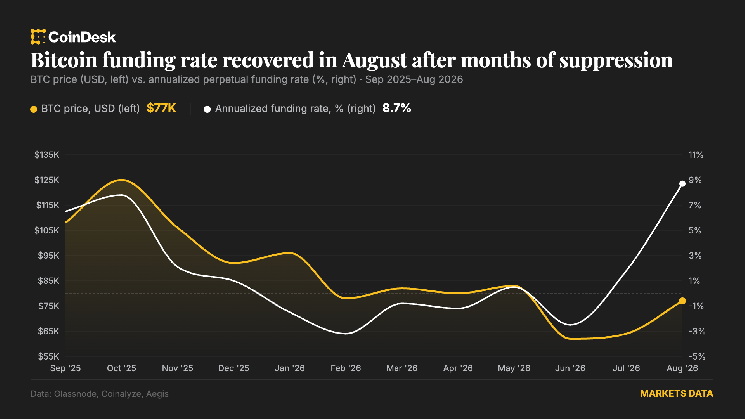
    When bitcoin surged from around $62,000 to above $77,000 in a matter of days last week, the rally wiped out $3 billion from leveraged short sellers who had accumulated bearish positions during the previous market downturn. For major crypto trading firms, however, the sharp price increase created an opportunity that did not depend on predicting bitcoin’s next move.

    Leading digital-asset trading firms including Abraxas Capital, Fasanara Capital and Wintermute have quietly accumulated hundreds of millions of dollars in short perpetual futures positions on Hyperliquid, an on-chain derivatives exchange.

    According to on-chain data tracked by Lookonchain, the three firms collectively hold short positions totaling 138,569 $ETH, worth roughly $338 million, and 3,425 $BTC, valued at approximately $265 million.

    At the same time, Abraxas Capital has been withdrawing large amounts of spot cryptocurrency from centralized exchanges. Data from Arkham Intelligence shows that the firm removed 73,872 $ETH, worth approximately $173 million, from Binance over the past four days alone.

    Crypto firms target funding yields instead of market direction

    The strategy is known as a cash-and-carry trade, or basis trade, and it has become one of the most widely used yield-generating strategies in crypto markets during bullish periods.

    The mechanics are straightforward: traders hold a spot cryptocurrency position while simultaneously shorting an equivalent amount through perpetual futures. Because the two positions largely offset each other, the trader has limited exposure to changes in the asset’s price.

    Instead, the firms seek to capture the funding rate — a periodic payment that traders holding long positions pay to short sellers when market sentiment is bullish.

  • Hyperliquid Gets Its First HIP-4 Outcome DEX With OUT

    Hyperliquid Gets Its First HIP-4 Outcome DEX With OUT

    Hyperliquid has recorded its first reported builder-deployed outcome exchange after OUT completed deployment through the network’s permissionless market framework.

    Hyperliquid’s block explorer shows a successful on-chain transaction registering the Outcome DEX under the name OUT through the HIP-4 deployment framework. The transaction confirms the deployment, but does not establish whether OUT has opened markets for live trading.

    No separate announcement or verifiable website detailing OUT’s markets, liquidity, or trading activity was available at the time of writing.

    How Hyperliquid’s HIP-4 framework works

    According to Hyperliquid’s developer documentation, HIP-4 allows approved deployers to create outcome markets without seeking validator approval for each individual contract. Every market must still use a template previously approved by the validator set.

    Templates define a contract’s basic structure, possible results, and settlement process. After validators approve a template, deployers can use it to create separate markets that meet the framework’s requirements.

    A YES/NO template gives traders two possible outcomes. Multi-result templates can cover questions with several possible answers, although Hyperliquid’s main HIP-4 documentation says multi-outcome support was not included in the initial mainnet release and would be introduced in stages.

    Hyperliquid’s deployer page, updated on Aug. 13, lists functions for activating a DEX, selecting templates, setting a deployer fee scale, and creating markets. The documentation currently labels HIP-4 deployer actions as testnet-only. As a result, OUT’s deployment should not yet be described as a confirmed permissionless mainnet launch without additional evidence.

    As crypto.news previously reported in July, Hyperliquid’s permissionless deployment plan was scheduled to begin on testnet before moving to mainnet. The proposal required market operators to stake 500,000 $HYPE and allowed validators to slash deployers for incorrect or delayed settlement, according to the July report.

    Hyperliquid’s framework also requires separate stakes for HIP-3 and HIP-4 operations because a single $HYPE allocation cannot support both deployments simultaneously. At current prices, that requirement could create a substantial entry cost for independent teams seeking to operate both perpetual and outcome exchanges.

    HIP-4 outcome contracts avoid leverage and liquidations

    Hyperliquid introduced HIP-4 on testnet in February and activated its first outcome contracts on mainnet on May 2. A July explainer described the products as fully collateralized contracts that settle within a fixed range at expiration.

    Unlike perpetual futures, an outcome position does not use borrowed funds or recurring payments between long and short traders. HIP-4 has no funding rate, while fully funded positions eliminate the liquidation process used to close leveraged trades when collateral falls below maintenance requirements.

    In a binary market, a YES token settles at 1 if the stated event occurs and at 0 if it does not. The NO side receives the opposite result. A trader who buys YES at 0.60 can earn 0.40 per contract if the event occurs, while the purchase price represents the maximum possible loss.

    Hyperliquid’s documentation presents HIP-4 as a general-purpose tool rather than a system limited to conventional prediction questions. Its fixed-range structure can also support bounded, options-style products with known maximum payouts and losses when positions open.

    Trading takes place through HyperCore, Hyperliquid’s on-chain order-book engine. HyperCore also powers the network’s spot, perpetual, and HIP-3 builder-deployed markets, allowing HIP-4 products to use the same matching infrastructure and order types.

    Protocol documentation states that fees are not charged when an outcome position opens. Charges may apply when a trader closes, burns, or settles a position, although Hyperliquid waived outcome-market fees during the initial testing period.

    Bitcoin and CPI contracts tested HIP-4 settlement

    Hyperliquid’s first mainnet HIP-4 product was a recurring Bitcoin binary contract. The market settled each day at 06:00 UTC against the $BTC mark price published through HyperCore, providing an objective data point for determining whether YES or NO tokens received the payout.

    The network later expanded beyond crypto prices. In May, a U.S. CPI contract allowed traders to take positions on the annual inflation rate reported by the Bureau of Labor Statistics.

    The CPI market offered three possible results: below 4.3%, exactly 4.3%, or above 4.3%. It used USDC as collateral and was scheduled to settle using the official BLS release. Early activity stood at approximately $3,000 in volume and $5,000 in open interest.

    According to Galaxy Research, validator-settled markets later covered Federal Reserve decisions and sporting events. The research firm said validators could publish approved off-chain results through regular network operations, reducing reliance on a separate oracle provider.

    Galaxy reported that HIP-4 recorded $2.38 million in 24-hour Bitcoin outcome volume by its 25th day. The figure represented about 20% of the combined $BTC prediction-market volume measured between Hyperliquid and Polymarket during that period, according to the firm’s June report.

    Activity later declined after an initial increase linked to World Cup markets. Blockworks data cited in a July market report placed HIP-4 open interest at about $182,000 and cumulative notional activity at approximately $881,000 at the time. Those figures covered a later snapshot and used a different measurement period.

    U.S. access depends on event-contract regulation

    For American traders, OUT does not have the same regulatory status as Kalshi, which offers event contracts through a Commodity Futures Trading Commission-registered designated contract market. Hyperliquid has not announced that OUT is registered with the CFTC or available to U.S. users.

    Hyperliquid Policy Center and Multicoin Capital addressed the regulatory divide in a July prediction-market rules filing. The groups asked the CFTC to publish clear federal standards for reviewing event contracts and to explain publicly why specific contracts are approved or rejected.

    Their submission said settlement terms should determine whether a contract falls into restricted categories involving gaming, war, assassination, or unlawful activity. The filing was an industry policy request and did not authorize HIP-4 exchanges to serve U.S. traders.

    State and federal regulators have also disputed whether some sports event contracts qualify as federally regulated derivatives or state-regulated wagers. Kalshi, Crypto.com, and Robinhood have faced state challenges over sports-related products even when the contracts were offered through federally regulated market structures.

    Users in the United States remain unable to access Hyperliquid, according to an August filing cited by Hyperliquid Strategies. The company said it was unaware of a pending CFTC approval process for the network and warned that a route into the regulated U.S. market could not be assured.