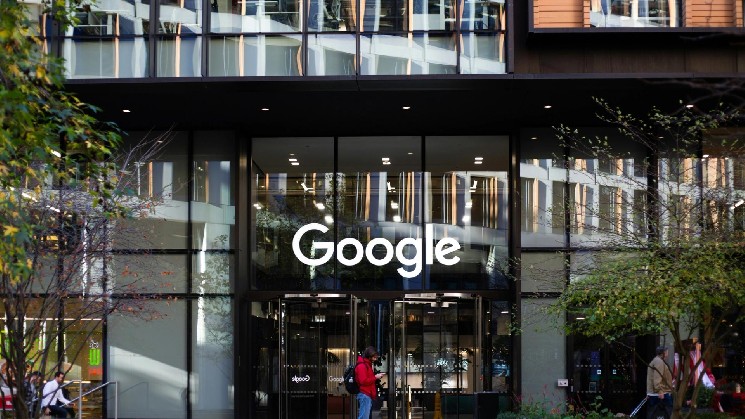
Tag: Hong Kong

  • Google and Apple Recruit Crypto Talent as Big Tech Targets Stablecoin and Tokenization Infrastructure

    Google and Apple Recruit Crypto Talent as Big Tech Targets Stablecoin and Tokenization Infrastructure

    Key Highlights

    • Google Cloud is recruiting an Industry Principal Architect in Hong Kong to drive real-world asset tokenization across the Asia-Pacific region, signaling a strategic push into blockchain infrastructure for institutional clients.
    • Apple is seeking an Apple Pay Financial Product Strategy Lead in Cupertino or New York, indicating the iPhone maker is deepening its exploration of digital-asset integration within its payments ecosystem.
    • The job postings confirm that stablecoins, tokenized deposits, and blockchain-based payments are becoming core competencies inside the world’s largest technology and payments platforms, moving beyond crypto-native firms.

    Big Tech Accelerates Digital Asset Hiring Amid Institutional Shift

    Google and Apple are actively recruiting specialized talent for digital asset initiatives, providing the clearest evidence yet that the world’s most valuable technology companies are preparing for a significant expansion of blockchain-based payments, stablecoins, and asset tokenization within their core business lines. The simultaneous hiring pushes reveal a coordinated industry movement where traditional Web2 giants are building the internal expertise necessary to support institutional-grade digital asset infrastructure.

    Google Cloud Targets APAC Tokenization Leadership

    Google Cloud has posted a role for an Industry Principal Architect based in Hong Kong, tasked with working directly with protocol foundations, exchanges, custodians, and financial institutions to tokenize real-world assets across the Asia-Pacific region. The position explicitly requires deep experience with blockchain networks, smart contracts, stablecoin infrastructure, tokenized deposits, and custody technologies. According to the listing, the hire will advise executives and help shape Google Cloud’s Web3 product roadmap as the division seeks to become the preferred cloud provider for digital-asset builders and institutional adopters. The Hong Kong location underscores the strategic importance of the APAC market, where regulatory frameworks in Hong Kong and Singapore are rapidly evolving to accommodate tokenized securities and regulated stablecoins.

    Apple Pay Explores Financial Product Strategy for Digital Assets

    In parallel, Apple is advertising for an Apple Pay Financial Product Strategy Lead to be based in either Cupertino, California, or New York. While the job description does not explicitly mention blockchain or cryptocurrency, the placement within Apple Pay—the company’s vast payments ecosystem that processes billions of transactions annually—suggests a focus on integrating new forms of digital value transfer. The role sits at the intersection of consumer payments, financial services partnerships, and emerging payment rails, positioning Apple to potentially leverage stablecoins or tokenized deposits for faster settlement, cross-border transactions, or new financial product offerings for its hundreds of millions of users.

    Why This Matters

    The hiring activity marks a pivotal inflection point for the digital asset industry. For years, blockchain infrastructure and stablecoin development were largely confined to crypto-native startups and specialist firms. The entry of Google Cloud and Apple signals that the technology has matured sufficiently for hyperscale cloud providers and global payments networks to treat it as a standard enterprise capability rather than an experimental frontier. Google Cloud’s explicit pursuit of institutional custodians and exchanges as clients reflects a broader trend: traditional financial institutions are moving from pilot programs to production deployments of tokenized assets, requiring the security, compliance, and scalability that only major cloud platforms can deliver. Meanwhile, Apple’s exploration within Apple Pay could accelerate consumer-facing adoption of blockchain-based payments by abstracting complexity behind familiar interfaces. Regulators in major jurisdictions are simultaneously finalizing frameworks for stablecoins and tokenized deposits, creating a more predictable environment for Big Tech investment. The next 12 to 18 months will likely reveal whether these hires translate into product announcements, platform integrations, or strategic partnerships that reshape how digital value moves across the global economy.

    Frequently Asked Questions

    Are Google or Apple launching their own cryptocurrencies or stablecoins?

    No. The job listings do not confirm that either company is launching a new crypto product, stablecoin, or blockchain. They indicate that both firms are building internal expertise to support digital asset infrastructure, tokenization services, and potential payment integrations for institutional partners and developers.

    Why is Google Cloud hiring in Hong Kong specifically?

    Hong Kong has emerged as a leading hub for digital asset regulation in Asia, with new licensing regimes for virtual asset trading platforms and active pilots for tokenized green bonds and wholesale central bank digital currencies. The location positions Google Cloud to serve financial institutions and protocol foundations operating under these evolving regulatory frameworks across the broader APAC region.

    What does the Apple Pay role suggest about the company’s direction?

    The Apple Pay Financial Product Strategy Lead role suggests Apple is evaluating how emerging payment rails—including stablecoins, tokenized deposits, and potentially central bank digital currencies—could enhance its payments ecosystem. This could enable faster cross-border settlements, new financial product partnerships, or programmable payment features for merchants and consumers, though no specific product has been announced.

  • Hong Kong to Pilot Tokenized Exchange Fund Bills and Regulated Stablecoin Trading

    Hong Kong to Pilot Tokenized Exchange Fund Bills and Regulated Stablecoin Trading

    Key Highlights

    • Hong Kong will pilot tokenization of Exchange Fund Bills by end of 2026 via a new CMU Omniclear digital asset platform, marking the government’s most direct move to put sovereign debt on-chain.
    • Regulated stablecoins will be permitted to trade on licensed virtual asset platforms, expanding the city’s existing stablecoin issuance framework into secondary market trading.
    • The measures position digital assets as a core growth engine for Hong Kong, which already accounts for roughly half of global digital bond issuance, as regional rivals accelerate their own programs.

    Exchange Fund Bills Pilot and New Digital Infrastructure

    Hong Kong is preparing to tokenize its Exchange Fund Bills by the end of 2026, a landmark step for the Hong Kong Monetary Authority’s market infrastructure. Secretary for Financial Services and the Treasury Christopher Hui announced the initiative at a press conference, detailing that CMU Omniclear will establish a digital asset platform within the year to provide one-stop services covering digital bond issuance and settlement. The government also plans to refine its virtual asset licensing regime and the regulatory framework for tokenized investment products, extending the city’s digital asset architecture from spot trading and custody into capital markets.

    CMU Omniclear to Operate One-Stop Digital Bond Platform

    The new platform under CMU Omniclear represents a significant upgrade to the Central Moneymarkets Unit’s capabilities. By enabling end-to-end digital issuance and settlement of Exchange Fund Bills—short-term government debt instruments—the pilot will test the integration of distributed ledger technology with the core plumbing of Hong Kong’s monetary system. Officials framed the move as essential to maintaining the financial hub’s competitiveness as regional rivals accelerate their own digital asset programs.

    Stablecoins Enter Regulated Mainstream Trading

    On the stablecoin front, Hui said Hong Kong will facilitate trading of regulated stablecoins on licensed platforms and encourage the expansion of use cases for compliant issuers. The policy builds on the city’s existing stablecoin licensing framework, which made Hong Kong one of the first major jurisdictions to bring stablecoin issuance under a dedicated regulatory regime. Allowing those tokens to trade on regulated platforms marks the next phase of that rollout, bridging issuance with secondary market liquidity.

    From Issuance Framework to Trading Ecosystem

    Hong Kong has spent the past few years assembling a comprehensive regulated framework for digital assets, first licensing virtual asset trading platforms and, more recently, stablecoin issuers. The latest announcements extend that framework into capital markets, with tokenized Exchange Fund Bills representing the government’s most direct move yet to put its own debt instruments on-chain. The coordinated approach signals an intent to blend traditional finance with digital asset infrastructure rather than treating them as parallel tracks.

    Why This Matters

    The measures reinforce Hong Kong’s effort to cement its status as a leading digital asset hub in Asia. The city has combined high-profile enforcement in its crypto sector with continued institutional adoption, and it remains a venue for major industry events such as the Hong Kong Web3 Festival. Tokenized Exchange Fund Bills would rank among the most prominent government-level tokenization initiatives to date, potentially setting a benchmark for other sovereign issuers. With roughly half of the world’s digital bond issuance already flowing through Hong Kong, the pilot could deepen the city’s role as a primary venue for on-chain capital markets.

    Frequently Asked Questions

    When will the Exchange Fund Bills tokenization pilot launch?

    The pilot is targeted for launch by the end of 2026, with CMU Omniclear establishing the digital asset platform within the year to support issuance and settlement.

    What changes for stablecoins under the new policy?

    Regulated stablecoins will be permitted to trade on licensed virtual asset trading platforms, expanding the existing framework that currently covers issuance. This creates a regulated secondary market for compliant stablecoin issuers.

    How does this affect Hong Kong’s position in global digital finance?

    The initiatives aim to keep Hong Kong competitive as regional rivals advance their own digital asset programs. The city already accounts for approximately half of global digital bond issuance, and tokenizing sovereign debt instruments could reinforce its role as a primary venue for on-chain capital markets in Asia.

  • Consensus Returns to Hong Kong for Third Year with Expanded AI Focus

    Consensus Returns to Hong Kong for Third Year with Expanded AI Focus

    Consensus Hong Kong Returns for Third Year in February 2027

    Consensus, the flagship event for the crypto and blockchain industry, is set to return to Hong Kong in early February 2027. This marks the third consecutive year the conference will be held in the city, reinforcing its status as a pivotal gathering for the global digital asset community.

    Record Attendance and Evolving Focus

    The previous two editions, held in 2025 and 2026, each attracted over 10,000 attendees. For the 2027 installment, organizers have anchored the agenda around two principal themes: the institutional adoption of digital assets and artificial intelligence (AI). Notably, AI is expected to command greater significance than in prior years, mirroring its accelerating influence on the future of finance and money.

    Hong Kong’s Strategic Position in Digital Assets

    Asia is widely recognized as the leading region for digital asset adoption, and Hong Kong sits at the forefront as a premier hub. The city’s appeal stems from a robust regulatory framework designed for virtual assets, combined with its established role as a global financial center. This environment continues to draw major industry players and institutional capital to the region.

    High-Profile Speaker Lineage

    The caliber of the event is underscored by its recent speaker rosters. The 2026 edition featured a lineup of industry titans, including Richard Teng, co-CEO of Binance; Lily Liu, president of the Solana Foundation; Justin Sun, founder of Tron; and Joseph Lubin, CEO of Consensys. Their participation highlights the conference’s ability to convene the leadership shaping the next generation of Web3 and blockchain infrastructure.

  • ‘DWTS’ Gleb Savchenko Claims Ex’s Fiancé Sent Inappropriate Texts to His Daughter

    ‘DWTS’ Gleb Savchenko Claims Ex’s Fiancé Sent Inappropriate Texts to His Daughter

    At 8:28 PM PT, Elena told TMZ that Gleb’s claims were false and accused him of seeking publicity instead of addressing Olivia’s failure to return to Hong Kong on July 9. She said: “Instead of addressing the real issue, his failure to return Olivia to Hong Kong on July 9, Gleb is making absurd and completely false accusations for publicity. Neither I nor my fiancé sent the inappropriate…

    Source: www.tmz.com