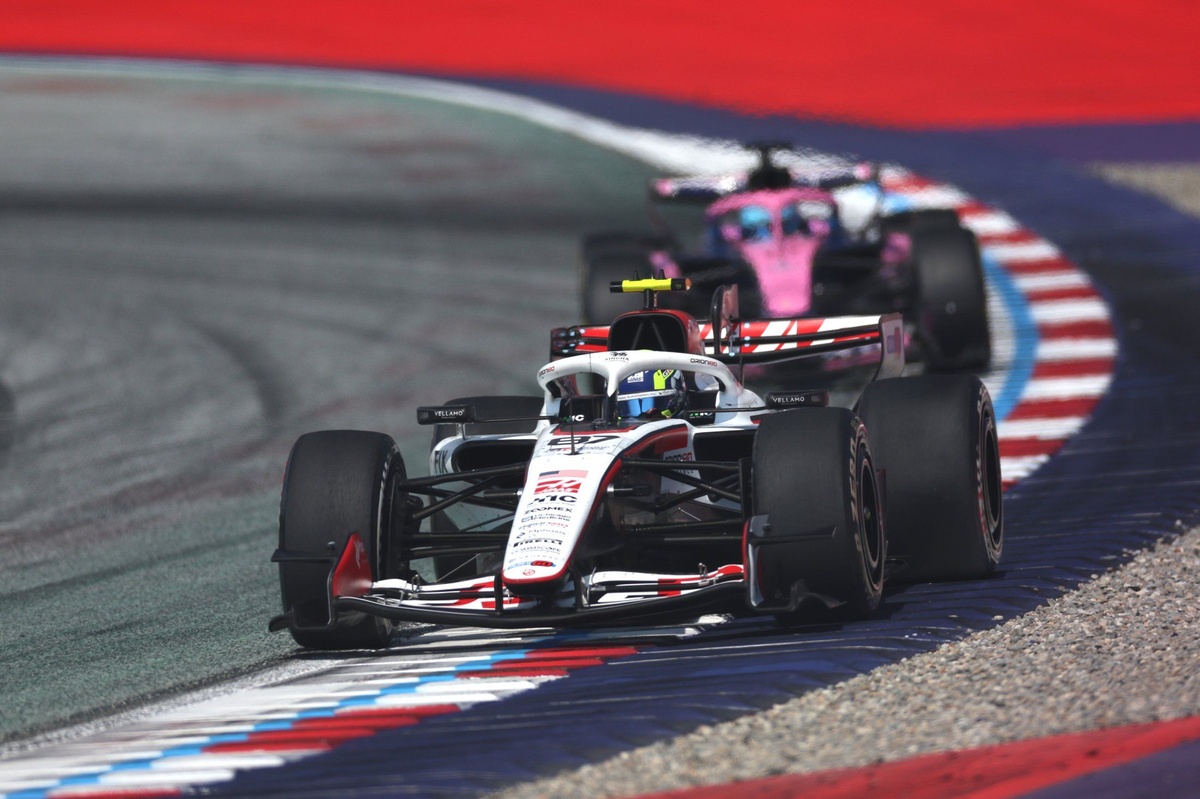
Tag: Haas F1 Team

  • Haas F1 Confident 2027 Budget Will Approach Cap as New Partner Talks Progress

    Haas F1 Confident 2027 Budget Will Approach Cap as New Partner Talks Progress

    Haas F1 Team Principal Komatsu Reports Positive Sponsorship Progress as Budget Nears Cap

    Haas Formula 1 team principal Ayao Komatsu has confirmed the American squad is making significant progress in its search for additional sponsorship as it works to push its annual budget toward the $215 million cost cap.

    Current Sponsorship Landscape

    As F1’s smallest team, Haas employs just over 400 personnel and has historically operated well below the budget cap in both of its regulatory iterations. The team secured a title sponsorship deal with Toyota’s Gazoo Racing division for the current season, replacing money transfer company MoneyGram. However, Haas continues to actively expand its commercial portfolio to close the financial gap to its competitors.

    Recent speculation has linked Haas with Austrian water technology company BWT, currently the title sponsor of Alpine. BWT is expected to depart the French squad at the end of this season as Alpine prepares to launch a new title partnership with fashion house Gucci for 2027. This is not the first time Haas has been connected with BWT; the company was previously considered a potential partner after ending its deal with Aston Martin in late 2021 before ultimately joining Alpine in search of more prominent pink livery exposure.

    Komatsu Provides Budget Update

    Earlier this year, Komatsu told Sky Sports that budget constraints were preventing the team from expanding its headcount and upgrading its tooling and infrastructure. He emphasized that his primary responsibility was generating additional revenue by attracting new commercial partners.

    Speaking during the Madrid Grand Prix weekend, Komatsu offered a positive assessment of ongoing negotiations with multiple prospective sponsors.

    “We’re talking to so many prospects; it’s getting there. I’d say very positive about next year’s budget,” Komatsu stated.

    “It just helps massively. But I think slowly and surely we are getting our story out there and finding great people. So, yeah, it’s good so far.”

    BWT Rumors Addressed

    When questioned directly about the BWT speculation, Komatsu was unequivocal about the visual identity of next year’s cars.

    “we’re not going to have pink cars, if that’s what you are saying!”

    Driver Selection Remains Performance-Focused

    Komatsu also clarified that commercial considerations would not drive the team’s 2027 driver line-up decisions. Haas has been evaluating several candidates through testing programs in previous-specification machinery, including Ryo Hirakawa, Leonardo Fornaroli, and Rafael Camara. Komatsu estimated five drivers remain in contention, presumably including current race driver Esteban Ocon—whose form has improved recently—and Yuki Tsunoda.

    Asked whether commercial backing would influence the final choice, Komatsu stated it would only become a factor if two candidates were virtually inseparable on pure pace.

    “If it’s within a tenth, for instance, very, very close, then affiliation package does come into play for sure. I don’t think [that will be the scenario]. I think we can choose by performance; we haven’t finished the whole programme yet.”

    Komatsu reinforced that securing the fastest possible driver pairing remains the team’s overriding priority, regardless of academy affiliations.

    “We really want two fast drivers because that’s the best way to grow this team. It doesn’t matter if it’s two Ferrari drivers or two Toyota drivers or two McLaren drivers.”

    “I mean, Fornaroli, he’s a McLaren driver, right? But honestly, it doesn’t matter. Whoever is the fastest, that’s the best for the team.”

    Team Morale and Championship Implications

    The team principal emphasized the motivational impact of performance-based selection on the workforce, while also highlighting the substantial financial value of each constructors’ championship position.

    “Again, for everybody, 400 people working here, they need to know that we’ve got the best driver choice that we can get hold of so that these two drivers are getting the best out of the car. Imagine taking somebody half a second off, but extra money. That’s not going to be very motivating.”

    “And also, one position in the championship. That’s quite a lot of money, right? For us, like I said, I’m staying consistent. I’ve always said we take drivers by performance. That’s what we’re doing.”
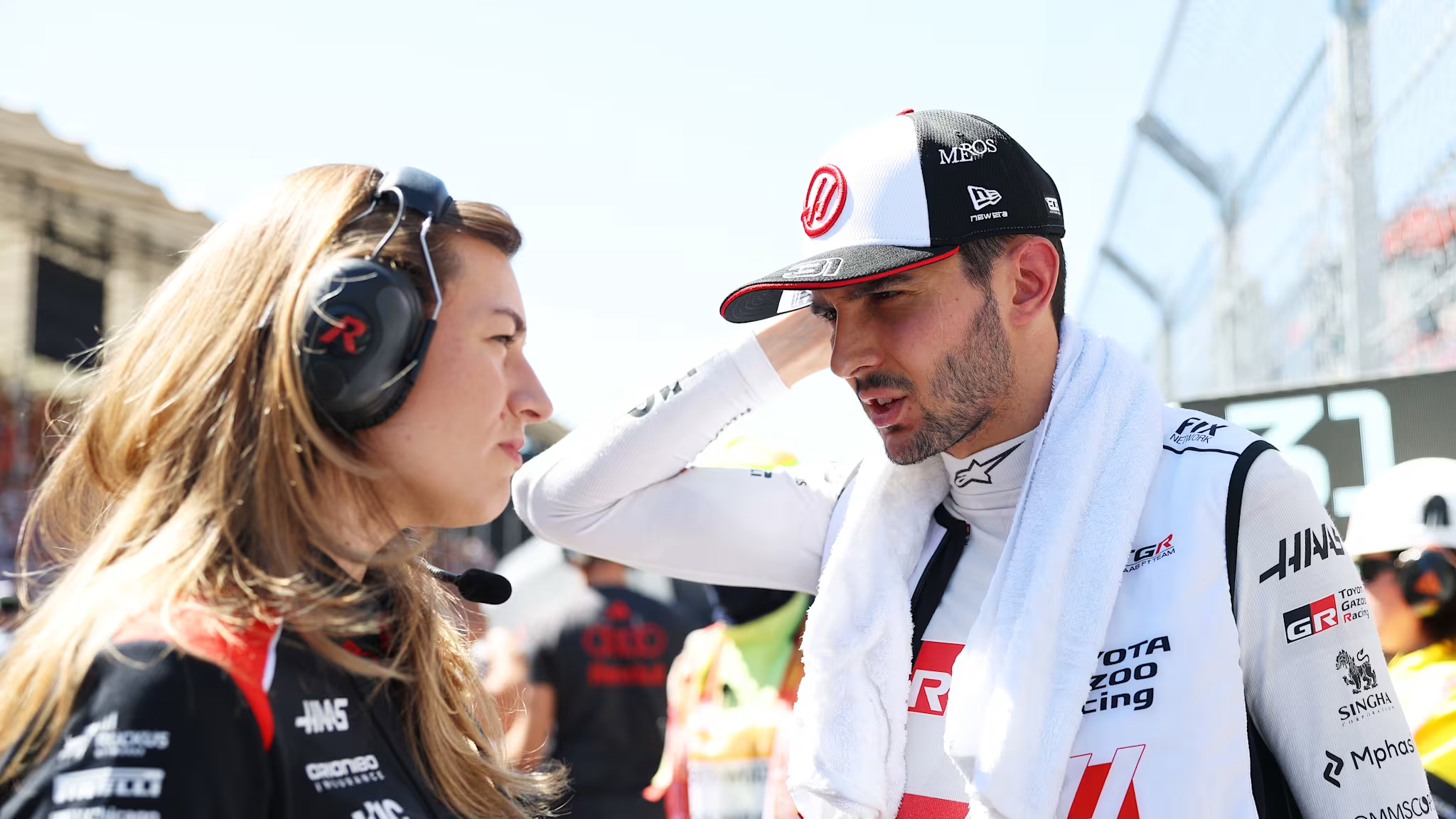
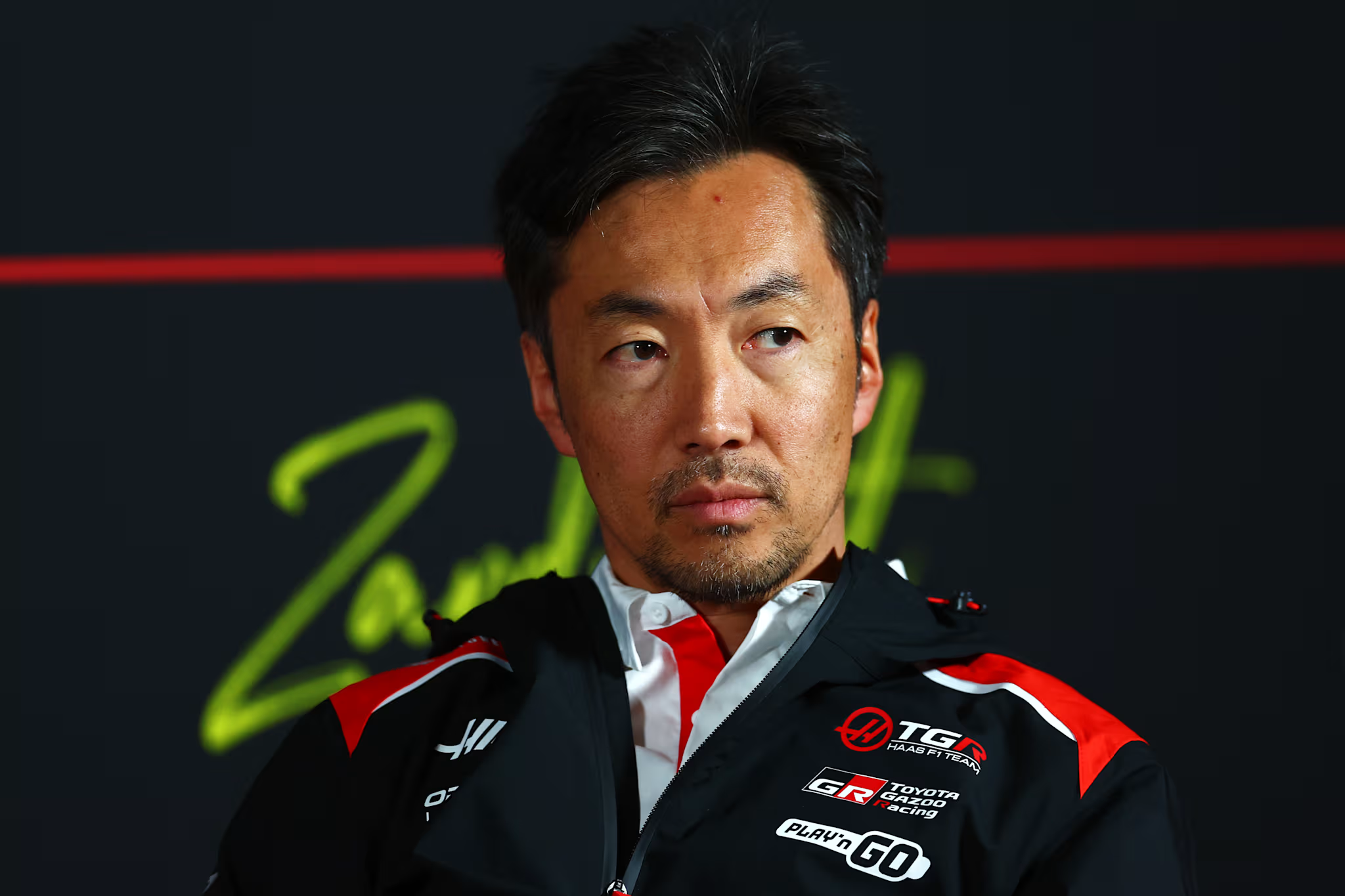
    Ayao Komatsu, Haas F1 Team Principal. Photo by Simon Galloway / LAT Images via Getty Images
  • Esteban Ocon and Haas Find Positives Despite ‘Disappointed’ Madrid Result

    Esteban Ocon and Haas Find Positives Despite ‘Disappointed’ Madrid Result

    Esteban Ocon expressed disappointment after narrowly missing out on championship points with an 11th-place finish at the Spanish Grand Prix, marking his closest brush with a top-ten result since the Monaco round. Despite the frustration, the Haas F1 Team extracted significant encouragement from the weekend, with their latest aerodynamic upgrade package demonstrating genuine performance gains at the Madrid circuit.

    Upgrade Package Delivers on Promise

    The American squad had endured a difficult mid-season slump following their last major update in Canada, which failed to deliver the expected step forward. A strong start to the campaign dissolved into repeated Q1 eliminations and battles with Williams and Aston Martin. However, the team introduced updates to Ollie Bearman’s car in Zandvoort, with Ocon receiving the aero package at Monza. While the Italian circuit’s characteristics masked some of the gains, the improvements were fully visible at the Madring layout.

    Ocon: Strong Start Undone by Pit Stop

    Qualifying 13th—his best single-lap performance since Japan—Ocon placed himself directly in the fight with the two Audi entries. He executed a brilliant opening lap, passing both Nico Hülkenberg and Gabriel Bortoleto to run inside the top ten early on.

    “We are all disappointed, I think we could have got much more, we deserved to be in the points today,” Ocon said after the race. “The plan was to get both Audis at the start and we managed to do so, we got both of them off the line and between Turn 1 and 2. I got Gabi [Bortoleto] first off the launch and then Nico [Hülkenberg] around Turn 2. So, that was very good.

    “We knew it would be hard to hold them off. But we were in front until the stop, at the stop we lost the position. We need to see what I could have done better, if I could have stopped a little bit better position or what happened as I think it was a decent stop so they must have done a really, really good one.

    “But we gave it our all out there. I am proud of everyone, because we come from a long [run] where we were out in Q1, below P15. Now we are fighting for points, so it is pretty positive and encouraging for the rest of the races.”

    Hülkenberg subsequently reclaimed the position during the pit-stop phase under the Virtual Safety Car, ultimately finishing tenth to score a point for Audi. The German manufacturer now trails Haas by just four points in the Constructors’ Championship.

    Progress Confirmed Despite Points Loss

    Ocon remained upbeat regarding the team’s trajectory, emphasizing the correlation between the new parts and improved consistency.

    “Since we got the update obviously, we are seeing when the car is healthy and we don’t have the inconsistency we can perform to a decent level and this is what we need to keep doing,” he added.

    Komatsu: Disappointment Signals Raised Expectations

    Team principal Ayao Komatsu echoed his driver’s sentiment, noting that the collective frustration over an 11th-place finish underscores how far the squad has come since the summer break.

    “The car was functioning very well, the drivers drove well, trackside and remote operations were really good, I think we did our best today. We lost out on the pit stop against Audi, but I don’t believe it was our team’s fault, it’s really the equipment that we need to improve to give them a better chance,” he explained.

    “I’m honestly very happy, it was a huge team effort all around, and the car’s consistency was there, no issues as we’ve had previously.”

    Bearman Finds Pace in Difficult Weekend

    Ollie Bearman also drew positives from a challenging weekend. After a heavy crash in FP3 forced him to start from the pit lane and take new power unit components, the rookie finished 16th but showed competitive lap times when running in clear air.

    “The car was strong, whenever I had clean air, I was right on pace with our competition. It was just unfortunately very rare that I had that, I was stuck in traffic,” he added.

    “I’m positive again, we needed a clean day after what happened yesterday. In that sense we have had that so we can turn the page, learn as much as we can from yesterday, but turn the page, reset and come back stronger in Baku.”

    With the upgrade package validated and both drivers reporting improved balance and consistency, Haas heads to Azerbaijan aiming to convert their renewed form into tangible points and defend their slender Constructors’ Championship advantage over Audi.

  • F1 Q&A: Madring’s Overtaking Problem, Virtual Safety Car Operation, and 2027 Rookie Prospects

    F1 Q&A: Madring’s Overtaking Problem, Virtual Safety Car Operation, and 2027 Rookie Prospects

    Key Highlights

    • Lando Norris lost a likely Spanish Grand Prix victory due to unique Virtual Safety Car timing that prevented only him from pitting, reigniting debate over minimum VSC duration rules.
    • McLaren team principal Andrea Stella expressed uncertainty over whether VSCs should last at least one full lap to equalize conditions or remain a “hands of the Gods” variable.
    • Haas appears the most likely entry point for 2026 rookies, with F2 champion Leonardo Fornaroli and Ferrari academy driver Rafael Camara leading candidates alongside Toyota protege Ryo Hirakawa.

    Norris Misfortune Reignites Virtual Safety Car Debate

    Lando Norris’ cruel twist of fate at the Spanish Grand Prix has thrust Formula 1’s Virtual Safety Car regulations back into the spotlight. The McLaren driver lost a commanding race lead—and near-certain victory—when a VSC deployment froze the field at the precise moment his track position made a pit stop impossible, while rivals behind him gained a free stop under neutralized conditions. Unlike previous strategic VSC gains, where teams deliberately gambled on a neutralisation, Norris’ predicament was purely circumstantial: he was the sole driver unable to access the pits during the brief window. The incident has been described as a “chance card in Monopoly” by observers, highlighting the arbitrary nature of the current system.

    Stella Questions Fairness, FIA Process Looms

    McLaren Team Principal Andrea Stella admitted the situation left him conflicted. “Offering a personal opinion, I’m puzzled myself as to what’s right,” Stella said. “Is it correct to give enough duration such that everyone will have been subject to the same track conditions? So, for instance, the virtual safety car lasts at least one full lap. Or you just keep it in the hands of the Gods, and sometimes you are lucky, sometimes you are not. I’m not sure.”

    Norris revealed after the race that the specific issue of VSC duration and pit-lane equity “has been spoken about many, many times” in driver briefings. Any regulatory change would follow a formal pathway: analysis by the Sporting Advisory Committee, then review by the F1 Commission comprising teams, commercial rights holder Formula 1, and governing body the FIA. However, sources indicate no immediate momentum exists for a rule alteration, as safety-car variability is widely accepted as an intrinsic, albeit unpredictable, competitive element.

    2026 Rookie Market: Haas the Epicenter of Opportunity

    With most 2026 driver line-ups settled or trending toward continuity, Haas emerges as the primary gateway for new talent. Esteban Ocon’s seat appears vulnerable, creating a rare opening. The leading contenders are Italy’s Leonardo Fornaroli, the reigning Formula 2 champion and a McLaren development driver, and Brazilian Rafael Camara, currently second in the F2 standings and a Ferrari Academy member. Both have tested for the American squad and reportedly impressed. Haas reserve driver Ryo Hirakawa, a long-time Toyota protege linked to the team’s technical partnership, remains in contention but is considered a less probable choice. The team is understood to prioritize a combination of pace and financial backing.

    Red Bull Junior Shuffle and Cadillac’s American Dilemma

    Elsewhere, Red Bull is evaluating a promotion for F2 championship leader Nikola Tsolov into the Racing Bulls squad. Such a move would necessitate dropping either Liam Lawson—who has performed solidly this season—or impressive rookie Arvid Lindblad, making the decision complex. At Cadillac, the plan to fast-track IndyCar race-winner Colton Herta has stalled; his difficult F2 campaign, yielding just a best finish of fifth and 19th in the standings, makes a 2026 graduation a significant risk. Fellow American Ugo Ugochukwu, who clinched the Formula 3 title in Madrid, is on Cadillac’s radar but is likely too inexperienced for an immediate F1 step. His stature—well over six feet, taller than current grid giants Esteban Ocon, Alex Albon, and George Russell—also presents unique cockpit integration challenges. The only other potential vacancy hinges on Fernando Alonso’s undecided future at Aston Martin.

    Why This Matters

    The Norris incident exposes a structural tension in F1’s sporting regulations: the balance between operational efficiency—the VSC’s original purpose of minimizing disruption for quickly cleared hazards—and competitive equity. The current rules, evolved through iterations including pit-lane closures, still allow a neutralisation to arbitrarily advantage or disadvantage a single driver based solely on micro-sector position at the moment of deployment. With the Sporting Advisory Committee and F1 Commission as the only formal mechanisms for change, any adjustment will be deliberate and political, requiring consensus among teams that may benefit from the status quo. Simultaneously, the 2026 rookie landscape reflects a broader trend of grid stability driven by multi-year contracts and academy consolidation, making Haas’s decision a bellwether for how teams weigh academy allegiance versus immediate performance and commercial value.

    Frequently Asked Questions

    Could the VSC rules be changed before the end of the 2025 season?

    It is highly unlikely. Any amendment requires analysis by the Sporting Advisory Committee and approval by the F1 Commission, a process that typically spans months. There is currently no indication that the FIA or Formula 1 management views this as an urgent safety or sporting integrity issue warranting an expedited change.

    Who is the favorite for the open Haas seat in 2026?

    There is no clear favorite. Leonardo Fornaroli (McLaren-backed F2 champion) and Rafael Camara (Ferrari-backed F2 runner-up) are the two primary candidates, both having tested successfully. Ryo Hirakawa (Toyota/HAAS reserve) is a dark horse. The final decision will likely weigh on-track performance, simulator work, and the commercial package each driver brings.

    Is Colton Herta’s F1 dream over?

    Not necessarily, but his path has narrowed significantly. A move to F1 in 2026 looks improbable given his current F2 form. Cadillac may opt to let him complete the F2 season to rebuild momentum for a potential 2027 entry, or explore alternative candidates like Ugo Ugochukwu, though the latter’s physical stature and inexperience present additional hurdles.

  • Ferrari’s ADUO 2 Upgrade Is No “Game Changer” for Haas Either

    Ferrari’s ADUO 2 Upgrade Is No “Game Changer” for Haas Either

    Bearman: Ferrari Engine Upgrade a “Much Smaller Step” Than Haas Aero Package

    Oliver Bearman has downplayed the impact of Ferrari’s ADUO 2 power unit upgrade, describing it as “a much smaller step” compared to the revised chassis Haas brought to the Italian Grand Prix. The Prancing Horse introduced its second and final power unit upgrade of the 2026 season under the Additional Development and Upgrade Opportunities (ADUO) system, supplying one such powertrain to Haas for the Monza round. The engine was fitted to Bearman’s VF-26.

    Oliver Bearman, Haas F1 Team. Photo by: Sam Bagnall / Sutton Images via Getty Images

    Qualifying Progress Offset by Race-Day Struggles

    The American squad showed slight progress in qualifying, with the British rookie securing 12th place—his best grid slot since the Chinese Grand Prix in March. However, Haas endured a seventh consecutive point-less round at Monza, equalling its worst streak since the 2021 season. Bearman briefly held eighth in the opening laps but slipped back as he could not match the pace of the Alpines and Racing Bulls. Having stayed out under the virtual safety car, he finished 15th.

    Ferrari team principal Fred Vasseur had already tempered expectations, stating the ADUO 2 powertrain would not be a game changer. Bearman echoed that sentiment after qualifying.

    “It’s a much smaller step than what the [aero] upgrade was, let’s say,” the 21-year-old commented. “Of course, there’s a bit more in this track, but in terms of a season average, it wouldn’t have been enough to get us out of the fight for Q1, to be honest, if you put that engine on us in Zandvoort. I don’t think it was a game changer.

    “Of course, more power is always nice, but you’ve read the news about how much it is. It’s definitely beneficial, but the biggest step was the [aero] upgrade, which was more than twice or three times the amount of power we got from the engine – which is testament to the team’s hard work, and I’m really, really proud of them for that.”

    Haas Aero Upgrade Details

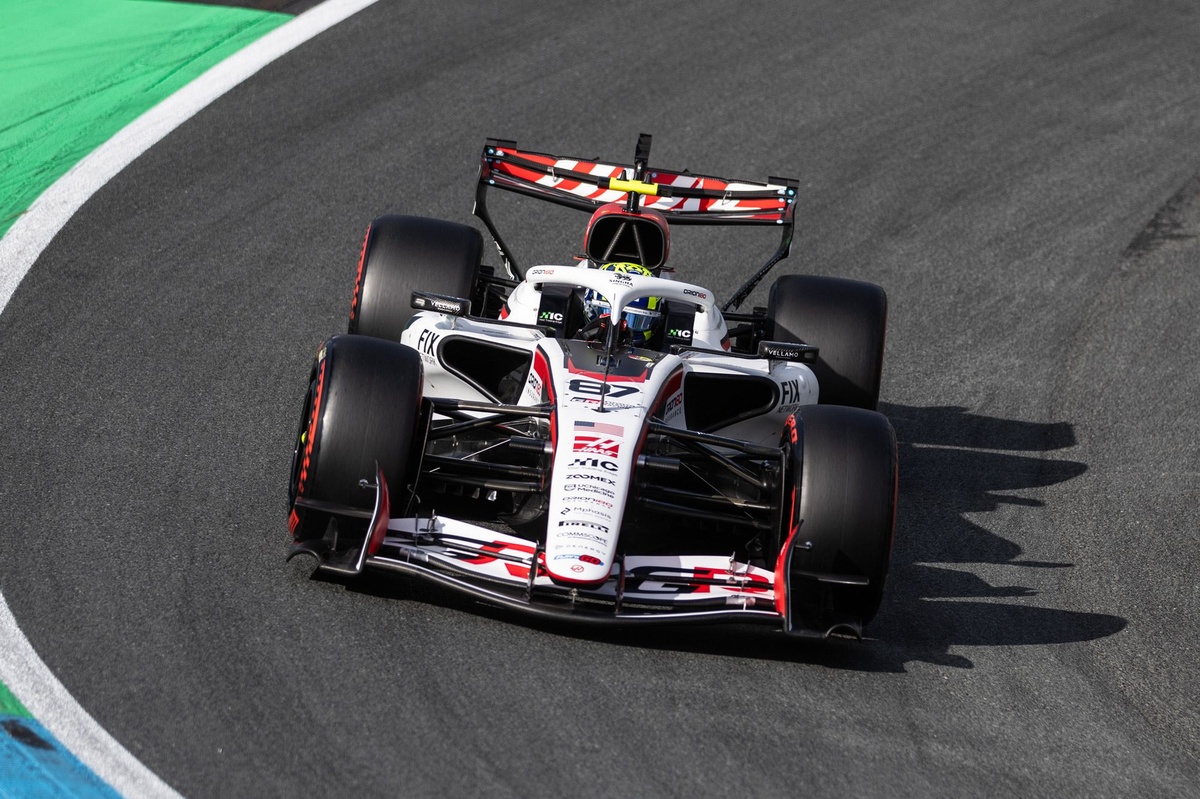
    The Haas upgrade for Monza featured a revamped floor and revised bodywork on the sidepods and engine cover. While Esteban Ocon did not receive the new power unit, he benefited from the aerodynamic parts. Nevertheless, the Frenchman ended up seven tenths slower than his teammate in Q2.

    That gap does not equate to the engine deficit alone. Ocon has struggled with the VF-26’s aerodynamic inconsistency—an issue he believes has affected him at 10 of the 13 grands prix so far this year.

    Esteban Ocon, Haas F1 Team. Photo by: Sam Bagnall / Sutton Images via Getty Images

    Ocon: “We Didn’t Get to the Bottom of the Issue”

    Asked after qualifying if the car’s inconsistency had improved compared to practice, Ocon replied:

    “No, it wasn’t, unfortunately. We tried everything we could, taking all the bits in the garage to put it on the car. We did everything that we could, but we didn’t get to the bottom of the issue.

    “Unfortunately, we’re still losing a lot of load compared to Ollie, especially on the rear of the car. It’s not ideal, clearly, but the guys did a mega job by trying that.

    “And I was happy with my lap, you know. At the end of the day, I feel like I did a strong lap, I was happy with it. But the deficit of downforce plus the engine losses, it’s quite a lot around here. So that’s the max that we could have done.”

    The veteran driver did find a silver lining in the performance of the sister car: “They worked on Ollie’s side, yes, they did.”

    Constructors’ Battle Tightens

    Despite the aerodynamic step forward on Bearman’s car, both Haas entries finished behind the Audis. The German manufacturer now trails Haas by just five points in the constructors’ championship, setting up a close fight for the remainder of the season.

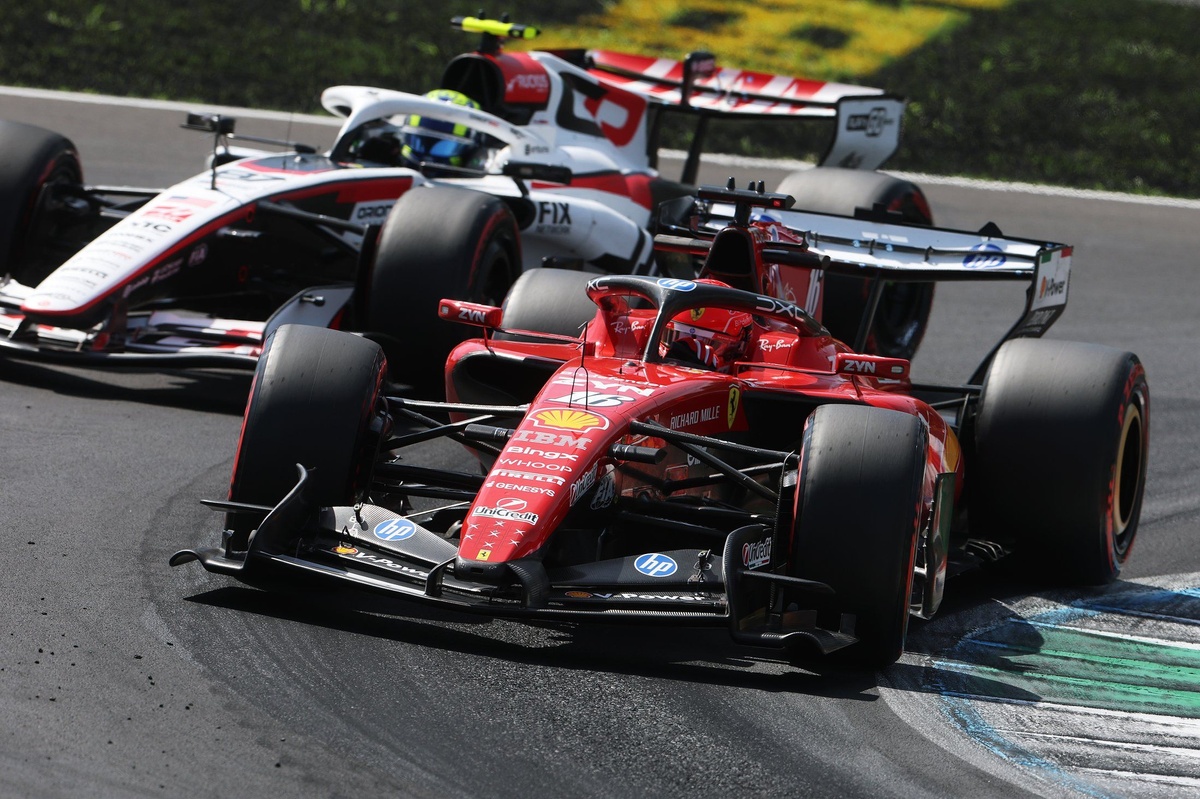
    Nico Hulkenberg, Audi F1 Team, Oliver Bearman, Haas F1 Team. Photo by: Andy Hone / LAT Images via Getty Images
  • Haas Updates Car for Monza as Oliver Bearman Remains “sceptical” About VF-26 Performance

    Haas Updates Car for Monza as Oliver Bearman Remains “sceptical” About VF-26 Performance

    Haas has admitted that its rivals have overtaken and out-developed the team during the 2026 Formula 1 season, despite a strong start. Team principal Ayao Komatsu and driver Oliver Bearman remain confident that Haas can close the gap “soon”.

    Haas traditionally begins each season strongly, and it maintained that trend in 2026 by scoring points in the opening three races. That run included a fifth-place finish for Bearman at the Chinese Grand Prix.

    However, the team has since been caught by its rivals as it struggles with an inconsistent car and a slower development rate than midfield competitors Alpine and Racing Bulls.

    “2025 was really the first year for us, or one of very few years, where we seemed to have good pace throughout the year,” Bearman explained ahead of the Dutch Grand Prix. “We actually improved our relative performance as the year went on.

    “Now, 2026 is more of what we’ve seen from Haas in the past, of starting incredibly strong with a really quick car as a base, but not being able to improve like the others have.

    “Quite frankly, we’ve been overtaken right now. We are the 10th-best team. It really hurts, myself and all the others. We were working really hard to make that not be the case, but that’s the reality of where we are right now.”

    Haas has not scored points since the Monaco Grand Prix in June, when Esteban Ocon finished ninth. Since then, inconsistency has limited the team’s ability to extract the maximum performance from its 2026 car.

    Haas will not abandon its 2026 Formula 1 car

    Komatsu remains hopeful that Haas can find solutions to the problems affecting its car. The team principal said the organisation has demonstrated over the past two seasons that it has the technical capability to develop its machinery.

    “So, the last two years, I think we proved to ourselves and the outside world that we can develop the car. We’ve got the people, the technical department is functioning,” Komatsu said ahead of the Zandvoort race.

    “For us to have any remote chance of keeping up with the others, because of the size of our team, everything has to be perfect. But that’s just not realistic in anyone’s life. And the Montreal upgrade wasn’t perfect. Some bits worked, some bits made the car faster, but some bits wasn’t perfect. Actually, [it] made the drivability more difficult as well.

    “So, we’re learning from those lessons. And what’s the objective for the rest of the season? For me, it’s the same as the last two years. We’ve got to prove to ourselves that we can identify the key issues, we can solve the issues and then put it on the car to move forward.”

    Haas’s struggles have prompted questions about when the team will stop developing its 2026 challenger and switch its resources to next year’s car. Komatsu said that is not an option, insisting that Haas must unlock the performance of the VF-26. He believes that process will also benefit the team over the longer term.

    “If you say, OK, fine, ‘26, we started well, but tail off, it’s the first year of regulation. Fine, let’s move on, start ’27. We haven’t solved the fundamental issue. If we do that, it doesn’t give confidence to people,” the Japanese engineer explained.

    “They’ve got to believe in themselves. One of the main driving factors in the way they’re tackling now, together as a team, is the confidence and togetherness they’ve gained from the last two years. That’s why we are developing out of it.”

    Haas confirms Monza upgrades for the Italian Grand Prix

    Haas will bring new parts for the VF-26 to Monza this weekend for the Italian Grand Prix as it attempts to develop its way out of its current performance problems.

    “This weekend, we’re bringing another upgrade package to the car,” Komatsu explained in a statement shared by the team. “So again, it’s critical we maximise our practice time, evaluate our data comprehensively, and strive to keep pushing in the midfield.”

    Bearman cautioned, however, that new parts do not always result in an immediate improvement on track. He said Haas has seen significant differences in downforce from one race to another, meaning that improving the car’s consistency could be as valuable as introducing an upgrade.

    “We have new parts coming,” the Briton said. “But we’re very sceptical in some ways. We have discrepancies in a race like Budapest. We have discrepancies of downforce equivalent to the size of an upgrade. If I have the car that I had in Spa, here [in Zandvoort], it’s like putting an upgrade on the car.

    “An upgrade, I don’t know how much it costs, but many millions. If we can figure out how to get our car to work, it’s for free. If we get the upgrade but it doesn’t perform, then it’s like not getting it. There’s many factors at play, it’s a big challenge.”

    Looking ahead to the Italian Grand Prix, Bearman believes Haas can move up to ninth in the Formula 1 constructors’ order. Aston Martin has recently introduced a major overhaul of its AMR26 and moved away from the back of the field, but Bearman expects Haas to hold an advantage at Monza because of the circuit’s power-sensitive layout.

    “We expect to beat [Aston Martin] in Monza, where it’s a power track,” Bearman said. “But in Hungary, they were faster than us, or at least more consistent. Those are the facts in terms of that. That’s where we are.

    “It really hurts to be sitting here saying that, but that’s the case.”

  • Haas Completes Latest TPC Test as Focus Grows on 2027 F1 Driver Lineup Decision

    Haas Completes Latest TPC Test as Focus Grows on 2027 F1 Driver Lineup Decision

    Haas has completed its latest Testing of Previous Cars (TPC) programme, with Ryo Hirakawa, Leonardo Fornaroli and Rafael Camara driving the team’s 2025 Formula 1 car as scrutiny of its 2027 driver line-up intensifies.

    As the 2027 F1 driver market gathers pace following the summer break, Haas remains one of the few teams yet to formally settle its line-up for next season. Oliver Bearman appears likely to retain his seat, while Esteban Ocon’s future remains under review as Haas evaluates its available options.

    Haas assesses 2027 driver options at Portimao

    The American team conducted a three-day TPC test at Portimao from 26-28 August. Reserve driver Hirakawa shared driving duties with 2025 Formula 2 champion and McLaren development driver Fornaroli, as well as current F2 title contender and Ferrari junior Camara.

    All three drivers completed laps in the VF-25, Haas’ 2025 F1 car, at the Portuguese circuit. The test followed a similar TPC programme at Fuji last month, where Toyota-backed drivers Sho Tsuboi and Nirei Fukuzumi were given running time.

    Haas has not released further details about the Portimao test, but the programme forms part of its broader evaluation of interested drivers before the team makes a final decision on its 2027 line-up.

    Ayao Komatsu, Haas F1 Team

    Photo by: Simon Galloway / LAT Images via Getty Images

    “I think it’s really good that other people are actually interested in us,” Haas team principal Ayao Komatsu said ahead of the Dutch GP last weekend.

    “At the moment, we’re not performing so well. We cannot challenge for points, but I think it’s nice that other people can see the potential in us. Within the constraint how we’re fighting and we’re trying to improve the team. We just take it as a compliment that other drivers are interested.”

    Komatsu has emphasised that his immediate priority is maximising the performance of Haas’ car and drivers in 2026, suggesting the team will not rush its decision on the future pairing.

    Haas has frequently been among the last teams to confirm its driver line-up for the following season during its relatively short F1 history. With other teams expected to maintain stable driver line-ups for 2027, a similar timeline remains possible.

    “We’re not in any rush,” Komatsu said at Zandvoort. “We’re focused on our two drivers, Ollie and Esteban, trying to get the best out of them. They’ve got the tough challenge, right? You know what they are capable of.

    “Ollie has showed it repeatedly, Esteban, when he is happy with the car, you know what he can do. So we need to really just focus on providing them with the best possible car, best set-up adaptation, and get the best out of them. And then both of our drivers are fully focused. So at the moment, we’re focused on that.”

  • ‘We’re not in any rush’ – Ayao Komatsu Updates Haas’ 2027 F1 Driver Plans

    ‘We’re not in any rush’ – Ayao Komatsu Updates Haas’ 2027 F1 Driver Plans

    Haas Team Principal Ayao Komatsu Downplays Driver Line-Up Urgency Amid Development Struggles

    Haas Formula 1 Team Principal Ayao Komatsu has stated the team is in no hurry to finalize its 2025 driver lineup, emphasizing that the immediate priority is maximizing the performance of current drivers Ollie Bearman and Esteban Ocon. The comments come as the American-owned squad endures a difficult mid-season slump following a promising start to the campaign.

    Strong Start Gives Way to Points Drought

    Haas opened the season with competitive form, highlighted by Bearman’s impressive fifth-place finish at the Chinese Grand Prix. However, the team’s trajectory has since reversed sharply. A run of six consecutive rounds without scoring points has seen Haas slip down the constructors’ order as midfield rivals—most notably Racing Bulls and Alpine—have outpaced them in the development race.

    The downturn has intensified speculation regarding the team’s plans for the 2027 regulatory cycle and beyond. While neither seat has been officially confirmed for next season, paddock consensus suggests rookie Bearman is more likely to retain his drive than the experienced Ocon. Potential candidates such as Ferrari junior Rafael Camara and Red Bull-affiliated Yuki Tsunoda are widely viewed as waiting in the wings should a vacancy arise.

    Komatsu: Focus Remains on Current Duo

    Speaking ahead of the Dutch Grand Prix—where Haas ultimately suffered a double DNF—Komatsu was reluctant to engage with the driver market speculation.

    “We’re not in any rush. We’re focused on our two drivers, Ollie and Esteban, trying to get the best out of them. They’ve got the tough challenge, right?

    “You know what they’re capable of. You know, Ollie has shown it repeatedly. Esteban, when he is happy with the car, you know what he can do.

    “So we need to really just focus on providing them with the best possible car, best set-up adaptation, and get the best out of them. And then both of our drivers are fully focused.”

    The points disparity between the teammates is stark: Bearman has accumulated 18 points to Ocon’s three. However, the rookie recently cautioned that the standings do not accurately reflect their on-track rivalry, citing apparent “inconsistency” between the parts fitted to their respective cars.

    Smallest Team Faces Biggest Regulation Challenge

    Komatsu acknowledged the scale of the challenge facing Haas, the smallest operation on the grid, under the current regulatory framework.

    “This is the biggest regulation change ever. So us being the smallest team, we expect that we’re going to really be struggling to keep up with the other big boys in the development race.

    “We started the season extremely well, much better than anyone can think of, and then from that moment I think that’s the reality. With our constraints, we’re trying to develop the car as fast as possible, but the other guys are putting performance on the car faster than us. That’s the reality.”

    The team principal was quick to defend his personnel, stressing that the deficit is a resource issue rather than a capability one.

    “Then, to be fair, honestly, it’s nothing against the guys in the team – they’re doing a fantastic job, they’re working together, and then for us to have a chance to keep up with the other guys, everything has to be perfect, right? Everything. In life, that’s not something you can ask for all the time.

    “I really do think I need to provide them with a better environment, facilitate it, so that they can show what they’re capable of. I’m sure of that. But the good thing is those tough times show the character, right? And then there’s no blame culture.”

    Engineering Focus: Downforce and Drivability Deficits

    Komatsu outlined the specific technical areas where the VF-24 is underperforming, confirming the engineering group has a clear diagnosis of the car’s shortcomings.

    “We looked at the problem: what’s the issue, where are we lacking downforce, why the drivability is not great, what are the drivers struggling with? We’re all on the same page, trying to fix the issue, trying to put performance on the car. But of course, again, that takes time.”

    He concluded with a message of resilience, drawing on the team’s recent history of overcoming adversity.

    “Lots of things we’re putting in place will take time for it to materialise, but we’ve just got to believe in ourselves, the teamwork, support each other, and we’ll get through it like we did the last two years.”

  • Esteban Ocon Defends Controversial Move on Alex Albon, Bemoans F1 Rule

    Esteban Ocon Defends Controversial Move on Alex Albon, Bemoans F1 Rule

    Esteban Ocon defended his controversial overtake on Alexander Albon during the Dutch Grand Prix and criticised the Formula 1 rule that sent him back behind the Williams driver for the second race start.

    Max Verstappen crashed out and Gabriel Bortoleto spun 360 degrees on the opening lap at a slightly damp Zandvoort circuit. As the yellow-flag zone ended, Ocon accelerated faster than Albon and moved into 13th place shortly after crossing the start-finish line. Albon objected to the move over the team radio.

    “I’m sorry, but what Esteban did is crazy,” Albon ranted on the radio. “He’s overtaking me in the middle of the crash.”

    Although Albon was not asked about the incident during his post-race media session, Ocon was questioned about the overtake and insisted that he had not breached the rules.

    “I overtook Alex, yeah, but I had the right, because it was green,”

    the Haas driver said. However, the grid for the second start was determined by the classification at the end of the first lap, making Ocon’s overtake irrelevant to the restart order.

    “What was a big shame is that you have to take all these risks, you know?” Ocon added. “You’re playing with either getting a penalty or not. I was not having a penalty, but it was very tight, because I just passed him when it was green. And then they put you back at the race start.

    “It’s been like that forever, but… Really, if that was 20 metres earlier, then I was having the place. But we still raced, like, for one-and-a-half sector. The red flag only came after Turn 5, you know? So, we passed sector one, and we were getting into sector two. So, I should have started in front of Alex – because that changed my race.”

    Esteban Ocon, Haas F1 Team — Photo by Simon Galloway / LAT Images via Getty Images

    Ocon spent the early stages of the race behind Albon before making an early pit stop on lap 16 in an attempt to find clear air. He had returned to 14th when he retired on lap 53 with a power unit problem.

    “After that, obviously, there’s a lot of things that maybe we could have done differently, with strategy, etc,”

    the Frenchman admitted.

    “Fernando [Alonso] did a really, really good strategy, I don’t think we could have done the same one without degradation. But there are things that we can look into to do a better job.”

    Ocon said Formula 1 should be able to use a more current race classification when forming the grid for a restart, rather than relying on the order recorded at the end of the previous lap.

    “We are not going to believe that in Formula 1 we don’t have timing loops every 20 metres, you know? It’s a very old-school rule, really,”

    he continued.

    “I said it on the radio, let’s not make Alex go in front again at the restart. Because that should not be the case. And for some reason I felt it, that they were going to put him in front again. They still take the line, which is like two kilometres back. It shouldn’t be like that, it should be the last moment.”