Tag: Green Lantern

  • Lanterns Episode 5 Recap: What Happened and What Comes Next

    Lanterns Episode 5 Recap: What Happened and What Comes Next

    Lanterns Episode 5 Recap: Rushville in Ruins as Hal Jordan and John Stewart Face Off

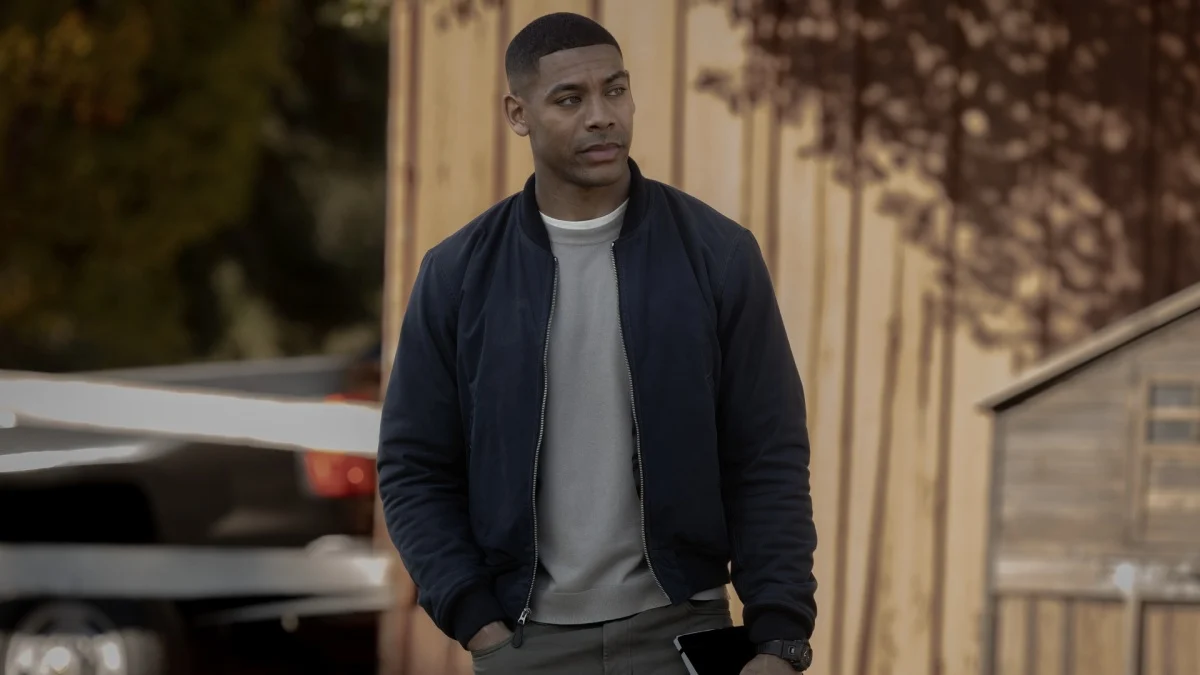
    If you need a moment to recover after Lanterns’ fifth episode, you are not alone. Episode 5 delivered a seismic shift, pitting Green Lanterns Hal Jordan (Kyle Chandler) and John Stewart (Aaron Pierre) against Manhunter Zoe Macon (Poorna Jagannathan) in a battle that left Rushville in ruins. The conflict also fractured the partnership between Hal and John, leaving the role of Green Lantern in flux.

    What Happened in the Rushville Fight?

    A better question might be what didn’t happen. Zoe healed John from wounds sustained when Hal crashed their car, then announced a town-wide kill order on Hal. The citizens of Rushville mobilized to protect the Manhunter in their midst, while Zoe began obliterating sections of the town with the laser satellite introduced in episode 4.

    Meanwhile, Hal hunted the Manhunter independently, hoping to deliver Zoe to the Guardians himself. He first sent Antaan (Paul Ben-Victor) and his vengeful alien crew on a wild goose chase to William Macon’s (Garret Dillahunt) compound, claiming Macon was the Manhunter. Macon put on a convincing performance thanks to language and backstory coaching from Zoe, but Antaan uncovered the ruse and killed him. (RIP to Lanterns’ resident exhibitionist wife guy.) Antaan then pursued Zoe, but Hal intercepted him, leaving Antaan to explode in mid-air. (RIP to the “Antaan is Atrocitus” theory.)

    Hal vs. John: The Motel Showdown

    The heart of the Rushville battle was the knock-down, drag-out fight between Hal and John at the motel. The two clashed over the power ring, unleashing months’ worth of resentment before Zoe leveled the building. In a move both sweet and practical, Hal managed to shield John inside a protective bubble.

    In the aftermath, John used Hal’s prone body as bait before sniping Zoe, eliminating the second-greatest threat Hal faced. John, Hal’s greatest threat, remained alive. He claimed both the ring and the lantern from Hal but refused to recite the Oath. Instead, he told Guardian Lianna (Laura Linney) he wanted no further part in the Corps. After his traumatic childhood training, discipline, and sacrifice, putting on the ring felt like nothing. To answer the question Hal posed after their fight: “No, it wasn’t worth it.”

    Now Lanterns is both Lantern-less and Manhunter-less. With these two central elements removed, the series must chart a new course.

    What Comes Next in Lanterns?

    Now that the Manhunter mystery is resolved, Lanterns can pivot to its next major question: Who killed Hal Jordan?

    Episode 1 ended with John and Sheriff Kerry Kane (Kelly Macdonald) examining Hal’s corpse at the Rushville football field—ground zero for the Manhunter conspiracy. Episode 6 will likely jump to the 2026 timeline, exploring John’s life after Green Lantern training—“please let him be an architect now!”—and his investigation into Hal’s murder. Viewers also need answers about Hal’s missing decade: Did he stay in Rushville? Did he continue pursuing the married Kerry? Did he remember to feed Earl?

    Because Lanterns takes place in 2026, Guy Gardner (Nathan Fillion), first introduced in Superman, is now the sector’s Green Lantern. Fillion is confirmed for the series, but his role remains unclear: a comedic cameo or an active participant in the murder investigation? Additionally, will the show expand on extraterrestrial characters like Lianna or Sinestro (Ulrich Thomsen)? Will the cosmic fear entity Parallax, a Green Lantern franchise staple, finally appear?

    Answers arrive in the final three episodes. Until then, a decompress nap feels well earned.

    Lanterns streams on HBO Max, with new episodes premiering Sundays at 9 p.m. ET on HBO and HBO Max.

  • Lanterns Reveals Manhunter: Biggest Clues to the Truth Explained

    Lanterns Reveals Manhunter: Biggest Clues to the Truth Explained

    In the fourth episode of Lanterns, the series resolves one of its central mysteries: the identity of the Manhunter hiding in Rushville, Nebraska. After a series of red herrings — including Hector Hammond (Jason Manuel Olazabal), real name Hector Gutierrez, and William Macon (Garret Dillahunt) — the reveal lands on Zoe Macon (Poorna Jagannathan), William’s wife and John Stewart’s (Aaron Pierre) occasional confidant and romantic partner.

    Poorna Jagannathan in "Lanterns."
    Poorna Jagannathan in “Lanterns.” Credit: John Johnson / HBO Max

    Zoe Macon Revealed as the Manhunter

    The episode cycles through suspects before confirming that Zoe has been operating in plain sight. Her immediate intimacy with John Stewart served as the most significant clue. With two Green Lanterns arriving in Rushville, Zoe faced a direct threat to her cover. Rather than confront them with force, she pursued a calculated strategy: getting close to John to earn his trust. Given that both John and Hal Jordan (Kyle Chandler) consistently used male pronouns when discussing the hidden Manhunter, it appears neither suspected a woman until the reveal.

    Key Clues That Hinted at Zoe’s True Identity

    The Romantic Deception Strategy

    Episode 4 intensifies the pressure on Zoe’s relationship with John. During a visit to his motel, she frames their encounter as a final goodbye, insisting his only options after confronting Macon are leaving town or dying. She pushes hard for his departure, and when he refuses, she escalates by faking her own death — sending John and Hal on a wild-goose chase toward Hector Hammond.

    This manipulation aligns with a pivotal line from Antaan (Paul Ben-Victor), who shares his own experience with a Manhunter. He asks John:

    “Have you ever been deceived by someone you love?”

    While John and Zoe’s connection may not reach “love,” Antaan’s point holds: the Manhunter exploits romantic intimacy to deceive someone the target is deeply close to.

    Macon’s Complicity and the Nurse Backstory

    Zoe’s dynamic with William Macon offers further foreshadowing. Macon is aware of the affair yet never retaliates against Zoe or John beyond verbal jabs. For a man who commands a private militia, such restraint is uncharacteristic — unless Zoe holds the upper hand and her infidelity is part of a deliberate plan to divert the Lanterns’ attention.

    Macon recounts how he met Zoe: she was a nurse treating his cancer, and shortly after, a mysterious, god-like benefactor cured him. The implication is strong that Zoe herself was that benefactor. As Hal tells John, Manhunters are programmed to exploit societal weak points. A nurse treats people at their most vulnerable, positioning Zoe to build trust throughout Rushville. The town’s empty hospital suggests she cured everyone, proving her power and placing the community in her debt.

    What This Means for Rushville

    Beyond Macon, his men, and likely Sheriff Kerry Kane (Kelly Macdonald), the question remains: how much of Rushville knows they have an alien benefactor among them? And what lengths will they go to protect her now that her cover is blown?

    Where to Watch Lanterns

    Lanterns is now streaming on HBO Max, with new episodes premiering Sundays at 9 p.m. ET on HBO and HBO Max.

    SEE ALSO: ‘Lanterns’ review: Kyle Chandler and Aaron Pierre shine bright in DC’s sci-fi mystery

  • Lanterns Episode 3: HBO Series Captures the Black American Experience in Unexpected Ways

    Lanterns Episode 3: HBO Series Captures the Black American Experience in Unexpected Ways

    This article contains spoilers for Season 1, Episode 3, “OutKast,” of Lanterns.

    Lanterns, HBO’s new adaptation of DC’s Green Lantern comics, has unfolded as a series of mysteries nested within one another. Each revelation leads to another, while the characters’ histories remain largely concealed. Three episodes in, the series finally explores the origin of its unflappable co-lead, John Stewart (Aaron Pierre), a former U.S. Marine and Green Lantern trainee to Hal Jordan (Kyle Chandler), the jaded, green-clad hero charged with protecting Earth from alien threats.

    Written by Vanessa Baden Kelly, Episode 3, “OutKast,” expands the show beyond its puzzles and superhero spectacle to examine John’s experience as a Black hero in training. His life has been shaped by immense pressure to defy racial expectations, much of it imposed by his parents, whose motivations the episode treats with unusual nuance and care.

    John Stewart’s family history in Lanterns

    The episode reveals that John’s father, John Stewart Sr. (J. Alphonse Nicholson), was approached by the Guardians of the Universe to become a Green Lantern before Hal Jordan. An extraterrestrial presence kidnaps John Sr. in a green bubble and asks him the question required to pass the test: “Are you afraid?”

    John Sr. answers honestly: Yes, he is. The opportunity ends there. When no one believes his claim that an alien abducted him, least of all his wife, Bernadette (Jasmine Cephas Jones), his mental state begins to deteriorate. Bernadette only accepts that he was telling the truth when an unnamed Guardian, played by Laura Linney, appears before her and apologizes for any “emotional turmoil” caused by the Lantern initiation process.

    Bernadette is furious that her husband was rejected. She challenges the Guardian: “Do you understand how unfair it is to ask a Black man in America if he’s afraid?” She continues, “We are terrified daily of persecution and still show up, sometimes better than everyone around us. Did you know that?” When the Guardian admits that she did not, Bernadette responds: “Even in space y’all don’t consider us.”

    The Guardian then hints that John’s younger son could become a candidate to replace the current Lantern someday. Bernadette’s resentment over the Guardians passing over John Sr. drives both parents to believe in that possibility. As Bernadette tells her husband: “We didn’t break every stereotype and face down every fear for you to be penalized because you’re scared to leave the people that you love.”

    From that point forward, the couple ruthlessly “conditions” John to become “used to fear,” hoping to transform him into an almost inhuman candidate for the Green Lantern role. They train him to be an expert sniper and force him to act as a target, with his father shooting apples from his head. John is later made to perform the same exercise against his parents.

    His childhood is stripped of ordinary comforts. He sleeps in a separate room from his older brothers and is forced to walk home through unfamiliar, potentially dangerous neighborhoods while barely a teenager. He must give up his interest in drawing, his relationships with his brothers and his emotional capacity so he can eventually become the next Green Lantern—and prove that Black people should not be excluded from conversations about ability, power and prestige.

    The burden of Black excellence

    That dream ultimately proves hollow. John becomes a Marine but is dishonorably discharged for a mistake everyone knows he did not make. The Guardians later instruct him, in practical terms, to stay quiet and follow orders. Even the Green Lantern job itself offers little reward: It pays poorly, and as Hal’s trainee, John is forced to endure the mediocre hero’s uninspiring instruction. Hal’s shortcomings also contributed to John’s dishonorable discharge.

    John’s parents raised him to pursue an honored position, but the episode asks what that sacrifice was for. John realizes that he is still expected to answer to a questionable group of beings that values him only for what he can do for them. After a lifetime under the psychological and emotional weight of his parents’ expectations, he has gained little more than the same old crap.

    This revelation exposes the pressure and fallacy of “Black excellence,” a phrase often used to describe Black people breaking barriers or achieving accomplishments that even their white peers find remarkable. Black success should be celebrated, and the idea that Black people can be great should be accepted as obvious rather than treated as something that must be proven.

    But in a world where people from other backgrounds are allowed to be mediocre, fail upward and display imperfections, Black people should be granted the same freedom. They should not face what can feel like life-ending or career-disrupting consequences for falling short of perfection. Greatness should not be the only thing Black people are permitted to be, particularly when the standards of greatness are set by groups that continue to disregard them.

    Why Lanterns treats John’s parents with empathy

    Lanterns addresses that conflict directly. John’s parents do not simply try to make him exceptional; they try to make him something less than human. It is painful to watch the young John, played by Cairo Cash Lee, separated from the people and activities he loves.

    The series could easily have presented his parents as villains. They understand the sacrifices they are demanding from a son too young to consent to them. “He’s gonna hate us,” John Sr. says. Bernadette replies, “So be it.”

    Yet John does not hate them, and neither does the series. Instead, Lanterns makes clear that his parents believed they were making the best decision for their family. Their actions emerge from exhaustion with surviving under the threat of persecution while being repeatedly judged as inadequate.

    As Bernadette tells John Sr., “We can’t raise three boys and believe that no matter how good they are, they get looked over.” For Bernadette, everything began “falling apart” on “the night they rejected” John Sr. Her choice of the word “rejected” is significant: She does not view the incident as her husband’s failure. She understands that the Guardians’ test did not account for the totality of his experience.

    By refusing to assign simple, total blame, Lanterns considers what happens when a Black parent dedicates a child’s life to making him undeniably exceptional in a world that seems determined to test him. John Sr. and Bernadette’s decision is misguided, but it is rooted in a deeply justified dissatisfaction with the status quo.

    The show can challenge the idea of Black excellence because it first establishes why John’s parents embraced it. The series suggests that entrenched cultural ideas are best dismantled through empathy and an understanding of where they came from.

    John Stewart’s story connects superhero politics to real life

    John’s story is difficult, but it reflects the Black American experience in ways that exceed expectations for a series that might otherwise have been about heroes flying through space in green Lycra. The integration of Black family dynamics into a story about intergalactic politics is less surprising when considering that Lanterns co-creator Damon Lindelof also made Watchmen, another series that managed a similarly difficult balance.

    During a panel at San Diego Comic-Con, Pierre delivered a heartfelt speech about the importance of John Stewart, a major Black hero in DC Comics. He said: “My hope is that when folks watch this, they watch it and they feel a tangible relatability.”

    For Pierre, that means embodying John’s “heart” and honoring the role of Green Lantern as John Stewart deserves. For viewers, it may also mean recognizing—and beginning to unlearn—the harsh expectations the world has unfairly placed on us.

    Source: slate.com

  • Did Lanterns Just Introduce the DC Supervillain Atrocitus?

    Did Lanterns Just Introduce the DC Supervillain Atrocitus?

    Lanterns Episode 2 revealed the show’s biggest threat: a secret Manhunter hiding in Rushville, Nebraska. The episode may also have quietly introduced another major Green Lantern supervillain.

    Did Lanterns introduce Atrocitus?

    Episode 2 marks the first appearance of Antaan (Paul Ben-Victor), the leader of the aliens killed at the Rushville football game. Antaan and his men kidnap Green Lantern trainee John Stewart (Aaron Pierre) and explain how the Manhunter hiding in Rushville wiped out their people.

    Ben-Victor’s casting announcement described Antaan as “an extraterrestrial devoted to exposing the truth and exacting vengeance against those who wronged his people. Consumed by a deep and unrelenting hatred for the law, he is determined to deliver justice on his own terms.”

    Green Lantern fans on social media quickly noticed that the description sounded like another major Green Lantern villain: Atrocitus.

    Like Antaan in Lanterns, Atrocitus, once known as Atros, is an alien whose entire sector was destroyed by the Manhunters. He and the four other survivors of the catastrophe dedicated themselves to taking down the Guardians of the Universe, who created the Manhunters in an attempt to establish a cosmic peacekeeping force.

    Atrocitus eventually becomes the first Red Lantern and the leader of the Red Lantern Corps. Unlike the Green Lanterns, whose power rings are fueled by willpower, the Red Lanterns channel anger.

    What separates Antaan from Atrocitus?

    Antaan’s introductory episode neither confirms nor rules out the possibility that he is Atrocitus. His backstory aligns with Atrocitus’ history, but there are also several discrepancies. His name is the most obvious difference, and he has more than four fellow survivors from his world with him.

    Until Antaan abandons his human disguise and transforms into a giant red rage monster, the Atrocitus theory remains unconfirmed.

    Lanterns is now streaming on HBO Max, with new episodes premiering Sundays at 9 p.m. ET on HBO and HBO Max.