Tag: gender dynamics

  • ‘Much Cheaper to Just Get a New Girlfriend’: Woman Posts Video of Boyfriend Buying New Couch Because She Cheated on Old One

    ‘Much Cheaper to Just Get a New Girlfriend’: Woman Posts Video of Boyfriend Buying New Couch Because She Cheated on Old One

    Key Highlights

    • A TikTok video posted by @sonogoodmorning showing a woman’s boyfriend buying a replacement couch after she admitted to cheating on their original one has garnered over 307,000 likes and sparked intense debate.
    • The comment section overwhelmingly criticized the woman’s framing of the gesture as a relationship goal, with top comments questioning why the cheater wasn’t the one making reparative efforts.
    • The viral discourse highlights shifting social media norms around public admissions of infidelity and the gendered expectations of accountability in relationships.

    Viral TikTok Reframes Infidelity as ‘Relationship Goals,’ Sparking Backlash

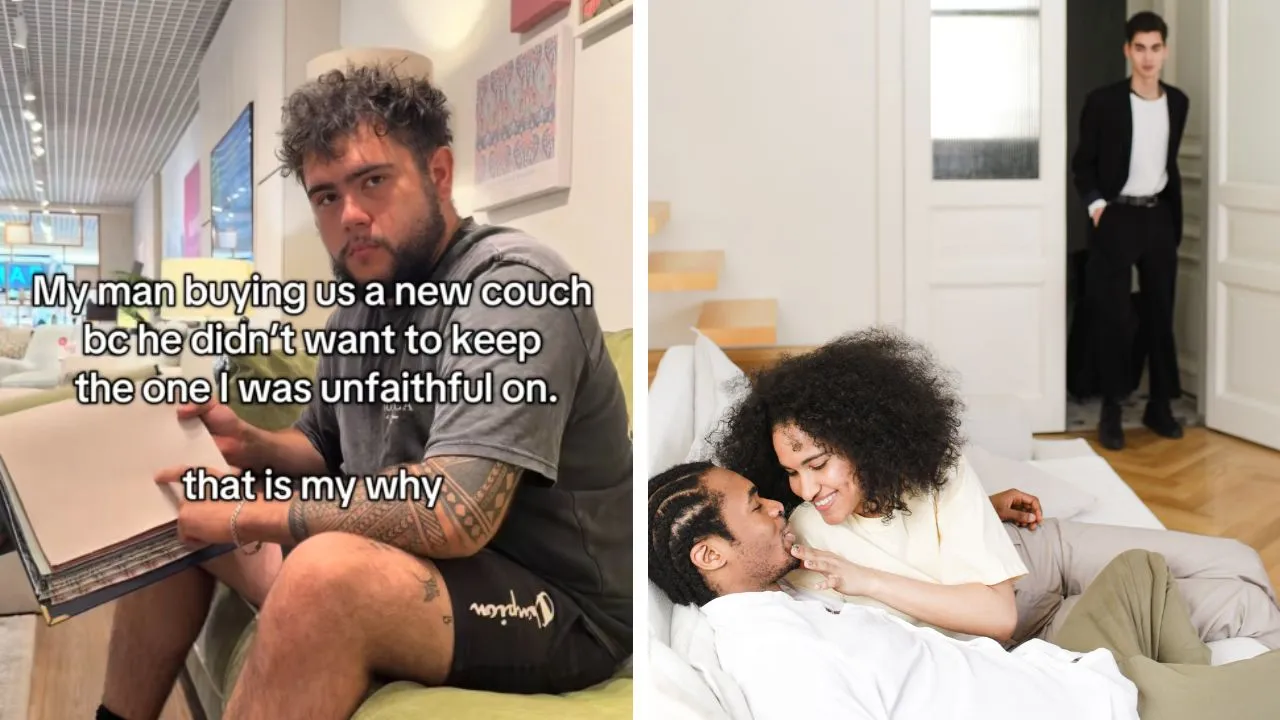
    A video posted to TikTok by user @sonogoodmorning has ignited a fierce conversation about accountability, gender dynamics, and the performative nature of relationship content on social media. The clip, which has accumulated more than 307,000 likes, depicts a couple browsing a furniture store. A text overlay on the video reads: “my man buying us a new couch because he didn’t want to keep the one I was unfaithful on.” A subsequent overlay adds: “that is my why,” referencing a popular trend where users share the reasons behind their long-term partnerships. The account’s caption reinforced the narrative: “real men stay and work things out.”

    Visual Cues Contradict the Narrative

    While the on-screen text attempts to frame the man’s actions as a noble gesture of forgiveness, the visual evidence tells a more complicated story. In the footage, the man appears visibly upset—he does not smile, avoids celebratory affect, and continues looking at his partner as if seeking validation or reassurance. He points out fabric samples dutifully, but his demeanor suggests resignation rather than the generous spirit implied by the caption. The woman recording, by contrast, smiles and pans the camera toward him with an expression of satisfaction and gratitude. The dissonance between the curated caption and the raw body language became the focal point for thousands of commenters.

    Comment Section Rejects the ‘Flex’

    The response in the comments was swift and largely condemnatory of the woman’s perspective. The top-liked comment, earning over 7,700 likes, stated bluntly: “This is not the flex you think it is.” Another user wrote: “Much cheaper and easier to just get a new girlfriend, brother,” while a third asked: “Why are people just admitting to cheating lately? Did it stop being the most embarrassing thing ever?”

    A significant thread of discussion emerged from women who expressed frustration at being placed in a position where they felt compelled to “side with a man.” One commenter articulated the tension: “I would like to be a ‘girl’s girl’ but genuinely believed that ‘cheating is not okay.’” Another addressed the creator directly: “Girl, why do you make me side with a man?” This sentiment underscores a broader cultural friction: the expectation of gender solidarity clashing with a baseline moral rejection of infidelity.

    Debate Centers on Burden of Repair

    Beyond the initial outrage, a more nuanced critique took hold regarding the distribution of reparative labor. Multiple commenters argued that if reconciliation was the genuine goal, the effort should originate from the partner who violated the trust. As one user put it, the woman “should be the one buying the couch, if at all, and also consistently make efforts and gestures to show him that she genuinely wants to be in this relationship and carry on with him.” Another injected dark humor into the critique: “Every time you want something new, be unfaithful on it.”

    The Daily Dot was unable to independently verify the events described in this video. The details above reflect the account shared by @sonogoodmorning on TikTok. The identities of those shown in the video have not been confirmed.

    Why This Matters

    This incident exemplifies how TikTok’s algorithm incentivizes vulnerable or controversial personal disclosures as content fodder. The “that is my why” trend, originally intended to celebrate enduring love, has been co-opted to aestheticize trauma bonding and uneven power dynamics. The viral backlash also reflects a growing public fatigue with narratives that recast accountability as optional—particularly when the labor of repair falls disproportionately on the wronged party. As social media continues to blur the line between authentic sharing and performative storytelling, audiences are increasingly literate in spotting the difference between a genuine gesture of repair and a content opportunity.

    Frequently Asked Questions

    Who posted the original TikTok video?

    The video was posted by TikTok user @sonogoodmorning. The account shared the footage with the caption “real men stay and work things out.”

    What was the specific reason given for buying a new couch?

    According to the text overlay in the video, the boyfriend purchased the new couch “because he didn’t want to keep the one I was unfaithful on.”

    Has the authenticity of the video been verified?

    No. The Daily Dot explicitly stated it “was unable to independently verify the events described in this video” and noted that “the identities of those shown in the video have not been confirmed.”
  • ‘I Will Kill You’: Woman’s ‘Worse Than Cheating’ Dealbreakers Include Giving Someone a Ride Home

    ‘I Will Kill You’: Woman’s ‘Worse Than Cheating’ Dealbreakers Include Giving Someone a Ride Home

    Key Highlights

    • TikToker Laila Hakim (@ulovelailahakim) viral video outlines four relationship behaviors she considers “worse than cheating,” including sending money to other women and giving female friends rides home.
    • The video amassed over 237,400 likes and 1,274 comments, sparking heated debate in the comments section about trust, boundaries, and gender dynamics in relationships.
    • Hakim explicitly stated none of the four scenarios constitute actual infidelity, but rather represent boundaries that would upset her more than cheating itself.

    TikTok Creator Laila Hakim Sparks Viral Debate With “Worse Than Cheating” Relationship Boundaries

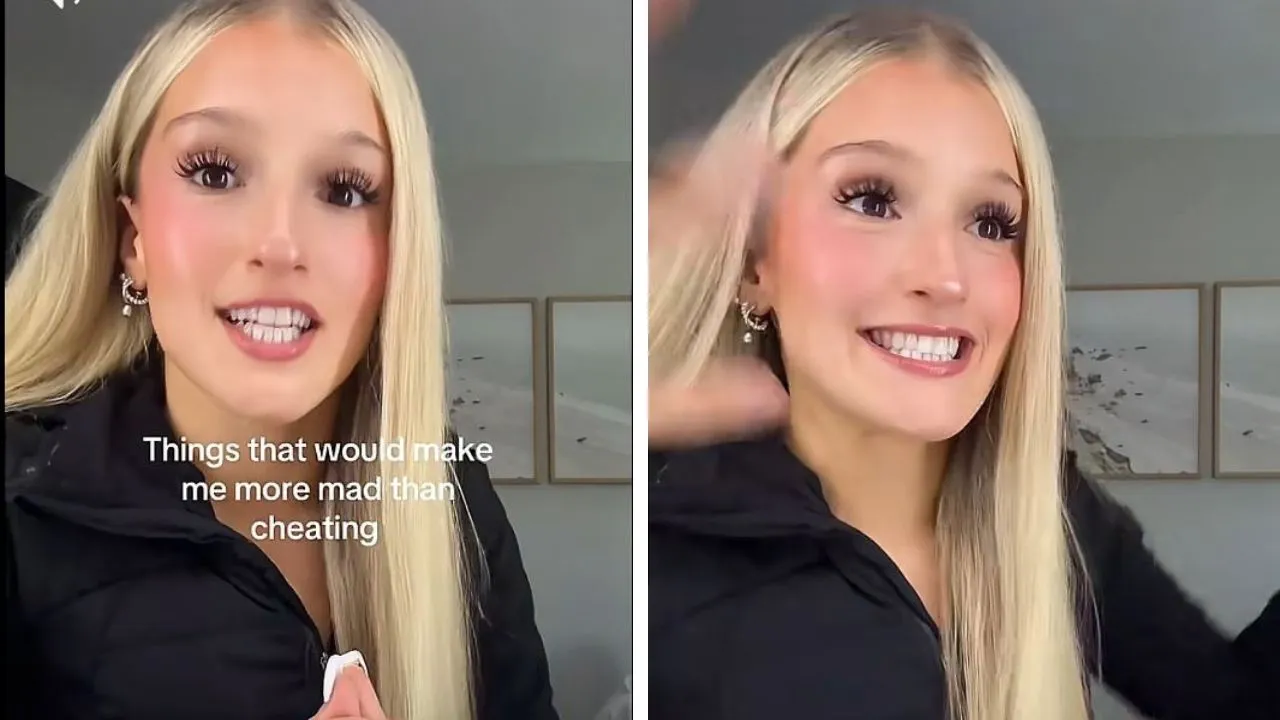
    Content creator Laila Hakim, known on TikTok as @ulovelailahakim, ignited a firestorm of discussion after posting a video enumerating four specific behaviors she considers dealbreakers “worse than cheating.” The video, which had garnered 237,400 likes and 1,274 comments as of publication, features Hakim delivering her list with a mix of hyperbolic humor and firm conviction, preemptively acknowledging the backlash she expected to receive.

    Financial Boundaries and Transportation Rules Top the List

    Hakim opened her list with a hard line on finances: a man sending money to another woman who is not a family member. “I will f—— literally kill you,” she said, “in a clearly exaggerated, joking tone. ‘I’ll have to. I’ll have to.’” She immediately followed with a prohibition on giving other women rides home, dismissing the concept entirely. “I don’t give a f-ck. I don’t give a f—, ‘She can Uber home. She can Uber. She can f—— Uber.’”

    Anticipating pushback, Hakim addressed the audience directly mid-video. “I can’t believe you guys are gonna fight me on this sh-t, too,” Hakim said, adding that she trusted her boyfriend “with my whole heart and soul” even while laying down the rule.

    Dancing and Disclosure Round Out the Four Dealbreakers

    The third item drew on Hakim’s personal background. Identifying herself as a dancer, she issued an ultimatum regarding her partner dancing with anyone else. “If you want to dance with anyone, you can dance with me.” She characterized any violation as relationship-ending. “That would disturb me to another level. I would have to break up with you,” she said.

    The final scenario involved a woman expressing interest in her boyfriend who remains unaware of his relationship status. Hakim drew the line not at reciprocation, but at omission. “Especially if you don’t tell her you have a girlfriend,” she said. “Oh, f-ck that, f-ck that, f-ck that.”

    Throughout the video, Hakim emphasized repeatedly that none of the four scenarios actually constitute cheating. Rather, she framed them as behaviors that would upset her more than infidelity itself — a distinction that became a focal point of the ensuing comment section debate.

    Comment Section Splits on Trust, Context, and Gender Dynamics

    The response in the comments revealed a sharply divided audience. One commenter defended the logic behind the ride-sharing rule, writing: “She trusts her bf she doesnt trust the girls around him espesically in his car [sic].”

    Another pushed back forcefully on the same point: “To everyone who is confused, giving someone in need a ride home is not cheating and you all need to grow up fr.”

    A third commenter challenged the financial boundary by introducing a hypothetical scenario involving menstrual products, then establishing their own separate red line: “Now I’d kill him for paying for someone’s Uber.”

    Why This Matters

    The viral spread of Hakim’s video illustrates how relationship boundary discourse has become a dominant genre of social media content, particularly on TikTok where algorithmic amplification turns personal preference lists into referendum-style debates. The video’s engagement metrics — nearly a quarter-million likes and over a thousand comments — demonstrate the high emotional resonance of trust, fidelity, and gendered expectations in modern dating culture.

    The divided reaction also highlights a broader cultural tension: whether relationship boundaries should be understood as expressions of individual security needs or as controlling behaviors that isolate partners from platonic social networks. Hakim’s explicit framing — that these are “worse than cheating” yet “not cheating” — encapsulates the ambiguity that fuels such debates. The Daily Dot was unable to independently verify whether the scenarios described reflect real events in Hakim’s relationship, underscoring the performative nature of much creator-led relationship content.

    Frequently Asked Questions

    Who is Laila Hakim and what is her TikTok handle?
    Laila Hakim is a TikTok content creator who posts under the handle @ulovelailahakim. She identifies herself as a dancer in the video.
    What are the four dealbreakers she listed?
    The four behaviors Hakim considers “worse than cheating” are: (1) a man sending money to a woman who isn’t a family member, (2) giving other women rides home, (3) dancing with someone other than her, and (4) not telling an interested woman that he has a girlfriend.
    Does Hakim consider these behaviors to be cheating?
    No. Hakim explicitly stated repeatedly throughout the video that none of the four scenarios count as cheating. She framed them as boundaries that would upset her more than infidelity itself.