Tag: FIA

  • Red Bull Still Trying to Fix RB22 Issue

    Red Bull Still Trying to Fix RB22 Issue

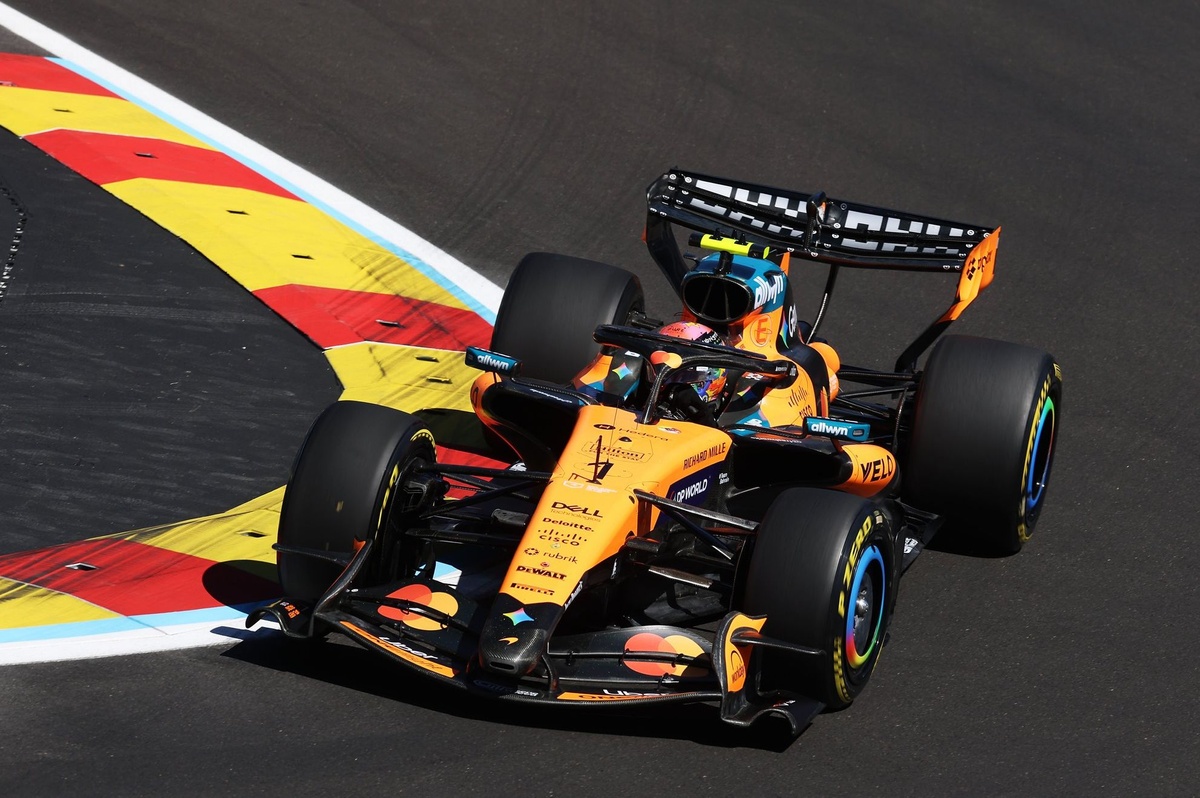
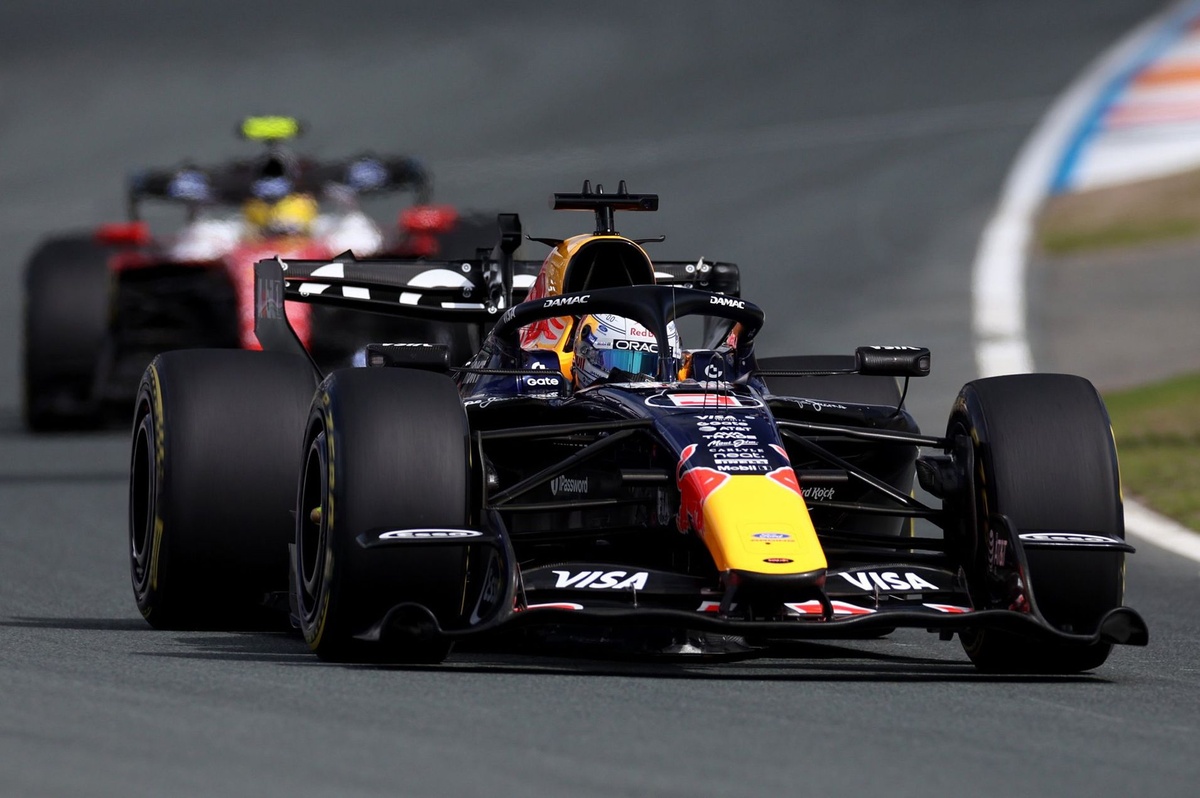
    While McLaren, Ferrari, and Mercedes have all unlocked significant performance gains through their recent upgrade packages, Red Bull Racing continues to grapple with a fundamental issue affecting the RB22.

    Verstappen Highlights Aerodynamic Degradation

    The core of the problem relates to feedback from Max Verstappen, who has pointed out that the car suffers from an aerodynamic degradation of performance after a certain number of laps. This characteristic has prevented the team from maximizing its race pace relative to its improving rivals.

    Mekies Admits Complex Fix Required

    Team principal Laurent Mekies confirmed during the Madrid round that resolving this balance issue will not be a straightforward process. However, the technical update submissions Red Bull has lodged with the FIA at both Monza and Madrid offer a clear indication of the specific development directions the team is pursuing to rectify the deficit.

  • Formula 1 Unveils 2027 Calendar with 10 Sprint Events

    Formula 1 Unveils 2027 Calendar with 10 Sprint Events

    Formula 1 and the FIA have officially unveiled the 2027 FIA Formula One World Championship calendar following approval by the World Motor Sport Council. The schedule features a record-equalling 24 Grands Prix across 22 countries on five continents, alongside an expanded slate of 10 Sprint events.

    2027 Formula 1 Calendar Structure

    Pre-season testing is set for Bahrain from 24–27 February, with the season opener taking place at the same venue. The championship then heads to Saudi Arabia before moving to Australia, Japan, and China. The North American swing follows with the Miami and Canadian Grands Prix.

    The European leg begins with Monaco, followed by Formula 1’s return to Portugal in June. Later in the year, Türkiye rejoins the calendar in October, slotted between Azerbaijan and Singapore. The season concludes with a run through the Americas — Austin, Mexico City, São Paulo, and Las Vegas — before the final two rounds in Qatar and Abu Dhabi.

    According to the organizers, the geographical flow of the 2027 calendar supports Formula 1’s long-term sustainability goals while reflecting the sport’s continued growth as a global entertainment platform.

    Sprint Format Expands to 10 Events

    Responding to strong fan demand and commercial success, the number of Sprint weekends will increase from six to 10 in 2027. Since its introduction in 2021, data indicates that total viewership on Sprint weekends is 12% higher than on traditional weekends. Sprint Qualifying attracts up to three times the audience of Free Practice sessions, while 82% of attendees at Sprint events say the format adds value to their ticket. Additionally, 75% of F1 fans believe Sprint events enhance the overall season calendar.

    New and Returning Sprint Venues

    Five circuits will host a Sprint event for the first time in 2027: Bahrain, Australia, Japan, Monaco, and Abu Dhabi. The Monaco weekend will feature two qualifying sessions, showcasing driver skill on the narrow streets of Monte Carlo. Returning Sprint venues include Montreal, Silverstone, Monza, São Paulo, and Lusail, promising more action-packed weekends for global audiences.

    Leadership Reacts to 2027 Calendar

    “The 2027 calendar brings together some of the most iconic circuits and vibrant cities in the world, creating an incredible stage for another unforgettable season of Formula 1. We are thrilled to welcome Portugal and Türkiye to the championship and to expand Sprint racing to ten events, giving our fans even more intensity, drama, and the wheel-to-wheel action that make our sport so special.

    “Formula 1 continues to go from strength-to-strength, attracting new audiences around the globe. Week after week, the world’s greatest drivers will battle on some of the most challenging tracks in motorsport, supported by F1’s outstanding teams, world-class manufacturers, and global partners.

    “Together, they create a spectacle unlike anything else in sport. As we continue this remarkable journey of growth, I want to thank our fans around the world as their passion drives everything we do.

    “I want to thank The President of the FIA, Mohammed Ben Sulayem, and the FIA, our teams and drivers, promoters, partners, sponsors, and host cities for their continued commitment and support and we recognise the extraordinary dedication of the volunteers, marshals, and officials whose hard work makes every Grand Prix possible.

    “We are incredibly excited to see this calendar come to life and to deliver another season packed with unforgettable moments, fierce competition, and world-class entertainment for our fans across the globe.”

    Stefano Domenicali, President and CEO of Formula 1

    “The 2027 FIA Formula One World Championship calendar is a strong reflection of the global appeal and continued growth of our sport.

    “With 24 Grands Prix across five continents, the return of Portugal and Türkiye, and the opportunity for an expanded Sprint programme, the calendar combines tradition, innovation, and fan engagement while maintaining the highest sporting standards.

    “I would like to thank Formula One Management, the promoters, the national sporting authorities, the FIA officials and volunteers and all our stakeholders for their collaboration and commitment.

    “Together, we continue to strengthen the FIA Formula One World Championship and deliver an exceptional season for competitors and fans around the world.”

    Mohammed Ben Sulayem, President of the FIA

    The full 2027 F1 calendar can be viewed below.

  • McLaren Won’t Blame F1 Race Control for Spanish GP Loss

    McLaren Won’t Blame F1 Race Control for Spanish GP Loss

    Key Highlights

    • Lando Norris lost a near-certain Spanish Grand Prix victory after a Virtual Safety Car triggered by Lance Stroll’s brake failure cost him approximately 20 seconds relative to rivals who pitted under the neutralisation.
    • McLaren Team Principal Andrea Stella refused to criticise race control, stating the race director’s sole focus must be safety and that regulatory changes require a lengthy process through the Strategy Advisory Committee and F1 Commission.
    • Norris acknowledged the misfortune was part of racing but noted this was likely the first time he had lost a race win specifically due to VSC timing, having previously benefited from similar scenarios.

    Norris Dominates Early Before VSC Cruelly Intervenes

    The 2025 Formula 1 Spanish Grand Prix at the Madring circuit appeared destined for a McLaren victory after Lando Norris converted pole position into a commanding early lead. The Briton quickly pulled away from Mercedes rookie Kimi Antonelli and reigning champion Max Verstappen, exploiting the clean air that is critical on a layout where overtaking proved exceptionally difficult across F1, F2, and F3 support races throughout the weekend.

    That narrative unravelled when Lance Stroll suffered a brake failure on his Aston Martin, forcing the Canadian to stop at the side of the track. Race control deployed a Virtual Safety Car (VSC) at the precise moment Norris had just passed the pit entry. By the time the McLaren driver completed the additional lap required to reach the pits, the track had already gone green again. Meanwhile, Antonelli, Verstappen, and the chasing pack had all dived into the pits under the VSC, swapping tyres at a significantly reduced time loss. Norris emerged from his eventual stop having surrendered roughly 20 seconds to his principal rivals, effectively handing the race lead—and ultimately the win—to Antonelli.

    Stella Defends Race Control, Points to Governance Process

    Despite the bitter disappointment, McLaren Team Principal Andrea Stella was unequivocal in refusing to apportion blame to the race director or FIA race control. Speaking after the Grand Prix, the Italian emphasised that the official’s mandate during a live incident is strictly limited to safety management.

    “Like all the times in which a safety car or a virtual safety car timing or duration has a large influence on a race, we have an opportunity to review whether we can do things differently,”

    Stella said.

    “But this is not under the jurisdiction of the race director. The race director applies the guidance and the regulations at the moment of the race that he’s directing. And I think that when there’s a situation like the one that caused the virtual safety car, the attention of the race director, and rightly so, is on when the conditions exist to turn the virtual safety car on and when they exist to turn it off. I don’t think he takes a look at what’s happening in the race. It would be a big distraction.”

    Stella confirmed the team had absolutely no comment on the race direction of the Spanish GP, adding they had done a good job according to what is present. However, he conceded there was scope for wider reflection on maintaining fairness.

    “I’m puzzled myself as to what’s right,” Stella continued. “Is it correct to give enough duration such that everyone will be subject to the same track conditions? So, for instance, the virtual safety car lasts at least one full lap. Or, you just keep it in the hands of the gods? And sometimes you are lucky, sometimes you are not. I’m not sure myself.”

    The McLaren boss outlined the formal pathway for any regulatory adjustment, noting it must originate in the Strategy Advisory Committee (SAC), progress to the F1 Commission, and ultimately be written into the Sporting Regulations—a relatively lengthy process that precludes any immediate change.

    “But in general, there’s the right place to have this sort of conversation which is the Strategy Advisory Committee, the famous SAC. And this is a topic that may be added to the agenda and discussed over there. But if it’s a change, it will have to be a change that goes through the SAC, then the F1 Commission, and then we have to go at some stage to the Sporting Regulations.”

    Norris Takes Philosophical View on Cruel Timing

    For Norris, the loss was particularly stinging because it occurred while fighting for a victory rather than mere points. In the post-race press conference, the 25-year-old articulated a balanced perspective, recognising that the fickle nature of safety-car timing has swung both ways during his career.

    “I was the only one, the only one on the whole grid that didn’t get the chance to do the pitstop,” Norris said in the post-race press conference. “That’s just unfortunate. It’s happened in races and there’s been plenty of times where I’ve gained from it in the past and times where I lost from it.”

    “It’s racing, but never when fighting for a win. So, I think it’s probably one of the first times a win has been lost simply because of it.”

    Why This Matters

    The Spanish Grand Prix episode has reignited a long-standing debate within Formula 1 regarding the sporting equity of Virtual Safety Car and Safety Car deployments. Because the VSC freezes gaps at the moment of deployment, any driver who has not yet passed the pit entry when the signal is given gains a massive advantage over those who have just missed it. The Madring circuit’s layout—where track position is paramount and overtaking is at a premium—amplified the consequence to a race-deciding level.

    Stella’s reference to the Strategy Advisory Committee underscores that any solution—whether a mandatory minimum VSC duration, a “pit window” guarantee, or a red-flag-style reset—must navigate F1’s multi-layered governance structure involving teams, the FIA, and commercial rights holders. Until such a mechanism is ratified, the sport must accept that the timing of neutralisations remains, in Stella’s words, in the hands of the gods. For Norris and McLaren, the focus now shifts to recovering the championship momentum lost on a Sunday where pace was never the issue.

    Frequently Asked Questions

    Why did Lando Norris lose the Spanish Grand Prix?
    Norris lost the lead when a Virtual Safety Car was deployed moments after he passed the pit entry. He was forced to complete an extra lap at reduced speed before pitting, while rivals including Kimi Antonelli and Max Verstappen pitted immediately under the VSC, gaining roughly 20 seconds on the McLaren driver.
    Is McLaren protesting the race director’s decision?
    No. Team Principal Andrea Stella explicitly stated McLaren has absolutely no comment on the race direction and believes the race director’s sole responsibility during a live incident is safety, not sporting equity.
    Could the rules be changed to prevent this happening again?
    Any rule change would need to be proposed at the Strategy Advisory Committee (SAC), approved by the F1 Commission, and written into the Sporting Regulations. Stella described this as a relatively lengthy process, meaning no immediate fix is expected.
  • “I almost fell asleep” – F1 drivers push for Madrid track changes after “very poor” Spanish GP

    “I almost fell asleep” – F1 drivers push for Madrid track changes after “very poor” Spanish GP

    Formula 1 Spanish Grand Prix Exposes Overtaking Flaws at New Madrid Circuit

    The inaugural Formula 1 Spanish Grand Prix at the Madring circuit delivered exactly the processional race many drivers predicted. Despite a spectacular qualifying layout, Sunday’s race offered virtually no overtaking opportunities, leaving the paddock united in criticism of the track’s racing dynamics.

    Drivers and Media Alike Struggle to Stay Engaged

    The lack of on-track action was so pronounced that journalists in the media centre reportedly nearly fell asleep during the event. Sauber driver Gabriel Bortoleto confirmed the sentiment from inside the cockpit: “I almost fell asleep as well!”

    Even race winner Kimi Antonelli, who leads the championship, admitted he enjoyed qualifying but not the Grand Prix itself. The Mercedes driver explained the core issue: “It definitely doesn’t create overtaking opportunities and it doesn’t push you to try and make a move, because 80% of the time you might have contact.”

    Antonelli cited a specific incident with Lando Norris at the second chicane: “I think especially in the second chicane, if I would have turned in there, me and Lando would have touched and probably gone into the wall and blocked the road. It definitely wouldn’t have been nice.” He concluded: “So, I think there are some corners that need to be changed to create more overtaking opportunities, because right now, yes, it’s nice over one lap, but for sure in the race you’re just stuck behind.”

    Layout Criticized Before Lights Out

    The fundamental design flaws were apparent to drivers long before the race. Max Verstappen stated on Saturday he could not see a single passing opportunity, telling Dutch media: “Just give me the track map” to indicate the extensive changes he would make.

    Drivers noted they were not consulted during the design phase, a contrast to the Jeddah Corniche Circuit where feedback was sought only after the first year proved dangerous. Haas rookie Oliver Bearman, who crashed heavily in final practice and missed qualifying, was blunt in his assessment: “You only have to look at the layout, and it’s quite clear that it’s going to be a poor track for racing.”

    Bearman added: “I mean, when you arrive and you see that layout, you’re like, what do you expect us to do? It’s a bit of a shame.” He identified two compounding factors: “Not only do you have a lot of long combined exits where it’s really tough to put power down, but you have a lot of combined entries as well. It’s very easy to drive a bit dangerously defending your position and, therefore, very hard to send an overtake.”

    The British driver confirmed the grid had already raised concerns: “We already said that to the FIA on Friday and we need to look into a way to make the track a bit more interesting for us, because it’s interesting to drive for sure, but in the race it’s very poor.”

    Junior Categories Confirm Fears

    Williams driver Alex Albon pointed to support races as early validation: “I hope there’s open-mindedness to make some track changes for next year. I mean, if the F3 cars can’t overtake, then you know there’s going to be no overtaking the whole weekend.”

    Albon believes the fixes are manageable: “I think there only needs to be a couple of changes to fix the problem. Otherwise, honestly, it’s not a bad track. It’s quite a fun track to drive, just like you saw in the races, it’s pretty boring.”

    Three Key Areas Targeted for 2027 Modifications

    Turns 3 to 5 Complex Requires Redesign

    Albon identified the sequence from Turn 3 to Turn 5 as the primary trouble spot: “A lot of it is around Turn 3 to Turn 5. I think that whole area needs to be redone, maybe straighter braking zones. We need to remove that chicane. It’s good for spectacle, but it’s not good for racing.”

    He also questioned the effectiveness of the banked Turn 13: “And I think the banking, as great as it is, it’s not really doing a good enough job in Turn 13. Turn 13 maybe needs to be a slower corner, a bigger braking zone.”

    Bortoleto highlighted a physical toll from the Turn 5 jump: “Just the jump in T5, to do that 50 laps, you get quite a lot of headache at the end of the race. So, it’s not the easiest one for our body.”

    Final Sector “Useless” Corners Need Simplification

    Lando Norris targeted the circuit’s final sector for streamlining: “I think there are some obvious changes they should make. They should get rid of Turn 18, 19, useless. Just have more of a straight into a hairpin. I don’t know how someone looks at this design and goes, ‘Mint.’ Yeah, I think there’s a lot of opportunity.”

    The McLaren driver referenced Circuit of the Americas as a positive template: “To me, it’s not a great racetrack. It’s great in qualifying, but, you know, a straight line from 17 straight to 20 [would help], to have a much wider entry like Austin Turn 1 or Turn 10, a big hairpin. You’ll create much better opportunities for everyone and you’ll be able to enjoy the race.”

    Norris acknowledged the complexity of the Turn 5-6-7 section: “There are some simple changes and maybe some trickier ones, like Turn 5, 6, 7. It’s hard to know exactly what is the best thing. The fact you have to turn and brake basically defeats the whole object of racing. So, they can do some simple changes, I think, easy changes and maybe some trickier changes, but I hope they do it because then it should be more exciting for everyone.”

    Shorter Pit Lane Proposed for Strategic Variety

    Beyond corner geometry, drivers are advocating for a shortened pit lane to encourage additional pit stops and create strategic alternatives, potentially manufacturing race excitement that the layout currently fails to produce naturally.

    With the Spanish Grand Prix locked in at the IFEMA complex through 2026 before a potential move, the unanimous driver verdict places pressure on organizers and the FIA to implement meaningful layout revisions before the 2027 season.

  • Max Verstappen on Fixing Madrid’s New F1 Circuit: “If they give me the track map…”

    Max Verstappen on Fixing Madrid’s New F1 Circuit: “If they give me the track map…”

    Formula 1 drivers have voiced significant concerns about the new Madring circuit layout following qualifying for the Spanish Grand Prix in Madrid. While support series races at the IFEMA complex have seen multiple incidents, the premier class has avoided major chaos so far. However, the consensus suggests Sunday’s race could present substantial overtaking challenges.

    Verstappen Criticizes Track Design and Overtaking Prospects

    Reigning champion Max Verstappen was blunt in his assessment during the post-qualifying press conference.

    “I still need to figure out a corner where to pass,” Max Verstappen said straight away at the start of the press conference.

    Verstappen acknowledged the quality of the new asphalt but highlighted fundamental design flaws.

    “They did a good job with the tarmac, even though in some places it’s already a bit too bumpy for a new track. But the corners, like I said before, you can’t overtake.
    “For the braking zones, they need to learn that it should never be that you have to steer and combine that under braking. It doesn’t allow any kind of overtaking. So, in terms of track design, I think it can be better. I also think that input from the drivers on track designs can help a lot in the future.”

    Braking Zones Identified as Primary Defect

    Speaking to Dutch media in the paddock while watching the Formula 3 sprint race start, Verstappen reinforced his view that the circuit layout discourages racing.

    “Well, now we can stop watching, now everyone is just following each other,”

    he remarked, referencing the lack of passing opportunities. The Red Bull driver explained that the braking zone geometry eliminates the possibility of out-braking an opponent.

    “Then there is only one line and that makes it very easy to defend as well,”

    Verstappen clarified when asked by Motorsport.com about the braking zones.

    Asked what changes would improve the racing, the four-time world champion offered a candid response.

    “Almost all the braking zones! If you give me the track map, I’ll sort it out.”

    On a more constructive note, Verstappen expressed willingness to collaborate with the FIA and circuit designers.

    “They can always ask me, ‘What do you think of this layout?’ I don’t want to go into details now, because you have different track designers, but sometimes I do talk to someone about certain opinions and circuits. Ultimately, a driver knows very well what is needed or what a good corner should look like.”
    “There are also some good examples, like Austin. You can race well there. Certain corners are nice and wide. At least you can make a move there, and even if it doesn’t work straight away, you can still fight on the corner exit. There are enough examples of how to do it properly.”

    Drivers Excluded from Pre-Construction Consultation

    Verstappen revealed that driver input was not sought before the Madring was built, a recurring issue with new venues.

    “In Jeddah, we were able to change a few things, but you should really do that beforehand, before the track is built.”

    Excessive Pitlane Length Compounds Strategic Limitations

    Beyond the racing line, the pitlane configuration has drawn unified criticism. The lane is effectively bisected by an IFEMA exhibition hall, creating an unusually long transit time. Lando Norris raised the issue during the press conference, and Verstappen concurred.

    “Yeah, we’ve already talked about that with the FIA and they understood our point as well. It’s not convenient, it hasn’t been thought through logically,”

    Verstappen said.

    This design quirk carries strategic weight. High tyre degradation observed during practice and qualifying would typically encourage multiple stops, but the punishing pitlane delta combined with the premium on track position will likely push teams toward one-stop strategies on race day.

    2026 Power Unit Characteristics Frustrate Qualifying Approach

    Verstappen also pointed to the upcoming 2026 regulations as a factor diminishing the qualifying spectacle. Energy management requirements forced compromises on several corners, including the banked turn and the Turn 18-19 sequence.

    “Considering the circumstances and what these cars are like, this qualifying was reasonably OK. It’s just that I want to take that banked corner flat-out, but if I do that, then I lose more time on the straight afterwards.
    “That means you have to come off the throttle, wait a little bit to charge the battery and then you have more top speed later. All those kinds of things. The same in Turns 18 and 19. You have to lift there as well, because if you stay flat-out, then you don’t have any battery left afterwards.”

    Cautious Optimism for Future Iterations

    Despite the litany of issues, Verstappen sees potential for the venue if modifications are made.

    “If they can maybe change the circuit in a few places, then definitely. Look, I’m never really a fan of street circuits, but there are worse ones on the calendar.”

  • Red Bull Seeks F1 Development Lifeline as FIA’s New ADUO Decision Looms

    Red Bull Seeks F1 Development Lifeline as FIA’s New ADUO Decision Looms

    FIA ADUO Engine Rankings: Red Bull Tops First Period, Awaits Second Assessment

    Although the second ADUO period—Additional Development and Upgrade Opportunities in Formula 1—concluded after the Hungarian Grand Prix, the official results of the first assessment period remain unpublished. During the Monaco race weekend, however, all manufacturers were privately informed of the outcome, which placed Red Bull-Ford Powertrains surprisingly at the top of the rankings.

    First Period Results Favor Rivals

    Despite Red Bull’s dominant start to the season, the FIA allocated development tokens to its competitors: Mercedes High Performance Powertrains received one token, while Ferrari, Audi, and Honda were each granted two upgrade opportunities. The governing body had prepared a public announcement at that time but withheld it following considerable behind-the-scenes dissatisfaction from Red Bull, with CEO Oliver Mintzlaff directly involved.

    The Milton Keynes-based manufacturer had limited avenues to challenge the result. The current system measures only the internal combustion engine (ICE), yet the upgrade opportunities apply to the electrical side of the power unit as well—a structural weakness that cannot be addressed in the short term. FIA single-seater director Nikolas Tombazis explained to media including Motorsport.com that he was open to incorporating additional parameters such as turbo size, but teams and manufacturers pushed to keep the system simple last year.

    Consequently, Red Bull could only request a factual review. Team principal Laurent Mekies stated that, in his view, there was “not a single data point” suggesting that Red Bull-Ford Powertrains has the best engine on the grid. That factual check does not appear to have altered the outcome. When asked by Motorsport.com, Tombazis affirmed the accuracy of the FIA’s measurements.

    “I think our measurement, in my opinion, has proven to be very accurate,” he said. “With that said, has everything worked fine? No, because obviously people are not happy and so on. Do we need to think about improvements in the future? Yes, I would say so.”

    The prevailing paddock sentiment is that manufacturers such as Mercedes and Ferrari strategically managed their performance during the opening race weekends—avoiding showing their full hand—to secure ADUO tokens. Ferrari, in particular, managed to obtain two tokens through this approach.

    Second Period Offers Red Bull a Potential Lifeline

    Red Bull’s hopes now rest on the second assessment period, which covers races up to and including the Hungarian Grand Prix. According to the prescribed timeframe, the FIA should inform all manufacturers of the results ahead of the Italian Grand Prix at Monza, with an announcement expected this week or early next week.

    For Red Bull to receive a token, its internal combustion engine must no longer rank as the best in this second assessment. However, this outcome depends partly on rival manufacturers, who can effectively play a strategic game. If competitors refrain from using their tokens on the ICE and continue to withhold maximum performance at certain events, they could keep Red Bull at the top of the ranking for longer.

    Tombazis, speaking before the summer break, expressed skepticism about such a scenario unfolding.

    “Well, I don’t think it would be convenient for you to always be below [your maximum power] just to keep getting more opportunities, because what’s the point of opportunities if it isn’t ultimately for you to be on top?”

    To qualify for a token, Red Bull’s deficit to the best ICE on the grid during the second ADUO period must exceed 2%. If Red Bull remains top-ranked or its deficit is assessed at less than 2%, it will again receive no upgrade opportunity. In that scenario, the team’s only remaining chance to modify its power unit this season would come in the third period, which concludes after the Mexico City Grand Prix.

    Mekies and his team are hopeful of securing an opportunity before then. If successful, every manufacturer will have received at least one token in the first season under the all-new regulations, with clarity expected before media day in Monza.

  • FIA Explores Legal Action Over Abuse Targeting F1 Stewards After Colapinto’s Dutch GP Penalty

    FIA Explores Legal Action Over Abuse Targeting F1 Stewards After Colapinto’s Dutch GP Penalty

    Formula 1’s governing body, the FIA, has strongly condemned the wave of online harassment directed at its race stewards following their decision to penalise Alpine driver Franco Colapinto and Racing Bulls driver Arvid Lindblad during the Dutch Grand Prix at Zandvoort.

    Penalties for Overtaking Under Double Yellow Flags

    Both drivers received drive-through penalties on the opening lap for overtaking under double-waved yellow flags. The yellow flags were deployed after a heavy crash involving Red Bull’s Max Verstappen, which neutralised the final marshal sector of the circuit until the start-finish straight.

    As the yellows were shown, Colapinto overtook Racing Bulls driver Yuki Tsunoda exiting the final corner, while Lindblad drafted past Alpine’s Pierre Gasly before crossing the start/finish line. Both drivers had been forced to take evasive action due to debris on track.

    Stewards’ Verdict Cites Mitigating Circumstances

    Regarding the Colapinto incident, the FIA stewards issued the following explanation:

    “Car 43 was behind Car 22 entering Turn 14 and overtook Car 22 in the double yellow flag sector before the line at the end of Lap 1. Normally, such infringement requires a 10-second stop/go penalty, but the Stewards acknowledge the complications caused by the significant amount of debris on track at this point and take this into account as mitigating circumstances.”

    The stewards applied an identically phrased verdict for Lindblad’s infraction.

    Sponsor Criticism Sparks Abusive Backlash

    Colapinto described his penalty as extremely harsh, arguing he overtook Tsunoda a split second after the yellows appeared. However, under the strict letter of the regulations, both penalties were clear-cut, as the FIA prioritises safety-related infractions.

    The situation escalated when Colapinto’s Argentinian sponsor, Mercado Libre, launched a scathing attack on the stewards’ integrity via social media. Sean Summers, the company’s chief marketing officer, stated:

    “The Stewards are killing the integrity of F1. This season they are proving to be horrible and impacting race results,” said Sean Summers, Mercado Libre’s chief marketing officer. “Incompetence? Dishonesty? Both? Something is seriously broken in that organisation’s culture.”

    Those inflammatory comments—since removed—fuelled a torrent of abusive threats toward the FIA stewards. Alpine’s official social media channels were also targeted by a vocal section of Argentinian fans who believed the team did not support Colapinto sufficiently.

    Alpine Trusts FIA Process, Acknowledges Harshness

    On Monday, Alpine released a statement addressing the controversy:

    “We fully trust the FIA and the stewards when it comes to the policing of these rules and the application of sporting penalties during a live race scenario.

    “We believe the penalties applied for yellow flag Infringements during the opening laps of the Dutch Grand Prix were indeed harsh, but acknowledge they fit the punishment based on the letter of the law and were consistently applied across all competitors and is something we can review and learn from as a team.”

    FIA Condemns Abuse, Explores Legal Options

    The FIA, which established the United Against Online Abuse campaign to combat harassment in sport, is understood to be exploring legal avenues and released the following statement:

    “Following the Dutch Grand Prix, FIA stewards were targeted with online abuse after applying sporting penalties in line with FIA regulations.

    “The United Against Online Abuse Coalition condemns all forms of abuse and harassment. Disagreement with decisions is part of sport, but it must never justify threats or personal attacks.

    “In 2023, the FIA launched the United Against Online Abuse Coalition after a steward faced targeted abuse following the United States Grand Prix. We urge everyone engaging with our sport to do so with respect and responsibility, online and offline.”

    Nationality Bias Claims Contradicted by Facts

    Among the toxic commentary, suggestions emerged that Colapinto was penalised due to his nationality, alleging bias against non-British drivers. This narrative is directly contradicted by the identical penalty handed to Lindblad—a British driver—for a near-identical infraction on the same lap.