Tag: Ferrari

  • Lewis Hamilton “lucky to make it round” after Spanish GP brake failure

    Lewis Hamilton “lucky to make it round” after Spanish GP brake failure

    Key Highlights

    • Lewis Hamilton retired from the Spanish Grand Prix in Madrid after a sudden brake failure on the opening laps while running third.
    • Ferrari team principal Fred Vasseur confirmed the team attempted remote fixes before retiring the car, citing safety concerns on the wall-lined Madring circuit.
    • Vasseur stated Ferrari had the pace to challenge for the win, but track position dominance made overtaking nearly impossible during the 57-lap procession.

    Brake Failure Ends Hamilton’s Race Early at Madring

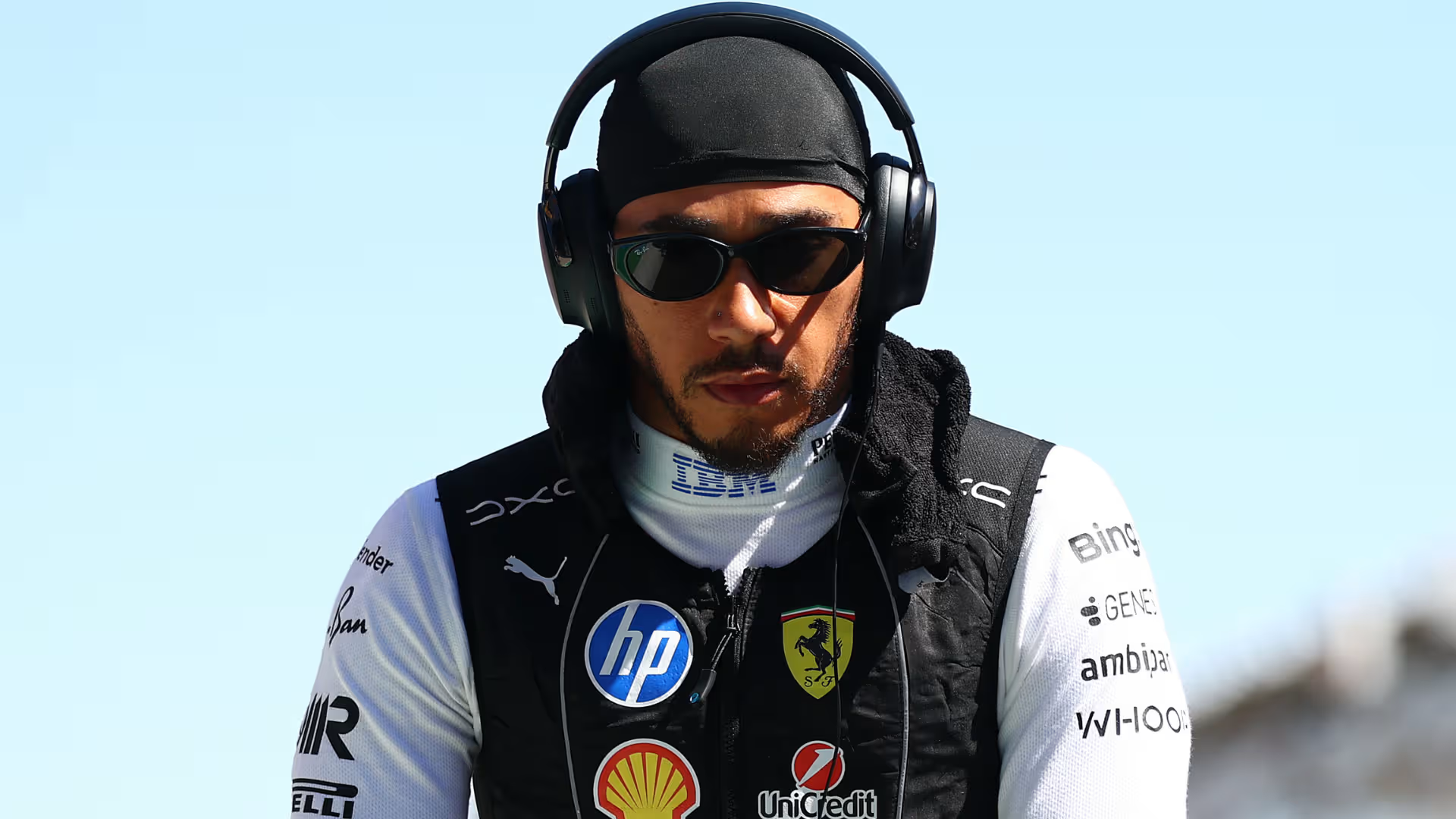
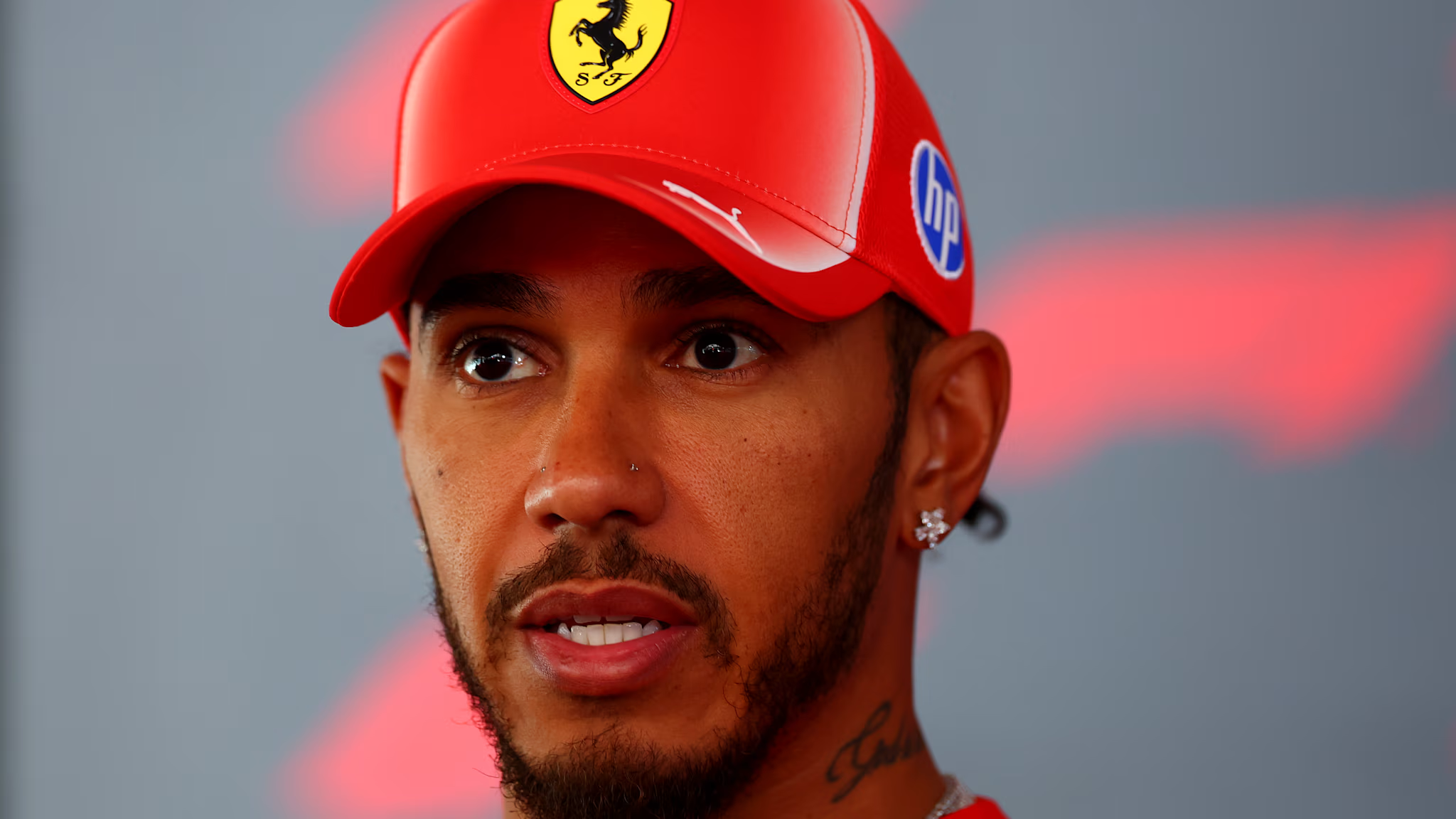
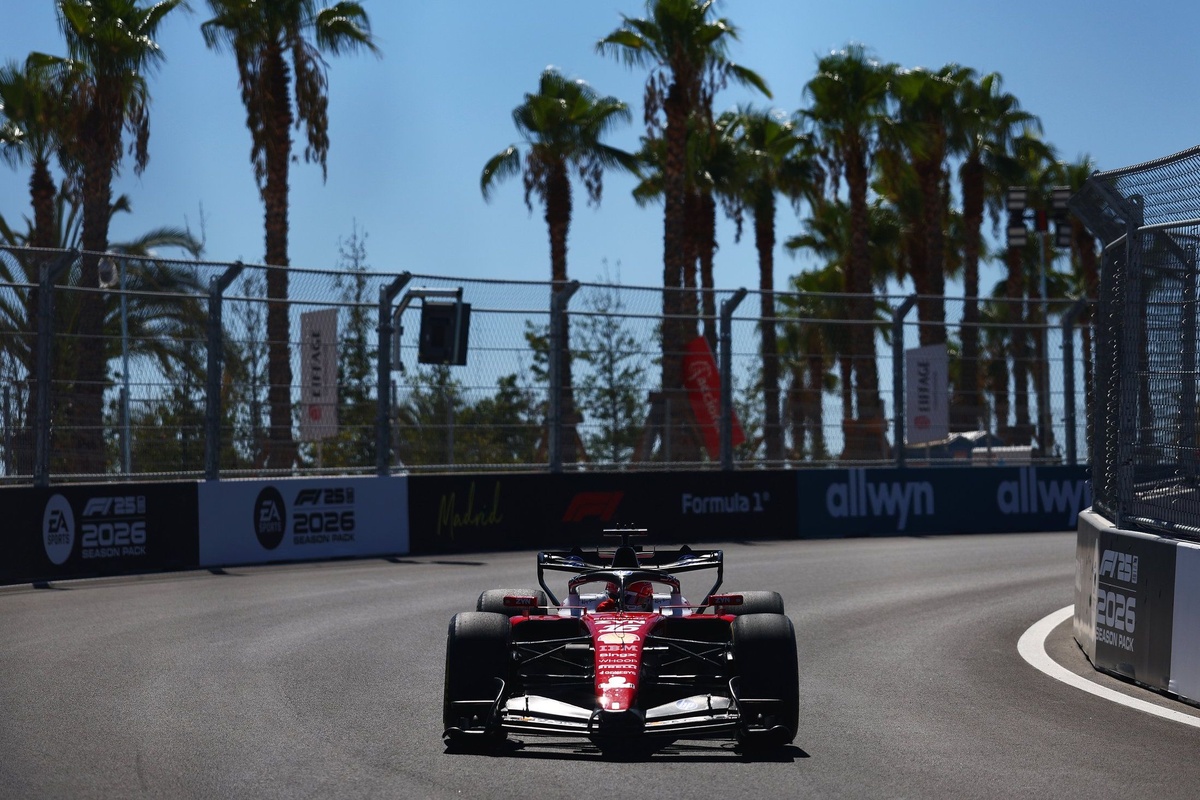
    Lewis Hamilton’s Spanish Grand Prix ended in frustration on Sunday after a catastrophic brake failure forced the seven-time world champion into an early retirement from the inaugural running at Madrid’s Madring circuit. The Ferrari driver had been locked in a battle with Red Bull’s Max Verstappen for third place during the opening laps when his brake pedal began to extend abnormally, leaving him unable to slow the SF-25 effectively.

    The issue manifested suddenly on the first lap. Hamilton reported that the car was stopping normally under braking for Turn 5 before the pedal “took a step,” causing him to carry excessive speed into the corner. Although the braking performance briefly recovered, giving the team and driver momentary hope, the pedal subsequently went fully to the floor. Hamilton described the incident as “really unexpected” and admitted he was “lucky to make it round” to the pits without a heavy impact, having already brushed the wall after missing a braking point.

    Ferrari Opts for Safety Over Salvage on Treacherous Layout

    With the 5.4-kilometre Madring layout lined by unforgiving barriers, Ferrari elected not to gamble on a damaged car. Team principal Fred Vasseur revealed that engineers attempted to rectify the problem via steering-wheel adjustments from the pit wall, but the failure recurred “a couple of corners later.” Vasseur characterized the decision to retire the car as straightforward: “Staying on track made no sense in a crazy race. We didn’t want to take any risk.”

    The retirement marked a bitter conclusion to a weekend where Ferrari appeared to possess genuine race-winning performance. Vasseur pointed to the pace of Hamilton’s teammate, Charles Leclerc, as evidence that the Scuderia had the speed to challenge the frontrunners. However, the team boss was blunt about the nature of the 57-lap contest, describing it as a “procession dominated by track position” where overtaking was “mega difficult.”

    Why This Matters

    The Spanish Grand Prix highlighted two critical storylines for Formula 1’s 2025 season. First, Hamilton’s mechanical DNF underscores the reliability challenges Ferrari continues to face in its championship push, wasting a rare opportunity where the SF-25 demonstrated clear front-running pace. Second, the processional nature of the race at the new Madring venue raises immediate questions about the circuit’s suitability for F1. With overtaking described as virtually impossible by a team principal whose driver was on the receiving end of the track-position trap, stakeholders will likely scrutinize whether layout modifications or regulatory adjustments are needed to prevent future editions from becoming static affairs. For Hamilton, the zero points represent a significant blow in the drivers’ standings, while Ferrari must quickly diagnose the brake-system gremlin before the next round.

    Frequently Asked Questions

    What caused Lewis Hamilton’s retirement at the Spanish Grand Prix?
    A sudden brake failure caused the pedal to go long and eventually travel fully to the floor, leaving Hamilton unable to slow the car reliably. The issue first appeared on lap one at Turn 5, briefly recovered, then failed permanently.
    Why did Ferrari retire the car instead of trying to continue?
    Team principal Fred Vasseur cited the wall-lined nature of the Madring circuit and the recurrence of the failure after attempted remote fixes. He stated that continuing “made no sense in a crazy race” and the team refused to take safety risks.
    Did Ferrari have the pace to win the Spanish Grand Prix?
    According to Vasseur, the pace shown by Charles Leclerc indicated Ferrari “had the pace to fight with everybody.” However, he emphasized that track position was the decisive factor in a race where overtaking was extremely difficult.
  • ‘It’s just the nature of the track’ – Max Verstappen explains Lewis Hamilton clash in Spanish Grand Prix

    ‘It’s just the nature of the track’ – Max Verstappen explains Lewis Hamilton clash in Spanish Grand Prix

    Verstappen Details Opening-Lap Clash with Hamilton at Spanish Grand Prix

    Max Verstappen has given his assessment of the near-miss with Ferrari’s Lewis Hamilton on the opening lap of the Spanish Grand Prix, an incident that saw the Dutch driver reluctantly concede the position after running off track.

    Turn 1 Incident Forces Position Swap

    As the lights went out at the Madring circuit, Hamilton surged ahead while Verstappen cut the first corner and maintained his starting slot of third place. The move prompted immediate calls from the British driver for Verstappen to return the place. The Red Bull driver was adamant that Hamilton almost shunted into me and initially resisted team instructions to yield, especially after he had also passed Kimi Antonelli to claim second. He eventually complied, allowing both Antonelli and Hamilton through, but swiftly returned to the top three when Hamilton began to struggle with brake issues.

    Verstappen Explains Defensive Decision

    Addressing the clash, Verstappen pointed to the circuit layout as a contributing factor.

    “It’s just a bit the nature of the track,” Verstappen said when questioned on the clash. “When you have that track layout with so much tarmac, people of course risk [going] for a move, and I saw what happened – Lewis clipped the kerb so he was going to run wide.

    “I think if I would’ve stayed on the track, you touch and there’s a big risk of damage. I decided to drive next to the track, and then of course the team told me to give the position back, which I did. After that, I just tried to do my race.”

    Virtual Safety Car Timing Benefits Red Bull

    Verstappen capitalized on a Virtual Safety Car period to minimize time lost during his pit stop—a strategic advantage that McLaren’s Lando Norris missed due to unfavorable timing. The sequence ultimately elevated Verstappen to second place while Norris finished third.

    Podium Finish Viewed as Strong Result Despite Pace Deficit

    Although the four-time World Champion acknowledged he lacked the outright pace to challenge either Norris or race winner Antonelli, he expressed satisfaction with the weekend overall, securing his sixth podium of the season.

    “Looking at the race pace, I think it’s a great result,” he said. “Of course, we know that Lando got unlucky with that VSC, so for us I think P2 is an incredible result because you could see how much Lando was catching me.”

    He later added further context on the competitive hierarchy during the stint.

    “I think it was quite clear that Lando and Kimi were a lot faster. Once everyone was a little bit clear, it was again the same thing where Kimi was a bit faster than me, Lando was faster than all of us, but I could keep him quite easily behind me.”

  • ‘Had the car to fight for a win’ – Ferrari’s Lewis Hamilton Explains Brake Issues Behind 2026 Formula 1 Spanish Grand Prix Retirement

    ‘Had the car to fight for a win’ – Ferrari’s Lewis Hamilton Explains Brake Issues Behind 2026 Formula 1 Spanish Grand Prix Retirement

    Lewis Hamilton Says Ferrari Had Pace to Win Spanish GP Before Brake Failure

    Lewis Hamilton insisted Ferrari “had the car to fight for a win” at the Spanish Grand Prix after the seven-time world champion suffered an early retirement due to brake problems at Formula 1’s newest venue, the Madring.

    Early Retirement at Madring

    The Briton started fourth for Sunday’s 57-lap race and made a strong launch on the soft Pirelli compound. Hamilton initially moved ahead of Max Verstappen’s Red Bull on the run to Turn 1 and briefly threatened to overtake front-row starters Lando Norris and Kimi Antonelli before backing out. After Verstappen cut the first corner, Hamilton was handed back third place, but braking issues emerged in the opening laps. He reported over team radio that he had glanced the wall.

    Hamilton continued to lose positions over the following laps and ran deep into the Turn 20 run-off area. He rejoined the circuit before pulling into the pits and retiring after just seven laps.

    Hamilton: Wall Contact Not Root Cause

    “It was already basically before that,” Hamilton told Sky F1 when asked if the contact with the wall had caused the braking issue.

    “Braking for Turn 5 I hit the brake, the car started stopping and then the pedal took a step and all of a sudden the car didn’t de-accelerate as fast a normal.

    “I ended up carrying a lot of speed in and just brushed the barrier. After that the pedal came back and then a few corners later, the pedal went long. I don’t really know where that’s come from.”

    Leclerc Leads Laps, Finishes Fourth

    Hamilton had challenged for pole position on Saturday. In Sunday’s race, team-mate Charles Leclerc led the most laps as Ferrari tried to keep the Monegasque driver out in the hope of a late Safety Car period before ultimately finishing fourth.

    Hamilton Praises Team, Eyes Future Wins

    “We’ve had a pretty decent car, a good car this weekend and I think we will continue to try and improve it and I think we have better results coming in the future,” said Hamilton.

    He added: “I think the team’s done an amazing job, so I’m sad for them today that they couldn’t get max points. I think we had the car to fight for a win today, and unfortunately it just didn’t work out.”

  • Lewis Hamilton: ‘We’ve got to work harder’ after missing 2026 Spanish GP pole for Ferrari

    Lewis Hamilton: ‘We’ve got to work harder’ after missing 2026 Spanish GP pole for Ferrari

    Hamilton and Ferrari Target Improvement After Spanish GP Qualifying

    Lewis Hamilton insists both he and Ferrari must “got to work harder” to close the performance gap after missing out on pole position for the Spanish Grand Prix. The seven-time world champion qualified fourth, finishing less than two-tenths of a second behind polesitter Lando Norris.

    FP3 Crash Puts Hamilton on Back Foot

    Hamilton entered Saturday’s qualifying session at a disadvantage after a heavy crash at the final corner during Free Practice 3. The British driver hit the barrier head-on and was forced to stop his damaged car on track after team radio calls instructed him to pull over rather than return to the pits.

    Despite the lost track time, Hamilton recovered impressively. He sat on provisional pole after the opening runs in Q3 before ultimately slipping to fourth in the final classification.

    Hamilton Reflects on Qualifying Performance

    When asked to assess his day, Hamilton downplayed the earlier incident.

    “The only thing to say about FP3 is nothing. Qualifying was pretty decent,”

    he said.

    “Generally been feeling pretty decent. It takes everything for us to be able to compete with the two powerhouse motors [Mercedes and McLaren] ahead.”

    Hamilton pointed to a perceived engine mode advantage for the leading teams during qualifying sessions.

    “They just seem to be able to turn the engine up or something when we get to Qualifying which we can’t match. We’ve got to work harder.”

    Leclerc Takes Responsibility for Fifth Place

    Teammate Charles Leclerc qualified fifth, directly behind Hamilton and also within two-tenths of Norris’s benchmark time. The Monegasque driver believed he over-drove during the decisive final segment.

    “I think the lap was pretty good in Q3, it’s a tricky Qualifying where you’ve got to go fully committed into Q3 and I did that,”

    Leclerc explained.

    “But I felt like I maybe went over the limit a little in some corners and lost a little bit on top of maybe losing down the straights a bit because of running the older spec [engine].”

    Leclerc accepted full accountability for the result.

    “But at the end, that’s on me. I think we did a good job today and we maximised our potential.”

    Both Ferraris start the Spanish Grand Prix from the third row, targeting a strong race pace to challenge the leading Mercedes and McLaren entries.

  • Charles Leclerc: Madrid Qualifying Set to Be “One of the Most Challenging” in F1 2026

    Charles Leclerc: Madrid Qualifying Set to Be “One of the Most Challenging” in F1 2026

    Leclerc Predicts Madrid Qualifying Will Be Among 2026’s Toughest Tests

    Charles Leclerc expects qualifying at this weekend’s Spanish Grand Prix to rank as “one of the most challenging qualifying sessions of the year” as Formula 1 tackles the brand-new Madring street circuit for the first time. The Madrid venue has replaced Barcelona as the host of the Spanish Grand Prix and presents a high-commitment layout featuring 22 corners, including the 13.5-degree banked La Monumental curve.

    Drivers Divided on Overtaking Prospects

    While several drivers have spoken positively about the track after Friday practice, the paddock is bracing for a high-stakes Saturday session. George Russell labeled the circuit a “very high risk circuit,” and Leclerc echoed the sentiment that track position will be paramount.

    “The track is very exciting. It’s very exciting, it’s very challenging, and it’s a street track as well. So these are the tracks that I normally quite enjoy, and there’s no exception to that. It was really nice to be driving on this new track. There’s still a lot of work to be done, and I expect it to be one of the most challenging qualifying sessions of the year, being such a commitment track.”

    The Ferrari driver emphasized that Saturday’s session will dictate the weekend’s outcome, citing the extreme difficulty of passing even with a significant pace advantage.

    “Qualifying is for sure going to be the key moment of the weekend, because particularly in FP2, I tried to overtake, but even with the large pace delta, it was extremely difficult or impossible to overtake. So most of the performance this weekend will be based on the qualifying.”

    Mercedes Sets Early Pace

    Leclerc finished third in FP1 and second in FP2, trailing Mercedes drivers George Russell and Kimi Antonelli by 0.459s and 0.113s respectively. Despite the deficit, the Monegasque remained measured about the early running.

    “The feeling was pretty good, but it’s true that Mercedes seems to be strong. However, we don’t really focus on what P1 says today [Friday], because we don’t know what the others are doing with their run plan for us. It was all about trying to maximise laps on the new track, to try and make sure that we have as many data as we want, and for us to be also at ease with the track coming tomorrow in qualifying. But I think we did a good work today, and we’ll see tomorrow in qualifying.”

    With Madrid’s tight confines and combined brake-and-turn corners amplifying the importance of grid position, all eyes turn to a qualifying session that could well decide the victor before Sunday’s race even begins.

  • F1 Teams Detail Madring Circuit Learnings from First Day of Running Ahead of Spanish Grand Prix

    F1 Teams Detail Madring Circuit Learnings from First Day of Running Ahead of Spanish Grand Prix

    Formula 1 drivers and teams finally experienced the Madring circuit during Friday practice, and the new Madrid venue proved every bit as demanding as predicted. While simulations provided a baseline, the session revealed significant unknowns regarding car setup, power unit deployment, and, most critically, tyre management. Tyre graining emerged as the dominant talking point early in the first session.

    Drivers Praise Layout but Highlight Precision Required

    Overall driver feedback on the new circuit was positive, with many noting its unique blend of high-speed sections and tight, wall-lined corners.

    Pierre Gasly, who finished the day 11th, described the track as exhilarating: “I actually really loved it. It was very exciting. It’s a track with a lot of adrenaline. At all the corners you kind of see the walls coming at you very quickly, and you’ve got to be extremely precise in your lines, how much you commit to the corner. It definitely has this type of like adrenaline element, which you don’t always find, but usually find on a street track. So, pretty cool. A lot of high-speed, which is unusual for a street track, and it’s kind of a mix between like Jeddah and Monaco all combined together. Always exciting to find a new track, and definitely very exciting driving-wise. Now, hopefully, in the race, we can still find opportunities to overtake.”

    Oscar Piastri, seventh in FP2, emphasized the difficulty: “I would say honestly it’s more difficult than some tracks. There’s a lot of sections where you’re not really brushing up against the walls, you’re kind of turning or heading at them, and then you need to avoid them. So it makes things quite challenging. Definitely I think everyone is still getting up to speed. But when you get into a decent rhythm over one lap, it’s pretty enjoyable. In race running, it’s been a nightmare to try and manage the tyres with graining. So a lot of corners have been very difficult. It’s been an interesting day. I think we are struggling a little bit for pace. But yeah, hopefully we can find a bit more tomorrow.”

    Tyre Graining Forces Strategy Rethink

    Teams had anticipated graining on the fresh tarmac, but the severity in FP1 came as a shock, prompting immediate setup adjustments for the second session.

    George Russell explained the scale of the issue: “We thought it was a possibility. It’s often a possibility on new tarmacs. The grip is very high, but you’re sliding quite aggressively. With the deg we had in FP1, a six-stop race would have been the fastest way! FP2 was slightly better, and I’m sure the race on Sunday will be better again. But that’s the biggest question mark.”

    The tyre situation influenced run plans significantly. Most teams opted to save two sets of the C2 hard compound for the race, with only Audi utilizing them during Friday running, signalling that the hardest tyre will play a crucial strategic role on Sunday.

    Setup Compromises Define Friday Workload

    The circuit’s diverse corner profile — mixing high-speed sweeps with heavy braking zones and kerb-heavy chicanes — forced engineers to search for a delicate setup balance.

    Ferrari Strong Out of the Box, Eyes on Qualifying

    Ferrari appeared competitive from the outset of FP1, though Team Principal Fred Vasseur downplayed Friday pace in favour of qualifying readiness: “I think the good setup is the setup that will work in in quali, not in free practice. We know that we’ll have a huge track evolution even during the session. The most important is to anticipate the grip in Q3, and to be ready for Q3. It makes no sense to do the best in free practice, and not in quali. It’s a challenge that you have approximately all the types of corners of the season, and it’s a good exercise for the engineers. But at the end, it’s also difficult to estimate what will be the grip evolution between FP3 and quali, and even during quali. It means that energy deployment is complicated with the high-speed section, and I think what will be key is to estimate the pace in Q3.”

    Charles Leclerc ended FP2 in second place, underscoring the SF-24’s early promise.

    Red Bull and Audi Grapple with Ride and Energy Deployment

    Red Bull drivers Max Verstappen and Liam Lawson were less satisfied with their Friday progress. Technical Director Pierre Wache echoed the sentiment that Friday dissatisfaction is preferable if it leads to qualifying solutions: “I think it’s better to not be happy during Friday! And there’s a lot of work to do on car setup, for sure. Mechanical grip, I think the ride is more challenging than what we thought. It’s not as smooth. On energy deployment, it’s clear that we have a lot of work to do there also. And the tyres grained maybe as expected – I think in FP2 we were a little bit better than FP1, and I think we have to continue in this route.”

    Wache elaborated on the competing demands: “I think compromising between corner and deployment, some corners are full throttle, and putting some sliding on the tyres. That’s something we have to see. But yeah, it is a challenging one.”

    The kerb-riding requirement adds another layer of complexity. Audi Sporting Director Inaki Rueda highlighted the fundamental aerodynamic trade-off: “It very difficult. So the main set-up trade that we have here is between running low and stiff for aero, because you have lots of high-speed corners. And usually these cars, the more stiff and low you get the aero platform, the better it is. But you have the trade-off of jumping the kerbs, like jumping the kerb in Turn 2. It’s a lot of lap time. We cannot not jump it, and of course for that you want a higher car, and more of a rolling car. And so that is where the trade-off is, and the answer is going to be difficult.”

  • 2026 Spanish Grand Prix FP2: Kimi Antonelli Tops Timesheets Ahead of Charles Leclerc

    2026 Spanish Grand Prix FP2: Kimi Antonelli Tops Timesheets Ahead of Charles Leclerc

    Kimi Antonelli Tops Spanish GP FP2 as Ferrari Duo Chase at Madring

    Mercedes rookie Kimi Antonelli ended Friday’s running at the Spanish Grand Prix as the fastest driver on track, heading a Ferrari duo of Charles Leclerc and Lewis Hamilton in the second hour of practice at the Madring circuit.

    Antonelli Sets Unbeatable Benchmark

    The Italian posted a session-best time of 1m 33.662s before the session was halted to recover Arvid Lindblad‘s damaged Racing Bulls car. No driver managed to improve on Antonelli’s lap in the closing minutes, giving him an advantage of just over a tenth of a second over Leclerc in second place.

    With a limited amount of time to learn the new Madrid circuit, all 22 drivers were eager to maximize Free Practice 2 and begin pushing the limits—ideally while avoiding the daunting walls that line the Madring layout.

    Alonso Misses Early Running With Clutch Issue

    Unfortunately for Fernando Alonso, Aston Martin confirmed the home favorite would miss the beginning of the session due to a clutch issue suffered following his practice starts in FP1.

    Haas pair Esteban Ocon and Ollie Bearman were the first to head out in the high temperatures, leading a long queue of competitors before George Russell—who topped the times in FP1—set an early benchmark of 1m 36.011s.

    Ferrari Strong on Mediums as Track Evolves

    Russell was soon demoted down the timesheets as Ferrari continued their impressive showing on the medium tyres. Leclerc claimed the top spot until the standings leader completed his first effort to go over a second clear.

    As expected on a track with a freshly laid surface, the evolution was notable. Leclerc closed the gap to just 0.001s, ensuring that Mercedes and Ferrari drivers occupied P1 through P4 in the opening 15 minutes.

    Despite his impressive lap, Ferrari were struggling in the final sector, where they were significantly down on the likes of Antonelli. They weren’t the only ones facing issues—McLaren opted to change Lando Norris‘ gearbox, restricting him to the garage, while Oscar Piastri complained about a lack of rear grip.

    Lindblad Impresses Before Turn 13 Crash

    Although Piastri managed to improve on the soft compound, his lap was eclipsed by Lindblad. The Racing Bulls driver consistently impressed through the first sector to wind up just two tenths off Antonelli’s fastest time.

    But the lack of incidents couldn’t last forever. Coming into Turn 13, Lindblad lost the rear and crashed into the barriers, bringing an early end to his day at the Madring and triggering a red flag period.

    Final Classification After Red Flag

    Once the subsequent red flag period concluded, Antonelli remained P1 thanks to his earlier rapid time, leaving him ahead of Leclerc and Hamilton on the timesheets. Lindblad similarly held onto P4 ahead of Russell, Max Verstappen, and Piastri.

    Yuki Tsunoda was eighth for Racing Bulls, followed by Haas’ Ocon and Red Bull’s Liam Lawson. Pierre Gasly claimed P11, the Frenchman leading the Audi pair of Nico Hulkenberg and Gabriel Bortoleto, Bearman, Franco Colapinto, and home favorite Carlos Sainz.

    Despite his shorter running, Alonso took P17 while Alex Albon, Sergio Perez, Lance Stroll and Valtteri Bottas completed the order, with Norris unable to set a representative time for McLaren.

    Saturday Running Ahead

    With the first day of action in Madrid complete, the teams and drivers will have the chance to delve into their learnings overnight before the final hour of practice takes place at 12:30 local time on Saturday, September 12.

  • Ferrari “too late” to prioritise Lewis Hamilton in F1 title fight, says Jolyon Palmer

    Ferrari “too late” to prioritise Lewis Hamilton in F1 title fight, says Jolyon Palmer

    Former Formula 1 driver and current F1 TV pundit Jolyon Palmer asserts that Ferrari has missed its opportunity to prioritize Lewis Hamilton’s championship aspirations, arguing that the Scuderia has already seen its title hopes evaporate.

    Disastrous Home Race Precipitates Crisis

    The assessment arrives on the heels of a catastrophic Italian Grand Prix at Monza for the Fred Vasseur-led squad. Starting third and fourth respectively, Hamilton and teammate Charles Leclerc collided at Turn 1 on the opening lap. The incident set the tone for a weekend that saw Leclerc crash out on the second lap, effectively surrendering significant ground in a championship fight that was already tilting against them.

    Championship Standings Highlight Uphill Battle

    The points deficit underscores the magnitude of the challenge. Hamilton currently sits third in the drivers’ standings with 191 points, a substantial 76 points adrift of championship leader Kimi Antonelli. Leclerc languishes in fifth place with 155 points. With the gap widening, external pressure has mounted for Ferrari to anoint a clear number-one driver, but Palmer contends that strategic window has firmly shut.

    Palmer: “The Ship Has Sailed” on Title Hopes

    Speaking on the F1 TV Weekend Warm-Up show ahead of the Spanish Grand Prix, Palmer delivered a blunt verdict when asked if the team should now back Hamilton exclusively.

    “Well, I feel like it’s too late,” Palmer said during the F1 TV Weekend Warm-Up show when asked if it is time for Ferrari to back Hamilton in the title fight.

    “The ship has sailed. I feel like they’re drifting away from championship contention. They’re not going to make it. I don’t think they’re quick enough.”

    Internal Rivalry Undermines Collective Progress

    Palmer expanded on his analysis, highlighting a persistent pattern of intra-team conflict that has prevented Ferrari from maximizing its weekends. He noted the irony of drivers acknowledging the need for cooperation while continuing to race each other aggressively.

    “And the drivers are so focused on beating each other that Lewis is talking there about how they need to start working together. We’re on round 14. I think back to China and they were knocking into each other, and there was a little bit of contact. They were absolutely swinging for each other for a podium while the Mercedes escaped.”

    “You thought, OK, they don’t have the pace to beat Mercedes on that day and it was fun to watch, and they do race each other really hard. They have done all season, but I can’t think of a single time where they’ve actually worked together.”

    Missed Opportunities at Key Rounds

    The pundit cited specific races where a lack of coordination cost the team dearly, contrasting the drivers’ fortunes when the other was not a factor.

    “Think of Lewis’s win and Charles wasn’t in contention in Barcelona, and Charles’s win and Lewis had jumped the start and wasn’t really in contention at Silverstone.”

    “So when they have an inferior car, I do feel like they had to probably prioritise a driver, if not at least make sure that they’re working together in any given race.”

    Monza Qualifying Advantage Squandered

    Palmer pointed to the Monza grid as the latest example of a strategic opportunity wasted. With the McLarens and Max Verstappen starting behind the Ferraris, and one Mercedes further back, the stage was set for a major points haul on home soil.

    “Starting third and fourth at Monza with one Mercedes at the back, both McLarens behind them, Max Verstappen behind as well, you’re thinking, OK, you’ve actually got a great chance to take the fight on your home turf. And they immediately started having a go with each other.”

    As the paddock moves to Barcelona for the Spanish Grand Prix, the scrutiny on Ferrari’s driver management and car performance will only intensify, with Palmer’s assessment suggesting the structural issues run deeper than a simple hierarchy adjustment can fix.

  • ‘Clear that I could have done a better job’ – Leclerc accepts blame for Hamilton incident at Monza

    ‘Clear that I could have done a better job’ – Leclerc accepts blame for Hamilton incident at Monza

    Charles Leclerc acknowledged responsibility for the opening-lap clash with Ferrari team-mate Lewis Hamilton at Monza, stating ahead of the Spanish Grand Prix that it’s pretty clear that I could have done a better job.

    Leclerc takes blame for Turn 2 incident

    The Ferrari drivers ran side-by-side through the first chicane during last weekend’s Italian Grand Prix, sending Hamilton into the gravel and dropping him down the order. The contact briefly strained the relationship between the pair before Hamilton said on Thursday in Madrid that they got a good racing relationship.

    Leclerc confirmed the two had spoken to clear the air, with the Monegasque driver admitting he was primarily at fault.

    Having the Turn 2 incident is not something we ever want to see again, he said. And for that, reviewing the images, it’s pretty clear that I could have done a better job just slowing down the car and not putting Lewis then in a difficult situation.

    So this is something I can learn from, for sure, but we’ve already spoken with Lewis.

    I think what was very important was to speak, first of all. It’s been quite a few years now that I’m in Ferrari — and I kind of know how it feels when everything around Ferrari is kind of on fire.

    And if you don’t speak between Lewis and I, then you can get caught up with this noise that there is around the team.

    It’s not that there are no reasons for that noise, but I think the intensity of the noise is a bit too crazy. When you look at Monza, there’s been friction between other team mates and we barely talk about it.

    But when it’s about Ferrari, it takes proportions that are not normal. But we spoke with Lewis. We’ve always had a great relationship.

    I have a lot of respect for Lewis, and I told him that in Turn 2 I didn’t behave the way I should have, and the way a team mate should.

    Leclerc fit for Madrid after heavy Monza crash

    Leclerc’s Monza race ended on lap two after a heavy impact at the final corner that brought out the red flag. Although medically cleared, he revealed he felt the effects in the immediate aftermath but expects to be fully fit for the new Madrid circuit layout this weekend.

    I will be 100% fine. I mean, it was only right after the crash that it was just a little bit strange and I felt a little bit dizzy, he said.

    But very quickly, from Monday afternoon, I felt better. I had quite a few treatments for the neck, because that’s where most of the shock went, and I’m feeling good now.

    So I’m ready for this weekend. I did quite a lot of checks, and all checks were fully fine. So no worries for this weekend.

  • Lewis Hamilton: I Don’t Want Preferential Treatment from Ferrari

    Lewis Hamilton: I Don’t Want Preferential Treatment from Ferrari

    Lewis Hamilton has dismissed suggestions that Ferrari should prioritize his championship bid over team-mate Charles Leclerc, insisting his focus remains on collective execution rather than preferential treatment. The seven-time world champion finds himself 76 points behind championship leader Andrea Kimi Antonelli with 10 rounds remaining, while Leclerc’s retirement at the Italian Grand Prix leaves him 112 points adrift—assuming the final races proceed unaffected by the Iran conflict.

    Hamilton Rejects Number One Driver Status

    Despite holding a mathematically viable path to the title, Hamilton pushed back against the narrative that Ferrari should funnel resources toward his campaign. When asked if the Scuderia should put all efforts behind him and have Leclerc play a supporting role, Hamilton responded directly:

    “That’s not actually really what I’ve been asking for.

    “It’s really just making sure we’re executing to make sure we get the best result for the team. Instead of us working against each other and finishing fourth and fifth, maybe we can work together and get a podium, pull off more points.”

    Consistency Keeps Hamilton in Contention

    Hamilton’s championship relevance stems largely from remarkable consistency: he is the only driver to finish every grand prix inside the top ten this season, with his lowest result being sixth. Yet he remains acutely aware of Ferrari’s fundamental deficit relative to Mercedes, particularly in power unit performance. Ferrari has yet to secure a single pole position in 2026.

    Quantifying the Straight-Line Deficit

    Hamilton provided specific data on the performance gap, highlighting the straight-line disadvantage that has defined Ferrari’s season:

    “Mercedes, if you look at the last race, they were six tenths a lap quicker on the straights,” Hamilton pointed out. “Pretty much most of the other tracks, it was three or four tenths. We were losing just on the straights.

    “I think we’ve done a really great job, given that we’ve had that deficit, and we continue to make improvements to the car. We’ve made improvements to the engine. We knew that the last [engine] upgrade wasn’t going to be a silver bullet and close that gap completely. But for me, it’s really positive to see us continuously stepping forward. They are just very, very quick, and it’s not easy.”

    Focus on Internal Execution Over External Rivals

    Rather than fixating on Mercedes’ advantage, Hamilton emphasized a strategy centered on operational excellence and capitalizing on opponent errors:

    “As I said, rather than focus on them – they’re not a focus for me at the moment – I think our focus should just be, how we can do the best and execute the best on our weekends, because there’ll be weekends where they’re exceptional, and there’ll be weekends where they maybe drop the ball.

    “As long as we just focus on our consistency and trying to optimise our weekends, maybe there’s going to be a moment where we are able to capitalise on, perhaps, their shortcomings.”

    That approach already yielded a signature victory earlier this season, when Hamilton beat Antonelli and George Russell to win the Barcelona Grand Prix—proof that maximizing Ferrari’s package can overcome the straight-line deficit on the right weekend.