Key Highlights
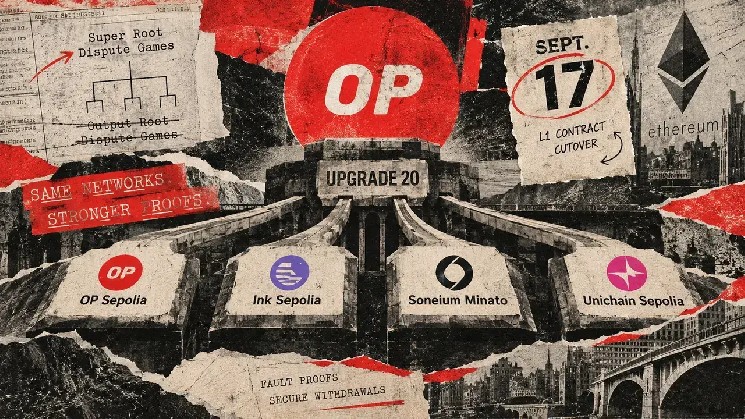
- Optimism governance approved Upgrade 20 on Sept. 16, initiating a transition from Output Root Dispute Games to Super Root Dispute Games across OP Sepolia, Ink Sepolia, Soneium Minato, and Unichain Sepolia testnets.
- The upgrade introduces timestamp-based dispute proofs—replacing L2 block numbers—to establish the common time reference required for future Superchain cross-chain interoperability.
- Mainnet execution is targeted for Sept. 24 contingent on a healthy seven-day testnet soak; ordinary users need no action, but node operators and withdrawal integrators must update infrastructure before the cutover.
Optimism Advances Superchain Architecture With Upgrade 20 Fault-Proof Overhaul
Optimism’s governance cycle concluded voting on September 16, greenlighting Upgrade 20 and setting in motion a foundational shift in how the OP Stack validates state before withdrawals are finalized to Ethereum. The approval places four major testnets—OP Sepolia, Ink Sepolia, Soneium Minato, and Unichain Sepolia—on track for a coordinated contract upgrade on September 17, with OP Mainnet and other participating chains slated for September 24 provided the new dispute system completes a clean seven-day soak period.
From Output Roots to Super Roots: A Structural Pivot
The core of Upgrade 20 replaces the existing Output Root Dispute Game architecture with Super Root Dispute Games. Under the legacy model, a challenger anchors a claim to a specific L2 block number. Super Root games instead use a timestamp as the common reference point, creating the temporal alignment that a future multi-chain dispute system will require. Optimism has characterized the upgrade as a prerequisite for Superchain interoperability because Super Roots can eventually represent multiple chains at the same timestamp.
Critically, Upgrade 20 does not yet activate cross-chain interoperability. Each chain’s dispute infrastructure remains separate, and each new game still contains the Output Root of a single chain. By migrating the dispute-system architecture now, Optimism aims to avoid modifying that security layer again when cross-chain interoperability moves to production.
Bundled Contract Improvements and Operational Safeguards
The release also packages changes to Optimism’s contracts manager and SystemConfig, including safeguards around upgrade sequencing and cleanup of legacy configuration functions. These additions address issues identified during Upgrade 19, reinforcing the reliability of the upgrade pipeline itself.
Infrastructure Migration: What Operators and Developers Must Do
The transition imposes concrete requirements on chain operators and integration developers. Permissioned chains will move to dispute game type 5, while permissionless fault-proof deployments will use game type 9. Before the L1 contract cutover, operators must ensure op-challenger and op-dispute-mon support Super Roots, while op-proposer must switch to the new RPC and game type when upgraded contracts are executed. Existing Output Root configurations must remain available long enough for in-flight games to conclude.
Bridge and withdrawal integrations that inspect dispute games directly can no longer assume a game’s root claim is a single-chain Output Root. Applications must recognize the new game types and retrieve the appropriate chain-specific root from the Super Root structure. Developers using viem/op-stack for withdrawal proving need version 2.51.0 or later and must pass the initiating transaction’s L2 timestamp through the proving flow.
For end users, the migration is seamless: previously submitted withdrawal proofs remain valid, and the OptimismPortal contract continues to accept both dispute-game formats. OP nodes that simply follow the chain do not require a new activation configuration, as the transition does not entail an L2 hardfork.
Why This Matters: Laying the Groundwork for a Multi-Chain Future
Upgrade 20 represents a deliberate architectural decoupling: Optimism is modernizing the dispute layer today to prevent a second disruptive migration when Superchain interoperability launches. The shift to timestamp-based proofs is the linchpin—without a shared time reference, coordinating disputes across multiple OP Stack chains would be impractical. By executing this change now, while each chain’s dispute game remains single-chain, the collective reduces the surface area of risk for the eventual multi-chain activation.
The seven-day testnet soak serves as a critical stress test for the new game types, challenger tooling, and proposer workflows. A clean run would validate that the Super Root architecture can sustain mainnet-grade security and liveness, clearing the path for the September 24 mainnet cutover. The broader ecosystem—including rollup operators, bridge providers, and wallet integrators—will be watching the testnet period closely, as any regression in fault-proof liveness or withdrawal finality could delay the mainnet deployment and, by extension, the timeline for Superchain interoperability.
Frequently Asked Questions
- Do ordinary users or token holders need to take any action for Upgrade 20?
- No. Previously submitted withdrawal proofs remain valid, and the OptimismPortal continues to accept both the legacy Output Root and new Super Root dispute-game formats. No user-side steps are required.
- What is the difference between game type 5 and game type 9 in the new system?
- Permissioned chains (those with allowlisted challengers) move to game type 5, while permissionless fault-proof deployments use game type 9. Both operate under the Super Root timestamp-based architecture.
- When will Superchain cross-chain interoperability actually go live?
- Interoperability remains a later step. Upgrade 20 only prepares the dispute infrastructure; each chain’s game still contains a single chain’s Output Root. The timeline for activating cross-chain dispute games has not been announced and will depend on the stability of this migration and subsequent governance decisions.