Tag: Event contracts

  • U.S. Regulator Warns of Cheating Risks in ‘Mention Markets’ on Prediction Platforms

    U.S. Regulator Warns of Cheating Risks in ‘Mention Markets’ on Prediction Platforms

    Key Highlights

    • The CFTC issued a staff advisory warning that “mention markets” — betting on what a specific individual might say or do — are “presumptively readily susceptible to manipulation.”
    • The regulator distinguishes these markets from standard event contracts because outcomes depend on “the discrete conduct of a named person” rather than independently generated, externally verifiable events.
    • Prediction platform operators including Kalshi and Polymarket are reminded they may only list derivative contracts that are not readily susceptible to manipulation.

    CFTC Targets ‘Mention Markets’ in New Supervisory Advisory

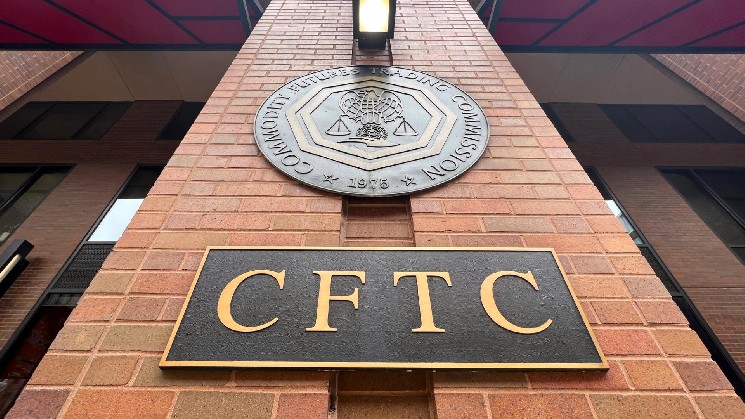
    The Commodity Futures Trading Commission has drawn a sharp regulatory line around a growing category of prediction-market contracts, issuing a staff advisory on Tuesday that labels wagers on an individual’s future statements or actions as “presumptively readily susceptible to manipulation.” The guidance, released by the agency’s Division of Market Oversight, signals a potential narrowing of the event-contract universe that can clear the CFTC’s supervisory hurdles, directly affecting operators such as Kalshi and Polymarket.

    How ‘Mention Markets’ Differ From Standard Event Contracts

    Unlike traditional event contracts that settle on “independently generated, externally verifiable outcomes that are outside the control of any single person,” the CFTC staff advisory explains that mention markets pivot on “the discrete conduct of a named person, and that conduct may be neither independently generated nor externally verifiable.” Because the outcome hinges on one person’s behavior — or the actions of those in their orbit — the agency warns that the individual or people around them could shift the result based on their own knowledge of the betting activity.

    Regulatory Reminder: Only Non-Manipulable Contracts Permitted

    The advisory serves as a formal reminder to prediction-platform operators that they are “only allowed to trade derivative contracts that are not readily susceptible to manipulation.” By classifying mention markets as presumptively problematic, the CFTC is effectively placing the burden on exchanges to demonstrate why any contract tied to a specific person’s conduct should be permitted, or to delist such markets altogether. The move underscores the agency’s focus on market integrity as prediction platforms expand their offerings beyond traditional economic and political indicators.

    Why This Matters

    The CFTC’s advisory arrives as prediction markets gain mainstream traction and attract significant volume during major news cycles. By targeting contracts tied to individual conduct, the regulator is addressing a structural vulnerability: markets where a single actor — or their associates — can influence the outcome create clear incentives for insider trading and market manipulation. For platforms like Kalshi and Polymarket, the guidance implies a compliance review of existing “mention market” listings and stricter vetting for future contracts. The decision also sets a precedent for how U.S. regulators may treat novel event-contract categories as the sector evolves, balancing innovation with the statutory mandate to prevent manipulation and protect market participants.

    Frequently Asked Questions

    What are “mention markets” according to the CFTC?
    Mention markets are wagers on what a specific, named individual might say or do — for example, whether a public figure will utter a certain phrase or take a particular action. The CFTC considers these distinct from standard event contracts because the outcome depends on the discrete conduct of one person.
    Why does the CFTC consider mention markets prone to manipulation?
    The advisory states that because the outcome pivots on “the discrete conduct of a named person,” that person or people around them could influence the result based on their own knowledge of the betting, making the market “presumptively readily susceptible to manipulation.”
    What must prediction platforms like Kalshi and Polymarket do in response?
    Operators are reminded they may only list derivative contracts that are not readily susceptible to manipulation. They will likely need to review existing mention-market contracts for compliance and apply stricter criteria before launching similar markets in the future.

  • Robinhood Crypto Trading Volume Jumps 61% in August

    Robinhood Crypto Trading Volume Jumps 61% in August

    Robinhood Crypto Volume Surges 61% in August, but Prediction Markets Steal the Show

    Robinhood Markets reported a sharp rebound in cryptocurrency trading activity during August, though the standout growth story remains its rapidly expanding prediction market business.

    Crypto Trading Rebounds From July Lows

    Notional crypto trading volume—the total dollar value of assets bought and sold on the platform—jumped 61% month over month to $17.5 billion in August, according to operating data released Thursday. The increase follows a sluggish July, when volume sat at $10.9 billion.

    Despite the monthly gain, August volume remained 38% below the $28.1 billion recorded in the same month last year, highlighting the persistent year-over-year decline in retail crypto engagement.

    Platform Breakdown: App vs. Bitstamp

    • Robinhood App: $7.4 billion in volume, up 72% from July but down 46% year over year.
    • Bitstamp: $10.1 billion in volume, up 53% month over month. Robinhood acquired the exchange in 2025.

    Combined, the two platforms averaged $565 million per day in crypto trading volume during the month.

    Broader Platform Metrics Show Strength

    Crypto represents a small slice of Robinhood’s overall balance sheet. Key platform-wide figures for August include:

    • Total platform assets: $384 billion, up 26% year over year.
    • Funded customers: 28.6 million (users with at least one transaction in the trailing 45 days).
    • Margin loans: $21.5 billion, up 72% from a year ago.

    Event Contracts Emerge as Breakout Business

    The most striking growth metric isn’t crypto at all. Event contracts—Robinhood’s prediction market bets on outcomes like Federal Reserve rate decisions or sports results—traded 4.7 billion times in August.

    While that represents a 23% decline from July, it marks a roughly 15-fold increase from the 300 million contracts traded in August 2025. Each contract functions as a binary wager: buy a “yes” for a few cents, and it pays $1 if correct, zero if wrong.

    That explosive growth has turned prediction markets into Robinhood’s fastest-growing revenue line. In the company’s record quarter reported in July, event contract revenue surged more than tenfold year over year to $156 million, overtaking crypto as a source of transaction income.

    Infrastructure and Partnerships

    Robinhood operates these products through partner exchanges Kalshi and ForecastEx, as well as its own joint venture Rothera. As of the July earnings report, Rothera had processed more than 3.5 billion contracts since its June launch.

    Regulatory Scrutiny Intensifies on Capitol Hill

    The rapid rise of prediction markets has drawn legislative attention. Since January, lawmakers have introduced more than 10 bills targeting the sector, including the PREDICT Act, which would prohibit members of Congress, the president, and other senior officials from trading contracts tied to political events.

    Critics argue that placing sports and political wagers alongside retirement accounts blurs the line between investing and gambling—a tension regulators are still working to resolve.

    Robinhood Chain Gains Traction on Ethereum Layer 2

    The company’s blockchain bet is also accelerating. Robinhood Chain, an Ethereum Layer 2 network designed to process transactions faster and cheaper before settling to the mainnet, logged $1.6 billion in daily trading volume on decentralized exchanges as of September 1—a 61% increase in just four days.

    Market Reaction and Upcoming Catalysts

    Despite the strong operating data, Robinhood shares (HOOD) slipped 0.83% on Thursday. Analysts at Mizuho and StoneX raised their price targets this week, citing the company’s broader growth trajectory.

    Robinhood’s next quarterly earnings report is expected November 4.

  • Alpaca Opens Brokerage Infrastructure to Kalshi Event Contracts

    Alpaca Opens Brokerage Infrastructure to Kalshi Event Contracts

    Kalshi Partners With Alpaca to Expand Prediction Markets Beyond the US

    Kalshi is partnering with brokerage infrastructure provider Alpaca to expand access to its event contracts outside the United States.

    The agreement comes as financial infrastructure firms increasingly add Kalshi contracts to their platforms. Finance Magnates reported that Alpaca recently registered as a futures commission merchant (FCM) with the Commodity Futures Trading Commission, while Apex launched an API enabling brokers and fintech companies to offer Kalshi contracts without building their own FCM infrastructure or direct exchange connectivity.

    Tony Lee, Alpaca’s chief brokerage officer. Source: LinkedIn

    Alpaca Customers to Gain Access to Kalshi Contracts

    Under the agreement, financial institutions using Alpaca’s technology will be able to offer Kalshi contracts through their existing brokerage infrastructure. Availability will remain subject to regulatory approval in each market.

    Tony Lee, Alpaca’s chief brokerage officer, said customer demand was behind the company’s move into prediction markets.

    “Our mission is really to open up financial services to as many people around the world as possible,” Lee said. “You really have to go where the customer demand is.”

    Alpaca works with more than 300 financial institutions and reaches around 14 million brokerage accounts globally. Kalshi said the network could help support its expansion into additional markets.

    Alpaca reaches 14 million brokerage accounts across more than 300 financial institutions worldwide, giving Kalshi a potential route for international expansion.

    Alpaca API Supports Kalshi’s International Expansion

    Kalshi Vice President of Business Development Max Crowley said Alpaca’s reputation and technology were important to the partnership.

    “They’re a trusted brand, they’re technology forward,” Kalshi Vice President of Business Development Max Crowley said. “This technical partnership enables that.”

    Kalshi has also expanded through other financial firms. In June, the company partnered with Canadian financial firm Wealthsimple to offer its markets in Canada.

    Alpaca’s API has about 83,000 monthly users and enables developers to build trading applications. Its infrastructure could also support automated trading activity in prediction markets.

  • Hyperliquid Gets Its First HIP-4 Outcome DEX With OUT

    Hyperliquid Gets Its First HIP-4 Outcome DEX With OUT

    Hyperliquid has recorded its first reported builder-deployed outcome exchange after OUT completed deployment through the network’s permissionless market framework.

    Hyperliquid’s block explorer shows a successful on-chain transaction registering the Outcome DEX under the name OUT through the HIP-4 deployment framework. The transaction confirms the deployment, but does not establish whether OUT has opened markets for live trading.

    No separate announcement or verifiable website detailing OUT’s markets, liquidity, or trading activity was available at the time of writing.

    How Hyperliquid’s HIP-4 framework works

    According to Hyperliquid’s developer documentation, HIP-4 allows approved deployers to create outcome markets without seeking validator approval for each individual contract. Every market must still use a template previously approved by the validator set.

    Templates define a contract’s basic structure, possible results, and settlement process. After validators approve a template, deployers can use it to create separate markets that meet the framework’s requirements.

    A YES/NO template gives traders two possible outcomes. Multi-result templates can cover questions with several possible answers, although Hyperliquid’s main HIP-4 documentation says multi-outcome support was not included in the initial mainnet release and would be introduced in stages.

    Hyperliquid’s deployer page, updated on Aug. 13, lists functions for activating a DEX, selecting templates, setting a deployer fee scale, and creating markets. The documentation currently labels HIP-4 deployer actions as testnet-only. As a result, OUT’s deployment should not yet be described as a confirmed permissionless mainnet launch without additional evidence.

    As crypto.news previously reported in July, Hyperliquid’s permissionless deployment plan was scheduled to begin on testnet before moving to mainnet. The proposal required market operators to stake 500,000 $HYPE and allowed validators to slash deployers for incorrect or delayed settlement, according to the July report.

    Hyperliquid’s framework also requires separate stakes for HIP-3 and HIP-4 operations because a single $HYPE allocation cannot support both deployments simultaneously. At current prices, that requirement could create a substantial entry cost for independent teams seeking to operate both perpetual and outcome exchanges.

    HIP-4 outcome contracts avoid leverage and liquidations

    Hyperliquid introduced HIP-4 on testnet in February and activated its first outcome contracts on mainnet on May 2. A July explainer described the products as fully collateralized contracts that settle within a fixed range at expiration.

    Unlike perpetual futures, an outcome position does not use borrowed funds or recurring payments between long and short traders. HIP-4 has no funding rate, while fully funded positions eliminate the liquidation process used to close leveraged trades when collateral falls below maintenance requirements.

    In a binary market, a YES token settles at 1 if the stated event occurs and at 0 if it does not. The NO side receives the opposite result. A trader who buys YES at 0.60 can earn 0.40 per contract if the event occurs, while the purchase price represents the maximum possible loss.

    Hyperliquid’s documentation presents HIP-4 as a general-purpose tool rather than a system limited to conventional prediction questions. Its fixed-range structure can also support bounded, options-style products with known maximum payouts and losses when positions open.

    Trading takes place through HyperCore, Hyperliquid’s on-chain order-book engine. HyperCore also powers the network’s spot, perpetual, and HIP-3 builder-deployed markets, allowing HIP-4 products to use the same matching infrastructure and order types.

    Protocol documentation states that fees are not charged when an outcome position opens. Charges may apply when a trader closes, burns, or settles a position, although Hyperliquid waived outcome-market fees during the initial testing period.

    Bitcoin and CPI contracts tested HIP-4 settlement

    Hyperliquid’s first mainnet HIP-4 product was a recurring Bitcoin binary contract. The market settled each day at 06:00 UTC against the $BTC mark price published through HyperCore, providing an objective data point for determining whether YES or NO tokens received the payout.

    The network later expanded beyond crypto prices. In May, a U.S. CPI contract allowed traders to take positions on the annual inflation rate reported by the Bureau of Labor Statistics.

    The CPI market offered three possible results: below 4.3%, exactly 4.3%, or above 4.3%. It used USDC as collateral and was scheduled to settle using the official BLS release. Early activity stood at approximately $3,000 in volume and $5,000 in open interest.

    According to Galaxy Research, validator-settled markets later covered Federal Reserve decisions and sporting events. The research firm said validators could publish approved off-chain results through regular network operations, reducing reliance on a separate oracle provider.

    Galaxy reported that HIP-4 recorded $2.38 million in 24-hour Bitcoin outcome volume by its 25th day. The figure represented about 20% of the combined $BTC prediction-market volume measured between Hyperliquid and Polymarket during that period, according to the firm’s June report.

    Activity later declined after an initial increase linked to World Cup markets. Blockworks data cited in a July market report placed HIP-4 open interest at about $182,000 and cumulative notional activity at approximately $881,000 at the time. Those figures covered a later snapshot and used a different measurement period.

    U.S. access depends on event-contract regulation

    For American traders, OUT does not have the same regulatory status as Kalshi, which offers event contracts through a Commodity Futures Trading Commission-registered designated contract market. Hyperliquid has not announced that OUT is registered with the CFTC or available to U.S. users.

    Hyperliquid Policy Center and Multicoin Capital addressed the regulatory divide in a July prediction-market rules filing. The groups asked the CFTC to publish clear federal standards for reviewing event contracts and to explain publicly why specific contracts are approved or rejected.

    Their submission said settlement terms should determine whether a contract falls into restricted categories involving gaming, war, assassination, or unlawful activity. The filing was an industry policy request and did not authorize HIP-4 exchanges to serve U.S. traders.

    State and federal regulators have also disputed whether some sports event contracts qualify as federally regulated derivatives or state-regulated wagers. Kalshi, Crypto.com, and Robinhood have faced state challenges over sports-related products even when the contracts were offered through federally regulated market structures.

    Users in the United States remain unable to access Hyperliquid, according to an August filing cited by Hyperliquid Strategies. The company said it was unaware of a pending CFTC approval process for the network and warned that a route into the regulated U.S. market could not be assured.