Tag: European Central Bank

  • Ripple News: Europe’s Digital Euro Rail Prompts XRP Holders to Calculate $1,000 Potential

    Ripple News: Europe’s Digital Euro Rail Prompts XRP Holders to Calculate $1,000 Potential

    Key Highlights

    • The European Central Bank officially launched the Pontes system on September 21, enabling EU banks to settle transactions using a digital euro and blockchain technology, with a full digital euro pilot targeted for mid-2027.
    • Axology has deployed a private network built on open-source XRP Ledger code that connects to Pontes, allowing tokenized securities and bonds to settle against central bank euros in a single atomic transaction.
    • Crypto analyst Dom Kwok has reiterated his long-standing $1,000 XRP price target with a cryptic "slowly and then all at once" message, though neither Ripple nor the ECB has linked Pontes to any specific token valuation.

    ECB Launches Pontes: Digital Euro Settlement Infrastructure Goes Live

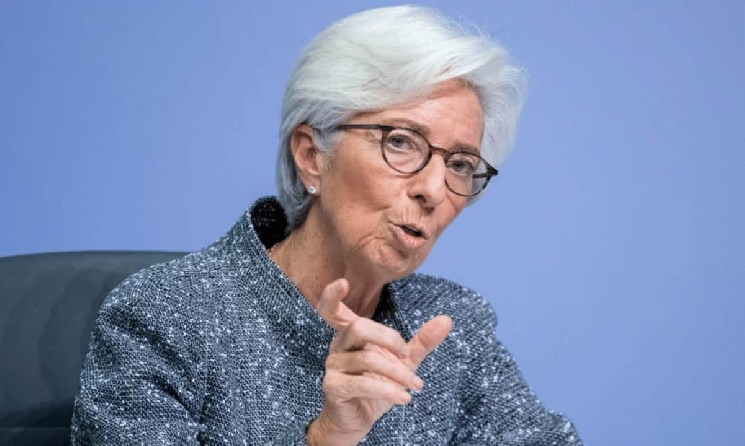
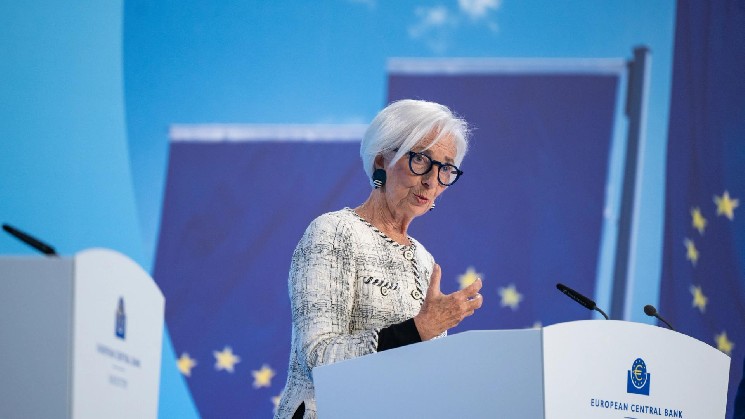
    European Central Bank President Christine Lagarde announced this week that the central bank officially launched Pontes on Monday, September 21, a system that lets banks across the European Union settle transactions with each other using a digital euro and blockchain technology. “It’s the beginning, not the finish,” Lagarde said, adding that a full digital euro pilot is planned to roll out around mid-2027. The launch marks the ECB’s first operational step toward integrating distributed ledger technology into the core of European wholesale payments.

    How Pontes Works: Tokenized Assets Meet Central Bank Money

    In simple terms, Pontes gives European banks a way to trade tokenized assets among themselves using digital euros issued by the central bank, settled through blockchain-style technology instead of older banking systems. It doesn’t replace how banks operate, but it gives them a faster, more direct way to move value between each other. The architecture is designed to support delivery-versus-payment settlement, meaning the asset and the payment move together instead of sequentially, reducing counterparty risk and settlement latency.

    XRP Ledger Technology Enters European Banking Through Axology Partnership

    Here’s the part getting attention in crypto circles. Pontes itself doesn’t run on XRP directly, but at least one platform connected to it does. A company called Axology has built a private network using open-source XRP Ledger code, and it’s being used to tokenize things like securities and bonds. Those tokenized assets can then be settled against real central bank euros through Pontes, a setup where the asset and the payment move together instead of separately. On top of that, existing Ripple banking partners like Société Générale and DZ Bank are also active in this space, giving XRP Ledger technology multiple points of contact with Europe’s new digital banking system, even if XRP the token isn’t the official settlement currency itself.

    Scale of European Payments Market Underscores Potential Impact

    To understand why this matters, look at the scale of money involved. Total non-cash payments across Europe, combining business and everyday transactions, are estimated at roughly 233.8 trillion euros every single year. Even capturing a tiny slice of that volume through XRP Ledger-based technology would represent a massive amount of real activity. The Pontes launch effectively creates a regulated on-ramp for tokenized asset settlement using central bank money, a capability that has been theorized for years but rarely implemented at this scale.

    Why This Matters

    The Pontes launch represents a significant milestone in the convergence of traditional financial infrastructure and distributed ledger technology. By providing a central bank-backed settlement layer for tokenized assets, the ECB is establishing a precedent that other major central banks are closely watching. The involvement of Axology’s XRP Ledger-derived network demonstrates how permissioned, enterprise-grade implementations of public blockchain code can interoperate with sovereign digital currency systems. For market participants, the key development is not token price speculation but the validation of blockchain-based settlement as a legitimate component of the European financial plumbing. The mid-2027 timeline for a full digital euro pilot suggests a deliberate, phased approach that prioritizes stability and regulatory compliance over speed.

    Frequently Asked Questions

    Does the ECB’s Pontes system use XRP as a settlement currency?
    No. Pontes settles transactions in digital euros issued by the European Central Bank. XRP is not the settlement asset. However, Axology’s private network—built on open-source XRP Ledger code—connects to Pontes to tokenize assets that then settle against those central bank euros.
    What is the significance of Société Générale and DZ Bank’s involvement?
    Both banks are existing Ripple partners and are active in the European tokenized asset space. Their participation signals that major European financial institutions are exploring how XRP Ledger technology can integrate with the new ECB digital euro infrastructure, even without using the XRP token itself.
    Is Dom Kwok’s $1,000 XRP price target connected to the Pontes launch?
    Kwok’s $1,000 figure is his own personal prediction, not a confirmed outcome. Neither Ripple nor the ECB has connected Pontes directly to any specific XRP price target. Kwok has held this position publicly since at least late 2025 and recently posted a cryptic follow-up message reading “slowly and then all at once.”

  • ECB Plans to Buy Tokenized Bonds with Its Own Funds

    ECB Plans to Buy Tokenized Bonds with Its Own Funds

    Key Highlights

    • The European Central Bank (ECB) plans to allocate a small portion of its reserves to tokenized securities, establishing direct exposure to blockchain-based financial markets.
    • Transactions will settle via Pontes, a new Eurosystem platform that connects the ECB’s payment infrastructure to blockchain networks using central bank money.
    • ECB Executive Board member Piero Cipollone emphasized that Pontes brings “the stability and trust of central bank money to the European tokenized finance ecosystem.”

    ECB Takes Strategic Step Into Tokenized Securities

    The European Central Bank has announced plans to invest a modest share of its foreign reserves in tokenized securities, marking a significant institutional endorsement of blockchain-based financial infrastructure. The initiative positions the ECB as an active participant rather than a mere observer in the evolving digital asset landscape, allowing it to gain firsthand operational experience with the technology’s potential for wholesale financial markets.

    Pontes Platform Bridges Central Bank Money and Blockchain Markets

    Central to the strategy is Pontes, a newly launched Eurosystem platform designed to settle wholesale transactions in central bank money. The platform functions as a bridge between the ECB’s existing payment system and blockchain-based financial markets, enabling the secure transfer of tokenized assets against central bank liabilities. This architecture addresses a critical gap in the current digital asset ecosystem: the ability to settle tokenized securities with the same finality and risk profile as traditional central bank money settlements.

    “Pontes brings the stability and trust of central bank money to the European tokenized finance ecosystem,” said Piero Cipollone, member of the ECB’s executive board. “It will give an important advantage to help it scale.”

    Initial Investment Focus on Euro-Denominated Government Securities

    The ECB’s initial foray will concentrate exclusively on euro-denominated securities issued by euro-area governments, regional authorities, agencies, and European supranational institutions. This conservative scope reflects the central bank’s mandate to maintain financial stability while exploring innovation. By limiting purchases to high-quality public sector issuers, the ECB minimizes credit risk while testing the end-to-end workflow of tokenized bond acquisition, settlement, and ongoing portfolio management.

    Testing Technology Across Full Investment Lifecycle

    Beyond the initial purchase, the ECB intends to evaluate the technology across the complete investment lifecycle. This includes assessing how tokenized bonds perform in secondary market trading, corporate actions processing, coupon payments, and redemption events—all settled through the Pontes infrastructure. The exercise serves as a practical stress test for the Eurosystem’s readiness to integrate distributed ledger technology into core central banking operations without compromising monetary policy implementation or financial stability.

    Why This Matters

    The ECB’s move signals a broader strategic shift among major central banks toward operational engagement with tokenization. While many monetary authorities have conducted proofs-of-concept or pilot projects, the decision to commit actual reserves—however small—represents a tangible step toward mainstreaming blockchain-based settlement for wholesale finance. The Pontes platform specifically addresses the “settlement finality” challenge that has hindered institutional adoption of tokenized assets, offering a model where central bank money anchors the transaction. As the European Union advances its Markets in Crypto-Assets (MiCA) regulation and explores a digital euro, the ECB’s hands-on experience with tokenized government securities will likely inform future policy frameworks for digital asset markets and central bank digital currency interoperability.

    Frequently Asked Questions

    What is the Pontes platform?

    Pontes is a new Eurosystem platform that enables wholesale transactions in tokenized securities to settle in central bank money. It connects the ECB’s traditional payment infrastructure with blockchain-based financial markets, providing settlement finality equivalent to existing central bank systems.

    What types of tokenized securities will the ECB purchase?

    The ECB’s initial investments will focus exclusively on euro-denominated securities issued by euro-area governments, regional authorities, agencies, and European supranational institutions.

    Why is the ECB investing in tokenized securities now?

    The ECB aims to test the technology as an active investor—from purchase through settlement to portfolio management—gaining operational insight into blockchain-based markets while supporting the scaling of the European tokenized finance ecosystem with the stability of central bank money.

  • Report: ECB President Personally Blocked Binance’s EU License

    Report: ECB President Personally Blocked Binance’s EU License

    Key Highlights

    • ECB President Christine Lagarde personally lobbied Greek Prime Minister Kyriakos Mitsotakis to block Binance’s MiCA license application, overriding Greece’s own finance minister and independent regulator.
    • Binance’s application had cleared all technical reviews and the mandatory 40-day assessment period without objections before political intervention halted the process in mid-June.
    • Binance has withdrawn its Greek application and is now pursuing a MiCA license through France’s AMF after rejections from Ireland and Latvia, while competitors Coinbase and Kraken have already secured EU authorizations.

    ECB President’s Unprecedented Intervention in Binance Licensing

    European Central Bank President Christine Lagarde directly intervened to derail Binance’s bid for a Markets in Crypto-Assets (MiCA) license through Greece, according to a Wall Street Journal report citing people familiar with the discussions. The extraordinary move saw Lagarde personally press Greek Prime Minister Kyriakos Mitsotakis to block the application during a May meeting, despite the Hellenic Capital Market Commission (HCMC) having all but finalized its approval.

    A Regulatory Process Overridden at the Highest Level

    Binance had submitted its application to Greece’s HCMC for a license that, once granted by any single EU member state, would permit operation across the entire 27-nation bloc. By early June, the exchange had successfully navigated the technical review. The mandatory 40-day assessment window closed without objections, the HCMC’s anti-money laundering officer had issued a favorable sign-off, and notifications to other member states were reportedly being prepared. Then, between June 7 and June 15, the trajectory shifted abruptly. An HCMC official subsequently informed Binance that Lagarde opposed the license, and the Journal reported she had signaled this position directly to Mitsotakis, a stance that superseded the views of Greece’s own finance minister. The report suggested the Greek government’s willingness to comply may have been influenced by domestic election timing as much as the merits of Binance’s case.

    Stated Concerns: US Settlement and Digital Euro Competition

    Lagarde’s reported reasoning centered on two pillars: Binance’s 2023 guilty plea in the United States to money laundering and sanctions violations, and a strategic concern that granting the exchange a European gateway would accelerate adoption of dollar-denominated stablecoins at a time when the ECB is advancing its own digital euro project. The intervention has drawn sharp criticism from legal observers. One legal expert described the episode as “political interference” in a licensing decision that legally rests with an independent national regulator, emphasizing that the ECB holds no formal authority over MiCA approvals whatsoever.

    Binance Retreats to France After Multiple EU Rejections

    Reuters first surfaced the risk of a Greek rejection in mid-June, prompting Binance to push back forcefully. The exchange insisted the HCMC’s review had found its application compliant and highlighted a compliance team that has grown to roughly 1,500 people since its US settlement. That resistance proved insufficient. Binance later confirmed it had decided to halt the Greek application process and would seek authorization from other member states. According to contemporaneous reports, regulators in Ireland and Latvia had already declined to engage, citing the exchange’s past penalties and complex corporate structure. With Coinbase having selected Luxembourg as its MiCA hub and Kraken already holding EU approval, Binance is now concentrating its efforts on France, where it holds a smaller registration and is in active discussions with the Autorité des Marchés Financiers (AMF) for a full MiCA license covering all member states.

    Why This Matters

    The episode raises fundamental questions about the independence of national competent authorities under the MiCA framework and the extent to which political leadership—and supranational figures without formal statutory power—can influence licensing outcomes. For the crypto industry, it signals that past enforcement actions, particularly the US Department of Justice settlement, continue to cast a long shadow over European market access even after technical compliance requirements are met. For the ECB, the intervention underscores the tension between fostering a regulated digital asset ecosystem and protecting the monetary sovereignty objectives tied to the digital euro. The coming months will test whether France’s AMF applies a strictly legal standard or whether similar political considerations shape its decision on Binance’s remaining pathway to a pan-European license.

    Frequently Asked Questions

    Did Christine Lagarde have legal authority to block Binance’s MiCA license in Greece?

    No. The ECB has no formal authority over MiCA licensing decisions, which legally belong to independent national competent authorities—in this case, Greece’s Hellenic Capital Market Commission. Lagarde’s intervention was political, not statutory.

    Why did Binance withdraw its Greek application after it had technically passed review?

    After the HCMC had completed its technical assessment and the 40-day objection period expired without issue, an HCMC official informed Binance that Lagarde opposed the license. Facing explicit political opposition at the prime ministerial level, Binance chose to withdraw and pursue authorization elsewhere.

    Where does Binance stand now for a MiCA license in Europe?

    Binance has been rejected or turned away by Greece, Ireland, and Latvia. The exchange is now focusing on France, where it holds a limited registration and is negotiating with the AMF for a full MiCA license that would cover all 27 EU member states.

  • Binance’s MiCA Application Stalls as ECB President Pushes Digital Euro ‘fit for future’

    Binance’s MiCA Application Stalls as ECB President Pushes Digital Euro ‘fit for future’

    Key Highlights

    • ECB President Christine Lagarde personally intervened to halt Binance’s MiCA license approval in Greece, according to a Wall Street Journal report.
    • The intervention was reportedly motivated by concerns that Binance’s stablecoin operations could undermine the ECB’s Digital Euro project, slated for a 2027 pilot and 2029 launch.
    • Binance withdrew its Greek application in mid-June 2026 and plans to reapply in another jurisdiction, likely France, though the timeline remains uncertain pending ESMA’s assumption of sole regulatory authority in 2027.

    ECB Intervention Halts Binance MiCA License Process in Greece

    Binance’s bid to secure a Markets in Crypto-Assets (MiCA) license within the European Union has hit a significant political roadblock. According to a report by The Wall Street Journal, European Central Bank President Christine Lagarde directly intervened to stop the approval process underway with Greece’s regulator, the Hellenic Capital Market Commission (HCMC). The report alleges that Lagarde ordered Greek authorities to pause Binance’s application, citing a strategic imperative to protect the ECB’s flagship Digital Euro project. The central bank digital currency (CBDC) is currently scheduled for a test pilot beginning in mid-2027, with a full launch targeted for 2029.

    Stablecoin Competition and the Digital Euro Vision

    The WSJ report indicates that Lagarde’s opposition stems from a fear that crypto exchanges like Binance are accelerating the adoption of USD-denominated stablecoins, a dynamic the ECB believes could erode the future relevance and monetary sovereignty of the Digital Euro. The source claims Lagarde explicitly stated she “wants the Digital Euro to be fit for the future” and raised specific concerns regarding the proliferation of dollar-backed stablecoins. This suggests the regulatory friction is less about Binance’s specific compliance posture and more about a broader policy conflict between private sector stablecoin dominance and public sector CBDC rollout.

    Regulatory Timeline and the ESMA Factor

    The political pressure forced Binance to withdraw its initial HCMC application in mid-June 2026, shortly after MiCA’s transitional period concluded on July 1, 2026. While Binance’s 2023 guilty plea in the United States for money laundering and sanctions violations was noted as a contributing factor in the report, the primary driver for the blockade appears to be the ECB’s strategic timeline. Currently, MiCA licensing is managed by national competent authorities with coordination from the European Securities and Markets Authority (ESMA). However, from 2027 onward, ESMA will assume sole direct supervisory authority over crypto-asset service providers across the bloc. The WSJ report suggests there was a concerted push to delay Binance’s approval until this centralized ESMA oversight regime takes full effect.

    Industry Reaction: Concerns Over Regulatory Fairness

    The alleged intervention has drawn sharp criticism from Binance and independent observers. A Binance spokesperson condemned the reported actions, arguing that MiCA approval should not be “A process where applicants can be privately undermined through informal channels.” The exchange maintains it met all key regulatory requirements and has stated its intention to reapply for a license in another European jurisdiction, with France widely speculated as the next target. However, whether a new application can be processed and approved before ESMA assumes sole authority in 2027 remains an open question.

    Market analysts have echoed the exchange’s concerns, questioning whether the EU can apply its landmark crypto framework consistently and fairly if political directives from the central bank can override national regulatory assessments. Separately, Binance founder Changpeng Zhao (CZ) publicly questioned why traditional banks appear apprehensive toward crypto and blockchain technology, framing the episode as a defensive move by incumbent financial infrastructure.

    Why This Matters

    The standoff between the ECB and Binance highlights a fundamental tension at the heart of European digital asset regulation: the competition between private stablecoins and sovereign central bank digital currencies. MiCA was designed to create a harmonized rulebook providing legal certainty for crypto businesses operating in the EU. If the framework’s implementation can be suspended by executive political intervention to favor a pending CBDC, it undermines the credibility of the regulatory regime and creates significant precedent risk for other global firms seeking EU authorization. The transition to ESMA as the sole supervisor in 2027 adds a layer of uncertainty; firms must now calculate whether applying under the current national regime is viable, or if they should wait for the centralized supervisor, potentially facing a de facto moratorium driven by CBDC protectionism.

    Frequently Asked Questions

    Did Binance fail to meet MiCA’s technical requirements for the license?

    According to the Wall Street Journal report, the license hiccup was not because Binance failed to meet key MiCA requirements. The withdrawal was forced by political intervention from the ECB President, who reportedly ordered Greece to stop the approval process to protect the Digital Euro project from stablecoin competition.

    When will ESMA become the sole crypto regulator in the EU?

    ESMA is scheduled to assume sole direct supervisory authority over crypto-asset service providers across the European Union starting in 2027. Until then, licensing and enforcement remain the responsibility of national competent authorities like Greece’s HCMC, with ESMA acting in an oversight and coordination capacity.

    Where will Binance apply next for a MiCA license?

    Binance has stated it intends to reapply for a MiCA license in another European country. Market speculation and the WSJ report suggest France is the most likely jurisdiction for the next application, though the company has not officially confirmed the specific venue or a definitive timeline for submission.

  • ECB President Christine Lagarde Intervened to Block Binance’s EU MiCA License, WSJ Reports

    ECB President Christine Lagarde Intervened to Block Binance’s EU MiCA License, WSJ Reports

    Key Highlights

    • Binance confirms it remains committed to securing a MiCA license in Europe despite withdrawing its Greek application in mid-June after the Hellenic Capital Market Commission (HCMC) declined to approve it.
    • Binance’s Head of Europe, Gillian Lynch, states the exchange met all HCMC requirements and had a “complete application” with nothing material outstanding.
    • The Wall Street Journal reports ESMA privately advised national regulators to reject Binance’s MiCA applications due to past compliance issues, while the ECB clarifies it has no institutional role in authorizing Crypto-Asset Service Providers.

    Binance Reaffirms European MiCA Ambitions After Greek Setback

    Binance has signaled its determination to remain a regulated participant in the European cryptocurrency market despite a significant regulatory rebuff in Greece. A company spokesperson confirmed that the exchange is actively working toward becoming MiCA-authorised and view this as an important step in providing users with a consistent, regulated, and trusted service across the European market. The statement comes weeks after Binance withdrew its application with the Hellenic Capital Market Commission (HCMC) and began winding down local operations after officials decided at the last minute not to approve the exchange’s Markets in Crypto-Assets (MiCA) license request. The company had previously vowed it would not exit the European market entirely.

    Exchange Contends Application Was Complete

    In an interview with CoinDesk in early July, Gillian Lynch, Binance’s Head of Europe, contested the regulatory outcome, asserting that the exchange had satisfied every condition set by the Greek regulator. We were deemed to have a complete application, Lynch said. Nothing was missing, nothing material was outstanding. The assertion raises questions about the specific grounds for the HCMC’s decision to deny authorization, particularly given the exchange’s claim of full procedural compliance. The withdrawal marks a notable stumble in Binance’s broader strategy to secure regulatory footing across the European Union under the new MiCA framework.

    ESMA Guidance and ECB Jurisdiction Clarified

    Adding complexity to the regulatory picture, The Wall Street Journal reported that the European Securities and Markets Authority (ESMA) privately advised national financial regulators to reject Binance’s MiCA applications. The guidance reportedly stems from concerns regarding the exchange’s historical compliance record. Meanwhile, an ECB spokesperson declined to comment on the specific case when contacted by CoinDesk. However, information shared with the outlet clarifies that the European Central Bank holds no institutional role with regards to the authorising of Crypto-Asset Service Providers (CASPs), noting that competence remains strictly with national competent authorities—in this instance, the HCMC.

    Founder’s Legal History Looms Over Licensing Efforts

    The regulatory scrutiny follows the high-profile legal resolution involving Binance founder Changpeng “CZ” Zhao. In 2023, Zhao pleaded guilty in the United States to violating the Bank Secrecy Act (BSA), resulting in a $4.3 billion settlement with U.S. authorities. He subsequently served a four-month prison sentence in California in 2024. In a significant political development, Zhao was pardoned by President Donald Trump in October 2025. This history appears to be a central factor influencing European regulators’ assessment of the exchange’s suitability for a MiCA license.

    Why This Matters

    The standoff in Greece represents a critical test case for how MiCA—the EU’s landmark crypto regulatory regime—will be applied to major global exchanges with checkered compliance histories. While MiCA offers a “passporting” mechanism allowing a license in one member state to serve the entire bloc, the Binance case illustrates that national competent authorities retain significant discretion to block entry based on reputational and historical risk factors. ESMA’s reported intervention suggests a coordinated regulatory posture toward entities with past enforcement actions, potentially setting a precedent for other exchanges seeking EU authorization. For Binance, securing a MiCA license remains essential for maintaining legitimate access to the EU’s 450 million consumers, but the path forward now likely requires a new application in a different jurisdiction or a successful appeal of the Greek decision.

    Frequently Asked Questions

    Why did Binance withdraw its Greek MiCA application?

    Binance withdrew its application in mid-June after the Hellenic Capital Market Commission (HCMC) decided not to approve its MiCA license request. The exchange subsequently began winding down its Greek operations but maintains it intends to pursue authorization elsewhere in Europe.

    Did Binance fail to meet the regulatory requirements in Greece?

    According to Binance’s Head of Europe, Gillian Lynch, the exchange met all of the HCMC’s requirements and was deemed to have a “complete application” with nothing material outstanding. The specific reasons for the HCMC’s denial have not been publicly detailed by the regulator.

    What role did Changpeng Zhao’s legal history play in the decision?

    While not explicitly cited by the HCMC, The Wall Street Journal reported that ESMA advised national regulators to reject Binance’s applications over concerns regarding the exchange’s past compliance issues. Zhao pleaded guilty to violating the U.S. Bank Secrecy Act in 2023, resulting in a $4.3 billion fine and a four-month prison sentence served in 2024, before receiving a presidential pardon in October 2025.

  • Europe Wants To “Mobilize” €10 Trillion Of Savings. Got Bitcoin?

    Europe Wants To “Mobilize” €10 Trillion Of Savings. Got Bitcoin?

    Europe’s Capital Shortfall: The €750–800 Billion Investment Gap

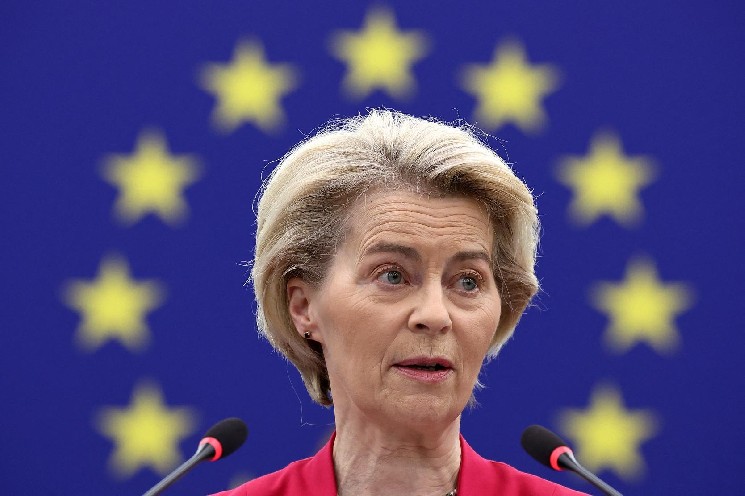
    European Commission President Ursula von der Leyen recently told French business leaders that trillions of euros in household savings held in bank accounts are sitting idle. She argued that Europe needs to put these savings to work for its companies. Her concern reflects a genuine structural issue: European companies struggle to access the capital required for growth, while households keep a disproportionate share of wealth in bank deposits.

    The European Commission’s Savings and Investments Union strategy cites the Draghi report’s estimate that the EU requires an additional €750 billion to €800 billion in annual investment by 2030. Banks remain central to the European economy, yet early-stage technology firms need equity capital and deep markets capable of absorbing risk. Many promising companies still relocate to the United States to scale or are acquired by foreign competitors.

    Household Savings vs. Capital Markets: The European Paradox

    European households save a larger portion of their income than Americans but allocate far less to capital markets. In a November 2024 speech, European Central Bank President Christine Lagarde noted that the household savings rate stands at about 13% in Europe versus 8% in the U.S. She added that Europeans held roughly €11.5 trillion in cash and deposits in 2023, representing one‑third of household financial assets.

    ECB analysis suggests that aligning the European deposit-to-financial-assets ratio with the American benchmark could redirect up to €8 trillion into European markets. Bridging the gap between savers and businesses could theoretically boost household wealth while helping European firms expand.

    Brussels’ Proposal: Savings and Investment Accounts Explained

    The rhetoric around mobilizing savings has sparked fears of deposit seizures. The published policy does not support that claim. The Commission’s September 2025 recommendation on Savings and Investment Accounts asks member states to create simple investment accounts giving retail savers access to shares, bonds, and regulated funds. Key features include:

    • No minimum opening balance
    • Permission to hold multiple accounts
    • Assets can move between providers without triggering a taxable event

    The Commission aims to attract capital through favorable tax treatment — deductions, exemptions, deferrals, or a uniform tax rate — paired with broad provider access. Participation is voluntary. Providers are encouraged to offer diversified investments across asset classes and geographies, including options aligned with European priorities such as digital infrastructure, defense, and green infrastructure. Most crypto assets are excluded, though financial instruments with crypto exposure may qualify under existing rules.

    Why Bank Deposits Aren’t Truly Idle

    Labeling deposits as idle makes sense only from the perspective of the investment Europe desires. A deposit appears inactive because it has not yet become equity in a startup, a bond issued by a European manufacturer, or a fund holding European securities. The household holding it may have entirely different objectives.

    A bank deposit provides liquidity, stability, and optionality. It may cover next month’s rent, fund medical or caretaking needs, or serve as a cushion against unemployment. It also functions as a liability on a bank’s balance sheet, supporting the banking system’s lending and liquidity operations. The return may be low, especially after inflation, but low yield can be the price a saver knowingly pays for immediate access and lower volatility.

    The ECB’s own data helps explain this mindset. Lagarde reported that 45% of European consumers lack confidence that financial advice serves their best interests. European retail investors in mutual funds pay almost 60% more in fees than their American counterparts. A household responding to high fees, opaque risk, and distrust is making a rational choice under imperfect conditions. Better markets could gradually shift behavior, but describing hard‑won savings in negative terms obscures the institutional failures that produced this attitude.

    Bitcoin and the Ownership Question

    Bitcoin cannot solve Europe’s immediate equity‑financing shortage or close the technology gap. However, it is relevant because it provides money that is separate from any state or government. A bitcoin holder controls the keys required to authorize a transaction. The Bitcoin network has no central issuer or account administrator with the power to redirect balances toward an approved industrial objective. Governments can regulate exchanges, tax gains, and prosecute crimes, but the protocol itself offers no administrative lever for reallocating coins because officials believe another use would be more productive.

    This architecture gives technological form to an old idea: savings are deferred consumption created by labor, judgment, and restraint. Their owner may invest, spend, lend, or hold them untouched. Bitcoin allows that decision to remain with the holder when kept in self‑custody, provided the holder is responsible and comfortable with the technology. While bitcoin’s price remains more volatile than many would accept as a sole savings vehicle, volatility and the risk of permanent loss of purchasing power are distinct. Savers need the freedom to decide how much volatility they can tolerate, especially when that volatility comes with a lower risk of inflation and confiscatory policy interventions.

    Competing for Capital: Trust, Property Rights, and Cultural Change

    If we steelman the Savings and Investments Union, its proposals for simplified investment accounts, lower fund fees, consistent rules, and better risk disclosures are easy to support. They would give households the confidence and access needed to engage with markets that have been fragmented and difficult to navigate. If European companies offer attractive returns and Europe protects property rights, household capital will have reasons to invest.

    However, defense of private property rights in Europe has been historically inconsistent. In extreme cases — which nonetheless manifest every few decades — countries have confiscated savings directly from accounts, or even displaced millions of people, seizing their homes and belongings. Europeans’ desire for higher savings buffers is therefore rational. Building trust in markets requires strong financial engineering, but that alone is insufficient. Cultivating a culture of individual liberty and respect for private property would do far more to align European savers’ attitudes with their U.S. counterparts. The European Commission would do well to recognize the need for this cultural transformation, take steps to advance it, and even acknowledge bitcoin as part of the picture.

    Von der Leyen’s phrase captured the urgency of Europe’s capital shortage, but it also exposed the need for a public conversation about why trust in European markets remains relatively low. A strong investment case earns capital by offering terms savers accept. Savings are accumulated choices. Europe may compete for them. The last word should belong to the people who did the work.