
Tag: ESMA

  • Binance’s MiCA Application Stalls as ECB President Pushes Digital Euro ‘fit for future’

    Binance’s MiCA Application Stalls as ECB President Pushes Digital Euro ‘fit for future’

    Key Highlights

    • ECB President Christine Lagarde personally intervened to halt Binance’s MiCA license approval in Greece, according to a Wall Street Journal report.
    • The intervention was reportedly motivated by concerns that Binance’s stablecoin operations could undermine the ECB’s Digital Euro project, slated for a 2027 pilot and 2029 launch.
    • Binance withdrew its Greek application in mid-June 2026 and plans to reapply in another jurisdiction, likely France, though the timeline remains uncertain pending ESMA’s assumption of sole regulatory authority in 2027.

    ECB Intervention Halts Binance MiCA License Process in Greece

    Binance’s bid to secure a Markets in Crypto-Assets (MiCA) license within the European Union has hit a significant political roadblock. According to a report by The Wall Street Journal, European Central Bank President Christine Lagarde directly intervened to stop the approval process underway with Greece’s regulator, the Hellenic Capital Market Commission (HCMC). The report alleges that Lagarde ordered Greek authorities to pause Binance’s application, citing a strategic imperative to protect the ECB’s flagship Digital Euro project. The central bank digital currency (CBDC) is currently scheduled for a test pilot beginning in mid-2027, with a full launch targeted for 2029.

    Stablecoin Competition and the Digital Euro Vision

    The WSJ report indicates that Lagarde’s opposition stems from a fear that crypto exchanges like Binance are accelerating the adoption of USD-denominated stablecoins, a dynamic the ECB believes could erode the future relevance and monetary sovereignty of the Digital Euro. The source claims Lagarde explicitly stated she “wants the Digital Euro to be fit for the future” and raised specific concerns regarding the proliferation of dollar-backed stablecoins. This suggests the regulatory friction is less about Binance’s specific compliance posture and more about a broader policy conflict between private sector stablecoin dominance and public sector CBDC rollout.

    Regulatory Timeline and the ESMA Factor

    The political pressure forced Binance to withdraw its initial HCMC application in mid-June 2026, shortly after MiCA’s transitional period concluded on July 1, 2026. While Binance’s 2023 guilty plea in the United States for money laundering and sanctions violations was noted as a contributing factor in the report, the primary driver for the blockade appears to be the ECB’s strategic timeline. Currently, MiCA licensing is managed by national competent authorities with coordination from the European Securities and Markets Authority (ESMA). However, from 2027 onward, ESMA will assume sole direct supervisory authority over crypto-asset service providers across the bloc. The WSJ report suggests there was a concerted push to delay Binance’s approval until this centralized ESMA oversight regime takes full effect.

    Industry Reaction: Concerns Over Regulatory Fairness

    The alleged intervention has drawn sharp criticism from Binance and independent observers. A Binance spokesperson condemned the reported actions, arguing that MiCA approval should not be “A process where applicants can be privately undermined through informal channels.” The exchange maintains it met all key regulatory requirements and has stated its intention to reapply for a license in another European jurisdiction, with France widely speculated as the next target. However, whether a new application can be processed and approved before ESMA assumes sole authority in 2027 remains an open question.

    Market analysts have echoed the exchange’s concerns, questioning whether the EU can apply its landmark crypto framework consistently and fairly if political directives from the central bank can override national regulatory assessments. Separately, Binance founder Changpeng Zhao (CZ) publicly questioned why traditional banks appear apprehensive toward crypto and blockchain technology, framing the episode as a defensive move by incumbent financial infrastructure.

    Why This Matters

    The standoff between the ECB and Binance highlights a fundamental tension at the heart of European digital asset regulation: the competition between private stablecoins and sovereign central bank digital currencies. MiCA was designed to create a harmonized rulebook providing legal certainty for crypto businesses operating in the EU. If the framework’s implementation can be suspended by executive political intervention to favor a pending CBDC, it undermines the credibility of the regulatory regime and creates significant precedent risk for other global firms seeking EU authorization. The transition to ESMA as the sole supervisor in 2027 adds a layer of uncertainty; firms must now calculate whether applying under the current national regime is viable, or if they should wait for the centralized supervisor, potentially facing a de facto moratorium driven by CBDC protectionism.

    Frequently Asked Questions

    Did Binance fail to meet MiCA’s technical requirements for the license?

    According to the Wall Street Journal report, the license hiccup was not because Binance failed to meet key MiCA requirements. The withdrawal was forced by political intervention from the ECB President, who reportedly ordered Greece to stop the approval process to protect the Digital Euro project from stablecoin competition.

    When will ESMA become the sole crypto regulator in the EU?

    ESMA is scheduled to assume sole direct supervisory authority over crypto-asset service providers across the European Union starting in 2027. Until then, licensing and enforcement remain the responsibility of national competent authorities like Greece’s HCMC, with ESMA acting in an oversight and coordination capacity.

    Where will Binance apply next for a MiCA license?

    Binance has stated it intends to reapply for a MiCA license in another European country. Market speculation and the WSJ report suggest France is the most likely jurisdiction for the next application, though the company has not officially confirmed the specific venue or a definitive timeline for submission.
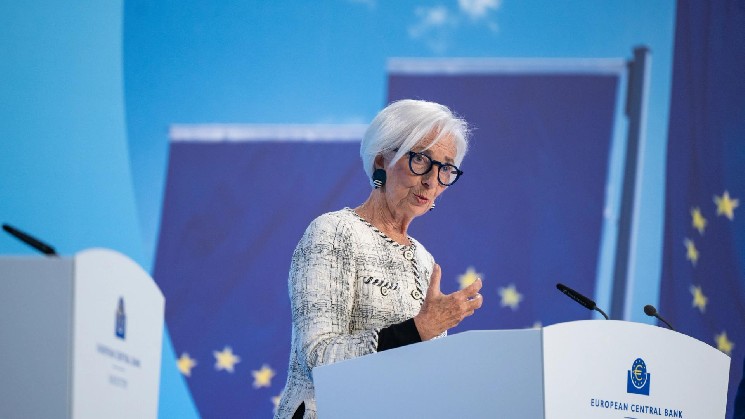
  • ECB President Christine Lagarde Intervened to Block Binance’s EU MiCA License, WSJ Reports

    ECB President Christine Lagarde Intervened to Block Binance’s EU MiCA License, WSJ Reports

    Key Highlights

    • Binance confirms it remains committed to securing a MiCA license in Europe despite withdrawing its Greek application in mid-June after the Hellenic Capital Market Commission (HCMC) declined to approve it.
    • Binance’s Head of Europe, Gillian Lynch, states the exchange met all HCMC requirements and had a “complete application” with nothing material outstanding.
    • The Wall Street Journal reports ESMA privately advised national regulators to reject Binance’s MiCA applications due to past compliance issues, while the ECB clarifies it has no institutional role in authorizing Crypto-Asset Service Providers.

    Binance Reaffirms European MiCA Ambitions After Greek Setback

    Binance has signaled its determination to remain a regulated participant in the European cryptocurrency market despite a significant regulatory rebuff in Greece. A company spokesperson confirmed that the exchange is actively working toward becoming MiCA-authorised and view this as an important step in providing users with a consistent, regulated, and trusted service across the European market. The statement comes weeks after Binance withdrew its application with the Hellenic Capital Market Commission (HCMC) and began winding down local operations after officials decided at the last minute not to approve the exchange’s Markets in Crypto-Assets (MiCA) license request. The company had previously vowed it would not exit the European market entirely.

    Exchange Contends Application Was Complete

    In an interview with CoinDesk in early July, Gillian Lynch, Binance’s Head of Europe, contested the regulatory outcome, asserting that the exchange had satisfied every condition set by the Greek regulator. We were deemed to have a complete application, Lynch said. Nothing was missing, nothing material was outstanding. The assertion raises questions about the specific grounds for the HCMC’s decision to deny authorization, particularly given the exchange’s claim of full procedural compliance. The withdrawal marks a notable stumble in Binance’s broader strategy to secure regulatory footing across the European Union under the new MiCA framework.

    ESMA Guidance and ECB Jurisdiction Clarified

    Adding complexity to the regulatory picture, The Wall Street Journal reported that the European Securities and Markets Authority (ESMA) privately advised national financial regulators to reject Binance’s MiCA applications. The guidance reportedly stems from concerns regarding the exchange’s historical compliance record. Meanwhile, an ECB spokesperson declined to comment on the specific case when contacted by CoinDesk. However, information shared with the outlet clarifies that the European Central Bank holds no institutional role with regards to the authorising of Crypto-Asset Service Providers (CASPs), noting that competence remains strictly with national competent authorities—in this instance, the HCMC.

    Founder’s Legal History Looms Over Licensing Efforts

    The regulatory scrutiny follows the high-profile legal resolution involving Binance founder Changpeng “CZ” Zhao. In 2023, Zhao pleaded guilty in the United States to violating the Bank Secrecy Act (BSA), resulting in a $4.3 billion settlement with U.S. authorities. He subsequently served a four-month prison sentence in California in 2024. In a significant political development, Zhao was pardoned by President Donald Trump in October 2025. This history appears to be a central factor influencing European regulators’ assessment of the exchange’s suitability for a MiCA license.

    Why This Matters

    The standoff in Greece represents a critical test case for how MiCA—the EU’s landmark crypto regulatory regime—will be applied to major global exchanges with checkered compliance histories. While MiCA offers a “passporting” mechanism allowing a license in one member state to serve the entire bloc, the Binance case illustrates that national competent authorities retain significant discretion to block entry based on reputational and historical risk factors. ESMA’s reported intervention suggests a coordinated regulatory posture toward entities with past enforcement actions, potentially setting a precedent for other exchanges seeking EU authorization. For Binance, securing a MiCA license remains essential for maintaining legitimate access to the EU’s 450 million consumers, but the path forward now likely requires a new application in a different jurisdiction or a successful appeal of the Greek decision.

    Frequently Asked Questions

    Why did Binance withdraw its Greek MiCA application?

    Binance withdrew its application in mid-June after the Hellenic Capital Market Commission (HCMC) decided not to approve its MiCA license request. The exchange subsequently began winding down its Greek operations but maintains it intends to pursue authorization elsewhere in Europe.

    Did Binance fail to meet the regulatory requirements in Greece?

    According to Binance’s Head of Europe, Gillian Lynch, the exchange met all of the HCMC’s requirements and was deemed to have a “complete application” with nothing material outstanding. The specific reasons for the HCMC’s denial have not been publicly detailed by the regulator.

    What role did Changpeng Zhao’s legal history play in the decision?

    While not explicitly cited by the HCMC, The Wall Street Journal reported that ESMA advised national regulators to reject Binance’s applications over concerns regarding the exchange’s past compliance issues. Zhao pleaded guilty to violating the U.S. Bank Secrecy Act in 2023, resulting in a $4.3 billion fine and a four-month prison sentence served in 2024, before receiving a presidential pardon in October 2025.

  • Kraken’s xStocks Backing Assets Surpass $800 Million as Holders Exceed 300,000

    Kraken’s xStocks Backing Assets Surpass $800 Million as Holders Exceed 300,000

    xStocks Surpasses $800 Million in Tokenised Assets with 300,000+ Unique Holders

    Tokenised equities platform xStocks has crossed a significant milestone, reporting over $800 million in assets backing its tokenised stocks and exchange-traded funds (ETFs). The platform also confirmed that the number of unique holders has exceeded 300,000, according to figures released by the company.

    “London’s trading industry is coming home!” the project declared, signalling its ambition to modernise access to traditional financial markets through blockchain infrastructure.

    Broad Multi-Chain Coverage and $40 Billion in Cumulative Volume

    The xStocks network now supports 715 tokenised instruments across ten blockchains, including Solana, Ethereum, BNB Chain, Mantle, TON, Ink, X Layer, Arbitrum, Tron, and Optimism. The platform reports more than $40 billion in cumulative transaction volume, a figure that encompasses activity on centralised and decentralised exchanges, as well as minting and redemption operations.

    Distribution has expanded through more than 100 integrations covering exchanges, self-custodial wallets, decentralised exchanges, and lending markets. The tokens are reportedly available in over 110 countries.

    1:1 Backing by Underlying Securities in Regulated Custody

    Each xStock token representing a listed stock or ETF is backed 1:1 by the corresponding underlying security, which is held in regulated custody, according to the project’s website. The tokens can be transferred and traded on-chain, giving holders economic exposure to changes in the underlying asset’s value.

    xStocks states that the instruments can be redeemed for the equivalent cash value or the underlying security, subject to relevant terms and eligibility requirements. The company clarifies that the $40 billion volume figure represents cumulative transaction activity rather than the current value of assets backing the tokens or an equivalent amount of new investor capital.

    Token Utility: Holding, Swapping, and Collateral Use

    Users can hold, transfer, or swap the tokens. Where supported by third-party protocols, the tokens can also be used as collateral, expanding their utility within decentralised finance (DeFi) ecosystems.

    Regulatory Classification and Legal Structure

    The European Securities and Markets Authority (ESMA) classifies these structures as wrapped tokenised equities. In its latest risk report, ESMA said these tokens typically represent a claim on, or economic exposure to, shares held by a trusted party.

    Legal ownership of the underlying securities remains off-chain, so transferring a wrapped token does not necessarily transfer legal title to the shares. ESMA said this structure adds dependencies on the token issuer, platform, and underlying custodian.

    Kraken similarly states that xStocks do not provide voting rights or a legal claim against the company whose shares back the token. Economic benefits from dividends are reflected by increasing the holder’s balance of the corresponding token.

    Issuance and Jurisdictional Availability

    xStocks are issued by Backed Assets (JE) Limited, registered in Jersey. Eligible clients outside the European Economic Area may receive them through Payward Digital Solutions, which is licensed by the Bermuda Monetary Authority.

    Within the EU and EEA, Payward Europe Digital Solutions offers the products. The tokens are unavailable to residents of the United States, United Kingdom, Canada, Australia, and sanctioned jurisdictions. Access through individual exchanges and other integrations remains subject to local rules and partner eligibility checks.