Tag: digital asset custody

  • XRP Surges 8.7% as Peter Brandt’s Chart Analysis Points to $5.40 Target

    XRP Surges 8.7% as Peter Brandt’s Chart Analysis Points to $5.40 Target

    Key Highlights

    • Veteran trader Peter Brandt projects XRP could reach $5.40 based on long-term monthly chart analysis, implying approximately 251% upside from current levels.
    • XRP surged 8.7% to $1.54 in 24-hour trading, reaching a session high of $1.57 before pulling back, with the token trading in an 11% range between $1.41 and $1.57.
    • Institutional developments accelerated as South African banking giant Absa launched digital asset custody built on Ripple technology, while the U.S. Senate rejected cloture on the CLARITY Act in a 49-50 vote.

    Peter Brandt’s Technical Analysis and $5.40 Price Target

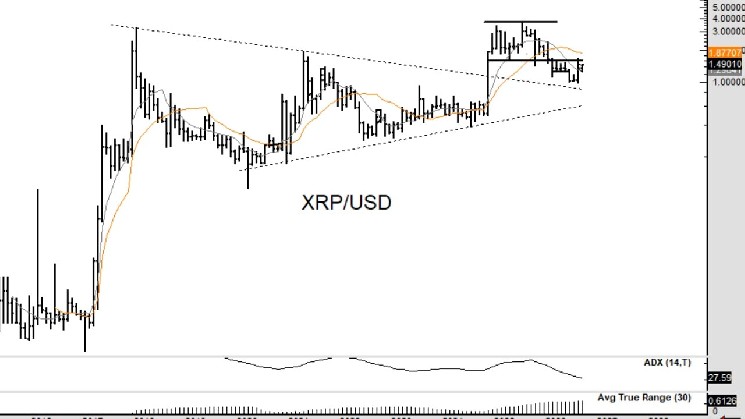
    Veteran commodity trader Peter Brandt shared a bullish long-term projection for XRP on September 21, posting a monthly chart on X that he says implies an eventual advance to $5.40. The target would represent a substantial premium over recent trading ranges, requiring approximately 251% appreciation from the $1.54 level where XRP traded at the time of publication.

    Brandt, who entered the commodity trading business in 1976 and founded Factor Trading in 1980, emphasized the distinction between a public chart presentation and an executed trade. “This is my long-term chart of $XRP It implies an eventual advance to $5.40.” he wrote. “A claim of a ‘call’ or simple presentation of a chart is $NOT a trade. People who claim ‘trades’ need to provide proof or else the claims are BS. An X post is $NOT proof,” he added. His use of the term “eventual” frames the $5.40 objective as a long-term technical target rather than a near-term prediction, and he explicitly noted that proving an actual trade would require verifiable records showing entry, exit, and result.

    XRP Price Action and Market Performance

    Bitcoin.com Markets data confirmed XRP trading at $1.54, up 8.7% or $0.12 over the preceding 24 hours. The token established a session low of $1.41 early in the period before climbing steadily through most of the trading day. The advance peaked at $1.57 late in the session, after which XRP eased back to the $1.54 level, leaving it approximately 2% below its 24-hour high and roughly 9% above its low. The session’s full trading range spanned about 11% from low to high, reflecting heightened volatility accompanying the price discovery.

    Institutional Infrastructure Expansion and Regulatory Context

    The price rally coincided with significant institutional infrastructure developments. South African lender Absa, one of Africa’s largest banking groups, launched Absa Digital Asset Custody on September 21, built on Ripple’s custody technology. The launch occurred 11 months after Ripple and Absa announced their partnership, marking a concrete step in institutional adoption across the African continent.

    Asset manager 21Shares outlined a four-pillar investment case for XRP centered on regulatory clarity, institutional access, measurable utility, and fixed supply. The firm noted that while expanding XRP Ledger (XRPL) activity may not directly translate into sustained XRP demand, growing network activity could support demand through transaction fees, account reserves, and bridge transfers. 21Shares cited approximately $4 billion in tokenized assets and roughly $1.6 billion in RLUSD supply, with more than half circulating on the XRPL.

    On the regulatory front, the U.S. Senate rejected cloture on the CLARITY Act in a 49-50 vote. Ripple maintained that the failed vote did not alter XRP’s established legal position or disrupt demand across payments, stablecoins, and institutional markets, suggesting the token’s regulatory framework remains intact despite legislative setbacks.

    Why This Matters

    The convergence of technical analysis from a respected veteran trader, meaningful price appreciation with elevated volume, and tangible institutional infrastructure deployment creates a multi-layered bullish narrative for XRP. Brandt’s $5.40 target, while framed as a long-term technical implication rather than a trading recommendation, draws attention to the monthly chart structure that has historically preceded major trend advances in commodity and digital asset markets. The Absa custody launch demonstrates Ripple’s expanding institutional footprint beyond North America into African financial markets, while 21Shares’ analytical framework highlights the fundamental metrics—institutional access, on-chain utility, and regulatory standing—that professional allocators increasingly prioritize. The Senate’s CLARITY Act outcome, while a legislative disappointment for broader crypto regulatory clarity, appears to have had minimal immediate market impact on XRP specifically, reinforcing Ripple’s assertion that the token’s legal classification is settled. Market participants will likely monitor whether XRP can sustain above the $1.50 psychological level and build a higher base for the next leg toward Brandt’s long-term projection.

    Frequently Asked Questions

    What is Peter Brandt’s track record in technical analysis?

    Peter Brandt has over 45 years of commodity trading experience, founding Factor Trading in 1980 after beginning his career in 1976. He has managed institutional trading operations and authored two books on commodity trading and classical chart patterns, establishing him as a recognized authority in traditional technical analysis applied to digital assets.

    Does the Absa Digital Asset Custody launch directly increase XRP demand?

    Not necessarily. The custody service is built on Ripple’s technology infrastructure, but 21Shares notes that expanding XRPL activity may not translate directly into sustained XRP demand. However, the firm argues that growing network activity could support demand indirectly through transaction fees, account reserves, and bridge transfer mechanisms on the ledger.

    How significant was the Senate CLARITY Act vote for XRP specifically?

    According to Ripple, the failed cloture vote on the CLARITY Act did not change XRP’s established legal position or disrupt demand across its core use cases in payments, stablecoins, and institutional markets. The token’s regulatory classification remains intact regardless of the legislative outcome.
  • Bastion Secures Conditional OCC Approval for National Trust Bank Charter

    Bastion Secures Conditional OCC Approval for National Trust Bank Charter

    Key Highlights

    • Bastion has received conditional approval from the Office of the Comptroller of the Currency to form Bastion National Trust Bank, a non-depository national trust bank focused on digital asset custody and payment-clearing services.
    • The approval, documented in OCC Corporate Decision 1391 dated September 18, provides a federal regulatory framework for institutional-grade digital asset custody under OCC supervision.
    • Bastion must still satisfy standard pre-opening requirements — including capital, systems, management, compliance, and operational readiness — before the bank can begin operations.

    Bastion Advances Toward Federal Trust Charter for Digital Asset Custody

    Bastion has taken a significant step toward operating under a federal banking charter after the Office of the Comptroller of the Currency granted conditional approval for the formation of Bastion National Trust Bank. The authorization, formalized in Corporate Decision 1391 and dated September 18, permits the company to proceed with establishing a national trust structure specifically designed around custody and digital asset services. This development marks a notable milestone in the ongoing convergence of crypto infrastructure with traditional banking regulation.

    A Non-Depository Charter Tailored for Institutional Custody

    The charter approved by the OCC is explicitly a non-depository national trust bank, distinguishing it from conventional deposit-taking institutions. Rather than accepting retail deposits, the entity is geared toward providing custody solutions and digital asset payment-clearing activities for institutional clients. For digital asset companies, federal trust charters have become increasingly important because they offer a clearer regulatory framework for institutional custody. Large funds, corporations, and financial institutions generally require more than a wallet provider and a promise — they demand governance, fiduciary standards, audits, regulatory oversight, and clearly defined custody responsibilities. A national trust charter provides companies like Bastion a regulated pathway into that market under direct OCC supervision.

    Conditional Approval Means Pre-Opening Requirements Remain

    While the conditional approval represents a major regulatory milestone, it is not the final step. Bastion must still satisfy the OCC’s standard pre-opening requirements before the bank can commence operations under the charter. These conditions typically encompass capital adequacy, technology systems, management expertise, compliance infrastructure, and overall operational readiness. The company remains “in formation” until these prerequisites are met and the OCC grants final operating authority.

    Why This Matters

    The Bastion approval exemplifies a broader industry trend in which crypto infrastructure that once operated almost entirely outside traditional banking regulation is steadily moving inside it. Custody firms are pursuing trust charters, exchanges are seeking derivatives registrations, and stablecoin issuers are applying for payment licenses. This convergence reflects growing institutional demand for regulated digital asset services and the willingness of federal regulators to provide supervised pathways for compliant firms. The OCC’s decision also signals continued federal engagement with digital asset custody frameworks, potentially setting precedent for other firms seeking similar charters.

    Frequently Asked Questions

    What type of bank charter did Bastion receive conditional approval for?

    Bastion received conditional approval for a non-depository national trust bank charter, specifically designed for custody and digital asset services rather than traditional deposit-taking activities.

    Can Bastion begin operating immediately under this approval?

    No. The approval is conditional, and Bastion must satisfy the OCC’s pre-opening requirements — including capital, systems, management, compliance, and operational readiness — before commencing operations.

    What is the significance of the digital asset payment-clearing authorization included in the charter?

    The inclusion of digital asset payment-clearing activities expands the charter’s utility beyond straightforward asset storage, potentially enabling Bastion to provide settlement and clearing services for digital asset transactions under federal oversight.

  • Deutsche Bank Launches Bitcoin Custody Service as BTC Trades at $75,500

    Deutsche Bank Launches Bitcoin Custody Service as BTC Trades at $75,500

    Key Highlights

    • Deutsche Bank will launch institutional crypto custody for Bitcoin, Ether, and select stablecoins in Europe before year-end under the EU’s MiCA regime, pending a BaFin licence expected in October.
    • The bank will manage private keys in-house using hardware-based protection, multi-person approvals, and segregated warm and cold storage, targeting corporates, asset managers, hedge funds, and sovereign institutions.
    • Germany’s largest lender enters a competitive European custody landscape already served by Standard Chartered, BBVA, DZ Bank, and Landesbank Baden-Württemberg, but brings globally systemically important bank (G-SIB) scale and existing client relationships.

    Deutsche Bank Commits to Regulated Crypto Custody Under MiCA

    Germany’s largest bank confirmed Wednesday it will begin safeguarding bitcoin and ether for institutional clients in Europe before the end of 2025, marking the most significant entry yet by a globally systemically important bank into regulated digital-asset custody. The announcement, made a day after the U.S. Senate failed to advance the Clarity Act, underscores a divergent regulatory path: while U.S. market-structure legislation stalls, Deutsche Bank is moving forward under the European Union’s Markets in Crypto-Assets (MiCA) framework.

    Gerald Podobnik, co-head of Deutsche Bank’s corporate bank, framed the move as complementary rather than disruptive. “digital assets are not a replacement for the traditional financial system but an important complement to it,” Podobnik said in a statement. “We see them as new rails that can coexist with existing market infrastructures while benefiting from the trust, security and safeguards that regulated financial institutions provide.” He added, “Our aim is to offer clients a secure and regulated gateway to this evolving market.” A bank spokesperson told Cointelegraph the firm expects to receive its MiCA custody licence from Germany’s BaFin in October. Bitcoin traded at $75,547 Wednesday afternoon, little changed over 24 hours, according to CoinGecko.

    Asset Scope and Technical Architecture

    At launch, the service will cover “a selected range of digital assets, including Bitcoin and Ether, as well as selected stable coins or e-money tokens, including USDC and EURC, EURAU,” the bank said. Circle issues USDC and EURC. EURAU is the euro-denominated stablecoin of AllUnity, a joint venture between Galaxy, Flow Traders, and DWS—the asset manager majority-owned by Deutsche Bank—which received a BaFin e-money licence in July 2025. “Tokenized financial instruments are also included in the roadmap,” the release added.

    The first clients will be corporates, asset managers, hedge funds, custodians, brokers, and sovereign institutions served by the corporate and investment banks. Critically, Deutsche Bank will manage the wallets and private keys itself, with keys secured behind hardware-based protection, multi-person approvals, and separate warm and cold storage. For Ido Sofer, founder and chief executive of key-management firm Sodot, that in-house approach signals strategic intent. “When you hear a bank is launching their own custody solution and they’re hiring blockchain engineers and so on, that means that they’re saying, okay, I want to go all in. I want to have those in-house capabilities and I want this as a business line,” Sofer said on the On The Margin podcast in April. “It really shifted from this is an experiment to this is a growth vector in the business line.”

    Three-Year Build and Competitive Landscape

    Deutsche Bank applied to BaFin for a digital-asset custody licence in June 2023 and named Swiss technology provider Taurus as its partner that September. In July 2025, Bloomberg reported the bank was targeting a 2026 launch and had engaged Bitpanda’s technology unit alongside Taurus. Wednesday’s release names neither firm, stating only that the service “will use selected external technology and infrastructure providers for defined technical components.”

    The bank arrives late to its immediate neighbourhood. Landesbank Baden-Württemberg announced institutional custody with Bitpanda in 2024; DZ Bank’s meinKrypto platform received MiCA authorisation in December 2025; and Standard Chartered and BBVA already operate regulated custody in Europe, as CoinDesk noted. What Deutsche Bank brings is scale: it is one of the banks the Financial Stability Board classifies as globally systemically important, and its clients have been asking who should hold the keys since a wave of exchange hacks last summer.

    Why This Matters

    Deutsche Bank’s entry signals a maturation of institutional crypto infrastructure in Europe. By operating under MiCA—the world’s first comprehensive crypto-asset regulatory regime—the bank offers a regulated alternative to offshore or unlicensed custodians, addressing a primary barrier for pension funds, insurers, and sovereign wealth funds. The decision to retain private keys in-house, rather than outsourcing to a specialist like Fireblocks or Copper, reflects a business logic older than blockchain: a custodian that controls the keys controls the client relationship and the cross-sell opportunities that follow. As Sofer noted, “It’s gonna be hard for you to leave.”

    However, the release carries a blunt risk disclosure: “Digital assets involve material risks, including price volatility, fraud, cyber incidents and failures of market participants,” it says. “Crypto-assets are not covered by a deposit-guarantee scheme comparable to the protection applicable to eligible bank deposits.” That trade-off—regulated custodial controls without deposit insurance—is the core proposition. Michael Tanguma, co-founder and chief executive of bitcoin custody firm Onramp, argues the market has already accepted it. “Nobody would tell an individual to take all their gold out of the bank and park it underneath their mattress,” Tanguma said in an August interview. “It’s a misnomer and fallacy to say that self custody is the only way.”

    Podobnik left the door open on scope: “The service will be further developed in line with client demand, regulatory requirements and the bank’s risk appetite,” he said. The release adds that timing, geography, and the asset list “may change as a result of regulatory requirements, internal approvals, market developments or client demand.” Sofer’s read is that such hedging is standard boilerplate once a G-SIB commits. “When a bank does something, this is for like five, 10 years, right?” he said. “They don’t say, well, let’s do this for a couple of quarters and re-evaluate.”

    Frequently Asked Questions

    Which digital assets will Deutsche Bank custody at launch?

    The bank will hold Bitcoin, Ether, and select stablecoins or e-money tokens including USDC, EURC, and EURAU. Tokenized financial instruments are on the roadmap for future inclusion.

    How does Deutsche Bank’s custody model differ from specialist crypto custodians?

    Deutsche Bank will manage wallets and private keys entirely in-house using hardware-based protection, multi-person approvals, and segregated warm and cold storage, rather than relying on third-party key-management providers. The bank argues this integrates the trust and safeguards of a regulated G-SIB with new digital-asset rails.

    Are crypto assets held by Deutsche Bank covered by deposit insurance?

    No. The bank explicitly warns that crypto-assets are not covered by any deposit-guarantee scheme comparable to the protection applicable to eligible bank deposits. Clients assume material risks including price volatility, fraud, cyber incidents, and counterparty failures.

  • Deutsche Bank Bets Big on Digital Assets, Potentially Reshaping European Crypto

    Deutsche Bank Bets Big on Digital Assets, Potentially Reshaping European Crypto

    Deutsche Bank Prepares Digital Asset Custody Launch for European Institutions

    Deutsche Bank is advancing into digital assets with plans to offer custody services to institutional and corporate clients across Europe later this year. The bank will hold wallets and private keys, enabling clients to safeguard and transfer Bitcoin (BTC), Ether (ETH), USD Coin (USDC), EURC, and EURAU without building their own custody infrastructure.

    Banking Framework for Digital Asset Access

    The service aims to place digital assets within a regulated banking framework, incorporating key protections such as private key storage, wallet control, and transaction approval controls. This approach could provide European institutions an easier entry point into crypto markets through existing banking relationships. While the initial asset list remains limited, tokenized financial instruments are expected to follow at a later stage.

    Regulatory approval remains a prerequisite between the announcement and launch, making the approval process and subsequent adoption critical developments to monitor.

    Regulated Custody Demand Driven by Institutional Allocation Trends

    Institutional interest has shifted beyond simple investment exposure to focus on regulated access mechanisms. According to a 2026 Coinbase-EY survey of over 350 decision-makers, 73% plan to increase allocations to digital assets. Within that study, 81% preferred spot exposure through registered vehicles such as ETFs and ETPs.

    This preference creates strong demand for regulated custody providers. Although hundreds of European-based MiCA-authorized cryptocurrency companies currently operate, very few major banks function as custodians. Deutsche Bank can therefore bridge crypto custody with established banking relationships across Europe, targeting asset managers, hedge funds, brokers, corporations, and sovereign institutions.

    Stablecoins Could Transform Custody into Recurring Settlement Channel

    Stablecoins have the potential to evolve Deutsche Bank’s custody service from a static storage product into an active settlement rail. USDC currently maintains approximately $74 billion in circulation, according to DeFiLlama data, demonstrating deep existing demand.

    EURC provides institutions a euro-denominated alternative within the same custody framework. Together, these stablecoins could support treasury transfers, business payments, and cross-border settlements alongside basic asset storage. If repeated transfers materialize, the activity would generate transaction flows beyond passive custody.

    Tokenized Assets May Extend Financial Rail Functionality

    Future addition of tokenized assets could further expand the service’s utility. Purchases, redemptions, and transfers of tokenized instruments would create additional flow opportunities. Consequently, stablecoins and tokenization combined could position a custody service provider as an active financial rail for institutional clients.

  • Senate Stalemate on Clarity Act Prompts BitGo Custody Call

    Senate Stalemate on Clarity Act Prompts BitGo Custody Call

    BitGo Pushes Federally Regulated Banking Amid Clarity Act Senate Stall

    The stalled progress of the Clarity Act in the Senate has raised significant concerns regarding asset security, prompting digital asset custodian BitGo to advocate for the protection of assets through federally regulated banks. The situation underscores the growing importance of secure custody solutions for investors despite ongoing legislative delays.

    Regulatory Uncertainty Fuels Market Anxiety

    The broader crypto market is navigating mixed signals, with uncertainty surrounding regulatory developments contributing to trader anxiety. BitGo’s recent commentary draws attention to the need for secure asset custody solutions, especially as the Clarity Act — which aimed to provide regulatory clarity — faces delays in the upper chamber. This scenario places additional pressure on investors to seek secure and federally insured banking options for asset protection.

    Key Developments at a Glance

    • BitGo advocates for secure custody options for investors.
    • The Clarity Act’s progress has stalled in the Senate.
    • BitGo emphasizes the importance of federally regulated banks.
    • The market reflects mixed signals amid regulatory uncertainty.
    • Investors are urged to consider secure asset solutions.

    Market Context and Trading Implications

    In the current market context, hesitation surrounding regulatory clarity has led to mixed performance across major assets. As traders assess the implications of the stalled Clarity Act, there is a growing focus on stable custody solutions to protect their investments. The lack of a decisive legislative path may lead to further caution among investors in the near term.

    BitGo is a leading digital asset custody provider specializing in secure storage solutions for cryptocurrencies. The Clarity Act, aimed at clarifying regulations for digital assets, falls under the jurisdiction of the Senate, which has the authority to create laws affecting financial institutions and digital asset management.

    What to Watch Next

    Traders are monitoring the potential for further clarity on regulatory frameworks that could affect custody solutions. The ongoing uncertainty may lead to heightened interest in secure banking options, particularly as market participants seek stability. Investors should remain vigilant for any developments in the Senate regarding the Clarity Act, as these could significantly impact market sentiment and trading strategies.

    This article is for informational purposes only and should not be considered financial advice.

  • Coinbase, Moov Bring Stablecoin Payments to 1,000+ Community Banks

    Coinbase, Moov Bring Stablecoin Payments to 1,000+ Community Banks

    Coinbase and payments platform Moov have formed a partnership designed to bring stablecoin payments and custody capabilities to the technology stacks used by more than 1,000 U.S. community banks and credit unions. Announced by Coinbase, the agreement will see Moov integrate Coinbase’s stablecoin infrastructure into its existing payments platform, giving financial institutions a turnkey way to offer stablecoin services without having to independently build wallets, blockchain connections, or other crypto infrastructure.

    The planned services span consumer payments, merchant acceptance, settlement, payouts, and real-time funding. Neither company disclosed a launch date or identified which banks and credit unions will be the first to roll out the services.

    How the Partnership Splits the Work

    Coinbase will supply the digital-asset infrastructure underpinning the collaboration. Moov intends to leverage Coinbase Developer Platform’s Custodial Wallet accounts to hold funds and its Payments API to coordinate stablecoin transfers, extending the always-on settlement advantage that is driving stablecoin rails to replace traditional wire transfers. Moov will connect these capabilities to the payment systems already used by its financial-institution customers. Its platform currently links more than 1,000 community banks and credit unions to services including card acquiring, card issuing, and real-time payment rails.

    The integration does not mean every institution connected to Moov will immediately offer stablecoin products. Each bank or credit union will still need to decide whether to participate and determine how the services fit within its compliance and risk-management requirements.

    Coinbase Announces the Partnership on X

    Banks benefit from crypto.We’re partnering with @Moov to provide small and community banks the infrastructure for stablecoins.That means acceptance, settlement, and real-time funding for more than 1000 of them, through the tech stacks they already use.This is what regulated… pic.twitter.com/sS8NNIVZBF
    — Coinbase 🛡️ (@coinbase) September 10, 2026

    Why Community Banks Are Exploring Stablecoins Now

    Stablecoins can move outside conventional banking hours, potentially allowing merchants to receive funds on weekends and holidays. They may also provide an additional settlement option for businesses already receiving payment requests in digital dollars. Wade Arnold, Moov’s co-founder and CEO, noted that business customers are increasingly being asked to accept stablecoins but often must leave their primary financial institution to do so. The partnership is designed to let community institutions provide that connection themselves. Jill Castilla, CEO of Citizens Bank of Edmond, linked the technology to demand from small businesses seeking faster payments and lower interchange costs.

    However, stablecoin transfers still create custody, compliance, fraud, liquidity, and operational risks. Faster blockchain settlement does not guarantee that customers will receive immediate access to bank deposits, since conversion and compliance reviews may add separate processing steps.

    A Partnership Arriving Amid an Active Policy Debate

    The announcement arrives as banks and crypto companies continue to debate the treatment of stablecoins under U.S. legislation. Lawmakers are considering the Clarity Act and rules affecting stablecoin rewards, payment activity, and the division of oversight between financial regulators—a dynamic explored in recent comparisons of the Clarity Act versus the GENIUS Act. Community-banking groups have warned that stablecoins offering yield-like incentives could draw deposits away from smaller institutions. Coinbase and Moov are taking a different approach by positioning community banks as distribution partners for stablecoin services rather than competitors to them.

    The Details That Will Determine How This Rolls Out

    The first participating institutions, supported stablecoins, blockchain networks, pricing, and rollout schedule have not been disclosed. More information will also be needed on how customer funds will be held, converted, reported, and protected within each institution’s service.

    What This Means for You

    The partnership could let customers and businesses access stablecoin payments through familiar local institutions instead of relying entirely on standalone crypto platforms. Its practical impact will depend on how many Moov-connected banks adopt the services and what custody, conversion, and withdrawal terms they offer.

    This is not financial advice. Stablecoins and digital-asset custody involve regulatory, operational, counterparty, liquidity, and technology risks. Availability will depend on participating institutions and applicable requirements.

  • Coinbase Targets 1,000 Banks With Moov Stablecoin Deal

    Coinbase Targets 1,000 Banks With Moov Stablecoin Deal

    Coinbase and Moov Partner to Bring Stablecoin Payments to Over 1,000 U.S. Community Banks

    Coinbase has announced a strategic partnership with payments infrastructure provider Moov to connect more than 1,000 U.S. community banks and credit unions with stablecoin payments, custody, merchant settlement, and real-time funding capabilities. The announcement, made on September 10, 2026, positions the collaboration as a way for smaller financial institutions to offer digital asset services without building their own blockchain systems.

    Shared Infrastructure Model for Community Institutions

    Moov, which provides card acquiring, card issuing, and real-time payment connections to institutional customers, will integrate Coinbase’s stablecoin infrastructure into the payment systems already offered to its financial institution clients. The companies did not disclose a commercial launch date or identify the first participating banks.

    Under the arrangement, Coinbase will supply digital asset custody and payment tools, while Moov will connect those capabilities with the systems used by its community bank and credit union customers. Moov plans to use Coinbase Developer Platform Custodial Wallet accounts to hold funds, and Coinbase’s Payments API will coordinate stablecoin transfers. This design allows Moov to embed blockchain functions inside its existing payment product.

    The companies identified consumer payments, merchant acceptance, merchant settlement, and payouts as initial applications. Business and merchant transactions will use Coinbase custodial accounts with disclosed ownership, according to the release.

    Executive Perspectives on the Partnership

    Coinbase highlighted the partnership in a social media post:

    Banks benefit from crypto.We’re partnering with @Moov to provide small and community banks the infrastructure for stablecoins.That means acceptance, settlement, and real-time funding for more than 1000 of them, through the tech stacks they already use.This is what regulated… pic.twitter.com/sS8NNIVZBF

    Ryan VanGrack, Coinbase vice chair and head of corporate affairs, stated that community financial institutions have watched customers use digital assets for years. Through Moov, Coinbase plans to place its infrastructure “right into their existing systems,” he said.

    Moov CEO Wade Arnold noted that business customers already receive requests to accept stablecoins and often leave their primary financial institution to obtain the service. He described acceptance and disbursement as the immediate products, with continuous funding presented as a possible later use.

    Banks Retain Customer Relationships and Control

    Moov will serve as the connection between Coinbase and participating institutions. Banks and credit unions can continue managing their customer accounts and local relationships while using third-party infrastructure for blockchain custody and payments. The partnership does not turn participating banks into stablecoin issuers.

    Coinbase described the arrangement as a way for institutions to offer payment and custody services, with no announcement made about a community bank creating its own dollar-backed token. Citizens Bank of Edmond Chairman and CEO Jill Castilla was quoted in the announcement noting that small businesses are seeking lower interchange costs and faster access to payments, though Coinbase and Moov did not confirm that the Oklahoma bank will become an initial customer.

    Regulatory Context and Compliance Considerations

    Under the Federal Reserve’s definition, its community bank program covers domestic state member banks, bank holding companies, and savings and loan holding companies with less than $10 billion in total assets. Other agencies supervise community institutions operating under different charters. Federal Reserve examinations usually take place every 12 months, with some eligible banks examined every 18 months depending on size, condition, and other factors.

    Coinbase and Moov did not describe how participating institutions will divide compliance duties involving customer identification, transaction monitoring, sanctions screening, or suspicious-activity reporting. Each bank will remain subject to its applicable federal and state obligations.

    Stablecoin Details and Operational Parameters Remain Undisclosed

    Neither company named the stablecoins or blockchain networks that the integration will support. Coinbase’s developer platform offers access to USDC and custom stablecoin products, but the announcement did not confirm which assets Moov’s customers will receive.

    Details covering transaction fees, conversion charges, redemption, insurance treatment, and user eligibility remain undisclosed. The partners did not say whether financial institutions would hold stablecoins directly or provide customers with balances backed by assets held in Coinbase custody. The announcement refers to “fully disclosed custodial accounts” for business and merchant payments without publishing the account terms.

    Diverging Models in Bank Stablecoin Adoption

    Large banks are pursuing stablecoin projects through structures that differ from Coinbase and Moov’s service-provider model. U.S. Bank disclosed a live cross-border test on September 9 involving USBDC, its proprietary dollar-backed token. As previously reported, U.S. Bank transferred USBDC between North American and European entities on the Stellar public blockchain, testing minting, redemption, freezing, and clawback functions while maintaining links with the bank’s finance, risk, and compliance systems.

    U.S. Bank did not make USBDC available to customers or external institutions. The bank released a Stellar issuer address but withheld the payment amount, transaction hash, reserve structure, and public rollout timetable.

    Coinbase and Moov are proposing shared infrastructure that can serve many institutions, centering on payment acceptance and custody through Coinbase instead of asking every participating bank to create a separate token and issuance platform. Banking technology providers are forming other institutional networks around tokenized deposits and digital assets. In related coverage, Cosmos formed a 17-member banking infrastructure network with participants including BitGo, Galaxy, and OpenZeppelin.

    The Coinbase partnership does not state whether Moov’s banks will work with tokenized deposits, which represent bank liabilities on blockchain infrastructure. Its announced scope covers stablecoins, custodial accounts, and payment movement.

    Federal Stablecoin Framework Sets Participation Requirements

    The GENIUS Act created a federal framework for payment stablecoins in July 2025. The law restricts issuance to permitted entities and requires one-to-one backing with qualifying liquid assets. Bank subsidiaries may issue payment stablecoins under the supervision of their federal banking regulator. State-qualified issuers can operate through certified state regimes, while nonbank firms may seek federal approval from the Office of the Comptroller of the Currency.

    Payment service providers remain subject to anti-money-laundering and sanctions requirements regardless of whether they issue tokens. Stablecoins are not automatically covered by federal deposit insurance, even when their reserves include deposits held at an insured bank.

    For the Coinbase-Moov arrangement, the applicable responsibilities will depend on the asset used, the custody structure, and the services offered by each institution. The companies have not published contracts explaining how losses, frozen transactions, redemption requests, or operational failures would be handled. Coinbase describes its digital asset infrastructure as regulated, but the announcement does not name the Coinbase legal entity that will hold each category of customer or merchant funds.

    No Public Rollout Date or Pilot Participants Announced

    Implementation will require Moov to integrate Coinbase’s wallet and payment interfaces before individual banks can offer the services. Each participating institution may need internal approval, compliance testing, and vendor-risk reviews based on its regulator and operating model.

    No bank has announced a customer launch through the partnership. Coinbase and Moov have not disclosed pilot participants, supported payment corridors, minimum transaction amounts, or settlement currencies. Future functions described by the companies remain plans. Coinbase said acceptance, settlement, and real-time funding are starting areas, while later work could connect digital assets with other products offered by community institutions.

    Moov said continuous funding could let institutions move value during weekends and holidays. The company has not released performance results showing settlement times, transaction capacity, or costs for the planned service. Coinbase and Moov have not provided a deadline for completing the technical integration or opening stablecoin services to the first community bank customers.

  • BitGo CEO Discusses AI and CLARITY Act on Bloomberg Live

    BitGo CEO Discusses AI and CLARITY Act on Bloomberg Live

    BitGo CEO Mike Belshe Discusses AI and CLARITY Act on Bloomberg Live

    BitGo CEO Mike Belshe recently appeared on Bloomberg Live to discuss the intersection of artificial intelligence and the CLARITY Act, offering insights that come at a critical moment for cryptocurrency regulation. As regulators continue shaping the future of digital assets, this conversation highlights the growing importance of understanding how these developments may influence market dynamics.

    Market Context and Regulatory Dialogue

    The broader crypto market is displaying mixed signals, with major assets continuing to fluctuate in response to varying momentum. Against this backdrop, Belshe’s discussion on Bloomberg emphasizes the need for regulatory clarity, specifically regarding artificial intelligence and blockchain technology. As institutional interest in cryptocurrency grows, these regulatory dialogues could significantly impact investor sentiment and market trends, potentially providing a roadmap for how companies like BitGo navigate increasing complexity.

    Key Takeaways from the Interview

    • Belshe emphasized the role of AI in the future of finance
    • The CLARITY Act served as a central theme throughout the discussion
    • Belshe’s insights aim to influence cryptocurrency regulatory frameworks
    • The interview was part of Bloomberg’s live programming on crypto trends
    • Viewers can access the full interview through BitGo’s Twitter link

    Market Implications and Token Metrics

    While BitGo’s recent discussions and market commentary do not reflect specific price movements or trading volumes, the overall context suggests that regulatory clarity could lead to increased institutional participation. This potential shift might stabilize or enhance market activity in the near future. Discussions around the CLARITY Act are particularly relevant, as they address foundational issues for cryptocurrency regulations that could influence future trading behaviors.

    BitGo operates as a prominent digital asset custody service provider that enhances security measures for institutional investors. The CLARITY Act aims to provide a clear framework for the cryptocurrency industry, making it a significant topic for companies operating at the intersection of finance and technology.

    What Traders Are Monitoring

    Market participants should keep a close eye on how regulatory discussions evolve, particularly regarding AI’s role in finance and the implications of the CLARITY Act. As sentiment shifts, potential risks include regulatory delays and market reactions to new announcements. Observing how major industry players respond to these discussions will be crucial for predicting future market movements.

    This article is for informational purposes only and does not constitute financial advice.

  • SEC Proposes Broad Update to Decades-Old Transfer Agent Rules With Blockchain Nod

    SEC Proposes Broad Update to Decades-Old Transfer Agent Rules With Blockchain Nod

    The US Securities and Exchange Commission (SEC) has proposed the most significant overhaul in decades of the rules governing transfer agents, as blockchain-based recordkeeping and tokenized securities gain traction in US financial markets.

    The proposed SEC transfer agent rules would update requirements for registration, recordkeeping, securities safeguarding and transfers. They would also introduce new compliance measures addressing risks linked to increasingly digital and automated market infrastructure.

    “Market participants are actively seeking to bring blockchain-native, or ‘onchain’ transfer agents into the U.S. market,” the SEC said, citing potential applications including blockchain-based recordkeeping, tokenized fund administration and cross-chain interoperability.

    The agency said its current regulatory framework does not adequately address these developments. In particular, the SEC identified risks involving cybersecurity, operational resilience and the protection of securities and investor records.

    Under the proposal, transfer agents would face expanded reporting obligations and additional compliance standards. The changes would include requirements covering restrictive legends on securities and the use of third-party service providers.

    SEC’s proposed Transfer Agent Rules. Source: SEC

    SEC transfer agent rules date back decades

    The SEC said its transfer agent rules have not undergone substantive updates since the late 1970s and early 1980s, when the industry still depended heavily on paper certificates and manual recordkeeping.

    The regulatory agency is seeking public comment on the proposed changes. Comments will be due 60 days after the proposal is published in the Federal Register.

    Related: CFTC chair says agency will move forward with crypto regulation if CLARITY fails

    SEC advances broader securities rule changes

    The SEC is “on a mission to simplify its rules,” according to an analysis from law firm Cahill Gordon & Reindel that was sent to clients on Tuesday.

    In May, the SEC proposed three major changes to public-company reporting and securities rules. The proposals would allow companies to choose semiannual reporting, simplify the current filer classification system and expand access to streamlined registered securities offerings.

    Last week, the SEC sent a proposed overhaul of custody rules for investment advisers and investment companies to the White House for review. The potential changes include provisions on how firms hold crypto assets for clients.

    The proposed custody changes could establish clearer standards for investment advisers and funds holding digital assets while they comply with federal securities regulations.

    Magazine: Does the Bitcoin rally mean we haven’t wasted our lives in crypto?

  • SEC and CFTC Advance Crypto Regulations as CLARITY Act Stalls in Congress

    SEC and CFTC Advance Crypto Regulations as CLARITY Act Stalls in Congress

    The U.S. Securities and Exchange Commission (SEC) and the Commodity Futures Trading Commission (CFTC) are moving ahead with separate cryptocurrency regulatory initiatives as Congress remains in recess and the future of the CLARITY Act remains uncertain.

    According to Decrypt, the agencies have launched a joint public comment process to clarify their respective jurisdiction over digital assets. The effort suggests that federal crypto oversight could take shape through agency rulemaking rather than a comprehensive law passed by Congress.

    SEC and CFTC Seek Input on Crypto Jurisdiction

    In June, the SEC and CFTC began seeking public feedback on swaps, security-based swaps, emerging products and the scope of each agency’s regulatory authority. The joint initiative reflects the growing complexity of digital assets, which can share characteristics of both securities and commodities.

    The agencies are seeking clearer boundaries between their responsibilities to reduce regulatory gaps and provide greater certainty for crypto businesses and investors.

    Former CFTC Chairman Chris Giancarlo and former SEC Commissioner Steven Wallman responded with a comment letter warning that poorly designed rules could drive profitable trading activity to overseas markets. Giancarlo, often referred to as “Crypto Dad” for his forward-looking stance on digital assets, and Wallman, a long-time advocate for regulatory modernization, argued that overly restrictive or unclear rules could weaken the U.S. competitive position.

    Their letter underscores the challenge regulators face in balancing investor protection with continued innovation in the digital asset sector.

    SEC Advances Proposed Digital Asset Custody Rules

    Separately, the SEC has taken a major step toward creating a regulatory framework for digital asset custody. The agency recently asked the White House Office of Information and Regulatory Affairs (OIRA) to review proposed revisions to existing custody rules covering investment advisers and investment companies.

    The specific provisions have not been made public. However, the proposal is expected to address how regulated entities can hold cryptocurrencies and other digital assets while complying with federal securities laws.

    Clearer custody requirements could be especially significant for institutional investors that have been reluctant to enter the crypto market because of uncertainty surrounding asset safekeeping. A defined framework could provide the legal certainty needed to encourage participation from pension funds, endowments and other large investors.

    It could also help address persistent industry concerns involving the theft, loss and insolvency of crypto custodians.

    What the Regulatory Moves Mean for Crypto Markets

    The SEC and CFTC initiatives come as the CLARITY Act remains stalled in Congress. The legislation is intended to define the agencies’ roles in overseeing digital assets, but lawmakers are currently on recess and the timing of future legislative action is unclear.

    By using their existing authority, the agencies are moving to shape rules that could influence the cryptocurrency market for years. For market participants, this means compliance obligations may develop through agency guidance and rulemaking instead of through one comprehensive federal statute.

    The outcome could have broad implications for crypto businesses, investors and financial markets. More precise definitions of securities and commodities could help resolve long-running classification disputes involving major cryptocurrencies such as Ether.

    Strong custody requirements could also reduce systemic risks, improve market integrity and make the United States a more attractive base for cryptocurrency companies and investors.

    FAQs About SEC and CFTC Crypto Regulation

    What is the CLARITY Act?

    The CLARITY Act is a proposed U.S. law intended to clarify the jurisdictional boundaries between the SEC and CFTC over digital assets. It aims to define when a cryptocurrency is considered a security or a commodity, but it has not yet been passed by Congress.

    Why are the SEC and CFTC working together on crypto rules?

    Digital assets often have characteristics of both securities and commodities, creating legal ambiguity. The joint comment process allows the agencies to gather public input and coordinate their approaches to avoid conflicting regulations and ensure comprehensive oversight.

    How could new custody rules affect crypto investors?

    Proposed custody rules would establish a clearer regulatory framework for investment advisers and companies holding digital assets. The changes could increase institutional participation, improve security standards and reduce the risk of loss or theft, potentially strengthening market stability.

    Related Reading

    • Coinbase CEO: Entrenched Financial Interests Oppose Crypto Clarity Act
    • Kalshi Permanently Bans Former Rep. George Santos Over Insider Trading
    • Crypto funds see $3.2B weekly inflow, biggest since October 2025
    • Ripple CLO: Clarity Act Vote Would Boost U.S. Jobs and Economic Growth
    • Bitcoin posts best August since 2017 with 25% rally, but year-to-date losses persist