Tag: CTE

  • I Don’t Remember Nothing, I Just Play Football

    I Don’t Remember Nothing, I Just Play Football

    Druski has built a massive following with hyper-relatable, satirical sketch comedy. His mockumentary-style videos and short skits often draw on real-life events, celebrity culture and everyday behavior.

    He began his comedy career on Instagram and TikTok around 2017, but his major breakthrough came during the 2020 lockdowns. His growing online popularity eventually attracted major hip-hop artists, leading to appearances in high-profile music videos such as Drake’s “Laugh Now Cry Later” and Lil Baby’s “Errbody.”

    One of Druski’s most infamous skits focused on Erika Kirk, while rumors involving Gia Duddy also circulated online after he gained widespread attention.

    Druski’s NFL concussion skit goes viral

    Druski is now drawing attention with another provocative comedy sketch aimed at the NFL. This week, he went viral for a satirical video titled “Athletes Get Concussions & LOSE THEIR MINDS.”

    The sketch delivers a dark commentary on the dangers of football, including head injuries, concussion protocols and chronic traumatic encephalopathy, commonly known as CTE.

    Rather than taking a restrained approach, Druski uses his trademark observational style to parody the erratic behavior sometimes associated with athletes who have experienced repeated brain trauma.

    Druski portrays fictional NFL player Ray Price

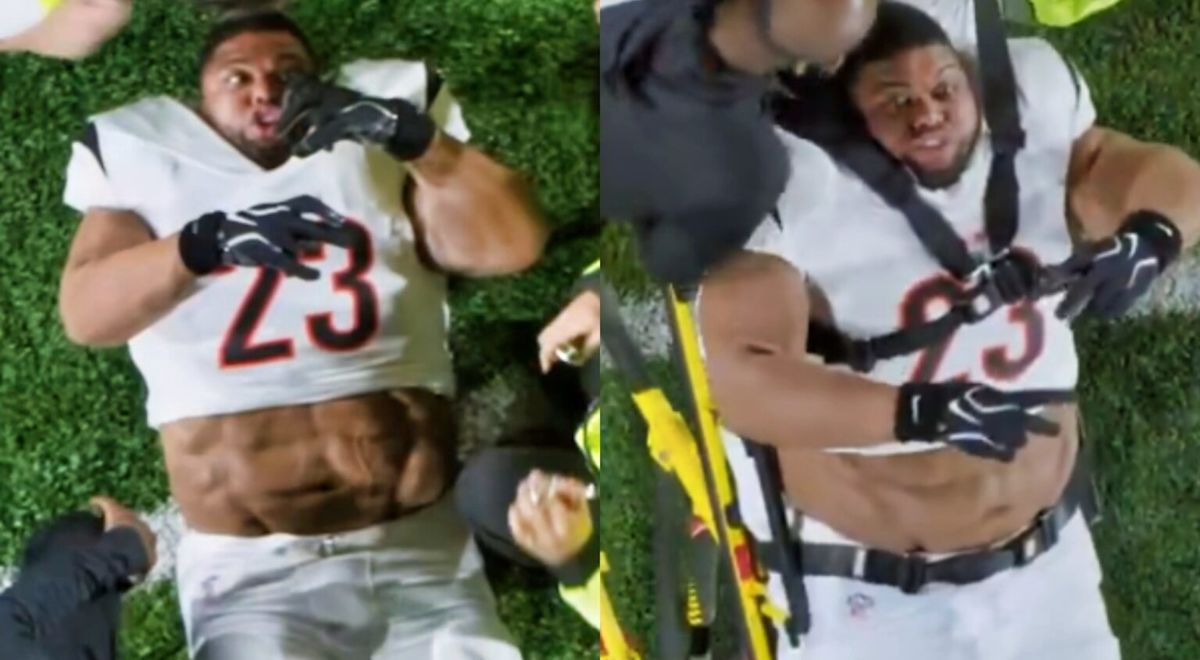
    In the sketch, Druski plays fictional running back Ray Price of the MFL League. The character is first shown being knocked to the ground during a play, with his helmet coming off as he lies stunned on the field.

    The situation quickly escalates. Price is later shown leading police on a 10-mile chase while driving a gold Ferrari. At home, he streams online while behaving erratically, speaking to an empty room, shouting at people and dismissing the seriousness of his condition.

    The scenes parody real-life incidents in which impaired athletes have publicly displayed erratic behavior on social media.

    The sketch ends at a media news conference, where Price gives reporters a blank response: “I don’t even remember… I don’t remember nothing. I just play football.”

    During the 2025 NFL season, documented in-game concussions rose to 168, a 30% increase from the 129 concussions recorded during the 2024 campaign.

    Source: www.yahoo.com
  • Study Reveals Nearly One‑Quarter of Deceased NFL Players Had CTE, Raising Fresh Safety Questions

    Study Reveals Nearly One‑Quarter of Deceased NFL Players Had CTE, Raising Fresh Safety Questions

    A new analysis published in The BMJ and highlighted by The New York Times shows that at least 24.5 percent of former NFL players who died between 2016 and 2021 were found to have chronic traumatic encephalopathy (CTE). Out of 878 deaths during that six‑year window, researchers confirmed the disease in 215 brains, while the remaining 663 cases were not examined for CTE, suggesting the true prevalence could be considerably higher. Read also: Study: Nearly 25% of Deceased NFL Players Had CTE.

    Because CTE can only be diagnosed after death, the reported figure is almost certainly a floor rather than a ceiling. The large number of untested brains means many additional former athletes may have been living with the condition without ever being counted, a point that underscores how little is still known about the long‑term neurological toll of repeated head impacts in professional football.

    The findings have reignited debate over whether workplace‑safety regulators should treat the NFL like other high‑risk industries. Former heads of the Occupational Safety and Health Administration described the CTE rate as "astoundingly high" and even "apocalyptically high," arguing that such a hazard would trigger enforcement in any conventional workplace. Current OSHA leadership, however, maintains that the agency generally does not pursue enforcement actions against professional athletes.

    Both the league and the players’ union responded to the study. The NFL emphasized its ongoing efforts to reduce concussions and head impacts, pointing to expanded medical resources and rule changes aimed at player safety. The NFL Players Association called the research a sobering reminder of the real risks players face and urged the entire football ecosystem — from youth leagues to the professional level — to treat the data as a call to action.

    The conversation extends beyond the gridiron. Comparisons with occupations such as construction, mining, and professional boxing illustrate that repetitive brain trauma is a recognized occupational hazard elsewhere, often accompanied by stricter monitoring and compensation frameworks. Meanwhile, scientists are racing to develop reliable, non‑invasive tests that could detect CTE in living individuals, a breakthrough that would transform how athletes, teams, and regulators manage brain health in the future.