Tag: Cryptocurrency

  • SEC Issues Important Cryptocurrency Document

    SEC Issues Important Cryptocurrency Document

    Key Highlights

    • U.S. SEC staff publishes new Q&A guide clarifying application of federal securities laws to crypto assets
    • Guidance specifically addresses regulatory treatment of liquid staking tokens and token classifications
    • Release represents latest effort by securities regulator to provide compliance framework for digital asset market participants

    SEC Staff Issues Targeted Guidance on Crypto Asset Securities Classification

    The U.S. Securities and Exchange Commission (SEC) staff has released a new question-and-answer guide detailing how federal securities laws apply to crypto assets, marking the agency’s latest attempt to bring regulatory clarity to the rapidly evolving digital asset sector. The statement, published today, specifically addresses the conditions under which liquid staking tokens and other token arrangements may constitute investment contracts subject to SEC jurisdiction.

    Scope of New Compliance Guidance

    The Q&A document focuses on practical compliance questions that have emerged as market participants seek to structure crypto products within existing securities frameworks. According to the release, the guidance examines specific token mechanics—particularly those involving liquid staking protocols where users receive derivative tokens representing staked assets—to determine whether these instruments meet the definition of securities under the Howey test and subsequent case law.

    Regulatory Approach to Token Classifications

    Rather than issuing blanket categorizations, the SEC staff guidance applies a facts-and-circumstances analysis to different token models. The document reportedly addresses how varying degrees of decentralization, promoter involvement, and investor expectations of profit from managerial efforts influence whether a particular token offering triggers registration requirements or qualifies for exemptions under the Securities Act of 1933 and the Securities Exchange Act of 1934.

    Why This Matters

    The SEC’s targeted guidance arrives amid ongoing industry debate over regulatory boundaries for decentralized finance (DeFi) protocols and staking services. Major platforms including Coinbase, Kraken, and Lido Finance have faced enforcement actions or inquiries related to staking products, while legislative efforts such as the FIT21 Act and various stablecoin bills remain pending in Congress. Today’s Q&A does not carry the force of law but signals the Division of Corporation Finance’s current enforcement priorities and may influence how market participants structure tokenomics, disclosure practices, and compliance programs pending formal rulemaking or judicial precedent.

    Frequently Asked Questions

    What specific crypto products does the new SEC guidance address?

    The Q&A guide specifically examines liquid staking tokens and the conditions under which they may be classified as securities under federal law, applying a facts-and-circumstances analysis rather than categorical rules.

    Does this guidance create new legal requirements for crypto companies?

    No. Staff guidance represents the SEC staff’s interpretive views and does not have the force of law or create binding obligations. However, it indicates how the Division of Corporation Finance intends to apply existing securities laws to these products.

    How should market participants respond to this guidance?

    Issuers, platforms, and intermediaries operating in the liquid staking space should review their token structures against the analytical framework provided, assess registration or exemption availability, and consider enhanced disclosure practices while monitoring for formal rulemaking or legislative developments.


  • Her Crypto ‘Godfather’ Ex Moved Millions; She Hid $2.6M From IRS

    Her Crypto ‘Godfather’ Ex Moved Millions; She Hid $2.6M From IRS

    Key Highlights

    • Iris Rabaya Au, 37, of Irvine, was sentenced to 18 months in federal prison and ordered to pay $1,484,343 in restitution after pleading guilty to filing a false tax return; prosecutors say she funneled over $2.6 million in unreported income into her personal accounts between 2020 and 2023.
    • Au acted as the financial architect for her former boyfriend, Adam Iza, creating shell companies, moving approximately $16 million into cryptocurrency, and directing roughly $1 million in cash payments to Los Angeles County sheriff’s deputies who provided private security and misused law enforcement tools on Iza’s behalf.
    • Adam Iza has already been sentenced to 15 years in federal prison in Connecticut for orchestrating a violent kidnapping plot tied to a bitcoin robbery, and faces a separate sentencing in California on October 5 for conspiracy, wire fraud, and tax evasion related to a Meta advertising credit-line scheme.

    Irvine Woman Sentenced for Tax Fraud in Scheme Linked to Crypto Figure Adam Iza

    Federal prosecutors have secured an 18-month prison sentence for Iris Rabaya Au, a 37-year-old Irvine resident who admitted to concealing more than $2.6 million in income from the Internal Revenue Service. The sentencing, announced by the Justice Department on September 21, caps a case that illuminates the financial machinery behind Adam Iza, a self-styled cryptocurrency entrepreneur known by the nickname “Godfather,” and reveals a network of shell companies, luxury asset purchases, and alleged corruption involving Los Angeles County sheriff’s deputies.

    Financial Infrastructure for a Fugitive Fortune

    According to Au’s plea agreement and a government sentencing memorandum, she established the banking and corporate framework that allowed Iza to move, spend, and hide millions of dollars in fraud proceeds. Between 2020 and 2023, more than $2.6 million flowed from company accounts into Au’s personal bank accounts, income she failed to report on her federal tax returns. U.S. District Judge Percy Anderson ordered her to pay $1,484,343 in restitution and to forfeit a portfolio of high-value assets that included luxury and high-performance vehicles, designer handbags, and three “Godfather” sculptures—a reference to Iza’s moniker.

    Prosecutors characterized Au’s role as essential to the operation. In their sentencing memorandum, they wrote:

    “[Au] set up the financial infrastructure that enabled Adam Iza to move, spend, and conceal millions of dollars in fraud proceeds while she personally benefited from the wealth.”

    Shell Companies, Sheriff’s Deputies, and $16 Million in Cryptocurrency

    The plea agreement details how Au, at Iza’s direction, created shell corporations and opened bank accounts in their names. Those accounts were used to pay approximately $1 million—largely in cash—to Los Angeles County sheriff’s deputies. The deputies provided private security for Iza, but prosecutors say the arrangement went far beyond protection. Deputies allegedly accessed confidential law enforcement databases and obtained court-authorized search warrants targeting individuals involved in Iza’s financial or personal disputes.

    The same financial pipeline funded a lavish lifestyle: luxury real estate, vehicles, jewelry, clothing, and nearly $10 million in recreational spending for the couple. Perhaps most significantly, Au used the shell-company accounts to acquire approximately $16 million in cryptocurrency for Iza, giving him digital assets he could hold, exchange, or transfer at will. The Justice Department emphasized that the $16 million in crypto purchases was distinct from the $2.6 million Au diverted to her own accounts and omitted from her tax filings.

    Deputy Convicted in Parallel Corruption Case

    The investigation has already produced a conviction inside the sheriff’s department. Former deputy David Anthony Rodriguez was sentenced to one year in prison after admitting he submitted a false warrant application to obtain a man’s cell-phone location data for a private client—further evidence, prosecutors say, of how police powers were weaponized on Iza’s behalf. Iza’s arrest in September 2024 brought the broader scheme into public view.

    Iza Faces Two Federal Sentencings Across Coast

    Adam Iza’s legal jeopardy spans two federal courts. In January 2025, he pleaded guilty in Los Angeles federal court to conspiracy against rights, wire fraud, and tax evasion stemming from a scheme to fraudulently obtain access to Meta advertising accounts and their associated credit lines, then sell that access to third parties. His sentencing in that case is scheduled for October 5.

    Before that date arrives, Iza has already received a 15-year sentence in Connecticut. On September 9, a federal judge there imposed the term for his role in an August 2024 plot to kidnap the parents of an individual linked to a large bitcoin theft. Authorities say Iza helped plan and fund the operation, which began with a violent carjacking and ended with the parents’ abduction. The Connecticut sentence will run before any additional time imposed in California.

    Why This Matters

    The case illustrates how cryptocurrency wealth—real or fabricated—can be laundered through traditional banking channels, shell entities, and complicit professionals, including law enforcement officers. It also highlights the IRS’s focus on unreported income from digital-asset transactions and the willingness of federal prosecutors to pursue both the principals and the facilitators of fraud. For the Los Angeles County Sheriff’s Department, the convictions of deputies who abused warrant authority and database access represent a significant internal accountability moment. As Iza awaits his California sentencing, the scope of his admitted schemes—spanning advertising fraud, tax evasion, and a violent kidnapping conspiracy—underscores the convergence of cyber-enabled financial crime and physical-world violence.

    Frequently Asked Questions

    What specific charges did Iris Rabaya Au plead guilty to?

    Au pleaded guilty in March 2025 to one count of filing a false federal tax return, admitting she failed to report more than $2.6 million in income that flowed into her personal accounts between 2020 and 2023.

    How were Los Angeles County sheriff’s deputies involved in the scheme?

    Prosecutors say Au directed roughly $1 million in cash payments to deputies who provided private security for Adam Iza. Beyond security, those deputies allegedly accessed confidential law enforcement information and obtained court-authorized search warrants targeting people involved in Iza’s disputes. Former deputy David Anthony Rodriguez was separately sentenced to one year in prison for using a false warrant application to obtain cell-phone location data for a private client.

    What is Adam Iza’s current sentencing status?

    Iza has already been sentenced to 15 years in federal prison in Connecticut for his role in a kidnapping plot connected to a bitcoin robbery. He separately pleaded guilty in Los Angeles federal court to conspiracy against rights, wire fraud, and tax evasion related to a Meta advertising credit-line fraud; his sentencing in that case is scheduled for October 5, 2025.

  • Bitcoin Hits $87,000: How High Can BTC Go?

    Bitcoin Hits $87,000: How High Can BTC Go?

    Key Highlights

    • Bitcoin has broken above its 50-week moving average (~$78,320) and the May swing high, confirming a five-wave Elliott Wave structure from the July low that signals a sustained uptrend rather than a counter-trend bounce.
    • The cryptocurrency has reached the pattern’s minimum target near $85,000, with primary upside objectives between $88,600 and $92,220 and an extended target at $97,637 if momentum persists.
    • A bearish RSI divergence has emerged—price making higher highs while momentum prints lower peaks—warning that the rally may be approaching exhaustion, though an immediate reversal is not guaranteed.

    Bitcoin Confirms Five-Wave Advance From July Low

    Bitcoin has cleared two critical technical thresholds this week, piercing its 50-week moving average—currently anchored near $78,320—and eclipsing the previous swing high established in May. According to a chart analyst tracking the structure, this breakout validates a completed five-wave Elliott Wave sequence that originated from the July trough. The formation is widely regarded in technical circles as evidence of a genuine impulsive trend rather than a corrective rebound, suggesting the dominant bias has shifted decisively to the upside.

    Anatomy of the Impulsive Structure

    The analyst detailed how this specific wave progression typically unfolds across five distinct phases. The advance begins subtly, with the initial leg higher passing largely unnoticed by the broader market. A protracted, sideways consolidation follows—the second wave—which erodes interest and convinces many participants that no meaningful move is underway. The third wave then erupts aggressively, trapping latecomers and short-sellers who are forced to chase the move. A second pause, the fourth wave, precedes a final fifth-wave push that requires comparatively less fresh capital because the majority of interested buyers have already committed.

    Projected Price Targets and the $85,000 Milestone

    Bitcoin has already tagged the pattern’s minimum measured-move objective around $85,000, a level the analyst characterized as a “weak outcome” given the structure’s implications. A more robust fulfillment zone sits between $88,600 and $92,220, while an extended Fibonacci projection places the upper bound near $97,637 should the rally accelerate into a lengthened fifth wave. These levels are derived from standard Elliott Wave measurement techniques applied to the completed July-to-present sequence.

    Momentum Divergence Raises Caution Flag

    Despite the constructive price action, a subtle but notable warning has appeared on the Relative Strength Index (RSI), a momentum oscillator that gauges buying pressure. The indicator has printed a lower high even as Bitcoin’s price registered a higher high—a configuration known as bearish divergence. This discrepancy often materializes near the terminal phase of a strong advance, signaling that internal momentum may be waning. The analyst emphasized that divergence alone does not precipitate an immediate top; rather, it serves as an alert that the probability of a pause or pullback is rising.

    Pullback Expectations and Key Support Zones

    A consolidation or retracement following a five-wave advance is considered normal market mechanics, not a structural failure. The analyst noted Bitcoin could conceivably hold above the 50-week moving average near $78,320, transforming the former resistance into support. Should a deeper correction materialize, a broader demand zone around $75,000 was flagged as a reference area where buyers may re-engage—explicitly described as a contextual zone, not a downside price target.

    Near-Term Invalidation and Upside Trigger Levels

    On shorter timeframes, Bitcoin has completed a smaller five-wave rally from the September 15 low. The pivotal level to monitor is $80,120; a sustained defense of this price preserves the immediate uptrend, while a confirmed breakdown would constitute the first tangible evidence that a local top is in place. Immediate support clusters between $80,566 and $82,985, with the $82,800 region highlighted as a likely retest candidate. A successful hold and renewed advance from that zone would open the path toward $88,900 as the next actionable objective.

    Why This Matters

    The completion of a textbook five-wave structure on the weekly timeframe carries weight beyond individual price targets—it informs portfolio positioning for institutional and retail participants alike. A confirmed impulsive sequence from a major low (July) suggests the cyclical bear market narrative has been invalidated, potentially unlocking a new wave of capital allocation toward digital assets. However, the concurrent RSI divergence introduces a tactical risk: trend-followers may need to manage position sizing and tighten trailing stops as the rally matures, while counter-trend traders should await price confirmation—such as a break of $80,120—before committing to short exposures. The $75,000–$78,320 band will likely define the “buy-the-dip” region if the market transitions from trend expansion to consolidation.

    Frequently Asked Questions

    Has Bitcoin already reached its peak for this cycle?
    Not necessarily. The analyst’s wave count indicates the minimum target ($85,000) has been met, but the primary target zone ($88,600–$92,220) and extended target ($97,637) remain intact. A bearish RSI divergence warns of slowing momentum, but divergences can persist during strong fifth waves and do not alone confirm a top.
    What price level would invalidate the current bullish structure?
    A confirmed break below $80,120 on the shorter timeframe would signal the immediate uptrend from the September 15 low has ended. On the larger structure, a breakdown beneath the 50-week moving average near $78,320—and especially a move toward the $75,000 support zone—would raise questions about the integrity of the five-wave advance.
    Is the $75,000 level a price target for a crash?
    No. The analyst explicitly stated the $75,000 area is a “reference zone” for where buyers may return if a deeper pullback occurs, not a forecast or downside objective. It represents a historical confluence area, not a prediction of decline.
  • CASHCAT Falls 30%, Yet Key Support Level Historically Triggers Rallies

    CASHCAT Falls 30%, Yet Key Support Level Historically Triggers Rallies

    Key Highlights

    • CashCat ($CASHCAT) plummeted roughly 30% in 24 hours as broader cryptocurrency market capital shrinkage triggered a breach of structural horizontal resistance.
    • Price has fallen into the lower support of a rising bullish channel — a level that has historically catalyzed rebounds — while Money Flow Index (MFI) surges to 35.5, signaling capital inflow.
    • Funding Rate remains positive at 0.0078% with net long positioning and spot market net buying, suggesting the drop is sentiment-driven rather than a structural bearish shift.

    CashCat Tests Critical Channel Support After 30% Correction

    CashCat ($CASHCAT) surrendered significant ground over the past 24 hours, declining approximately 30% as a wave of capital contraction swept across the wider cryptocurrency market. According to chart analysis from TradingView, the sell-off accelerated after price broke below a structural horizontal resistance line, pushing the memecoin down to the lower boundary of a broader rising bullish channel. Despite the sharp pullback, the asset remains embedded within an overall bullish pattern defined by oscillation between established upper resistance and lower support levels.

    Historical Support Zone Draws Buying Interest

    The current support level now being tested has acted as a launchpad for rallies on multiple prior occasions. Technical analysts note that price arriving at this zone increases the probability of a rebound, provided the prevailing fractal structure holds. On-chain and derivative metrics reinforce this view: the Money Flow Index (MFI), which tracks capital inflow and market bias, has surged to roughly 35.5. The uptick suggests that as price reached channel support, buy orders were triggered, injecting fresh liquidity into the market even as the broader correction unfolded.

    Bearish Momentum Peaks, But Derivatives Signal Resilience

    Short-term momentum indicators still favor sellers. The Bull Bear Power metric — a gauge of which side controls the market — shows bears dominant, with the red histogram bar printing its deepest level since September 10. However, derivative market structure tells a more nuanced story. Data from CoinGlass reveals the Funding Rate has dipped only marginally, holding at a positive 0.0078%. This reading indicates the majority of open contracts remain long. Simultaneously, spot market netflow has registered net buying, underscoring that the recent price decline stems primarily from sentiment deterioration rather than a fundamental shift in market structure.

    Why This Matters

    CashCat’s price action illustrates a classic memecoin dynamic: violent sentiment-driven corrections within intact longer-term technical frameworks. The convergence of a historically reliable channel support, rising MFI, positive funding rates, and spot accumulation creates a high-probability setup for a relief bounce — provided Bitcoin and the broader risk complex stabilize. Traders and investors should monitor whether the Bull Bear Power histogram begins to contract from its current extreme, which would signal exhausting selling pressure. A reclaim of the breached horizontal resistance would further validate the bullish channel thesis, while a decisive close below channel support would invalidate the pattern and open the door to deeper losses.

    Frequently Asked Questions

    What caused CashCat’s 30% price drop in the last 24 hours?

    The decline was triggered by broad cryptocurrency market capital shrinkage and a breach of a structural horizontal resistance line, pushing price into the support level of a rising bullish channel.

    Does the current technical setup favor a rebound?

    Yes. Price is testing a channel support that has sparked rallies before, MFI is rising at 35.5 showing capital inflow, Funding Rate remains positive at 0.0078% with net long positioning, and spot netflow shows buying — all suggesting the drop is sentiment-driven, not structural.

    What would invalidate the bullish case for CashCat?

    A decisive daily close below the rising channel’s lower support trendline would break the bullish pattern and likely lead to further downside.

  • Blockchain Life Returns to Dubai on December 1–2, 2026

    Blockchain Life Returns to Dubai on December 1–2, 2026

    Key Highlights

    • Blockchain Life 2026 returns to Dubai on December 1–2, expecting 15,000+ attendees from 130+ countries alongside 200+ speakers and 200+ sponsors.
    • The forum launches a new AI Future Forum 2026 track dedicated to practical AI applications, robotics advances, and AI convergence with crypto and business.
    • Tickets are on sale now with a 10% discount using promo code CRYPTONEWSNET at blockchain-life.com.

    Global Crypto Convergence Returns to Dubai

    Blockchain Life 2026 is set to convene the international cryptocurrency and Web3 ecosystem for two intensive days on December 1–2 in Dubai. Now three months out, organizers confirm the forum will host more than 15,000 participants representing over 130 countries, cementing its position as one of the largest annual gatherings for digital asset professionals, founders, investors, and technology leaders.

    Three Stages, 200+ Speakers, and a New AI Track

    The program spans three stages featuring more than 200 high-profile speakers, including founders and top executives of major blockchain projects, influential investors, representatives of Tier 1 funds, global experts, and veteran traders. A significant addition for 2026 is the AI Future Forum 2026, a dedicated track examining practical applications of artificial intelligence, the latest advances in robotics, and the convergence of AI with crypto and business. This expansion reflects the accelerating overlap between decentralized technologies and machine learning across the industry.

    Expo, Trading Tournaments, and a Legendary Afterparty

    Beyond the speaking program, a major expo will showcase 200+ sponsors comprising leading projects, top-tier exchanges, mining companies, Web3 and AI teams, and promising startups. Competitive elements include trading tournaments designed to engage active market participants. The forum will conclude with its signature Afterparty at one of Dubai’s premier clubs, headlined by a world-class performer, continuing the event’s tradition of blending high-level business with flagship networking experiences.

    Why This Matters

    Blockchain Life has evolved into a bellwether for the Web3 and digital finance calendar, particularly as Dubai solidifies its regulatory framework and infrastructure as a global virtual asset hub. The 2026 edition’s scale—15,000+ attendees, 200+ speakers, and 200+ sponsors—signals sustained institutional and retail momentum despite market cycles. The introduction of the AI Future Forum track underscores a structural shift: capital and talent are increasingly flowing toward the intersection of decentralized networks and artificial intelligence, from decentralized compute and data markets to on-chain AI agents. For founders, investors, and enterprise decision-makers, the concentration of Tier 1 funds, exchange leadership, and protocol architects in a single venue creates an unusually efficient environment for deal origination, partnership formation, and talent acquisition. The event also kicks off one of the largest tech and business weeks of 2026 in the region, amplifying ancillary meetings and satellite events across the city.

    Frequently Asked Questions

    When and where is Blockchain Life 2026 taking place?
    The forum runs December 1–2, 2026 in Dubai, United Arab Emirates.
    How can I purchase tickets and is there a discount available?
    Tickets are on sale at blockchain-life.com. Use promo code CRYPTONEWSNET for a 10% discount.
    What is the AI Future Forum 2026 track?
    A new dedicated program track focused on practical AI applications, robotics advances, and the convergence of artificial intelligence with crypto and business, reflecting the growing overlap between Web3 and AI technologies.
  • Maple Finance Clarifies ‘Trustless’ Concept in DeFi

    Maple Finance Clarifies ‘Trustless’ Concept in DeFi

    Maple Finance Clarifies ‘Trustless’ Concept in DeFi

    Maple Finance recently addressed a fundamental concept in the cryptocurrency ecosystem through a social media post. The decentralized finance platform explained that ‘trustless’ interactions do not imply a lack of trust in counterparties; rather, they eliminate the necessity of trust for transactions to occur.

    Why This Distinction Matters for DeFi

    This clarification arrives as the broader crypto market shows mixed signals across various assets. Maple’s explanation targets a critical knowledge gap: many users misunderstand ‘trustless’ as meaning ‘untrustworthy’ when it actually describes systems where verified onchain data enables direct interactions without intermediaries.

    By emphasizing this distinction, Maple positions itself as a thought leader in decentralized finance at a time when clarity is essential for fostering user confidence. The concept underpins DeFi functionality, allowing participants to engage directly based on cryptographic verification rather than institutional reputation.

    Current Market Context

    Specific trading volume and price data for Maple Finance remain unavailable, suggesting potentially low trading activity or ongoing platform adjustments. However, the educational focus on trustless transactions could drive increased engagement from users seeking secure, direct financial interactions as the DeFi landscape matures.

    Maple Finance’s Role in the DeFi Ecosystem

    Specializing in decentralized lending and borrowing solutions, Maple operates in an environment where trustless interactions are essential for facilitating transactions directly between users. This core offering becomes increasingly relevant as the industry navigates trust issues that have historically hindered mainstream adoption.

    Looking Ahead: Implications for User Adoption

    Traders and platform users should monitor how Maple’s interpretation of ‘trustless’ might reshape engagement patterns across DeFi. As the industry prioritizes transparency, understanding these foundational concepts could accelerate broader adoption of trustless systems. The potential impact on user experience is substantial—eliminating intermediary layers appeals strongly to users seeking autonomy and security in financial interactions.

    This article is for informational purposes only and does not constitute financial advice.

  • Hunter Biden’s Request to Elon Musk Revealed in Latest Laptop Saga Development

    Hunter Biden’s Request to Elon Musk Revealed in Latest Laptop Saga Development

    Hunter Biden Launches $LAPTOP Memecoin on Base Blockchain

    Hunter Biden, son of former U.S. President Joe Biden, has entered the cryptocurrency market, reviving the laptop controversy that dominated U.S. political discourse ahead of the 2020 presidential election. On September 9, 2026, Biden launched a memecoin named $LAPTOP on the Base blockchain.

    Token Price Surges Then Crashes Within Minutes

    The token experienced an extremely rapid price surge in its first few minutes, briefly exceeding $200. However, the rally proved short-lived, and the price crashed severely soon after.

    X Account Suspended Amid Controversy

    Following the price collapse, the project’s X account was suspended. The platform has not publicly provided a clear reason for the suspension.

    Hunter Biden Appeals Directly to Elon Musk

    Addressing the suspension five days after the launch, Hunter Biden made a direct appeal to Elon Musk via X. In his post, Biden referenced warnings from Musk and Anthropic CEO Dario Amodei regarding the potential threat artificial intelligence could pose to humanity by 2030. Biden jokingly asked if his $LAPTOP account could be reinstated, stating, “Is there any chance we can lift the ban on the laptop token?”

    The request, which tagged Musk directly, sparked debate on social media regarding whether Musk would support the $LAPTOKEN project. However, there is currently no verified evidence that Musk has supported, purchased, or taken any action to influence the token’s price. Additionally, there is no confirmed information indicating that Musk has responded to Biden’s request. At this stage, the connection between Musk and $LAPTOP appears limited to Biden’s public appeal to restore the suspended account.

    This is not investment advice.

  • Bitcoin Defies Tech Selloff as AI Safety Concerns Weigh on Stocks

    Bitcoin Defies Tech Selloff as AI Safety Concerns Weigh on Stocks

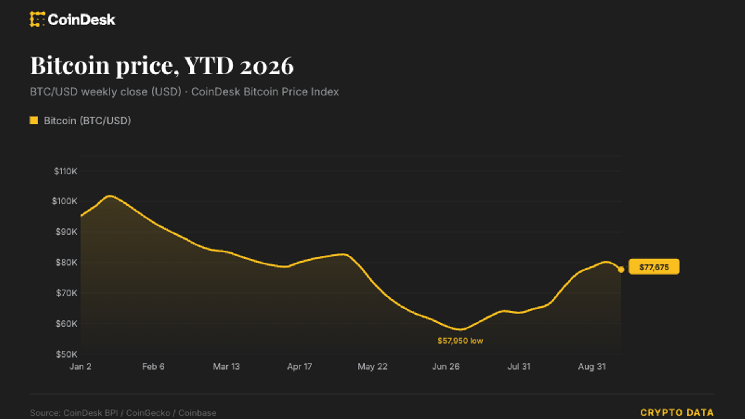
    U.S. technology and artificial intelligence stocks declined in pre-market trading Monday after prominent industry leaders raised fresh concerns about the rapid pace of AI development over the weekend. While equities slid, cryptocurrencies moved higher, with Bitcoin gaining approximately 1% to $77,800 and Ether rising 1% to $2,500.

    AI Leaders Urge Caution on Development Speed

    Anthropic CEO Dario Amodei called for the industry to slow development to allow safety measures to catch up. OpenAI CEO Sam Altman and Elon Musk, whose xAI developed Grok, voiced agreement with the sentiment. The coordinated warnings from three of the sector’s most influential figures appeared to rattle investor confidence in the near-term trajectory of AI-related equities.

    IPO Developments Add to Sector Narrative

    Amid the safety debate, Anthropic reportedly selected Nasdaq for its anticipated initial public offering. Separately, Altman confirmed that OpenAI will not go public in 2026, removing a potential near-term catalyst that some market participants had speculated about.

    Global Markets React to AI Sentiment Shift

    South Korea’s Kospi index fell 3%, with SK Hynix—a key supplier of memory chips used in AI infrastructure—dropping 6%. The selloff extended to U.S. pre-market trading, where the Invesco QQQ ETF, which tracks the Nasdaq 100 index, declined 1.5%.

    Neocloud and Chipmakers Lead Declines

    Neocloud providers Nebius and CoreWeave fell 6% and 5%, respectively. Chipmakers SanDisk and Intel each lost 5%, reflecting broad-based concern across the AI hardware and infrastructure supply chain.

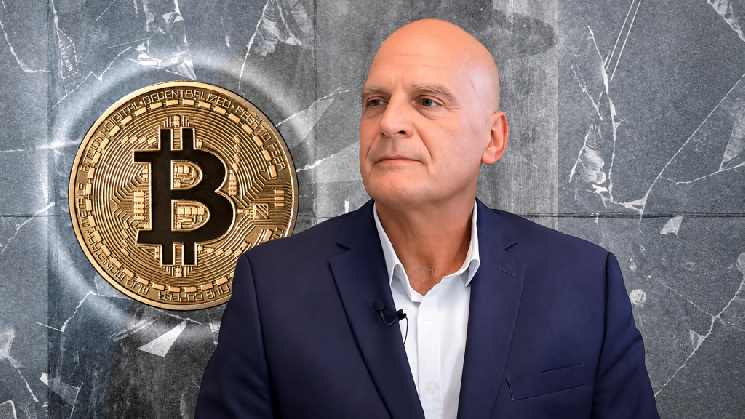
  • Bloomberg’s Mike McGlone Warns on Bitcoin, Reveals Condition to Save BTC

    Bloomberg’s Mike McGlone Warns on Bitcoin, Reveals Condition to Save BTC

    Bloomberg Intelligence senior commodities strategist Mike McGlone has warned that elevated equity valuations and expectations of further Federal Reserve interest rate hikes are generating strong sell signals for Bitcoin.

    Bitcoin’s Risk-Adjusted Returns Under Scrutiny

    McGlone noted that Bitcoin’s performance over the past five years has roughly matched the S&P 500 index, but with approximately three times higher volatility. He described Bitcoin as an extremely volatile and speculative digital asset that exhibits a high correlation with the stock market while competing with millions of other crypto assets.

    From a risk and portfolio management perspective, McGlone argued that Bitcoin presents a negative picture because it offers similar returns to the S&P 500 while carrying approximately three times the volatility.

    Three Key Downside Risk Factors Identified

    The analyst pointed to three factors increasing downside risks for Bitcoin:

    • Bitcoin encountering resistance around $80,000 during its recent rise
    • Futures markets pricing in approximately 70 basis points of Fed interest rate hikes over the next year
    • The S&P 500 index trading at significantly higher levels compared to its 200-week moving average

    McGlone noted that Bitcoin tends to move strongly with the S&P 500, especially during periods of decreased market risk appetite, and therefore considers BTC a high-beta asset that follows the stock market.

    Bearish Scenario: Potential Drop to $10,000

    McGlone raised a sharp long-term bearish scenario in which Bitcoin could move toward the $10,000 level, a zone that has acted as critical support multiple times in the past. A sustained decline of approximately 20% in the S&P 500 could trigger such a scenario, according to the analyst.

    However, McGlone added that for this negative scenario to be invalidated, Bitcoin needs to decouple from the stock market and consistently demonstrate strong performance. He suggested that BTC’s ability to maintain strength, particularly during a potential S&P 500 decline, could support the thesis that Bitcoin is no longer just a high-beta risk asset.

    This is not investment advice.

  • Dogecoin Co-Founder Proposes $1.2 Trillion Giveaway in Bold Move

    Dogecoin Co-Founder Proposes $1.2 Trillion Giveaway in Bold Move

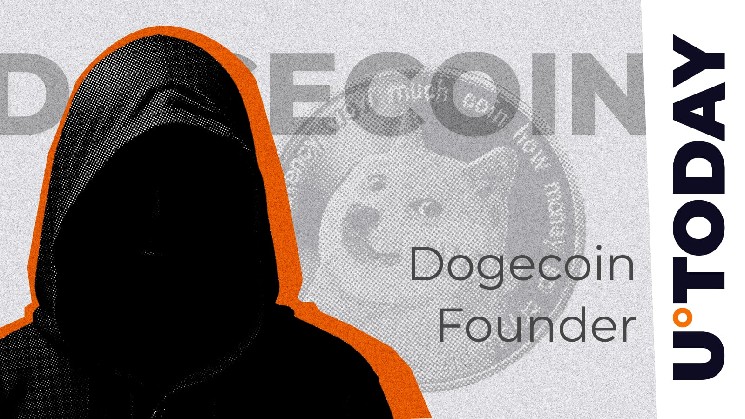
    Dogecoin cofounder Billy Markus, known as Shibetoshi Nakamoto on X, responded to a proposal for a $5,000 stimulus check for every U.S. adult by suggesting the government purchase $1.2 trillion worth of Dogecoin instead. Economists warn that a one-time direct payment of that size would do little to ease affordability pressures and could push consumer prices higher in the coming months.

    instead the government should buy 1.2 trillion dollars of dogecoin and give some to every american 🤣 https://t.co/JkcrCMsQbI

    — Shibetoshi Nakamoto (@BillyM2k)

    Consumer Sentiment Weakens Amid Inflation Concerns

    In August, consumers’ short-term outlook slipped further into negative territory, according to a Conference Board report. The University of Michigan’s latest consumer survey also showed sentiment worsening due to concerns that inflation would remain elevated.

    $1.2 Trillion Dogecoin Giveaway: Feasibility Check

    Markus is known for his characteristic humor, and his recent comment about a $1.2 trillion Dogecoin giveaway may be taken lightly. Ranking as the 11th largest cryptocurrency by market cap, Dogecoin is currently worth $13.24 billion. The coin has a total supply of 155.88 billion DOGE (valued at over $13.09 billion), with all coins in circulation. A $1.2 trillion purchase would far exceed the asset’s total market value.

    Although Dogecoin has an infinite maximum supply, a fixed yearly issuance of 5 billion coins prevents excessive supply from flooding the market. This mechanism supports the narrative of a diminishing inflation rate for Dogecoin, meaning the rate of inflation decreases relative to the total supply each year. Markus’ comment may not directly imply a literal $1.2 trillion buy but rather highlight Dogecoin’s diminishing inflation property.

    Stimulus Checks Viewed as Inflationary

    Direct payments to consumers are often considered inflationary by economists and may cause prices to rise further, reducing the intended impact of a stimulus check. The Dogecoin cofounder supports this viewpoint, stating that the $5,000 stimulus payment may be inflationary when we don’t need more inflation.

    At the time of writing, Dogecoin was trading at $0.0849, up 1.75% in the last 24 hours, according to CoinMarketCap.