Tag: Cryptocurrency regulation

  • Legendary Analyst Tom Lee Reveals New Cryptocurrency Future Prediction

    Legendary Analyst Tom Lee Reveals New Cryptocurrency Future Prediction

    Key Highlights

    • BitMine Chairman Tom Lee asserts cryptocurrency market rally can continue despite CLARITY Act failing to advance in U.S. Senate
    • Lee emphasizes real user and investor demand outweighs single regulatory outcomes for crypto market trajectory
    • Ethereum remains preferred institutional blockchain platform; switching to alternatives creates unnecessary technical and operational risks

    CLARITY Act Stalls But Market Momentum Persists, Says BitMine Chairman

    BitMine Chairman Tom Lee maintains that the cryptocurrency market’s upward trajectory remains intact despite the CLARITY Act failing to secure the 60 votes needed to advance in a Senate procedural vote. The legislation, designed to establish a comprehensive regulatory framework for digital assets in the United States, would have explicitly defined the Commodity Futures Trading Commission’s (CFTC) oversight role. However, Lee argues that fundamental market forces—not any single piece of legislation—will ultimately determine the sector’s direction.

    User Demand Trumps Regulatory Milestones

    In an interview, Lee argued that real user and investor demand is more important than any single regulation for the future of the cryptocurrency market. He stated that the passage of the CLARITY Act would create a clearer regulatory framework for the industry and make the role of the US Commodity Futures Trading Commission (CFTC) more explicit, adding that the failure of the bill would not completely halt the regulation of the sector. Following the bill’s failure, the U.S. Securities and Exchange Commission (SEC) and the CFTC will continue to work on regulations for the cryptocurrency sector within their existing legal powers.

    Prediction Markets Demonstrate Resilience Amid Uncertainty

    Lee pointed out that sectors like prediction markets have shown that growth can continue in areas with strong demand despite regulatory uncertainty. Therefore, he argued that the failure of the CLARITY Act alone would not be a development that would end the bullish trend in the cryptocurrency market. This perspective suggests market participants are pricing in regulatory evolution as an ongoing process rather than a binary legislative event.

    Ethereum’s Institutional Dominance Remains Unchallenged

    Network Effects Outweigh Theoretical Alternatives

    The BitMine chairman also reiterated his strong views, particularly regarding Ethereum’s institutional use. He stated that it would not make sense for financial institutions to gravitate towards new networks with low liquidity and uncertainties surrounding code security, adoption, market makers, or node operators once they decide to use a public blockchain. Lee stated that Ethereum is currently the preferred platform for financial institutions, and that switching to alternative networks could create unnecessary technical and operational problems.

    Why This Matters

    The CLARITY Act’s stall reflects ongoing legislative gridlock around digital asset regulation in Washington, yet market structure continues evolving through agency rulemaking and institutional adoption. Lee’s analysis highlights a critical divergence: while policy makers debate comprehensive frameworks, market infrastructure—particularly Ethereum’s institutional entrenchment—is hardening around practical utility and network effects. The SEC and CFTC’s parallel regulatory tracks under existing authority suggest a fragmented but functional oversight regime may emerge absent congressional action. For investors and builders, this underscores that product-market fit and liquidity moats currently matter more than regulatory clarity timelines.

    Frequently Asked Questions

    Did the CLARITY Act fail completely?

    The CLARITY Act failed to reach the 60-vote threshold needed to advance in a Senate procedural vote, but this does not permanently kill the legislation—it could be reintroduced or its provisions incorporated into other bills.

    What happens to crypto regulation now that the CLARITY Act stalled?

    The SEC and CFTC will continue developing regulations within their existing statutory authorities, maintaining a dual-agency oversight approach rather than the unified framework the CLARITY Act proposed.

    Why does Tom Lee believe Ethereum will remain the primary institutional blockchain?

    Lee cites Ethereum’s established liquidity, proven code security, broad adoption, mature market maker ecosystem, and decentralized node operator network as factors that make switching to newer, less proven alternatives operationally and technically irrational for financial institutions.

    This is not investment advice.
  • Clarity Act Stalled; CFTC Submits Cryptocurrency Draft to White House

    Clarity Act Stalled; CFTC Submits Cryptocurrency Draft to White House

    Key Highlights

    • The Clarity Act, a leading legislative effort to establish a comprehensive U.S. cryptocurrency market framework, failed a procedural Senate vote this week.
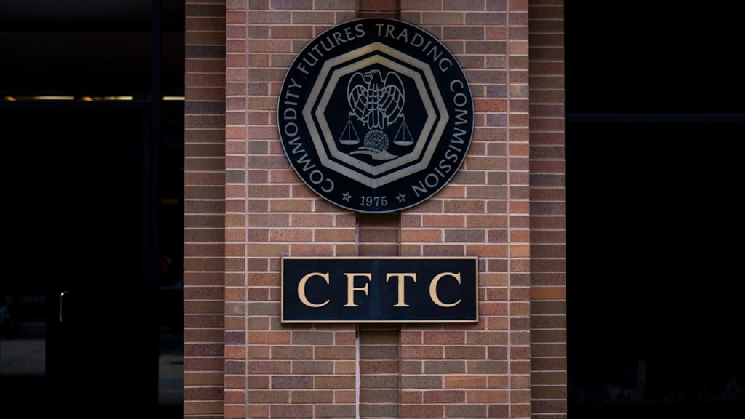
    • The CFTC submitted a new regulatory proposal to the White House Office of Management and Budget on September 17, now under interagency review by OIRA.
    • CFTC Chair Michael Selig directed staff to “develop ways to formalize the digital asset market structure using the agency’s existing legal authority, independently of congressional legislation,” signaling a potential administrative path forward.

    Senate Setback for Clarity Act Prompts CFTC Administrative Action

    The legislative path toward a unified federal framework for digital assets encountered a significant obstacle this week when the Clarity Act failed to secure the necessary votes to advance in the U.S. Senate. The bill, widely regarded as one of the most consequential attempts to codify comprehensive rules for cryptocurrency markets, stalled on a procedural vote, leaving a regulatory vacuum that the Commodity Futures Trading Commission (CFTC) appears prepared to address through administrative rulemaking.

    CFTC Proposal Enters White House Interagency Review

    According to the Office of Information and Regulatory Affairs (OIRA) within the White House Office of Management and Budget, the CFTC formally submitted a new proposal on September 17. The submission is currently undergoing interagency review, a standard step before a proposed rule can be published for public comment in the Federal Register. While the full scope and specific provisions of the regulation have not been disclosed, a Bloomberg report analyzing the draft title indicates the commission intends to establish a comprehensive regulatory framework governing cryptocurrency transactions and the operational structure of digital asset markets.

    Chair Selig Signals Intent to Leverage Existing Authority

    The agency’s move aligns with recent public statements from CFTC Chairman Michael Selig, who said he had instructed staff to “develop ways to formalize the digital asset market structure using the agency’s existing legal authority, independently of congressional legislation.” This approach suggests the commission is prepared to assert jurisdiction over digital asset markets—particularly those involving commodities and derivatives—without waiting for new statutory mandates from Congress.

    Industry Observers Note Accelerated Timeline

    The speed of the CFTC’s submission drew immediate attention from policy analysts. Hyperliquid Policy Center CEO Jake Chervinsky posted on X, “The CFTC is moving fast. It appears to have sent a proposed rule for interagency review.” His observation underscores a growing perception that federal regulators may pursue parallel administrative tracks to address digital asset oversight while legislative efforts remain gridlocked.

    Why This Matters

    The dual developments—legislative stall and regulatory acceleration—highlight a pivotal moment for U.S. crypto policy. With the Clarity Act’s future uncertain, the CFTC’s proposal represents the most concrete federal initiative to date to define market structure rules for digital assets under existing commodities law. If finalized, the rule could establish registration, reporting, and operational standards for trading platforms, custodians, and market participants, shaping compliance obligations across the industry. However, the scope of the CFTC’s authority over spot digital asset markets remains legally contested, and any rulemaking will likely face scrutiny from both industry stakeholders and congressional committees. The OIRA review period typically spans 90 days but can be extended, meaning the earliest public glimpse of the proposed text may arrive in late 2024 or early 2025.

    Frequently Asked Questions

    What is the Clarity Act and why did it fail?
    The Clarity Act is a Senate bill designed to create a comprehensive legal framework for cryptocurrency markets in the United States. It failed a procedural vote this week, meaning it did not receive the necessary support to advance to debate or a final vote on the Senate floor.
    What does the CFTC’s new proposal aim to do?
    Based on the draft title reviewed by Bloomberg, the CFTC’s proposal seeks to create a comprehensive regulatory framework for cryptocurrency transactions and the functioning of digital asset markets, using the agency’s existing authority under the Commodity Exchange Act.
    When will the public see the details of the CFTC proposal?
    The proposal is currently under review by the Office of Information and Regulatory Affairs (OIRA). Interagency review typically takes up to 90 days, after which the CFTC would publish a Notice of Proposed Rulemaking in the Federal Register for public comment.
  • CLARITY Act Update After Failure: SEC Chair Breaks Silence, Says ‘Stay Tuned’

    CLARITY Act Update After Failure: SEC Chair Breaks Silence, Says ‘Stay Tuned’

    SEC Chairman Paul Atkins expressed gratitude to stakeholders across the administration, Congress, investors, and innovators who have advanced the CLARITY Act, while confirming the agency will proceed with regulatory action regardless of the legislation’s fate.

    “I have been unequivocal: with or without legislation, we will act decisively within the SEC’s statutory authority to deliver certainty for American investors and for the entrepreneurs shaping our technological future,” Atkins said. “Stay tuned.”

    A Pattern of Agency-Level Action

    Atkins’ remarks followed a separate announcement outlining the SEC’s latest regulatory proposals, which he characterized as reflecting a focus on keeping Commission rules within the agency’s statutory authority while aligning with current and anticipated market practices.

    The SEC proposed rescinding Rule 14a-8, arguing the rule exceeds the agency’s statutory scope and intrudes into matters of state law. The Commission also proposed amendments to Rule 14a-4(c), aimed at giving companies more flexibility and shareholders greater control over proposals eligible for discretionary proxy voting authority.

    House Advances Crypto Tax Legislation

    Separately, the House Ways and Means Committee advanced the Digital Asset Tax Certainty Act in a 38-5 vote. The bill would ease tax treatment for small cryptocurrency transactions, clarify how stablecoins are handled, and address rules governing mining, staking, and wash sales. The legislation still requires full House approval before moving to the Senate.

    The proposed legislation would eliminate capital gains tax on crypto transactions and network fees under $10, with certain exceptions, and also covers staking, mining, tokenized assets, wash sales, and rules for crypto brokers.

    Strategic Bitcoin Reserve Bill Under Consideration

    Alongside the tax bill, lawmakers are also considering the Strategic Bitcoin Reserve Bill, which would lock up the roughly $25 billion in Bitcoin currently held by the U.S. government for a period of 20 years.

    Shifting Legislative Momentum

    With the CLARITY Act stalled in the Senate, momentum in Washington has shifted toward narrower, more targeted measures. The current approach combines agency rulemaking from the SEC on one front with House-level tax and reserve legislation on the other, rather than pursuing the comprehensive market structure framework the CLARITY Act was designed to deliver.

  • Clarity Act Fails Final Senate Vote, Senator Bill Says

    Clarity Act Fails Final Senate Vote, Senator Bill Says

    Senator Bill Hagerty Criticizes Senate Democrats Over Clarity Act Delay

    Senator Bill Hagerty (R-TN) expressed disappointment today over Senate Democrats’ refusal to bring the Clarity Act to a final vote, arguing the decision undermines America’s position as a leader in cryptocurrency and blockchain technology. The Tennessee senator, a vocal advocate for clearer digital asset regulations, warned that legislative delays risk ceding ground to foreign competitors advancing in blockchain innovation.

    Legislative Impasse Frustrates Crypto Community

    The broader cryptocurrency market remains in a cautious state as traders monitor regulatory developments. Hagerty’s critique, shared via social media and garnering significant engagement, underscores growing urgency within the industry for decisive legislative action. The Clarity Act aims to establish a comprehensive framework for blockchain technology, providing clearer guidelines that proponents say are essential for regulatory certainty.

    Political back-and-forth over the legislation has intensified frustration among market participants, who view the lack of clear rules as a barrier to stability in the fast-evolving digital asset landscape. The Senate holds jurisdiction over federal legislative matters affecting financial technologies, making its action — or inaction — pivotal for the sector’s trajectory.

    Market Impact and Investor Sentiment

    As of now, the crypto market shows no significant price movements directly tied to the legislative delay, though uncertainty persists. Investors seeking regulatory clarity face continued ambiguity without the framework the Clarity Act would provide. The ongoing indecision adds a layer of risk for traders navigating an already volatile asset class.

    What to Watch Next

    Market observers should monitor several developments in the coming weeks:

    • Potential renewed discussions on cryptocurrency legislation in the Senate
    • Increased pressure on Senate leadership to schedule a vote on the Clarity Act or similar measures
    • Shifts in public sentiment and social media discourse that could influence legislative priorities
    • Regulatory actions from other jurisdictions that may accelerate U.S. policy responses

    Traders and industry stakeholders are advised to remain vigilant as the situation develops. The failure to advance the Clarity Act may catalyze broader debates about the necessity of a coherent federal approach to digital asset regulation.

    This article is for informational purposes only and does not constitute financial advice.

  • Bitcoin Stability Remains Unshaken Despite Regulatory

    Bitcoin Stability Remains Unshaken Despite Regulatory

    Bitcoin Demonstrates Resilience Amid SEC and CFTC Regulatory Developments

    Bitcoin continues to showcase remarkable stability despite ongoing regulatory uncertainty in the cryptocurrency sector. According to crypto commentator @BitGo, the Securities and Exchange Commission (SEC) and Commodity Futures Trading Commission (CFTC) are moving to establish a regulatory framework “due to a lack of progress on Clarity.” The commentary emphasizes that Bitcoin itself does not require this regulatory clarity, as it has “consistently processed blocks on schedule since its inception.” This operational consistency suggests Bitcoin’s fundamental protocol rules remain firmly established regardless of external regulatory shifts.

    Market Overview: Mixed Signals with Bitcoin Stability

    The broader cryptocurrency market currently presents mixed signals, with Bitcoin maintaining a steady presence against the evolving regulatory backdrop. As the SEC and CFTC prepare to intervene, market participants are closely monitoring potential impacts on trading dynamics. Bitcoin’s robust performance through various challenges—including congressional hearings and legislative attempts—reinforces its foundational strength. The uninterrupted processing of blocks further highlights the network’s resilience.

    Key Takeaways

    • Bitcoin processes blocks consistently, demonstrating operational reliability.
    • SEC and CFTC involvement could reshape regulatory oversight of digital assets.
    • Bitcoin’s foundational protocol rules are well-established and unaffected by potential regulatory changes.
    • Current volatility in the broader crypto market contrasts sharply with Bitcoin’s stability.
    • Traders are observing how regulatory actions may influence Bitcoin’s market dynamics.

    Trading Data and Market Sentiment

    Recent Bitcoin trading volume has been relatively thin, yet price stability remains a focal point for many investors. With the SEC and CFTC stepping in, traders might anticipate fluctuations as new regulations are introduced. Observers note that while Bitcoin’s immediate trading data may appear subdued, its long-term prospects remain strong due to its established track record since 2009.

    Bitcoin operates as a decentralized digital currency enabling peer-to-peer transactions without intermediaries. The SEC and CFTC maintain jurisdiction over cryptocurrencies to ensure compliance with securities laws and protect investors, playing a crucial role in shaping the evolving regulatory landscape.

    What to Watch: Regulatory Evolution and Market Impact

    Market participants should monitor how the SEC and CFTC’s regulatory framework evolves and its potential impacts on Bitcoin’s trading dynamics. If new regulations are introduced, they could influence market sentiment and trading volumes. However, Bitcoin’s historical performance suggests it can weather regulatory changes, making it a focal point for long-term investment strategies.

    The information provided is for educational purposes and should not be considered financial advice.

  • Kazakhstan Plans National Crypto Analytics Center to Track Digital Asset Flows

    Kazakhstan Plans National Crypto Analytics Center to Track Digital Asset Flows

    Kazakhstan to Launch National Cryptocurrency Analytics Center on SupTech Platform

    Kazakhstan has announced plans to establish a National Cryptocurrency Analytics Center designed to monitor digital asset transactions across fiat payments, crypto transfers, wallets, and customer data. The initiative was disclosed by National Bank of Kazakhstan Chairman Timur Suleimenov during a government meeting on September 15, according to Qazinform News Agency.

    Center Built on Central Bank’s SupTech Supervisory Platform

    The new analytics center will be constructed on the National Bank’s existing SupTech supervisory platform. This system will analyze both fiat and cryptocurrency components of transactions, alongside client information, wallet details, and individual transfer data. Suleimenov stated that banks, law enforcement agencies, and licensed digital asset providers will gain access to verification tools offered through the center.

    The National Bank has been developing its SupTech platform as a centralized system for supervising digital asset markets and payment organizations. According to an August update on the central bank’s 2025–2029 digitalization and data management strategy, the platform covers the full supervisory cycle—from maintaining registries and profiles of regulated entities to analyzing reports, conducting blockchain analytics, and automating supervisory actions. The National Bank aims to migrate the complete supervisory cycle to the system by the second half of 2026.

    Integration with Anti-Fraud Center Enhances Monitoring

    The National Cryptocurrency Analytics Center will be integrated with the National Bank’s Anti-Fraud Center, placing digital asset monitoring alongside an existing system used by financial institutions and government bodies to identify suspicious financial activity. Launched in August 2024, the Anti-Fraud Center operates with law enforcement agencies and financial market participants to detect and block fraudulent transactions in real time.

    Participation has grown rapidly. By July 2025, more than 200 organizations—including banks, microfinance companies, telecom operators, and government agencies—had connected to the platform. As of January 1, 2026, the system had registered 80,871 incidents involving transactions with signs of fraud and roughly 19,810 incidents linked to drug trafficking, illegal gambling, and financial pyramid schemes. Authorities had blocked 2.8 billion tenge through the system, while more than 500 million tenge had been returned to fraud victims.

    Recent development work has expanded links between the Anti-Fraud Center, the Prosecutor General’s Office, the Interior Ministry, and telecom operators. The National Bank is also developing artificial intelligence tools for behavioral analysis and early detection of suspicious customer activity, including a pilot project on session-based analysis to examine user behavior inside financial applications.

    Regulated Crypto Services Expand Alongside Oversight

    The monitoring project follows a series of measures bringing more cryptocurrency activity under regulated financial infrastructure. In November 2025, Bybit Kazakhstan launched the country’s first regulated peer-to-peer (P2P) platform under an Astana Financial Services Authority (AFSA) license. The platform requires users to complete identity checks, with fiat payments routed through corporate bank accounts of licensed financial institutions rather than personal accounts.

    Kazakhstan has also experimented with stablecoins inside regulated financial services. In September 2025, AFSA began a pilot allowing eligible firms to pay regulatory fees using U.S. dollar-pegged stablecoins through approved agents. Simultaneously, the National Bank is pursuing state investment in digital assets. Kazakhstan plans to use cryptocurrencies confiscated in criminal cases as one source for a national crypto reserve. The National Investment Corporation, the central bank’s investment arm, earmarked $350 million from foreign currency and gold reserves for crypto-related investments, targeting exposure through hedge funds rather than direct purchases.

    Mining and Payment Pilots Support State Reserve

    Kazakhstan continues developing its reserve through the domestic mining industry. Under rules approved this year, licensed Bitcoin miners can receive additional electricity capacity when they contribute a portion of their mined cryptocurrency to the state reserve, linking energy access to participation in the government-backed program. The country remains one of the world’s largest Bitcoin mining jurisdictions, ranked fifth globally by the Cambridge Digital Mining Industry Report in April 2025.

    Regulated cryptocurrency payments are also being tested. In July, Alatau City Bank partnered with Binance Kazakhstan to introduce Crypto Pay, enabling customers to make purchases using cryptocurrency via QR codes and point-of-sale terminals connected to the bank’s acquiring network.

    Enforcement Continues Alongside Innovation

    Kazakhstan’s enforcement policy continues in parallel with these programs. Authorities previously blocked more than 1,100 unauthorized cryptocurrency exchange platforms in 2025 and liquidated 36 illegal platforms with a combined turnover of 60 billion tenge in 2024, seizing 4.8 million USDT. Officials noted that platforms lacking proper anti-money laundering and Know Your Customer controls were being used for fraud, drug trafficking, and other illicit activities.

    The National Bank’s Anti-Fraud Center continues expanding its capabilities, incorporating predictive analytics, session-based monitoring, and integration with government and telecom databases. The new National Cryptocurrency Analytics Center will extend transaction analysis specifically to fiat and cryptocurrency flows, client information, and digital asset wallets, providing a unified view for regulators and market participants.

  • Will the CLARITY Act Pass the Senate Today?

    Will the CLARITY Act Pass the Senate Today?

    Connor Brown, Executive Director of the Bitcoin Policy Institute and former Senate staffer, outlined the stakes as the Senate prepares for a cloture vote today on the CLARITY Act. With Republicans holding 53 seats and two potentially absent, the measure requires 7 to 9 Democrats to cross the aisle to reach the 60-vote threshold. This procedural vote does not decide the bill’s final passage; it determines only whether the Senate can proceed to debate and an eventual up-or-down vote.

    Years of Legislative Groundwork

    Brown characterized the vote as the culmination of years of legislative effort, tracing the lineage back to the Token Taxonomy Act and the Lummis-Gillibrand framework on which he worked during his Senate tenure. He described the current text as Republicans’ “final and best offer” to pass comprehensive digital asset legislation before the election, with only a handful of session days remaining.

    “This really is sort of a buzzer-beater moment,” Brown said, “for this legislative package and for a clear set of lasting rules for the digital asset industry.”

    Ethics Compromise Breaks Logjam

    The provision that stalled negotiations longest—government ethics restrictions—shifted significantly when former President Trump agreed to approximately 80% of Democratic requests. Brown called the resulting compromise “pretty compelling,” noting it extends restrictions to officials’ spouses and grants individual states authority to pursue exchanges and seek injunctions against the Justice Department.

    “80% of the way there,” Brown said, “sounds like a pretty good deal for something that otherwise would be 0% of the way there.”

    Congress vs. Agency Rulemaking

    Brown framed the vote as a fundamental choice: allow regulatory agencies like the SEC and CFTC to write industry rules unilaterally, or give Congress a direct role in shaping the regulatory framework. With Senator Cynthia Lummis’s updated draft reportedly incorporating 115 Democratic-requested changes, Brown argued the question facing senators today is not whether the bill is perfect, but whether Congress wants a seat at the table or prefers to default to agency rulemaking.

  • Trump Agrees to Revised Clarity Act Ethics Provision

    Trump Agrees to Revised Clarity Act Ethics Provision

    Legislation addressing digital asset market clarity and government ethics advanced toward a critical procedural vote this week, setting the stage for a complex legislative path that extends into the post-election session.

    Cloture Vote Determines Immediate Future

    The bill’s survival hinges on a cloture vote scheduled for this week. If successful, the measure will proceed through additional procedural steps, including a final passage vote in the Senate. The House of Representatives must also take up the legislation when it reconvenes after the November election recess.

    Ethics Provisions Strengthened in Revised Draft

    The updated legislation introduces significant changes to ethics enforcement for senior government officials. The provision now includes civil penalties for issuers and, marking a departure from the previous draft, grants state attorneys general the authority to file lawsuits to enforce compliance. Additionally, lawmakers removed a sunset clause that would have limited the enforcement timeframe.

    Divestiture and Blind Trust Requirements Detailed

    The revised text establishes strict timelines for covered individuals—defined as senior government officials subject to the ethics rules—who hold significant financial interests in digital assets. According to the bill:

    “Not later than the effective date of division C of the Digital Asset Market Clarity Act under section 30104 of that division, a covered individual who maintains a significant financial interest shall — A$0.08276 divest the significant financial interest; or B$0.2173 place the significant financial interest in a qualified blind trust,” the revised text said.

    Disclosure and Exchange Restrictions

    Following divestiture or placement in a blind trust, the covered individual has three days to notify the relevant ethics office. That office then has an additional three days to publicly announce the action, which will be treated as a sale for regulatory purposes. The legislation also prohibits cryptocurrency exchanges from listing any digital assets issued by a covered individual.

  • Coinbase CEO: “$400,000 Is a Reasonable Target for Bitcoin”

    Coinbase CEO: “$400,000 Is a Reasonable Target for Bitcoin”

    Coinbase CEO Brian Armstrong Projects $400,000 Bitcoin by 2030

    Coinbase CEO Brian Armstrong has reiterated his long‑term bullish outlook for Bitcoin, stating that a price of $400,000 by 2030 is a “reasonable target.” In a recent interview, Armstrong outlined the key drivers behind his prediction, citing market cycles, evolving U.S. regulation, and growing institutional capital inflows.

    Bitcoin’s Four‑Year Market Cycle Nearing a Turning Point

    Armstrong emphasized that Bitcoin continues to follow an approximate four‑year cycle characterized by a strong rally, a period of euphoria, and a subsequent correction. He noted that the current downturn may be approaching its end.

    “Typically, there’s a rise, then a period of euphoria, and then a decline. Most declines last about a year, and we’ve already passed the one‑year threshold in the current decline.”

    Pointing to Bitcoin’s rebound from support around $60,000, Armstrong expressed confidence that the cycle bottom is behind us.

    “Personally, I believe that the bottom of this latest cycle in Bitcoin is behind us. We’ve already seen it start rising from around $60,000.”

    Regulatory Clarity and the CLARITY Act

    Regulatory developments in the United States play a significant role in Armstrong’s $400,000 forecast. He highlighted the CLARITY Act, a bill designed to establish a clearer legal framework for cryptocurrencies. While passage of the act would be a major milestone, Armstrong argued that Bitcoin’s upward trajectory does not depend solely on its success; subsequent regulatory rules could also shape the market’s direction.

    Armstrong described the legislation as a “regulatory checkbox” that would remove substantial uncertainty for banks and asset managers, potentially unlocking a wave of institutional investment.

    “This would be a huge milestone. It could pave the way for institutional capital and bring products like tokenized shares to the US. That would be very positive for the industry.”

    Macro Tailwinds: Bond Market Pressure and Alternative Assets

    Beyond crypto‑specific factors, Armstrong pointed to stress in global bond markets as a catalyst for demand for alternative stores of value such as Bitcoin. If these macroeconomic pressures combine with regulatory progress and the natural market cycle, he believes Bitcoin could enter another strong bull phase in the coming years, ultimately reaching the $400,000 level by 2030.

    *This is not investment advice.

  • Republicans Introduce New Version of Key Crypto Bill for BTC, XRP, ETH

    Republicans Introduce New Version of Key Crypto Bill for BTC, XRP, ETH

    Senate Republicans have circulated a revised 630-page version of the CLARITY Act mere days before a pivotal procedural vote that could shape the regulatory future of the broader cryptocurrency market, including major assets such as Bitcoin, XRP, and Ethereum.

    Partisan Dynamics Remain Unresolved

    Journalist Brendan Pedersen reported Thursday that the latest legislative text remains a Republican proposal rather than a bipartisan agreement. Democrats who have previously expressed interest in crypto legislation remain skeptical, according to Pedersen. A Democratic aide characterized the unresolved ethics dispute as the “biggest stumbling block by far.”

    “This latest proposal does nothing to resolve those concerns,” the aide said.

    Sept. 15 Cloture Vote Looms as Critical Test

    The Senate’s cloture motion on the motion to proceed to the CLARITY Act is scheduled to ripen on Sept. 15 at 2:15 p.m. ET. This procedural vote determines whether debate on the legislation can advance; it is not a final vote on passage. With the current draft still lacking bipartisan support, Republicans will need to persuade enough Democrats to allow the legislation to move forward.

    Key Revisions in the Updated Draft

    The updated legislation introduces several notable changes to the regulatory framework:

    Decentralization Definitions Refined

    The revised draft draws a clearer distinction between genuinely decentralized protocols and what it terms “non-decentralized finance trading protocols.” The text specifies that merely participating in a decentralized governance mechanism or an incident-response security council does not automatically constitute control.

    Developer Protections Retained

    The bill maintains significant protections for software developers, a provision viewed as critical for innovation in the digital asset space.

    Focus on Digital-Commodity Markets

    The revised DeFi language explicitly focuses parts of the regulatory regime on digital-commodity cash and spot markets, narrowing the scope of certain oversight mechanisms.

    Credit Union Provisions Strengthened

    Another notable revision strengthens language concerning credit unions. Regulators, including the National Credit Union Administration (NCUA), would retain their full supervisory and enforcement powers. The bill also makes technical changes to the GENIUS Act intended to place credit-union accounts on more equal footing with bank deposits when dealing with tokenized financial products.

    Political Hurdle Outweighs Technical Changes

    While the updated draft modifies several regulatory mechanics of the CLARITY Act, it does not resolve the core political dispute most likely to determine whether the legislation can advance. The Sept. 15 cloture vote represents the next major test, and the outcome will signal whether a path forward exists for comprehensive crypto market structure legislation in the current Congress.