Tag: Crypto Custody

  • SEC’s Atkins Backs Clarity Act, Vows to Advance Crypto Rules Without It

    SEC’s Atkins Backs Clarity Act, Vows to Advance Crypto Rules Without It

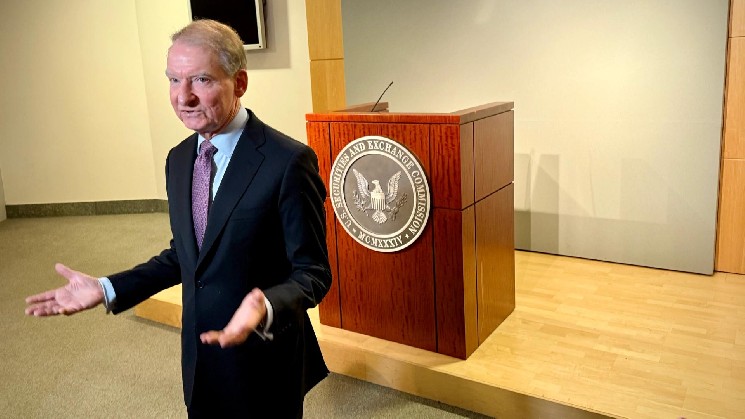
    SEC Commissioner Hester Peirce outlined a three-part regulatory framework for digital assets during recent remarks, emphasizing the need for clarity as markets evolve. The proposals target capital formation, transfer agent modernization, and crypto custody rules for investment advisers.

    Digital Asset Clarity Act Would Reduce Regulatory Guesswork

    The first pillar centers on advancing the Digital Asset Clarity Act. If adopted, the framework would give entrepreneurs greater certainty to raise capital in the U.S. using digital assets rather than having to “guess what the law is as they go.” The legislation aims to define when a digital asset qualifies as a security, providing a clearer path for compliant fundraising.

    Transfer Agent Rules Overdue for Blockchain Integration

    The second initiative calls for an overhaul of transfer agent rules to include blockchains for digital ownership ledgers. Peirce noted the rules have not been seriously updated in roughly four decades and were built for paper stock certificates. Transfer agents are already adapting to a market that increasingly incorporates tokenized assets, making regulatory modernization essential.

    Crypto Custody Proposal for Advisers and Regulated Funds

    Additionally, Peirce said she has asked SEC staff to develop a proposal clarifying crypto custody for investment advisers and regulated funds. That proposal would seek to allow advisers, under certain conditions, to custody crypto themselves and to use state trust companies as custodians. Self-custody may be necessary because qualified third-party custodians do not yet exist for some assets, while state trust companies already provide a pathway that “works in practice.”

    Unified Regulatory Architecture

    Peirce described the three initiatives together as “three pillars of a single, rational, and comprehensive regulatory architecture.” She emphasized the urgency of action, stating, “The SEC should not be the last institution to notice that the world actually has changed.”

    The push for the Clarity Act vote comes as the bill faces an uphill battle, with several key disputes still unresolved ahead of Tuesday’s procedural vote.

  • Bitcoin Suisse Plans to Cut Up to Half Its Swiss Jobs as Work Shifts Abroad

    Bitcoin Suisse Plans to Cut Up to Half Its Swiss Jobs as Work Shifts Abroad

    Bitcoin Suisse Cuts 60 Jobs in Switzerland, Shifts Development Overseas

    Crypto financial services firm Bitcoin Suisse plans to eliminate up to 60 positions in Switzerland, reducing its domestic workforce by half, as the company moves software development and back-office operations to lower-cost international hubs. The Zug-based firm, which oversees more than $3 billion in digital assets under custody, employs roughly 200 people globally.

    Restructuring Driven by Cost Efficiency

    As part of the reorganization, Bitcoin Suisse is closing its IT development site in Copenhagen. The company already operates a technology hub in Bratislava, Slovakia, and intends to establish another in Vietnam. CEO and co-founder Andrej Majcen explained the rationale to Swiss outlet Finews, which first reported the restructuring:

    “In Bratislava and Vietnam, we can provide these services at significantly lower cost,”

    Majcen emphasized that the decision reflects the company’s international growth strategy and is unrelated to difficult crypto market conditions.

    Expansion Beyond Crypto Services

    Founded in 2013, Bitcoin Suisse offers crypto trading, custody, staking, and lending. According to Majcen, the firm now aims to broaden its scope into wealth and asset management services targeting high-net-worth individuals and institutional clients.

    To support that expansion, the company has begun securing regulatory licenses. Its Liechtenstein subsidiary received authorization in June under the European Union’s Markets in Crypto-Assets (MiCA) framework, enabling it to serve clients across selected European Economic Area markets.

  • UniCredit Weighs Tokenized Products and Crypto Services for Clients, Report Says

    UniCredit Weighs Tokenized Products and Crypto Services for Clients, Report Says

    UniCredit is exploring new digital-asset services, including custody and brokerage, as the Italian lender evaluates building infrastructure to support the sector, Bloomberg reported Friday, citing people familiar with the matter.

    Technology Provider Selection Underway

    The bank is currently selecting a technology provider that would enable it to hold digital assets and facilitate transactions, according to the sources. Potential services remain under discussion, and no final decision has been made.

    Scope of Digital-Asset Offerings

    UniCredit is considering a range of services, including tokenized investment products and fixed-income securities, stablecoin applications for clients, and cryptocurrency exposure. The plans reflect a broader push by European banks into digital assets as the European Union’s Markets in Crypto-Assets (MiCA) regulation provides greater clarity for financial institutions.

    Existing Digital-Asset Initiatives

    UniCredit has so far targeted professional investors and corporations. Earlier this year, the bank offered a structured product tied to BlackRock’s iShares Bitcoin Trust ETF. Late last year, it issued Italy’s first tokenized minibond on a public blockchain. Tokenization refers to issuing and transferring traditional assets using blockchain networks.

    Strategic Partnerships and Investments

    The bank also joined other European lenders in creating Qivalis to develop a euro-denominated stablecoin. This week, UniCredit announced it acquired a minority stake in VC Trade, a German lending markets platform, to expand its digital capital markets capabilities.