Tag: Crypto Clarity Act

  • Multiple Actors Behind Crypto Clarity Act Derailment

    Multiple Actors Behind Crypto Clarity Act Derailment

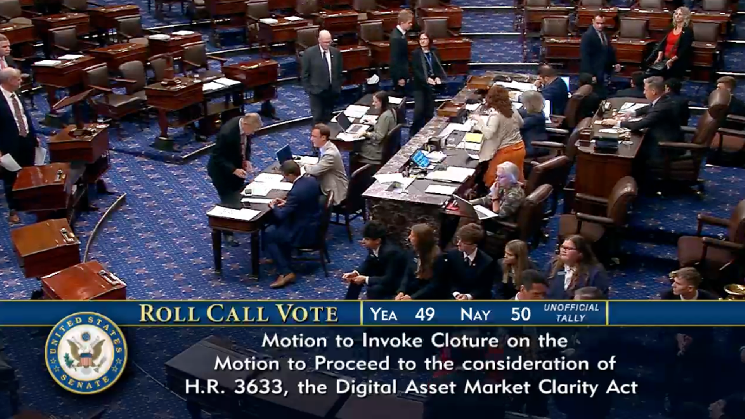
    Senate Democrats accused Republican leadership of abruptly terminating bipartisan negotiations on cryptocurrency legislation Tuesday, forcing a vote despite a potential deal to address ethics concerns surrounding presidential crypto holdings.

    Democrats Demand Ethics Guardrails for Presidential Crypto Holdings

    The legislation, which includes provisions targeting illicit finance, stalled over Democratic demands for stronger ethics requirements. Senator Mark Warner, a Democrat who contributed to the bill’s illicit-finance sections, argued that the legislation was incomplete without guardrails preventing conflicts of interest at the highest levels of government.

    “The president should not be able to use the power and influence of his office to benefit his own crypto holdings while his administration makes decisions that could directly affect their value,” said Senator Mark Warner, one of the Democrats who worked on the illicit-finance portions of the bill and said he really wanted to vote yes on it. “At a minimum, any serious crypto legislation must include meaningful ethics requirements that prevent the president and other senior government officials from profiting off the policies they oversee.”

    Negotiations Collapse Before Tuesday Vote

    According to Democratic lawmakers, negotiators from both parties were close to resolving outstanding issues, including the ethics provisions, as recently as Tuesday afternoon. However, Democrats said Republican leaders shut down talks and proceeded with the vote, which was not procedurally required to happen at that time.

    “Just as Democrats and Republicans were making progress to address ethics concerns, Republican leadership ended talks and forced a vote,” said Democrat Senator Ruben Gallego in a statement after the Tuesday vote. “They were never serious about bipartisan negotiations.”

    Senate Minority Leader Chuck Schumer echoed that account, telling reporters that a bipartisan agreement had been within reach.

    “As you may have heard, there was a bipartisan deal on the table as recently as this afternoon to resolve all outstanding items including ethics,” Schumer said. “Republican leadership walked into the room, broke up the bipartisan discussion and said, ‘No, we’re done’ and killed it.”

    The breakdown underscores the deep partisan divide over how to regulate digital assets while addressing growing concerns about potential conflicts of interest involving public officials and cryptocurrency policy.
  • Bitcoin Remains Unfazed by Trump’s Iran Threats

    Bitcoin Remains Unfazed by Trump’s Iran Threats

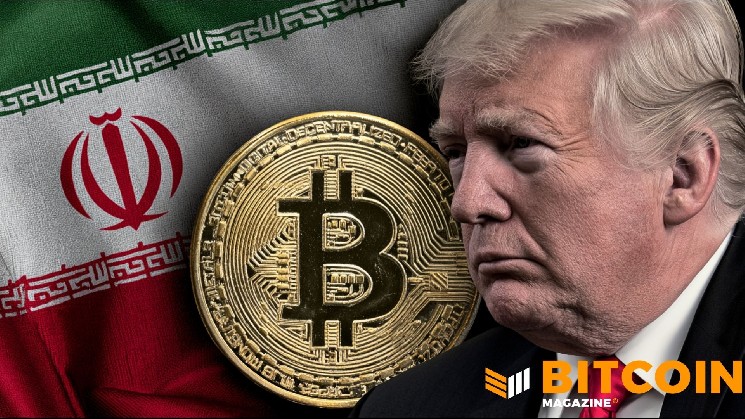
    Bitcoin remained largely unchanged despite escalating tensions in the Middle East and U.S. President Donald Trump’s vow on Monday to hit Iran hard.

    The price of Bitcoin, the world’s largest cryptocurrency, recently stood at $79,076, showing no movement over 24 hours. The asset was also virtually unchanged from its level seven days earlier.

    Bitcoin gains nearly 30% in a month

    Bitcoin began a powerful rally two weeks ago, marking its strongest performance in three years. The cryptocurrency is now up nearly 30% over the past month.

    Bitcoin’s price began rising after the U.S. Treasury announced that it would at least double the size of its liquidity-support buyback operations. The announcement weakened the dollar, while non-yielding assets such as Bitcoin and gold benefited.

    Positive cryptocurrency regulation developments have also supported Bitcoin this month. Last week, President Donald Trump described the long-awaited crypto Clarity Act as a “very, very powerful” piece of legislation and urged lawmakers to pass it.

    The Clarity Act is intended to establish a framework for determining whether digital assets should be classified as securities, commodities or payment stablecoins. The cryptocurrency industry has long called for such legislation.

    Crypto ETF inflows support Bitcoin

    Investors have also returned to exchange-traded funds linked to cryptocurrencies, providing further support for Bitcoin’s price. Between August 17 and August 27, investors put more than $2.8 billion into the funds, the highest total since October.

    JUST IN: Crypto ETFs attracted $3.2 billion in inflows last week, “their largest weekly intake since October 2025”, The Kobeissi Letter reports. BlackRock’s IBIT led with $928 million last week, adding to their $1.3 billion from the prior week, and marking the biggest 2-week…

    — Bitcoin Magazine (@BitcoinMagazine), August 31, 2026

    Bitcoin reached a weekly high of $81,281 before declining again on Friday.

    Geopolitical conflict has weighed on Bitcoin’s price this year. The cryptocurrency has typically come under pressure following news of war and rallied when investors saw prospects for a ceasefire.

    When the United States and Israel first attacked Iran in February, Bitcoin’s price plunged. The cryptocurrency also remained volatile after reports of war in March and April.

    However, analysts say Bitcoin’s volatility has eased in recent months. Monday followed that pattern: Trump threatened to strike Iran again, but the digital asset showed little reaction.

    The United States and Iran resumed strikes on Sunday, marking the first such action in more than one month.

    “We’re going to hit them hard,” President Trump was quoted telling a Fox News reporter on Monday.

    Source: cryptonews.net