Tag: CLARITY Act

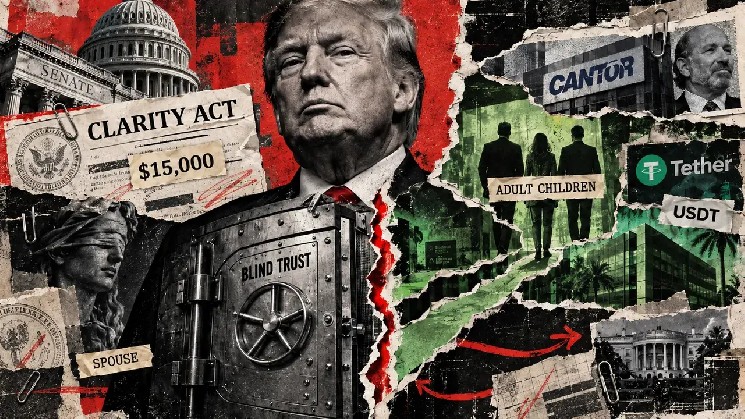
  • Why Trump backed a crypto ethics rule that stopped at the family business

    Why Trump backed a crypto ethics rule that stopped at the family business

    Key Highlights

    • The CLARITY Act’s failed ethics provision would have required senior federal officials to divest crypto-related equity holdings above $15,000 or place them in qualified blind trusts, covering spouses but not adult children.
    • Commerce Secretary Howard Lutnick’s transfer of Cantor Fitzgerald ownership to trusts benefiting his adult children illustrates the gap between legal separation and ongoing family financial exposure to crypto policy.
    • The Senate bill’s collapse leaves unresolved how far conflict-of-interest rules should extend when government policy can rapidly alter the value of family-held digital asset businesses.

    The CLARITY Act’s Ethics Provision: What It Targeted

    The final Senate draft of the Clarifying Law Around Regulations of Innovative Technology (CLARITY) Act contained a narrowly tailored ethics rule that came surprisingly close to becoming law before the bill stalled on Sept. 15. The provision would have applied to the president, vice president, senior executive officials, members of Congress, and other federal officeholders already subject to public financial-disclosure requirements. It mandated that any covered official holding an equity interest worth at least $15,000 in a business whose largest revenue source in any of the preceding three calendar years was issuing or sponsoring digital assets—excluding tokenized traditional assets—must either sell that interest or place it into a qualified blind trust. The same restriction extended to spouses, but adult children were explicitly excluded.

    Republicans characterized the final draft as incorporating most of a bipartisan ethics proposal and dozens of changes requested by Democrats. Yet several Democrats withheld support, arguing the protections did not go far enough. The disagreement centered less on the mechanics of the rule than on where the line between an official’s financial interest and the family’s should be drawn—a distinction that has become increasingly consequential as crypto ventures proliferate among political families.

    The Lutnick Case: Legal Separation vs. Family Economic Reality

    Commerce Secretary Howard Lutnick provides a real-world case study of why that boundary matters. Before joining President Donald Trump’s Cabinet in February 2025, Lutnick spent decades running Cantor Fitzgerald, a major Wall Street trading and investment firm that became deeply embedded in the crypto ecosystem through its relationship with Tether, issuer of the world’s largest stablecoin, USDT. Cantor has held billions of dollars in U.S. Treasuries for Tether and serves as reserve custodian and preferred primary dealer for Tether’s regulated U.S. stablecoin.

    Upon entering government, Lutnick stepped down from Cantor and, in October 2025, transferred his ownership through trusts benefiting his adult children. His son Brandon now runs the company and serves as controlling trustee of the trusts holding the voting interests. Securities and Exchange Commission filings confirm that after the transfer, Howard Lutnick no longer held beneficial ownership of the securities tied to that control structure. Legally, the separation is clean. Economically, however, the family remains heavily exposed to a business whose fortunes are directly affected by federal stablecoin regulation, banking access rules, and securities law—all policy levers within the Commerce Department’s sphere of influence.

    Blind Trusts vs. Family Transfers: A Critical Distinction

    The CLARITY draft’s blind-trust requirement highlighted a common misconception. In federal ethics law, a qualified blind trust is not merely an arrangement where an official transfers assets to a trustee and promises not to interfere. It requires an independent trustee and strict limits on the official’s knowledge of, and control over, the investments. The purpose is to prevent the officeholder from knowing enough about the portfolio to shape government decisions around particular holdings. Moreover, federal ethics guidance generally treats the original holdings as known until the trustee disposes of them or they fall below the relevant threshold; an official cannot erase knowledge of owning a company simply by signing a trust agreement.

    Lutnick’s structure, by contrast, removed his control while deliberately keeping ownership within the next generation of the family. That is a legitimate estate-planning and ethics-compliance move under current law, but it falls short of the blind-trust standard the CLARITY draft would have imposed for certain covered holdings. The bill’s language specified that under this provision, the trustee’s actions and those of businesses held by the trust would not be attributed to the official, though existing conflict-of-interest laws would still apply.

    Where the Bill Drew the Line—and Why It Mattered

    Federal conflict law has traditionally drawn the attribution line close to the official: financial interests of a spouse or minor child can be attributed to an executive-branch employee, but an independent adult child’s interests generally are not. That principle prevents the law from assuming every financially independent son or daughter is simply an extension of a government official. Crypto makes the consequences of that boundary much easier to see. A parent can leave office-facing control behind while the next generation continues running a business tied to stablecoins, token issuance, or Bitcoin finance—sectors whose economics can shift rapidly with federal policy.

    The Trump family illustrates the same dynamic. Trump’s latest certified financial disclosure showed more than $1.4 billion in 2025 income from crypto ventures, according to Reuters, with most connected to World Liberty Financial and the Trump meme coin business. World Liberty was founded with members of his family, including his sons. The White House has said Trump’s finances are managed by his children and that his private interests don’t influence administration policy. Under the Senate proposal, a qualifying interest still owned by Trump himself could have required divestment or a blind trust, as would his spouse’s holdings. Ownership held independently by adult children would fall outside that particular requirement.

    Why This Matters

    The collapse of the CLARITY Act leaves a regulatory vacuum that extends beyond market structure into the heart of government ethics. As digital asset businesses become major sources of private wealth for political families, the speed with which federal policy—stablecoin legislation, banking guidance, securities enforcement—can alter the value of those holdings creates a persistent conflict-of-interest challenge. Congress can require a president or Cabinet secretary to sell an asset or submit to a qualified blind trust. What it has not settled is how far those restrictions should follow the money once the business passes to the next generation. Until that question is answered, the gap between legal compliance and public confidence will remain a defining feature of crypto-era governance.

    Frequently Asked Questions

    What specific holdings would the CLARITY Act ethics rule have covered?

    The rule targeted equity interests worth at least $15,000 in businesses or subsidiaries whose largest revenue source in any of the preceding three calendar years was issuing or sponsoring digital assets, excluding tokenized traditional assets. It also restricted officials from issuing or sponsoring digital assets for compensation. Simply holding Bitcoin or other tokens would not have triggered the requirement unless the official held equity in a qualifying issuer or sponsor.

    Why were adult children excluded from the ethics provision?

    Federal conflict law traditionally does not automatically attribute the financial interests of independent adult children to a government official. The CLARITY draft followed that precedent, covering the official and spouse but not adult children. Several Democrats opposed the bill in part because they believed this exclusion left too much room for families to remain financially connected to crypto businesses while the government writes the industry’s rules.

    How does a qualified blind trust differ from transferring a company to family members?

    A qualified blind trust requires an independent trustee and strict limits on the official’s knowledge of and control over investments. The original holdings are treated as known until the trustee disposes of them. Transferring a family company to adult children, as Howard Lutnick did, removes the official’s control but deliberately keeps ownership and economic exposure within the family—a legal separation that does not meet the blind-trust standard.
  • Clarity Act Replaced: What the Bill Contained and What Comes Next

    Clarity Act Replaced: What the Bill Contained and What Comes Next

    Key Highlights

    • The Clarity Act would have granted the Commodity Futures Trading Commission (CFTC) full supervisory authority over crypto commodity spot markets, including Bitcoin and Ethereum trading.
    • The legislation aimed to define regulatory buckets for blockchain-native assets, curb illicit finance, and provide limited legal protections for decentralized finance (DeFi) software developers.
    • With the bill stalled, the Securities and Exchange Commission (SEC) is moving to fill the regulatory vacuum, signaling continued enforcement-focused oversight of the digital asset sector.

    The Clarity Act’s Regulatory Blueprint

    The Clarity Act represented a comprehensive attempt to resolve the United States’ fragmented approach to digital asset regulation by formally designating the Commodity Futures Trading Commission as the primary supervisor of crypto commodity spot markets. Since Bitcoin (BTC) at $81,656.52 and Ethereum’s ether (ETH) at $2,643.82 were classified as commodities, the bulk of cryptocurrency trading activity occurs in spot markets that have operated without a dedicated, hands-on federal regulator—except in cases involving market manipulation. The bill would have elevated the CFTC, the SEC’s sister agency overseeing derivatives, to direct supervisory authority over these markets, addressing a structural gap unique to the American regulatory framework where securities and derivatives oversight remain separated across independent agencies.

    Defining Asset Categories and Developer Protections

    Beyond market structure, the legislation sought to establish clear taxonomic buckets for blockchain-native assets, assigning each to the appropriate regulatory regime. The bill also incorporated provisions targeting illicit finance risks and, in a notably contentious measure, proposed limited legal shields for software developers building decentralized finance protocols. These protections aimed to prevent developers from facing prosecution based solely on how third parties utilize their open-source code—a provision that sparked significant debate across industry and policy circles.

    Legislative Failure and the Enforcement Vacuum

    The Clarity Act ultimately stalled due to provisions unrelated to its core regulatory mission, leaving a policy void that the SEC has moved quickly to occupy. Rather than waiting for congressional action, the securities regulator has intensified its enforcement posture, leveraging existing securities laws to assert jurisdiction over a broad swath of digital asset activity. This development effectively replaces a potential legislative framework—designed with industry input and clear statutory boundaries—with a case-by-case enforcement approach that many market participants argue creates greater uncertainty for compliant actors.

    Why This Matters

    The collapse of the Clarity Act underscores the persistent inability of Congress to pass bespoke digital asset legislation, leaving regulatory authority contested between the SEC and CFTC. The U.S. remains an outlier among major economies in maintaining separate securities and derivatives regulators, a structure that complicates the classification of hybrid assets like cryptocurrencies. In the absence of statutory clarity, the SEC’s enforcement-first strategy is likely to continue shaping market behavior, potentially driving activity offshore or into less transparent venues while courts adjudicate the boundaries of the agency’s jurisdiction on a case-by-case basis.

    Frequently Asked Questions

    What would the Clarity Act have changed for crypto regulation?
    The bill would have granted the CFTC full supervisory powers over crypto commodity spot markets—where Bitcoin and Ethereum primarily trade—while creating defined regulatory categories for blockchain assets, adding anti-illicit finance measures, and offering limited liability protections for DeFi software developers.
    Why did the legislation fail?
    The bill was derailed by unrelated provisions that had little to do with its primary regulatory objectives, though the source does not specify which particular sections caused the breakdown.
    How is the SEC responding to the legislative vacuum?
    The SEC is actively using its existing enforcement authority to police the digital asset sector, effectively filling the regulatory gap left by the Clarity Act’s failure through litigation and regulatory actions rather than new rulemaking.
  • SEC Advances Despite Clarity Act Stall, Bitfinex Says

    SEC Advances Despite Clarity Act Stall, Bitfinex Says

    Key Highlights

    • The SEC is advancing regulatory initiatives independently while the Clarity Act remains stalled in Congress, per a Bitfinex announcement.
    • Bitfinex warns the SEC’s proactive enforcement stance could heighten scrutiny on crypto exchanges and trading activities.
    • Market participants face prolonged uncertainty as legislative clarity remains elusive, potentially driving volatility.

    SEC Accelerates Crypto Oversight Amid Legislative Gridlock

    The U.S. Securities and Exchange Commission is moving forward with its own regulatory agenda for the digital asset sector even as the Clarity Act—a bipartisan bill designed to establish a comprehensive framework for crypto markets—languishes in Congress. The development was highlighted in a recent communication from Bitfinex, one of the world’s longest-operating cryptocurrency exchanges, which signaled that the regulator is not awaiting congressional action before tightening its supervisory grip. This divergence between legislative intent and executive enforcement underscores a growing tension in U.S. crypto policy, where the absence of statutory guardrails has not prevented the SEC from pursuing what it views as necessary investor protections through existing securities laws.

    Bitfinex Flags Regulatory Uncertainty for Traders

    Bitfinex’s assessment suggests the SEC’s willingness to act unilaterally could introduce a new layer of unpredictability for market participants. The exchange noted that trading volumes and order book dynamics across major assets are already reflecting mixed signals, a pattern consistent with a cautious sentiment among traders who are closely parsing every regulatory signal. Without the definitional clarity the Clarity Act would provide—particularly around which tokens constitute securities versus commodities—exchanges like Bitfinex and their users remain exposed to shifting enforcement priorities. The SEC’s jurisdiction over securities markets gives its actions outsized influence over platform operations, listing decisions, and the broader liquidity environment.

    Market Dynamics Reflect Wait-and-See Posture

    Current market data shows no significant price dislocations or volume spikes directly attributable to the latest regulatory signaling, yet the underlying mood is described as cautious. Participants are monitoring for formal SEC announcements regarding rulemaking, enforcement actions, or guidance updates that could crystallize the regulatory perimeter. Analysts suggest that until either Congress passes the Clarity Act or the SEC finalizes its approach through rulemaking or litigation, the market will likely continue to price in a risk premium for regulatory uncertainty. This environment may favor compliant, well-capitalized platforms while pressuring those operating in jurisdictional gray zones.

    Why This Matters

    The standoff between legislative delay and regulatory acceleration defines the current phase of U.S. crypto policy. The Clarity Act, formally known as the Digital Asset Market Structure and Investor Protection Act, was crafted to resolve long-standing ambiguities by assigning clear regulatory authority between the SEC and the Commodity Futures Trading Commission. Its stagnation leaves a vacuum the SEC is filling through enforcement—most notably in cases against major exchanges and token issuers. For industry stakeholders, the practical consequence is a compliance landscape shaped by litigation risk rather than statutory certainty. The next inflection points will likely come from either a congressional breakthrough, a landmark court ruling on token classification, or a formal SEC rule proposal that tests the boundaries of its authority under the Howey test.

    Frequently Asked Questions

    What is the Clarity Act and why is it stalled?

    The Clarity Act (Digital Asset Market Structure and Investor Protection Act) is a bipartisan bill that would establish a comprehensive regulatory framework for digital assets, defining which tokens are securities versus commodities and assigning oversight between the SEC and CFTC. It remains stalled in Congress due to competing legislative priorities, jurisdictional disputes between committees, and the broader political calendar.

    How does the SEC’s current approach affect exchanges like Bitfinex?

    Without legislative clarity, the SEC is applying existing securities laws through enforcement actions and guidance. This creates compliance uncertainty for exchanges regarding token listings, custody, and operational requirements. Bitfinex and similar platforms must navigate evolving expectations while facing potential enforcement risk if the SEC determines their listed assets or services violate securities regulations.

    What should traders watch for in the coming weeks?

    Traders should monitor formal SEC communications—including rule proposals, enforcement announcements, and speeches by Commissioners—as well as any movement on the Clarity Act in Congressional committees. Court rulings in pending SEC cases against crypto firms could also set precedents that reshape the regulatory landscape rapidly.

  • Bitcoin Briefly Tops $81,000 as Bad News Stops Working

    Bitcoin Briefly Tops $81,000 as Bad News Stops Working

    Key Highlights

    • Bitcoin surged approximately 6% on Friday to briefly trade above $81,000, absorbing five major macroeconomic and regulatory headwinds—including a failed Senate vote on the CLARITY Act, a Federal Reserve rate hike, and a Bank of Japan rate increase—without a sustained selloff.
    • The rally was driven predominantly by short covering: $470 million in short positions were liquidated versus only $60 million in longs, while aggregate open interest fell 1.4%, signaling position compression rather than fresh leveraged buying.
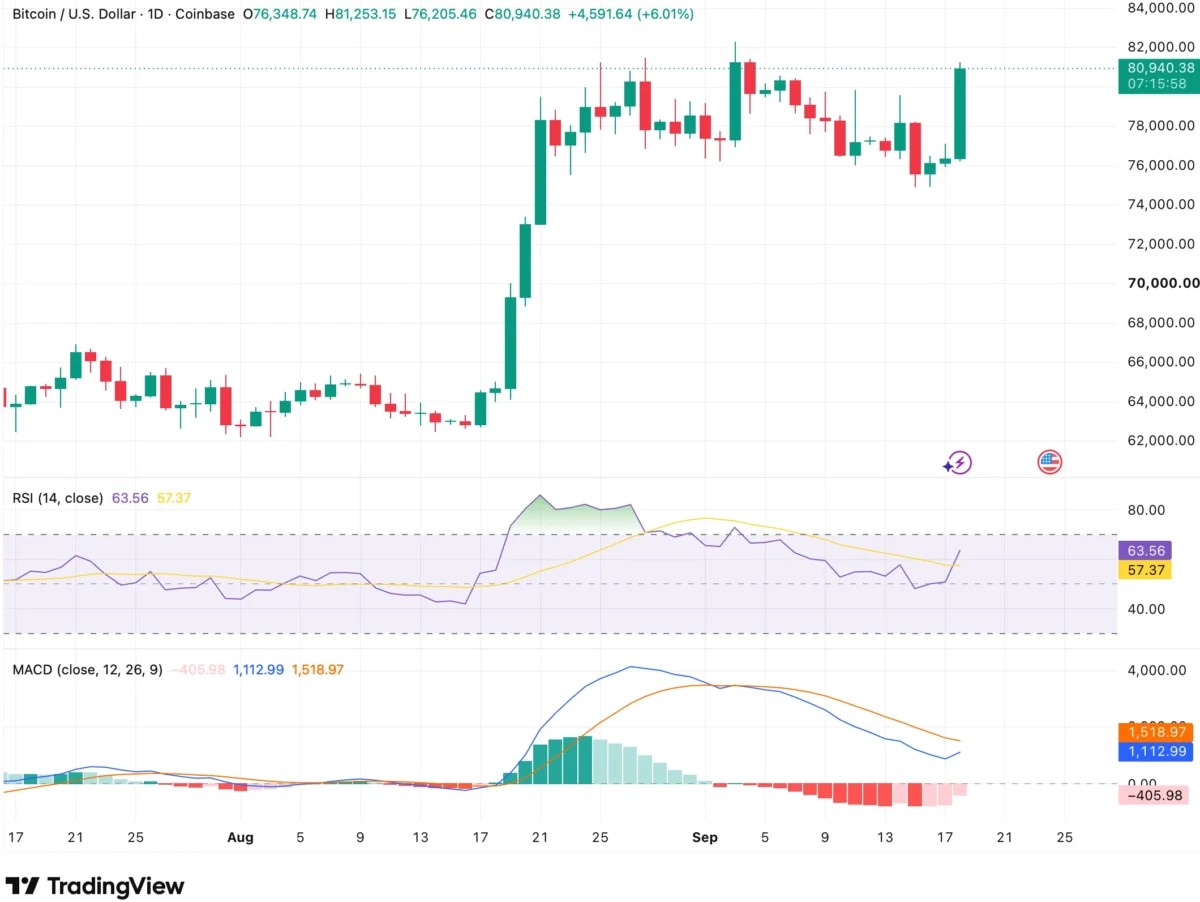
    • Technical momentum is improving (14-day RSI at 63.56, above its moving average), but the daily MACD remains below its signal line, leaving the move unconfirmed by slower momentum indicators.

    Bitcoin Defies Concentrated Macro Headwinds

    Bitcoin staged a sharp intraday reversal on Friday, climbing roughly 6% to a session high of $81,253 on the Coinbase daily chart before settling near $80,940 at the time of writing. The advance is notable not for its magnitude but for the backdrop against which it occurred: within a single week, the market digested a procedural failure on the CLARITY Act in the U.S. Senate (49–50, short of the 60 votes needed for cloture), the Federal Reserve’s first rate increase since 2023 (lifting the target range to 3.75%–4.00%), the Bank of Japan’s policy rate hike to 1.25% (a 31‑year high), a U.S. Dollar Index reclaiming the 100 level, and Brent crude holding above $100 per barrel. Each of these developments typically pressures risk assets—higher rates boost the appeal of yield‑bearing alternatives, a stronger dollar tightens global financial conditions, and elevated oil sustains inflationary impulses—yet Bitcoin not only refused to extend its earlier decline toward $76,000 but accelerated higher.

    Derivatives Data Reveal Short‑Covering Dynamics

    Friday’s derivatives metrics provide a clearer mechanical explanation than any single bullish catalyst. According to Coinglass data, roughly $530 million in leveraged crypto positions were liquidated over 24 hours, with short positions accounting for approximately $470 million of that total versus only $60 million in long liquidations. Simultaneously, aggregate open interest declined 1.4% to $453.43 billion while 24‑hour derivatives volume rose 2.2% to nearly $936 billion. This combination—rising price, falling open interest, and disproportionately large short liquidations—is consistent with position compression: traders positioned for further downside were forced to buy back as Bitcoin rallied, amplifying the move. The breadth of the advance underscores the systemic nature of the squeeze; Ethereum gained 5.3%, XRP 6.2%, Solana 10.4%, and HYPE more than 11%, lifting total crypto market capitalization about 5% to $2.76 trillion.

    Short Squeezes Are Self‑Limiting

    While the liquidation cascade explains the velocity of Friday’s rally, it does not guarantee durability. Forced covering creates mechanical demand that evaporates once bearish positions are exhausted. The critical question is whether underlying spot demand—evidenced by sustained exchange trading activity, continued ETF inflows, or stable open interest rebuilding—persists after the liquidation impulse fades. Absent that, the rally remains a positioning unwind rather than a new demand regime.

    Technical Momentum Improves But Lags Price Action

    Bitcoin’s daily chart offers a second lens on sustainability. The 14‑day Relative Strength Index has climbed to 63.56, comfortably above its moving average at 57.37 and well clear of the conventionally overbought 70 threshold, indicating strengthening momentum without exhaustion. The Moving Average Convergence Divergence, however, tells a more cautious story: the MACD line has turned upward to 1,112.99 but remains below the signal line at 1,518.97, leaving the histogram negative at –405.98. The histogram bars have been contracting and the MACD line curling higher, suggesting the direction is improving, but a bullish crossover has not yet occurred. This divergence—price accelerating while the slower daily momentum indicator has not fully confirmed—creates a clear watchpoint: a MACD crossover would signal that momentum broadening is underway rather than remaining concentrated in a single explosive session.

    Historical Parallel: 2023 Regime Shift Echoes

    The current dynamic bears a striking resemblance to Bitcoin’s behavior throughout 2023. During that period, the asset absorbed aggressive Federal Reserve tightening (the target range ultimately reaching 5.25%–5.50%) alongside an intensive U.S. regulatory campaign that saw the SEC sue Coinbase and Binance and designate several major tokens as securities. Despite repeated negative headlines, each successive shock generated diminishing incremental selling pressure, and Bitcoin gradually ceased revisiting the lows established after the 2022 collapse. The lesson from 2023 is not that restrictive policy or enforcement actions became bullish, but that the market’s capacity to produce new sellers in response to them was waning. Markets can begin shifting before the news flow turns favorable, and Friday’s price action—absorbing five simultaneous headwinds without a net decline—suggests a similar recalibration may be in progress.

    Why This Matters

    The week’s events highlight a potential inflection point in Bitcoin’s market structure. For years, macro tightening and regulatory uncertainty acted as reliable catalysts for drawdowns. The failure of that playbook in the face of a concentrated barrage of negative catalysts—failed legislation, dual central‑bank hikes, dollar strength, and elevated energy prices—signals that the marginal seller may be exhausted. If spot demand proves resilient, leverage remains contained, and momentum indicators like the MACD confirm the RSI’s strength, the market could be transitioning to a regime where bad news is increasingly “priced in” and produces diminishing downside volatility. This has direct implications for portfolio allocation, risk management, and the narrative around Bitcoin’s maturation as a macro asset. Institutional participation metrics (ETF flows, custody data) and derivatives market structure (open interest trends, funding rates) will be the primary arbiters of whether this is a durable shift or a temporary positioning anomaly.

    Frequently Asked Questions

    What specifically drove Bitcoin’s 6% rally on Friday?

    The primary driver was a massive short‑covering event: approximately $470 million in short positions were liquidated in 24 hours, forcing bearish traders to buy back Bitcoin and accelerating the price rise. Aggregate open interest fell, confirming that the rally stemmed from position unwinding rather than new leveraged long entries.

    Is this rally sustainable or just a short squeeze?

    Sustainability hinges on whether genuine spot demand persists after the forced buying ends. Key signals to watch include continued ETF inflows, stable or gradually rebuilding open interest (rather than a surge in aggressive longs), and a bullish MACD crossover on the daily chart confirming broadening momentum.

    How does this week compare to previous macro stress periods for Bitcoin?

    The closest analogue is 2023, when Bitcoin absorbed simultaneous Fed tightening and SEC enforcement actions with progressively smaller drawdowns. In both episodes, the market’s reaction function to negative news appeared to change—selling pressure diminished even as the fundamental headwinds persisted—suggesting a structural shift in participant positioning and risk appetite.

  • Altcoin Rally Sustainability Questioned: Analysts Debate if Bull Market Has Begun

    Altcoin Rally Sustainability Questioned: Analysts Debate if Bull Market Has Begun

    Key Highlights

    • Bitcoin demonstrated unexpected resilience following the Clarity Act’s Senate failure and the Federal Reserve’s rate hike, outperforming the S&P 500 despite initial fear-driven sell-offs.
    • Santiment on-chain data reveals large wallets (10–10,000 BTC) have distributed approximately 57,600 BTC since August 5, while small investors increased holdings—a pattern historically associated with heightened pullback risk.
    • Capital rotation is accelerating into altcoins, with Zcash, Uniswap, and Hyperliquid significantly outperforming Bitcoin and Ethereum, while AI and big data tokens like NEAR see surging volume and price action.

    Bitcoin Resilience Amid Macro Headwinds

    Bitcoin’s price action has defied bearish macroeconomic catalysts in recent sessions, holding relatively flat while traditional equity markets stumbled. According to Santiment analyst Brian, the failure of the Clarity Act to advance in the U.S. Senate combined with the Federal Reserve’s latest interest rate decision initially amplified investor fear. However, the cryptocurrency market’s reaction proved more resilient than anticipated. Brian noted that despite these developments being widely viewed as extremely negative for digital assets, Bitcoin’s swift recovery after a limited pullback suggests the market has largely absorbed the negative news flow. He highlighted a striking divergence: while the S&P 500 dropped to its lowest level in a month following the Fed’s decision, Bitcoin avoided a similarly severe sell-off, signaling underlying strength relative to traditional risk assets.

    On-Chain Data Flags Whale Distribution

    Beneath the surface stability, Santiment’s on-chain metrics are flashing a significant risk signal for Bitcoin. Data shared by Brian shows that large investor wallets holding between 10 and 10,000 BTC—often categorized as whales and “sharks”—have sold a cumulative total of approximately 57,600 BTC since August 5. Concurrently, smaller investors have been accumulating during the same period. This dynamic indicates that sophisticated entities are distributing into strength while retail participants chase price appreciation, a pattern that historically precedes corrections. Brian emphasized that this outlook warrants caution in the short to medium term, adding that renewed accumulation by these large wallets would be required to restore a more bullish structural signal. Santiment concludes that the continued reduction in whale holdings alongside rising retail exposure elevates the probability of a pullback above normal levels.

    Capital Rotation Fuels Altcoin Outperformance

    In stark contrast to Bitcoin’s distribution profile, the altcoin sector is exhibiting clear signs of capital rotation. Santiment data highlights that several mid- and low-capitalization assets—including Zcash, Uniswap, and Hyperliquid—have significantly outperformed both Bitcoin and Ethereum over the past week. Brian stated that the strong gains across a broad swath of alternative cryptocurrencies, juxtaposed with limited downside in the two largest assets, serve as a significant signal that capital is actively shifting toward altcoins. This rotation extends beyond isolated names; trading volumes for AI and big data-focused cryptocurrencies have surged recently. Brian specifically noted strengthening volume and price action in NEAR Protocol and other AI-themed projects, advising that if the altcoin rally persists through the second half of September, the AI and big data sector warrants close monitoring.

    AI and Memecoin Dynamics Signal Shifting Sentiment

    Sentiment analysis further complicates the outlook. Santiment tracks memecoin activity as an inverse market indicator, observing that peaks in memecoin trading volume and speculative fervor have historically coincided with short-term market tops, while sharp declines in memecoin interest have occasionally appeared near market bottoms. Meanwhile, overall market sentiment has deteriorated from strong optimism at the start of September to neutral levels. Brian explained that sentiment was buoyed by high expectations for the Clarity Act’s passage but eroded progressively following the Senate setback and the Fed’s rate decision. Regarding Bitcoin’s near-term trajectory, Brian acknowledged a path toward $80,000 and potentially $85,000 remains possible, though he stressed that fresh positive catalysts would likely be necessary to sustain such a move.

    Why This Matters

    The divergence between whale distribution and retail accumulation in Bitcoin underscores a classic late-cycle dynamic where smart money exits into liquidity provided by late entrants. Simultaneously, the pronounced capital rotation into altcoins—particularly AI-linked tokens—suggests investors are seeking higher beta exposure amid a perceived lull in Bitcoin’s momentum. The Clarity Act’s legislative stall removes a near-term regulatory clarity catalyst for the U.S. market, while the Fed’s rate posture keeps macro liquidity tight. These factors combined create an environment where selective altcoin strength may persist, but systemic risk remains elevated should Bitcoin’s whale distribution accelerate. Market participants should monitor on-chain accumulation trends among large wallets and the sustainability of altcoin volume as leading indicators for the next directional move.

    Frequently Asked Questions

    What does the 57,600 BTC sale by large wallets since August 5 indicate?
    It signals that entities holding 10–10,000 BTC are distributing positions during price strength, while smaller buyers absorb supply—a pattern Santiment associates with increased short-to-medium-term pullback risk.
    Which altcoins are leading the current capital rotation?
    Zcash, Uniswap, and Hyperliquid have significantly outperformed Bitcoin and Ethereum over the past week, alongside rising volume in AI and big data tokens such as NEAR Protocol.
    What catalysts could push Bitcoin above $80,000 again?
    According to Santiment’s Brian, Bitcoin could retest $80,000–$85,000, but the market would likely require new positive catalysts—such as regulatory clarity or improved macro liquidity—to sustain such a rally.
  • Legendary Analyst Tom Lee Reveals New Cryptocurrency Future Prediction

    Legendary Analyst Tom Lee Reveals New Cryptocurrency Future Prediction

    Key Highlights

    • BitMine Chairman Tom Lee asserts cryptocurrency market rally can continue despite CLARITY Act failing to advance in U.S. Senate
    • Lee emphasizes real user and investor demand outweighs single regulatory outcomes for crypto market trajectory
    • Ethereum remains preferred institutional blockchain platform; switching to alternatives creates unnecessary technical and operational risks

    CLARITY Act Stalls But Market Momentum Persists, Says BitMine Chairman

    BitMine Chairman Tom Lee maintains that the cryptocurrency market’s upward trajectory remains intact despite the CLARITY Act failing to secure the 60 votes needed to advance in a Senate procedural vote. The legislation, designed to establish a comprehensive regulatory framework for digital assets in the United States, would have explicitly defined the Commodity Futures Trading Commission’s (CFTC) oversight role. However, Lee argues that fundamental market forces—not any single piece of legislation—will ultimately determine the sector’s direction.

    User Demand Trumps Regulatory Milestones

    In an interview, Lee argued that real user and investor demand is more important than any single regulation for the future of the cryptocurrency market. He stated that the passage of the CLARITY Act would create a clearer regulatory framework for the industry and make the role of the US Commodity Futures Trading Commission (CFTC) more explicit, adding that the failure of the bill would not completely halt the regulation of the sector. Following the bill’s failure, the U.S. Securities and Exchange Commission (SEC) and the CFTC will continue to work on regulations for the cryptocurrency sector within their existing legal powers.

    Prediction Markets Demonstrate Resilience Amid Uncertainty

    Lee pointed out that sectors like prediction markets have shown that growth can continue in areas with strong demand despite regulatory uncertainty. Therefore, he argued that the failure of the CLARITY Act alone would not be a development that would end the bullish trend in the cryptocurrency market. This perspective suggests market participants are pricing in regulatory evolution as an ongoing process rather than a binary legislative event.

    Ethereum’s Institutional Dominance Remains Unchallenged

    Network Effects Outweigh Theoretical Alternatives

    The BitMine chairman also reiterated his strong views, particularly regarding Ethereum’s institutional use. He stated that it would not make sense for financial institutions to gravitate towards new networks with low liquidity and uncertainties surrounding code security, adoption, market makers, or node operators once they decide to use a public blockchain. Lee stated that Ethereum is currently the preferred platform for financial institutions, and that switching to alternative networks could create unnecessary technical and operational problems.

    Why This Matters

    The CLARITY Act’s stall reflects ongoing legislative gridlock around digital asset regulation in Washington, yet market structure continues evolving through agency rulemaking and institutional adoption. Lee’s analysis highlights a critical divergence: while policy makers debate comprehensive frameworks, market infrastructure—particularly Ethereum’s institutional entrenchment—is hardening around practical utility and network effects. The SEC and CFTC’s parallel regulatory tracks under existing authority suggest a fragmented but functional oversight regime may emerge absent congressional action. For investors and builders, this underscores that product-market fit and liquidity moats currently matter more than regulatory clarity timelines.

    Frequently Asked Questions

    Did the CLARITY Act fail completely?

    The CLARITY Act failed to reach the 60-vote threshold needed to advance in a Senate procedural vote, but this does not permanently kill the legislation—it could be reintroduced or its provisions incorporated into other bills.

    What happens to crypto regulation now that the CLARITY Act stalled?

    The SEC and CFTC will continue developing regulations within their existing statutory authorities, maintaining a dual-agency oversight approach rather than the unified framework the CLARITY Act proposed.

    Why does Tom Lee believe Ethereum will remain the primary institutional blockchain?

    Lee cites Ethereum’s established liquidity, proven code security, broad adoption, mature market maker ecosystem, and decentralized node operator network as factors that make switching to newer, less proven alternatives operationally and technically irrational for financial institutions.

    This is not investment advice.

  • Clarity Act Stalled; CFTC Submits Cryptocurrency Draft to White House

    Clarity Act Stalled; CFTC Submits Cryptocurrency Draft to White House

    Key Highlights

    • The Clarity Act, a leading legislative effort to establish a comprehensive U.S. cryptocurrency market framework, failed a procedural Senate vote this week.
    • The CFTC submitted a new regulatory proposal to the White House Office of Management and Budget on September 17, now under interagency review by OIRA.
    • CFTC Chair Michael Selig directed staff to “develop ways to formalize the digital asset market structure using the agency’s existing legal authority, independently of congressional legislation,” signaling a potential administrative path forward.

    Senate Setback for Clarity Act Prompts CFTC Administrative Action

    The legislative path toward a unified federal framework for digital assets encountered a significant obstacle this week when the Clarity Act failed to secure the necessary votes to advance in the U.S. Senate. The bill, widely regarded as one of the most consequential attempts to codify comprehensive rules for cryptocurrency markets, stalled on a procedural vote, leaving a regulatory vacuum that the Commodity Futures Trading Commission (CFTC) appears prepared to address through administrative rulemaking.

    CFTC Proposal Enters White House Interagency Review

    According to the Office of Information and Regulatory Affairs (OIRA) within the White House Office of Management and Budget, the CFTC formally submitted a new proposal on September 17. The submission is currently undergoing interagency review, a standard step before a proposed rule can be published for public comment in the Federal Register. While the full scope and specific provisions of the regulation have not been disclosed, a Bloomberg report analyzing the draft title indicates the commission intends to establish a comprehensive regulatory framework governing cryptocurrency transactions and the operational structure of digital asset markets.

    Chair Selig Signals Intent to Leverage Existing Authority

    The agency’s move aligns with recent public statements from CFTC Chairman Michael Selig, who said he had instructed staff to “develop ways to formalize the digital asset market structure using the agency’s existing legal authority, independently of congressional legislation.” This approach suggests the commission is prepared to assert jurisdiction over digital asset markets—particularly those involving commodities and derivatives—without waiting for new statutory mandates from Congress.

    Industry Observers Note Accelerated Timeline

    The speed of the CFTC’s submission drew immediate attention from policy analysts. Hyperliquid Policy Center CEO Jake Chervinsky posted on X, “The CFTC is moving fast. It appears to have sent a proposed rule for interagency review.” His observation underscores a growing perception that federal regulators may pursue parallel administrative tracks to address digital asset oversight while legislative efforts remain gridlocked.

    Why This Matters

    The dual developments—legislative stall and regulatory acceleration—highlight a pivotal moment for U.S. crypto policy. With the Clarity Act’s future uncertain, the CFTC’s proposal represents the most concrete federal initiative to date to define market structure rules for digital assets under existing commodities law. If finalized, the rule could establish registration, reporting, and operational standards for trading platforms, custodians, and market participants, shaping compliance obligations across the industry. However, the scope of the CFTC’s authority over spot digital asset markets remains legally contested, and any rulemaking will likely face scrutiny from both industry stakeholders and congressional committees. The OIRA review period typically spans 90 days but can be extended, meaning the earliest public glimpse of the proposed text may arrive in late 2024 or early 2025.

    Frequently Asked Questions

    What is the Clarity Act and why did it fail?
    The Clarity Act is a Senate bill designed to create a comprehensive legal framework for cryptocurrency markets in the United States. It failed a procedural vote this week, meaning it did not receive the necessary support to advance to debate or a final vote on the Senate floor.
    What does the CFTC’s new proposal aim to do?
    Based on the draft title reviewed by Bloomberg, the CFTC’s proposal seeks to create a comprehensive regulatory framework for cryptocurrency transactions and the functioning of digital asset markets, using the agency’s existing authority under the Commodity Exchange Act.
    When will the public see the details of the CFTC proposal?
    The proposal is currently under review by the Office of Information and Regulatory Affairs (OIRA). Interagency review typically takes up to 90 days, after which the CFTC would publish a Notice of Proposed Rulemaking in the Federal Register for public comment.
  • CFTC Submits Crypto Market Structure Proposal to White House for Review

    CFTC Submits Crypto Market Structure Proposal to White House for Review

    Key Highlights

    • The CFTC has submitted a proposed regulatory framework for crypto asset transactions and markets to the White House Office of Management and Budget for review.
    • The move comes after the CLARITY Act stalled in the Senate, prompting the agency to act under its existing authorities.
    • The proposal could establish a new “crypto asset market” category for eligible exchanges and permit leveraged or margined crypto trading.

    CFTC Advances Crypto Rulemaking Amid Legislative Gridlock

    The Commodity Futures Trading Commission is forging ahead with its own regulatory framework for digital asset markets after congressional action on the CLARITY Act stalled in the Senate. Federal records confirm the agency formally submitted its proposed rule set to the White House Office of Management and Budget on September 17, initiating the interagency review process required before the commission can vote on publication for public comment.

    Proposal Leverages Existing Statutory Authority

    Chairman Michael Selig signaled the agency’s intent in August, stating that CFTC staff were developing rules under existing authorities that would create a new category of “crypto asset market” for eligible exchanges and permit crypto trading on a leveraged or margined basis. The submission to OMB represents a concrete step toward formalizing that vision, bypassing the legislative impasse that has left a regulatory vacuum for spot and derivatives crypto markets alike.

    Regulatory Process and Next Steps

    The proposal now faces OMB review, which may result in revisions before the document returns to the CFTC for a commission vote. If approved, the agency would publish a notice of proposed rulemaking in the Federal Register, opening a public comment period. A final rule would then require another commission vote before taking effect, a timeline that could extend well into 2025 depending on the volume of feedback and any legal challenges.

    Why This Matters

    The CFTC’s unilateral action underscores the growing urgency among U.S. regulators to establish guardrails for the digital asset ecosystem in the absence of comprehensive legislation. While the Securities and Exchange Commission has pursued enforcement actions, the CFTC’s rulemaking approach aims to create a structured registration and compliance regime for platforms offering crypto derivatives and leveraged products. Market participants, including exchanges, custodians, and institutional investors, are closely monitoring the process for clarity on eligibility standards, capital requirements, and customer protection provisions. The outcome will shape the competitive landscape for U.S.-based crypto trading venues and influence global regulatory alignment.

    Frequently Asked Questions

    What is the CLARITY Act and why did it stall?

    The CLARITY Act (Commodity Legislation for America’s Regulatory Improvement and Transparency Yearly) was a bipartisan bill designed to clarify the CFTC’s jurisdiction over digital commodity markets. It passed the House Agriculture Committee but did not advance to a full Senate vote before the legislative calendar compressed ahead of the election cycle.

    What does a “crypto asset market” designation mean for exchanges?

    Based on Chairman Selig’s public remarks, the new category would allow eligible platforms to register with the CFTC and offer leveraged or margined trading of digital assets under a defined regulatory framework, including capital, reporting, and customer segregation requirements.

    How long before a final rule takes effect?

    After OMB review and a CFTC vote to propose, a public comment period of at least 30 to 60 days is typical. The commission must then review comments, potentially revise the rule, and vote again on a final version. The entire process often takes six to twelve months or longer.

  • Bitcoin Endures September Volatility Amid Rate Hikes and Clarity Act Setback Challenging Bulls

    Bitcoin Endures September Volatility Amid Rate Hikes and Clarity Act Setback Challenging Bulls

    Key Highlights

    • The Clarity Act failed to advance in the U.S. Senate on Tuesday, securing only 49 of the 60 votes required for cloture.
    • Bitcoin dipped briefly below $74,887 but stabilized rapidly, signaling traders had largely priced in the legislative risk.
    • Analyst Mitchell Askew of Blockware Intelligence interprets the muted price reaction as evidence of seller exhaustion, a potential indicator of a market bottoming process.

    Senate Rejects Clarity Act as Bitcoin Shrugs Off Legislative Setback

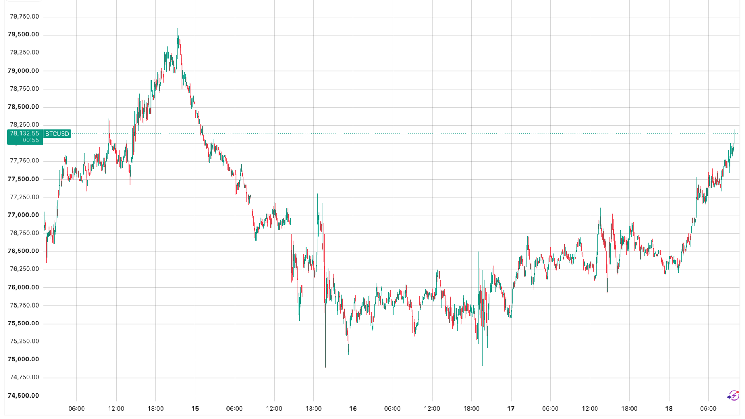
    The Clarity Act, a closely watched piece of digital asset legislation, failed to overcome a procedural hurdle in the U.S. Senate on Tuesday. The measure attracted just 49 supporters, falling 11 votes short of the 60-vote supermajority needed to advance. Despite the legislative defeat, the cryptocurrency market’s reaction was notably subdued. Bitcoin briefly slipped below the $74,887 level during the session but recovered quickly, stabilizing in a manner that suggested market participants had already discounted the probability of failure.

    Analyst Cites Seller Exhaustion as Bullish Signal

    Mitchell Askew, head of Blockware Intelligence at Blockware, characterized the price action as a significant technical development. In an email commentary, Askew stated: “What stands out to me is that Bitcoin has hardly budged at all in response to two objectively bad pieces of news. A 25-basis-point hike and the CLARITY Act failing to pass are both headlines that, in a different market environment, would have sent price meaningfully lower. Instead, we got basically nothing.”

    Askew explained that the absence of a sustained sell-off on adverse headlines points to a depletion of motivated sellers. “Anybody who was going to sell bitcoin based on events like these has already sold. They no longer have coins to sell. That is an incredibly positive sign for the medium to long term, and it is exactly what you tend to see in the later stages of a bottoming process,” she noted. The analysis frames the legislative loss as a non-event for price discovery, reinforcing a narrative of structural support accumulating at current levels.

    Energy Markets Compound Macro Pressure

    Adding to the complex macroeconomic backdrop, energy markets exerted additional pressure early in the week. West Texas Intermediate (WTI) crude futures climbed above $106 per barrel on Tuesday, marking a five-month high. The surge was driven by persistent geopolitical tensions in the Middle East, which continue to inject volatility into global risk assets. While Bitcoin demonstrated resilience against the specific legislative catalyst, the broader inflationary impulse from rising energy costs remains a variable for monetary policy expectations.

    Why This Matters

    The failure of the Clarity Act represents a continuation of legislative gridlock surrounding digital asset regulation in the United States. However, the market’s indifferent reaction may be more consequential than the vote itself. The concept of “seller fatigue” described by Blockware Intelligence suggests that the marginal supply of Bitcoin available for sale on negative news shocks is diminishing. Historically, such dynamics have preceded periods of price consolidation and eventual upward re-rating. Meanwhile, the simultaneous spike in crude oil prices underscores that crypto assets are not trading in isolation; they remain sensitive to the same liquidity and inflation crosscurrents driving traditional markets. The next focal point for traders will be whether the Federal Reserve’s response to energy-driven inflation reintroduces correlation between risk assets and rate expectations.

    Frequently Asked Questions

    What was the vote count for the Clarity Act in the Senate?

    The Clarity Act received 49 votes in favor, failing to reach the 60-vote threshold required to invoke cloture and advance the legislation.

    Why did Bitcoin’s price not crash after the bill failed?

    According to Blockware Intelligence analyst Mitchell Askew, the muted reaction indicates seller exhaustion. Market participants looking to exit on regulatory or macro headlines have likely already done so, leaving a holder base less reactive to negative catalysts.

    How do rising oil prices affect the cryptocurrency outlook?

    Higher energy costs contribute to inflationary pressures, potentially influencing Federal Reserve policy. While Bitcoin showed resilience to the specific legislative news, sustained oil price strength could tighten financial conditions broadly, creating headwinds for risk assets including crypto.

  • Industry Doubts Democrats’ Effort to Restart Stalled CLARITY Act Talks: ‘It’s all talk!’

    Industry Doubts Democrats’ Effort to Restart Stalled CLARITY Act Talks: ‘It’s all talk!’

    Key Highlights

    • Moderate Senate Democrats led by Kirsten Gillibrand and Ruben Gallego pledged renewed bipartisan talks on the CLARITY Act after a 49-50 procedural vote failure.
    • Prediction markets assign less than a 30% probability of passage within two years, while JPMorgan analysts see a narrow but existing legislative window.
    • SEC Chair Paul Atkins and CFTC leaders committed to fast-tracking rulemaking to provide regulatory certainty regardless of legislative outcome.

    Moderate Democrats Vow Renewed Push After CLARITY Act Stalls

    A coalition of moderate Senate Democrats, spearheaded by Senators Kirsten Gillibrand and Ruben Gallego, signaled determination to revive the stalled CLARITY Act following a procedural defeat that underscored deep partisan fractures over digital asset regulation. The legislation, which has been under negotiation for approximately two years, failed to advance on a 49-50 vote after Democrats uniformly blocked the procedural step required to proceed. Notably, seven moderate Democrats who were anticipated to support the measure withheld their votes, citing insufficient ethics provisions as the primary objection.

    This week was a setback, but not the end of that important work. We remain committed to working in a bipartisan fashion to get this legislation passed.

    According to reporting by Eleanor Terrett, the commitment to new talks follows intensive behind-the-scenes efforts to reignite negotiations and potentially fast-track the crypto legislation before the current congressional session concludes. However, the path forward remains highly uncertain, with prediction market platform Kalshi assigning less than a 30% probability of enactment over the next two years.

    Industry Skepticism and Analyst Perspectives

    The Democrats’ recommitment has been met with pronounced skepticism from segments of the crypto industry and pro-crypto analysts. Nate Geraci, a prominent industry observer, characterized the renewed bipartisan rhetoric as “all talk” devoid of substantive action, drawing a sharp contrast with the regulatory posture of the previous administration.

    All talk at this point…There was no ‘working in a bipartisan fashion’ on crypto during the Biden admin. It was purely anti-crypto & regulation by enforcement. So it’s all talk. Actions speak louder than words.

    Despite the legislative impasse, JPMorgan analysts maintain that the bill is not definitively dead, identifying a narrow window for potential passage. This assessment reflects the complex legislative calculus where bipartisan cooperation remains theoretically possible but politically fraught, particularly given the ethics provisions that drove Democratic opposition.

    Regulatory Agencies Pivot to Rulemaking

    In a significant development for market participants, both the Securities and Exchange Commission and the Commodity Futures Trading Commission have pledged to accelerate rulemaking initiatives to establish clear regulatory frameworks for the digital asset sector. This administrative pivot aims to provide a degree of certainty that the legislative process has thus far failed to deliver.

    I have been unequivocal: with or without legislation, we will act decisively within the SEC’s statutory authority to deliver certainty for American investors.

    SEC Chair Paul Atkins’ declaration underscores the agency’s intent to utilize existing statutory authority to address regulatory gaps. The CFTC has echoed this commitment to expedited rulemaking. However, industry participants face a critical unresolved question: whether the next administration will uphold, modify, or reverse these forthcoming regulatory frameworks, introducing a new layer of policy uncertainty.

    Why This Matters

    The CLARITY Act’s stall represents more than a single legislative failure; it encapsulates the broader struggle to define a coherent federal framework for digital assets in the United States. With Congress deadlocked, the locus of regulatory action has shifted decisively to the SEC and CFTC, placing immense importance on the rulemaking agendas of Chair Atkins and his CFTC counterparts. For market participants, the immediate practical impact is a reliance on administrative rulemaking rather than statutory clarity—a dynamic that introduces durability risks should political winds shift after the next election cycle. The narrow legislative window identified by JPMorgan suggests that the lame-duck period or early next session may represent the last best chance for a comprehensive statutory solution before regulatory policy becomes entirely dependent on executive branch interpretation.

    Frequently Asked Questions

    Why did the CLARITY Act fail to advance in the Senate?

    The bill failed on a 49-50 procedural vote after all Democrats, including seven moderate senators expected to support it, voted against advancing the legislation. They cited insufficient ethics provisions as the reason for their opposition.

    What is the likelihood of the CLARITY Act passing in the near future?

    Prediction market Kalshi assigns less than a 30% probability of passage within the next two years. JPMorgan analysts believe the bill is not dead but face a narrow window for enactment.

    How will the SEC and CFTC respond to the legislative stall?

    Both agencies have committed to fast-tracking rulemaking to provide regulatory certainty. SEC Chair Paul Atkins stated the SEC will act decisively within its statutory authority “with or without legislation” to deliver clarity for investors.