Tag: China

  • Ollie Millroy Thanks Loek Hartog for Saving Him from Burning Car

    Ollie Millroy Thanks Loek Hartog for Saving Him from Burning Car

    Racing driver Millroy is preparing for an emotional reunion with Loek Hartog, the 23-year-old Dutch competitor who pulled him from a burning car following a high-speed crash. The pair are set to meet in China this week for the first time since the incident, with Millroy still recovering in hospital but expressing a firm intention to return to racing.

    The rescue: 59 seconds that saved a life

    Hartog, who races a Porsche across various GT championships, recounted the moments after the collision. “I remember being scared very briefly,” says Hartog. “I tried to run to the car and I was seeing if he was making an effort himself and quickly realised it was a one-sided quest. I saw I needed to free the space around him to get out [of the car].”

    By the time Hartog reached the scene, Millroy’s car had already come to a stop. Hartog recalled that another 59 seconds elapsed from when he stopped his own car to Millroy exiting the burning vehicle. “I wish it were sooner,” Hartog said. “There’s a human element to that. I don’t know why I went there; why I chose [to help him]. There was no reasoning, and I explain to myself that it was how I have been taught – how I grew up in some way.”

    A family’s gratitude

    Millroy’s wife, Fern, has remained at his bedside since arriving hours after the crash. The couple’s three children are being cared for by Fern’s sister. Speaking about the impending meeting, she said: “It’s so emotional. I feel like I need that closure to give [Hartog] a great big hug.” She added, “It’s incredible how you can instantly love someone you’ve never met before – we’ve probably been around the same paddocks over the years, but to love someone who has just taken care of my soulmate and father of our three children, it’s incredibly significant.”

    Millroy’s perspective from the hospital bed

    Despite his condition, Millroy managed humour when discussing the reunion. “I’m just sorry I can’t take him out anywhere nicer for dinner [when they meet] but I’m tied to machines in the hospital bed.”

    He also reflected on Hartog’s character and upbringing: “We’ve got to know Loek’s parents and you can see how he’s come from the most wonderful, amazing family, and that you don’t have to be a bad guy to be a great sportsman; you can be a really nice guy and really good sportsman.”

    Summarising the split-second decision that changed everything, Millroy said: “He made a decision that day he was going to prioritise something else other than sport, and that’s what saved my life.”

  • Billionaire Claiming He Paid $4.5 Million to Marry Actress Seeks Refund After Romance Ends

    Billionaire Claiming He Paid $4.5 Million to Marry Actress Seeks Refund After Romance Ends

    Key Highlights

    • Tron founder Justin Sun is suing former fiancée Jing Tian to recover a $4.5 million dowry paid to her parents, alleging she demanded $50 million for a surrogacy arrangement before cutting contact.
    • Sun’s lawyer Zhang Qihuai confirmed a court has approved the lawsuit; Sun also consulted Anthropic’s AI tool Claude about the surrogacy demand, which reportedly advised against compliance.
    • Tian responded on social media stating “Time will prove everything” and that she “believes in the law” while denying she would “trade love or her soul for money,” per the South China Morning Post.

    Billionaire Crypto Founder Takes Legal Action Over Failed Engagement

    Justin Sun, the 36-year-old founder of blockchain platform Tron and a figure Forbes values at $8.5 billion, has initiated a high-profile lawsuit against Chinese actress Jing Tian, 38, seeking the return of a $4.5 million “bride fee” he allegedly paid to her parents during their engagement. The legal dispute, first reported by the Wall Street Journal, centers on the collapse of a relationship that Sun says was explicitly oriented toward marriage. “We dated with marriage in mind,” the cryptocurrency tycoon told the Wall Street Journal in a short statement. According to Sun’s attorney, Zhang Qihuai, the payment was made to Tian’s family under the assumption the couple would wed, but the engagement unraveled during discussions about having a child via a U.S. surrogate.

    Surrogacy Demand and AI Consultation Preceded Split

    Sun alleges that Tian demanded $50 million to proceed with surrogacy plans, a request he refused. He further claims that after declining the demand, Tian severed communication. In an unusual detail, Sun said he consulted Anthropic’s AI tool Claude regarding the surrogacy payment and that the tool encouraged him not to comply. “The engagement could no longer proceed,” Sun told the Journal, while his lawyer Qihuai claimed that a court has given the lawsuit against his ex the green light to proceed. The case highlights the intersection of personal wealth, family law, and reproductive technology among ultra-high-net-worth individuals in China’s entertainment and tech circles.

    Actress Responds With Defiant Social Media Posts

    Tian, known for roles in Pacific Rim: Uprising, Kong: Skull Island, and the 2016 Zhang Yimou epic The Great Wall alongside Matt Damon, has not directly addressed the specific financial allegations. However, she posted a response on social media that was reported by the South China Morning Post, referencing her “poor judgment in men and insufficient wisdom” and adding brutally that she “would never trade love or her soul for money.” In a subsequent statement, “Time will prove everything,” Tian said, while going on to say she ‘believes in the law’ and that ‘justice and fairness will ultimately prevail’. The phrasing suggests a calculated public posture as the legal process advances.

    Sun’s Public Narrative Shifts After Detailed X Post

    Adding complexity to the public record, Sun published a lengthy post on X titled “My Girlfriend Jing Tian,” recounting his longstanding admiration for the actress, a date at a privately hired cinema, and the payment to her parents. The post appeared to serve as his version of events but concluded with a striking disclaimer: “This article is entirely fictional; any resemblance to actual events or persons is purely coincidental.” The retraction raises questions about the evidentiary value of the post and Sun’s media strategy. Sun previously drew global attention in 2024 when he purchased Maurizio Cattelan’s conceptual banana artwork for $6.2 million and promptly ate the fruit, a stunt that cemented his reputation for headline-grabbing behavior.

    Why This Matters

    This dispute transcends celebrity gossip, touching on several consequential domains. First, it tests the enforceability of substantial pre-marital financial transfers—often termed “bride prices” or dowries—in Chinese civil courts when a marriage does not materialize, a recurring flashpoint in family law. Second, the involvement of a U.S. surrogate and a nine-figure demand introduces cross-border reproductive rights and contract law complexities. Third, Sun’s citation of an AI tool (Claude) as a factor in a high-stakes personal decision may foreshadow how generative AI is increasingly woven into human decision-making narratives, including legal defenses. Finally, the case underscores the reputational risks for public figures when private negotiations become public litigation, especially in an era where social media posts serve as both evidence and performance.

    Frequently Asked Questions

    What is the exact amount Justin Sun is trying to recover, and what was it for?

    Sun is seeking the return of $4.5 million he characterizes as a “bride fee” paid to Jing Tian’s parents during their engagement, which he says was made with the understanding the couple would marry.

    Has a court officially accepted the lawsuit?

    Yes. According to Sun’s lawyer Zhang Qihuai, a court has given the lawsuit the green light to proceed, meaning the case has passed the initial filing threshold and will move toward hearings.

    How has Jing Tian responded to the allegations?

    Tian has not directly contested the financial claims in a formal legal filing as of this reporting. Publicly, she posted on social media that “Time will prove everything,” affirmed she “believes in the law,” and stated that “justice and fairness will ultimately prevail,” while also declaring she would “never trade love or her soul for money.”

  • China’s Modded RTX 5090 GPU Reaches 96GB VRAM at $3,888 Price

    China’s Modded RTX 5090 GPU Reaches 96GB VRAM at $3,888 Price

    Shenzhen Manufacturer Lists Modded RTX 5090 With 96GB VRAM on Alibaba for $3,888

    A Shenzhen manufacturer has done something Nvidia never authorized: it tore apart a GeForce RTX 5090, tripled its memory, and put the result up for sale on Alibaba for less than the price of a decent laptop. On September 11, 2026, Tom’s Hardware reported that Shenzhen Suqiao Intelligent Technology is selling a modified RTX 5090 carrying 96GB of VRAM, up from the card’s stock 32GB, for $3,888. Other Alibaba sellers are listing similar rebuilds closer to $5,900. Neither price is official Nvidia pricing, and neither card is an Nvidia product anymore in any sense the company would recognize.

    What Actually Showed Up on Alibaba This Week

    The listing itself is straightforward: a GeForce RTX 5090, Nvidia’s current flagship gaming GPU built on the Blackwell architecture, with its factory 32GB of GDDR7 memory replaced by 96GB. Tom’s Hardware framed the math directly in its headline, describing the card as offering “3x more VRAM at 65% the cost of the original” relative to comparable market pricing for high-memory alternatives. Whatever the exact baseline for that percentage, the headline figures are simple enough: 96GB of VRAM for $3,888 versus Nvidia’s official $1,999 Founders Edition MSRP for the unmodified 32GB card, or the $2,500 to $5,000 range the RTX 5090 actually trades at on the open retail market in 2026.

    Suqiao is not a hobbyist operation. Reporting describes it as an OEM/ODM manufacturer, meaning it already runs board-level production and assembly work for other brands and is applying that same capability to memory rebuilds. Tom’s Hardware also flagged something worth dwelling on: rumors of leaked Nvidia firmware had reportedly circulated for months before these 96GB cards appeared, suggesting the software side of the mod, getting the GPU to correctly address and report the expanded memory pool, relied on a firmware mechanism that was never meant to leave Nvidia’s internal toolchain.

    This isn’t even the most extreme example on the market. A separate Tom’s Hardware report covers an even rarer modded RTX 5090 carrying 128GB of VRAM, priced at roughly $13,000 and described explicitly as a limited-run prototype rather than a production item. That card sits well outside normal consumer or even prosumer budgets, but it confirms the ceiling modders are chasing: as close to datacenter memory capacity as a gaming die can be pushed.

    Stock RTX 5090 vs. the Modded Alibaba Cards

    Laid side by side, the spec gap explains why buyers are willing to accept a rebuilt card with no factory backing. The table below compares Nvidia’s official RTX 5090, the mainstream 96GB Alibaba mod, the rarer 128GB prototype, and Nvidia’s own China-compliant variant, the RTX 5090D V2, which is a separate and fully legal product built to satisfy export-control performance ceilings rather than a mod.

    Card VRAM Price Status Architecture
    RTX 5090 (Founders Edition) 32GB GDDR7 $1,999 MSRP (Jan. 30, 2025 launch) Official Nvidia product Blackwell
    RTX 5090 96GB (Suqiao mod) 96GB $3,888 on Alibaba Unofficial third-party rebuild Blackwell (modified board)
    RTX 5090 96GB (other Alibaba sellers) 96GB ~$5,900 Unofficial third-party rebuild Blackwell (modified board)
    RTX 5090 128GB (prototype) 128GB ~$13,000 Unofficial, limited-run prototype Blackwell (modified board)
    RTX 5090D V2 (China) ~25% less VRAM/bandwidth than global RTX 5090 $2,299 MSRP in China Official Nvidia China SKU Blackwell (export-compliant)

    That last row matters for context. Nvidia already sells a China-specific, deliberately downgraded RTX 5090 variant, the RTX 5090D V2, which trims roughly a quarter of the VRAM and memory bandwidth off the global card to stay under export-control performance thresholds, while keeping the same $2,299 MSRP in China according to Tom’s Hardware’s coverage. In other words, Nvidia’s own compliant answer to Chinese demand for the RTX 5090 is a card with less memory. The Alibaba mod scene is doing the opposite: taking the globally sold, uncapped RTX 5090 and pushing memory well past what Nvidia offers in any version, official or restricted.

    This Isn’t New: The RTX 4090 48GB Mod Economy Since 2023

    The RTX 5090 story is a sequel. Chinese workshops have been rebuilding RTX 4090 cards since 2023, doubling their stock 24GB of GDDR6X to 48GB and marketing the results under names like “RTX 4090D 48G” (a companion mod bumps the RTX 4080 from 16GB to 32GB). These conversions were never supported by Nvidia and were documented independently by outlets including Tom’s Hardware, TweakTown, ExtremeTech, and HotHardware, along with a steady stream of Reddit and Taobao listings tracked by the r/LocalLLaMA community.

    The technique is closer to factory rework than garage tinkering. Technicians desolder the original Ada Lovelace GPU die and memory chips from a donor RTX 4090, then transplant them onto a custom “clamshell” PCB that carries memory packages on both sides of the board instead of one. Twelve additional Micron GDDR6X modules go on alongside the original twelve, doubling the total to 24 chips, and a custom BIOS is flashed to make the card correctly enumerate 48GB instead of 24GB. Tom’s Hardware traced the software trick back to a leaked Nvidia BIOS mechanism for partial memory-controller changes, the same category of leak now suspected in the RTX 5090’s 96GB conversion.

    Pricing has followed a consistent pattern across three years and two GPU generations, summarized below using figures reported by Tom’s Hardware, TweakTown, BigGo News, and UK/EU repair shops that now offer the same service as a standing catalog item rather than a one-off mod.

    Source / Market Mod Reported Price Notes
    Chinese retail (TweakTown, BigGo News) RTX 4090 24GB → 48GB ~$3,400 (with AIO cooler) Sold openly in China, early 2025
    Taobao listings (Reddit-tracked) RTX 4090 24GB → 48GB / “4090D” variant ~$3,300 / ~$2,900 Multiple active sellers as of 2025-2026
    Component cost breakdown (Tom’s Hardware) Upgrade kit only ~$430–$1,800+ (excludes donor card) 12 extra GDDR6X modules ~$288 total, plus custom PCB/cooler
    UK repair shop (Blackstone Repair) RTX 4090 24GB → 48GB From £1,000 Customer sends in own card
    EU repair shop RTX 4090 24GB → 48GB €1,600 (own card) / €3,900 (card included) 3-month shop warranty
    Alibaba (Shenzhen Suqiao) RTX 5090 32GB → 96GB $3,888 September 11, 2026 listing

    The RTX 4090 mod economy has had three years to mature into something resembling an actual supply chain, with component sourcing, standardized kits, and international repair shops now offering the same service outside China. The RTX 5090 conversion is following the identical playbook on a newer, more expensive donor card.

    Why VRAM, Specifically, Is the Thing Worth Rebuilding a GPU For

    Gamers rarely need more than 16GB to 24GB of VRAM even at 4K with ray tracing enabled. AI inference and fine-tuning workloads are a different story: model size, context length, and batch size all scale directly with available memory, and running out of VRAM doesn’t degrade a large language model’s performance gracefully, it simply stops the job from running at all. That’s the specific pain point these mods target. Chinese buyers documented on Reddit have used 48GB RTX 4090 mods to run Llama 3.1 70B locally and to train video generation models at 720p resolution with a batch size of four, workloads that would otherwise require a genuine datacenter card or a cloud GPU rental.

    That’s the economic logic driving both the RTX 4090 and RTX 5090 mod markets: a rebuilt gaming card that costs $3,000 to $4,000 delivers memory capacity that would otherwise require equipment priced in the tens of thousands of dollars, with none of the export paperwork.

    The Export Control Backdrop Making These Mods Worth the Risk

    None of this happens in a vacuum. U.S. export policy on Nvidia’s AI-class chips to China shifted twice in 2026, and both shifts help explain why a modded gaming card looks attractive to Chinese AI teams. In a January 2026 final rule, the Bureau of Industry and Security moved Nvidia’s H200 and AMD’s MI325X from a “presumption of denial” posture to “case-by-case licensing” for exports to China and Macau, according to BIS’s own press release. The change applies only to chips under a specific performance ceiling (total processing performance below 21,000 and DRAM bandwidth below 6,500 GB/s), and approval still requires third-party U.S. testing, customer-screening commitments, and a hard cap limiting China to no more than 50% of the volume sold to American customers.

    Nvidia’s Blackwell-generation datacenter chips, the B100, B200, and GB200, remain flatly excluded from that opening. They sit under presumption-of-denial status for China in 2026, a restriction reinforced on May 31, 2026, when BIS issued weekend guidance clarifying that license requirements apply to any company whose ultimate parent is headquartered in China, even if the purchasing entity sits in a subsidiary outside the country, according to reporting from Al Jazeera. That guidance closed a subsidiary workaround that some Chinese-linked firms had reportedly used to acquire Blackwell hardware indirectly. Blackwell chips also depend on TSMC’s 4NP process node, which is separately barred from China-bound production runs under U.S. national-security rules, adding a manufacturing-level barrier on top of the licensing one.

    Put plainly: the newest, most capable Nvidia AI silicon is essentially unreachable for Chinese buyers in 2026, and even the mid-tier H200 requires clearing a licensing gauntlet most smaller labs and startups can’t navigate. A rebuilt gaming GPU, bought retail and modified domestically, sidesteps every part of that process. It’s not a datacenter-class part, but for teams doing inference or fine-tuning at a moderate scale, 96GB of memory for under $4,000 is a workable substitute that requires no license, no compliance review, and no wait.

    What the Warranty Fine Print Actually Says

    Buyers of these cards are trading Nvidia’s backing for the mod shop’s own guarantee, and that trade is total. Nvidia’s official GeForce Graphics Cards Warranty covers manufacturing defects and hardware component failures for three years from the date of purchase, but explicitly excludes damage tied to abuse, misuse, negligence, or misapplication of service by a non-authorized party. Nvidia’s broader service terms for its DGX line go further, stating coverage applies only to unmodified products used exactly as documented, and that opening a case for self-service, let alone desoldering the GPU die, voids support entirely.

    Once a card like the RTX 5090 or RTX 4090 has its memory chips physically replaced and its BIOS re-flashed, it is no longer, in Nvidia’s terms, an unmodified product. The three-year factory warranty is gone the moment the rework begins. That’s precisely why the mod shops profiled by Tom’s Hardware, Blackstone Repair, and various EU services offer their own short-term coverage, typically just three months, reflecting the real failure risk baked into a hand-reworked, non-standard board.

    Modded Gaming Cards vs. Real Datacenter Silicon

    Even at 96GB or 128GB, a modified RTX 5090 is not a substitute for genuine enterprise AI hardware, it’s a budget alternative for teams priced out of the real thing. The gap in both capacity and cost is stark.

    GPU Memory Hardware List Price Cloud Rental (per GPU/hr)
    RTX 5090 96GB (modded) 96GB GDDR7 $3,888 Not applicable (retail card)
    Nvidia H100 80GB HBM ~$31,000; 8-GPU HGX system $250,000–$320,000 $0.57–$14.90 (avg. ~$3.99–$4.09 on major platforms)
    Nvidia H200 141GB HBM3e ~$39,999 (retailer list) $0.93–$13.78 (~$3.22 typical)
    Nvidia B200 192GB HBM3e ~$50,000–$70,000 (rumored) $3.35–$16.11 (~$5.25 typical)

    The comparison explains the appeal without overselling it. A single H100 card lists around $31,000, and an eight-GPU HGX H100 system runs $250,000 to $320,000, according to pricing data compiled by GetDeploying and Morphllm. A modded RTX 5090 costs roughly an eighth of a single H100’s list price for a bit more raw memory (96GB versus 80GB), but none of the HBM bandwidth, error correction, NVLink interconnect, or driver-level enterprise support that make H100, H200, and B200 the actual workhorses of large-scale AI training. For a closer look at how the stock RTX 5090 stacks up against its predecessor on pure gaming performance, see our RTX 5090 vs RTX 4090 comparison. What the modded card buys is memory capacity for inference and mid-scale fine-tuning, not a datacenter replacement.

    A Bigger Pattern: 2026’s Year of Export-Control Workarounds

    The Alibaba GPU mod is one data point in a much larger story that’s played out across 2026: Chinese entities finding creative, sometimes legally contested paths around U.S. chip restrictions. Reporting this year uncovered Megaspeed’s Malaysian subsidiary, Speedmatrix, purchasing an estimated $2 billion in Nvidia chips, and Chinese server maker Inspur routing roughly $5.6 billion in Nvidia hardware purchases through Aivres, an offshore-registered entity. Samsung and SK Hynix have also been drawn into the picture, testing China-made chipmaking tools after four of their fabs lost Verified End User status earlier in 2026, forcing a review of which equipment those fabs can keep using. Meanwhile, Beijing has publicly rejected U.S. claims that Chinese AI labs distilled American models to shortcut their own development, naming six firms in its rebuttal.

    None of those stories involve physically modifying consumer GPUs, but they share the same underlying dynamic: export restrictions create a price and access gap, and someone, whether a shell subsidiary, a chip-tool importer, or a Shenzhen OEM with a soldering iron, moves to close it. The RTX 5090 mod is simply the version of that story that plays out on a retail marketplace instead of in a corporate structuring memo.

    Market Impact: What This Means for Nvidia’s Product Strategy

    For Nvidia, a thriving gray-market mod economy is an awkward signal wrapped around otherwise good news. The fact that Chinese buyers are willing to pay a premium to rebuild an already-expensive consumer card into something resembling a workstation GPU confirms just how much unmet demand exists for mid-tier AI compute inside China, demand Nvidia’s own compliant product, the RTX 5090D V2, was specifically designed not to fully satisfy by trimming its VRAM and bandwidth below the global card. Every modded RTX 5090 sold outside Nvidia’s channel is also a card Nvidia didn’t get standard margin on twice: once at original retail, and again on whatever premium the reseller charges after the rebuild, since the donor card itself still had to be purchased at market price before the mod shop touched it.

    There’s also a support-cost angle. Even though Nvidia’s warranty explicitly excludes modified hardware, a card as visibly non-standard as a clamshell-rebuilt RTX 5090 with double-sided memory chips is unlikely to pass unnoticed if it ever reaches an authorized service center, but the sheer volume of RTX 4090 mods documented since 2023 suggests enforcement at the point of sale, rather than after the fact, has not meaningfully slowed the practice.

    Competitive Landscape: How This Compares Across the GPU Industry

    Nvidia isn’t the only company whose chips are caught in this dynamic, but it is by far the largest target because of its dominant position in AI compute. AMD’s MI325X falls under the same case-by-case H200-tier licensing framework the January 2026 BIS rule established, meaning it faces an identical, if smaller-scale, version of the same access gap. There’s no public reporting of a comparable gray-market VRAM-mod economy built around AMD’s Radeon gaming cards, which likely reflects Nvidia’s overwhelming share of both the gaming GPU market and the AI software ecosystem, since CUDA compatibility matters enormously for anyone trying to repurpose a gaming card for machine learning work, and that ecosystem lock-in points buyers toward GeForce cards specifically.

    On the memory side, Micron and Samsung GDDR6X and GDDR7 chips are the components actually being harvested and re-soldered in these mods, meaning the memory makers are, indirectly, supplying both Nvidia’s official product line and the parallel gray-market rebuild industry at the same time, through entirely separate distribution channels.

    The Cost-Per-Gigabyte Math Buyers Are Actually Running

    Strip away the marketing angle and the decision comes down to simple arithmetic that Chinese AI buyers are clearly already running for themselves.

    • Stock RTX 5090: $1,999 / 32GB = $62.47 per GB
    • Modded RTX 5090 96GB: $3,888 / 96GB = $40.50 per GB
    • Nvidia H100: ~$31,000 / 80GB = $387.50 per GB
    • Nvidia H200: ~$39,999 / 141GB = $283.68 per GB
    • Nvidia B200: ~$60,000 / 192GB = $312.50 per GB (midpoint of rumored range)

    By raw cost-per-gigabyte, the modded card is cheaper than every legitimate option on the list, including the stock RTX 5090 itself. That math ignores bandwidth, reliability, support, and the fact that GDDR7 is not HBM3e, but for a buyer whose bottleneck is simply fitting a large model into memory at all, it’s an easy number to be persuaded by.

    Historical Context: Gray Markets Have Always Chased Export Bans

    The pattern isn’t unique to GPUs. Whenever a government restricts a technology’s flow to a specific market, that market historically self-organizes to route around the restriction, from Cold War-era electronics smuggling to more recent cases of restricted networking and semiconductor equipment reaching sanctioned buyers through third countries. What’s notable about the RTX 4090 and RTX 5090 mod economy is how visible it is. These aren’t hidden transactions, they’re listed openly on Alibaba, discussed openly on Reddit and Bilibili, and covered openly by mainstream tech press. The openness itself is a signal that mod shops and their customers view the practice as occupying a gray zone rather than a clearly illegal one, since VRAM modification of a legally purchased consumer product sits in a different legal category than smuggling a restricted datacenter chip across a border.

    Predictions: Where This Goes From Here

    Based on the trajectory from the RTX 4090 mod cycle to the RTX 5090 cycle now underway, a few outcomes look likely over the next 12 to 18 months.

    • Mod pricing will compress. The RTX 4090’s 48GB conversion dropped from an early premium toward roughly $2,900 to $3,400 within about two years of appearing; expect the RTX 5090’s 96GB mod to follow a similar downward curve as more Shenzhen shops enter the market and component sourcing scales.
    • Nvidia will keep segmenting China-specific SKUs rather than chasing individual mod shops. The RTX 5090D V2’s reduced-spec, same-price approach suggests Nvidia’s strategy is to control what it can, official channel products, rather than police what it can’t, aftermarket rebuilds of cards already sold.
    • U.S. export policy will likely see further incremental adjustment rather than a single dramatic reversal, continuing the back-and-forth seen in the January 2026 H200 easing followed by the May 2026 subsidiary-loophole crackdown.
    • Expect a 128GB or higher modded tier to become more commercially available, following the same escalation path that took the RTX 4090 mod scene from 48GB toward the rarer 96GB variant over roughly two years.
    • Scrutiny of secondhand and gray-market GPU resale will increase globally as regulators in the U.S. and EU pay closer attention to where high-VRAM consumer cards ultimately end up, given their dual-use potential for AI workloads.

    What Buyers Outside China Should Take Away From This

    For readers outside China who might be tempted by a heavily discounted, high-VRAM RTX 5090 or RTX 4090 showing up on a resale platform or an overseas Alibaba storefront, the practical risk calculus hasn’t changed from what has applied to modded 4090s since 2023: no Nvidia warranty, no guarantee the BIOS mod remains stable under sustained load, and no recourse beyond whatever short-term guarantee the individual mod shop offers. For workloads that genuinely need the memory and can tolerate that risk, particularly hobbyists and small labs running local large language models who would otherwise be priced out of any high-VRAM option entirely, the economics are real. For anyone running production workloads, the gap between a $3,888 gray-market card and a supported, warrantied piece of hardware is the entire point of paying more in the first place. For more on how AI chip pricing and availability are reshaping the broader hardware market, see our ongoing AI chips coverage.

    Frequently Asked Questions

    What is the China-modified RTX 5090 with 96GB of VRAM?

    It’s a standard Nvidia GeForce RTX 5090 that has had its factory 32GB of GDDR7 memory removed and replaced with 96GB through a board-level rework. Shenzhen Suqiao Intelligent Technology began selling the modified cards on Alibaba around September 11, 2026, for $3,888, with other sellers listing similar cards closer to $5,900.

    How does the price compare to the official RTX 5090?

    Nvidia’s official RTX 5090 launched on January 30, 2025, at a $1,999 Founders Edition MSRP with 32GB of VRAM. The modded 96GB version costs roughly $3,888 to $5,900 depending on the seller, roughly double to triple the original MSRP for three times the memory.

    Does modifying an RTX 5090 or RTX 4090 void the Nvidia warranty?

    Yes. Nvidia’s official GeForce Graphics Cards Warranty excludes damage or issues caused by abuse, misuse, or servicing by a non-authorized party, and the company’s broader service terms state that support only applies to unmodified products. A card with its GPU die and memory desoldered and replaced is no longer considered unmodified.

    Why do buyers want more VRAM than Nvidia officially provides?

    AI inference and fine-tuning workloads scale directly with available memory. Larger VRAM pools let a single GPU load bigger language models, longer context windows, or larger training batch sizes. Buyers of 48GB RTX 4090 mods have reported running Llama 3.1 70B locally and training video generation models, workloads that would otherwise require far more expensive datacenter hardware.

    What’s the difference between this mod and Nvidia’s own RTX 5090D V2?

    The RTX 5090D V2 is an official, Nvidia-sanctioned China-market SKU that reduces VRAM and memory bandwidth by roughly 25% compared to the global RTX 5090, in order to comply with U.S. export-control performance thresholds, while keeping a $2,299 MSRP. The Alibaba mod is the opposite: an unofficial, unsanctioned rebuild of the full global RTX 5090 that increases memory well beyond any version Nvidia sells.

    Are these modded GPUs legal to buy and own?

    Buying and owning a modified consumer GPU is not the same legal question as exporting a restricted datacenter AI chip. The RTX 5090 and RTX 4090 are retail gaming products with no export restriction on the base card; the mods are aftermarket hardware modifications, which typically fall into a legal gray area around warranty and consumer protection rather than export control law. Buyers should not assume any manufacturer support or recourse.

    What is the current status of U.S. export controls on Nvidia AI chips to China in 2026?

    As of 2026, Nvidia’s H200 and AMD’s MI325X are eligible for case-by-case export licensing to China and Macau under a January 2026 BIS rule, subject to performance ceilings, third-party testing, and volume caps. Nvidia’s Blackwell-generation datacenter chips (B100, B200, GB200) remain under a presumption of denial and are effectively banned for China, a position reinforced by May 2026 guidance closing a subsidiary-based workaround.

    Can these modded cards still be used for gaming?

    In principle yes, since the GPU die itself is unchanged, but the added memory provides no gaming benefit since no current game uses anywhere near 32GB of VRAM, let alone 96GB. The mods are built and marketed specifically for AI workloads, not gaming performance.

  • Oasis Will Never Tour ‘Huge Country’ After Anais Gallagher Reveals Noel’s Lifetime Ban

    Oasis Will Never Tour ‘Huge Country’ After Anais Gallagher Reveals Noel’s Lifetime Ban

    Anais Gallagher has disclosed that Oasis will be unable to tour in China due to her father, Noel Gallagher, being banned from the country. The revelation comes after the band’s highly anticipated 2025 reunion tour, which kicked off at Heaton Park in Manchester before expanding globally following a 16-year hiatus.

    Noel Gallagher Branded ‘Enemy of the People’

    According to reports from the Daily Mail, the Chinese government has labeled Noel Gallagher an “enemy of the people,” effectively imposing a lifetime ban. Noel himself previously addressed the restriction, suggesting it stemmed from his participation in a pro-Tibet event.

    In a video posted to YouTube, Anais Gallagher shared her perspective on the situation:

    “I would love to go to China, I would love to see The Great Wall. I would love to travel China. My Dad is banned for life, an enemy of the people I actually think it is. So I’m not sure if that will affect me.”

    Visa Complications for Family Members

    Anais went on to speculate about potential pathways to visit China despite her father’s status, acknowledging the bureaucratic hurdles involved.

    “t’s probably something I’ve got to look into with the embassy or something like that,” she said. “Trying to get a visa and that, I’m not sure it’ll be the easiest thing but I would love to go to China. That’s definitely something on my bucket list.”

    Origins of the Ban: 1997 Tibetan Freedom Concert

    The restriction appears linked to a 1997 performance by Noel Gallagher at a Tibetan Freedom Concert in New York City. Speaking to the Daily Star in 2022, Noel revealed he was unaware of the ban until Oasis was invited to tour China approximately two decades ago.

    ”I’ve got a letter somewhere from the Minister of The Interior saying, ‘You are an enemy of the people,’ or something like that”,

    Noel recounted the sequence of events that brought the ban to light:

    “I only found out I was banned when Oasis got invited to go to China a good 20 years ago,” he said. “We’d agreed to go and all the paperwork came and you had to send through a list of your songs and the Chinese government sent you back a list of songs that weren’t appropriate and we’d agreed to do all that.”

    “About a month before we were about to leave I got a letter saying you lot can come but you can’t because of this thing you did for the Tibetan people. I’d forgot I’d even done it.”

    Oasis Responds to 2009 Tour Cancellation

    When the ban initially derailed tour plans in 2009, Oasis issued an official statement expressing their disappointment and hope for a future resolution:

    “Oasis are extremely disappointed that they are now being prevented from undertaking their planned tour of mainland China and hope that the powers that be within China will reconsider their decision and allow the band to perform to their Chinese fans at some stage in the future.”

    With Oasis back on the road in 2025, the China restriction remains a notable omission from their global itinerary, underscoring the long-lasting diplomatic repercussions of cultural and political engagements by international artists.

  • Dillon Brooks Takes Offseason Training to China for Kung Fu

    Dillon Brooks Takes Offseason Training to China for Kung Fu

    Phoenix Suns forward Dillon Brooks is elevating his offseason preparation with an unconventional approach, traveling to China’s Wudang Mountains to train in kung fu. The All-Defensive selection, renowned for his relentless gym work ethic, is incorporating martial arts into his regimen to enhance concentration, rhythm, strength, and overall conditioning.

    NBA Players Embracing Combat Sports Training

    Brooks joins a growing list of NBA stars exploring combat sports for cross-training benefits. Five-time All-NBA center Anthony Davis has similarly integrated boxing into his workout routine, highlighting a trend among elite athletes seeking competitive edges through disciplines that emphasize footwork, timing, and mental focus.

    Brooks Coming Off Career-Best Season

    The 28-year-old wing missed 26 games during the 2023-24 campaign due to injury, yet delivered the most productive season of his eight-year career when available. His decision to pursue kung fu training in the birthplace of Taoist martial arts signals a commitment to durability and peak performance as he enters a pivotal year with Phoenix.

    The Wudang Mountains, a UNESCO World Heritage site in Hubei Province, are renowned as a historic center for internal martial arts such as Tai Chi and Baguazhang. Brooks’ immersion in this environment reflects a holistic approach to athletic development that blends ancient practice with modern sports science.

  • Stunning second humanoid ‘face-plants’ at ‘Robotic Olympics’


    Relating to most sports activities, an athlete’s worst nightmare might be falling over and embarrassing themselves in entrance of a big crowd.

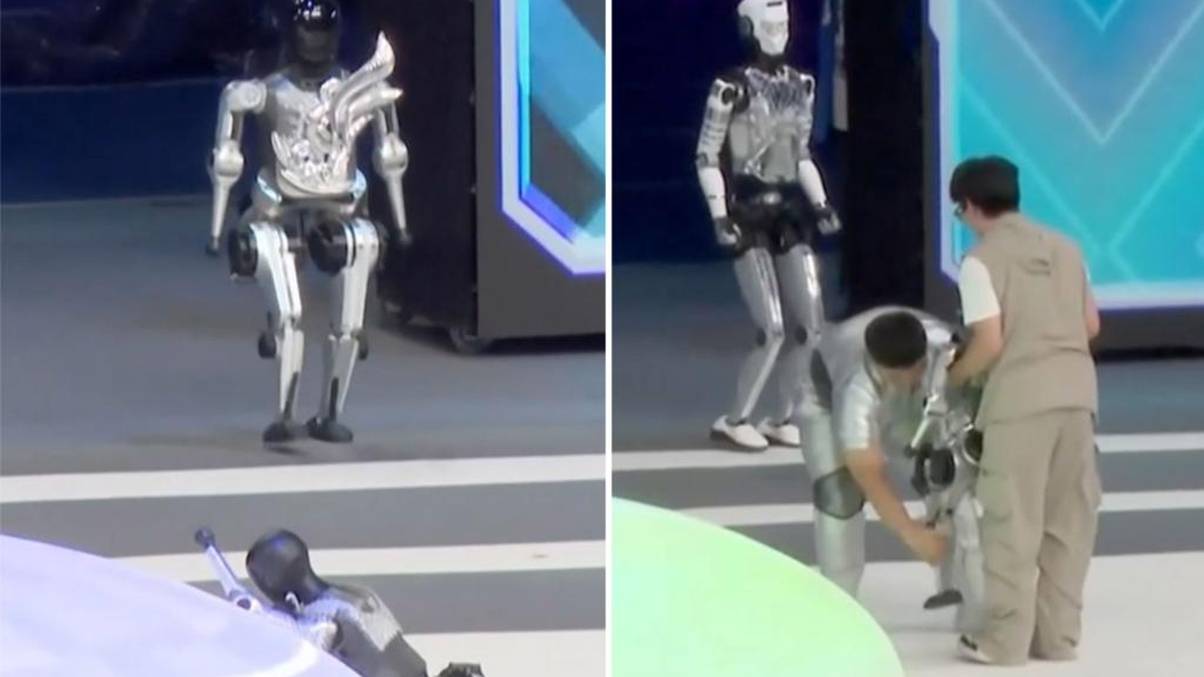
    For one younger humanoid reaching its dream of competing on the world’s first ‘Robotic Olympics’, that sadly grew to become the truth because the technology-based sports activities occasion kicked off in Beijing this week.

    Whereas robots do have the potential to be very useful for humanity, with those able to exploring the underside of the ocean doing issues that no human may, I am unsure it is as essential to get them to slowly shuffle ahead with a soccer at their ft, or fall over when sprinting. Manchester United followers already get to see that each week.

    There’s additionally clearly quite a lot of work that must be completed on the subject of perfecting them, not that I need them to be taking up anytime quickly, however the robotic that ‘went berserk’ for no obvious purpose exhibits that there is numerous tweaks to be completed.

    Some good quaint robotic boxing (Emre Aytekin/Anadolu through Getty Photos)

    And it has been a reasonably rocky begin to the World Humanoid Robotic Video games as effectively, with one robotic racer being much less Usain Bolt and extra Usain Bolts because it ‘face-planted’ into the bottom in entrance of spectators within the Chinese language capital.

    In the course of the 1,500m ‘sprinting’ sprint, one fell on the first invisible hurdle, drawing some cheers and gasps from the gang, a few of whom had bafflingly paid as a lot as $80 to look at the occasions, regardless of most faculty sports activities days being of a far increased high quality.

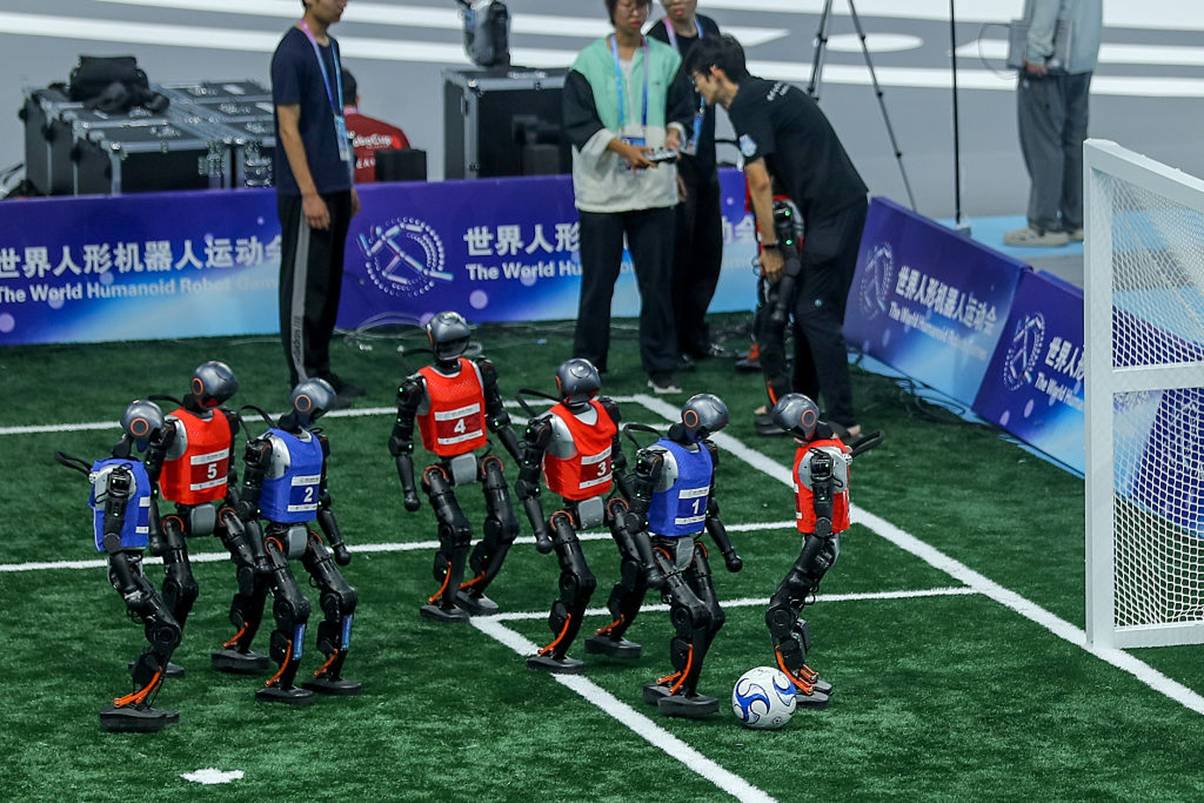
    It wasn’t the one one as 4 mechanical soccer gamers additionally crashed into one another and collapsed, with followers often accustomed to seeing limbs within the stadium with celebrations, not on the pitch.

    “We come right here to play and to win. However we’re additionally concerned about analysis,” said Max Polter, from Germany’s HTWK Robots soccer group, affiliated with Leipzig College of Utilized Sciences.

    “You may check quite a lot of attention-grabbing new and thrilling approaches on this contest. If we attempt one thing and it doesn’t work, we lose the sport. That’s unhappy however it’s higher than investing some huge cash right into a product which failed.”

    Chaos within the penalty field (Xu Jiming/VCG through Getty Photos)

    Regardless of the frequent falls that affected robots in almost each occasion, they frequently managed to get themselves up, with one goalkeeper even falling to the ground in agony as if it had simply misplaced a cup remaining.

    Contributors from 16 nations – together with the US, Germany and Brazil – are set to compete throughout a variety of sports activities on the three-day occasion.

    And whereas there have been loads of failures, the billions that China is investing in robotics counsel that that is solely the beginning, and maybe we’ll quickly see the likes of RoBotafogo and RoBolton Wanderers taking part in week in week out.

  • Drunk teenagers movie themselves urinating into sizzling broth at Chinese language restaurant leaving 4,000 clients compensated

    Drunk teenagers movie themselves urinating into sizzling broth at Chinese language restaurant leaving 4,000 clients compensated


    Two drunk youngsters have sparked outrage after filming themselves urinating right into a broth at a Chinese language sizzling pot chain restaurant.

    Stunning footage reveals how the pair stood on prime of the desk and let unfastened – regardless of the place being totally geared up with rest room services – final month.

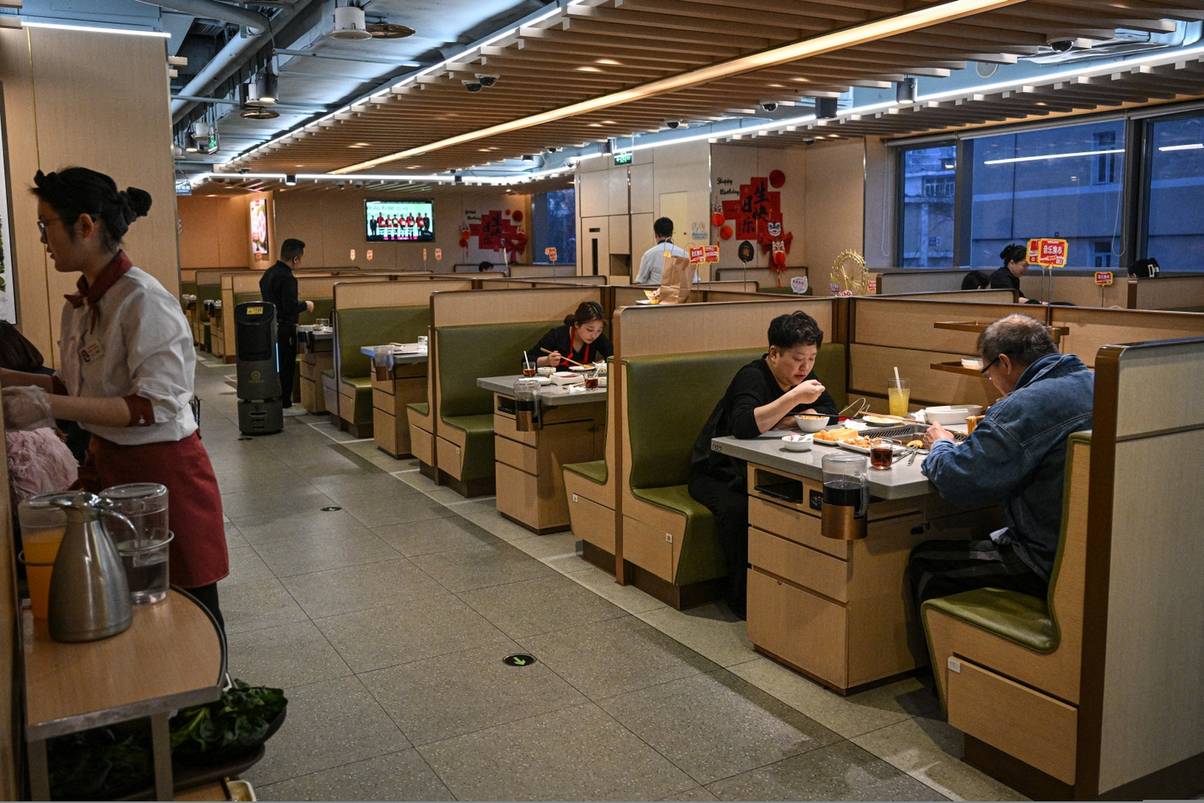
    The weird incident occurred in a personal room at a Shanghai department of Haidilao, which is China’s largest sizzling pot chain, on 24 February.

    However bosses solely turned conscious of the vile act 4 days later after the footage began to go viral on social media, the BBC reports.

    Police mentioned that the boys, who had been aged 17, had been drunk on the time and each had been detained shortly after the incident.

    The vile footage of the youngsters urinating right into a broth has sparked outrage (X)

    Haidilao admitted that employees within the restaurant had didn’t cease the teenagers, whereas it took one other week for the corporate to establish which department it had occurred at out of the handfuls in Shanghai.

    For many who do not know, sizzling pot eating places provide a communal eating expertise which permits folks to cook dinner their very own meals.

    You fling quite a lot of elements right into a tasty pot of simmering broth that is proper in entrance of you and tuck in – however that may not sound as engaging after this incident.

    The corporate mentioned in a press release (as per CBS): “Within the early hours of February 24, two males urinated right into a hotpot after eating in a personal room at a Haidilao department on the Bund in Shanghai.

    “As administration had by no means made contingency plans or given coaching for coping with this kind of incident, employees at our department had been unable to detect any abnormalities on the scene or uphold the security of the eating atmosphere.”

    Though there isn’t any suggestion that anybody consumed the contaminated broth, Haidilao has provided to compensate the greater than 4,000 diners who visited the Shanghai department.

    Prospects who ate on the outlet in query between 24 February and eight March will obtain a full refund and money compensation which is ten occasions the quantity of their invoice.

    Haidilao diners seen tucking into their sizzling pot at a Beijing department (JADE GAO/AFP by way of Getty Photographs)

    Haidilao mentioned in a press release: “We totally perceive that the misery precipitated to our clients by this incident can’t be totally compensated for by any means, however we’ll do our utmost to take accountability.”

    Broths and eating tools should not re-used by a number of clients, nonetheless, it stays unclear whether or not the realm was completely cleaned and disinfected earlier than the following clients sat down.

    Haidilao mentioned that every one hotpot tools and eating utensils have been changed, whereas crockery and different utensils have all been disinfected.

    The recent pot chain – which has two branches in London and one in Birmingham – operates greater than 1,000 eating places internationally.

    Its web site explains that it presents a ‘signature eating expertise’ for visitor, with a ‘concentrate on service, meals and ambiance’.

    Haidilao is understood for its customer support and distinctive choices, as folks can get a manicure or watch ‘noodle dancing performances’ as they look forward to a desk, whereas children are given sweet floss.

    LADbible has contacted Haidilao for additional remark.

  • World’s largest metropolis the place you ‘by no means contact the ground’

    World’s largest metropolis the place you ‘by no means contact the ground’


    For thousands and thousands of individuals on this planet’s most densely populated metropolis, there may be the very actual probability they might stay their total lives with out touching the precise floor.

    And it’s all right down to how intricately made the so-called ‘Cyberpunk metropolis’ is.

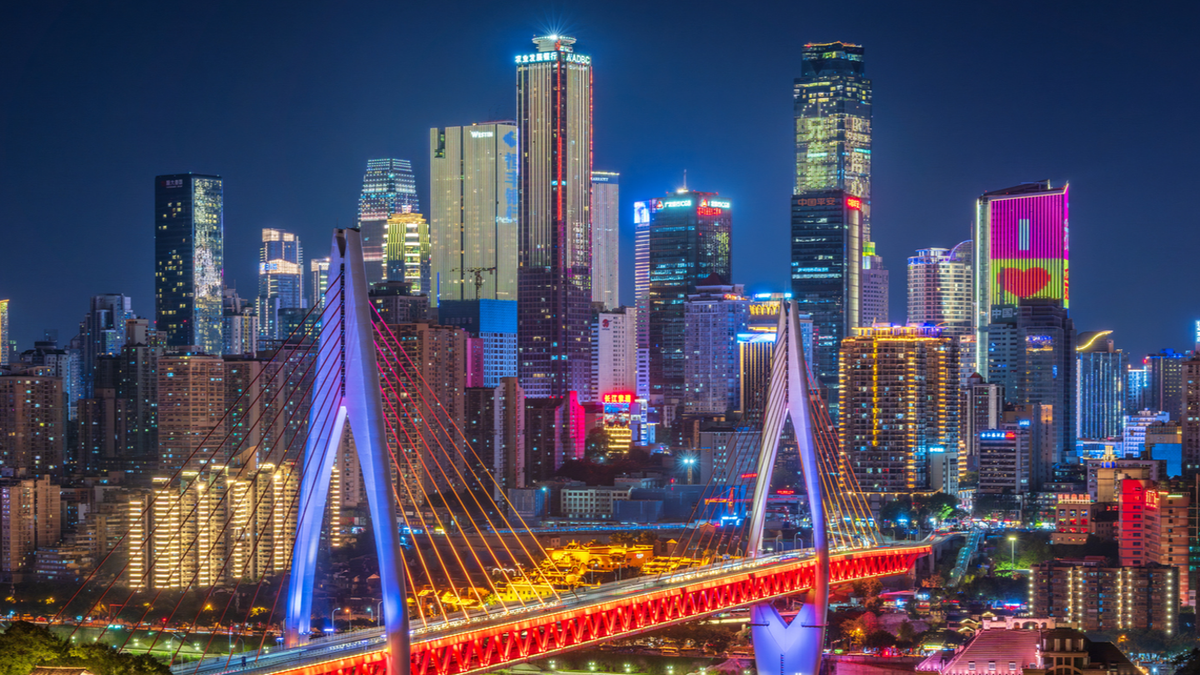
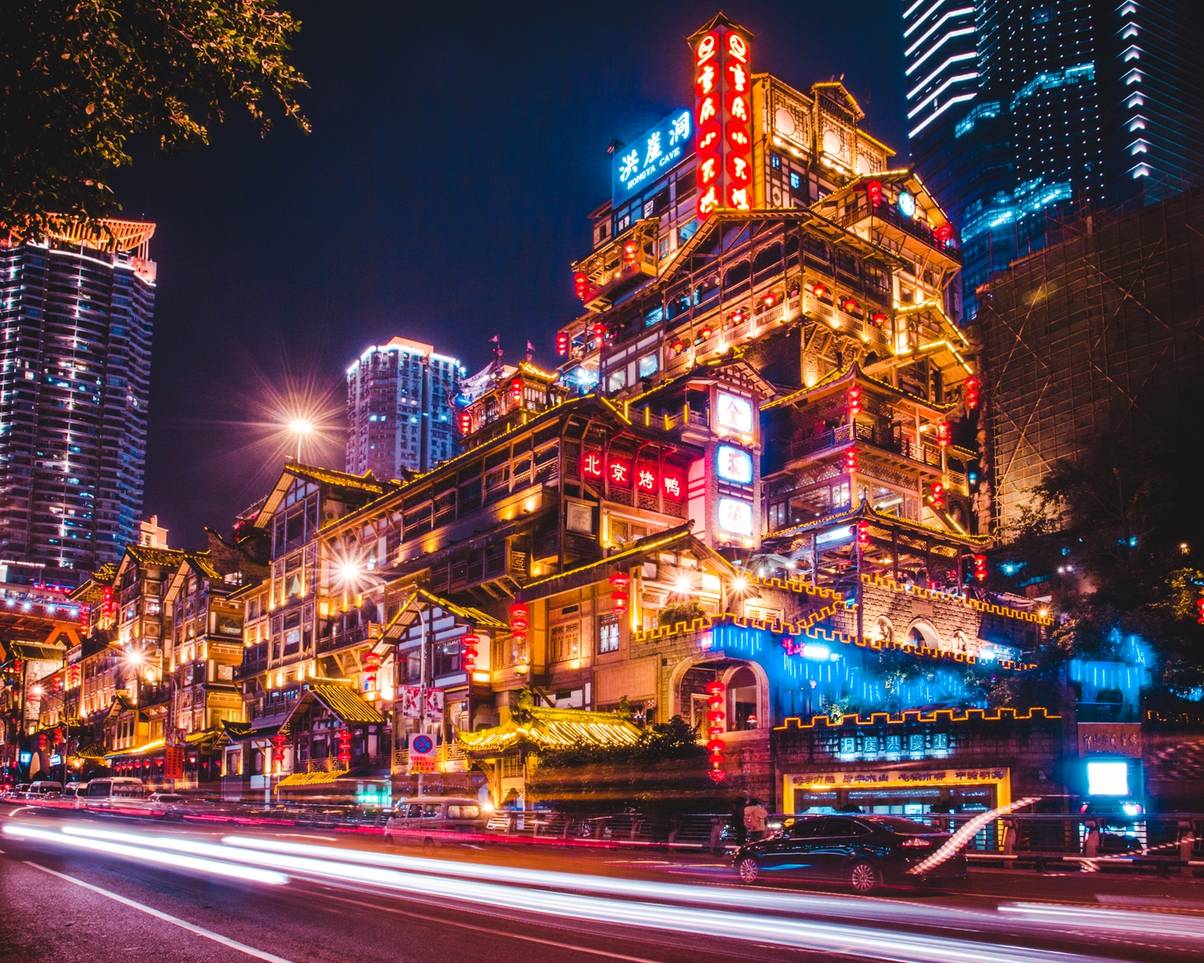
    Formally known as Chongqing in south western China, town has gone viral on TikTok for folks exhibiting off simply how futuristic it appears to be like compared to a ‘regular’ metropolis centre – particularly at night time time when it lights as much as signify one thing that appears prefer it belongs in Blade Runner.

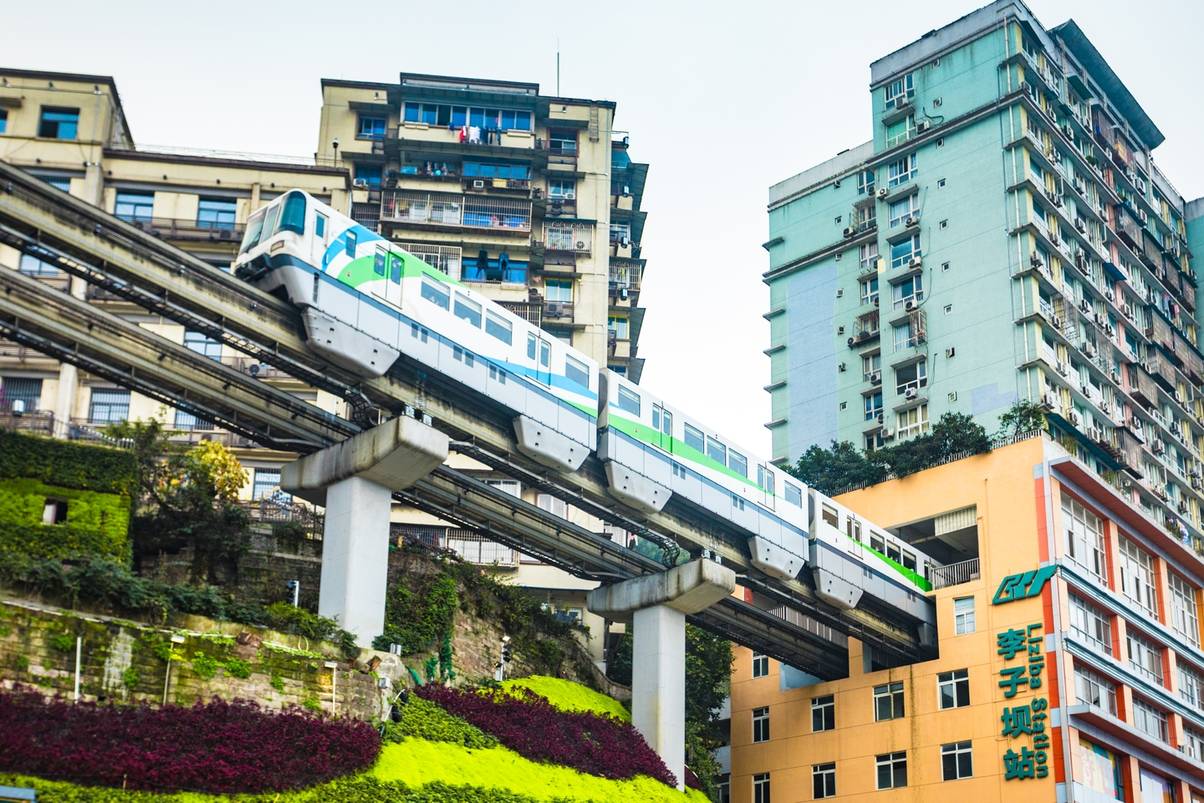
    With practice tracks working via buildings, it’s residence to the Yuzhong District; probably the most central space of Chongqing that’s the most densely populated space you’ll find anyplace on Earth, with a staggering 32 million folks calling town their residence.

    Trains run via buildings in Chongqing (Getty Inventory Photos)

    However what’s the floor flooring? Put fairly merely, you generally have completely no thought.

    One video on this has been put ahead by TikToker @hughchongqing, who says: “In Chongqing we by no means know which flooring we’re on.

    “It appears to be like like I am on a traditional public sq., the road is over there [pointing], but when we go right here [to the other side], we’re on the twenty second flooring.

    “But when we use the elevator on the sq., it says we’re on the twelfth flooring. Then we take the elevator to the eight flooring and we will likely be on the streets.”

    It is extremely densely populated (Getty Inventory Photos)

    Hugh continues: “We go contained in the constructing on the fitting and it says we’re on the thirteenth flooring.

    “We exit from the thirteenth flooring to the constructing subsequent to it, we will likely be on a bridge connecting to a different constructing… then once we stroll via this constructing, we’re again on the road.”

    Completely insane and mind-bending. Take a look your self:

    @hughchongqing

    Which flooring is the groud flooring in Chongqing? #China #Chongqing #cyberpunk #重庆 #travel

    ♬ original sound – Hugh Chongqing

    One other TikToker, Jackosn Lu (@journeyofjackson), made it his mission to attempt to discover the underside of town after saying it’s simple to ‘spend your total life with out touching the ground’.

    Throughout his quest to seek out the bottom, he journeyed throughout floor flooring of 18-storey buildings which might be really 12 tales up from the place the bottom is. After which when hitting what he thought was the underside, a fast look within the distance confirmed a faculty tales under him. Cue outrage.

    Given this, it is common place for not simply public squares to be discovered on roofs. No, you will additionally discover petrol stations in the identical place because of the intricate layering of Chongqing.

    Oliver Wainwright, a journalist for the Guardian, visited town the place he said he would discover himself ‘taking steep staircases that led to underground escalators, then throughout walkways to lifts that ferried me up the aspect of a cliff’ as a way to get to someplace that appeared only some blocks away.

    There’s clearly a floor flooring close to the Yangtze River – however you will assume you are there if you’re really tens of metres up within the sky (Getty Inventory Photos)

    One individual wrote: “I’m ABSOLUTELY FASCINATED by this metropolis on a structural degree. Like how the hell does every little thing not collapse in a single itself? Actually a marvel.”

    A second stated: “How do map navigations work? does GPS comes with a 3D mannequin of all of the streets above one another?”

    And a 3rd posted: “I am simply confused how they pulled it off from an engineering perspective, like, you possibly can’t simply maintain including layers?”

    A part of why Chongqing has gone solo in its quest to modernise the area is as a result of it’s its personal municipality. Basically, this implies it governs itself.