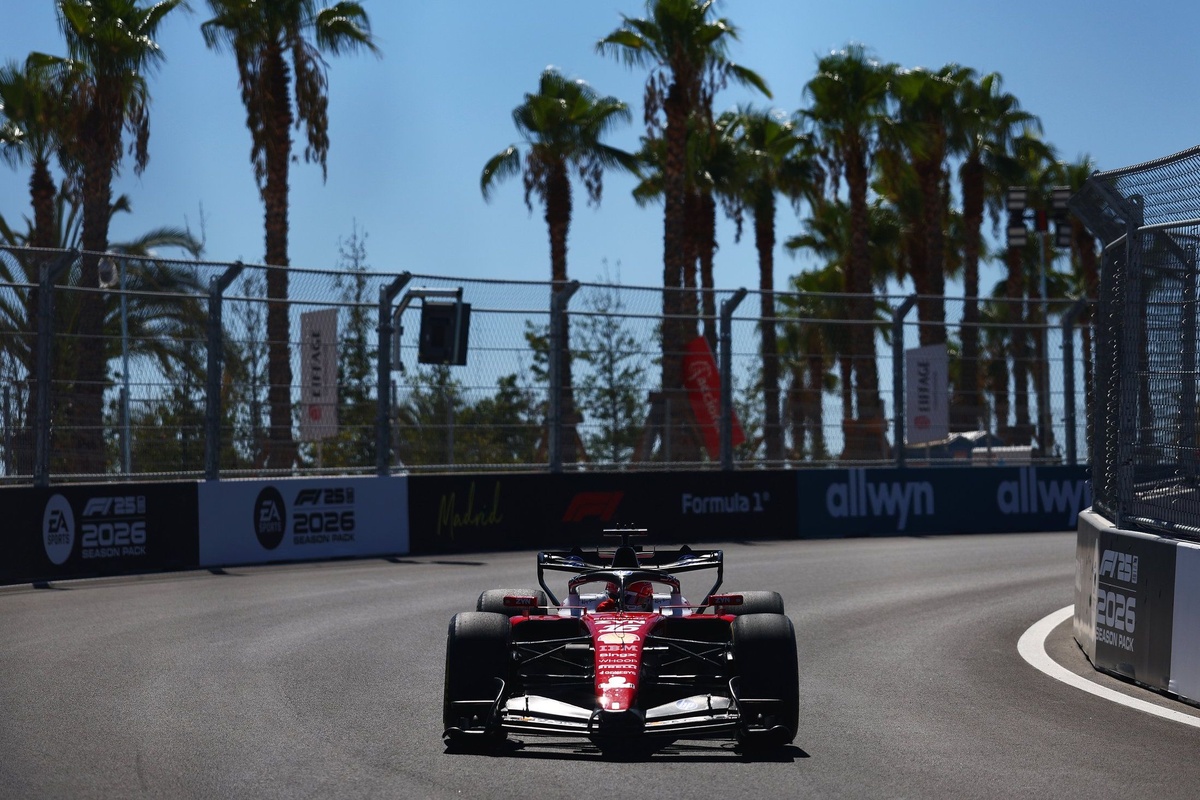
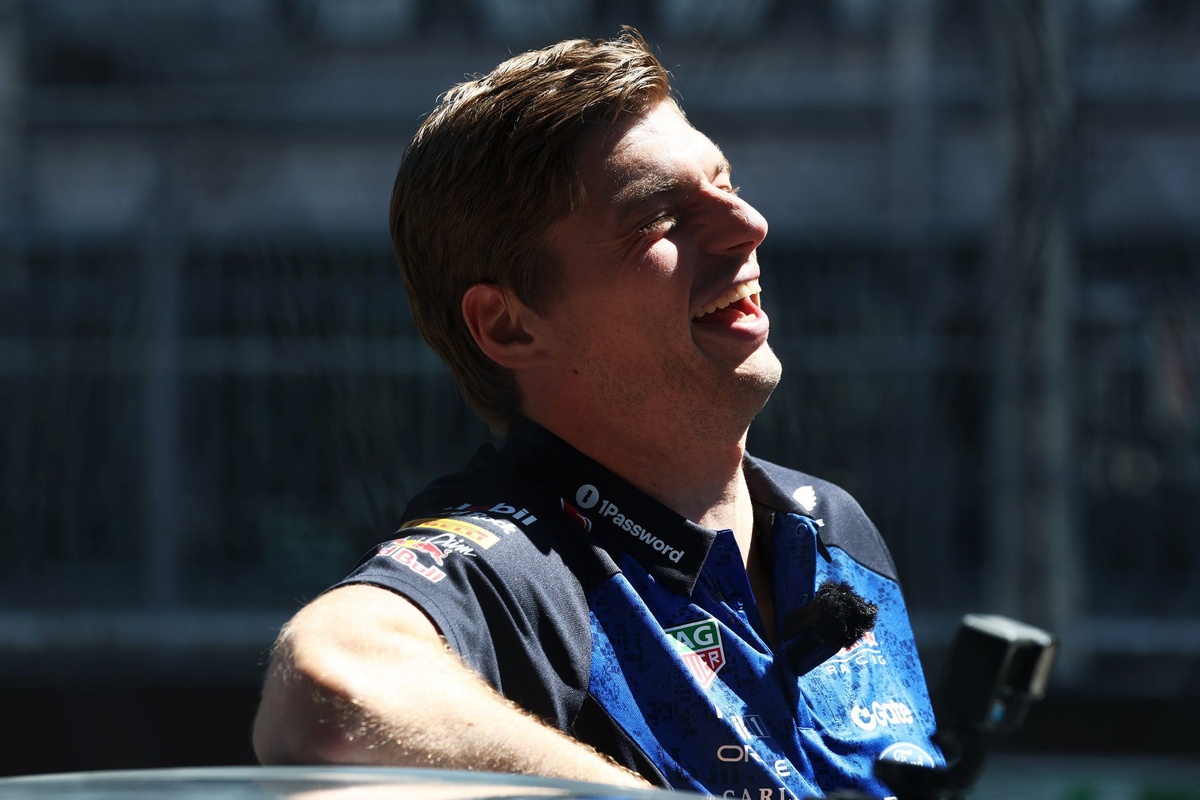
Tag: Charles Leclerc

  • James Hinchcliffe Explains Why Ferrari Is “Happy” With Lewis Hamilton-Charles Leclerc Rivalry

    James Hinchcliffe Explains Why Ferrari Is “Happy” With Lewis Hamilton-Charles Leclerc Rivalry

    Key Highlights

    • James Hinchcliffe asserts Ferrari welcomes the intensifying rivalry between Lewis Hamilton and Charles Leclerc, calling it the expected outcome of signing the seven-time champion.
    • Hamilton rebounded in 2026 with his first Ferrari podium in China and maiden victory for the Scuderia in Barcelona, sitting third in the standings with 191 points.
    • Hinchcliffe describes the two-driver battle as a “privileged position” that accelerates development, though he acknowledges difficult team-order decisions may loom if Ferrari contends for the title in 2027.

    Hinchcliffe: Ferrari’s Hamilton-Leclerc Rivalry Is a Feature, Not a Bug

    Former IndyCar race-winner and current F1 TV analyst James Hinchcliffe has dismissed suggestions that Lewis Hamilton‘s resurgence at Ferrari constitutes a headache for team principal Frédéric Vasseur. Speaking on the F1 Nation podcast ahead of the Azerbaijan Grand Prix, Hinchcliffe argued the Scuderia deliberately engineered a high-stakes intra-squad duel when it recruited the seven-time world champion, and that the current friction is precisely the dynamic the Maranello hierarchy anticipated.

    From Struggle to Strength: Hamilton’s 2026 Turnaround

    Hamilton’s debut campaign with Ferrari in 2025 yielded scant reward as he grappled with the car and the organization’s operational rhythm. The narrative shifted decisively in 2026. Having acclimated to the squad and the revised technical regulations, the Briton claimed his first podium in red at the Chinese Grand Prix before converting pole position into a breakthrough victory at the Barcelona-Catalunya Grand Prix. Those results have propelled him to third in the drivers’ championship on 191 points, albeit 101 adrift of leader Kimi Antonelli. Team-mate Charles Leclerc, long regarded as the franchise cornerstone, sits fifth with 167 points.

    “They Didn’t Sign Him to Be Subservient”

    Asked whether Hamilton’s newfound pace had created an unforeseen management challenge for Vasseur, Hinchcliffe was unequivocal. “I think they’re happy to have the problem,” he said. “I don’t think Ferrari would sign somebody that they were anticipating to be slower and subservient to Charles, to the ‘Ferrari Golden Boy’.” The pundit emphasized that Vasseur, having managed Hamilton in junior categories, entered the partnership with open eyes regarding the 39-year-old’s ceiling. “Everybody knows exactly what Lewis is capable of, and Fred has seen it from the beginning. So, no, I think they were more surprised last year at the lack of issue they had with this because Lewis wasn’t up to the same pace as Charles, and that this year is really more what they were expecting to have, and frankly, it’s what they want.”

    Development Accelerant and the “Privileged Position”

    Hinchcliffe framed the internecine competition as a catalyst for engineering progress. “When you have two drivers that can push each other like this, you’re going to help make the team better. Yes, at some point it might bring up some difficult conversations and some difficult decisions, but that’s a privileged position to be in.” He projected that if Ferrari delivers a title-capable chassis in 2027, the dialogue will evolve from managing egos to adjudicating championship strategy. “It’s one that they hope, if they get the car right next year, that we’ll be having similar conversations next year, but talking about the championship implications of who they should back.”

    Why This Matters

    The Hamilton-Leclerc axis represents Formula 1’s most scrutinized driver pairing: a record-equalling champion chasing an eighth crown versus a homegrown talent anointed as the Scuderia’s future. Hinchcliffe’s assessment reframes the narrative from potential dysfunction to calculated roster construction. Ferrari’s 2026 form — race-winning pace but a substantial deficit to Antonelli in the standings — suggests the team has the raw performance to exploit a two-driver development loop. However, the “difficult conversations” Hinchcliffe anticipates will materialize only if the 2027 regulation set yields a genuine title contender. For now, Vasseur’s challenge is converting the rivalry into constructive data without fracturing garage harmony, a balancing act that will define Ferrari’s trajectory into the next regulatory cycle.

    Frequently Asked Questions

    Where does Lewis Hamilton stand in the 2026 drivers’ championship?
    Hamilton is third with 191 points, 101 points behind championship leader Kimi Antonelli.
    What were Hamilton’s key results for Ferrari in 2026?
    He scored his first podium for the team at the Chinese Grand Prix and took his maiden Ferrari victory at the Barcelona-Catalunya Grand Prix.
    Does James Hinchcliffe believe Ferrari will face team-order dilemmas?
    Yes. He acknowledges “difficult conversations and some difficult decisions” may arise, but characterizes that scenario as a “privileged position” that Ferrari actively sought by signing Hamilton.
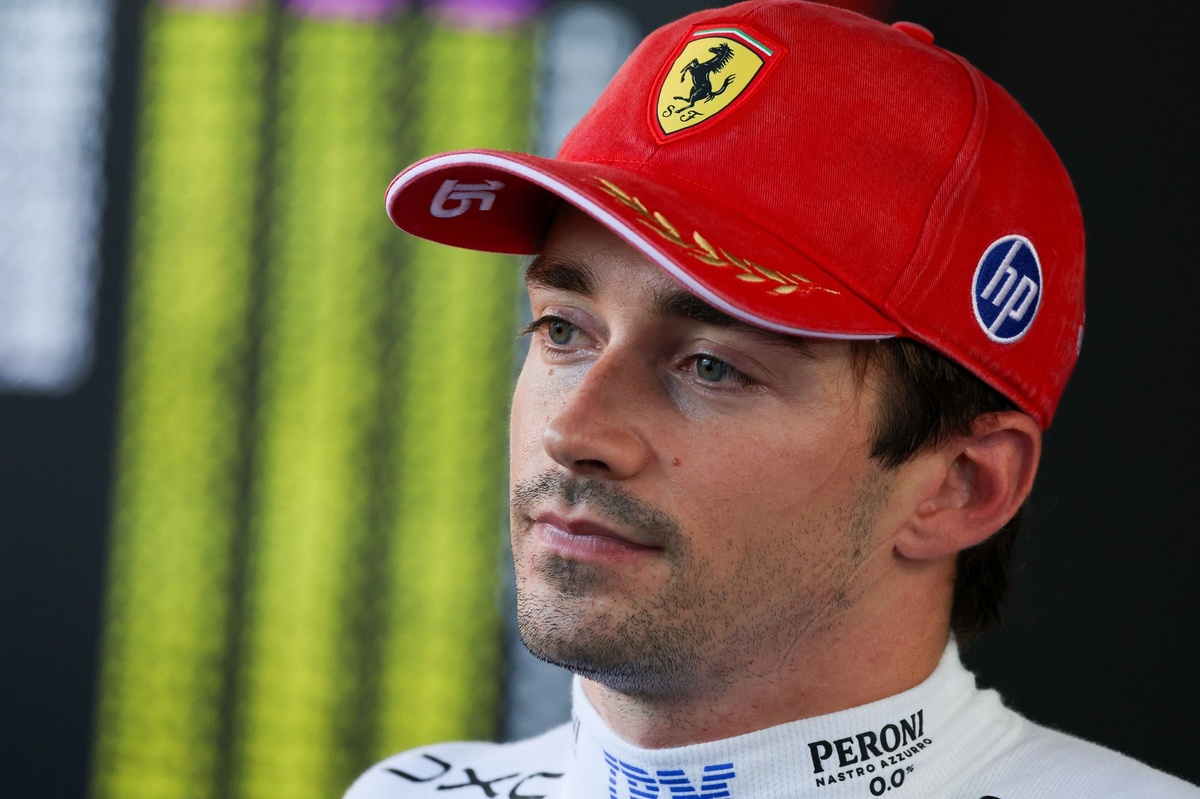
  • What Were Charles Leclerc’s “Other Opportunities” Before Signing New Ferrari Deal?

    What Were Charles Leclerc’s “Other Opportunities” Before Signing New Ferrari Deal?

    Key Highlights

    • Charles Leclerc has reaffirmed his long-term commitment to Ferrari, stating he wants to achieve his “ultimate goal” of becoming a world champion with the Scuderia and expressing 200% belief in team principal Frederic Vasseur.
    • Leclerc’s manager, Nicolas Todt, explored opportunities with Mercedes, McLaren, and Aston Martin, but negotiations with Ferrari concluded rapidly once the parties sat down together.
    • The current contract, signed in early 2024 alongside Lewis Hamilton’s arrival announcement, runs theoretically to 2029 but includes a 2026 break clause originally intended as protection against potential regulatory failures.

    Leclerc’s Loyalty Tested by Market Forces and Internal Dynamics

    Charles Leclerc’s relationship with Ferrari has long resembled a high-stakes romance punctuated by periodic flirtations with rival suitors. Each contract extension arrives amid whispers of interest from Mercedes, Red Bull, McLaren, and most recently Aston Martin, yet the Monégasque driver consistently returns to Maranello. On a recent episode of F1’s Beyond the Grid podcast, Leclerc offered rare transparency about the process: “For that, I’m also lucky to be in the position where I’ve got my manager… And my manager is here to let me know about what are the other opportunities, what’s going on around. And so I didn’t have any personal talks, but my manager did.” He elaborated that Nicolas Todt’s role is to provide “the full picture of what’s going on in the paddock,” confirming that “yes, there were other opportunities. But at the end of the day, we sat down with Ferrari and we made it happen quite quickly.”

    The Todt-Vasseur Axis and Its Strategic Leverage

    Central to Leclerc’s bargaining power is his manager, Nicolas Todt, whose connections run deeper than typical driver representation. The son of Jean Todt—the architect of Ferrari’s Michael Schumacher-era dominance and former FIA president—Todt Jr. manages a stable including Le Mans winner James Calado and formerly guided Felipe Massa. Crucially, he co-founded the ART Grand Prix organization with Frederic Vasseur over two decades ago, forging an alliance that proved decisive in January 2023 when Todt was instrumental in replacing Mattia Binotto with Vasseur as team principal. This access to Ferrari’s senior leadership, extending beyond the team principal to chairman John Elkann and CEO Benedetto Vigna, grants Leclerc a channel of influence unavailable at rival outfits. It facilitated not only Binotto’s departure but also the swift, peculiarly communicated removal of race engineer Xavier Marcos early in the 2024 season.

    Contract Architecture: Golden Handcuffs and Escape Hatches

    When Ferrari announced Lewis Hamilton’s 2025 arrival in January 2024, it simultaneously locked Leclerc into a long-term deal theoretically extending to 2029 with options. However, the contract contained a 2026 break clause—a calculated hedge against Ferrari botching the new technical regulations. That scenario has not materialized; instead, Ferrari has produced a competitive chassis and demonstrated an aggressive, effective upgrade trajectory. Yet operational misfires—strategy errors, pit-stop issues, and execution lapses—have cost valuable points. Meanwhile, the external landscape shifted: Mercedes, once a plausible destination when Todt sounded out the Silver Arrows about filling Hamilton’s vacancy, grew content with its own lineup. McLaren, where Todt held discussions with Andrea Stella and Zak Brown, entered 2024 with two championship-contending drivers. Aston Martin approached late last year, but amid internal turmoil that saw Adrian Newey’s arrival coincide with Andy Cowell’s ouster, the project presented what one observer termed “a farrago.” Faced with Ferrari’s improving trajectory versus organizational chaos elsewhere, Leclerc chose continuity.

    Why This Matters

    The Leclerc-Ferrari bond now enters a critical phase. With Hamilton installed as teammate, the internal equilibrium hinges on clear number-one status, operational excellence, and a car capable of challenging Red Bull and McLaren consistently. The 2026 break clause looms as a natural inflection point: if Ferrari fails to convert current promise into championships, both parties retain flexibility. For now, Leclerc’s public declaration—“I don’t want to give up on my ultimate goal, which is to become a world champion with Ferrari… I believe in the project. I believe in every single person of the team… And Fred is a big reason on why I have signed again as well. I believe in Fred 200%.”—signals alignment. Yet his leverage diminishes if performance plateaus; at the next renewal cycle, he will be over 30, an age when F1 options historically narrow. The Scuderia’s ability to translate technical innovation into race wins will determine whether this partnership achieves its stated destiny or becomes another chapter in Ferrari’s long championship drought.

    Frequently Asked Questions

    Does Charles Leclerc have a clause allowing him to leave Ferrari in 2026?

    Yes. The long-term contract signed in January 2024 includes a break clause activatable in 2026, originally inserted as protection against potential failure with the new technical regulations. Both parties retain the option to reassess at that juncture.

    What role did Nicolas Todt play in Frederic Vasseur becoming Ferrari team principal?

    Todt was instrumental in the January 2023 transition that replaced Mattia Binotto with Vasseur. The two co-founded ART Grand Prix together over 20 years ago, and Todt’s access to Ferrari’s senior leadership—including chairman John Elkann—enabled him to influence the decision.

    Which other teams expressed interest in signing Leclerc?

    Mercedes, McLaren, and Aston Martin all held discussions or were approached by Todt over the past two years. Mercedes was considered when Hamilton’s departure created a vacancy, McLaren was approached while fielding two title contenders, and Aston Martin made an approach amid its own organizational upheaval.

  • Fred Vasseur shuts down claims Ferrari split Spanish GP strategy to separate drivers

    Fred Vasseur shuts down claims Ferrari split Spanish GP strategy to separate drivers

    Key Highlights

    • Ferrari Team Principal Fred Vasseur dismissed suggestions that split tire strategies for Charles Leclerc and Lewis Hamilton at the Spanish Grand Prix were designed to keep the teammates apart on track.
    • Vasseur cited identical strategy splits at McLaren, Mercedes, and Red Bull as evidence the approach was standard racecraft, not internal conflict management.
    • Hamilton retired early with a braking issue on soft tires, while Leclerc’s hard-tire gamble for a late safety car did not materialize, leaving Ferrari without points in Madrid.

    Vasseur Rejects Narrative of Manufactured Separation

    Ferrari Team Principal Fred Vasseur moved decisively to quash speculation that the Scuderia’s divergent tire strategies for Charles Leclerc and Lewis Hamilton at the Spanish Grand Prix were a tactical maneuver to prevent on-track friction between the pair. The scrutiny followed a tense run of races: in Zandvoort, Hamilton pleaded for team orders to pass Leclerc, and at Monza, the duo collided on the opening lap, derailing Hamilton’s afternoon. Against that backdrop, the decision to start Hamilton on soft compounds and Leclerc on hards in Barcelona invited immediate questions about whether Ferrari was engineering separation.

    Comparisons to Rivals Underscore Standard Practice

    Addressing reporters after Sunday’s race, Vasseur pointed to the grid at large to contextualize the call. “Have a look. [Lando] Norris, [Oscar] Piastri did the same. [George] Russell, [Kimi] Antonelli did the same. [Max] Verstappen, [Liam] Lawson did the same,” he said. “I don’t think they [McLaren] were scared to have a crash between Norris and Piastri.” The comparison framed the split strategy as a routine response to marginal qualifying positions—Hamilton fourth, Leclerc fifth—rather than a relationship-management tool.

    Divergent Race Outcomes Highlight Strategic Gamble

    The race itself rendered the strategic debate largely academic. Hamilton’s afternoon ended prematurely when a braking issue prevented him from exploiting the soft tire’s early-life advantage, forcing retirement after only a handful of laps. Leclerc, meanwhile, committed to a long first stint on the hard compound, banking on a late safety car that would allow a cheap pit stop for fresh rubber. That caution period never arrived, leaving the Monegasque to finish outside the points.

    Leclerc Stands by Hard-Tire Call Despite Result

    Leclerc offered a robust defense of the approach post-race, emphasizing the lack of overtaking opportunities at the Madring circuit. “We could have done many different things, but I think the best thing for us today was what we did. If I had to do the race again I would do exactly the same thing. Because starting on the soft at the beginning wouldn’t have given me the opportunity to do anything special,” he explained. “I would have ended up in the same strategy as the guys in front of me and wouldn’t have been very helpful, considering there were no overtakes. So, the hard soft was the right strategy and waiting for the safety car at the end was also the right thing to do. But, unfortunately, it never came.”

    Why This Matters

    The episode underscores the intense external pressure on Ferrari’s driver lineup, where every tactical decision is parsed for signs of internal discord. While Vasseur’s data-driven rebuttal—highlighting identical splits at McLaren, Mercedes, and Red Bull—is factually sound, the team’s zero-point weekend in Spain amplifies scrutiny of its strategy group. With the Constructors’ Championship battle tightening, Ferrari cannot afford weekends where both cars finish empty-handed, regardless of the strategic rationale. The next round will test whether the Leclerc-Hamilton dynamic stabilizes or continues to overshadow the Scuderia’s technical performance.

    Frequently Asked Questions

    Did Ferrari split strategies to keep Leclerc and Hamilton apart?

    No. Team Principal Fred Vasseur explicitly denied this, noting that McLaren, Mercedes, and Red Bull all employed the same soft/hard split for their driver pairings in Spain, indicating it was a circuit-specific tactical choice rather than a relationship-management measure.

    Why did Hamilton retire from the Spanish Grand Prix?

    Lewis Hamilton suffered a braking issue early in the race that prevented him from extracting performance from his soft-compound tires, leading to his retirement after only a few laps.

    What was Leclerc’s strategy and why did it not work?

    Charles Leclerc started on hard tires aiming for a long first stint, hoping a late safety car would allow a cheap stop for softs. The safety car did not deploy, leaving him on a one-stop strategy that yielded no points at a circuit where overtaking was extremely difficult.

  • Mercedes Explains Why George Russell Pitted Under VSC at Madring

    Mercedes Explains Why George Russell Pitted Under VSC at Madring

    Key Highlights

    • Mercedes deputy team principal Bradley Lord revealed George Russell’s alternate strategy was forced by the poorly timed virtual safety car on lap 14, which ruined the team’s planned one-stop on hard tyres.
    • Russell switched to mediums under the VSC to attempt an undercut on Charles Leclerc, then returned to hards on lap 28, finishing just 0.7 seconds behind the Ferrari in fifth place.
    • The result leaves Russell 81 points adrift of Mercedes teammate and championship leader Kimi Antonelli, with the Briton admitting a title challenge now feels “exceptionally unlikely.”

    VSC Timing Derails Mercedes’ Original One-Stop Plan for Russell

    Mercedes deputy team principal Bradley Lord has detailed the strategic dilemma that forced George Russell into a two-stop strategy during Formula 1’s Spanish Grand Prix, explaining that the virtual safety car deployment on lap 14 arrived at the “worst possible time” for the British driver. Russell started sixth on the hard compound tyre with a clear intention to run long and execute a one-stop race, mirroring the approach of Charles Leclerc ahead of him in the Ferrari. However, the neutralisation period—triggered while Russell was the second car on hards behind Leclerc—eliminated any realistic chance of overtaking or undercutting on similar-aged rubber.

    Why Mercedes Chose to ‘Box Opposite to Leclerc’

    Faced with the prospect of Russell simply circulating behind the Ferrari to the finish, Mercedes opted for a reactive ‘box opposite to Leclerc’ call under the VSC. “The opportunity to undercut was very, very limited, and the opportunity to overtake was almost non-existent for cars on similar age tyres,” Lord explained. The team fitted medium tyres knowing they would not last the remaining 43 laps, planning a 20-lap stint before switching back to the more durable hard compound for the final phase. This divergent strategy was a calculated gamble to create a performance differential in a race where track position appeared unassailable.

    Russell’s Pace Forces Ferrari’s Hand and Nearly Yields a Podium

    The tactical switch sparked an impressive performance from Russell. His pace on the medium tyre was sufficient to pressure Leclerc into an earlier pit stop than Ferrari likely desired, a move that simultaneously handed clean air to race leader and Mercedes teammate Kimi Antonelli. Russell rejoined on fresh hards for the closing laps and hounded Leclerc relentlessly, crossing the line a mere 0.7 seconds adrift of the Ferrari in fifth place. Lord noted Russell “unleashed some really impressive performance” and that the hard tyre proved “quite fragile” on the Ferrari in the final stint.

    Why This Matters

    The Spanish Grand Prix outcome underscores the critical importance of safety car timing in modern Formula 1 strategy, particularly at circuits like Madrid where overtaking is at a premium. For Mercedes, the race delivered a bittersweet narrative: a dominant victory for championship leader Kimi Antonelli, facilitated by the same VSC that compromised Russell’s race. The 81-point gap now separating the teammates highlights how quickly a title fight can pivot on a single strategic variable. With Russell openly conceding his championship hopes are “exceptionally unlikely,” the focus within the team will inevitably shift toward consolidating Antonelli’s lead while extracting maximum constructors’ points from both cars in the remaining rounds.

    Frequently Asked Questions

    Why did George Russell pit under the Virtual Safety Car when he started on hard tyres?

    The VSC deployed on lap 14 at the worst possible moment for Russell’s planned one-stop strategy. As the second car on hards behind Charles Leclerc, staying out would have condemned him to following the Ferrari to the finish with almost zero overtaking opportunity. Mercedes chose to ‘box opposite to Leclerc,’ fitting mediums to create a strategic differential.

    How did Russell’s alternate strategy affect the race outcome?

    Russell’s medium-tyre stint forced Leclerc into an earlier pit stop than Ferrari planned, which gave Kimi Antonelli clean air at the front. Russell then switched back to hards on lap 28 and closed to within 0.7 seconds of Leclerc by the finish, setting the fastest lap of the race in the process.

    What is George Russell’s current championship deficit to Kimi Antonelli?

    Following the Spanish Grand Prix, Russell trails Mercedes teammate and championship leader Kimi Antonelli by 81 points. Russell has described his chances of fighting for the title as “exceptionally unlikely.”

  • Charles Leclerc Called Out by Fans After Awkward Moment with Wife Alexandra

    Charles Leclerc Called Out by Fans After Awkward Moment with Wife Alexandra

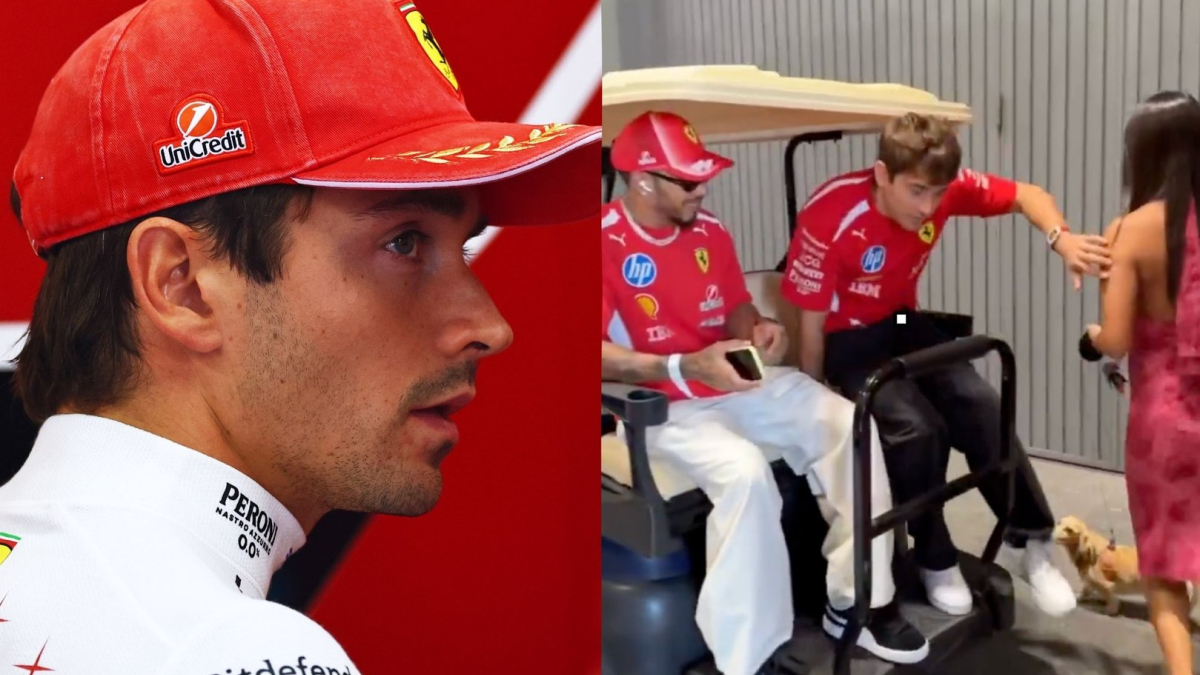
    Formula 1 fans are scrutinizing a brief interaction between Charles Leclerc, his wife Alexandra Saint Mleux, and Lewis Hamilton that unfolded as the drivers headed to the garage ahead of a session.

    Leclerc’s gesture draws online criticism

    Video footage circulating on social media shows Leclerc and Hamilton boarding a golf cart bound for the Ferrari garage. As they approached the vehicle, Leclerc placed a quick pat on Alexandra’s shoulder before climbing aboard. He did not appear to assist her onto the cart or wait for her to enter before him.

    Hamilton reacts by offering his seat

    The moment appeared to leave Hamilton visibly uncomfortable. The seven-time world champion stood up from his seat on the cart to offer it to Alexandra. She ultimately declined the offer, choosing instead to sit in the front passenger seat of the golf cart.

    Social media reaction

    The clip has sparked debate among fans, with many criticizing Leclerc for what they perceived as a lack of chivalry, while others defended the interaction as a harmless, split-second moment taken out of context. Neither Leclerc nor Hamilton has publicly commented on the incident.

  • ‘Had the car to fight for a win’ – Ferrari’s Lewis Hamilton Explains Brake Issues Behind 2026 Formula 1 Spanish Grand Prix Retirement

    ‘Had the car to fight for a win’ – Ferrari’s Lewis Hamilton Explains Brake Issues Behind 2026 Formula 1 Spanish Grand Prix Retirement

    Lewis Hamilton Says Ferrari Had Pace to Win Spanish GP Before Brake Failure

    Lewis Hamilton insisted Ferrari “had the car to fight for a win” at the Spanish Grand Prix after the seven-time world champion suffered an early retirement due to brake problems at Formula 1’s newest venue, the Madring.

    Early Retirement at Madring

    The Briton started fourth for Sunday’s 57-lap race and made a strong launch on the soft Pirelli compound. Hamilton initially moved ahead of Max Verstappen’s Red Bull on the run to Turn 1 and briefly threatened to overtake front-row starters Lando Norris and Kimi Antonelli before backing out. After Verstappen cut the first corner, Hamilton was handed back third place, but braking issues emerged in the opening laps. He reported over team radio that he had glanced the wall.

    Hamilton continued to lose positions over the following laps and ran deep into the Turn 20 run-off area. He rejoined the circuit before pulling into the pits and retiring after just seven laps.

    Hamilton: Wall Contact Not Root Cause

    “It was already basically before that,” Hamilton told Sky F1 when asked if the contact with the wall had caused the braking issue.

    “Braking for Turn 5 I hit the brake, the car started stopping and then the pedal took a step and all of a sudden the car didn’t de-accelerate as fast a normal.

    “I ended up carrying a lot of speed in and just brushed the barrier. After that the pedal came back and then a few corners later, the pedal went long. I don’t really know where that’s come from.”

    Leclerc Leads Laps, Finishes Fourth

    Hamilton had challenged for pole position on Saturday. In Sunday’s race, team-mate Charles Leclerc led the most laps as Ferrari tried to keep the Monegasque driver out in the hope of a late Safety Car period before ultimately finishing fourth.

    Hamilton Praises Team, Eyes Future Wins

    “We’ve had a pretty decent car, a good car this weekend and I think we will continue to try and improve it and I think we have better results coming in the future,” said Hamilton.

    He added: “I think the team’s done an amazing job, so I’m sad for them today that they couldn’t get max points. I think we had the car to fight for a win today, and unfortunately it just didn’t work out.”

  • Lewis Hamilton: ‘We’ve got to work harder’ after missing 2026 Spanish GP pole for Ferrari

    Lewis Hamilton: ‘We’ve got to work harder’ after missing 2026 Spanish GP pole for Ferrari

    Hamilton and Ferrari Target Improvement After Spanish GP Qualifying

    Lewis Hamilton insists both he and Ferrari must “got to work harder” to close the performance gap after missing out on pole position for the Spanish Grand Prix. The seven-time world champion qualified fourth, finishing less than two-tenths of a second behind polesitter Lando Norris.

    FP3 Crash Puts Hamilton on Back Foot

    Hamilton entered Saturday’s qualifying session at a disadvantage after a heavy crash at the final corner during Free Practice 3. The British driver hit the barrier head-on and was forced to stop his damaged car on track after team radio calls instructed him to pull over rather than return to the pits.

    Despite the lost track time, Hamilton recovered impressively. He sat on provisional pole after the opening runs in Q3 before ultimately slipping to fourth in the final classification.

    Hamilton Reflects on Qualifying Performance

    When asked to assess his day, Hamilton downplayed the earlier incident.

    “The only thing to say about FP3 is nothing. Qualifying was pretty decent,”

    he said.

    “Generally been feeling pretty decent. It takes everything for us to be able to compete with the two powerhouse motors [Mercedes and McLaren] ahead.”

    Hamilton pointed to a perceived engine mode advantage for the leading teams during qualifying sessions.

    “They just seem to be able to turn the engine up or something when we get to Qualifying which we can’t match. We’ve got to work harder.”

    Leclerc Takes Responsibility for Fifth Place

    Teammate Charles Leclerc qualified fifth, directly behind Hamilton and also within two-tenths of Norris’s benchmark time. The Monegasque driver believed he over-drove during the decisive final segment.

    “I think the lap was pretty good in Q3, it’s a tricky Qualifying where you’ve got to go fully committed into Q3 and I did that,”

    Leclerc explained.

    “But I felt like I maybe went over the limit a little in some corners and lost a little bit on top of maybe losing down the straights a bit because of running the older spec [engine].”

    Leclerc accepted full accountability for the result.

    “But at the end, that’s on me. I think we did a good job today and we maximised our potential.”

    Both Ferraris start the Spanish Grand Prix from the third row, targeting a strong race pace to challenge the leading Mercedes and McLaren entries.

  • Charles Leclerc: Madrid Qualifying Set to Be “One of the Most Challenging” in F1 2026

    Charles Leclerc: Madrid Qualifying Set to Be “One of the Most Challenging” in F1 2026

    Leclerc Predicts Madrid Qualifying Will Be Among 2026’s Toughest Tests

    Charles Leclerc expects qualifying at this weekend’s Spanish Grand Prix to rank as “one of the most challenging qualifying sessions of the year” as Formula 1 tackles the brand-new Madring street circuit for the first time. The Madrid venue has replaced Barcelona as the host of the Spanish Grand Prix and presents a high-commitment layout featuring 22 corners, including the 13.5-degree banked La Monumental curve.

    Drivers Divided on Overtaking Prospects

    While several drivers have spoken positively about the track after Friday practice, the paddock is bracing for a high-stakes Saturday session. George Russell labeled the circuit a “very high risk circuit,” and Leclerc echoed the sentiment that track position will be paramount.

    “The track is very exciting. It’s very exciting, it’s very challenging, and it’s a street track as well. So these are the tracks that I normally quite enjoy, and there’s no exception to that. It was really nice to be driving on this new track. There’s still a lot of work to be done, and I expect it to be one of the most challenging qualifying sessions of the year, being such a commitment track.”

    The Ferrari driver emphasized that Saturday’s session will dictate the weekend’s outcome, citing the extreme difficulty of passing even with a significant pace advantage.

    “Qualifying is for sure going to be the key moment of the weekend, because particularly in FP2, I tried to overtake, but even with the large pace delta, it was extremely difficult or impossible to overtake. So most of the performance this weekend will be based on the qualifying.”

    Mercedes Sets Early Pace

    Leclerc finished third in FP1 and second in FP2, trailing Mercedes drivers George Russell and Kimi Antonelli by 0.459s and 0.113s respectively. Despite the deficit, the Monegasque remained measured about the early running.

    “The feeling was pretty good, but it’s true that Mercedes seems to be strong. However, we don’t really focus on what P1 says today [Friday], because we don’t know what the others are doing with their run plan for us. It was all about trying to maximise laps on the new track, to try and make sure that we have as many data as we want, and for us to be also at ease with the track coming tomorrow in qualifying. But I think we did a good work today, and we’ll see tomorrow in qualifying.”

    With Madrid’s tight confines and combined brake-and-turn corners amplifying the importance of grid position, all eyes turn to a qualifying session that could well decide the victor before Sunday’s race even begins.

  • Max Verstappen Reveals Laid-Back Approach to 100-Driver Silverstone Challenge

    Max Verstappen Reveals Laid-Back Approach to 100-Driver Silverstone Challenge

    Four-time Formula 1 world champion Max Verstappen has revealed he has done absolutely no preparation for his upcoming 30-lap go-kart challenge against 100 competitors at Silverstone next week. The Red Bull Racing driver will start from the back of the grid and attempt to overtake every participant on the historic circuit.

    Verstappen: “I’ll Just Rock Up and Do My Thing”

    Speaking to media ahead of the Spanish Grand Prix in Madrid, the Dutchman displayed his trademark relaxed confidence when questioned about the unique event. The field includes athletes, streamers, content creators, personalities, and fans.

    “No, I didn’t do anything,” he explained when asked if he has looked up who his competitors would be. “I’ll just rock up and have a good time, to be honest. Let’s see how it goes. But yeah, it’s a lot of people.

    “Starting from the back, it’s going to be challenging, but I hope I can catch them all. But we don’t know yet. I don’t even know the format at the moment. So I will just rock up and do my thing.”

    F1 Rivals Weigh In on the Spectacle

    The challenge has drawn attention from Verstappen’s Formula 1 peers, who offered mixed assessments of his chances during their own press commitments.

    Leclerc Urges Caution for Both Sides

    Ferrari driver Charles Leclerc, speaking in Italy, highlighted the potential risks involved with such a large field.

    “I mean, 100 is a lot,” the Monegasque driver explained in Italy. “Honestly, the only advice I’ll give is maybe not to crash into Max, because he’s got a season to finish, and for Max to be careful, because I don’t know how professional those drivers are.

    “But 100 drivers is quite a lot on a track, so I think it will be fun. But obviously, when you’re racing against one of the best drivers in the world, they’ll probably have a tough time.”

    Sainz Predicts Easy Victory Based on Personal Experience

    Williams driver Carlos Sainz provided a more mathematical prediction during the Madrid press conference, drawing on his own recent karting experience.

    “I did a karting race yesterday with my team. Started 20th because we did reverse grid and I was P1 in five laps. So by my calculations, if there are another 20 times five, in 20 laps Max will be P1 for sure. 15-20 laps, or who knows, depends how much overtaking there is. But he will win it easy.”

    The Silverstone event promises to be a unique spectacle, pitting one of motorsport’s greatest current talents against a massive, eclectic grid in identical machinery. With zero preparation and a relaxed mindset, Verstappen appears ready to embrace the chaos.

  • 2026 Spanish Grand Prix FP2: Kimi Antonelli Tops Timesheets Ahead of Charles Leclerc

    2026 Spanish Grand Prix FP2: Kimi Antonelli Tops Timesheets Ahead of Charles Leclerc

    Kimi Antonelli Tops Spanish GP FP2 as Ferrari Duo Chase at Madring

    Mercedes rookie Kimi Antonelli ended Friday’s running at the Spanish Grand Prix as the fastest driver on track, heading a Ferrari duo of Charles Leclerc and Lewis Hamilton in the second hour of practice at the Madring circuit.

    Antonelli Sets Unbeatable Benchmark

    The Italian posted a session-best time of 1m 33.662s before the session was halted to recover Arvid Lindblad‘s damaged Racing Bulls car. No driver managed to improve on Antonelli’s lap in the closing minutes, giving him an advantage of just over a tenth of a second over Leclerc in second place.

    With a limited amount of time to learn the new Madrid circuit, all 22 drivers were eager to maximize Free Practice 2 and begin pushing the limits—ideally while avoiding the daunting walls that line the Madring layout.

    Alonso Misses Early Running With Clutch Issue

    Unfortunately for Fernando Alonso, Aston Martin confirmed the home favorite would miss the beginning of the session due to a clutch issue suffered following his practice starts in FP1.

    Haas pair Esteban Ocon and Ollie Bearman were the first to head out in the high temperatures, leading a long queue of competitors before George Russell—who topped the times in FP1—set an early benchmark of 1m 36.011s.

    Ferrari Strong on Mediums as Track Evolves

    Russell was soon demoted down the timesheets as Ferrari continued their impressive showing on the medium tyres. Leclerc claimed the top spot until the standings leader completed his first effort to go over a second clear.

    As expected on a track with a freshly laid surface, the evolution was notable. Leclerc closed the gap to just 0.001s, ensuring that Mercedes and Ferrari drivers occupied P1 through P4 in the opening 15 minutes.

    Despite his impressive lap, Ferrari were struggling in the final sector, where they were significantly down on the likes of Antonelli. They weren’t the only ones facing issues—McLaren opted to change Lando Norris‘ gearbox, restricting him to the garage, while Oscar Piastri complained about a lack of rear grip.

    Lindblad Impresses Before Turn 13 Crash

    Although Piastri managed to improve on the soft compound, his lap was eclipsed by Lindblad. The Racing Bulls driver consistently impressed through the first sector to wind up just two tenths off Antonelli’s fastest time.

    But the lack of incidents couldn’t last forever. Coming into Turn 13, Lindblad lost the rear and crashed into the barriers, bringing an early end to his day at the Madring and triggering a red flag period.

    Final Classification After Red Flag

    Once the subsequent red flag period concluded, Antonelli remained P1 thanks to his earlier rapid time, leaving him ahead of Leclerc and Hamilton on the timesheets. Lindblad similarly held onto P4 ahead of Russell, Max Verstappen, and Piastri.

    Yuki Tsunoda was eighth for Racing Bulls, followed by Haas’ Ocon and Red Bull’s Liam Lawson. Pierre Gasly claimed P11, the Frenchman leading the Audi pair of Nico Hulkenberg and Gabriel Bortoleto, Bearman, Franco Colapinto, and home favorite Carlos Sainz.

    Despite his shorter running, Alonso took P17 while Alex Albon, Sergio Perez, Lance Stroll and Valtteri Bottas completed the order, with Norris unable to set a representative time for McLaren.

    Saturday Running Ahead

    With the first day of action in Madrid complete, the teams and drivers will have the chance to delve into their learnings overnight before the final hour of practice takes place at 12:30 local time on Saturday, September 12.