Tag: Changpeng Zhao

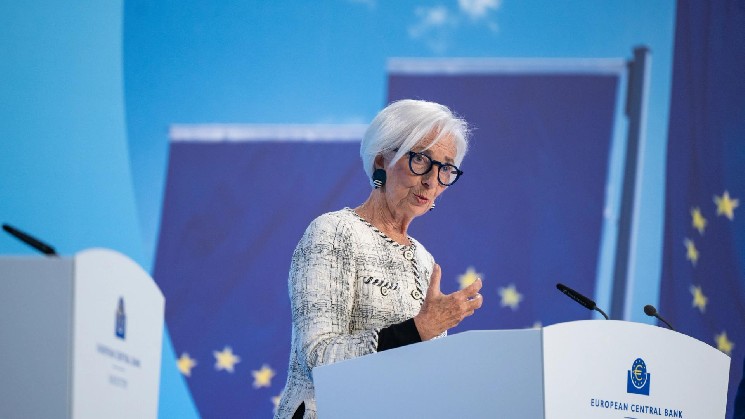
  • ECB President Christine Lagarde Intervened to Block Binance’s EU MiCA License, WSJ Reports

    ECB President Christine Lagarde Intervened to Block Binance’s EU MiCA License, WSJ Reports

    Key Highlights

    • Binance confirms it remains committed to securing a MiCA license in Europe despite withdrawing its Greek application in mid-June after the Hellenic Capital Market Commission (HCMC) declined to approve it.
    • Binance’s Head of Europe, Gillian Lynch, states the exchange met all HCMC requirements and had a “complete application” with nothing material outstanding.
    • The Wall Street Journal reports ESMA privately advised national regulators to reject Binance’s MiCA applications due to past compliance issues, while the ECB clarifies it has no institutional role in authorizing Crypto-Asset Service Providers.

    Binance Reaffirms European MiCA Ambitions After Greek Setback

    Binance has signaled its determination to remain a regulated participant in the European cryptocurrency market despite a significant regulatory rebuff in Greece. A company spokesperson confirmed that the exchange is actively working toward becoming MiCA-authorised and view this as an important step in providing users with a consistent, regulated, and trusted service across the European market. The statement comes weeks after Binance withdrew its application with the Hellenic Capital Market Commission (HCMC) and began winding down local operations after officials decided at the last minute not to approve the exchange’s Markets in Crypto-Assets (MiCA) license request. The company had previously vowed it would not exit the European market entirely.

    Exchange Contends Application Was Complete

    In an interview with CoinDesk in early July, Gillian Lynch, Binance’s Head of Europe, contested the regulatory outcome, asserting that the exchange had satisfied every condition set by the Greek regulator. We were deemed to have a complete application, Lynch said. Nothing was missing, nothing material was outstanding. The assertion raises questions about the specific grounds for the HCMC’s decision to deny authorization, particularly given the exchange’s claim of full procedural compliance. The withdrawal marks a notable stumble in Binance’s broader strategy to secure regulatory footing across the European Union under the new MiCA framework.

    ESMA Guidance and ECB Jurisdiction Clarified

    Adding complexity to the regulatory picture, The Wall Street Journal reported that the European Securities and Markets Authority (ESMA) privately advised national financial regulators to reject Binance’s MiCA applications. The guidance reportedly stems from concerns regarding the exchange’s historical compliance record. Meanwhile, an ECB spokesperson declined to comment on the specific case when contacted by CoinDesk. However, information shared with the outlet clarifies that the European Central Bank holds no institutional role with regards to the authorising of Crypto-Asset Service Providers (CASPs), noting that competence remains strictly with national competent authorities—in this instance, the HCMC.

    Founder’s Legal History Looms Over Licensing Efforts

    The regulatory scrutiny follows the high-profile legal resolution involving Binance founder Changpeng “CZ” Zhao. In 2023, Zhao pleaded guilty in the United States to violating the Bank Secrecy Act (BSA), resulting in a $4.3 billion settlement with U.S. authorities. He subsequently served a four-month prison sentence in California in 2024. In a significant political development, Zhao was pardoned by President Donald Trump in October 2025. This history appears to be a central factor influencing European regulators’ assessment of the exchange’s suitability for a MiCA license.

    Why This Matters

    The standoff in Greece represents a critical test case for how MiCA—the EU’s landmark crypto regulatory regime—will be applied to major global exchanges with checkered compliance histories. While MiCA offers a “passporting” mechanism allowing a license in one member state to serve the entire bloc, the Binance case illustrates that national competent authorities retain significant discretion to block entry based on reputational and historical risk factors. ESMA’s reported intervention suggests a coordinated regulatory posture toward entities with past enforcement actions, potentially setting a precedent for other exchanges seeking EU authorization. For Binance, securing a MiCA license remains essential for maintaining legitimate access to the EU’s 450 million consumers, but the path forward now likely requires a new application in a different jurisdiction or a successful appeal of the Greek decision.

    Frequently Asked Questions

    Why did Binance withdraw its Greek MiCA application?

    Binance withdrew its application in mid-June after the Hellenic Capital Market Commission (HCMC) decided not to approve its MiCA license request. The exchange subsequently began winding down its Greek operations but maintains it intends to pursue authorization elsewhere in Europe.

    Did Binance fail to meet the regulatory requirements in Greece?

    According to Binance’s Head of Europe, Gillian Lynch, the exchange met all of the HCMC’s requirements and was deemed to have a “complete application” with nothing material outstanding. The specific reasons for the HCMC’s denial have not been publicly detailed by the regulator.

    What role did Changpeng Zhao’s legal history play in the decision?

    While not explicitly cited by the HCMC, The Wall Street Journal reported that ESMA advised national regulators to reject Binance’s applications over concerns regarding the exchange’s past compliance issues. Zhao pleaded guilty to violating the U.S. Bank Secrecy Act in 2023, resulting in a $4.3 billion fine and a four-month prison sentence served in 2024, before receiving a presidential pardon in October 2025.

  • Binance Founder CZ Highlights Numerous Entry and Exit Opportunities in Crypto Market

    Binance Founder CZ Highlights Numerous Entry and Exit Opportunities in Crypto Market

    Changpeng Zhao, widely known as CZ, the founder and former chief executive of Binance, has shared his perspective on navigating cryptocurrency market cycles. In a brief post on X, the platform formerly known as Twitter, Zhao highlighted the dual-sided nature of market volatility.

    “The market offers many opportunities for entry or exit. All you have to do is make the right decision.”

    Zhao’s commentary underscores a core tenet of active trading: that fluctuating price action creates distinct windows for both accumulating and distributing assets. His remarks come during a period where digital asset valuations continue to react sharply to macroeconomic signals and shifting investor sentiment.

    Volatility as a Strategic Tool

    Market observers note that the Binance founder’s assessment aligns with the view that high volatility, while often cited as a risk, simultaneously functions as a mechanism for tactical portfolio management. Sharp price declines can present potential entry points for long-term positions, while rapid appreciations offer moments to secure profits or reduce exposure.

    Notably, Zhao refrained from endorsing any specific token, price target, or trading methodology. His statement was deliberately broad, framing market participation as an exercise in judgment rather than a reaction to a singular catalyst.

    Context Drives Decision-Making

    Investment choices in the crypto sector remain contingent on a complex interplay of factors. These include real-time liquidity conditions, trading volume trends, broader macroeconomic developments, and the prevailing psychological state of market participants. By emphasizing the necessity of evaluating these conditions, Zhao’s post serves as a reminder that opportunity recognition is inextricably linked to risk assessment.

    As one of the most recognizable figures in the blockchain industry, Zhao’s public communications continue to draw significant attention from retail and institutional participants alike. His influence persists despite his departure from Binance’s operational leadership, reflecting his enduring role in shaping market discourse.

    This article is for informational purposes only and does not constitute investment advice.

  • Binance Founder CZ Says Crypto Sector Has Ended Its Harshest “Crypto Winter” in History: Here Are the Details

    Binance Founder CZ Says Crypto Sector Has Ended Its Harshest “Crypto Winter” in History: Here Are the Details

    Binance founder Changpeng Zhao said the cryptocurrency industry has endured the most severe “crypto winter” in its history while maintaining strong underlying fundamentals.

    Speaking at Bitcoin Asia 2026 in Hong Kong, Zhao said the market has matured significantly following previous sharp declines. The Binance founder, widely known as CZ, also offered a broadly positive outlook for the sector’s future.

    Real-world asset tokenization gains momentum

    Zhao said expectations are particularly high for the tokenization of real-world assets (RWA). He noted that putting tokenized assets on-chain could reduce time and cross-border transaction constraints, while also improving liquidity for small and medium-sized assets by connecting them with investors worldwide.

    Global cryptocurrency regulation

    Discussing regulatory approaches around the world, Zhao identified the United Arab Emirates (UAE) as one of the leading countries in cryptocurrency regulation. He added that the United States is making rapid progress in establishing rules for stablecoins and cryptocurrency exchanges.

    Zhao said Japan has adopted a crypto-friendly approach, Hong Kong’s market is expanding rapidly, and Singapore is following a more cautious policy than some other regions.

    Decentralized exchanges continue to mature

    CZ also said decentralized exchanges (DEXs) have made significant advances in both technological infrastructure and user awareness over the past eight years. According to Zhao, DEXs have become a more mature part of the cryptocurrency ecosystem, and the sector could make an even greater leap forward if regulatory conditions were relaxed further worldwide.

    Zhao’s comments highlighted regulatory clarity, broader adoption of RWA tokenization and continued development of decentralized finance infrastructure as potential drivers of the cryptocurrency sector’s next growth phase.

    This is not investment advice.

  • Crypto Has Survived Its Harshest Winter as Fundamentals Remain Solid

    Crypto Has Survived Its Harshest Winter as Fundamentals Remain Solid

    Binance founder Changpeng Zhao, widely known as CZ, delivered an upbeat assessment of the cryptocurrency industry at the Bitcoin Asia 2026 event in Hong Kong, saying the sector has moved beyond its most difficult period. He told attendees that crypto’s fundamentals remain strong as the market continues to develop amid changing regulatory conditions worldwide.

    RWA Tokenization Emerges as a Major Crypto Opportunity

    Zhao identified real-world asset (RWA) tokenization as one of the cryptocurrency industry’s most promising areas. He said bringing assets on-chain could remove traditional time and cross-border barriers, making it easier for investors around the world to connect with them.

    On-chain assets could also improve liquidity for small and mid-sized investments that often struggle to attract capital through traditional financial channels. Zhao’s comments reflect the broader push to connect traditional finance with blockchain technology, an area that has attracted growing institutional interest in recent years.

    Crypto Regulation Remains Uneven Worldwide

    Zhao offered a mixed assessment of the global regulatory landscape. He described the United Arab Emirates as the most advanced jurisdiction for crypto regulation and said the United States is making rapid progress on rules governing stablecoins and cryptocurrency exchanges.

    He characterized Japan as friendly toward the industry and said Hong Kong is developing quickly as a crypto hub. Singapore, by contrast, was described as relatively conservative. Governments worldwide continue to weigh the potential benefits of blockchain innovation against the need for investor protection.

    Decentralized Exchanges Have Matured

    Zhao also discussed the development of decentralized exchanges, or DEXs. He said the sector has matured substantially over the past eight years, both technologically and in terms of user awareness.

    According to Zhao, the cryptocurrency industry could make an even greater leap forward if regulators around the world adopt more accommodating policies. His assessment reflects confidence in the resilience of the crypto ecosystem despite previous market downturns and continuing legal challenges involving major industry participants.

    What CZ’s Bitcoin Asia 2026 Comments Mean for Crypto

    CZ’s remarks at Bitcoin Asia 2026 point to a cautiously optimistic outlook for the cryptocurrency market. Regulatory uncertainty remains a significant challenge, but the continued strength of crypto’s underlying fundamentals and the potential of RWA tokenization offer a more positive perspective on the sector’s next stage.

    For investors and cryptocurrency users, the central message is that the industry has moved beyond its most severe downturn and is positioning itself for further growth.

    Frequently Asked Questions

    What did CZ say about the crypto winter?

    CZ said the cryptocurrency industry has already overcome its harshest winter and that its fundamentals remain solid, indicating that the sector is entering a recovery phase.

    Which region did CZ consider the most advanced in crypto regulation?

    He identified the United Arab Emirates as the most advanced jurisdiction for crypto regulation. He also highlighted rapid progress in the United States on stablecoin and exchange rules.

    Why is RWA tokenization considered promising?

    RWA tokenization can reduce time and cross-border constraints, connect assets with global investors and improve liquidity for small and mid-sized investments. These benefits make it a significant opportunity for the cryptocurrency and traditional finance sectors.

    Related Reading

    • BitMine Acquires 53,000 ETH as Analyst Lee Sees Rising Institutional Accumulation in Ethereum
    • Bitcoin’s Worst Phase Is Over, Says Former Credit Suisse Executive: $150K Target by 2027
    • CZ Says Rising X Follower Count Has Been a Consistent Early-Cycle Signal
    • Hyperliquid in Talks With Kraken Parent to Enter U.S. Market, Bloomberg Reports
    • Binance Founder Changpeng Zhao Changes Stance on RWA Tokenization, Sees Growth Ahead
  • How Bitcoin Is Drifting Away From Tech Stocks and Into Gold’s Territory

    How Bitcoin Is Drifting Away From Tech Stocks and Into Gold’s Territory

    Bitcoin’s relationship with traditional markets may be undergoing a significant shift. For much of the past year, Bitcoin traded closely alongside the Nasdaq, reinforcing its image as a technology-linked asset. However, that correlation has weakened sharply.

    Bitcoin’s 90-day correlation with the Nasdaq has fallen from above 60% to 33%, according to recent data from Grayscale.

    Source: Grayscale

    At the same time, Bitcoin’s correlation with gold has moved higher. The relationship is now above 50% after Bitcoin spent much of last year trading relatively independently from the precious metal.

    This does not mean Bitcoin has suddenly become gold. However, markets may be treating the two assets more similarly than before, particularly as investors reassess Bitcoin’s role as a scarce, non-sovereign asset.

    Source: TradingView

    Bitcoin has outperformed gold in recent weeks

    Over the past five weeks, Bitcoin has gained approximately 22.2%, compared with a 13.3% increase for gold.

    Although the two assets may now be moving in a more similar direction, Bitcoin remains the higher-beta version of the trade. If this trend continues, BTC could further establish itself as a scarcity asset without losing the upside potential that attracts investors.

    Changpeng Zhao says Bitcoin could overtake gold

    Speaking at Bitcoin Asia 2026 in Hong Kong, Binance founder Changpeng “CZ” Zhao said Bitcoin could overtake gold during the next bull market.

    “I think Bitcoin will overtake gold pretty soon… In the next bull run, it could happen.”

    The main obstacle is that governments already have decades of infrastructure built around gold, including valuation systems, custody arrangements and reserve-management frameworks.

    Zhao said any transition from gold to Bitcoin would likely happen gradually, even if market prices moved more quickly. Gold remains roughly 10 times larger than Bitcoin by market size, although the gap has narrowed.

    He also said he regularly advises governments to establish cryptocurrency reserves, with Bitcoin making up approximately half of the allocation.

    “Bitcoin will, for sure, become more important than gold.”

    Bitcoin’s role as a reserve asset

    For years, Bitcoin has shifted between being viewed as a technology investment and a store of value. If its correlation with the Nasdaq continues to weaken while its relationship with gold strengthens, that distinction could become less relevant.

    The bigger question may be whether institutions and governments begin treating Bitcoin as a reserve asset in its own right. Gold still holds important advantages, but Bitcoin has several factors supporting its case, including limited supply, portability and a growing institutional investor base.

    • Bitcoin’s 90-day correlation with the Nasdaq has fallen to 33%.
    • Bitcoin has outperformed gold over the past five weeks, rising about 22.2% compared with gold’s 13.3% gain.
    • Binance founder Changpeng “CZ” Zhao expects Bitcoin could eventually overtake gold as a reserve asset.