Key Highlights
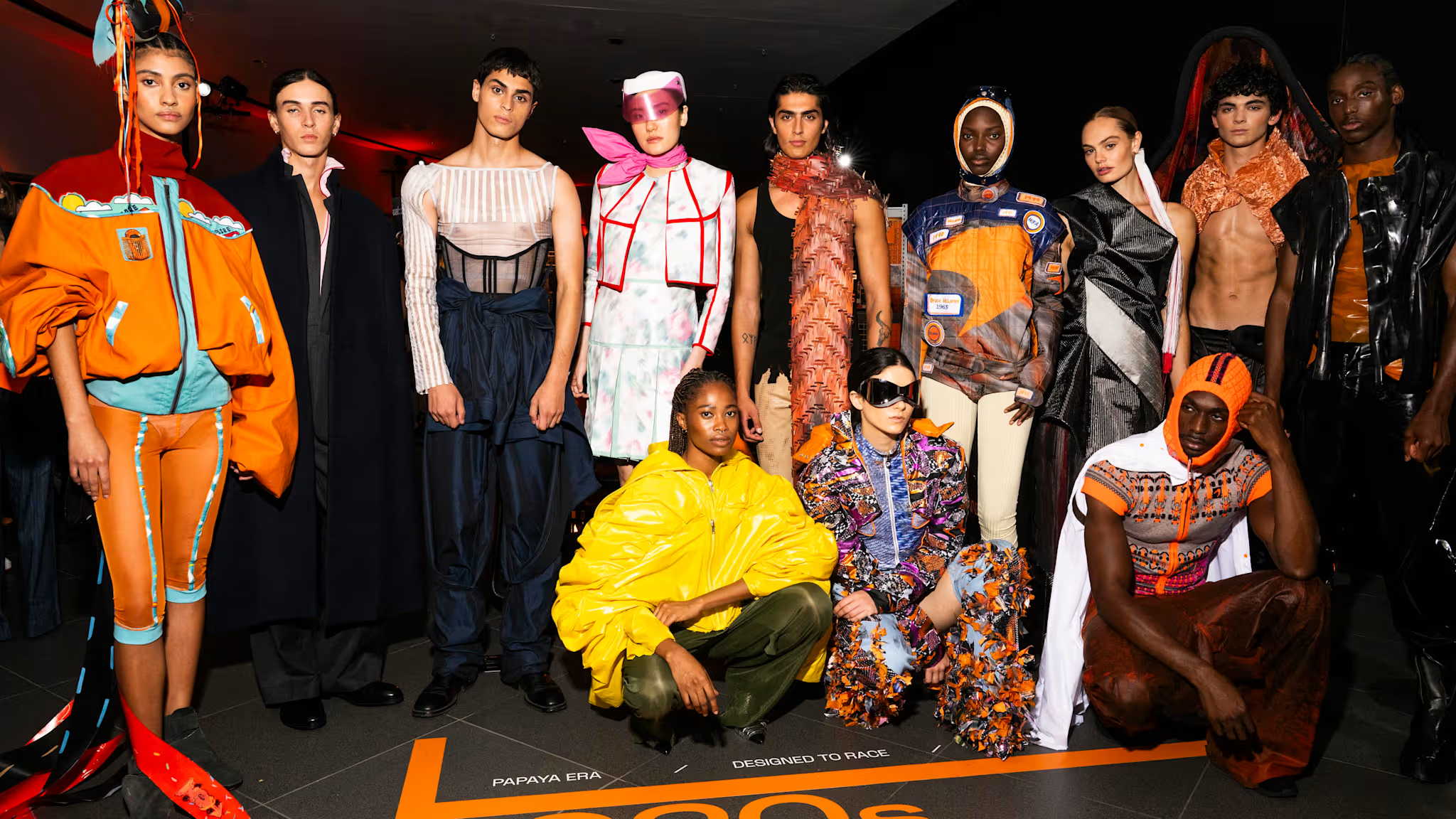
- McLaren Racing and Central Saint Martins unveiled “Designed to Race: Front Row,” a fashion show at the McLaren Technology Centre featuring 12 looks by 46 MA students interpreting six decades of team history.
- The non-commercial collaboration emphasized creative dialogue between high-performance engineering and fashion design, utilizing materials like carbon fibre, upcycled seatbelts, and engineering blueprints.
- McLaren CMO Louise McEwen cited data showing nearly half of F1 fans consider fashion vital to expressing fandom, framing the event as a strategic bridge to younger, more diverse audiences.
McLaren Technology Centre Hosts Fashion Showcase Rooted in Six Decades of Racing Heritage
The McLaren Technology Centre in Woking was transformed into a runway on Wednesday evening for Designed to Race: Front Row, a collaborative presentation between McLaren Racing and Central Saint Martins (CSM). Instead of engineers and mechanics, models navigated a course set among the team’s most iconic Formula 1 cars, wearing 12 distinct looks conceived by 46 MA Fashion students. The collection traversed the team’s history from the 1970s to the present day, drawing inspiration from specific drivers, engineering philosophies, and the evolving culture of the sport.
From James Hunt’s Grit to Senna’s Precision: A Five-Chapter Narrative
The show was structured across five thematic chapters: Grit x Glamour, Precision and Power, Global Icon, Engineered Athlete, and Papaya Era. The opening chapter revisited the 1970s, when Emerson Fittipaldi secured McLaren’s first Drivers’ and Constructors’ championships in 1974. It focused heavily on James Hunt, whose habit of wearing overalls tied at the waist and disregard for formal dress codes informed flared silhouettes, leather, orange tones, and distressed finishes. As the narrative progressed toward the Ayrton Senna era, references became more technical. Students translated Senna’s yellow helmet, precise driving style, and the concept of airflow into lightweight fabrics and digitally developed patterns. Other groups shifted focus entirely, centering designs on a female fire marshal or embedding subtle details like the stitching of Monaco’s famous hairpin inside a pair of trousers.
Shared Language of Trial, Error, and Micron-Level Precision
During a pre-show panel discussion, CSM MA Fashion Course Leader Fabio Piras explained the open brief encouraged interpretation over replication. “The brief was interesting because it wasn’t asking us to necessarily design a piece of fashion, an outfit,” Piras said. “It was an interpretation of a period, of an era, of a character, of obviously an iconic champion and a car.” He described the students’ visit to the Technology Centre as an “absolutely bombastic moment,” noting the race cars function as “amazing design objects.” Student Enzo Keuning highlighted the project’s unique freedom: “What made this project unique was that there wasn’t one way to interpret that heritage. Each group brought a different perspective, from engineering and performance, to identity and craftsmanship, and we were challenged to transform those ideas into something new.”
The parallel between fashion’s iterative process and Formula 1’s relentless development cycle was a central theme. Piras noted that audiences see only the “10-minute performance at the end,” missing the “process of fashion is trial and error… trying things out and moving on with the mistakes.” McLaren Racing Chief Marketing Officer Louise McEwen drew a direct equivalence, describing the team’s “constant state… of reinvention.” She recalled a directive ahead of the 2025 British Grand Prix where Team Principal Andrea Stella requested weight savings measured in “microns and milliseconds,” adding, “it’s fair to say it was some segments of papaya that really make the difference.” This engineering rigour—blueprints informing patterns, carbon fibre and upcycled seatbelts integrated into garments—was visibly present in the students’ final work.
The Papaya Era: Fan Culture, Data, and the Cultural Crossover
The final chapter, Papaya Era, addressed the contemporary intersection of racing and lifestyle. Papaya orange dominated, mixed with denim and knitwear, while a headpiece referenced Daniel Ricciardo’s celebratory ‘Shoey.’ One group explored the perspective of young fans viewing drivers as heroes, utilizing toy cars and childlike drawings. This focus on the evolving fanbase was a primary strategic driver for McLaren. F1 Presenter Ariana Bravo emphasized the sport’s unexpected demographic shift: “Formula 1 has seen a growth in its audience in a way that I don’t think any of us within the sport were expecting… It’s a much younger and a much more diverse audience now.” She noted fans now seek “accessibility 24/7” and want to “express their support for a team through fashion, through culture.”
McEwen confirmed internal data indicates “nearly half of fans consider fashion important to the way they express their fandom,” a statistic that informed the project. However, she rejected a purely transactional view of success. “We are obsessed by data, and the whole piece tonight was informed by data… But everything that you saw today was very much about creativity and humanness coming through.” The event attracted a cross-section of motorsport, fashion, music, and sport, including drivers Lando Norris and Oscar Piastri, F1 ACADEMY drivers Ella Lloyd and Ella Stevens, Freddie Hunt (son of James), models Mia Regan and Denola Gray, rapper Kojey Radical, and Olympic medallist Amy Hunt. McEwen stressed the necessity of creative freedom: “We have to be as competitive off the grid as we are on it… without creativity, we’re never going to appeal to new fans, we’re never going to have new ideas.” She concluded, “I didn’t know quite what we were going to get tonight, and I’m just blown away and super excited.”
Why This Matters
The Designed to Race: Front Row showcase represents a maturation of Formula 1’s engagement with the fashion and lifestyle sectors. Moving beyond traditional merchandise drops or driver-branded capsule collections, McLaren adopted an academic partnership model that treats heritage as a creative dataset rather than a marketing asset. By granting Central Saint Martins students unrestricted interpretive license—resulting in pieces ranging from fire marshal-inspired workwear to gowns patterned on aerodynamic airflow—the project positions McLaren as a cultural curator rather than a mere rights holder. This aligns with the commercial reality highlighted by Ariana Bravo and Louise McEwen: a younger, gender-diverse fanbase consuming F1 as a 24/7 lifestyle ecosystem. The use of genuine race-used materials (seatbelts, boots, equipment) and engineering data (blueprints, weight-saving logic) provides an authenticity that purely fashion-led collaborations often lack. As the sport’s commercial value becomes increasingly tied to cultural relevance off-track, McLaren’s strategy of “competitive creativity” off the grid may become a template for other constructors seeking to convert cultural attention into commercial longevity.
Frequently Asked Questions
Was the fashion collection created for retail sale?
No. McLaren Racing CMO Louise McEwen explicitly stated the collaboration was not about designing product for sale. She described it as “opening up a conversation” between two high-performing teams—McLaren and Central Saint Martins—centered on shared values of craft, creativity, and ingenuity.
How did McLaren’s engineering process influence the student designs?
The influence was both material and methodological. Students incorporated carbon fibre, upcycled racing seatbelts, fabric offcuts, and used McLaren equipment into the 12 looks. Conceptually, engineering blueprints and aerodynamic forms informed patterns and silhouettes. McEwen drew a direct parallel between F1’s obsession with “microns and milliseconds”—citing a specific weight-saving demand for “segments of papaya” ahead of the 2025 British Grand Prix—and the fashion studio’s process of “trial and error” described by Fabio Piras.
What specific data point drove McLaren’s investment in this fashion project?
McEwen referenced Global F1 Fan data indicating that “nearly half of fans consider fashion important to the way they express their fandom.” This insight validated the strategic decision to engage the fashion community authentically, targeting the younger, more diverse audience identified by F1 Presenter Ariana Bravo as wanting to “tap into the culture… and the lifestyle aspect” of the sport beyond on-track action.