Key Highlights
- The Federal Reserve published two stablecoin rule proposals on September 24, 2026, creating distinct application paths for insured state member banks and operating rules for issuers under Fed supervision.
- Proposals establish a $5 million initial capital floor for new issuers with a 2% capital charge on uninsured reserve deposits, plus a 360-day transition for state issuers crossing $10 billion in outstanding tokens.
- Rules remain proposals open for a 60-day comment period; final requirements depend on feedback and interagency coordination with the OCC and FDIC.
Fed Unveils Dual Stablecoin Framework Targeting Bank Subsidiaries and Issuer Operations
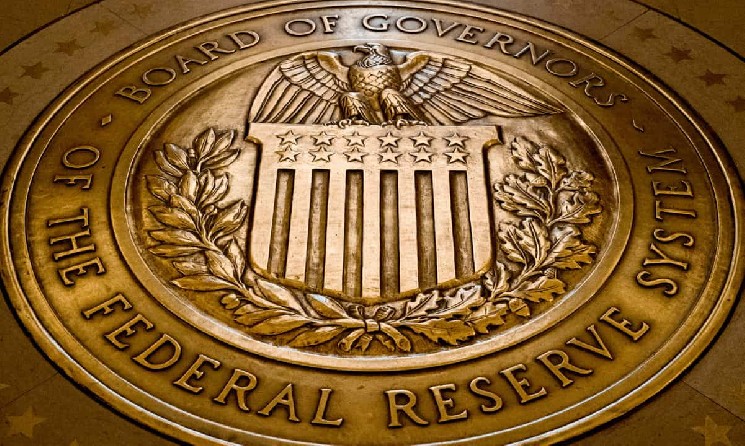
The Federal Reserve Board of Governors released two sweeping stablecoin proposals on September 24 at 2:30 p.m. Eastern time, marking the most detailed federal blueprint yet for dollar-token issuance in the United States. The 60-page application notice (Docket R-1900, RIN 7100-AH30) governs how an insured state member bank seeks approval for a stablecoin subsidiary. A separate 392-page notice would implement reserve, capital, redemption, custody and related requirements under the $GENIUS Act. Both documents are proposals open for comment, not licenses granted or final regulations. The comment period closes 60 days after publication in the Federal Register, a date the notices had not supplied when released.
The scope deserves care. The application notice addresses an insured state member bank seeking permission for a subsidiary to issue payment stablecoins. It does not offer every fintech a direct route to the Fed. The broader operating notice covers issuers supervised by the Board through the paths described in that proposal. As the source text emphasizes, “An OCC application, a state-qualified issuer and a state member bank subsidiary do not become the same legal entity simply because all three propose dollar tokens.”
Application Process Centers on Insured State Member Banks, Not Direct Fintech Access
The Bank Is the Applicant, the Subsidiary Is the Issuer
The $GENIUS Act permits three domestic issuer categories described in the Fed’s application notice: a qualifying subsidiary of an insured depository institution approved by its primary federal regulator, a federal qualified issuer approved by the Office of the Comptroller of the Currency, and a state-qualified issuer approved by its state regulator. Different supervisors handle the different paths. An insured state member bank applies to the Federal Reserve for approval of its subsidiary under section 5 of the statute, codified at 12 U.S.C. 5904.
That legal distinction can be obscured by a familiar phrase, a bank stablecoin. In the Fed’s proposed application procedure, the bank is the applicant and its controlled subsidiary is the contemplated issuer. A technology company supplying wallets or software is not the applicant on that basis. A bank with a national charter has a different primary regulator. An uninsured state member bank does not use the insured-bank procedure in this notice. The notice says such a bank may approach its home state stablecoin regulator, while its existing Federal Reserve obligations continue to apply.
Control Definitions and Consortium Questions
The proposed rule defines control using existing bank holding company concepts. Ownership or voting power of at least 25% of a class of voting securities is one path; control over a majority of directors is another; a controlling influence determined by the Board after notice and hearing is a third. A prospective issuer formed by multiple banks raises a practical question: which bank controls the company, and which regulator reviews it? The Fed asks that question explicitly in Questions 1 through 4 of its application notice.
For a consortium, the Board says it may accept one application on behalf of multiple insured state member banks if the venture counts as a subsidiary of each. The notice does not say that every multi-bank venture automatically meets that test. A structure in which a bank owns a small minority interest and a separate commercial company directs issuance needs analysis of who actually controls the issuer. A named bank on a consortium’s promotional list does not settle the question.
The distinction is timely because 21 financial institutions committed in September to form a stablecoin company, with a proposed launch in the first half of 2027 subject to conditions. The announcement is evidence of a planned venture, not evidence that its eventual entity will apply through the Fed’s insured state member bank route. Banks can collaborate through a company that uses another licensing path. The proposal leaves the legal design consequential.
Two-Stage Review Clock: 30-Day Completeness Check Then 120-Day Decision Window
The proposed application process contains two clocks. Under section 247.30, the Board would tell an applicant within 30 days of receiving its materials whether the filing is substantially complete and identify missing information if it is not. The 120-day decision period runs from the submission date of a substantially complete application. If the Board does not decide a complete application within that period, the proposal restates the statute’s deemed-approval provision.
Filing a letter on day one therefore does not guarantee approval on day 120. The Fed says the submission date is the date its Reserve Bank received the final material needed for substantial completeness, not the later date when the Board sends its completeness notice. An application with omitted material needed to evaluate statutory factors is not substantially complete. A material change can cause a previously complete application to be treated as new if the information on hand is no longer sufficient.
The notice supplies examples: deteriorating financial condition, a material change to the issuer’s business plan, or another change affecting review. This is a procedural limit on a headline claim that applications are approved automatically if the Fed waits. Automatic approval is tied to a complete application and a defined 120-day period. A company cannot make the clock run by sending an incomplete business plan and calling it a filing.
Nor can the Board deny a substantially complete application for any reason it likes. The $GENIUS Act, as described in the notice, limits denial to a determination that the applicant’s activities, including those of the proposed issuer, would be unsafe or unsound based on statutory factors. The proposal supplies a process for a denied applicant to seek a hearing and appeal. Those limits support the opposing reading of the application rule: the 30-day notification, 120-day decision period, limited denial grounds and appeal procedures constrain regulatory delay as much as they screen applicants.
There is an important difference between missing a deadline and refusing an application. The deemed-approval provision addresses a regulator’s failure to issue a decision on a complete file within 120 days. A timely denial triggers a separate process in which the applicant can contest the grounds. The proposed procedural rule details hearings and final determinations, while the statute restricts the substance of a denial. A prospective issuer should therefore distinguish three statuses in any public account of its progress: submitted, substantially complete and approved. None can safely be substituted for another. A press release that says an application was filed tells readers nothing by itself about when the 120-day clock began.
The Board says an applicant should send its letter to the appropriate Federal Reserve Bank, which would forward a copy to the Board. The applicant has to sign, describe the proposal, state the action sought and explain why approval meets the statutory factors. Existing information that the supervisor already holds can in some cases reduce duplication, but the proposed rule still requires the information needed to assess the stablecoin subsidiary. The detail becomes especially relevant where an established bank launches a new entity: examination history for the parent does not itself supply a business plan, governance scheme and redemption process for the proposed issuer.
The disclosure burden remains substantial. The proposed application includes a business plan, financial information, policies and procedures, relevant agreements, governance and material third-party relationships. It asks who does what across the proposed program. A bank can outsource technical tasks, but the Board still wants to see the issuer’s operating structure and the bank’s oversight of it. The notice invites pre-filing feedback for complex proposals, an option that does not itself constitute approval.
Capital Requirements Link Reserve Composition to Risk-Based Minimums
Reserve Backing and Capital Are Separate Layers
The operating proposal separates the dollars backing outstanding tokens from the issuer’s own loss-absorbing capital. A dollar of qualifying reserves for a dollar of coins is a backing requirement. Capital is a second layer, intended to absorb risks to the issuer’s continued operations and certain exposures. Describing a fully reserved issuer as needing no capital confuses those two accounts.
The Fed proposes a $5 million initial minimum during a three-year de novo period, indexed to nominal U.S. GDP. The applicable minimum would be the higher of that floor and a calculated risk-based requirement. The Board could set a different amount in specified circumstances, including when the calculated minimum does not match an issuer’s exposures. The $5 million is neither an application fee nor a universal final capital requirement. It is a proposed floor for a newly approved Board-supervised issuer in its initial period.
Uninsured Deposits Trigger a 2% Capital Charge
One line of the 392-page notice makes the reserve decision measurable. Proposed section 247.17(a)(1) assigns a 2% capital requirement to uninsured eligible deposit claims held as reserve assets. The Fed links that treatment to bank credit risk. A bank failure could delay recovery or leave a loss in the issuer’s reserves. The notice specifically recalls Circle’s approximately $3.3 billion in uninsured USDC reserves held at Silicon Valley Bank when regulators closed that lender in March 2023.
Apply the proposed rate to simple, hypothetical exposures. If an issuer holds $250 million in uninsured eligible deposits, the 2% component is $5 million. At $1 billion, it is $20 million. At $3.3 billion, matching the approximate historical exposure cited in the notice without implying that today’s Circle would hold that sum in such accounts, the arithmetic reaches $66 million. These are illustrations of one proposed component, not complete regulatory capital calculations, final costs or findings about a named issuer.
The arithmetic exposes the point at which the initial $5 million floor ceases to tell a reader much about the reserve bank choice. Even before operational risk and any other applicable charges enter, a hypothetical $1 billion uninsured deposit exposure produces a $20 million component. The proposal asks whether the 2% calibration should instead range from 1% to 4%, or vary with the credit standing of the deposit bank. At 1% the same $1 billion example produces $10 million; at 4% it produces $40 million. Those alternative rates are questions for commenters, not adopted rules.
Operational Risk and Custody Add Further Dimensions
The Fed’s framework considers other categories as well, including undercollateralized reverse repurchase agreements, eligible funds, operational risk and non-reserve assets. The calculation uses different measurement periods for some exposures. It would be false precision to treat the deposit example as the entire capital bill. The comparison does show why a prospective issuer should model its custody and reserve structure alongside its licensing application. A plan naming a reserve bank but leaving the size of uninsured exposure unspecified omits information central to its capital needs.
The proposal’s treatment of operating risk cannot be replaced with the usual argument that short Treasury bills have little credit risk. A redemption desk must work on weekends when a Treasury market does not; software access, failed transfers, custody controls, reconciliation and customer screening can each demand money even when reserves remain intact. The Fed’s separate capital calculation for operational risk therefore depends on inputs other than the market value of government securities. The agency proposes quarterly measurement for the revenue-based component and asks whether other measurement frequencies would work better.
The choice between depositing cash at a bank and holding short government securities is not binary in practice. An issuer needs settlement balances to pay redemptions, while it can hold another part of its backing in permissible liquid instruments. A design promising rapid redemptions but putting every dollar into instruments that must first be sold depends on the sale and payment chain working when customers want out. Conversely, an issuer that keeps large uninsured bank deposits may have immediate access to cash in normal conditions but incurs the proposed deposit credit-risk component. Neither observation proves one reserve mix is right for every program. Both follow from the Fed’s distinct treatment of liquidity and bank exposure.
Custody creates another decision. Proposed sections on covered custodians describe protection for reserve property and for the private keys that allow token issuance. An issuer that relies on an outside bank to hold Treasury securities and a separate technology firm to manage minting permissions needs to map which party controls each asset, who can authorize movement, and how the issuer reconciles outstanding coins with eligible backing. The application asks for material third-party relationships and relevant agreements for that reason. A marketing statement that the reserves are safe does not disclose the chain of authority.
The Fed describes a possible increase or decrease in the de novo capital requirement when it finds a different amount sufficient to support operations. It asks commenters whether the three-year period is appropriate and whether the initial $5 million level, indexed to nominal GDP, should be higher or lower. For a prospective issuer, a model that merely budgets $5 million as a fixed, permanent cost misses both the proposed higher-of test and the regulator’s reserved authority. The precise requirement would emerge from the adopted rule and the issuer’s actual exposures.
Different agencies have already taken their own steps. The FDIC proposed bank issuer standards in April, and the OCC published its stablecoin proposal in February. The Fed notice compares its proposed $5 million starting floor with those agencies’ approaches. Similar figures across proposals do not remove the differences in jurisdiction, application process or final text. None of these proposals should be described as a final license for a specific company.
$10 Billion Threshold Triggers Federal Transition for State-Supervised Issuers
The $10 billion boundary is a second eligibility test. State supervision is a route for eligible issuers below a statutory scale threshold. Proposed section 247.51 addresses a state-qualified issuer whose consolidated outstanding issuance passes $10 billion. The Board proposes a transition to its federal framework within 360 days, unless the issuer stops issuing new payment stablecoins on a net basis while above the line or obtains an available waiver permitting continued state supervision.
The notice asks an issuer crossing that level to notify the Board within five calendar days. Its notice would identify the supervising state, the outstanding amount, the crossing date and whether it has stopped net new issuance. A capital analysis would follow within 270 days. A request for a waiver, if sought, would be due within 240 days under the proposed procedure. A transition is not simply a new label on the same business; the issuer would need to meet the applicable federal requirements within the timetable.
Consider an issuer at $9.9 billion. A $200 million net issuance would take it to $10.1 billion, above the threshold, under a simple point-in-time calculation. The proposal asks whether measurement should instead use a rolling average and whether issuance by nonconsolidated affiliates should count. Those questions remain open. It is therefore premature to assert that splitting tokens among subsidiaries would keep a program permanently below the line. The Board expressly asks commenters how affiliated issuance should be treated.
The U.S. stablecoin licensing landscape already includes different supervisors and unfinished implementing rules. A growing state issuer faces the timing question earlier than a startup seeking its first license. It may need to prepare for federal supervision while current growth, reserve composition and capital remain moving targets. The $10 billion provision does not mean a coin above that value instantly becomes illegal. The notice specifies a transition period, a possible waiver and an alternative of halting net new issuance.
Redemption and Custody Rules Add Operational Demands Beyond Reserve Backing
A promise to redeem has its own operating requirements. The proposed reserve rule would require eligible assets backing outstanding coins on a one-to-one basis. The Board would require a public redemption policy setting out a timeframe, fees, minimum redemption quantity and procedures. Proposed section 247.12 says timely redemption may not exceed two business days after a request, subject to applicable requirements. Onboarding and customer screening still apply. An exchange customer who can sell a token in seconds is not necessarily the same person as an eligible customer redeeming directly with its issuer.
That distinction can be missed when an issuer’s market price stays close to one dollar. Secondary-market trading shows what buyers and sellers will accept; it does not answer who has a contractual redemption claim on the issuer and through which channel. The application notice asks about redemption policies precisely because the issuer needs an operational route from token presentation to payment. A banking partner, custodian and transfer system sit in that route.
Safekeeping requirements in the other notice reach reserve assets, tokens used as collateral and private keys used to issue payment stablecoins. The Fed would apply requirements to certain Board-supervised custodians holding covered assets, including protections intended to keep customer property separate from a custodian’s creditors. The scope differs from a generic wallet software provider that does not control the customer’s keys. The proposal asks where those boundaries should fall.
Governor Michael Barr, in his September 24 statement accompanying the notices, supported safeguards that address runs and payment system risks. The strongest case for the Fed’s approach is therefore operational: clear redemption terms, eligible liquid reserves, capital where bank deposits are uninsured and documented custody arrangements could make an issuer’s promise easier to evaluate before a stress event. The strongest concern from a prospective entrant is the amount of upfront work and uncertainty while separate agencies finish rules that are meant to fit together. Both readings are compatible with the text; the eventual requirements depend on comments and final decisions.
What the Proposal Cannot Tell Applicants Yet
The Fed has not published a list of approved issuers under these new proposals. Its application notice does not reveal which prospective companies will apply through a state member bank, an OCC-supervised entity or a state regulator. A charter, a pending application, a partnership announcement and permission to issue under a final regime are distinct milestones.
Several variables remain open on the face of the notices: the final capital calibration, whether the $10 billion threshold uses a momentary observation or an average, how multi-bank issuers document control, and how final rules across agencies line up. The notices are extensive because the Board is asking questions on these points, not because it has resolved all of them. A claim that a specific issuer qualifies today would require its organizational documents, supervisory status, application and regulator decision.
There is a checkable way to follow the process. Federal Register publication starts the stated 60-day comment period. Final rule text determines whether the proposed $5 million floor and 2% deposit charge survive. Application notices and decisions would show which banks actually seek approval. Consortium ownership documents would show whether a bank controls the issuer. Outstanding issuance disclosures would identify state issuers nearing $10 billion.
The Fed’s application notice says it will notify an applicant within 30 days whether its filing is substantially complete. Once the final required materials reach the appropriate Reserve Bank, the proposal defines the submission date from that receipt, which starts the statutory 120-day decision period.
What to Watch
- Federal Register publication: Check the publication date to calculate the 60-day comment deadline.
- Final Fed rules: See whether the $5 million initial floor, 2% deposit charge and 360-day state-issuer transition survive.
- Public application decisions: Look for an identified insured state member bank and the subsidiary it proposes to control.
- Issuer ownership disclosures: Check public filings for who controls any multi-bank venture before assigning it a Fed application route.
- Outstanding coin disclosures: Track whether a state-qualified issuer approaches or crosses $10 billion in consolidated issuance.
Why This Matters
The Federal Reserve’s dual-proposal release represents the most concrete federal framework to date for stablecoin issuance in the United States, but it arrives amid a fragmented regulatory landscape. The Office of the Comptroller of the Currency, under Comptroller Jonathan Gould, expects final $GENIUS Act rules by November and could begin processing applications in 2027, while the FDIC proposed its own bank issuer standards in April. This multi-agency approach means prospective issuers face overlapping but distinct rulemaking timelines, application procedures, and supervisory standards.
The proposals’ emphasis on legal structure—specifically which entity holds the charter and which regulator holds the pen—creates immediate strategic questions for the 21 financial institutions that announced a stablecoin consortium in September. Whether that venture applies through the Fed’s insured state member bank route, the OCC’s federal qualified issuer path, or a state regulator will depend on ownership, control, and charter decisions that remain unresolved. Meanwhile, the $10 billion transition threshold introduces a new milestone for existing state-supervised issuers, forcing them to model federal capital and operational requirements well before they cross the line.
Critically, the Fed’s separation of reserve backing from risk-based capital, and its explicit 2% charge on uninsured deposit reserves, signals that reserve composition decisions carry direct capital consequences. The reference to Circle’s $3.3 billion uninsured exposure at Silicon Valley Bank in March 2023 underscores that the rule is calibrated to real-world stress events. For the industry, the 60-day comment period is the primary window to shape final calibrations on capital floors, deposit charges, control definitions, and the $10 billion measurement methodology before the rules harden.
Frequently Asked Questions
Can any stablecoin company apply directly to the Fed?
No. The proposed application route in Docket R-1900 addresses an insured state member bank seeking approval for a subsidiary. Other potential issuers use the regulator applicable to their legal structure.
Does the bank or its subsidiary submit the application?
The insured state member bank submits it. The proposed subsidiary would issue the payment stablecoin if the relevant approvals are obtained.
Is an application approved automatically after 120 days?
The statute’s deemed-approval provision applies when the Board does not decide within 120 days of a substantially complete application’s submission date. The Fed proposes a separate 30-day notice about completeness and can identify missing information.
Is $5 million enough capital for every issuer?
No. The proposed $5 million floor applies during an initial three-year period, and an issuer would need the higher of that figure and its calculated requirement. The Board could require a different amount in specified circumstances.
How would uninsured reserve deposits affect capital?
The proposal assigns a 2% component to eligible uninsured deposit claims held in reserves. On a hypothetical $1 billion exposure, that component alone is $20 million, before other applicable requirements.
Can a bank consortium apply through one filing?
The Fed says it may accept one filing on behalf of multiple insured state member banks if the issuer qualifies as a subsidiary of each. The notice seeks comment on how control works in a consortium.
What happens when a state issuer passes $10 billion?
The proposal describes a 360-day transition to federal supervision, an option to stop net new issuance while above the threshold, and a possible waiver. It asks for notification within five calendar days of crossing the line.
Are the Fed’s September 24 rules already in force?
No. They were published as proposals for comment, and the actual comment deadline depends on Federal Register publication. This is educational analysis, not investment advice.
Disclaimer: This article is for information and educational purposes only and does not constitute financial or investment advice. Figures reflect regulatory filings and reporting available at the time of writing and change with each disclosure. Nothing here is a recommendation to buy, sell, or hold any security or asset. Always do your own research. Information is accurate as of September 25, 2026.