Tag: Brad Garlinghouse

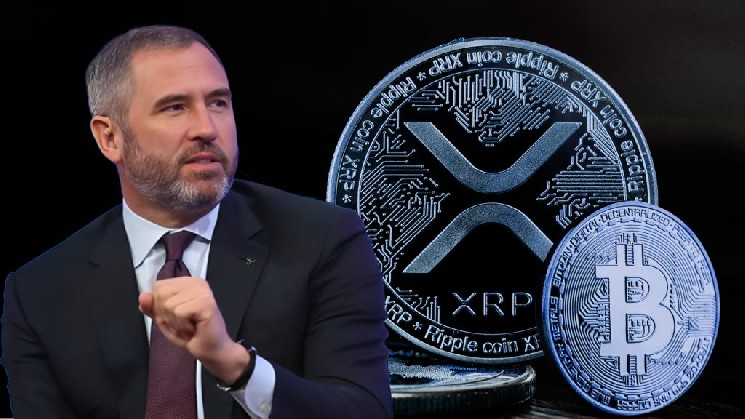
  • Ripple CEO Brad Garlinghouse Unveils 5-Year Crypto Strategy Featuring Bitcoin, XRP, Three Altcoins

    Ripple CEO Brad Garlinghouse Unveils 5-Year Crypto Strategy Featuring Bitcoin, XRP, Three Altcoins

    Key Highlights

    • Ripple CEO Brad Garlinghouse proposes a simple five-year “buy and hold” strategy focusing on the top five cryptocurrencies by market capitalization: Bitcoin, Ethereum, Tether, BNB, and XRP.
    • Garlinghouse emphasizes he is not an “XRP maximalist,” reveals he personally holds a small amount of Solana, and argues different blockchain projects can succeed simultaneously without being direct competitors.
    • The executive cites “trust, utility, speed, and liquidity” as the fundamental drivers of XRP’s long-term value, asserting that the most liquid assets tend to become the most valuable over time.

    Garlinghouse Unveils Long-Term ‘Top Five’ Crypto Portfolio Strategy

    Speaking at a recent industry event, Ripple CEO Brad Garlinghouse outlined a straightforward investment thesis for long-term cryptocurrency holders, suggesting that a diversified basket of the five largest digital assets by market capitalization could yield “great results” over a five-year horizon. The strategy moves away from concentrated bets on single tokens, instead advocating for exposure to the established market leaders: Bitcoin (BTC), Ethereum (ETH), Tether (USDT), BNB, and XRP.

    XRP Inclusion Notable Amid ‘Non-Maximalist’ Stance

    The inclusion of XRP in Garlinghouse’s proposed top-five basket draws particular attention given his previous public stance. The Ripple chief has explicitly stated in the past that he does not define himself as an “$XRP maximalist,” signaling a broader market perspective rather than singular allegiance to the token native to the Ripple ecosystem. This approach underscores a philosophy of market-cap-weighted diversification rather than thematic or ecosystem-specific concentration.

    Solana Acknowledged as Valid, Non-Competitive Peer

    Addressing the inevitable comparisons between XRP and other high-throughput blockchains, specifically Solana (SOL), Garlinghouse declined to frame the relationship as a zero-sum competition. When asked why an investor should prefer XRP over Solana, he stated he was not trying to convince anyone to choose one over the other. He revealed he personally owns a small amount of Solana and maintains a positive view of various cryptocurrencies for different reasons. “He stated that he does not see Solana as a direct competitor to $XRP and that different crypto projects can be successful simultaneously,” reinforcing a multi-chain future thesis.

    Liquidity, Trust, and Utility Cited as XRP Value Drivers

    Concluding his remarks, Garlinghouse expressed strong optimism regarding XRP’s specific fundamentals. He argued that the determinants of a currency’s enduring value are “trust, utility, speed, and liquidity“—effectively, how liquid the asset is. He posited a direct correlation between liquidity and value, asserting that the most liquid currencies tend to be the most valuable because liquidity is the primary reason investors seek to hold an asset. This framework positions XRP’s design for institutional cross-border payments as its core competitive advantage.

    Why This Matters

    Garlinghouse’s comments arrive as institutional adoption of digital assets accelerates, with major financial firms increasingly treating cryptocurrency as a distinct asset class requiring diversified allocation strategies rather than speculative single-token bets. His “top five” framework mirrors traditional finance index-investing principles applied to the crypto market cap leaderboard. Furthermore, his explicit refusal to engage in tribalistic “maximalist” rhetoric—and his acknowledgment of holding Solana—signals a maturing industry leadership mindset focused on interoperability and collective ecosystem growth. For market participants, the remarks reinforce the narrative that regulatory clarity (particularly surrounding XRP’s status in the U.S.) and deepening liquidity pools are critical milestones for the next phase of crypto market development.

    Frequently Asked Questions

    What are the five cryptocurrencies Brad Garlinghouse includes in his proposed long-term strategy?
    The basket consists of Bitcoin (BTC), Ethereum (ETH), Tether (USDT), BNB, and XRP, ranked by current market capitalization.
    Does Brad Garlinghouse consider himself an XRP maximalist?
    No. Garlinghouse has previously stated he does not define himself as an “$XRP maximalist,” and he confirmed he personally holds a small amount of Solana (SOL).
    What fundamental factors does Garlinghouse believe drive XRP’s value?
    He cites “trust, utility, speed, and liquidity” as the primary drivers, arguing that the most liquid assets tend to become the most valuable over time.
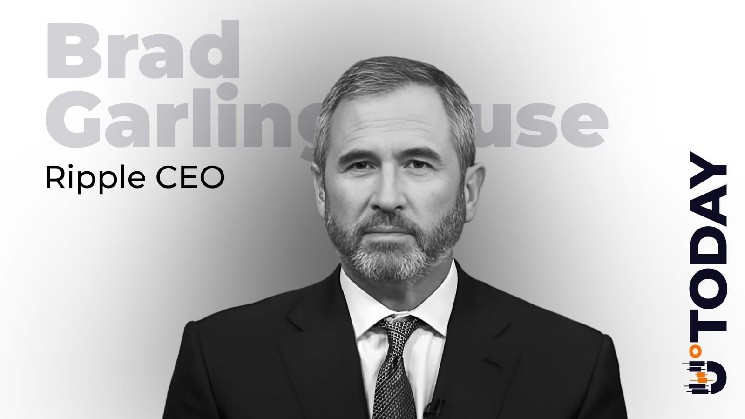
  • Ripple CEO, Wall Street Heavyweights Head to Swell 2026: Agenda Revealed

    Ripple CEO, Wall Street Heavyweights Head to Swell 2026: Agenda Revealed

    Key Highlights

    • Swell 2026 merges Ripple’s Swell and Apex conferences into a three-day event in New York (October 27–29) with over 100 speakers and 80 sessions.
    • High-profile speakers include Ripple CEO Brad Garlinghouse, CME Group’s Terrence Duffy, Bullish CEO Tom Farley, actor Matt Damon, and executives from BNY, Coinbase, Robinhood, Barclays, State Street, and Jump Trading.
    • Agenda focuses on institutional crypto adoption: tokenized real-world assets, stablecoin infrastructure, AI-driven payments, post-quantum security, and the first year of spot XRP ETFs.

    Swell 2026 Agenda Unveiled: Ripple Merges Flagship Conferences for New York Event

    Ripple has published the full agenda for Swell 2026, a three-day conference running October 27–29 in New York City that combines the company’s Swell and Apex events for the first time. The program features more than 100 speakers across 80 sessions and three stages, targeting the intersection of traditional finance and blockchain infrastructure.

    The announcement was made via the official Swell X account on September 16, 2026:

    The Swell 2026 agenda is live.Join us in New York, October 27–29, with Brad Garlinghouse, Terrence Duffy of CME Group, Tom Farley of Bullish, Matt Damon of @Water, leaders from @BNYglobal, @coinbase, @RobinhoodApp, @Barclays, @StateStreet, @jumptrading and many more.See the…
    — Swell (@RippleSwell) September 16, 2026

    Speaker Lineup Bridges Traditional Finance and Crypto

    The roster reflects Ripple’s strategy of convening decision-makers from both established financial institutions and digital-asset natives. Confirmed participants include:

    • Brad Garlinghouse, CEO, Ripple
    • Terrence Duffy, Chairman and CEO, CME Group
    • Tom Farley, CEO, Bullish
    • Matt Damon, Actor and Co-founder, Water.org
    • Senior leaders from BNY, Coinbase, Robinhood, Barclays, State Street, and Jump Trading

    Three Thematic Tracks Define the Program

    Content is organized around three core pillars that signal where institutional crypto is heading:

    Liquidity and Settlement

    Sessions will examine how blockchain rails are reshaping cross-border payments, wholesale settlement, and the role of regulated market infrastructure.

    Tokenization of Real-World Assets

    A major focus on bringing traditional assets—treasuries, commodities, credit—on-chain with bank-grade compliance and custody.

    Stablecoins in Bank-Grade Production

    Practical discussions on issuance, regulation, interoperability, and adoption by financial institutions.

    Day 1 Highlights: Opening Remarks, AI Agents, and XRPL Roadmap

    The opening day packs several high-signal sessions:

    • Brad Garlinghouse delivers opening remarks followed by a 20-minute conversation.
    • Monica Long, Ripple President, converses with Johann Kerbrat, SVP and GM of Crypto at Robinhood.
    • Terrence Duffy (CME Group) takes the main stage for a dedicated conversation.
    • Aanchal Malhotra, Ripple research scientist, presents on the next frontier for XRPL research.
    • Jasmine Cooper, Head of Product at RippleX, outlines the XRPL roadmap for building an institutional DeFi stack.
    • Panel “What Happens When AI Moves Money” features Massimo Cervesato (Mastercard), Nilesh Dusane (AWS), Henri Stern (Privy co-founder), and Edward Woodford (ZeroHash) on AI agents, crypto infrastructure, and payments.
    • Mayukha Vadari, Ripple software engineer, introduces a new paradigm for building on the XRP Ledger with “smart features.”
    • David Schwartz, Ripple CTO Emeritus, and JA Akinyele discuss “Building What’s Next for XRPL.”
    • Jack McDonald, Ripple SVP of Stablecoins, and Brett Tejpaul, Coinbase Institutional co-CEO, cover advancement of crypto infrastructure.

    Day 2: Garlinghouse and Farley on Stage

    Day two features a main-stage conversation between Brad Garlinghouse and Tom Farley, CEO of Bullish, offering further insights into exchange infrastructure and institutional market structure.

    Additional Agenda Themes

    Beyond the day-one highlights, the program also addresses:

    • The first year of spot XRP ETFs — market dynamics, flows, and regulatory evolution.
    • AI agents that move money — autonomous economic agents, payment rails, and risk frameworks.
    • Post-quantum security — preparing blockchain cryptography for quantum-era threats.

    Why This Matters

    Swell 2026 signals a maturation milestone for enterprise blockchain adoption. By merging Swell (Ripple’s traditional finance-focused conference) with Apex (its developer-centric event), Ripple is explicitly positioning the XRP Ledger and its associated infrastructure—stablecoins, tokenization, custody—as production-ready for banks, asset managers, and market infrastructure providers. The speaker roster, heavy on C-suite executives from CME Group, BNY, Barclays, State Street, and major crypto exchanges, indicates that institutional deployment is moving from pilot to scale. Agenda topics like spot XRP ETFs, AI-agent payments, and post-quantum cryptography reflect the three vectors—capital markets, automation, and long-term security—that will define the next phase of crypto integration into global finance.

    Frequently Asked Questions

    When and where is Swell 2026 taking place?

    Swell 2026 runs October 27–29, 2026, in New York City. It combines Ripple’s Swell and Apex conferences into a single three-day event.

    Who are the headline speakers?

    Key speakers include Ripple CEO Brad Garlinghouse, CME Group Chairman Terrence Duffy, Bullish CEO Tom Farley, actor Matt Damon (Water.org), and executives from BNY, Coinbase, Robinhood, Barclays, State Street, and Jump Trading.

    What are the main themes on the agenda?

    The program centers on liquidity and settlement, tokenization of real-world assets, and stablecoins in bank-grade production. Additional tracks cover the first year of spot XRP ETFs, AI agents that move money, post-quantum security, and the XRP Ledger roadmap.

  • Ripple Legal Chief Offers Bullish XRP Outlook After CLARITY Act Failure

    Ripple Legal Chief Offers Bullish XRP Outlook After CLARITY Act Failure

    The U.S. Senate failed to advance the CLARITY Act on September 15, with a 49–50 procedural vote falling short of the 60-vote threshold required to move the legislation to formal floor debate. The outcome stalls a bill that previously passed the House of Representatives in July 2025 by a 294–134 margin.

    Senate Deadlock Halts Legislative Momentum

    The procedural vote concluded with 49 senators voting in favor and 50 against, preventing the measure from proceeding along its immediate regulatory path. Senate negotiations had stalled over objections surrounding public ethics standards and the regulatory oversight of decentralized protocols, despite the strong bipartisan showing in the lower chamber.

    Ripple Leadership Affirms Legal Standing

    Ripple Chief Legal Officer Stuart Alderoty emphasized that the company and its digital asset operate on established legal ground following the legislative impasse. In a post on his X account, Alderoty stated:

    Don’t forget – Ripple and $XRP stand on settled ground. The 2023 federal Court ruling established $XRP is not a security.
    And in March the SEC and CFTC issued a joint interpretation naming $XRP a digital commodity. SEC Chairman Atkins and a CFTC Chairman Selig understand these… https://t.co/63ML5xmbAP

    Alderoty referenced the 2023 federal court ruling that established programmatic sales of $XRP on exchanges do not constitute securities, effectively decoupling those transactions from classification as investment contracts.

    Market Reaction and Technical Indicators

    Over the past 24 hours, $XRP declined 7.95% to $1.29, according to CoinMarketCap metrics. Technical indicators suggest the breach below the 200-day moving average at $1.355 likely accelerated defensive sell orders following the Senate vote.

    Judicial Precedents and Regulatory Framework

    The company anchors its stance in administrative determinations established prior to the legislative debate. Official March 2026 documentation issued jointly by the Securities and Exchange Commission (SEC) and the Commodity Futures Trading Commission (CFTC) categorized $XRP among sixteen digital assets recognized as digital commodities.

    According to financial sector reports, this interagency interpretation limits the company’s operating exposure to direct disputes regarding the commercial nature of the asset. Industry representatives note that the absence of comprehensive federal legislation shifts the task of defining operating boundaries back to agency-level technical rulemaking.

    Business Operations Continue Uninterrupted

    Corporate leadership maintains that business operations will proceed without adjustments in the wake of the legislative stall. According to remarks by Chief Executive Officer Brad Garlinghouse, commercial activity and cross-border agreements are maintaining their standard operational momentum.

    The Commodity Futures Trading Commission’s formal roadmap outlines the release of updated regulatory guidance for the spot market toward the end of the fourth quarter, which may provide further clarity on the regulatory treatment of digital commodities.