Key Highlights
- Last Ditch Bar and Arts Venue in Greenfield, Massachusetts, switched Saturday nights to mask-optional in 2026 after maintaining a strict KN-95 requirement since opening in 2025.
- The policy change was driven by financial strain, including a large loan left with the sole remaining owner after co-owners departed.
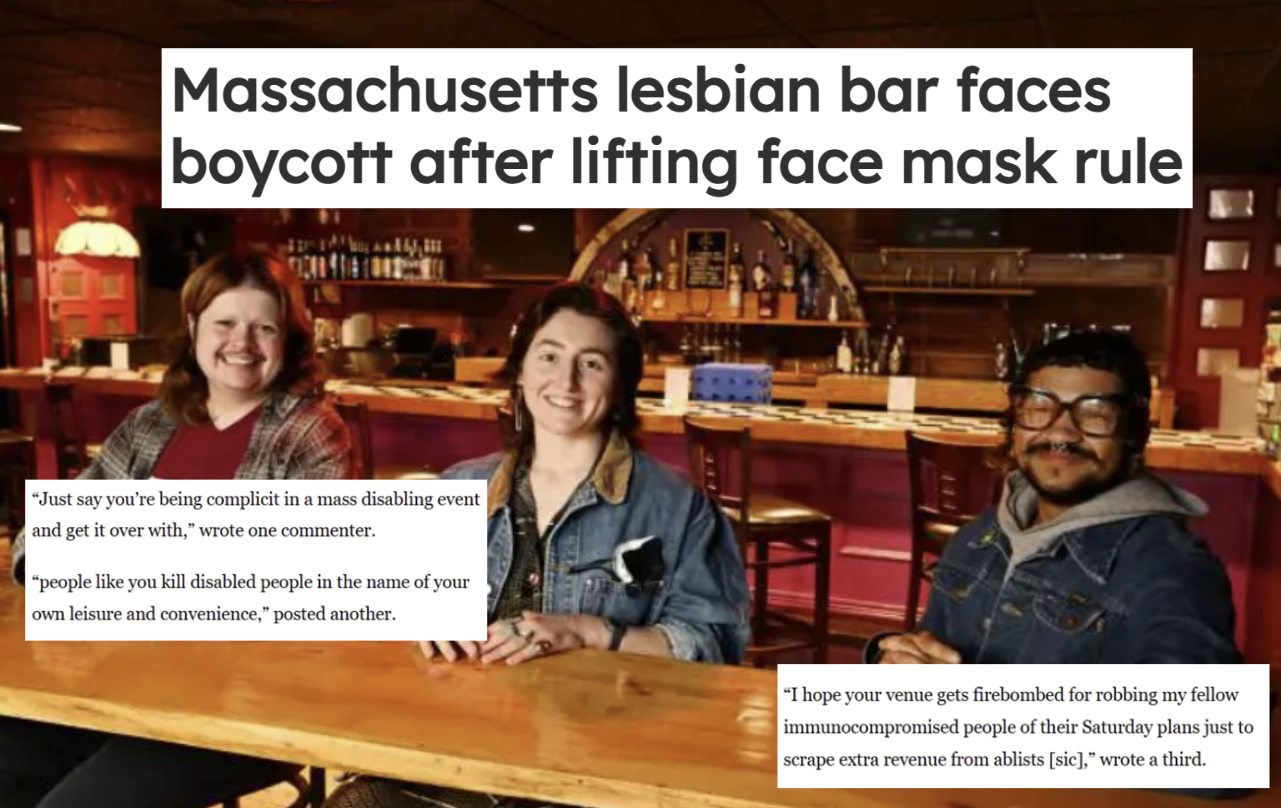
- The decision sparked intense community backlash accusing the venue of ableism and prioritizing revenue over immunocompromised patrons, later amplified by a Boston Globe Magazine feature.
Greenfield Queer Venue Reverses Mask Mandate Amid Financial Pressure
The Last Ditch Bar and Arts Venue, a lesbian and queer bar that opened in Greenfield, Massachusetts in 2025, built its early reputation on a rigorous accessibility protocol: all patrons were required to wear KN-95 masks at all times except when actively eating or drinking. The policy was explicitly designed to protect immunocompromised and disabled members of the community. In 2026, however, the venue announced that Saturday nights would become mask-optional, a shift that immediately fractured the very community the bar sought to serve.
Financial Strain Forces Operational Pivot
According to public accounts surrounding the controversy, the reversal was not motivated by a change in public health guidance but by acute financial distress. The business was reportedly carrying a sizable loan that fell entirely on the remaining owner after co-owners stepped back from the operation. While Greenfield had reportedly gone months without reported COVID-19 cases at the time, the economic reality forced a choice between maintaining the strict mitigation standard and keeping the doors open. The ownership framed the Saturday night adjustment as a necessary survival measure.
Community Backlash Centers on Disability Justice
The response from a significant portion of the local queer community was swift and severe. Critics argued that lifting the mandate—even for a single night—constituted ableism and amounted to eugenics by rendering the space unsafe for high-risk patrons. Accusations flew that the venue was prioritizing business viability over the lives of disabled community members, violating the foundational promise of accessibility that defined the bar’s identity. The discourse quickly migrated from local circles to broader social media platforms, where the conversation splintered into boycott calls, theoretical debates on disability justice, and, conversely, mockery of the backlash and scrutiny of the owners’ internal dynamics.
National Spotlight via Boston Globe Magazine
The controversy escaped the bounds of regional social media on September 22, 2026, when journalist Annalisa Quinn published a reported feature in the Boston Globe Magazine. The article brought national attention to the tensions between small-business survival and the non-negotiable safety requirements of marginalized subcommunities. Quinn’s reporting contextualized the Last Ditch Bar not merely as a business making a policy tweak, but as a flashpoint for the ongoing, unresolved negotiation over what “community safety” entails in a post-emergency pandemic landscape.
Why This Matters
The Last Ditch Bar controversy encapsulates a recurring crisis for identity-based venues: the collision between the high fixed costs of hospitality and the non-negotiable access needs of the populations they claim to center. As pandemic-era government support evaporated, spaces that marketed themselves on radical accessibility found themselves financially unable to sustain the infrastructure—air filtration, mask enforcement, reduced capacity—that such accessibility requires. The Greenfield case study illustrates how quickly community trust, built on safety protocols, can dissolve when economic reality forces a retreat, and how media coverage can transform a local operational decision into a referendum on disability justice movement politics.
Frequently Asked Questions
- What was the original mask policy at Last Ditch Bar?
- The venue required all patrons to wear KN-95 masks at all times except when actively eating or drinking, a rule in place since its 2025 opening to ensure access for immunocompromised and disabled community members.
- Why did the bar make Saturday nights mask-optional?
- The decision was attributed to severe financial difficulties, specifically a large loan that became the sole responsibility of the remaining owner after co-owners stepped away from the business.
- How did the broader public become aware of the controversy?
- The dispute gained national attention after journalist Annalisa Quinn published a feature article in the Boston Globe Magazine on September 22, 2026, examining the conflict between business survival and disability access.